

Shampoo, conditioner and sunscreens may be part of many people’s self-care routines, but most of these products contain chemicals that are harmful to animals and the environment.
New research has found that, contrary to long-held beliefs, some of the ingredients in personal care products, such as softening agents in shampoos, are harmful to aquatic life.
“We have conducted the first study in the world to investigate this. The substances do not penetrate the animals’ cells, but rather stick to the surface of the animal. This physically affects the animal, making it unable to move as well, and it impairs its ability to ingest food,” said senior researcher Hans Sanderson with the Department of Environmental Science at Aarhus University in a press release from the university.
Human hair is made of keratin, which has a negative charge that makes hair dull and frizzy. Most shampoos contain positively charged substances that work as softening agents by binding to hair to make it less frizzy and give it shine.
It had previously been thought that softening agents did not pose any environmental hazards, since they are large molecules that can’t penetrate plant and animal cells.
But new research has shown this not to be true. Softening agents impact small aquatic animals like daphnia, who live in lakes, rivers and streams, making it hard for them to find sustenance and ultimately killing them.
Softening agents added to shampoos, conditioners and a wide array of personal care products are types of the chemical group polymers.
Sanderson and colleagues tested some types of softening agents, but they were just a small percentage of the 25,000 used globally.
Softening agents aren’t only used in personal care products, they are also added to wastewater treatment plants to aid in purification of the water by binding to other molecules and making them easier to filter.
“In the EU, lawmakers are starting to realize that we also need to investigate substances that do not penetrate cells. New regulations of these substances are expected. That’s why I’ve conducted these studies at the request of the industry,” Sanderson said.
The researchers investigated how two species of daphnia — tiny freshwater crustaceans — were affected by the substances. Daphnia eat bacteria, plant matter and algae, and play an essential role in the ecosystem by purifying the water and serving as a food source for a wide variety of fish.
When too many of the softening agents end up in the water, they harm the daphnia.
“We tested two different species. In the first species, the sticky substances attached itself to its body, significantly hindering its movements. This affects the animals’ survival chances—and therefore has a strong negative effect on it. The second species was slightly less affected,” Sanderson explained.
Sanderson said the findings suggest regulations should be established and more substances need to be investigated.
“These softening agents, which are large molecules, are very difficult to investigate for their harmful effects because they bind to everything. To investigate them as accurately as possible, we need to imitate the conditions in streams and lakes to see the real effect,” Sanderson said. “We succeeded in doing so, and we have developed a method to test the environmental effects of many more of these substances.”
Sanderson emphasized that most products people use contain the substances — even those displaying the Nordic Swan Ecolabel.
“Even the Swan-labeled neutral products contain some of these substances. It may be that producers of these products will have to look for a range of other substances in the future,” Sanderson said.
Another concern is whether the substances should continue to be used at wastewater treatment plants.
“The substances are added to filter out other substances from the wastewater. Therefore we need to address the question of what is worst for the environment: these substances or the substances they help to filter out,” Sanderson said.
The study, “Acute and chronic toxicity of cationic polyquaterniums of varying charge density and molecular weight to Daphnia magna and Ceriodaphnia dubia,” was published in the journal Aquatic Toxicology.

In Denmark, 99 species of daphnia, commonly called water fleas, are found primarily in freshwater. Creative Commons / Store Norske Leksikon
The post Personal Care Products Like Shampoo Can Harm Aquatic Life: Study appeared first on EcoWatch.
https://www.ecowatch.com/personal-care-products-aquatic-life-harm.html

Everyone wants to get a good night’s sleep, but conventional mattresses can often be full of questionable chemicals and synthetic materials — that you’ll be exposed to for one third of your day, every single day.
What Makes a Mattress Sustainable?
The materials matter most. A mattress made from certified organic cotton, wool, and natural latex is a fundamentally different product than one made from conventional foam and synthetic fibers.
Beyond materials, look for real transparency: does the company disclose exactly what they use, and where and how it’s manufactured? Vague claims like “eco-friendly” or “sustainably made” with no specifics are a red flag, not a green one.
Local, in-house manufacturing is also worth weighing, because a brand that owns its own factory (rather than outsourcing to an unnamed third party) generally has more direct visibility into its own labor and material sourcing, and more accountability if something’s wrong.
Mattress Materials to Look For (and Materials to Avoid)
Sustainable mattresses will be made from natural, non-toxic, and sustainably sourced materials, ideally backed by real certifications, not just marketing language.
Some eco-friendly materials to look out for:
- GOTS Certified Organic Cotton
- Sustainably sourced wool
- Natural Dunlop or Talalay Latex, ideally GOLS certified
- Non-toxic, water-based adhesives
The materials to be most cautious of are conventional polyurethane foam, plastics, and added chemical flame retardants — these are where the biggest health and environmental concerns tend to concentrate. That said, not all synthetic materials are equal: a foam that’s independently tested and certified (like CertiPUR-US®) can be a reasonably safer choice than an untested one, even if it’s not our top recommendation compared to natural latex. I’ll flag where a brand in this guide uses tested synthetic materials so you can weigh that tradeoff yourself.
Eco-Friendly Mattress Certifications to Know
Certifications add a layer of third-party accountability to a brand’s claims. Though none are perfect on their own, so it’s key to know what each one actually covers!
- GOTS Certified = the fabric (like the organic cotton cover) meets strict organic and safety standards, with labor protections built into the entire supply chain. This is the most rigorous certification for organic textiles specifically — but it’s fabric-specific, not a claim about the foam or latex inside.
- GOLS Certified = verifies that latex is made from certified organic latex, grown and processed to strict environmental and safety standards. A latex-specific certification, not a wood, fabric, or foam guarantee.
- Cradle to Cradle Certified (Gold) = evaluates a product across material health, circularity, clean air/climate, water/soil stewardship, and social fairness — one of the few certifications that can assess a whole mattress rather than a single material.
- GREENGUARD Gold Certified = the finished product was tested for low chemical emissions, including VOCs — the stricter tier of GREENGUARD certification.
- eco-INSTITUT Certified = a German certification measuring a material’s chemical emissions and verifying responsible sourcing — similar in spirit to GREENGUARD, but based in the EU.
- MADE SAFE® = screens against a list of thousands of chemicals known or suspected to harm human health. One of the more comprehensive certifications available, assessed at the product level.
- Rainforest Alliance Certified = verifies a product was produced in a socially, economically, and environmentally responsible way, particularly regarding forests and climate — commonly seen on natural latex specifically, since it’s often applied to rubber tree sourcing.
- OEKO-TEX® = tests the finished textile for harmful substances. OEKO-TEX offers several distinct certification tiers (STANDARD 100 being the most common), so it’s worth checking which specific OEKO-TEX label a brand holds.
- FSC Certified = wood-based materials (like a bed frame or wood mattress components) came from responsibly managed forests. Not a chemical-safety or textile certification.
- Fair Trade Certified = verifies that a factory meets standards for fair wages, safe working conditions, and ethical labor practices — a certification about how a product was made and by whom, not about the materials themselves.
Where to Find Eco-Friendly Mattresses
[Looking for bed frames too? Check out this guide.]
Note that some of the brands below are affiliates, meaning we’ll earn a commission at no additional cost to you if you choose to purchase through these links. As always, all brands meet rigorous criteria for sustainability and are brands we love — and that we think you’ll love too!
1. Savvy Rest
Best for fully customizable organic mattresses (even side-by-side for couples)

Based In: US | Made In: US
Conscious Qualities: GOTS-certified organic company and factories; organic wool, natural USDA- and GOLS- certified Dunlop or Cradle to Cradle Gold-certified Talalay latex and organic cotton
Price: $1199-$4799
One of the more standout features of Savvy Rest is their ability to customize your mattress to fit your needs. If you’re a couple, they can even customize each side. This B Corp also designs non-toxic furniture, including bed frames to complete your bedroom set.
*Use code CONSCIOUSSTYLE20 for 20% off at Savvy Rest!*
2. Avocado
Best for organic mattresses with nearly every possible certification
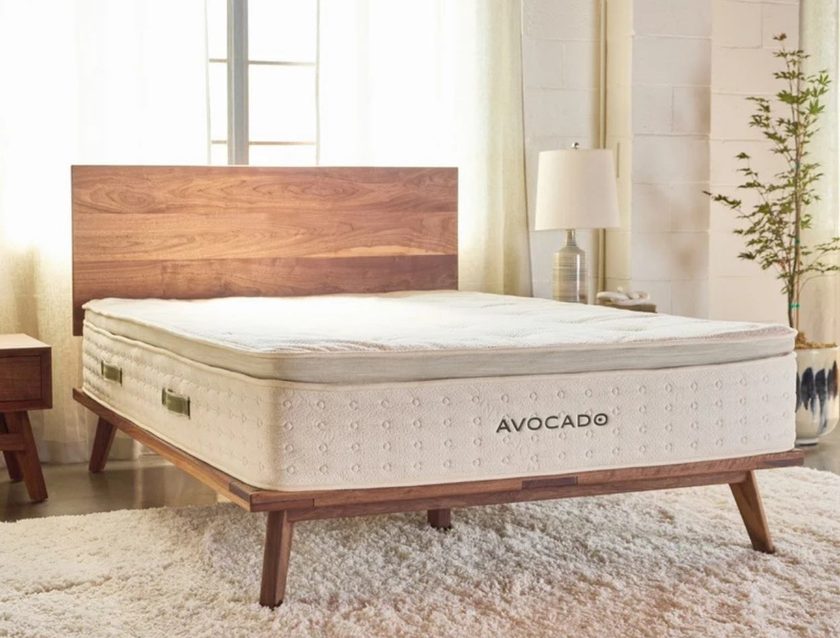
Based In: US | Made In: US
Conscious Qualities: Climate-neutral; No chemical retardants; Eco-Institut certified, sustainably-sourced Dunlop latex, GOTS-certified cotton and wool from their own sheep herd; Handcrafted in their own local GOTS-certified factories; Fair Trade, Greenguard Gold and Made Safe, and B-Corp certified
Price: $279-$3,339
Avocado is leading the way in sustainability efforts as far as mattress brands go. They offer a variety of eco-friendly mattresses to choose from depending on your needs, as well as crib mattresses and various household goods. They also have a 1-year trial to ensure you have ample opportunity to try their sustainable mattresses out before you commit.
3. My Green Mattress
Best for a full family lineup, crib to child and basic to luxury adult mattresses
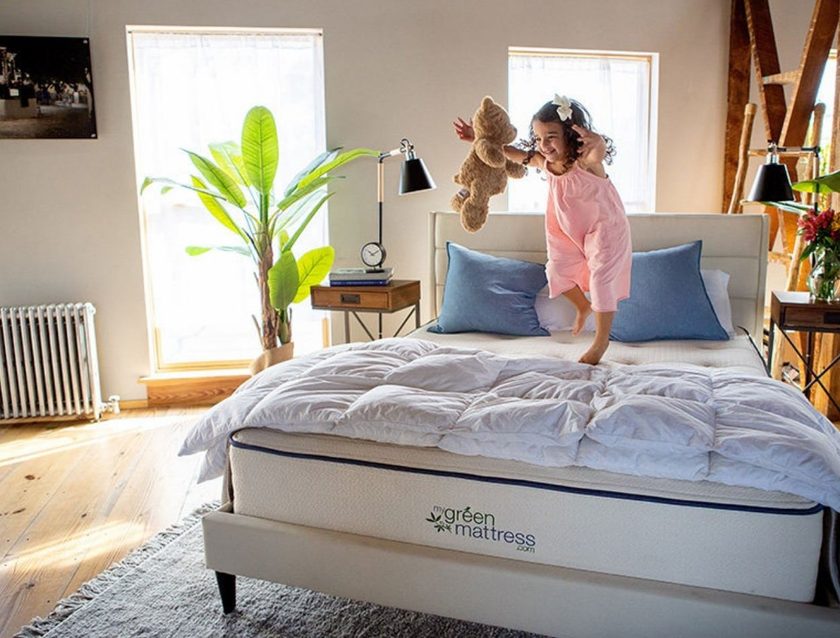
Based In: US | Made In: US (Willowbrook, IL)
Conscious Qualities: GOTS-Certified Organic Cotton & Wool, GOLS-Certified Organic Latex, GREENGUARD Gold Certified, MADE SAFE® Certified
Price: $399 (Crib) – $2,399 (Cal King)
My Green Mattress handcrafts their entire lineup — crib, kids, and two adult tiers — in their own Illinois factory.
Their Natural Escape is the most luxurious pick, with extra latex cushioning for a plusher feel, while the Kiwi Organic Mattress offers that same organic cotton, wool, and latex construction in their standard everyday option. For kids, the Pure Eco Organic Kids Mattress is a lower-profile design made to fit bunk beds and trundle beds, and for babies, the Emily Organic Crib Mattress takes a firmer, simpler approach suited to safe infant sleep. All four come with a 365-night trial.
4. PlushBeds
Best for highly customizable non-toxic mattresses
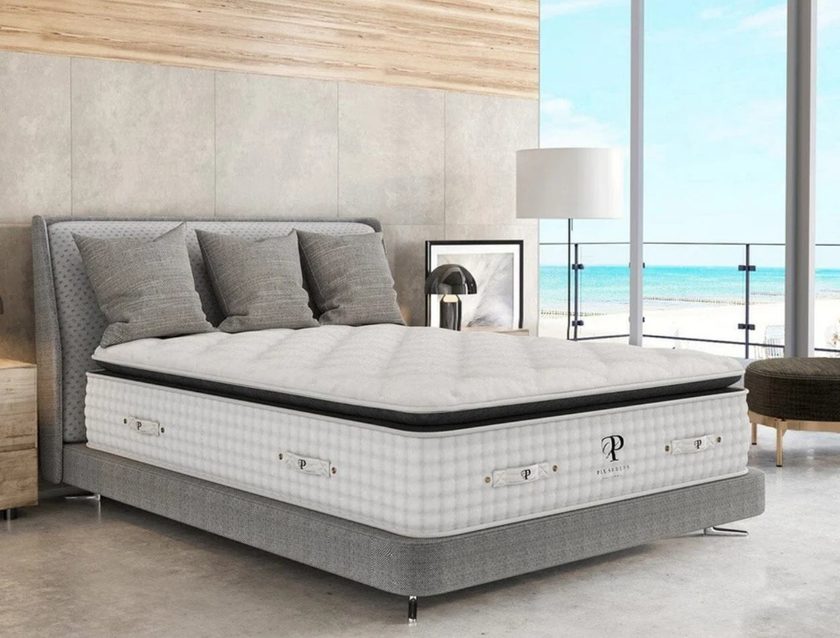
Based In: US | Made In: US
Conscious Qualities: USDA-certified organic cotton, wool, and latex; GOTS organic cotton and wool; OEKO-TEX certified latex; FSC- Control Union- and Greenguard certified; ethical in-house production; sources ethically harvested materials
Price: $300-$2000
Plushbeds has almost every certification one could want in a sustainable mattress company. They have been making handcrafted mattresses for over a decade in GOTS and GOLS-certified factories. One notable initiative from Plushbeds is that they also provide annual scholarships to students working in environmental fields.
5. Spindle
Best for an affordable, family-run organic option
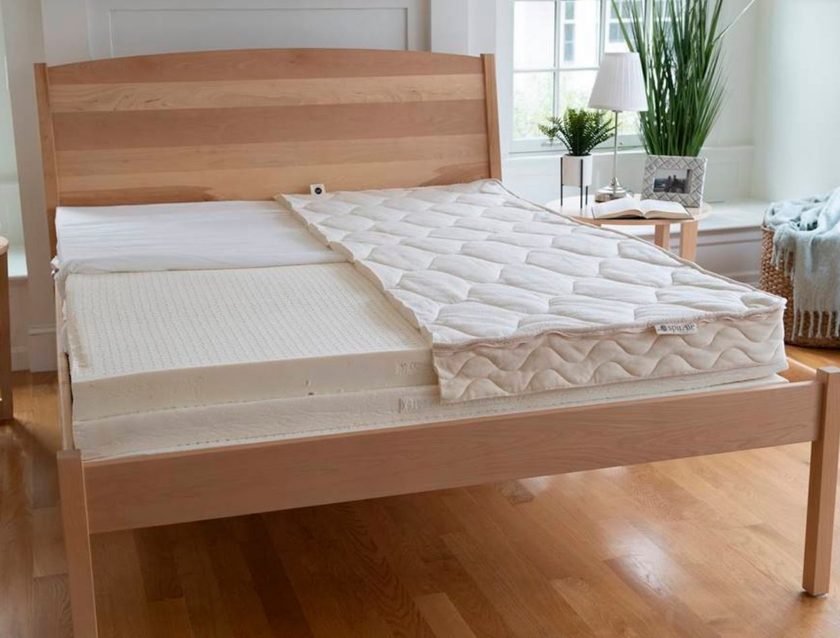
Based In: US | Made In: US
Conscious Qualities: family-run company, OEKO-TEX certified organic Dunlop latex, organic cotton, organic wool; no chemical fire retardants, rubber, or VOCS; donates 10% of proceeds to environmental organizations
Price: $1500-$1800
Spindle is a fourth-generation family-run company that deeply values their customers. Thanks to their direct-to-consumer model, they can offer high-quality sustainable mattresses at a competitive price. Like many of these companies, they offer a 365-day trial and a 10-year warranty. Spindle also donates one mattress per every 10 mattresses sold.
6. Medley
Best for a simple, no-frills organic latex mattress
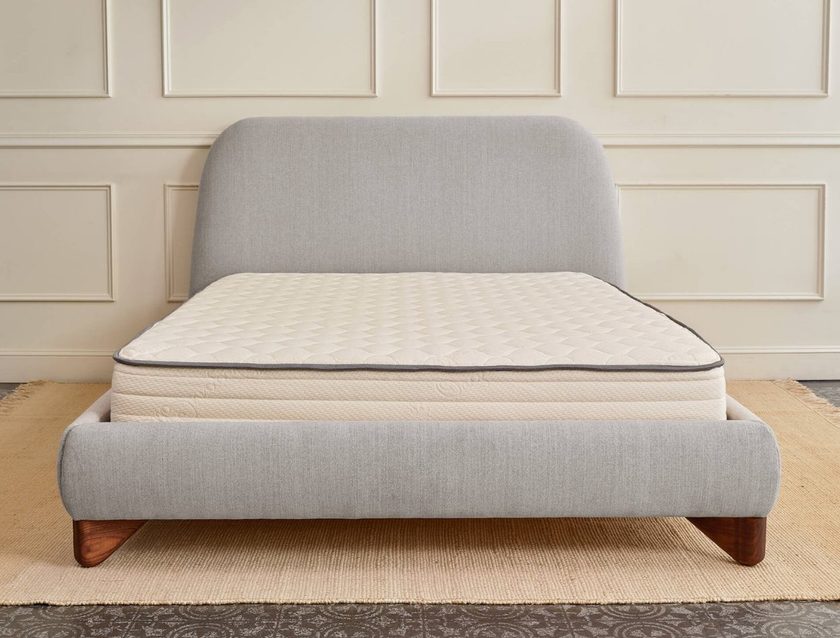
Based In: US | Made In: US (Illinois)
Conscious Qualities: GOLS-Certified Organic Latex, Organic Cotton Cover, Natural Wool Barrier, 20-Year Warranty
Price: $1,895 – $3,495
Medley’s mattress keeps things simple: a single, GOLS-certified organic latex core (a minimum of 95% certified organic raw material, per GOLS’ standard) wrapped in a natural wool barrier and a quilted organic cotton cover handcrafted in an Illinois factory. The perfect addition to the furniture company’s non-toxic beds.
7. Saatva
Best for a luxury innerspring feel (not a fully organic build)
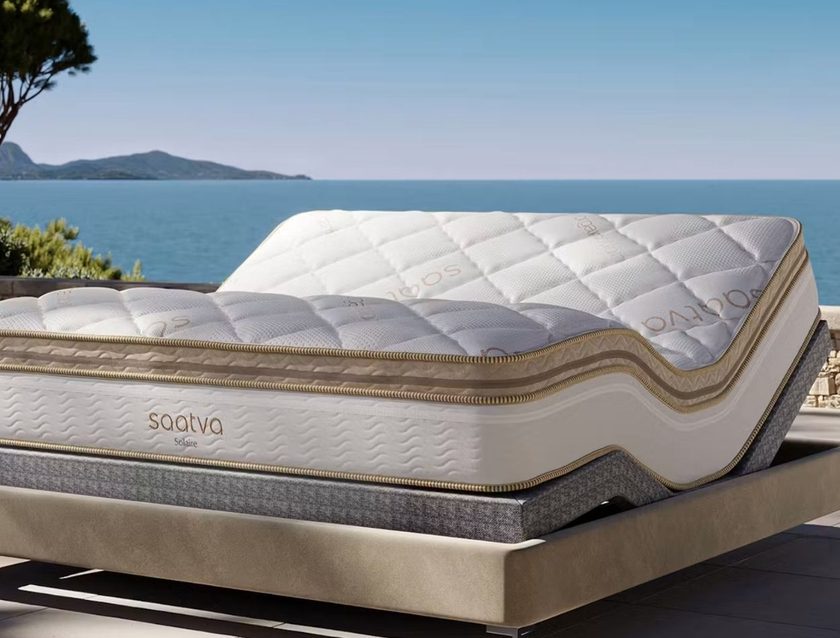
Based In: US | Made In: US (New Jersey, plus a nationwide factory network)
Conscious Qualities: CertiPUR-US® Certified Foam, OEKO-TEX® Standard 100 Certified Bedding, Recycled Steel Coils, No Fiberglass or Chemical Flame Retardants, Solar-Powered Factory
Price: Saatva Classic starts at $2,729 (Queen; varies by size)
Saatva’s best-selling Classic Mattress is a luxury innerspring, not an all-organic build — worth knowing upfront if you’re comparing it to the fully GOTS/GOLS-certified options elsewhere in this guide. Its cover uses organic cotton, and rather than fiberglass or chemical flame retardants, Saatva uses a natural plant-based thistle pulp and organic wool flame barrier. The coils are made from recycled, triple-tempered steel, and the base panels use REPREVE® recycled polyester (removing the equivalent of four plastic bottles per Queen mattress made).
Where Saatva differs most from the rest of this guide: their foam is CertiPUR-US® certified rather than natural latex — a meaningful synthetic-foam certification (tested for VOCs, flame retardants, heavy metals), but not the same as the GOLS-certified organic latex used by brands like Medley or My Green Mattress. Saatva does offer a separate GREENGUARD Gold and eco-INSTITUT certified natural latex mattress line for shoppers who want a fully natural core, so it’s worth specifying which Saatva mattress you’re looking at rather than assuming the flagship Classic and the natural latex line share the same materials.
Saatva also operates a solar-powered New Jersey factory, plants trees through a partnership with Evertreen (23,000 to date), and is an early member of the Sustainable Furnishings Council.
8. Birch
Best for affordable organic mattresses
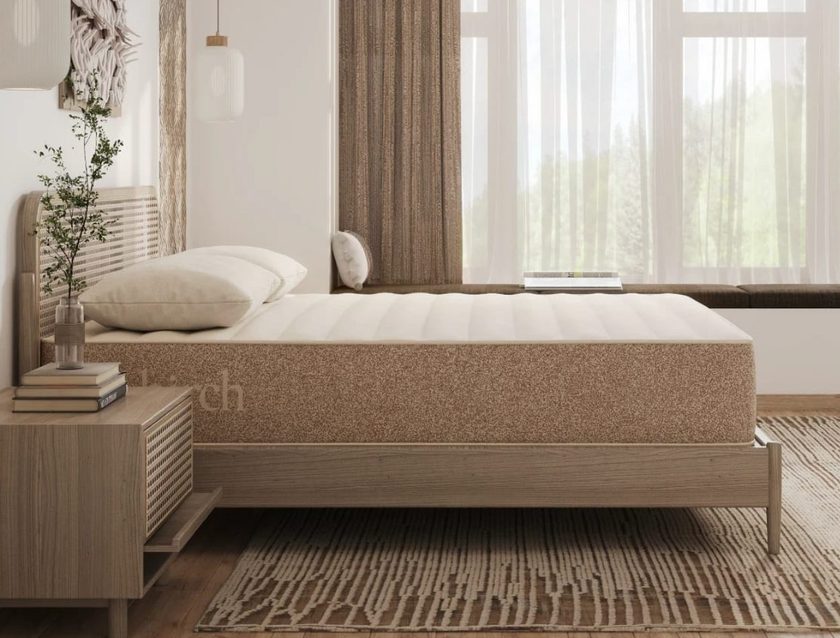
Based In: US | Made In: US
Conscious Qualities: Fair Trade certified factory; sustainable supply chain; GOTS-certified organic cotton, organic birch wool, 100% natural Talalay latex; free of chemical fire retardants
Price: $1299-$2899
Birch handcrafts mattresses locally in the US from a variety of sustainable materials, with ergonomic pressure relief technology. They sell online and at numerous storefronts nationally. Their 100-day trial period and 25-year warranty take the risk out of trying these eco-friendly mattresses.
9. Naturepedic
Best for organic mattresses across every age, from baby to adult
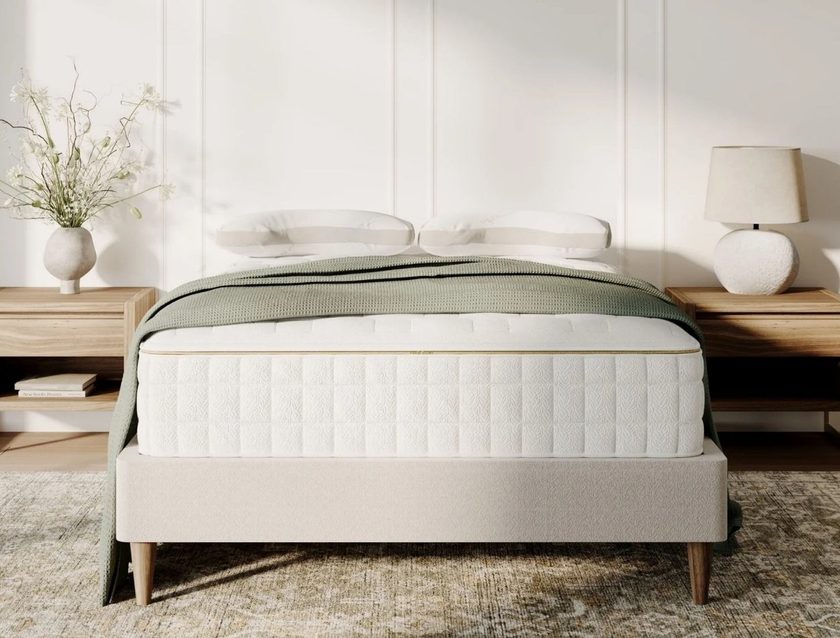
Based In: US | Made In: US
Conscious Qualities: GOTS-certified cotton and wool, GOLS-certified latex; manufactures in their own factories in the US; Greenguard Gold, Rainforest Alliance, Made Safe, and FSC-certified; family-run company; 1% For The Planet member
Price: $259-$4799
Naturepedic designs wonderful organic mattresses for the whole family, from adult to baby size. Operating since 2003, this family-run company takes extra steps to produce toxic-chemical-free, luxury mattresses. They also sell online and in a variety of storefronts across the US.
10. Essentia
Best for a fully vegan, natural memory foam mattress
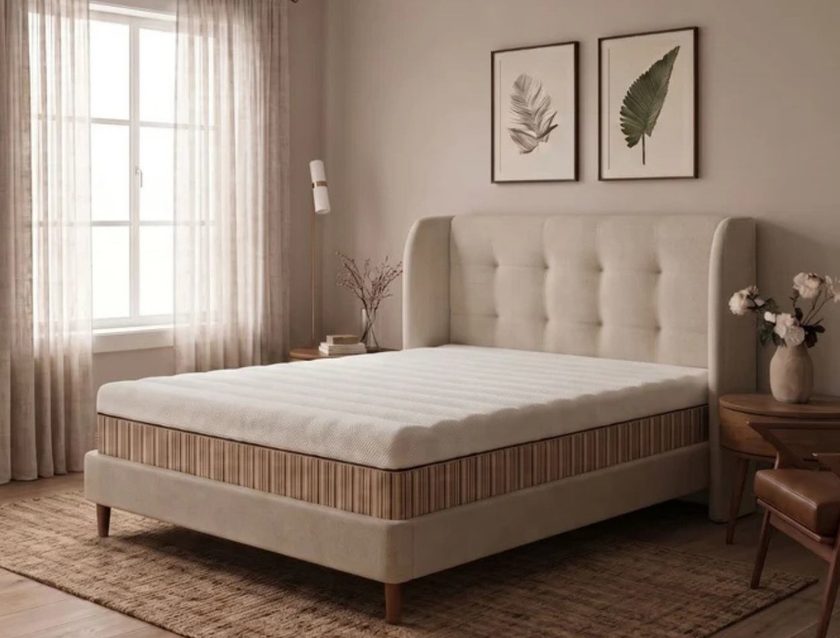
Based In: Canada | Made In: Canada
Conscious Qualities: 100% vegan, made in a certified organic factory, GOLS-certified organic Dunlop latex, GOTS-certified organic cotton; only natural memory foam mattress
Price: $649-$8790
Essentia offers four different eco-friendly collections tailored to your needs. Whether it’s spinal support, deeper sleep, or a custom design you’re after, Essentia likely has what you’re looking for. Each organic mattress is handcrafted in their GOTS and GOLS certified factory and comes with a 120-night trial.
You May Also Want to Check Out:
Your Ultimate Guide to Organic & Non-Toxic Bedding (15+ Brands!)
Eco-Friendly Bed Frames for a Sweet Sustainable Slumber
The Best Sustainable Furniture Brands To Complete Your Space
The post 10 Non-Toxic and Eco-Friendly Mattress Options for a Safer Sleep appeared first on Conscious Life & Style.
10 Non-Toxic and Eco-Friendly Mattress Options for a Safer Sleep
People are particular about their pillows — just like our mattress, a good pillow determines whether or not we have a great night’s sleep. Unfortunately, many pillows are made with synthetic materials and toxic finishes. Thankfully, there are a number of brands creating non-toxic and eco-friendly pillows that you can feel better about, and sleep better with.
Whether you’re looking for a travel pillow, body pillow, or sleep pillow, one of the eco-friendly pillow brands below is bound to have what you’re looking for.
What Goes Into a Sustainable & Non-Toxic Pillow?
When deciding if a pillow is sustainable, transparency is key. In general, if sourcing, materials, or production methods are unclear, the company is most likely not a sustainable one.
A sustainable pillow will be made from eco-friendly, non-toxic materials. This means no harmful chemicals or synthetic materials. The materials used will be sustainable and responsibly sourced, such as organic cotton and natural dye.
Sustainable pillows, and brands, will most likely have one or more of the certifications listed below. These certifications verify that the materials and production methods a company is using comply with trusted global standards.
Additionally, sustainable pillow companies will produce their products in a way that doesn’t involve exploitative labor. They will implement production methods that are eco-friendly and ethical – benefitting both their workers and the planet.
Non-Toxic Pillow Materials to Look for — and Materials to Avoid
These are the kinds of materials to look for for sustainable non-toxic pillows:
- GOTS-certified organic cotton
- Sustainably sourced organic kapok fiber
- GOLS organic certified latex
- Responsibly sourced or organic certified wool
- TENCEL Lyocell
- Hemp
- Buckwheat hulls
These are the materials we’d avoid.
- Synthetic polyurethane foam or memory foam
- Synthetic latex
- Polyester
Certifications for Eco-Friendly Pillows
Certifications add a layer of third-party accountability to a brand’s claims — though none of them are perfect on their own, so it’s worth knowing what each one actually covers.
- GOTS Certified = the fabric (like an organic cotton pillowcase) meets strict organic and safety standards, with labor protections built into the entire supply chain. This is the most rigorous certification for organic textiles specifically.
- GOLS Certified = verifies that latex filling is made from certified organic latex, grown and processed to strict environmental and safety standards. A latex-specific certification.
- USDA Organic = confirms that a grown material (like cotton or wool) was produced without synthetic pesticides or GMOs. This is a raw-material certification, not a finished-product one and it doesn’t cover dyes, fillers, or manufacturing chemicals added afterward.
- OEKO-TEX Standard 100 = tests the finished textile for harmful substances. OEKO-TEX actually offers several distinct certification tiers (STANDARD 100 being the most common), so it’s worth checking which specific OEKO-TEX label a brand holds rather than assuming they’re all equivalent.
- GREENGUARD Gold Certified = the finished product was tested for low chemical emissions, including VOCs. This is the stricter tier of GREENGUARD certification.
- eco-INSTITUT Certified = a German certification measuring a material’s chemical emissions and verifying responsible sourcing — similar in spirit to GREENGUARD, but based in the EU.
- MADE SAFE® = screens against a list of thousands of chemicals known or suspected to harm human health. One of the more comprehensive certifications available, assessed at the product level.
- FSC Certified = wood or paper-based materials (like packaging or textiles like viscose) came from responsibly managed forests. Not a chemical-safety certification.
- Fair Trade Certified = verifies that a factory meets standards for fair wages, safe working conditions, and ethical labor practices. This is a certification about how a product was made and by whom, not about the materials themselves.
- FLOCERT = the certifying body behind Fairtrade International’s certification — a different organization from Fair Trade USA (which issues “Fair Trade Certified”). Both cover similar ground (fair wages, ethical labor, transparent supply chains), but they’re separate certifying bodies with their own standards, so don’t assume a “FLO-Cert” claim and a “Fair Trade Certified” claim mean the exact same thing.
Where to Find Eco-Friendly Pillows
Note that some of the brands below are affiliates, meaning we’ll earn a commission at no additional cost to you if you choose to purchase through these links. As always, all brands meet rigorous criteria for sustainability and are brands we love — and that we think you’ll love too!
1. Circadian
Tested by CL&S Editor, Elizabeth
Sustainable Materials: Organic cotton, organic wool, USA-grown buckwheat, Dunlop latex, Kapok fibers
Based In: USA | Made In: USA
Price: $89 – $269
Crafted in their own New Jersey workshop for over four decades, Circadian knows organic pillows. And with six distinct natural pillow options, Circadian’s range fulfills most sleeping needs, whether you’re a side sleeper or back sleeper and whether you sleep hot or wake up with neck pain.
I’ve been having neck pain for months — even going to physical therapy for it — and the buckwheat pillow has been one of the most helpful things I’ve tried to alleviate neck pain. I tried memory foam, I tried a side sleeper pillow, but the firmness of the buckwheat has been the trick for me.

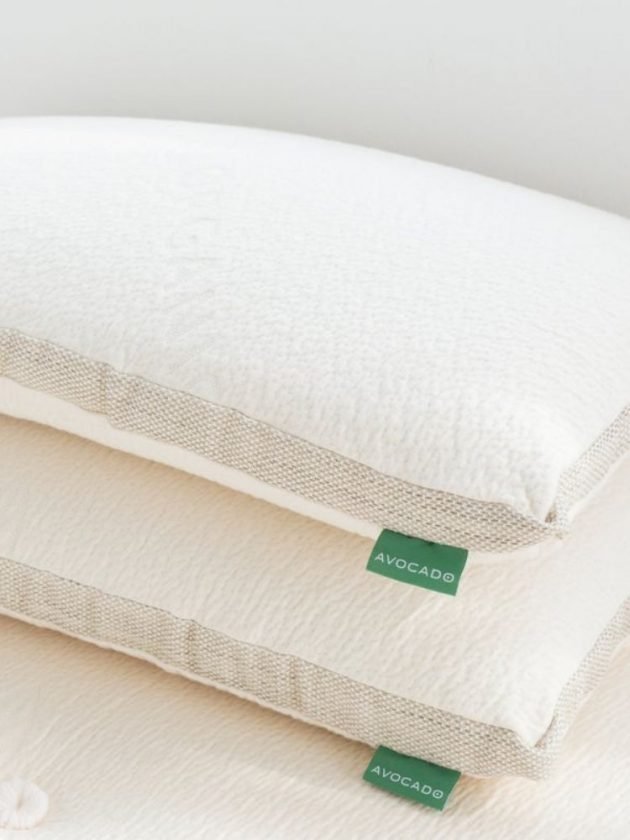
2. Avocado
Based In: USA | Made In: USA
Sustainable Materials: No chemical retardants; organic GOTS-certified cotton and kapok fiber, GOLS organic certified latex
Price: $25-$199
Avocado is one of the leading brands for eco-friendly pillows. They are a climate neutral B-corp that sources their materials from their own Fair-Trade farms in India and Guatemala. Each pillow is handcrafted in their local GOTS-certified factories.
Plus, Avocado has the trusted certifications you want like Gold Certified vegan, Eco-Institut certified and Made Safe certified.
3. Savvy Rest
Based In: USA | Made In: USA
Sustainable Materials: Organic wool, natural USDA and GOLS-certified Dunlop or Talalay latex, organic cotton, organic kapok fiber, natural dye
Price: $29-$239
*Use code CONSCIOUSSTYLE20 for 20% off*
Savvy Rest has a large selection of eco-friendly pillows, with eight different styles to choose from, including body and contour pillows. Savvy uses a variety of sustainable materials and even offers customizable filling options.
Savvy Rest is both a B Corp and a GOTS-certified organic company, as are their factories.

4. Coyuchi
Based In: USA | Made In: Sri Lanka
Sustainable Materials: GOLS Certified Organic Latex, GOTS certified Organic Cotton, sustainably sourced Down; reusable cloth bag packaging
Price: $68-$198
Coyuchi is a woman-owned, Made Safe Certified company. They produce four different types of organic latex pillows including a body pillow.
Coyuchi uses Fair-trade certified factories and a circular production process. They are also a 1% for the planet partner.

5. SOL Organics
Based In: US | Made In: India
Sustainable Materials: Certified 100% Organic cotton, 100% Canadian down, non-toxic dyes; pesticide & harmful chemical free, hypoallergenic
Price: $169
SOL Organics is a BIPOC-owned and family-run company. They are passionate about ethical production and only work with FLO, OEKO-TEX, GOTS, and Fair-Trade Certified manufacturers.
Responsibly made with care, you can sleep soundly on these sustainable down pillows.

6. Birch
Based In: USA | Made In: USA
Sustainable Materials: GOTS-certified organic cotton, organic birch wool, 100% natural Talalay latex, recycled polyester filling; chemical fire retardant free
Price: $75-$119
Birch offers two different non-toxic pillows. Their organic pillow comes with a 100 night trial and is Greenguard Gold and GOTS Certified.
Their eco-rest pillow is GOTS and Fair Trade certified. Both are handmade in a Fair Trade certified factory.

7. Sleep & Beyond
Based In: USA | Made In: Kyrgyzstan, India, China
Sustainable Materials: 100% natural or organic wool and latex; GOTS, Woolmark and OEKO-TEX Certified
Price: $49-$139
Sleep & Beyond is a BIPOC-owned company that offers nine different types of eco-friendly pillows, including a travel pillow. They have a handy comparison guide so you can easily find the best fit for you.
Sleep & Beyond produces everything in Fair-trade Certified and solar factories using zero waste production.

8. Buffy
Based In: USA | Made In: USA
Sustainable Materials: GRS or RCS certified BPA free Recycled PET filling, Eucalyptus Lyocell, hemp linen; packaging made from FSC certified recycled materials
Price: $49-$99
Buffy is best known for their “cloud-like” comforters but they also have an extensive pillow offering including travel pillows and body pillows.
Buffy is working toward closed loop and zero waste production and offsets their CO2 emissions.

9. Organic Textiles
Based In: USA
Sustainable Materials: 100% natural & organic latex, natural Australian wool, kapok fiber, natural down, GOTS and GOLS certified cotton
Price: $60-$117
Organic Textiles is a great company for finding sustainable pillows from a variety of materials. They even offer extra pillow fillings for a customisable feel.
All of their products are pesticide & toxic chemical free as well as hypoallergenic. Organic Textiles is Green America Approved Certified and uses Fair-Trade manufacturers.

10. Boll & Branch
Based In: USA | Made In: USA, India
Sustainable Materials: OEKO-TEX standard locally and responsibly sourced Down, 100% organic cotton, hypoallergenic synthetic down alternative; recycled packaging
Price: $58-$168
Another great husband and wife owned company is Boll & Branch. They offer harmful chemical free, non-toxic Down and Down alternative pillows.
You May Also Want to Check Out:
15+ Sustainable & Organic Bedding Brands — Sorted by Material
Eco-Friendly Bed Frames for a Sweet Sustainable Slumber
Non-Toxic Mattresses for a Sound & Sustainable Sleep
The post The Top 10 Non-Toxic and Eco-Friendly Pillows for a Safer Slumber appeared first on Conscious Life & Style.
The Top 10 Non-Toxic and Eco-Friendly Pillows for a Safer Slumber
One of my goals when moving into our house was to source the majority (about three fourths, give or take) of our furniture secondhand. It hasn’t necessarily been quick or easy to buy secondhand furniture for an entire home. But it has been worth the effort thus far both in terms of cost savings and the uniqueness of the pieces.
We also sold a few of our used furniture items when moving out of our apartment because there were some pieces that we didn’t need anymore. For example, we had counter stools in our apartment but the house we were moving into had no countertop to sit at.
Below I’m sharing my perspectives on the top places to buy secondhand furniture as well as sell it.
I started shopping secondhand because of the reduced environmental impact (check out my full guide to sustainable furniture here), but I also like to save money! And sometimes secondhand (particularly vintage) furniture can be pretty unaffordable. So that is a significant criteria in the ranking of this list.
There are also a couple of sources that I’ve scoured and considered but haven’t actually purchased from yet. (I’ll share why below.)
In these cases I will refer to reviews and my own in-depth research. (I’ve spent way too much time searching for used furniture!!) And if or when I do purchase from these sources, I’ll be sure to add in my personal reviews alongside the other user reviews.
Where to Give Away or Find Furniture for Free
In case you want to give away or find furniture for free, I’ll quickly share some ideas before getting into the paid options.
To find free furniture, try “stooping”. This is where you find furniture people put out on the curb. I’ve also found furniture (like a desk and ottoman) near our apartment complex’s dumpster. It’s sometimes unbelievable what people throw away, especially when they’re moving in a hurry.
I’d also suggest checking your local Buy Nothing group. Though I will say in my experience, it can be a pain to sift through so many low quality posts (like partially used coloring books and cleaning products).
In terms of giving away furniture, I generally would not recommend leaving your pieces on the curb if you want to ensure it’s getting a second life. I’ve also seen furniture that’s left outside get destroyed by rain and what was yesterday’s perfectly good furniture is today’s trash. (It’s a bit heartbreaking to be honest.)
Instead I’d recommend to list it in a Buy Nothing group; share it on a app like Craigslist, NextDoor, or Facebook Marketplace; or coordinate a furniture pickup/drop-off with a nearby charity that sells used furniture.
Alright now let’s get into buying and selling used furniture!
Secondhand Furniture Apps, Sources, and Stores Ranked (with Pros & Cons)
With any kind of listing like this, there are going to be points of subjectivity so I’m detailing the pros and cons from my vantage point alongside the listings so you can determine which one is right for you, based on what you are looking for.
For me price and the ability to find specific types of items are important. I’m willing to sacrifice some convenience (i.e. I don’t need something delivered to me; I’m ok picking it up) for a good find. That might not be true for you, so be sure to look at the details of each to decide your own pick for buying (or selling) secondhand furniture for your space.
Note that there are a few affiliate links in here, which means we’ll earn a commission if you choose to purchase through our links at no additional cost to you. As always, our recommendations are made independently and vetted for sustainability.
1. Facebook Marketplace

Pros for Buyers:
- Easy-to-use platform for searching and buying
- Vast selection updated frequently
- You can find great prices and negotiate prices
- I’ve bought from so many amazing, friendly sellers
- Many sellers have been willing to help lift (though not all are able to, so you might want to ask first if you require assistance)
Cons for Buyers:
- Not convenient: usually requires pick-up
- Some listings are for new items and ads can mimic actual listings
- Some sellers aren’t as easy to communicate with
Pros for Sellers
- Very easy to use
- Popular items can get sold quickly
- Low effort (no shipping or packing required)
Cons for Sellers
- Buyers may negotiate down significantly
- You can get spam messages
- You may have to give out your address to strangers
As much as I genuinely do not want to give a Facebook-run platform the top spot, the selection on Facebook Marketplace is unbeatable when it comes to buying secondhand furniture. It’s probably also the best place to find secondhand deals online (I say “online” because you can browse through the app, though you do typically have to pick up the furniture.)
Search Selection
You also can sell your used furniture quite quickly on the platform. I was able to sell gently used counter stools within 24 hours of listing them for my asking price!
Because so many people already use the site, there is a ton of volume of listings and it’s regularly updated. You can truly find anything and everything you’re looking for, and it’s a far better user experience than Craigslist in my opinion.
I’ve found that most sellers upload quite a few clear photos of the item and a decent number of listings (though certainly not all) also include solid descriptions so you have a good idea of what you’re buying.
It’s also incredibly easy to find what you’re looking for. Even when I search for specific terms like “MCM brown leather chair” or “MCM TV stand” there were many search results, and the search results were quite accurate. In fact the latter search led to the find pictured above!
What About Price?
Prices ranges vastly, as you might expect. Some people genuinely give you a great deal and others are clearly just trying to get however much they can. I’d recommend taking some time to get an understanding of the “going price” on an item before committing. I also sometimes ask the brand so I can look up how much that item costs new, if the seller has not shared that information. And if something feels like it’s priced too high, know that negotiating is very normal on the platform! They might say no, but there are a lot of options, so don’t let that deter you.
As a seller this means you will get people negotiating you down on price too. If you’re selling an in-demand good quality item, though, and you’re selling at a fair price you should be able to find a buyer willing to pay the listed price. In fact for the counter stools I sold on here, I got offers above asking price.
I also hypothesize that part of the reason for the great response to the used stools was because I posted the listing on a Saturday morning, rather than a weekday.
The Pick-Up Process
Something you may be uncomfortable with is going to other people’s houses or having others come to your house to pick up the used furniture. Here are some ways to navigate this:
- Coordinate a porch pick-up. I purchased a rug from a seller who left the rug on their porch and I paid via Venmo. To be honest, I might be nervous as a seller that the item could get taken without payment. But it worked quite well as a buyer.
- Suggest a pickup spot. This would require more effort on the seller’s side instead of just having the buyer pick-up at your place, but you might feel safer with this option.
- Opt for delivery. Some sellers offer free delivery or delivery for a fee, especially for large furniture items that buyers may not be able to pick up by themselves. As a buyer, you can always ask a seller (especially if the person is a frequent seller or small business) if they have delivery options.
If you prefer to avoid online searching completely, check out the next recommendation on this list. And if you want delivery, I suggest skipping ahead to #4.
2. Estate Sales
Pros for Buyers:
- There are some incredible, unique finds
- You can see the items in-person before purchasing
- You could have the option to buy an entire room’s worth of coordinating furniture
- You can find great deals if you go towards the end of the sale (especially the last day)
Cons for Buyers:
- Not as easy to find specific items
- Not convenient: sales are only on specific days and sometimes you have to wait in line
- Some items could be expensive on first day
- You have to lift the furniture yourself (it’s typical for sellers / estate sale companies to say they can’t help you for liability reasons)
Pros for Sellers:
- Liquidate all of your furniture at once when moving
- Convenient: no packing or shipping required
- It’s typical to hire an estate sale company, so it takes out a lot of the work
Cons for Sellers:
- You open up your home to crowds of people and have to publish your address online
- If you work with an estate sale company, they may take a decent portion of sales and you won’t have control of the prices
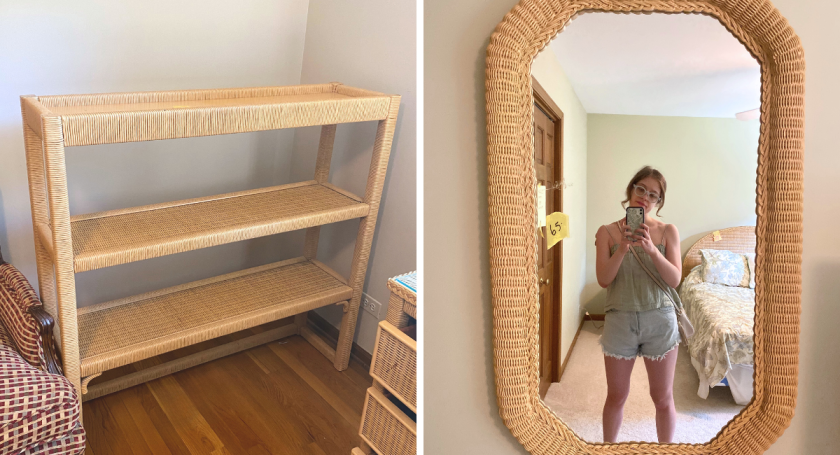
I have to come to LOVE estate sales! I find out about estate sales through EstateSales.net. My husband and I have found a Weber grill, wall mirror (pictured above), desk, plant stand, and more through local estate sales.
While there are some fabulous finds and good prices (more on that in a moment) shopping secondhand furniture at estate sales does require more work than Marketplace. That’s why it’s ranked number two on this list.
How Do Estate Sales Work?
First, you have to search for estate sales near you through a site like EstateSales.net. When you see one that looks like it’s selling items you like, you can find out the dates of the sale and when the sale gets closer, see the address as well.
If you find an in-demand item you love, you may have to go to the estate sale right when it opens. Sometimes there may even be a line if there are a lot of popular items. In this case you’ll have to put your name on a list typically and they will call in people one-by-one or in groups. Since many estate sales start on weekdays, like a Thursday or Friday, it might not always be possible for you to do this.
If there is an item that is less in demand, or you just want to browse the estate sale in general for deals, it’s best to go on the later days or last day of the sale. The later days of a sale are also typically on the weekend.
Expect to lift the furniture yourself (most estate sales specify that they will not help you). Some sales will let you claim an item (if you pay for it) so you can arrange a pick-up later that day or on the next day.
Be prepared that some estate sales can be picky how they take payment (i.e. cash only, no card; Venmo but not PayPal.. etc.) so be sure to check in the description of the sale before going!
My Experiences with Estate Sales
I purchased the mirror pictured above at a nearby estate sale along with the matching desk and an open-shelving storage unit at half off, since I went on the second day. So instead of paying $250 total, I paid $125. At that particular sale they were not going to let me pick it up later so it was a bit stressful! But it all worked out in the end.
I have been really happy with those purchases. They were unique finds that met the aesthetic I was going for in my office and I could get them at unbeatable prices. And as always with buying secondhand furniture, you have a great feeling afterwards that you saved furniture from the landfill.
The biggest con to estate sales for me is that I just can’t go to as many as I would like to because these sales often start on the weekdays (Thursdays or Fridays).
What is it Like to Sell Secondhand Furniture at an Estate Sale?
It is typical to hire a company to help you with your estate sale since it is a lot of work to price and photograph all of the items in a limited time. It is important to do your due diligence on the company to make sure it’s a good fit and you get what you want out of the sale, whether that priority is getting rid of all your stuff or making top dollar on your valuable pieces.
I’ve heard from people who have not had the best experiences with their estate sale companies. But there are also some quality estate sale companies out there.
And I will add that I’ve seen a range of professionalism on the buyer side. Some have been very helpful and organized while at one sale, the “cashier” was reading in a book and acted annoyed when I tried to ask a question!
You can find companies through EstateSales.net.
3. OfferUp
Pros for Buyers:
- Easy to use
- You can search for specific furniture
- You can find great prices and negotiate
Cons for Buyers:
- Some sellers can become unresponsive
- Not as many options as Facebook Marketplace
- Ads for new products can look similar to listings
Pros for Sellers:
- Easy to use
- Convenient if buyer comes to your place to pick up
- The selling timeline can be quite fast
Cons for Sellers:
- There are fewer buyers on OfferUp compared to Facebook Marketplace
- People may negotiate your listing down price significantly
OfferUp is an app to sell and buy secondhand furniture that I used a lot in the beginning.
My Best Purchase on OfferUp
We have found some incredible deals, like a barely used blue velvet MCM-style sofa that was originally over $3,000 that we bought for $800. This was my absolute favorite find in all of my secondhand furniture shopping! Despite the material (velvet) being a total pain to keep clean, I will love this beautiful couch until it is literally falling apart.
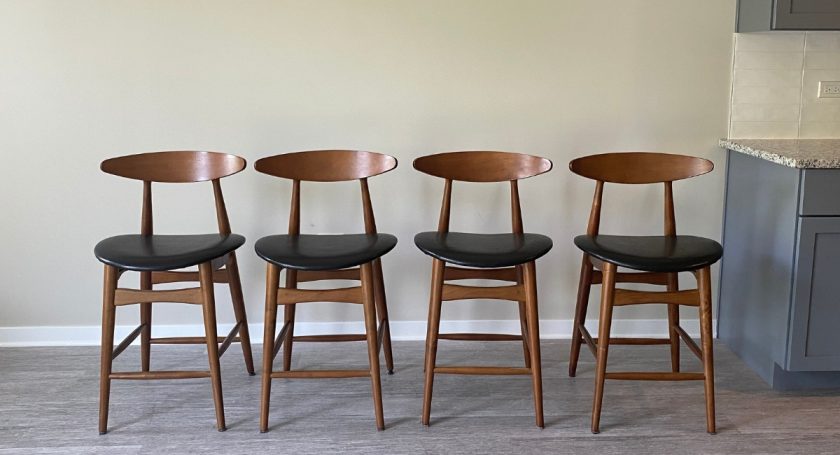
Another great purchase was the counter stools that I eventually sold on Marketplace. The counter stools were never used and we were able to buy them for half off since the person who originally bought them could no longer return them. They were perfect for our MCM-meets-contemporary aesthetic!
My Experiences Buying on OfferUp
My experiences with sellers have been pretty good thus far. The only bad experience I had was with the pickup of our coffee table. We ended up waiting over an hour in a parking lot because the seller got caught in a bad traffic jam. This was a bit out of their control but it’s worth noting because these sorts of things can happen with pickups so expect the unexpected!
There aren’t as many options on OfferUp as there are on Marketplace, but there are some finds on there that aren’t listed elsewhere, so I like to check both apps.
Similar to Marketplace, it can be annoying to see so many ads and fast furniture product listings among the used furniture listings. Unfortunately some of the ads have gotten very low quality on OfferUp to the point of borderline (if not outright) spam. So be mindful to not click on the wrong image when browsing the app!
The reason OfferUp is still listed as number three on my list despite these cons is because of the prices. There are some great deals and if you pickup the furniture you do not have to pay for shipping. Even if a local seller offers delivery, it is typically much less than the delivery of a furniture retailer that is shipping the furniture from farther away.
In terms of the pickup process, it’s quite similar to other local apps, like Marketplace so reference those tips above if you want them.
My Experiences Selling on OfferUp
As a seller, I sold a futon very quickly on OfferUp but had challenges selling the counter stools pictured above. When I put those very same counter stools on Marketplace, they sold the same day. After that experience I have been pretty much exclusively selling on Marketplace, but if you’re not getting any bites on there, OfferUp can be another solid option.
4. AptDeco
Pros for Buyers:
- Convenient: get the furniture shipped to you!
- Great selection of quality and in-demand brands at lower prices
- Find brands that aren’t as easy to find on apps like OfferUp or Facebook Marketplace
- Strong search functionality
Cons for Buyers:
- Shipping fees can be high (and some users have complained about unexpectedly higher shipping prices)
- Cannot see item in-person before purchasing
- Quality and damage disputes not honored after 24 hours
Pros for Sellers:
- Convenient: AptDeco’s professional team disassembles and picks up the furniture for you
- You won’t need to give out your address or meet up with buyers in-person
Cons for Sellers:
- AptDeco takes a significant share of the selling price
- AptDeco lowers earnings for sellers the longer an item takes to sell
AptDeco has become a popular spot to sell and buy secondhand furniture online. I have browsed this site many times but I have not yet purchased from the site due to the high shipping fees. (As I mentioned, price tends to come above convenience for me at this point.)
Options and Searchability
From what I’ve experienced with searching for furniture on this site, the search functionality works quite well and there are a good number of results from popular brands like West Elm, Pottery Barn, and CB2. These are brands you don’t typically see many pieces from on apps like OfferUp or Marketplace!
There are also many filters you can use, like condition, color, material, dimensions, and brand.
Prices
I’ve seen the secondhand items sell for up to 75% off retail price with items that have a lot of use and wear to as little as 12% off retail price for new-in box items from stores moving inventory out. So you can find some fantastic deals on brands that rarely, if ever, go on sale.
Shipping Costs
The biggest thing to watch out for on AptDeco is the cost of shipping. Because AptDeco started and is headquartered in New York, a lot of the furniture sold on the site is shipping from New York or New Jersey.
I calculated the shipping cost to Chicago on some pieces selling from New York, and the shipping was between $300 – $400. That is in line with what brands like West Elm quote me for new furniture too, but still it can feel like a big expense if you’re accustomed to finding used furniture in store.
One nice feature on AptDeco’s site is you can filter to “Near” your zip code (the default is “Any”). When I tried out that feature I saw some pieces available for local pickup and delivery options under $200.
AptDeco does tell you, though, that shipping costs are estimates based on location and the final shipping cost may increase for larger items.
AptDeco’s Reviews
AptDeco has over 38,000 customer reviews and an average rating of 4.6 stars. One recent 5-star reviewer wrote “Great delivery service. Put it exactly where I needed it and were very careful not to damage anything in the surrounding area.” Others had mixed reviews, with one reviewer sharing “Delivery team was awesome very quick and efficient as well as careful. The couch had some bleaching marks that were not described as well as damage to the legs that was not captured in photos.”
5. Bonus: Open Box Collections from Brands
This option is for anyone looking to buy secondhand furniture that’s gently used, if at all. Open Box usually means returned items. So furniture pieces that someone purchased, didn’t like for some reason and returned. Often a brand cannot sell this product as new. While unfortunately a lot of companies have been known to landfill returns, there are some companies that sell these open box items at a lower price.
Prices can be anywhere from 20-50% lower than new depending on the condition and if the style is in-season or not.
Wayfair’s Open Box section has returned products. And they also have a (true) outlet in the Chicagoland area with returned items. Note that these products, like any other Open Box collection, are not eligible for returns.
West Elm Open Box Outlet Deals also offers up to 40% off on returned items. Since West Elm furniture rarely goes on sale, this can be one of the only ways to get a deal! My husband and I purchased a leather recliner from West Elm’s Open Box section and have been satisfied with it.
Medley Re-Lounge is my personal favorite because this secondhand option is from a sustainable furniture company! You can access their sofas for 25-40% off new prices, and they ship in 1-2 weeks instead of the two months it typically takes to receive made-to-order furniture.
Ikea has an “As Is” selection of returned or discontinued products. They do not ship these products, so you’ll have to check what’s available at the store near you. I have a TV stand and outdoor umbrella from Ikea’s As Is program — I simply reserved the products ahead of time online and then that day drove there to pick them up.
My final verdict on where to buy or sell used furniture
Overall when it comes to buying or selling secondhand furniture, there is no single “best” place, but there is a “best for you” place. It all comes down to your priorities.
Looking for convenience — and willing to pay a bit more for it? A furniture resale site is probably your best bet.
Are you willing to sacrifice some time and convenience to get the best price? An app like Facebook Marketplace, OfferUp, or NextDoor is probably the way to go. You might even find free furniture by stooping or by browsing a Buy Nothing group.
Are you looking for unique vintage items? Estate sales and curated online vintage sites are going to be the best resources for this.
I hope that sharing my experiences and curating reviews above can help you sort out which option(s) are most suitable for what you’re looking for!
The post 5 Best Places to Buy and Sell Secondhand Furniture — Reviewed (2026 Guide) appeared first on Conscious Life & Style.
https://www.consciouslifeandstyle.com/buy-sell-secondhand-furniture/?utm_source=rss&utm_medium=rss&utm_campaign=buy-sell-secondhand-furniture



-
Climate Change1 year ago
Guest post: Why China is still building new coal – and when it might stop
-

 Greenhouse Gases2 years ago
嘉宾来稿:满足中国增长的用电需求 光伏加储能“比新建煤电更实惠”
-
Greenhouse Gases1 year ago
Guest post: Why China is still building new coal – and when it might stop
-

 Climate Change2 years ago
嘉宾来稿:满足中国增长的用电需求 光伏加储能“比新建煤电更实惠”
-

 Renewable Energy11 months ago
Sending Progressive Philanthropist George Soros to Prison?
-
Climate Change2 years ago
Bill Discounting Climate Change in Florida’s Energy Policy Awaits DeSantis’ Approval
-
Greenhouse Gases1 year ago
嘉宾来稿:探究火山喷发如何影响气候预测
-

 Carbon Footprint2 years ago
US SEC’s Climate Disclosure Rules Spur Renewed Interest in Carbon Credits