

Welcome to Carbon Brief’s DeBriefed.
An essential guide to the week’s key developments relating to climate change.
This is an online version of Carbon Brief’s weekly DeBriefed email newsletter. Subscribe for free here.
This week
Loss-and-damage fund agreement
LOSS AND DAMAGE: Global climate negotiators have agreed a draft framework for the loss-and-damage fund, Bloomberg reported, but the breakthrough was “marred by sparring over exactly how the programme would be funded”. Delegates agreed at a meeting in Abu Dhabi that the World Bank will host the fund on an interim basis for four years, along with the basic guideposts for funding.
COMPROMISE: The Times of India noted that the framework includes a compromise that the “fund will be based on ‘voluntary’ instead of ‘mandatory’ contribution from the rich nations as part of their historical responsibility”. However, the US objected to the wording within the final text, with the state department noting it does not reflect consensus concerning, the Financial Times reported. Carbon Brief covered the final draft in a detailed Q&A, including the questions around consensus.
‘FRAGILE AGREEMENT’: The “fragile agreement” came after hours of “acrimonious haggling”, Politico stated. It quoted Lien Vandamme, senior campaigner at the Center for International Environmental Law, who said: “That the US finally could not even agree with the massively watered down text after cornering developing countries into accepting it, is a testimony to its lack of good faith effort to actually deliver an effective fund.”
Petrostates plan carbon budget-busting projects
CARBON BUDGETS: According to a new UN Environment Programme (UNEP) report, fossil fuel-producing nations are planning expansions of coal, oil and gas that would “blow the planet’s carbon budget twice over”, reported the Guardian. Existing plans would lead to 460% more coal production, 83% more gas and 29% more oil in 2030 than it is possible to burn if global temperature rises are to be kept at 1.5C.
NET-ZERO PLEDGES: The report analysed more than 20 major fossil fuel producers, finding they plan to produce around 110% more fossil fuels in 2030 than would be consistent with 1.5C, and 69% more than would be consistent with 2C, reported Reuters. Of these, 17 of the countries have pledged to reach net-zero.
‘INSANITY’: Experts called the plans “insanity” that will “throw humanity’s future into question”, the Guardian article noted. It quoted Inger Andersen, the executive director of UNEP, who said “the addiction to fossil fuels still has its claws deep in many nations”.
Around the world
- CHINESE METHANE: China has unveiled a “long-awaited” plan to tackle methane emissions, as it reached the end of a four-day meeting with the US, Reuters reported. However, the plan includes no firm targets for cutting those emissions, “only goals for re-using them as fuel”, the article noted.
- KING’S SPEECH: The UK government has used the king’s speech before the next election to set out plans that would mandate the North Sea Transition Authority to run annual oil-and-gas licensing rounds, BusinessGreen reported.
- DEFORESTATION DROPS: Brazil’s National Institute of Space Research has announced that deforestation has fallen to a five-year low within the nation’s Amazon rainforest, reports the New York Times. This is a “sign” that Brazil is making progress on its pledge to halt all deforestation by the end of the decade, it noted.
- CANADIAN EMISSIONS: Canada is set to miss its 2030 target to reduce emissions by at least 40% below 2005 levels, according to a new government audit, the Globe and Mail reported. The country has never met an emissions-reduction goal despite devising more than 10 separate plans to do so since 1990, it said.
- WARMEST ON RECORD: It is “virtually certain” that 2023 will be the warmest year on record, after global average air temperatures last month were 0.4C warmer than the previous October high in 2019, BBC News reported. This is according to new data released by the EU’s Copernicus Climate Change Service, which confirms what Carbon Brief first revealed last month.
85%
Wind and solar generated enough electricity in 2022 to power about 85% of all households in the EU, according to the International Energy Agency.
Latest climate research
- A new meta-analysis of 400 studies published in Nature Ecology & Evolution found native species are more vulnerable to extreme weather events than non-native species.
- “Artisanal” gold mining in Brazil’s Amazon rainforest has a “major environmental impact”, according to new research published in Nature Sustainability that looked at energy consumption and the release of mercury.
- Reducing carbon emissions so atmospheric levels of CO2 remain constant – rather than reaching net-zero, where atmospheric CO2 would fall – could see major tipping points crossed in the Earth system, research published in Earth’s Future has warned.
(For more, see Carbon Brief’s in-depth daily summaries of the top climate news stories on Monday, Tuesday, Wednesday, Thursday and Friday.)
Captured

Ahead of the king’s speech, the UK government announced that the North Sea Transition Authority (NSTA) is to invite applications for new production licences on an annual basis, to “support the UK’s transition to net-zero in a pragmatic, proportionate and realistic way”. Analysis of NSTA figures by Carbon Brief’s Dr Simon Evans found that the UK’s North Sea gas production is set to drop 97% by 2050 and, even with new licensing rounds, this will still fall by 95%.
Spotlight
Q&A: Did a 1910 kidnap change the history of solar energy?
This week, Carbon Brief takes a look at Dr Sugandha Srivastav’s thought experiment, which asks how far solar energy could have come had it not been for the kidnapping of George Cove.
Who was George Cove?
Cove was a Canadian inventor, who moved to the US in the early 1900s and filed numerous patents, including for a technology that harnessed solar power around which he created his company Sun Electric.
He had purportedly created a new semiconductor and a battery energy storage solution, which were gaining significant attention.

However, in October 1909, Cove was kidnapped by two men. According to the New York Herald at the time, the kidnappers asked Cove to give up the rights to his solar patent and close down his business.
There have been various theories around who the kidnappers were, including questions as to whether companies with vested interests – such as Standard Oil or Edison Electric – played a part.
A smear campaign was launched against Cove, with claims that – despite its patent – the solar technology did not work, or simply drew electricity from the grid.
His kidnap and the repeated attack on Sun Electric meant Cove’s technology was not able to develop – and Sun Electric failed.
Dr Sugandha Srivastav, British Academy postdoctoral fellow and lecturer in Environmental Economics at the Smith School of Enterprise and the Environment in Oxford, who has been researching Cove, told Carbon Brief:
“I really think that we would have had a very interesting tranche of early solar innovation, but instead what we had was entrepreneurs and investors getting spooked because here’s a man who was kidnapped on the grounds of his solar innovation.”
How might solar have developed in the 20th century?
Following Cove’s kidnapping, it was more than 40 years until the invention of the silicon solar cell.
Dr Srivastav conducted an experiment to explore the impact of Cove’s kidnapping, using Wright’s Law, to model what solar development could have looked like had it been developed in 1910.
She used data on cost and cumulative installed capacity – which found that for every doubling of solar PV capacity there is a 20% decline in cost – to “hindcast” costs within two scenarios: one that assumed Cove’s solar had a capacity of 1,000 kilowatt hours (kWh); and one that assumed 5,000kWh.
The analysis assumes solar PV growth is slow to begin with during the experimental phase, then picks up pace, before tapering as the market saturates.
When could solar PV have become cheaper than coal?
While there are limitations and uncertainties inherent in any hindcasting exercise, this experiment provides a view of what the development of solar PV could have looked like in the 20th century.
Depending on the scenario, solar PV would have become cheaper than coal in 2007 or even 2002. In reality, solar PV only became cheaper than coal in 2016, according to Our World in Data.
In the Cove counterfactual, the 2016 cost of electricity from solar PV is US$24-40 per megawatt hours, which is between two and four times cheaper than the actual costs that year.
Following the recent publication of Srivastav’s report on Cove’s kidnapping, she said:
“An earlier transition to renewables would have spared the world huge amounts of carbon emissions, and far fewer deaths from air pollution and other climate related disasters. We cannot say for certain how solar PV’s trajectory would have panned out if George Cove was not kidnapped. But we can say with greater clarity that in 1909 a vision of a solar-powered world was lost, and it is only being revived now, over 100 years later.”
Watch, read, listen
MONSTERS OF THE ROAD: SUVs “have higher emissions, hog roadspace and are more dangerous for other road users, yet are more popular than ever”, said an article in the Guardian, which explores what can be done in the UK about the surge in SUVs.
CHINA’S CARBON PRICING: Chen Ji, executive director at the China International Capital Corporation Global Institute, and Yan Qin, lead carbon analyst at Refinitiv, discuss the topics of finance and carbon- pricing on the Oxford Institute for Energy Studies’ China Programme podcast.
MOMENT OF TRUTH: The Institute for Sustainable Development and International Relations runs through what to expect from the upcoming COP28 summit, looking at the global stocktake, energy transition, global goal on Adaptation and more.
Coming up
- 15 November: Lancet Countdown Report release
- 14-16 November: APEC CEO Summit, San Francisco, California
- 13-17 November: Asia-Pacific Climate Week 2023, Jahor, Malaysia
Pick of the jobs
- Carbon Brief, multimedia producer | Salary: £30,000 a year, dependent on experience. Location: A UK/Europe time zone
- IPCC, head of science for the IPCC working group III technical support unit | Salary: Unknown. Location: Preference given to those in US eastern time zone and/or Washington DC area
- Energy and Climate Intelligence Unit, factchecking programme lead | Salary: £45,000 – £55,000. Location: Hybrid, but must be able to travel into London
- Grist, climate fellowships (four positions available) | Salary: $55,000. Location: Any state, US
DeBriefed is edited by Daisy Dunne. Please send any tips or feedback to debriefed@carbonbrief.org
The post DeBriefed 10 November: Loss-and-damage fund; UNEP warns of petrostate plans; Solar’s forgotten kidnapping appeared first on Carbon Brief.

Climate Change
After a week of plenty of activity and drama for Greenpeace at sea, I felt like writing to you on a much quieter theme…
Do you have a favourite book, poem or story about the ocean?
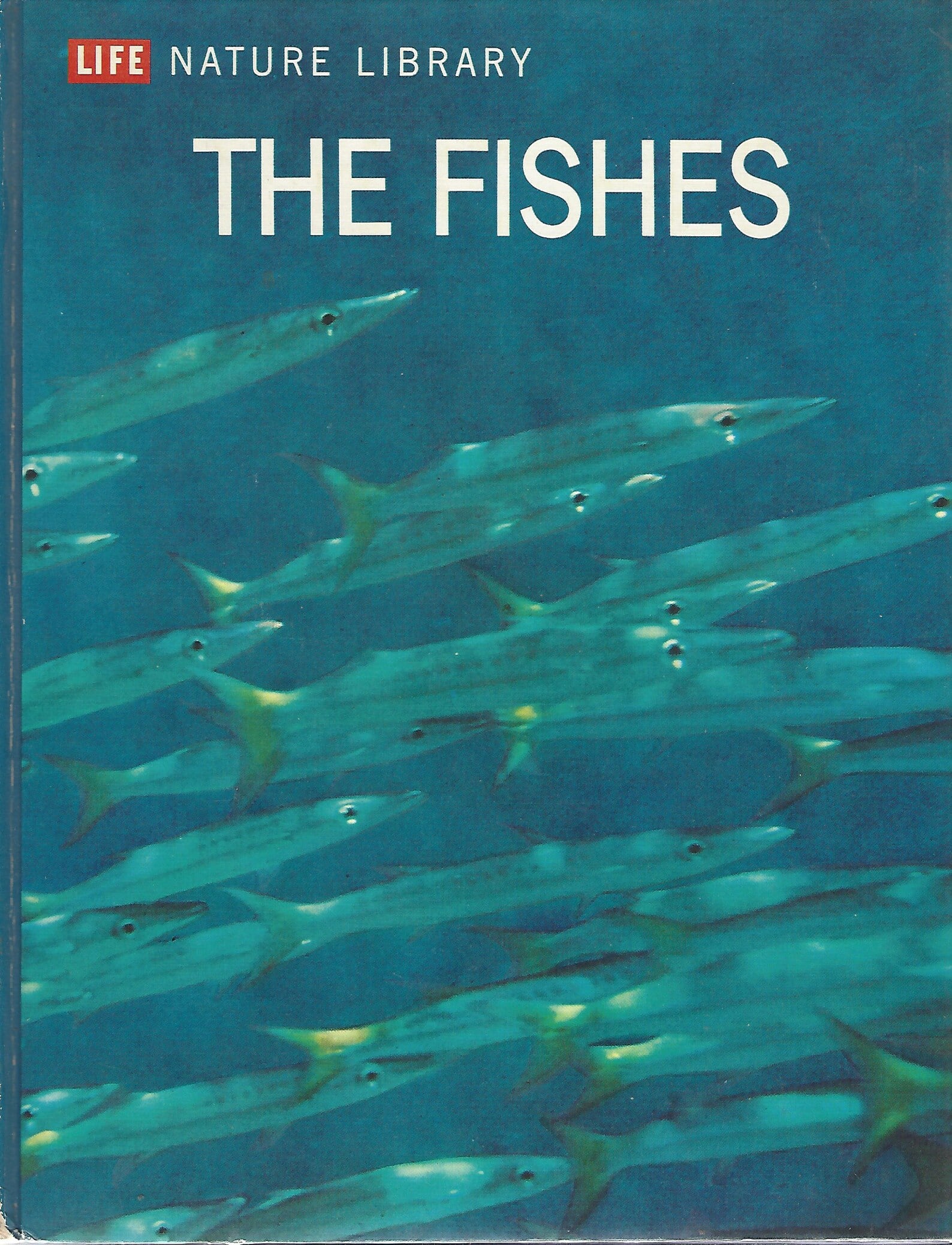
When I was very small, it was the TimeLife book of The Fishes, by F. D. Ommanney, which I remember endlessly poring over, my child’s mind gripped, in total fascination. The cover illustration showed a shoal of barracuda, mid-water and heading upwards, lit up as an iridescent blue by a column of sunlight. Oddly, it is only the cover and the illustrations of the deep sea creatures which I now remember—but I loved that book, as the weakened spine, blunted pages and dog-eared corners attested.
The Fishes has been on my mind recently, because I’ve been working with some dear friends on our own illustrated oceans book, to be published by Upswell Publishing. The book is called Scott Reef: Like Nowhere Else on Earth, and I want to share with you a bit of the story behind its creation.
Scott Reef is absolutely magnificent: Australia’s largest freestanding oceanic reef, brimming with life, including rare and threatened species such as a genetically distinct population of green sea turtles, pygmy blue whales and the wonderfully elegant dusky sea snake. But Scott Reef isn’t near our capital cities; it is way off the north-west coast of WA. And it is threatened with devastation by Woodside, which wants to drill up to 57 toxic wells at the Reef for its vast, dirty Browse gas project.
One of the main challenges in the fight to save Scott Reef from being turned into an industrialised gas zone by Woodside is bringing this incredible location to life for people who haven’t actually experienced it first hand. Because despite its ecological significance and dazzling beauty, ‘Scott Reef’ is also—at least not yet—exactly a household name.
To help get over this barrier, Greenpeace has enabled a number of photographers to travel to Scott Reef by boat (including the Rainbow Warrior) to document its astonishing diversity of colour and life. We then brought these images together in a remarkable photobook, produced by our talented in-house team, which we’ve been putting into the hands of as many leaders as possible—including the MPs whose decisions can determine the Reef’s future.
Back in June this year, I was sharing a copy of our in-house book at a business gathering in Perth when someone pulled me aside. Had we thought about publishing the book commercially? Apart from anything else, he wanted to buy a copy himself! He had a point. We were proud of what we’d created, but a commercially published version could reach a much wider audience and have even greater campaign impact. I immediately turned to my dear friend, Terri-ann White, who runs Upswell Publishing in WA, for advice.
Terri-ann has a huge heart and terrific vision. So many wonderful things in WA owe their existence to her doings, and, true to form, she was immediately encouraging and enthusiastic. “But,” she said, “it would add a whole new dimension if we had some words to accompany the incredible pictures.”
Fair enough, I thought. I could ask a few authors.
“And when would you like it published?” she asked.
“Ideally November,” I answered sheepishly.
Now, in publishing terms, nobody goes from idea to finished work, beautifully produced by a commercial publisher, in just four months. It. Just. Doesn’t. Happen. A book of this scale would ordinarily take nine months, I was told. But Terri-ann was undeterred. “If you can get a rapid turnaround on the writing, I will give it a shot.”
Over the following few days, I sent out 24 emails to prospective writers. To my joy and surprise 23 of them responded almost immediately with an enthusiastic yes!
Terri-ann was somewhat alarmed and perplexed when I told her the good news… we’d discussed a few authors, not more than twenty! “Impossible,” she texted. “Editing is important and you are talking about thousands of words!” But I also know Terri-ann. She does the impossible. And so, here we are… Terri-ann is going to hit that improbable deadline. Scott Reef: Like Nowhere Else on Earth will be on shelves in November.
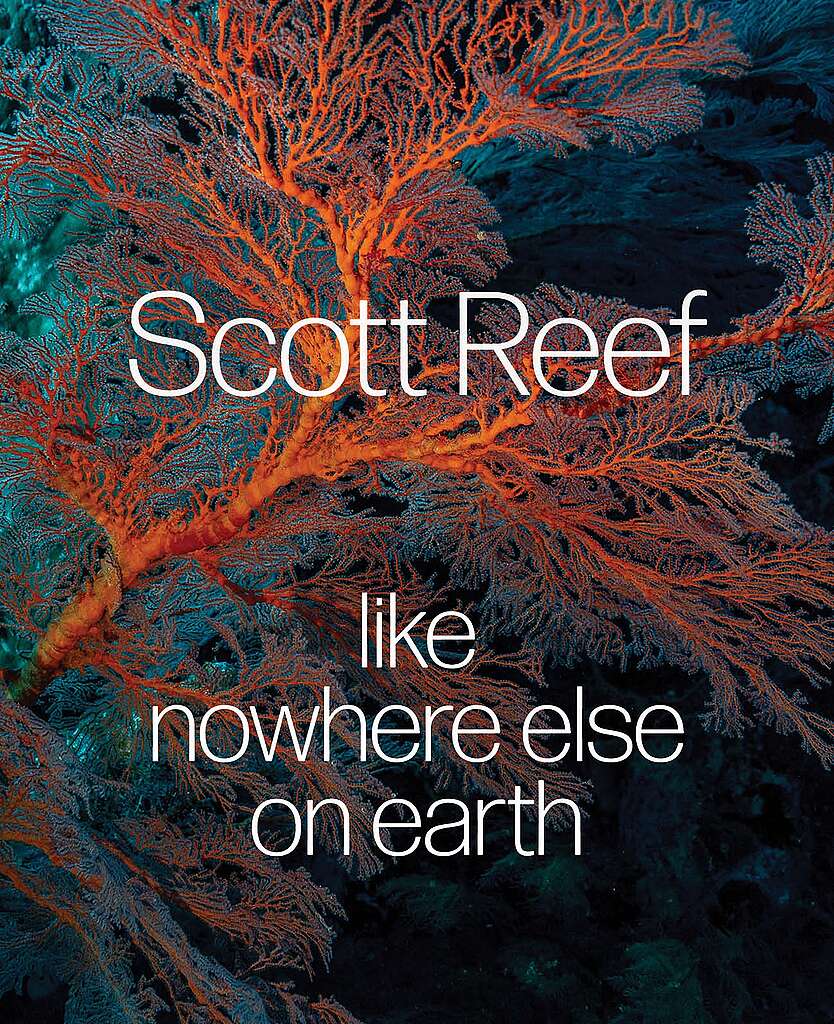
The contributors are a wonderfully diverse bunch, united by their enthusiasm for Scott Reef — and their extraordinary speed!
It’s a brilliant mix. The book brings together national icons like Peter Garrett, Tim Winton, Mick Dodson, Janet Holmes à Court and Fiona Stanley; the intellectual heft of professors Frank Bongiorno, Jessica Meeuwig, Rick Steiner and Samantha Hepburn; the poetic vision of Prema Arasu, Berndt Sellheim and Saadiah Freeman; the field expertise and passionate first hand witnessing of Imogen Zethoven, Tooni Mahto, Ben Fitzpatrick, Geoff Bice, Olaf Meynecke, Paul Gamblin, Sarah Gittoes and Hayley Baillie; and the determination of emerging activist voices Jackson Reid and Emma Sangalli.
Their elegant words wrap themselves around the sheer wonder of the underwater world, brought to life by the work of the photographers — of whom one, Wendy Mitchell, has also contributed a wonderful essay.
Terri-ann showed me the full physical proofs this week and they are breathtaking. This book contains some of my absolute favourite images of wildlife beneath the waves -– and believe me, after almost 20 years at Greenpeace, I’ve been privileged enough to see some remarkable shots! The essays bring a whole new depth and richness to the story of Scott Reef.
If I am being honest, and maybe a bit sentimental, I hope that a four or five-year-old child somewhere in Australia will spend part of their summer holidays turning the pages of this book, wide-eyed with curiosity and awe at the beauty and strangeness of the creatures that call our oceans home.
Our shared commitment is to make sure that, as those children grow up, the wonders of Scott Reef will exist not just in the pages of the book, but out there in the wild waters off north-western Australia—alive, thriving, and every bit as extraordinary as they are today; a living wonder beneath the waves.
Pre-orders of Scott Reef: Like Nowhere Else on Earth are available here.


Q & A
Sometimes you get asked a question so often that you decide to produce a report to answer it!
We know there is strong public opposition to voter opposition to gas drilling at Scott Reef and fracking in the Kimberley in Western Australia. But I am frequently asked whether, even if people don’t want it, more gas drilling is a necessary evil to sustain WA’s prosperity?
The short answer is an unequivocal ‘No’. The longer answer is our new report, From Gas to Green: Building Western Australia’s Future State, which makes the comprehensive case that Asia’s gas market is declining — while WA has an enormous untapped opportunity to become a global leader in green industries and exports, helping drive the region’s shift away from fossil fuels. The faster that WA embarks on a decisive shift away from gas—and that includes no fracking in the Kimberley, or drilling at Scott Reef — so much the better for the state’s people, ecology and economy.