

Weather Guard Lightning Tech

GE Vernova Slows in Q2, 2024 Election Impact on Wind
GE Vernova recently held their Q2 investor presentation, sharing the company will focus on their the 3.6-154, 6.1-158 Cypress, and Haliade-X 15.5-250 turbine lines. So far, the company’s wind division is not headed toward profitability in 2024. What can the company do to turn their financials around? And then a focus on the 2024 US presidential election–what implications will it have on the wind industry? Does the IRA bill hang in the balance? In other news, Siemens Gamesa will resume production of their 4X wind turbines this year, Dogger Bank A has installed interarray cables, and a carbon-free cement plant is planned for Massachusetts.
Sign up now for Uptime Tech News, our weekly email update on all things wind technology. This episode is sponsored by Weather Guard Lightning Tech. Learn more about Weather Guard’s StrikeTape Wind Turbine LPS retrofit. Follow the show on Facebook, YouTube, Twitter, Linkedin and visit Weather Guard on the web. And subscribe to Rosemary Barnes’ YouTube channel here. Have a question we can answer on the show? Email us!
Pardalote Consulting – https://www.pardaloteconsulting.com
Weather Guard Lightning Tech – www.weatherguardwind.com
Intelstor – https://www.intelstor.com
Allen Hall: Joel, we’re moving to the 2020s. We now have our email newsletter, Uptime Tech News on Substack. Ooh, nice. I like it. It’s slick. It’s almost super modern. And if you haven’t subscribed to Uptime Tech News, you need to, because who else is going to go through the news? The right way and pick out those articles that the technical people working in wind and the financial people working in wind need to know besides us engineers who filter through it and get all the riffraff out and give you the stuff that you need.
That is the whole point of Uptime Tech News. So if you haven’t subscribed to it, do it. You can actually go on Substack and search Uptime Tech News. You can subscribe via Substack. And it’s on LinkedIn. The newsletter is nuts, crazy busy. There’s thousands of people who are subscribed to our newsletter, Uptime Tech News on LinkedIn.
I like LinkedIn, but I like the Substack version even more.
Welcome to the Uptime Wind Energy Podcast. I’m Allen Hall, and I’ll be joined by the rest of the Uptime host after these headlines. Kicking off our headlines, Siemens Gamesa is set to breathe new life into its turbine production. The company plans to resume manufacturing of its 4X wind turbines later this year, following a pause due to technical issues.
This move is expected to reactivate sales of the 4X turbine, with production of the 5X model slated to follow next year. The news comes as a welcome relief to staff, as the current order book has been running low, and this development could signal a turning point for Siemens Gamesa, which has faced challenges in recent months.
Shifting our focus offshore, a major milestone has been reached at the world’s largest offshore wind farm. Over 200 miles of interarray cables have been successfully installed at Dogger Bank A, the first phase Of this ambitious project. The 66 kilovolt cables manufactured by Hellenic cables will connect 95 massive Haliade-X 13 megawatt turbines to the offshore converter station.
The EU is doubling down on its commitments to renewables reelected EU commission president, Ursula von der Leyen. Has announced a new clean industrial deal, emphasizing homegrown clean energy. This plan includes support for clean tech manufacturing and a new EU competitiveness fund. Von der Leyen has also promised to cut red tape and expedite permitting processes for renewable projects in the coming years.
Vestas is pushing the boundaries of onshore wind technology. The company has completed the installation of its V172 7. 2 megawatt prototype at its test center in Denmark. This behemoth is Vestas largest and most powerful onshore wind turbine to date. Based on the Inventus platform. It promises a 12 percent increase in annual energy production compared to its predecessors in low to medium wind conditions.
Meanwhile, in the U S the town of Nantucket in Massachusetts is making waves in the legal arena. Town officials are contemplating legal action against vineyard wind following a turbine failure that left debris scattered on local beaches. The incident, which occurred on July 13th, prompted federal officials to suspend operations at the wind farm.
The town’s concerns center around potential hazards to swimmers and sailors, highlighting the importance of safety measures in offshore wind development. A Massachusetts startup is making strides in zero carbon cement production. Sublime Systems is planning on building a 150 million carbon free cement plant in Holyoke, Massachusetts, and they have secured a 2, 000 ton cement order from Vineyard Offshore.
The cement will be used for offshore wind turbine platforms and onshore projects, significantly reducing the carbon footprint of future wind developments. Wrapping up our update, according to Level 10 Energy, which runs an online marketplace for energy transactions, wind power purchase agreement prices rose 7 percent in the second quarter, while solar PPA prices saw a modest 3 percent increase.
Wind PPAs continue to face ongoing challenges, including land scarcity, interconnection delays, and rising insurance premiums, while solar prices remain relatively stable thanks to recent government incentives. That’s this week’s top news stories. Now let’s welcome our co hosts, CEO and founder of IntelStore, Phil Totaro, and the Chief Commercial Officer of WeatherGuard, Joel Saxom.
Mark your calendars for AMI’s Winter in Blades conference happening October 2nd and 3rd in historic Boston, Massachusetts. This two day event, which is similar to the well established edition in Europe, We’ll bring together the whole blade value chain to examine market outlook, innovations in blade materials, design, manufacturing, testing, and lifecycle management with a special focus on the North American market.
Gain insights from experts from Vestas, along with scientists and engineers from the National Renewable Energy Laboratory and the Oak Ridge National Laboratory. Plan your trip to Boston this fall by visiting the link in the show notes or just Google 2024 Blades Boston. GE Vernova just had their Q2 investor event and it was quite a show Phil.
I don’t know if you got to watch this online but It was a real stage show, right? They had the first speaker was about safety and the culture of safety and safety is job one, and then the CEO gave presentation. Great talking about the overall GE Vernova performance and where they were going.
There’s really good pieces of GE Vernova at the minute that are making money and they have growth opportunities for sure. When Vic Abate was talking about GE Wind. Those the wind part was rather, um, maybe the word is troubling in terms of where they want it to be right now. Maybe that’s where I’ll put it is that if they were hoping to be cash flow positive this year, right now, and they’re not going to be, and that is from a couple of different sources.
Problems that they’re sorting through right now, which is one, I think they’re still dealing with supply chain and what it seems price increases coming up through that supply chain, the ability to sell product at a decent margin, plus the backlog they’re going through, particularly offshore. There is a lot of concern outside of GE about their offshore.
Portfolio that they’re going to lose money on this thing, and they locked into it. So they have to produce it, lose the money, and then come out on the other side. So as I put into Slack today for everybody what GE, the win part was saying was, we’re going to be profitable sometime in 2025, maybe 2026.
That’s the way I read it, which is a little bit of a setback. And if you, and also the orders have come in. It’s about year on year, about half of where they were in 2023. That I think is due to a large order. I think that was Sunzea probably that was driving some big numbers there, but still seeing an uphill climb for GE Vernova on the, in the wind sector.
Now, guys, I think there’s a lot going on in the United States at the minute. And I wish Rosemary’s here because she could give us some Australian point of view. Is GE going to turn that corner on the wind side? Because the other parts of GE Vernova are profitable.
Philip Totaro: Allen, if you remember about a little over a year ago, we had a chat about Vic Abate being brought back in, at which point, this was obviously before the Vernova spinoff, and they were talking about things like, the power generation business, including wind being profitable by the end of 23.
Yeah. I think they technically achieved that, but the wind business has taken longer to turn around for some of the reasons Allen mentioned. But at the end of the day, it their order book is down because we’re still stuck with a lot of projects in the consenting queue. And the interconnection queues and the price increases that have, necessarily so subcomponent costs are increasing, the turbine prices are increasing and the cost of capital is still very high because interest rates are still high.
Everyone was deferring orders in anticipation of all these costs coming back down a little bit. And now that the market’s kind of realizing that these prices are high, it’s getting baked in more and more. And a fundamental kind of tenet of economics, if the price keeps going up, demand is going to keep going down a little bit eventually.
And that’s just the situation we’re in at the moment. Until everybody can acclimatize to the new the new market reality.
Joel Saxum: Yeah. Interesting thing here in some of these metrics that they put out in their Q2 report here is that services are doing well. Their service revenue year over year has grown.
I think they’re up like 12 percent or 15%. It’s the new order book, like you said, Phil, that’s falling down. That’s not doing as well. So that’s the developer side of things, right? There’s two different customer bases. You have the developers, IPPs looking at building some wind farms, and then you have the people that are, we’ve got wind farms in play and we’re servicing them.
We’ve got work to do on them. So the services revenue is high now. Is that driven from, more work out there or is it driven from, we actually have to work on bearing failures and generator swap outs and these kinds of things, because not all of those, some of those are just invoices, right?
Purchase orders. They’re not part of an FSA.
Allen Hall: This is what Vic Abate was talking about in terms of the three platforms that they were gonna go forward with. And it was only three. The 3.6 megawatt 1 54, which is the one that’s being used in Sun Zia, the New Mexico, the 6.1 1 58, so a 1 54 for the Con SunZia project.
Large project was. Good capacity factors, 158 for land constraints. So if you have two, three turbines somewhere, and then the Haliad and the offshore seem to get downplayed quite a bit, in my opinion, reading between the lines, the vast majority of their income is going to come onshore. And if they’re having basically two specific platforms, there are trying, it looks like trying to reduce the amount of factory people needed to build turbines.
And bringing it down to two base models and emphasizing that they are, all of them, offshore, onshore, are all US manufactured.
Joel Saxum: Now, that’s new. That is very new, and I don’t believe it. There’s, they may have some components US manufactured, but the reality is if they’re going to put these out at scale, they can’t. manufacture them all in the United States. There’s not enough capacity.
Allen Hall: This is where they’re trying to combine the different segments of GE Vernova. So one of the areas in which the gas turbines and wind turbines are combined is in Schenectady, New York. So there’s an existing gas turbine factory has been there forever.
They put the nacelle plant in there for the 6. 1 megawatt machines in basically the plant, the same plant or next door. Using the same basically work crews to go do that. So they’re cross training as how I read it is that they’re using this knowledgeable work group, bunch of employees that have been doing gas turbines, it’s not out of their capability to start building some nacelles, which it looks like they’re doing.
Which means, to me, smaller footprint, factory wise.
Philip Totaro: Yes, although let’s also be clear, because even on the, their supply chain for the 2 megawatt platform, some of it comes, blades are made all over the place. So a lot of their gearboxes come from China to be blunt. I don’t, again, I, they may be doing final assembly in Schenectady for the Cypress.
But that’s, as Joel said, it’s still, I would also question whether or not it’s going to be a hundred percent U. S. made everything inside.
Allen Hall: They didn’t say a hundred percent, Bill. They did not say a hundred percent, but they say it’s U. S. manufactured, which means I, I read that as assembled.
Philip Totaro: But again, yeah, exactly. So the final assembly is one thing, but like we even talked about, what, a week or two ago? What’s the difference if it’s, Is it really a U. S. made turban if it’s a bunch of Chinese parts inside a fiberglass shell that’s manufactured in the U. S.? Which, by the way, it might not even be, because some of their suppliers for the nacelles are down in Brazil.
They may be doing final assembly here, but that’s not quite a U. S. made product. But do you see where they’re headed though, Phil?
Allen Hall: Do you feel the draw to U. S. territory and that G. E. Vernovas is going to claim the U. S. as their prime real estate and try to keep everybody else off of their playground?
Philip Totaro: Yes and we’ve been here, we’ve been here before, when They first bought the assets of Enron Wind. That’s exactly what they tried to do as well, and they developed the 1. 5 megawatt platform to do precisely that. And it was, for the most part, domestically manufactured. Eventually, they started having to get international suppliers because of the scale of what they had.
But, they had, they had some of the fabrication happening in Greenville, South Carolina in various factories throughout the U. S. With these two, future focused platforms, the 3. 6154 and the 6. 1158. It looks like they will domesticate most of the production here, or final assembly here.
The blades, it, my understanding is that anything for the the 3. 6154 will be done by either GE to a certain extent, but mostly by TPI domestically. And, but again, potentially if they need to source from Mexico, there’s nothing stopping TPI from, putting some blades across the border.
It’s also my understanding that LM in South Dakota would be retooled to do the blades for the 158. But I don’t think that decision has been made final yet, because there’s obviously some conversations still going on about LM and the future under GE. And, taking into consideration now what’s happened at Vineyard Wind.
LM is under even more of a microscope than they, they were before.
Allen Hall: Yeah. So now LM is having financial difficulty. They’ve been having financial difficulty for a while, but in more recent news reports, they’re bleeding about a hundred million dollars a quarter kind of number, roughly speaking.
So the turnaround hasn’t happened at LM. They’re still going to be involved in GE, at least in the short term, from what it appears, Phil. I understand the TPI involvement in GE and it gives them a lot of flexibility, but LM is still, at least at this point, still part of GE, Vernova, does the restructuring that’s happening at GE now, and obviously they’re taking their pain pill now, mostly because they have to.
Does that put them at a stronger position against their main competitor in the U. S., which is going to be Vestas?
Joel Saxum: Let me preface that one, Phil. An interesting point, right? So we’re looking at this 6. 1 megawatt machine, 158 meter rotor. That competes with the V162 directly. Because the V162 is a 6 megawatt machine.
There is zero to date GE installed 6. 1 machines. And there is a small handful of the V 162s that are already on the ground. So I think there’s some in, I know there’s some in Oklahoma cause Allen and I saw them. And I think there’s some up in Michigan or Pennsylvania or something like that.
Pennsylvania. And there’s a few in Michigan too, right on the tip of the thumb. There’s a dozen of them or something. So there’s, while that’s going to be the, that’s the two competing ones there. I think what one of the things that GE is doing to be more competitive here is we all know the struggles that they’re having at this time with the one 16 and one 27, whether it’s lightning rotors, gearboxes, these kinds of things.
If you’re bringing this you’re basically signposting that you’re going to bring all of, as much as you can, manufacturing into the United States. That gives them the ability to have, in my mind, a better QAQC mechanism over their operation, over their Manufacturing operations. And I think that’s part of the problem that we’re seeing is when you have, like Allen, we’ve seen those wind farms with the same turbine with four different blade manufacturers from 10 different places in the world.
That’s a hard thing to get right. A hundred percent of the time. So if you can narrow down your models that you’re putting out there, which they say they’re going to do. And then domesticate some of your production. It’s easier for, an engineer from Greenville or an engineer from Schenectady to take a rip out to Iowa or South Dakota, North Dakota, or wherever you’re going to be building these things at and do a site, do a factory visit, sit with the technicians, make sure everything’s going well.
While you’re building these. So I think that in the long run, it may not change something But in the long run, I think that’s a good angle to get some quality injected back into the GE brand. Can’t
Allen Hall: argue with that. Right? Making the turbines simpler, less variations, is going to produce more consistency in the product.
I think that’s where GE recently has had trouble. Right? Bearings blades, pretty much the whole thing at a million suppliers and sub suppliers from all over the world. A lot of suppliers, right? And they’re trying to manage that managing suppliers is not easy, especially if they’re spread out all over the world, which currently has done.
So it definitely looks like a change in direction, or maybe more loudly proclaiming the change in direction than when they were part of GE, the larger GE.
Philip Totaro: I would agree. The thing that’s interesting about that though is to shift supply chain in that way. The more global diversity you have, the more you have the ability to negotiate for better price.
You, you start narrowing down the number of suppliers and you’re going to have to price take a lot more than you would. If you had at least two competing suppliers or three competing suppliers for, the same spec of components. So the interesting thing there to me is. Are they going to go back to doing more build to print versus build to spec components for these?
And I don’t know that I’ve heard enough about that from them, not specifically their engineers telling me stuff they’re not supposed to, but I, I don’t know that I have a sense of whether or not they would have the ability to go get a secondary or a tertiary supplier, because, again, just Siemens Gamesa, having a supplier issue, if you don’t have a backup in place that can provide you with, something of comparable quality at a comparable price, it’s going to shut down your entire production capacity for, months on end.
So it’s a risk.
Joel Saxum: Phil, can you gimme do me a solid here once, and this is for my benefit and for the rest of the listeners as well, can you gimme the middle school? Differences between build to print and build to spec.
Philip Totaro: Yeah, no, so this is a great question because it’s timely in, in terms of when we started off as an industry.
Everything was build to print, which what that means is I’m an OEM. I’m going to design everything, down to the smallest detail. My CAD model gives you, everything you could possibly ever need to see about how this product is, what it does, how it’s supposed to function, all the parts that go into it, how it’s assembled, everything.
If I’m then contracting you as a subcomponent supplier, you’re gonna build me what I’m telling you to build me according to my CAD drawings and, again, all the assembly instructions, everything. Okay? So that’s more or less build to, to print. Build to spec is I’m going to create a broad based product specification, but I don’t do the CAD drawings, you do them as a supplier.
You come back to me with something if it’s a bearing, it’s gotta fit into, my main shaft and my drivetrain architecture. If it’s a pitch bearing, same thing, or whatever it is. It’s got to plug into my system, but I’m leaving it to you to have more control over what that thing is, how it, again, I, there’s a lot of different ways to skin a cat.
I’m going to allow you to tell me what the best, your preferred way of doing it, and it might be different from that of a different supplier. Now, when you do a lot more stuff from a supply chain standpoint and a servicing standpoint, particularly with wind, when you do more stuff, that’s build the spec.
All those little things I just talked about somebody may have some kind of specialized way of making their component and while it might physically fit into my wind turbine, if I have a problem with it, I’m basically dependent on going back to you as a subcomponent supplier to, to get the thing fixed.
If there’s a problem. And that’s actually what’s going on with GE right now, with this whole, SKF thing, and we talked about that, last week, I think, on, or two weeks ago, on, on the show. Shifting your product strategy and your supply chain strategy back to a build to print model makes you more potentially vertically integrated, and as you mentioned, Joel, it takes more of the quality control and brings it back in house.
Because then, even if you have a subcomponent supplier, they have to do it your way, not, or the way that the OEM is specifying, not necessarily their way. Yeah, so the nice thing
Joel Saxum: would be, like, if you’re, if you buy a fill to taro turbine, and fill to taro turbines are all built to print, then if you have an issue with that turbine, you can go back to fill and get an answer.
If it’s built to spec and Phil basically subs everything out and you have someone in India making your bearings and someone in Brazil making your generator and someone, yeah. And six different people making your
Philip Totaro: blades. Everybody starts going, pointing fingers at each other saying how do I get an answer?
Exactly. Exactly.
Joel Saxum: So in your opinion, is that why we have some of the large problems within the wind industry? If you went, if some of these manufacturers would bring more of it back in house.
Allen Hall: Yeah, Joel. All right. Boeing went through the same issue, right? And we’ll just put it a little broader context.
And I know we’re focusing on GE here, but this is a wider More complex issue, right? So Boeing did a similar thing where they outsourced pretty much everything and they were the final assemblers of the large components and they let all the sub tier suppliers design the component and Boeing just went to meetings and sat through a little design reviews and went, yep, that looks good.
And meets the spec and off they went. And then we had the seven, eight, seven, and then we have. Just enormous problems with that sort of system. And so now Boeing’s trying to pull it all back. So they got rid of Spirit Aerospace to build fuselages, inspect it all out. And then Boeing is buying that whole company back because neither system is perfect.
It all depends on the economics of the particular time and who you have for employees and all kinds of things. But as Phil’s going to point out, there is no winners. You have to pick one or the other.
Philip Totaro: And you may have picked the wrong one. And Allen, you just also nailed it because it’s dependent on the state of maturity of the market.
And when the market was really immature, you have to almost do a build to print because the supply chain companies aren’t sophisticated enough to know how to build something to spec, even if you went to them. Once the industry matures up to a point, you can start D vertically integrating, if that’s a word or, D, centralizing your supply chain and even some of your engineering work out to your subcomponent suppliers, because they’ve developed that expertise, the reason at this state of the industry that everybody wants to vertically integrate again.
Is because of this profitability question. And it’s not just, I talk about interest rates and all that crap all the time, but it’s more if you’re at a point where you’re not profitable enough, you probably will get more levers to pull, to get profitability out of your own system. If you’re vertically integrated, you’re doing everything in house as opposed to outsourcing it where yes, you might have more negotiating leverage, but you’re still theoretically paying a price premium because in addition to.
If I, again, if I’m an OEM And I’m selling to a developer. I charge them, for, the build cost plus margin. But if I’m doing build to spec, everybody else that’s supplying me components also has a huge amount of margin built in and all those margins stack up exactly, Joel. That’s where you get stuck a little bit because.
It, it can be less profitable to do that, but you also might be able to react faster to customer requirements or a new order or what have you. So again, as Allen saying, there’s just different reasons why you would want to vertically integrate at any given time.
Joel Saxum: The trouble with any of that is, is if you’re going to bring the engineering in house it’s a function of human resources, right?
How much engineering horsepower do we have? And can we take this on?
Allen Hall: Engineers are not making the decision there. Financial people are making the decision there. And then that’s what trips that decision, right? In the aerospace world, because I lived through all this multiple times, when they start specking out systems to suppliers, and they force the suppliers to participate financially in this aircraft project, which they don’t have any control over, It’s a huge deal, right?
So there’s actually bidding going on to participate in a project. They’re upfronting money to the main company to participate. And then they’re going to make all the money in the backend, but the program is severely at risk, whether you’re going to get to an actual product or not. It’s highly risky. So as the top level, top dog in the supply chain, I am the OEM.
I control everybody. That’s the Boeing move, right? It, it was a GE move for a number of years, but Phil’s pointed out that has to happen in a developed industry where everybody knows what they’re doing. When Boeing decided to outsource 787, totally new stuff, composites, carbon fiber, all this cool stuff, but supply chain didn’t know how to manufacture it.
That was a wrong move because now you have suppliers that are way out of their element trying to create something new that they’re not very good at and they failed time and time again. Boeing ended up buying facilities, buying whole companies, and it continues to do it. Because of the logic they put into the 787 financial decision years ago, and GE is going to go through that too, right?
GE is going to go back through that because technology advanced faster than the suppliers could manage. Blades being one of them bearings being another that’s what I was just gonna say is blade
Joel Saxum: now take blades, right? So now you have again, you’ve got ten different manufacturers all over the world that are new models all the time now we’re introducing carbon fiber now we’re doing this There’s these different ideas and they can’t keep up and so that’s what I think one of the reasons why we and then on the same card we turn around we talk about this on the podcast all of a sudden you see in massive engineer layoffs So it’s here’s an issue.
Yeah. It’s here’s an issue that you need this engineering resources for. What is your response? We just fired all of our engineers. What? Everything’s driven by the market, right? So you can go to, we can point at wall street for that decision.
Allen Hall: Well, Joel, but listen to the language like GE, Brnova gave today, they’re focused on, at least it looks like on the U S market.
So they’ve truncated the amount of work that they’re going to possibly do. So what engineering, somebody had to do the numbers like you did Joel in the back of your envelope there, you go, Hey, you don’t have the engineers to support the whole world. Guess what? We’re pulling out of Brazil.
We’re pulling out of India. We’re going to start pulling slowly out of Europe to some measure. We’re going to pull out of parts of Asia because we can’t support that right now. We have to totally restructure our business to bring, I think Phil’s pointed out, bring it in house until it becomes stabilized, which is where Vic Abate is talking about.
We’re going to have free platforms. We’re going to do them really well. And then we’re going to go back down the supply chain to have people make these parts for us over time. We just can’t do it today. We just can’t. Isn’t that the pathway out of this, Phil?
Philip Totaro: Yes. And I here’s what’s also interesting.
If you compare and contrast this philosophy that we’re talking about right now for Vernova versus what the Chinese OEMs are doing with, hey, let’s build a new, bigger turbine all the time. They haven’t yet gotten to that critical mass of All of these problems that the Western OEMs have just faced. Now, that’s also the reason why you see companies like Vestas and Siemens Gamesa saying, We don’t necessarily need or want to be part of that, bigger turbine size contest.
It’s a scenario where they can, everybody’s starting to wrap their head around the fact that, all these other things that impact profitability are tied to not only your product development strategy, but your supply chain strategy. And if you don’t have the right philosophy in place at the right time, as Allen’s talking about, you’re necessarily going to end up going through this huge period where, your margins are just destroyed because you’re going to be servicing You know, 13 types of different turbines instead of one platform.
Joel Saxum: But I think that the fundamental difference between say a Vestas, whoever, and a Chinese manufacturer is in the, for the most part, the Chinese manufacturers in better control of their supply chain. Cause it’s local. They’re not getting, they’re not sending stuff around the world as much as we are to get these turbines built.
They’re doing a lot of it themselves.
Allen Hall: Their economics are different. Can we say that?
Philip Totaro: Although they are getting a lot of their control electronics from Europe, by the way, particularly for the larger turbines, because they don’t have the capability to do it over there. But what’s also interesting is, by contrast, they are now starting to put in place a lot of the castings and forgings facilities that They do it themselves.
Exactly.
Joel Saxum: That we don’t have. Allen, you said their economics are different. I agree. We all know their economics are different. However, that doesn’t change the fact that they have a local supply chain that they can rely on to Change, adjust, make moves get things out the door. And they’ve shown that by the amount of turbines that they’ve installed in the last five years.
Allen Hall: It’s all driven by government policy in China for the most part, right? They’re making strategic investments into infrastructure there in specific industries. And I want to talk about this after the break, the U. S. is going through an election cycle and there’s been a lot of changes in the last two weeks to who could possibly be heading up the country.
When we come back, I want to talk about that and get back to your point, Joel, what it means for U. S. industry.
Dealing with damaged blades? Don’t let slow repairs keep your turbines down. Blade Platforms get you back up and running fast. Blade Platforms truck mounted platforms reach up to 100 meters, allowing for a quick setup, improved safety, and efficient repairs. Book soon to secure your spot and experience a difference in blade access, speed, and efficiency.
Visit bladeplatforms. com and get started today.
Okay, we’re back with the Uptime Podcast. During the break, oh my gosh a lot of heated talk about the U. S. elections. And obviously there’s been a number of changes. President Biden is not going to run for president anymore. And it looks like Vice President Harris is going to be the Democrat nominee Which is astounding.
Okay, so we live in strange times and former President Trump was attacked, be the nice way to say it. Both sides are heated at the moment, and I do think this has implications on what happens in renewables, for sure. I think there’s two pieces to this, Phil. First is, what’s going to happen to the IRA bill and the financial structure that exists around renewable projects.
I think that’s one piece. The second piece, I think, is a broader economy, which is what’s driving, I think, driving the slowdown of renewables worldwide at the moment, more than any IRA bill. So first off is if Trump or Harris are elected, does anything really happen to the IRA bill here?
Philip Totaro: Probably not wholesale.
What if Harris is elected, presumably the current kind of status quo from the Biden administration would be continued, if not potentially improved upon, particularly around permitting and a quicker pace at which the manufacturing tax credits are doled out. Because that’s one thing that’s been holding up a little bit of progress in addition to the interest rate situation, which I’ll come back to.
Thank you. If Trump’s elected, the biggest thing that He, his administration would have an impact on would be the pace of permitting of anything that’s not already consented, but what’s interesting about it is we’ve got a ton of projects that are actually stuck in the interconnection queue and the consent queue right now, both onshore, offshore wind, solar batteries, everything that, they’re looking for transmission is one thing.
And they’re also looking for capital. Transmission’s hard to come by just because it’s not physically available. Capital’s hard to come by because there are people who would rather be investing it in other things in the current interest rate environment. That’s the second piece of this is, okay, if Harris wins, presumably the current pace of Federal Reserve rate cuts is going to be maintained, albeit at this kind of slow, a bit of droning pace, if you will, that, that has been holding back at the potential investment in renewable energy, both from, institutional investors, private investors, and the importantly, the oil and gas companies who in a high interest rate environment have gone and plowed their money back into what they know best.
Thank you. Rather than taking a punt on, renewables that are, if they were getting, 150 or 190 a megawatt hour offshore wind PPA, but their production costs were down lower than what they are, they might still be investing and they might still be pursuing that. But that’s, the simplest way to, to say, or explain why they haven’t they haven’t continued.
Now, here’s the thing. If you look at Trump’s previous administration, during 2017 through 2020, That time frame actually saw one of the biggest build outs of onshore wind, certainly, in the country’s history. About a third of what we now have installed was built during that time frame. But as I’ve talked about before on the show, nothing gets built, in five minutes.
It has to go through a consent process, and a environmental approvals, all that sort of thing. It, that occurred largely during Obama’s second term. So there was a lot of projects in the queue that were ready to go for the period of time when Trump was president, but we also had lower inflation and therefore lower interest rates back then.
So capital was a plenty for those projects because of COVID, but also just because of other macroeconomic things that happened between, you 2021 and today. We are in a, an environment where a lot of the project permitting got slowed down during Trump’s administration, which it took Biden’s administration a long time to catch back up.
And they’re now trying to, ram a crapload of projects through the consent process, particularly an offshore wind. It’s certainly not happening as fast as it could be, by the way, but that’s a different conversation. But we’re now getting to a point where, you know, and I talked about, alright if Harris wins, interest rates might probably stay higher than, they would if Trump was actually president.
So with a massive queue of projects, By the end of Biden’s term, plus the likely outcome of Trump’s administration would be to, get rid of the chairman of the federal reserve, put somebody in place that’s going to lower interest rates faster. You’re going to have a dearth of projects plus lower capital or, cheaper or access to cheaper capital, more plentiful access to cheaper capital.
Let’s say it that way. That is potentially going to unlock a deluge of new project construction between 2025, 2026. The real question then becomes, is Trump’s administration going to do anything to slow down the pace of permitting and consenting again, which would have an impact on, In the latter years of his second term and potentially well into whomever would be president from 2028 or well, 2029 onwards.
Allen Hall: So the heated talk about Trump shutting down all kinds of renewable projects that I hear on the clean energy side of the political spectrum, it seems really overblown, right? You had four years of history there and Trump essentially did nothing, right? There was too many other things going on in that time frame where you can’t focus on that It’s not something that is focusable
Philip Totaro: and let’s be clear to he That’s why the Biden administration right now is rushing to get a lot of stuff rammed through this consent queue, because if something’s already consented, and it’s just looking for capital, everybody, the next eras of the world, the Invenergys, the, mid Americans of the world, they’re gonna, they’re gonna be screaming bloody murder if they can’t build these projects that have been consented because the plug gets pulled on the projects themselves.
At the end of the day, the Republican president is not going to do anything to undercut business. Largely speaking, anything that’s already consented is going to be fine. It’s the, anything that’s in an earlier stage of project development that is desiring to be consented, what kind of, you know, enthusiasm is that going to receive versus, having the administration’s attention go towards, approval of oil and gas, drilling out in the Gulf of Mexico or wherever.
Allen Hall: You really can’t pump more oil or petroleum products than the United States is doing at the minute. It’s at all time record highs, right? So there’s no lever that Trump has gone to pull to pump more oil and Joel’s seen that business. It’s crazy how much. Petroleum products, the United States is pumping and delivering outside the United States.
On the economic side, though, I think every administration has levers that it wants to control, right? A Trump administration is going to want to control the Fed a little bit better, I think. A Democrat administration is going to want to pass bills in Congress, which seems to be their thing. Both of those have widely different responses in the U.
S. economy. You pump money into the U. S. economy today, inflation is going to go crazy.
Joel Saxum: But what is one thing that both sides of that aisle And that’s a good jobs reporting.
Allen Hall: You’re not going to get it. If you cause inflation, the wind farm of the week is the North Bend wind
Joel Saxum: farm out in South Dakota, near the river.
It’s got 71 GE 2. 8 to one 27 rotor wind turbines with 89 meter towers. The total height of these things is 152 and a half meters, which is right at 500 feet. The cool thing about this, if you look online about this wind farm, they actually. Posted some of their service and maintenance. That they’re going to be doing contractually to the South Dakota state government.
So this is once operational, the project service and maintenance carefully plan and divide into the intervals. So they have it posted right online. The first service inspection will take place one to three months after the wind turbines have been commissioned, and they will pay particular attention to tightening bolts and a full greasing of the turbine, then they will also have semi annual service inspections, which is every six months after commissioning.
And the same thing, lubrication and safety tests of each turbine. Then they also have an annual service inspection, which is lubrication, safety checks, checking bolt assemblies, tightening and loosening or tightening and logging loose bolts if they’re detected. And they also have a two year service inspection, which is an annual inspection plus checking and tightening of all of the terminal connectors in the entire turbine.
So a lot of work to be done out at the North Bend Wind Farm out by Chamberlain, South Dakota. So you guys are our wind farm of the week.
Allen Hall: That’s going to do it for this week’s Uptime Wind Energy Podcast. Thanks for listening. And please give us a five star rating on your podcast platform and subscribe in the show notes below to Uptime Tech News, our weekly newsletter.
And check out Rosemary’s YouTube channel, Engineering with Rosie. We’ll see you here next week on the Uptime Wind Energy Podcast.
https://weatherguardwind.com/ge-investor-call-2024-election-wind-industry/

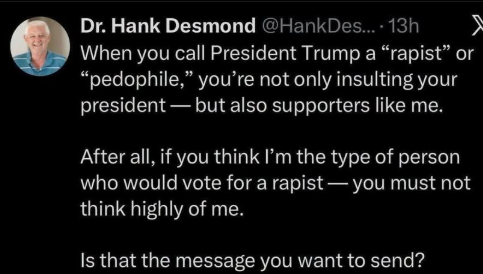 Apparently, this guy believes that the majority of Americans think poorly of Trump supporters, and wonders if this the message we want to send.
News flash: This is precisely the message we want to send.
I wonder what his doctorate is in. Filth? Debauchery? White collar felonies? War crimes?
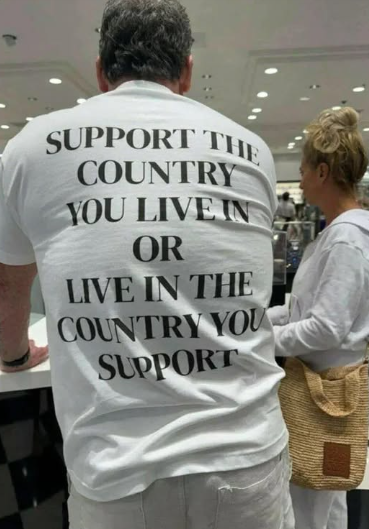 The idiot’s t-shirt shown here raises the question: How do you define the word “support?”
In a certain sense, I support all countries, insofar as the people living in each deserve to live freely.
As an American, I support the United States. I revere it for its strengths, while I advocate for remedying its considerable set of weaknesses: corruption, injustice, racism, indifference to human suffering, militarism, and greed.
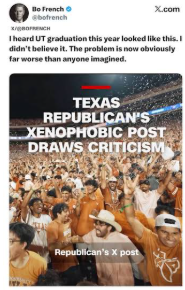 BREAKING: Texas Republicans are flailing after a party nominee posted vile racist commentary and refused to take it back.


-
Climate Change1 year ago
Guest post: Why China is still building new coal – and when it might stop
-

 Greenhouse Gases2 years ago
嘉宾来稿:满足中国增长的用电需求 光伏加储能“比新建煤电更实惠”
-
Greenhouse Gases1 year ago
Guest post: Why China is still building new coal – and when it might stop
-

 Climate Change2 years ago
嘉宾来稿:满足中国增长的用电需求 光伏加储能“比新建煤电更实惠”
-

 Renewable Energy11 months ago
Sending Progressive Philanthropist George Soros to Prison?
-
Climate Change2 years ago
Bill Discounting Climate Change in Florida’s Energy Policy Awaits DeSantis’ Approval
-
Greenhouse Gases1 year ago
嘉宾来稿:探究火山喷发如何影响气候预测
-

 Carbon Footprint2 years ago
US SEC’s Climate Disclosure Rules Spur Renewed Interest in Carbon Credits