

Welcome to Carbon Brief’s DeBriefed.
An essential guide to the week’s key developments relating to climate change.
This week
Elections in India and Mexico
CLIMATE PRESIDENTA: Following weeks of deadly heat in the country, Mexico elected former climate scientist Claudia Sheinbaum as its first female president after a “landslide victory in Sunday’s election”, Axios reported. Sheinbaum was co-author of the industry chapter for the 2007 Intergovernmental Panel on Climate Change report that jointly won the Nobel peace prize, noted a profile by Mexican newspaper El Universal.
‘GREEN PROMISES’: However, Mexican climate scientists and political analysts questioned “whether she will deliver on her green promises”, Climate Home News reported. Boston Globe columnist Marcela García also doubted Sheinbaum’s “progressive credentials”, while Bloomberg columnist Juan Pablo Spinetto noted her support of the populist politics and pro-oil policies of her “mentor”, outgoing president Andrés Manuel López Obrador.
NO MODI MAJORITY: In India’s elections, meanwhile, prime minister Narendra Modi’s Bharatiya Janata Party (BJP) suffered the “unexpected blow” of losing its parliamentary majority, the Guardian reported. Modi will continue for a third term, but “[his government] will face major challenges fueled by climate change”, the New York Times said.
HEAT STRESS: At least 85 people died of heat stress in northern India last week, the Hindustan Times reported. Six weeks of voting “amid unusually high temperatures…may have depressed turnout” in the election, NBC News reported, but: “[n]either the BJP nor the opposition said much about climate change during the campaign”.
Around the world
- MONEY TALKS: UN climate chief Simon Stiell opened intersessional talks in Bonn, Germany, by calling for “serious progress” on a new finance target, Climate Home News reported. Carbon Brief analysis revealed record UK climate finance spending.
- BROKEN RECORD: May 2024 was the world’s 12th consecutive warmest month on record, Agencia EFE reported, citing the Copernicus Climate Change Service.
- WINDFALL TAX: UN secretary general António Guterres has backed a windfall tax on fossil-fuel firms, which he called the “godfathers of climate chaos”, the Associated Press reported. BBC News said he also called for a fossil-fuel advertising ban.
- GERMAN GAP: An expert council on climate issues said Germany is likely to miss its 2030 targets, Der Spiegel reported, adding that this contradicted ministers. At least six people have died in floods in southern Germany, said Tagesschau.
- OFFSETS PLEASE: A group of 10 West African nations are supporting carbon credit use, Reuters reported. In a letter to the Science-Based Targets initiative they called for offsets to be included in corporate net-zero guidance, the newswire said.
- EU ELECTIONS: European Parliament elections are underway, with exit polls from the Netherlands showing a Labour-Green alliance narrowly beating Dutch far-right leader Geert Wilders’ party, said Politico.
36.8 billion
Global carbon dioxide emissions from fossil fuels and cement in 2023, a record, according to a new Carbon Brief guest post on the world’s key climate indicators.
5
Years before the carbon budget for a 50% chance of staying below 1.5C is used up, according to the study described by the guest post, which updates IPCC figures.
1.43
Global warming in 2023, in degrees C above pre-industrial levels, also a record.
100%
Share of warming in the decade 2014-2023 caused by humans, according to the guest post.
Latest climate research
- Research in Nature Sustainability looked at how to incorporate environmental concerns when planning for more hydropower in Africa.
- Catastrophic recent floods in Brazil were made twice as likely by climate change, according to a rapid attribution study by World Weather Attribution.
- A study published in Environmental Research Letters and covered by Carbon Brief showed better refrigeration could cut almost 2bn tonnes of greenhouse gases a year.
(For more, see Carbon Brief’s in-depth daily summaries of the top climate news stories on Monday, Tuesday, Wednesday, Thursday and Friday.)
Captured

The world will invest $2tn in clean energy this year, according to a new report from the International Energy Agency (IEA). This is roughly double the amount being put towards fossil fuels, the agency said. Carbon Brief analysis of the figures showed North America is the top spender on fossil fuels, while China is putting 3.7 times more money into clean energy than it is investing in fossil fuels. The world is still off track for the goal of tripling renewables by 2030, said another new IEA report covered by the Guardian.
Spotlight
Rapid climate action ‘makes energy cheaper, not more costly’
This week, Carbon Brief looks at the costs and benefits of cutting emissions to net-zero in order to tackle climate change, factchecking claims made during the UK election campaign.
Ahead of the 4 July election, UK politicians are talking about climate action in very different ways. As ever, a key battleground is the costs and benefits of cutting emissions.
The climate-sceptic Reform party has mislead by omission, highlighting a large and scary-sounding figure for the cost of net-zero, without mentioning the cost of the alternative.
Its manifesto says the cost of net-zero is “estimated by the National Grid and others at some £2tn or more” – but leaves out the part about this being cheaper than not meeting the target.
Conservative prime minister Rishi Sunak has portrayed net-zero as a reluctant sacrifice. In this week’s leaders’ debate on ITV, he said: “Of course we are going to tackle climate change and get to net-zero…[But I am] not going to impose thousands of pounds of costs [on voters].”
This, too, is only a partial accounting, focusing on the investments needed to decarbonise.
In contrast, opposition Labour leader Keir Starmer said less on the investment required, but touted the economic opportunity and potential to lower bills. He told the leaders’ debate: “[The transition] is a huge opportunity. If we go to renewables that means cheaper bills.”
A much-discussed report by consultancy Aurora appeared to offer more support to Sunak than to Starmer, noting higher investment needs to decarbonise electricity more quickly.
Yet Aurora later tweeted further details from its modelling, showing that a faster transition to net-zero power would result in lower bills – despite larger investment costs.
The costs and benefits of net-zero
At a global level, reaching net-zero by 2050 would “make energy cheaper, not more costly”, according to a new report from the International Energy Agency (IEA).
It compared global energy costs on the world’s current path – heading for 2.4C of warming – with the accelerated action needed to reach net-zero by 2050 and stay below 1.5C.
It totted up investment needs, financing costs, the cost of fuel – including fossil fuel “rents”, such as oil company profits – as well as subsidies and distributional impacts.
Strikingly, the IEA concluded that accelerating climate action to reach net-zero emissions by 2050 would make the global energy system “more affordable and fairer”.
According to the report, this is because higher investment costs would be more than offset by lower fuel bills, greater efficiency and reduced fossil fuel rents. It concluded:
“Energy transitions could lead to major reductions in household energy bills and accelerate progress towards universal energy access. But managing upfront costs for poorer and rural households – as well as ongoing costs – remains a key public policy challenge.”
If those challenges can be overcome, in other words, then it would be cheaper to avoid dangerous climate change than to continue on our current path.
As well as being cheaper on its own terms, this would also limit the negative economic impacts of warming. As Green MP Caroline Lucas tweeted during the leaders’ debate, what is the cost of not decarbonising?
Watch, read, listen
IPCC CHAIR: In an interview with African Arguments, IPCC chair Prof Jim Skea talked about developing country representation, model reliance on CO2 removal and more.
SECRET SPHERE: Amid doubts over European Commission president Ursula von der Leyen’s climate commitment if she wins a second term, Politico’s Karl Mathiesen recounted her “secret climate crusade” to get her Green Deal “past sceptical colleagues”.
GAZA HEATWAVE: Climate Home News reported on the unequal effects of a recent heatwave on communities in Gaza and nearby Tel Aviv.
Coming up
- 13 June: Close of the Bonn UN climate change conference, Germany
- 9 June: Conclusion of European Parliament elections
- 13-15 June: G7 summit, Borgo Egnazia, Italy
Pick of the jobs
- Climate Analytics, senior climate policy analyst | Salary: Unknown. Location: Berlin
- UK Climate Change Committee, analyst – just transition | Salary: £35,985-38,562. Location: London
- Oil Change International, senior strategist – global policy | Salary: $75,000-85,000. Location: Flexible
- The Royal Society, policy adviser – climate change | Salary: £42,000. Location: London
DeBriefed is edited by Daisy Dunne. Please send any tips or feedback to debriefed@carbonbrief.org.
This is an online version of Carbon Brief’s weekly DeBriefed email newsletter. Subscribe for free here.


The post DeBriefed 7 June 2024: Sheinbaum and Modi elected; Hottest May; Factchecking net-zero costs appeared first on Carbon Brief.
DeBriefed 7 June 2024: Sheinbaum and Modi elected; Hottest May; Factchecking net-zero costs

Climate Change
“Sink or swim”: WA Gov hugely underestimating decline in regional gas demand while sleeping on green exports, new report finds
PERTH, Tuesday 13 October 2026 — A new report from Greenpeace Australia Pacific and Springmount Advisory reveals green commodity exports are an untapped economic opportunity for Western Australia in a declining Asian gas market, while offering a genuine solution for decarbonising Asia.
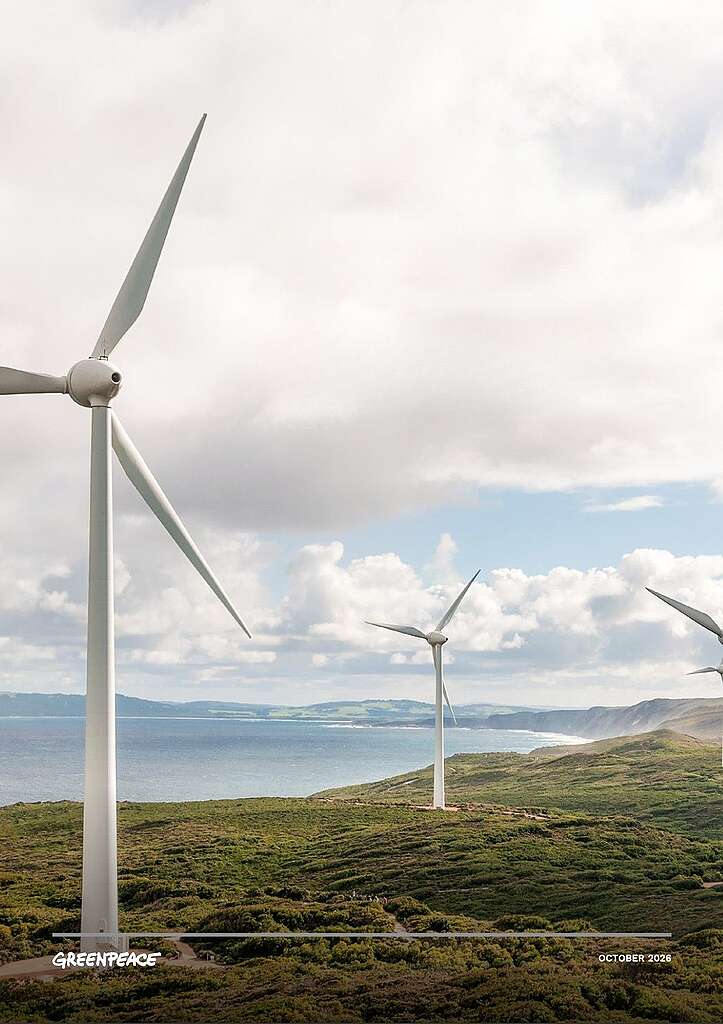
From Gas to Green: Building Western Australia’s Future State is a comprehensive analysis of the declining gas market in Asia, and the untapped economic opportunity for WA to become a global leader in green commodity exports while driving the regional shift away from fossil fuels.
The report offers key recommendations for the WA Government to support regional decarbonisation through an orderly phase out of gas exports in favour of green iron and other green exports. It comes as global climate leaders from across business, politics and advocacy prepare to meet for the Global Citizen Now: Perth event focused on decarbonising WA.
Key findings:
- Gas demand is falling across WA’s core markets in Asia: Gas demand fell in 2025 and is projected to continue to decline, driven by a combination of global geopolitical factors and domestic concerns.
- Policy shifts in key markets since the war on Iran now prioritise renewables and nuclear over gas: Japan, South Korea and China have legislated energy plans that prioritise renewables and nuclear over gas.
- New WA gas would arrive in a saturated, uncertain Asian market filled with cheaper gas: The US is now the world’s largest liquefied gas producer and plans to double its capacity as it also targets Asian markets.
- Green commodities offer a real solution to sustain WA’s economy: WA can lead Australia’s green commodity exports, which by 2060 could be worth almost a trillion dollars.
- Exporting more WA gas is likely to delay or impede Asia decarbonisation: Despite claims by the gas industry, there is no evidence that WA gas is displacing coal in Asia, and in fact diverts resources from genuine decarbonisation options.
Geoff Bice, WA Campaign Lead at Greenpeace Australia Pacific said: “As our export partners in Asia shift away from expensive and polluting gas, the WA Government has a golden opportunity to pivot our economy to green exports, like green iron, which is the most effective way to help our region to decarbonise.
“The writing is on the wall: gas is in decline, renewables are our future. In this context, it makes zero sense for the government to encourage high risk projects like Woodside’s reckless Browse gas proposal at Scott Reef.
“This report clearly shows that the WA Government faces a choice: sink or swim. They can either allow the gas industry to keep ripping off West Australians and continue propping up its decline, or choose the path that will deliver enormous benefits to the state and the world by becoming a leader in the rapidly expanding green economy.”
Tom Quinn, Managing Director of Springmount Advisory: “Western Australia prospers when it looks to the future and builds for future demand. Twenty years from now, what the world needs is green commodities made using WAs abundant renewable resources. Just like it did with iron ore in the 1950s and gas in the 1970s, WA should look to the future and build what the world will need, not sunsetting industries like gas that are already past their peak.”
-ENDS-
Media contact
Kate O’Callaghan on 0406 231 892 or kate.ocallaghan@greenpeace.org
Lucy Keller on 0491 135 308 or lucy.keller@greenpeace.org
A report from Greenpeace Australia Pacific and Springmount Advisory reveals the untapped green economic opportunity for Western Australia in a declining Asian gas market, which also offers a genuine solution for decarbonisation in Asia.
Is Western Australia clinging to a fading gas industry while a thriving green future passes it by? As major Asian trading partners rapidly pivot away from volatile gas imports toward cheap solar and battery storage, this report exposes a high-stakes choice: risk becoming stranded in an oversupplied fossil fuel market, or harness WA’s unmatched sun and wind to lead the global clean energy transition.
Summary
From Gas to Green: Building Western Australia’s Future State reveals that Western Australia (WA) faces a critical juncture as falling Asian gas demand, geopolitical gas supply volatility and accelerating renewable energy deployment undermine the long-term economic viability of gas exports. By harnessing its world-class wind and solar resources, the report demonstrates that WA can execute an orderly phase-out of gas and pioneer a green commodity export economy that could generate $987 billion in economic value by 2060, create 24,000 ongoing jobs, and drive a 9.6% reduction in global greenhouse gas emissions.
Key Findings
- Gas demand is falling in Asia – WA can no longer rely on gas exports: Gas demand in core Asian markets fell in 2025 and is projected to continue to decline in 2026. Legislated energy plans in Japan, South Korea, and China now prioritise renewables and nuclear over gas.
- Asia is increasing renewables, importing gas just gets in the way: Evidence from markets like Thailand suggests that gas imports are increasingly crowding out cheaper renewable energy investments and battery storage rather than displacing coal, locking in more emissions over time.
- Green commodities offer a real solution to decarbonise Asia – this is a major win for WA: With world-class renewables, WA can lead Australia’s green commodity exports, which by 2060 could be worth almost a trillion dollars ($987 billion) and support a genuine 9.6% reduction in global emissions.
Recommendations to WA government
Recommendation 1: Plan an orderly gas phase-out aligned with a trading partner pivot plan
Implement a managed, orderly phase-out of gas exports aligned with trading partners’ decarbonisation pathways, rather than waiting for demand to collapse, by:
- Developing and implementing a staged phase-out of gas facilities aligned with feedstock supply expiry or typical end of facility lifespans.
- Committing to no new gas development for gas expansion, including Browse and Kimberley fields.
- Developing new, reciprocal trade relationships with existing gas trade partners, structured to progressively replace gas exports with green commodities – integrated with recommendation 2.
Recommendation 2: Develop an integrated green commodity export strategy, positioning WA as a global green iron manufacturing hub
Establish an integrated green commodity export strategy that immediately prioritises green iron development, positioning WA as a global green iron manufacturing hub, by:
- Committing to green commodity export targets to give industry and investors a clear demand signal.
- Prioritising green iron as the lead sector within the broader green commodity strategy, given WA’s iron ore endowment and first-mover potential.
Recommendation 3: Reject false solutions such as carbon dumping (CCS) and blue hydrogen
Reject carbon dumping (also described as carbon capture and storage, or CCS) and blue hydrogen as viable decarbonisation technologies, and prioritise green hydrogen and proven renewables for clean energy and fuel production by:
- Excluding blue hydrogen projects (and CCS-dependent projects) from all government support programs.
- Requiring existing hydrogen-based production (including ammonia, methanol, synthetic fuels) to have clear, near-term transition timelines to switch to green hydrogen production.

What you can do
Together, we can push for a prosperous green future.
You can help by:
- Sending an email to Environment Minister Murray Watt and Prime Minister Anthony Albanese, calling on them to reject Browse.
- Sharing this story to help more Australians understand what’s at stake.
- Encouraging your friends and family to take action.