

Welcome to Carbon Brief’s Cropped.
We handpick and explain the most important stories at the intersection of climate, land, food and nature over the past fortnight.
Key developments
Weather-related hunger
‘LARGE-SCALE HUNGER’: A new report from the Clingendael Institute, a Dutch thinktank, found that “around 2.5 million people in Sudan could die from hunger by September 2024”, Middle East Eye reported. The report said “that parts of the country have likely already reached the tipping point at which large-scale hunger transitions into large-scale death”, the outlet wrote. The civil war that broke out in Sudan in April 2023 has disrupted food supply chains and logistics, but the shortage “has been worsened by drought and flooding, likely exacerbated by climate change”, Truthout said. Al Jazeera reported that “more than 25 million people scattered across Sudan, South Sudan and Chad are ‘trapped in a spiral’ of food insecurity”, according to the World Food Programme.
-
Sign up to Carbon Brief’s free “Cropped” email newsletter. A fortnightly digest of food, land and nature news and views. Sent to your inbox every other Wednesday.
PROLONGED DROUGHT: Zambia’s environment minister, Collins Nzovu, has warned that the drought that has gripped southern Africa in recent months is “a harbinger of what is in store for the region as the climate crisis worsens”, the Guardian reported. The newspaper continued: “People are reaching the end of their food stores, and importing from other countries in the region has become much harder as they too are feeling the impacts of the drought.” Hydropower capacity has also halved in the country, which receives about 95% of its electricity from dams. The Times of Zambia reported last month that the World Food Programme was giving Zambia $3.3m “to help the country respond to the drought”.
MARGINAL IMPROVEMENT: The Integrated Food Security Phase Classification (IPC), which monitors global hunger, “forecast that 28% of Afghanistan’s population, about 12.4 million people, will face acute food insecurity before October”, the Associated Press reported. This is a “slight improvement” over the previous IPC report, “but underline[s] the continuing need for assistance”, the newswire said. It added that “torrential rains and flash floods” in the northern part of the country last month killed more than 400 people, damaged or destroyed “thousands of homes” and turned farmland into mud. The Afghanistan Times reported that the floods have also “destroyed numerous water systems”, causing “difficulties in accessing sufficient clean water for drinking, cooking and bathing”.
END OF EL NIÑO: Meanwhile, despite the coming end to El Niño, “it is uncertain how soon a transition to a cooler La Niña will bring respite from the heat”, New Scientist wrote. The outlet explained: “El Niño is associated with hotter average temperatures and a distinctive pattern of weather conditions in much of the world.” It noted that background warming heightened the impacts of extreme weather events during this El Niño in many parts of the world, including flooding in Afghanistan and “intense” wildfire seasons in South America and Indonesia. But, it added: “Not all these effects were entirely negative. In the Horn of Africa, for instance, the rain helped ease a drought that has contributed to near-famine conditions in the region.”
Bird flu continues to spread
CASE BY CASE: The US reported a third human case of the H5N1 avian influenza and the first with the “respiratory symptoms that are more typical of human influenza infections”, CNN reported. All three cases so far have occurred in workers on dairy farms who had direct contact with infected cows. The outlet added that “the addition of respiratory symptoms doesn’t necessarily indicate that the virus has become more dangerous or that it may transmit more easily from person to person”. But in the New York Times, virologist Dr Rick Bright wrote that “the current bird flu situation is at a dangerous inflection point”.
SILENCE BEFORE THE STORM: Bright pointed out that the virus has now been found in 69 dairy herds in nine states. But the “agribusiness industry is eerily quiet about bird flu”, Gene Baur, an animal-rights activist, wrote in the Des Moines Register. He added that “lax responses from…industry indicate that there is no rush to spend the time and money needed to address this growing crisis”. Meanwhile, according to the Los Angeles Times, a “growing number” of states are moving to legalise the sale of raw milk, despite finding “high levels” of the virus in samples.
TWO FLUS: The first human case of H5N1 avian influenza in Australia was detected two weeks ago, in a child who had recently travelled to India, Reuters reported. The child has “made a full recovery” and there “was a very low chance of others becoming infected”, the newswire wrote. Meanwhile, a different strain of avian influenza has been detected near Melbourne, Reuters reported in a separate piece. The newswire wrote: “Hundreds of thousands of birds have already been destroyed after bird flu was found at two Australian egg farms last month.” According to the Victoria state government, “the outbreak poses no risk to consumers of eggs and poultry products”.
TREATY TALKS STALL: Meanwhile, the World Health Assembly ended without a finalised pandemic treaty, although member states agreed to extend the body’s mandate, with an aim to finalise the treaty by next year’s assembly, according to Down to Earth. The assembly did, however, “adop[t] crucial amendments to the International Health Regulations”. These included “pledging improved access to medical products and financing”, which will help protect the world against future pandemics, the outlet wrote. Al Jazeera explained that it appears that talks broke down over knowledge and technology sharing around new disease-causing pathogens. (For more on the importance of the pandemic agreement, see Carbon Brief’s DeBriefed from earlier this year.)
Offset push
MIXED MESSAGING: The US government announced new rules “to govern the use of voluntary carbon credits [while] seeking to boost confidence” in a market that has seen high-profile projects “failing to deliver” on emission cuts, Reuters reported. Meanwhile, a Financial Times story quoted US treasury secretary Janet Yellen calling for corporate buyers of carbon credits to “prioritise reducing their own emissions” and that participation in voluntary carbon markets should only “complement these efforts”. However, Yellen added that countries “need to use all the tools at our disposal”, including markets and private capital. The new federal guidelines attempt to define what “high-integrity” offsets are, the New York Times wrote, “meaning they can deliver real and quantifiable emissions reductions for projects that wouldn’t have happened otherwise”.
OFFSETS UNRAVELLING: Elsewhere, Bloomberg reported that one of the world’s biggest carbon-offsetting projects, based in Zimbabwe, is being withdrawn from Verra, a “key registry and standards body”. The Kariba forestry project, operated by Carbon Green Investments, “has emerged as one of the most controversial projects in the market for carbon offsets”, Bloomberg added. Kariba’s withdrawal from Verra “risks undermining one of the carbon market’s key insurance mechanisms”, which is a pool of surplus credits “set aside to cover events such as forest fires”, it said. Meanwhile, a SourceMaterial investigation with the Times questioned a claim from offset platform Carbon Done Right that it had “secured 57,000 hectares for offsetting” in Sierra Leone. The investigation found that no such leases had been registered with local authorities.
DWINDLING APPETITE: According to a new report by Ecosystems Marketplace, the market for carbon offsets “shrank dramatically” in 2023, falling from $1.9bn (£1.5bn) in 2022 to $723m (£551m) in 2023, the Guardian reported. The 61% contraction in market size was attributed to a “flurry of scientific studies and media reports that concluded millions of offsets were worthless”, the story adds. However, Prof Julia Jones of Bangor University, who co-authored one such study, told the Guardian – and wrote in Nature Ecology & Evolution – that she was “deeply concerned” that recent media coverage “gives the impression that the very idea of tackling climate change by slowing tropical deforestation is a scam”. She added: “This is not true and the idea could harm forests.”
News and views
‘BOILING NOT WARMING’: Thailand’s marine life is “suffering” due to record ocean temperatures, “worrying scientists and local communities”, the Bangkok Post reported. Mass coral bleaching is underway, with Lalita Putchim, a marine biologist with the country’s department of marine and coastal resources, telling the newspaper: “I couldn’t find a single healthy coral…Almost all of the species have bleached, there’s very little that’s not affected.” The temperatures – reaching close to 33C – are also impacting the livelihoods of local fishers, with potential knock-on effects for food prices and food security, the outlet noted.
POLAND FARMER STRIKES: A DeSmog investigation revealed that Orka – a new Polish farmers’ movement that stormed the country’s parliament on 9 May – rose to prominence “after it was championed by populist politicians”, despite identifying itself as an “apolitical” group of “common farmers”. DeSmog uncovered “a number of far-right links to two of the group’s leading figures”. Rightwing Polish MPs gave Orka “access to the parliament building” and have “also been quick to join” Orka’s protest, which has said it wants to put the EU Green Deal “in the trash”, the outlet added. Politicians named in the piece had not yet responded to DeSmog.
SEABED SUIT: WWF-Norway has sued the Norwegian government “for its controversial decision to open up vast parts of its continental shelf to deep seabed mining”, the Maritime Executive reported. The suit claims that the government’s impact assessment “fails to satisfy minimum requirements of the country’s subsea minerals act”. The outlet added that the NGO had sent an initial notice to the government in April, while the government responded that the lawsuit is “lacking merit”. According to the Guardian, the Norwegian Environment Agency “has also said the impact assessment does not provide a sufficient scientific or legal basis for deep-sea mining”.
WOLVES RETURN: The Irish Times reported that wolf populations are “making a comeback” in Europe “thanks to wildlife protection measures” introduced by the EU. According to the newspaper, the number of wolves has grown 81% since 2012, to more than 20,000, and their range is up 25%. While Spain, host to “one of the largest populations in the EU”, has “tightened” its measures to protect the wolf, a “backlash” is stirring at the EU level, it adds. In December, Ursula Von Der Leyen’s conservative party backed a proposal to downgrade the protected status of wolves, Agriland reported. And, last week, the EU council of agricultural ministers “heard calls for more to be done to address the rise in wolf attacks on livestock”.
NZ’S ‘WAR ON NATURE’: New Zealand’s rightwing government was accused of “waging a war on nature” by environmentalists after it made “sweeping cuts” to climate projects in its 2024-25 budget, the Guardian reported. While the country’s climate minister pointed to flood defences and a waste levy when asked about the absence of new funding for environmental protection, critics described these as “the ambulance at the bottom of the cliff without future-facing climate mitigation plans”, the paper added.
OJ INFLATION: Orange juice makers are considering switching to mandarins as wholesale prices have “gone bananas” following fears of poor harvests in Brazil, the Guardian reported. It added that orange trees in Brazil have been hit by an “incurable disease” after “extreme heat stress and drought during their key flowering period…fuelled by the climate crisis”. Florida, another key growing region, has been “hit by a series of hurricanes and the greening disease, which is spread by sap-sucking insects”, it added. The Financial Times quoted Kees Cools, the president of the International Fruit and Vegetable Juice Association, who said: “We’ve never seen anything like it, even during the big freezes and big hurricanes.”
MONKEY BUSINESS: More than 150 howler monkeys – “midsize primates known for their roaring vocal calls” – have died, apparently of heat stroke, amidst a major heatwave in Mexico, the Associated Press reported. In a northern Mexican animal park, “at least a hundred parrots, bats and other animals have died, apparently of dehydration”, the newswire added. Mexican newspaper La Prensa reported that volunteers were working to “establish drinking fountains for wildlife” in affected communities.
Watch, read, listen
FARMERS’ FURY: An Article 14 story explained why Punjab’s farmers “boycotted” Narendra Modi’s party in India’s general elections that concluded this week.
CHAT GPTREE?: This Guardian podcast looked at the literature to see if the “wood-wide web” – the idea that trees can talk to each other – holds water against new evidence.
FROG FUNGUS: In Sequencer, freelance journalist Max Levy explored the single deadliest pathogen for biodiversity loss: a deadly fungus imperilling amphibian populations.
ISLAND DROUGHT: Euronews Green followed the plight of Sicilian farmers trying to cope with one of the island’s worst droughts on record – exacerbated by poor water management.
New science
Global groundwater warming due to climate change
Nature Geoscience
New research found that, on average, global groundwater is projected to warm by more than 2C over the 21st century under a medium-emissions pathway. By modelling the diffusion of heat from the surface through the ground and maps of water-table depth, researchers calculated monthly temperatures for groundwater around the world from 2000 to 2100. They found that groundwater temperatures increased by an average of 0.3C over 2000-20, although with significant variation from place to place. They concluded that climate change under a medium-emissions pathway could push groundwater resources for 77-188 million people above the “highest threshold for drinking water temperatures set by any country”.
African food system and biodiversity mainly affected by urbanisation via dietary shifts
Nature Sustainability
Increasing rice demand due to urbanisation will increase Africa’s methane emissions by 2.4% by 2050, according to new research. Using projections of urban expansion in Africa, researchers modelled land-use changes and the accompanying production changes for staple crops. They found that more than 3m hectares of land will be converted to urban land under a “middle-of-the-road” narrative – a relatively small proportional decrease, but with potential major impacts on local biodiversity. The authors argued that land-use planning and policymaking should take into account impacts on food production and biodiversity loss.
The human side of rewilding: Attitudes towards multi-species restoration at the public-private land nexus
Biological Conservation
A new study looking to understand US public opinion towards rewilding found more negative attitudes and behaviour when it came to reintroducing species that could harm livestock or humans or those that require more regulation. Conversely, interest groups favoured initiatives that involved conserving species migration as an ecological process. Researchers surveyed five stakeholder groups – “local ranchers, statewide ranchers, rural residents, urban residents and members of conservation organisations” – across the state of Montana. The results, they concluded, highlight “how achieving rewilding in working lands will require community engagement to increase public support and continued assessments of social processes that may limit multi-species restoration”.
In the diary
- 3-13 June: 60th sessions of UN Climate Change’s subsidiary bodies | Bonn, Germany
- 6-9 June: European elections
- 7-8 June: High-level event on ocean action | San Jose, Costa Rica
- 12 June: Sixth meeting of the informal advisory group on benefit-sharing from the use of digital sequence information on genetic resources | Online
This is an online version of Carbon Brief’s fortnightly Cropped email newsletter. Subscribe for free here.
Cropped is researched and written by Dr Giuliana Viglione, Aruna Chandrasekhar, Daisy Dunne, Orla Dwyer and Yanine Quiroz. Please send tips and feedback to cropped@carbonbrief.org.

The post Cropped 5 June 2024: Sudan famine ‘imminent’; Pandemic treaty drags on; US backs offsets with ‘integrity’ appeared first on Carbon Brief.

Climate Change
After a week of plenty of activity and drama for Greenpeace at sea, I felt like writing to you on a much quieter theme…
Do you have a favourite book, poem or story about the ocean?
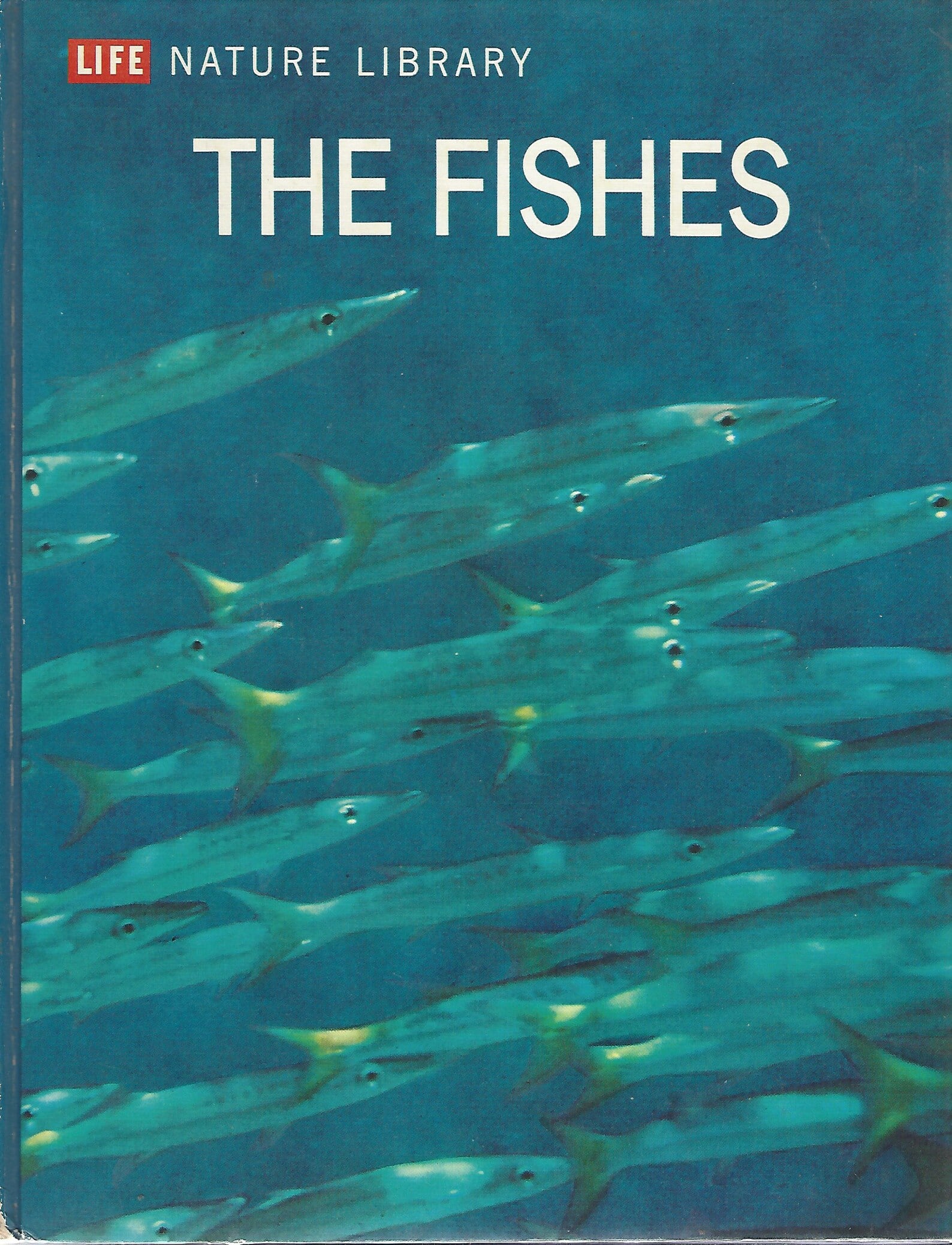
When I was very small, it was the TimeLife book of The Fishes, by F. D. Ommanney, which I remember endlessly poring over, my child’s mind gripped, in total fascination. The cover illustration showed a shoal of barracuda, mid-water and heading upwards, lit up as an iridescent blue by a column of sunlight. Oddly, it is only the cover and the illustrations of the deep sea creatures which I now remember—but I loved that book, as the weakened spine, blunted pages and dog-eared corners attested.
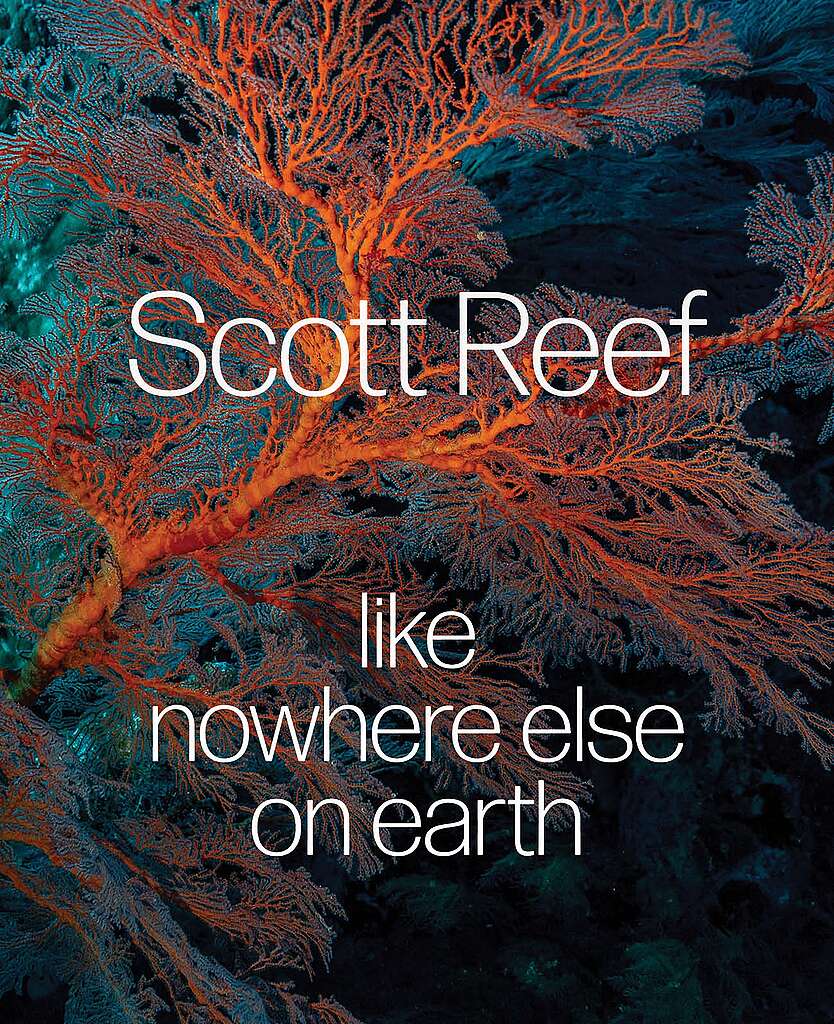
The Fishes has been on my mind recently, because I’ve been working with some dear friends on our own illustrated oceans book, to be published by Upswell Publishing. The book is called Scott Reef: Like Nowhere Else on Earth, and I want to share with you a bit of the story behind its creation.
Scott Reef is absolutely magnificent: Australia’s largest freestanding oceanic reef, brimming with life, including rare and threatened species such as a genetically distinct population of green sea turtles, pygmy blue whales and the wonderfully elegant dusky sea snake. But Scott Reef isn’t near our capital cities; it is way off the north-west coast of WA. And it is threatened with devastation by Woodside, which wants to drill up to 57 toxic wells at the Reef for its vast, dirty Browse gas project.
One of the main challenges in the fight to save Scott Reef from being turned into an industrialised gas zone by Woodside is bringing this incredible location to life for people who haven’t actually experienced it first hand. Because despite its ecological significance and dazzling beauty, ‘Scott Reef’ is also—at least not yet—exactly a household name.
To help get over this barrier, Greenpeace has enabled a number of photographers to travel to Scott Reef by boat (including the Rainbow Warrior) to document its astonishing diversity of colour and life. We then brought these images together in a remarkable photobook, produced by our talented in-house team, which we’ve been putting into the hands of as many leaders as possible—including the MPs whose decisions can determine the Reef’s future.
Back in June this year, I was sharing a copy of our in-house book at a business gathering in Perth when someone pulled me aside. Had we thought about publishing the book commercially? Apart from anything else, he wanted to buy a copy himself! He had a point. We were proud of what we’d created, but a commercially published version could reach a much wider audience and have even greater campaign impact. I immediately turned to my dear friend, Terri-ann White, who runs Upswell Publishing in WA, for advice.
Terri-ann has a huge heart and terrific vision. So many wonderful things in WA owe their existence to her doings, and, true to form, she was immediately encouraging and enthusiastic. “But,” she said, “it would add a whole new dimension if we had some words to accompany the incredible pictures.”
Fair enough, I thought. I could ask a few authors.
“And when would you like it published?” she asked.
“Ideally November,” I answered sheepishly.
Now, in publishing terms, nobody goes from idea to finished work, beautifully produced by a commercial publisher, in just four months. It. Just. Doesn’t. Happen. A book of this scale would ordinarily take nine months, I was told. But Terri-ann was undeterred. “If you can get a rapid turnaround on the writing, I will give it a shot.”
Over the following few days, I sent out 24 emails to prospective writers. To my joy and surprise 23 of them responded almost immediately with an enthusiastic yes!
Terri-ann was somewhat alarmed and perplexed when I told her the good news… we’d discussed a few authors, not more than twenty! “Impossible,” she texted. “Editing is important and you are talking about thousands of words!” But I also know Terri-ann. She does the impossible. And so, here we are… Terri-ann is going to hit that improbable deadline. Scott Reef: Like Nowhere Else on Earth will be on shelves in November.
The contributors are a wonderfully diverse bunch, united by their enthusiasm for Scott Reef — and their extraordinary speed!
It’s a brilliant mix. The book brings together national icons like Peter Garrett, Tim Winton, Mick Dodson, Janet Holmes à Court and Fiona Stanley; the intellectual heft of professors Frank Bongiorno, Jessica Meeuwig, Rick Steiner and Samantha Hepburn; the poetic vision of Prema Arasu, Berndt Sellheim and Saadiah Freeman; the field expertise and passionate first hand witnessing of Imogen Zethoven, Tooni Mahto, Ben Fitzpatrick, Geoff Bice, Olaf Meynecke, Paul Gamblin, Sarah Gittoes and Hayley Baillie; and the determination of emerging activist voices Jackson Reid and Emma Sangalli.
Their elegant words wrap themselves around the sheer wonder of the underwater world, brought to life by the work of the photographers — of whom one, Wendy Mitchell, has also contributed a wonderful essay.
Terri-ann showed me the full physical proofs this week and they are breathtaking. This book contains some of my absolute favourite images of wildlife beneath the waves -– and believe me, after almost 20 years at Greenpeace, I’ve been privileged enough to see some remarkable shots! The essays bring a whole new depth and richness to the story of Scott Reef.
If I am being honest, and maybe a bit sentimental, I hope that a four or five-year-old child somewhere in Australia will spend part of their summer holidays turning the pages of this book, wide-eyed with curiosity and awe at the beauty and strangeness of the creatures that call our oceans home.
Our shared commitment is to make sure that, as those children grow up, the wonders of Scott Reef will exist not just in the pages of the book, but out there in the wild waters off north-western Australia—alive, thriving, and every bit as extraordinary as they are today; a living wonder beneath the waves.
Pre-orders of Scott Reef: Like Nowhere Else on Earth are available here.


Q & A
Sometimes you get asked a question so often that you decide to produce a report to answer it!
We know there is strong public opposition to voter opposition to gas drilling at Scott Reef and fracking in the Kimberley in Western Australia. But I am frequently asked whether, even if people don’t want it, more gas drilling is a necessary evil to sustain WA’s prosperity?
The short answer is an unequivocal ‘No’. The longer answer is our new report, From Gas to Green: Building Western Australia’s Future State, which makes the comprehensive case that Asia’s gas market is declining — while WA has an enormous untapped opportunity to become a global leader in green industries and exports, helping drive the region’s shift away from fossil fuels. The faster that WA embarks on a decisive shift away from gas—and that includes no fracking in the Kimberley, or drilling at Scott Reef — so much the better for the state’s people, ecology and economy.