

Across these lands, First Nations are not simply responding to climate change; they are expressing a profound act of self-determination. Investing in resilience is not just about reducing risk or protecting infrastructure; it is about renewing relationships with land, water, plants, animals, and elements as the primary teachers of how to live, adapt, and thrive in a rapidly changing world.
For Indigenous communities, resilience is inseparable from identity, language, law, and governance. It is a way of saying: We will define our own adaptation, guided by the natural laws that have sustained life here for millennia.
Learning from Nature’s Long History of Change
Climate change is often described as novel or purely human-made. While industrial activity has unquestionably accelerated, the Earth’s climate has always been in motion. Over millennia, warming, cooling, flooding, and fire have continuously reshaped life. In these cycles, nature teaches a hard truth: some species perish, others adapt. Those that survive don’t just endure; they reorganize, forge new relationships, and sometimes emerge more resilient and diverse than before.
Indigenous Peoples have observed and lived within these adaptive processes for thousands of years. By watching how plants root deeper, how animals shift migration patterns, and how waters carve new paths, communities learn what authentic adaptation means. Adaptation is not an optional add-on; it is a law of life.
More-than-Human Teachers of Autonomy
Indigenous law and lifeways are rooted in the more-than-human world. Languages carry the verbs and metaphors of specific territories, while hunting, fishing, harvesting, and ceremony express ecological kinship.
From this perspective:
- Plants teach patience, rootedness, and collective defence.
- Animals show mobility, alertness, and cooperation.
- Waters’ model persistence and the quiet strength of flow.
- Fire and wind remind us of transformation and the limits of control.
These beings are not “resources.” They are teachers. They show that autonomy is not isolation but the capacity to respond to change while remaining in right relationship with the web of life. For many First Nations, this is where self-determination begins in the school of the land, long before it is written into policy.
Climate Change as a Crucible for Renewal
When communities design resilient housing, energy systems, food networks, or water infrastructure, they do more than install technology; they realign human systems with the teachings of their territories. This can mean:
- Designing community layouts that follow local contours, winds, and wildlife corridors.
- Adjusting hunting and fishing practices to track shifting species while maintaining reciprocity.
- Reclaiming fire stewardship to protect habitats and renew ecosystems.
- Localizing food and energy to reduce reliance on fossil-fuel-heavy supply chains.
Each of these is a form of climate self-determination. The more space, resources, and authority First Nations must shape such models, the more deeply adaptation can take root in long-term relationships with land and water. These shifts are not only technical but also cultural, linguistic, and spiritual. They create the conditions for communities to renew their institutions, habits, and values at the pace the Earth now demands.
Knowledge That Evolves with the Climate
As First Nations engage closely with their territories, monitoring ice, tracking plant cycles, observing wildlife, and watching shorelines, a living record of change emerges. Each project produces two transformations:
- Infrastructure evolves through new buildings, systems, and practices.
- Knowledge evolves, deepening understanding of place, risk, and interdependence.
This co-evolution is crucial. Static plans soon fail in a world of accelerating climate disruptions. True resilience relies on the capacity to read the land, interpret signals, and adjust course. When governance is grounded in the agency of the land itself, Indigenous Nations are uniquely positioned to lead this kind of adaptive practice.
From Self-Determination to Shared Sovereignty
When First Nations lead adaptation, they are not only strengthening their own communities, but they are also modelling shared sovereignty rooted in place. Shared sovereignty does not erase difference; it anchors relationships in mutual responsibility.
It rests on three recognitions:
- Natural laws, those governing water, soil, species, and climate, are the highest laws.
- Human governance must fit within them, not above them.
- Nation-to-nation relationships are strongest when grounded in shared duties to land and water.
As First Nations are supported to listen to and act from the authority of land, new possibilities for collaboration and climate justice open. Non-Indigenous societies have much to learn from these approaches, not just techniques, but humility: accepting that humans must adapt to the Earth, not the other way around.
A Path Forward for Climate Justice
Climate change is revealing the brittleness of systems built on extraction and the denial of limits. In contrast, Indigenous climate leadership offers another path, one grounded in relationship with morethanhuman relatives and exercised through responsibility rather than domination.
For readers of the Indigenous Climate Hub, this is an invitation to see resilience not as a technical challenge but as a renewal of connection:
- Supporting First Nations’ leadership strengthens teachers’ adaptation to lands, waters, and living beings.
- Investing in Indigenous self-determination invests in knowledge systems that can guide all communities through uncertainty.
- Embracing shared sovereignty honours natural law and the hope that, by learning from the Earth, humanity can move beyond survival into a state of balance.
In this light, climate change becomes more than a threat; it becomes the crucible through which deeper self-determination, wiser stewardship, and more just relationships among nations are forged.
Blog by Rye Karonhiowanen Barberstock
Image Credit : Kenzie Broad, Unsplash
The post Climate Resilience as an Act of Self-Determination appeared first on Indigenous Climate Hub.

Saturday, 17 October 2026
7.18 AM AWST
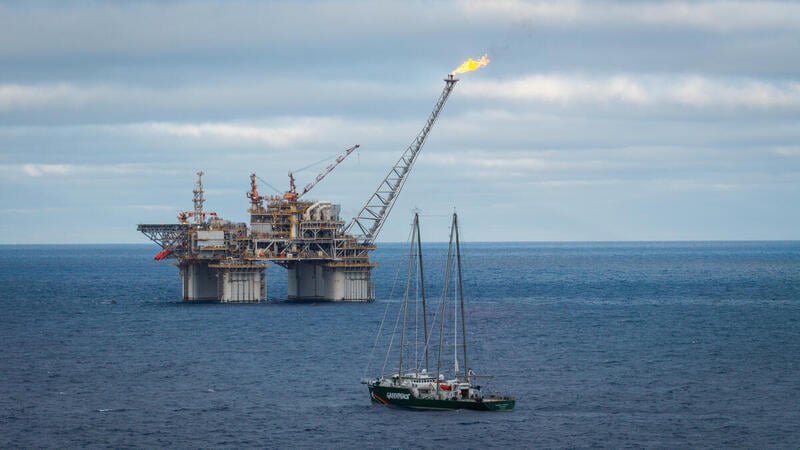
Hi folks! We’re joining you live from the Rainbow Warrior where we will be providing you with updates as our four activists continue scaling and occupying Woodside’s gas platform. The activists are peacefully protesting against Woodside’s latest gas expansion plans, the Browse project, which would see up to 57 toxic wells drilled at Scott Reef.
“Right now our activists are scaling Woodside’s massive Floating Production Unit. They are scaling the South-East pillar and the underside of the Helideck. They’ll be setting up camp soon and have plenty of provisions with them – so stick around!”
5:45 AM AWST
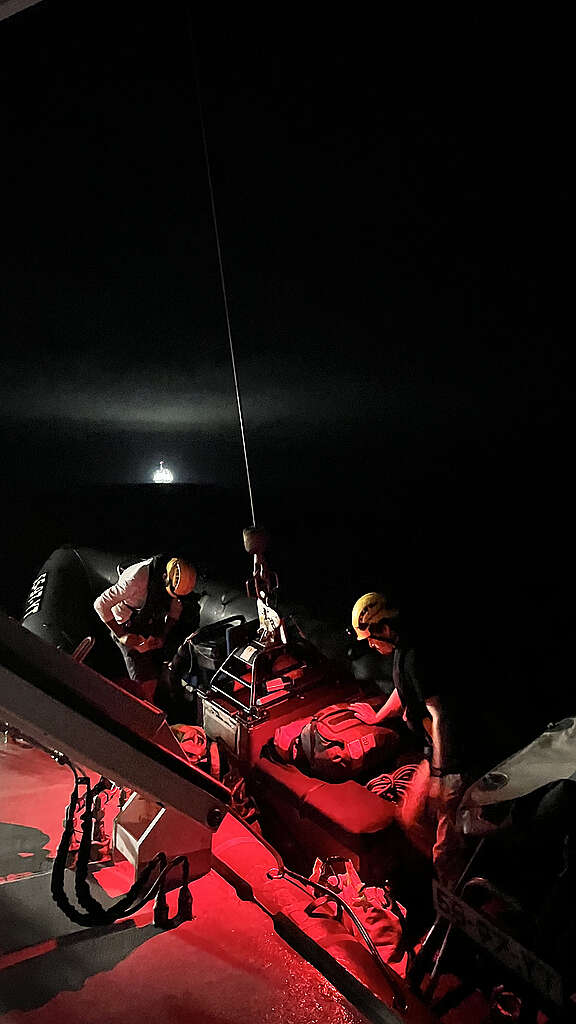
Our RHIBS are in the water! We’ve deployed our four activists and our ship crew on our small fast boats, headed to the gas platform. We’re carrying crew and equipment, plenty of food, all of our safety climbing gear, some big banners, cameras and a whole lot of heart… someone even has something to read after they get settled in.
5:26 AM AWST
Before sunrise activists prepared to launch RHIBS from the Rainbow Warrior.
Looking for a front seat view?
You can follow along with the Live Rainbow Warrior bow cam here!
Looking for more?
Follow us on Instagram for a peek behind the scenes and hear from our Rainbow Warrior crew.
Live blog: Greenpeace activists occupy Woodside gas project to save Scott Reef
Climate Change
Greenpeace activists climb and occupy Woodside’s Scarborough gas project calling on the Australian government to “Stop Woodside’s Dirty Gas” and “Save Scott Reef”
PERTH, Saturday 17 October 2026 — Four Greenpeace Australia Pacific activists are scaling and occupying a Floating Production Unit at Woodside’s Scarborough gas project off the coast of Western Australia, displaying banners reading: “Stop Woodside’s Dirty Gas. Save Scott Reef.”
- Photos and video available here and here. More will be uploaded throughout the day.
- Content and live updates will be uploaded to a live blog and to Instagram
Early this morning at 05:45 AWST, Greenpeace Australia Pacific activists launched from the Rainbow Warrior, Greenpeace’s flagship vessel, scaling and attaching themselves to a Floating Production Unit (FPU), a key piece of gas processing infrastructure at the Scarborough gas field over 200km off the coast of Exmouth.
Woodside has since confirmed it has initiated a temporary shut down of the FPU.
Greenpeace Australia Pacific is occupying the gas platform in peaceful protest of Woodside’s plans to drill for oil and gas at Scott Reef as part of its Browse proposal.
David Ritter, CEO at Greenpeace Australia Pacific, said: “Greenpeace Australia Pacific is taking action today to expose the unacceptable risk to Scott Reef posed by Woodside’s plans.
“Australians love our oceans. Woodside’s reckless Browse gas proposal would turn the magnificent Scott Reef into an industrial gas zone. Woodside wants to drill up to 57 toxic wells around Scott Reef, Australia’s largest oceanic reef, home to nesting green sea turtles, and endangered species like pygmy blue whales and the dusky sea snake; it is a place like nowhere else on Earth.
“Woodside has an alarming track record of oil spills, incidents and environmental neglect, and can’t be trusted with our oceans. From whaling in Albany in the seventies, to Woodside’s threat to Scott Reef today, there’s more than fifty years of history, of Greenpeace taking action off WA’s coasts to protect our oceans.
“There’s no future in new gas projects. Our future is in secure homegrown renewable energy, green industry and exports, where communities and places like Scott Reef are protected — there’s no future in dirty gas shipped offshore.
“The prospect of drilling for oil or gas on the Great Barrier Reef would be considered absolute madness today, but that is exactly the decision before the government: save Scott Reef or risk its destruction at the hands of a gas corporation.”
From aboard the Floating Production Unit, Dr Chris Holden, Greenpeace Australia Pacific activist said: “As a doctor, when I see new fossil fuel projects like Woodside’s Browse project being put forward, I can’t help but think about the impact this is going to have on the health of our communities and planet, and feel a sense of duty to act.
“Not only will this project do irrevocable harm to nature at Scott Reef, it will have a terrible impact on our climate, putting all of our lives at risk.
“On the Rainbow Warrior I’m carrying a copy of the 2025 Lancet countdown report, which warns that health impacts of climate change are worsening, with millions dying needlessly each year due to fossil fuel dependence, growing emissions, and failure to adequately adapt.
“With warnings like this from the leading global health professionals, our government simply can’t allow fossil fuel projects like Woodside’s Browse project to go ahead. It is their duty to do what is in the best interest of our communities.”
Almost half a million people have signed a petition calling on the government to Save Scott Reef and Woodside’s Browse gas project.
-ENDS-
Notes:
- Dial-in, SimSat and Zoom interviews with Geoff Bice, WA Campaign Lead at Greenpeace Australia Pacific, currently aboard the Rainbow Warrior, can be organised separately
Media contact:
Greenpeace Australia Pacific media team on +61 406 231 892 or +61 407 581 404
The board of the Fund for Responding to Loss and Damage (FRLD) will decide on Thursday on whether to “provisionally set aside” $20 million for Nepal to deal with some of the effects of the climate-driven flood it suffered in August.
The motion, seen by Climate Home News, has been drafted by a group of board members from both developed and developing countries and so is likely to pass easily at the fund’s first-ever extraordinary board meeting on October 22.
It invites the government of Nepal to submit a proposal for how to use the money, with the board then deciding at one of its regular board meetings whether to approve the proposal or not.
While Nepali officials have described $20 million as merely “symbolic” in the face of the $4.8 billion estimated costs of recovery and reconstruction, it would be the first time the new FRLD – agreed in 2022 months after devastating floods in Pakistan – has set aside money for a specific disaster.
Until now the fund has only taken requests through a single call for proposals, launched at COP30 in Belém last November, that gave countries six months to submit requests.
Most of the 180 projects the FRLD is currently considering are designed to help countries avoid damage from future climate disasters, for example by strengthening responses to floods in Bangladesh and Lagos.
The draft decision says Nepal’s proposal will serve as a pilot for how funding requests can be submitted outside of the fund’s current timetable. That could let governments seek funds quickly after a climate disaster strikes, rather than waiting for the next call.
This arrangement would set the fund apart from other United Nations funds designed for climate adaptation or cutting emissions like the Green Climate Fund.
Climate campaigners from Fill the Fund said the draft decision is “a real step forward” as it is “the first time this Fund has moved to respond to a specific disaster”.
Too little, too late
The FRLD was agreed by governments at COP27, set up and operationalised at COP28 in 2023 but has yet to award any money. The 180 funding requests it is currently considering would cost around $2.8 billion, but it only has $350 million to allocate.
The United Nations Secretary-General António Guterres has described the amount of money available in the fund as “ridiculously small” and Fill the Fund said $20 million “is a meaningful signal but it is a drop against an ocean of need”.
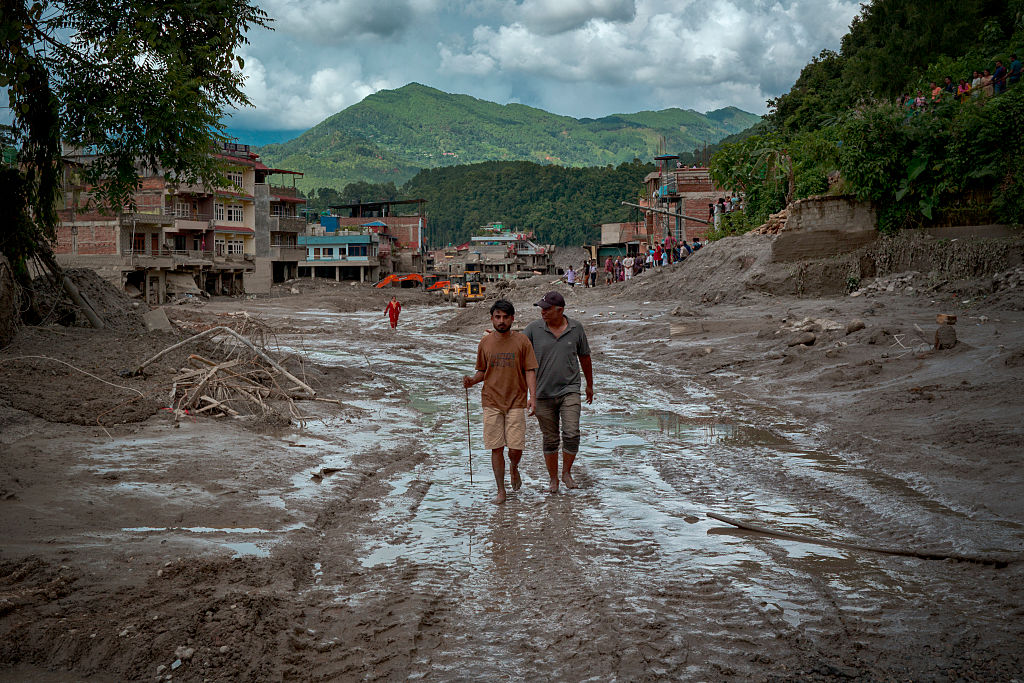
A glacial rock and ice collapse sent a torrent of water and debris through Nepal and the Chinese-administered region of Tibet on August 26. It killed more than 1,400 people, left thousands more missing and destroyed homes, bridges, roads and hydropower plants. Nepal’s finance and environment ministers quickly appealed to the FRLD board for funds, saying that “time is of the essence”.
Their call was followed swiftly by a letter from developing country FRLD board members urging the board’s co-chairs to organise an extraordinary meeting to allocate funds to Nepal.
But developed countries initially called for an informal consultation rather than a full board meeting. It took a further 45 days for the board’s co-chairs to organise an extraordinary board meeting for October 22 and to draft a motion for adoption.
Fill the Fund called for a permanent way of the fund rapid responding to disasters as “Nepal should not have required historic letters, an informal drafting group and the Fund’s first-ever extraordinary meeting simply to unlock an emergency response. The next country cannot wait two months and a bureaucratic marathon. Speed must be built in, not improvised.”
The post UN’s loss and damage fund set to give Nepal $20m for flood recovery appeared first on Climate Home News.
UN’s loss and damage fund set to give Nepal $20m for flood recovery


Is a Team of Is a Bunch of MAGA Thugs Beating the Snot Out of a Woman a New Low, or Is it What We Now Need to Expect?

Live blog: Greenpeace activists occupy Woodside gas project to save Scott Reef
Greenpeace activists climb and occupy Woodside’s Scarborough gas project calling on the Australian government to “Stop Woodside’s Dirty Gas” and “Save Scott Reef”
-
Climate Change1 year ago
Guest post: Why China is still building new coal – and when it might stop
-

 Greenhouse Gases2 years ago
嘉宾来稿:满足中国增长的用电需求 光伏加储能“比新建煤电更实惠”
-
Greenhouse Gases1 year ago
Guest post: Why China is still building new coal – and when it might stop
-

 Climate Change2 years ago
嘉宾来稿:满足中国增长的用电需求 光伏加储能“比新建煤电更实惠”
-