

Rachel Rose Jackson & Adrien Tofighi-Niaki of Corporate Accountability are lead researchers on a new report on the effectiveness of carbon offset reforms.
As we pen this, the world’s governments are gathered in Bonn, Germany, for a round of tense climate negotiations that must deliver fruitful progress if COP30 later this year in Belém has any chance of helping us avoid complete climate breakdown. Simultaneously, industry actors, policymakers and thousands of participants are coming together in London for more than 700 events meant to catalyse local to global climate collaboration.
We all know what is at stake should the world fail.
For decades, carbon offsets (or “pollution allowances” purchased by polluting actors and counted towards their emissions reductions) and the voluntary carbon market (VCM, which links up offsets into a globally tradable market) have been consistently promoted by world policymakers and the private sector as our key to addressing climate change.
Yet they have never, not once, correlated with a sustained decrease in global greenhouse gas emissions. Today, dozens upon dozens of independent studies and investigations repeatedly remind us of the fundamental failures of offsets and the VCM.
Pará’s Amazon forest carbon deal in doubt as prosecutors move to block it
Yet, the VCM is predicted to reach values of up to US$27 billion by 2035, signalling the clear intent to go “all in” on a scheme that has repeatedly proven its own failure. Meanwhile, leading scientists and the UN Secretary-General have warned against dubious offsets and put the VCM on notice, insisting the industry plug its holes or sink the ship.
VCM 2.0
In response to years of public exposure of its failures, the VCM industry is trying to defend its legitimacy through a coordinated reformation strategy – the “VCM 2.0.” New industry-led initiatives, methodologies, and standards have been launched to rescue the VCM – in a rush to assure investors that the Titanic’s holes are being plugged and that the iceberg is not fatal.
Going “all in” on offsets and the VCM means betting our futures, massive resources, and the ability of the planet to sustain human life on a mechanism that has failed to prove its competence for decades.
To understand how risky this bet is, we looked at “VCM 2.0” performance in 2024 to see if there are any signs that these reforms are spurring fundamental shifts, or whether carbon offsets are still beyond fixing.
Carbon credit auditors suspended for failures in sham rice-farming offsets
Widespread use of ‘problem’ offsets
What we found was concerning, but not surprising. Despite ongoing reforms, problematic offsets – with failings that mean they may not deliver the carbon savings they represent – remain the norm.
More than 47.7 million problematic offsets were “retired” (VCM lingo for purchased and counted towards emissions reductions) by 43 of the world’s largest projects in 2024, accounting for nearly a quarter of the entire VCM. None of these offsets can be counted on to deliver the promised emissions reductions, yet they are used by actors around the world, often in lieu of truly reducing emissions. In addition, we found that:
- Eighty percent of the offsets assessed were unlikely to deliver the promised emissions reductions.
- Nearly all (or 93%) of the projects retiring problematic credits are located in the Global Soth, countries that have historically contributed the least to climate change. This includes five projects in Brazil, host of the U.N climate talks later this year.
- The approval and promotion of problematic offsets spreads much further than one or two “bad apples.” Four registries and at least 17 verifiers were involved in approving these problematic offsets, signalling much broader responsibility for the failure of the VCM to deliver emissions cuts.
- Forestry and land use projects and renewable energy projects are among the most utilised problematic projects, though other sectors were also involved.
- All 37 projects we looked at in greater detail had a legitimate risk of having at least one fundamental failing that rendered the projects unlikely to deliver – totalling nearly 40 million credits. These projects either had a legitimate or high risk of non-additionality (23), non-permanence (14), leakage (17), or over-crediting (19).
Dangerous to ignore failings
This new research, which is just the tip of the iceberg, suggests that despite ongoing reforms, the VCM 2.0 continues to largely fail. Carbon offsets are hastening the likelihood of global climate action failure, not preventing it. Any advances through this reform appear to be limited in scope and potential, posing the question of why VCM supporters and investors continue to take on the liability in the face of proven (and repeated) failure.
Indigenous land disputes cloud Kenya’s carbon market ambitions
These findings, combined with the work of many other experts, necessitates clarity on who is responsible for the repeated failures of the ‘checks and balances’ of the VCM for the last decades. It’s time we reckon with what this research and the overwhelming evidence so clearly lays bare – that the VCM is still driving us head first toward the iceberg, and that offsets rip open rather than plug leaking holes, despite claims of reforms.
It is evident that 2024 repeated the failures of the past. We cannot entrust the VCM industry to captain the ship of climate action any longer. If we do, we know that humanity’s collision with the fatal iceberg is all but guaranteed.
*Neither Corporate Accountability nor the authors have any conflict to disclose. Corporate Accountability does not take any funding from corporations or governments. It is funded primarily by individuals and carefully vetted foundations.*
The post World’s largest carbon projects unlikely to deliver emissions cuts despite reforms appeared first on Climate Home News.
World’s largest carbon projects unlikely to deliver emissions cuts despite reforms

Next week, diplomats from around the world will descend on Yerevan, Armenia, to negotiate a series of decisions under the UN Convention on Biological Diversity (CBD).
Between 19 and 30 October, 196 parties will gather to hammer out the precise wording of the dozens of legal texts that make up the decisions under the Conference of the Parties (COP) to the CBD.
This year’s summit is particularly significant, as it marks the halfway point between the agreement of the Kunming-Montreal Global Biodiversity Framework and the deadline for achieving its targets.
The CBD has found that countries are currently not on track to meet 22 out of the framework’s 23 targets.
During the fortnight, delegates will also be negotiating decisions relating to the two supplemental protocols to the CBD: the Cartagena Protocol, which covers biosafety; and the Nagoya Protocol, which covers access and benefit-sharing for the use of genetic resources.
(The Cartagena and Nagoya Protocols, which are each governed by a “meeting of the parties”, or “MOP”, have fewer parties than the CBD as a whole, with 173 and 141, respectively.)
Carbon Brief is tracking the progress of countries towards consensus on dozens of negotiating texts using the interactive table below.
The tracker includes texts from the COP, as well as the MOPs for the Cartagena and Nagoya protocols. It also includes draft decisions from the most recent subsidiary body meetings, as these form the starting point for the negotiations in Yerevan.
The CBD has three subsidiary bodies: the subsidiary body on scientific, technical and technological advice (SBSTTA), the subsidiary body on implementation (SBI) and the subsidiary body on article 8(j) and other provisions (SB8J).
SB8J focuses on issues related to the Indigenous peoples and local communities. It was established at COP16 in Cali, Colombia, in 2024.
The first two columns of the interactive tracker list the topic of each agenda item and the relevant body, with subsequent columns including dates, page counts and links to the original documents.
The table is searchable and can be sorted using the arrows in the header.
Areas of disagreement in UN draft texts are denoted by square brackets. Counting the brackets in a particular iteration of a text therefore gives a sense of how far parties are from reaching consensus.
The bracket column is colour-coded, with dark green indicating a low number of brackets and red indicating a high number of brackets remaining.
Texts can also present parties with choices using “options” or alternatives (“alt”), which are counted together in the sixth column of the table.
The key discussions in Yerevan will centre around two agenda items in particular. The first is the global review, which will assess progress towards the GBF and make recommendations for accelerating action.
The second is finance, which can be separated into two parts: resource mobilisation and the financial mechanism. On resource mobilisation, biodiverse global south countries are likely to push for an increased amount of international finance for conservation.
Disagreement over the creation of the financial mechanism led to the suspension of COP16 in Cali in October 2024, as parties failed to find agreement on the mobilisation of finance before the end of the summit.
Global south countries want the establishment of a separate financial mechanism under the control of the CBD; global north countries largely prefer to maintain the existing mechanism, which sits under the Global Environment Facility.
At the resumed session of COP16 in Rome in early 2025, countries agreed on a roadmap that would lead to the establishment of a permanent mechanism.
related
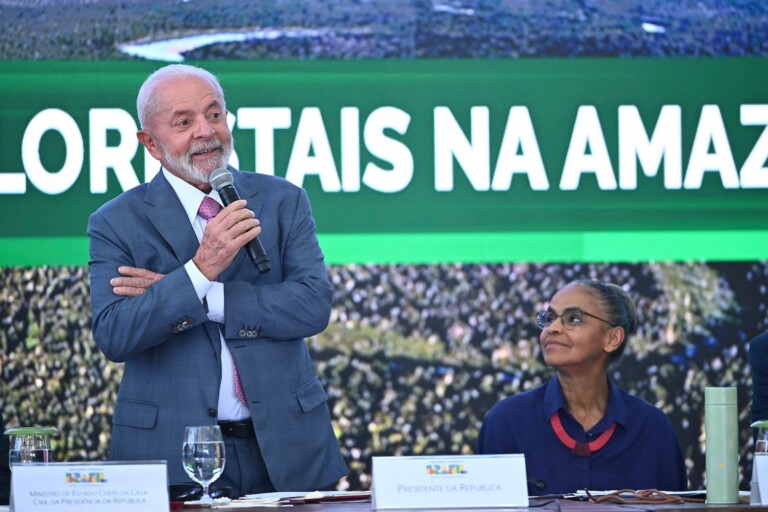
Analysis: Lula presidency saved at least 20,000km2 of Brazilian Amazon since 2022
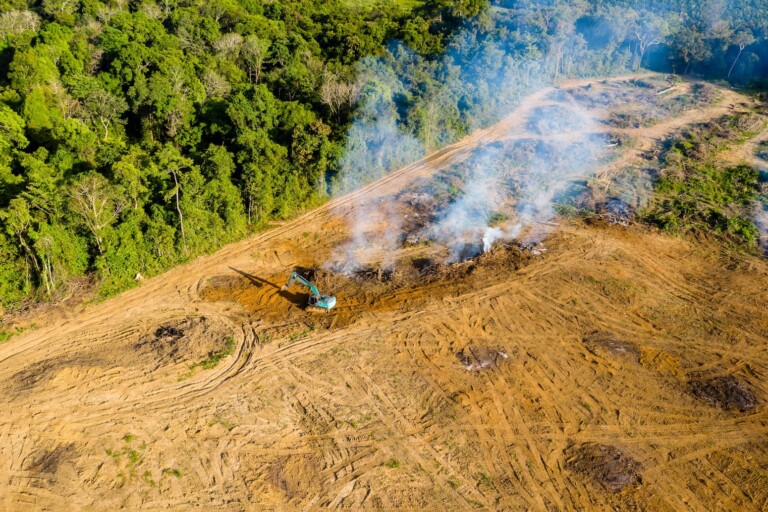
Why land-use emissions have fallen by a third this century – in six charts

Analysis: 84% of nations miss deadline to identify ‘nature-harming’ subsidies by 2025
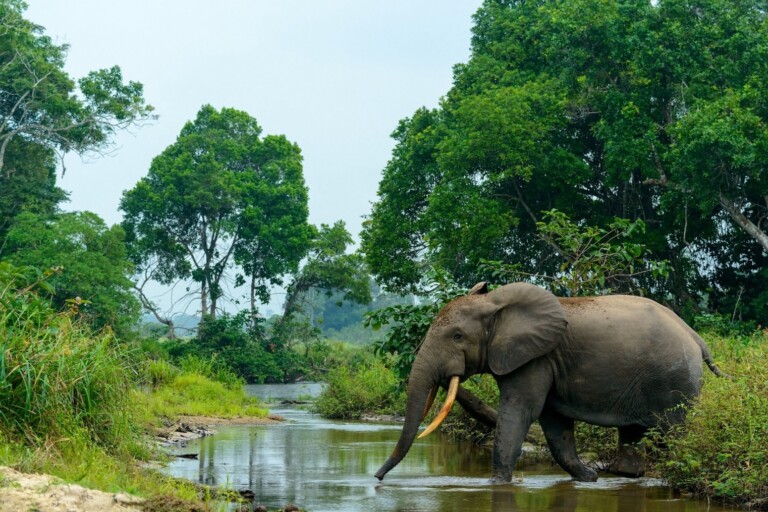
UK withdraws millions in funding from world’s second-largest rainforest in Congo
The post Interactive: Tracking negotiating texts at the COP17 biodiversity summit appeared first on Carbon Brief.
Interactive: Tracking negotiating texts at the COP17 biodiversity summit
A beacon of love
On an outer island of Fiji, two thousand nautical miles from Sydney, is a shining light of hope and resilience for our troubled world.
The island of Kioa is home to a Tuvaluan community who migrated from their atoll of Vaitupu in the late 1940s. It is a land of warm hearts, big smiles, and deep cultural roots; a place where the sound of a conch still summons the island together, where islanders paddle out to fish in carved outrigger canoes, and healthy happy children walk barefoot to school.
Here, culture is life. Kioans live sustainably through their traditional knowledge and practices. The island is alive with song, dance and the rhythms of a life tied to the tides, the winds, and the seasons.
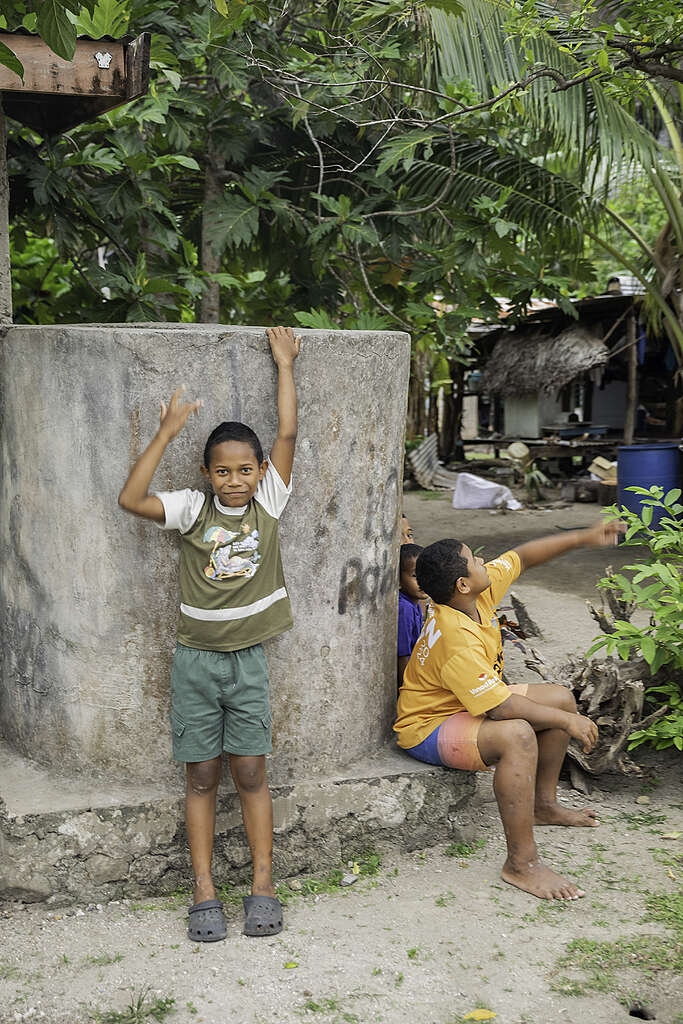
Facing the future
Greenpeace has been lucky to have a relationship with Kioa for a number of years now, and we are continually learning from this remarkable community.
Last week, as part of our Voyaging Oceania project, we returned to the island. Our purpose was twofold —- to carry messages from the island to leaders gathering in Nadi this week for the Pacific Pre-COP, and to support the Kioa community in their efforts to improve water security for the island.
Unlike Tuvalu itself, with its eight atolls, Kioa is a mountainous, forested and richly fertile island. It will remain habitable far into the future. Kioans did not initially migrate from Vaitupu due to climate change, but the move was prophetic. They now have a lifeboat.
However, even Kioa faces challenges on our rapidly warming planet, in particular when it comes to water. Climate change is shifting once reliable rainfall patterns. On top of this, the island is already feeling the effect of this year’s intensifying El Niño event, which for Fiji means reduced rainfall and prolonged dry spells.
Right now, fresh water has to be carefully rationed, and is only available for a few hours a day. During last week’s visit aboard our campaigning ship Oceania, Greenpeace was privileged to work with the Kioa community on a new solar-powered water distribution project for the island.
Designed and led by the island, the project involves using a solar pump to move water from a reliable source to a storage tank and then using gravity to distribute the water around the village.
It was a lesson in how local knowledge and ingenuity can be the backbone of today’s climate solutions. To build a dam around the source, the local community knew the exact spot where they could gather gravel at low tide to mix with the cement. They took only what was needed, knowing that all resources must be carefully conserved. Kioa has no roads and no machinery, and it was an all-of-island effort to carry the materials up to the project site, including many heavy bags of sand and rock.
Such projects truly bring to life the vision of a resilient, locally-led, fossil fuel free Pacific.