

The veteran climate envoys from the world’s two biggest polluters have stepped down in the same week, creating uncertainty at the top of international climate talks.
After suffering health problems, 74-year-old Xie Zhenhua Chinese climate envoy resigned earlier this month and will be replaced by foreign ministry diplomat Liu Zhenmin.
The same week this news broke, 80-year-old John Kerry told US President Joe Biden that he would step down as climate envoy in the next few months. He will campaign for Biden to win the presidential election in November. His replacement is unknown.
With the European Union appointing a new top climate diplomat last year and holding elections in June, all three of the world’s biggest polluters will be led by relatively new faces at Cop29 in November.
US-China ties
Xie has led China’s climate diplomacy for most of the period since 2007 while Kerry was heavily involved in climate talks as Barack Obama’s foreign minister and Biden’s climate envoy.
The two have a close personal relationship, shown most recently by Xie bringing his grandchildren to Cop28 in Dubai to sing happy birthday to Kerry. Xie’s return from retirement in 2021 was widely interpreted as a response to Kerry’s appointment.

Xie Zhenhua is a veteran of UN climate talks (Pic: UN Photos)
They have attempted to keep US-China climate talks going despite wider geopolitical tensions, particularly over China’s relationship with Taiwan.
The two sides are now talking about cooperation on issues like methane, clean electricity and urban climate action. But the outcome of US elections later this year could scupper talks.
China’s climate lead
Xie was appointed vice chair of China’s top economic planning body in 2007 and put in charge of climate talks. He was in the post until 2020 when he briefly retired before being re-appointed in 2021.
Former US negotiator Todd Stern described him in 2019 as a steadfast defender of Chinese interests who was likable, cared about climate change and wanted to get things done.
Witness bribing minister’s family own Congolese carbon credit company
Over his tenure, China has become more proactive about wanting to tackle climate change. It has set a net zero goal, established a carbon market, become a renewable energy leader and pledged to stop financing new coal power overseas – although it still plans to build many new coal plants.
Xie oversaw secret work to model different pathways for China to reach net zero emissions – models that eventually informed President Xi Jinping’s aim to reach carbon neutrality by 2060.
He suffered what Kerry called “something of a stroke” in January 2023 which prevented him from working and travelling abroad for much of this year, although he did lead China at Cop28 in Dubai.
The new boss
His replacement Liu previously worked for the United Nations as one of its second-highest ranking officials, focussing on economic and social affairs.
Before that, he was an ambassador to the United Nations in Geneva and then China’s deputy foreign minister and worked on the Paris and Kyoto climate agreements.

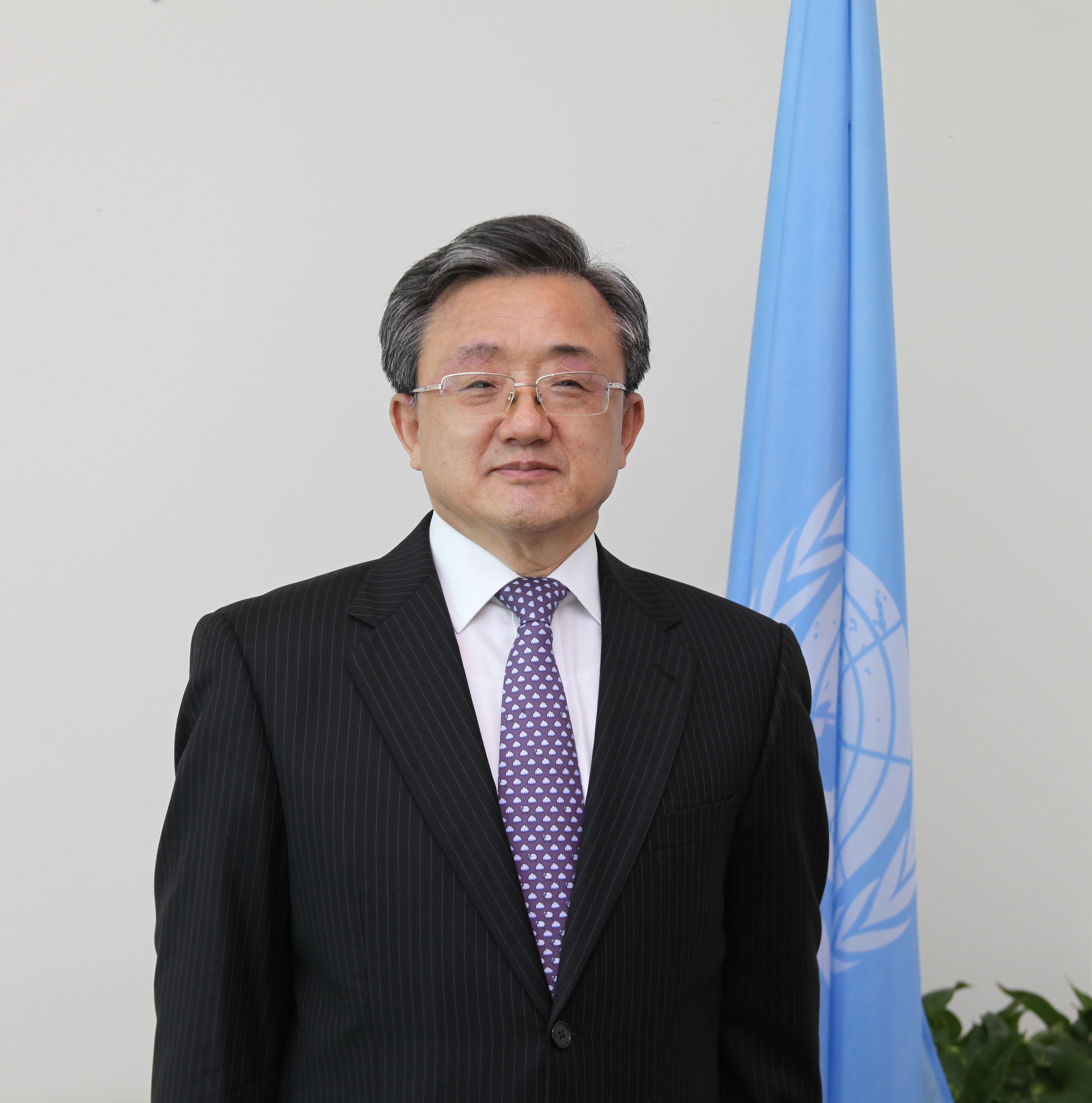
Liu Zhenmin poses for his official United Nations portrait (Photos: United Nations)
One China climate watcher, who did not want to be named, told Climate Home that many experts wanted someone from the environment ministry appointed not someone like Liu from the foreign service.
“To oversimplify,” they said, the”[foreign ministry] approaches climate as a card in U.S.-China grand bargain” whereas the “environment [ministry] sees climate change as a real issue that needs to be solved”. The foreign ministry “is known to be conservative and inaccessible”, they added.
On the other hand, the source said that Liu was “probably the most familiar with climate issues in China’s foreign service”.
Chatham House analyst Bernice Lee said, “sure, he is not from the environment ministry but no doubt he will be a fast learner not just in substance but also the building of an international network”. She described him as a “diplomat”, adding “challenging times require someone with diplomatic skills”.
Big hitter gone
After rising up as a Vietnam war veteran, senator and failed presidential candidate, Kerry was appointed as Barack Obama’s secretary of state in 2013.
Kerry worked with Xie to agree on carbon-cutting deals between the two nations which helped land the Paris Agreement in 2015. He went on to sign it with his granddaughter on his lap the next year.
“A la carte menu”: Saudi minister claims Cop28 fossil fuel agreement is only optional
Kerry left office when Donald Trump was elected in 2016. He came back into the fold immediately after the election of Joe Biden, who chose him as a presidential envoy on climate change. Kerry led the US delegation at Cop26, Cop27 and Cop28.
Jake Schmidt, from the Natural Resources Defence Council, said Kerry “helped rally the world around a commitment to transition away from fossil fuels, speed the growth of clean energy, and begin to mobilise resources to help the world’s most vulnerable nations cope with the consequences of the climate crisis”.
Kerry’s successor is unknown. His two deputies are Rick Duke and Sue Biniaz. If Donald Trump wins the presidential election in November, he is unlikely to appoint a climate envoy.
The post Veteran US and Chinese climate envoys step down appeared first on Climate Home News.

Climate Change
A Hunger Strike Ends, but an ‘Unreasonable’ Woman’s Battle Against Corporate Polluters Marches On
Four decades into her crusade against Texas petrochemical plants, a retired shrimper remains determined to fight Dow, the largest chemical company in America.
The Resistance, Part 1: With an army of lawyers, an activist legend squares off against polluting industries along the Texas coast she calls home.
A Hunger Strike Ends, but an ‘Unreasonable’ Woman’s Battle Against Corporate Polluters Marches On
Climate Change
Cancer Rates Are Higher Near Large Livestock Feeding Operations in 3 States, a New Study Finds
Researchers comparing maps of CAFOs with county-level disease data from California, Texas and Iowa found increased rates of all types of cancer, but said more research is needed to determine the cause.
People in three states living near large livestock feeding operations experience higher rates of cancer, a new analysis found.
Cancer Rates Are Higher Near Large Livestock Feeding Operations in 3 States, a New Study Finds
An interview with author Ed Yong.
Watch as Ed Yong, Pulitzer-winning science journalist and author of An Immense World, speaks with ICN executive editor Vernon Loeb about the extraordinary sensory worlds of animals, and the concept of the Umwelt, or the parts of an animal’s surroundings that it can uniquely perceive, sense and experience.



-
Climate Change8 months ago
Guest post: Why China is still building new coal – and when it might stop
-
Greenhouse Gases8 months ago
Guest post: Why China is still building new coal – and when it might stop
-

 Greenhouse Gases2 years ago
嘉宾来稿:满足中国增长的用电需求 光伏加储能“比新建煤电更实惠”
-
Climate Change2 years ago
Bill Discounting Climate Change in Florida’s Energy Policy Awaits DeSantis’ Approval
-

 Climate Change2 years ago
嘉宾来稿:满足中国增长的用电需求 光伏加储能“比新建煤电更实惠”
-
Climate Change Videos2 years ago
The toxic gas flares fuelling Nigeria’s climate change – BBC News
-

 Renewable Energy6 months ago
Sending Progressive Philanthropist George Soros to Prison?
-

 Carbon Footprint2 years ago
US SEC’s Climate Disclosure Rules Spur Renewed Interest in Carbon Credits