

Indigenous languages are more than tools of communication—they are living repositories of ecological knowledge, shaped by millennia of close relationship with the land, waters, skies, and all living beings. Each word, verb, and inflection embed understandings of place, seasonality, climate cycles, and human responsibility to the natural world.
As climate change accelerates, there is a growing recognition that language revitalization is climate action. Restoring Indigenous languages is about preserving culture and restoring knowledge systems that contain detailed and relational understandings of ecological processes. These languages offer insights urgently needed to adapt to and mitigate today’s environmental crises.
How Language Encodes Ecological Knowledge
Indigenous languages often describe the world relationally, not just descriptively. Many Indigenous terms describe relationships, behaviours, and responsibilities rather than naming things in isolation.
For example:
- In the Nuu-chah-nulth language on the west coast of Vancouver Island, there are multiple verbs for water movement—words that distinguish between rippling, trickling, flooding, or rushing. Each verb carries specific environmental cues: changes in rainfall patterns, seasonal flow, or flooding risk.
- In Anishinaabemowin, “Aki” refers to Earth as an animate being, reflecting a worldview where the land is not a passive backdrop but a living relative. This linguistic structure affirms that humans are in relationship with land, not dominion over it.
- In Gwich’in, different words for caribou describe their life stages, movements, and ecological roles. These linguistic distinctions hold knowledge about migration routes, mating cycles, and the health of the land.
Such examples reveal how Indigenous languages encode local environmental indicators, climate memory, and survival strategies within everyday speech.
Language and Climate Resilience: A New Frontier
As climate change disrupts familiar patterns, Indigenous languages offer tools to interpret these changes through a culturally grounded lens. Revitalizing these languages strengthens identity and cultural continuity and equips communities with local and regional knowledge systems that can assess and respond to ecological disruption.
In many communities, land-based language camps teach youth the names of medicines, constellations, and animals, alongside the protocols and stories accompanying them. This strengthens climate resilience through:
- Intergenerational knowledge
- Cultural pride and ecological responsibility
- Reinforced relationships with land, language, and community
Colonialism, Language Loss, and Environmental Consequences
Colonial policies and practices—including residential schools, forced relocation, and assimilation—aimed to sever the ties between Indigenous Peoples and their languages. Today, many Indigenous languages in Canada are critically endangered, and with their loss comes the erosion of place-based ecological knowledge that is not documented in Western science.
As communities work to reclaim their languages, they are also reclaiming their role as land stewards, drawing on ancestral teachings that define how to live in balance with all of creation.
Revitalizing Indigenous languages is thus not only cultural preservation but also environmental justice. It challenges extractive paradigms and reasserts worldviews that prioritize reciprocity, care, and interdependence with Mother Earth.
Recommendations for Readers
- Support Language Revitalization Programs
- Contribute to immersion schools, land-based learning camps, and Indigenous language organizations. These initiatives are vital for climate and cultural resilience.
- Incorporate Indigenous Languages into Environmental Education
- If you’re an educator, integrate local Indigenous terms into your climate, geography, and ecology lessons—always with appropriate consultation and permission.
- Attend Workshops and Learn Locally
- Participate in language classes or workshops offered by nearby Indigenous Nations. Learning a few words for local species, landforms, or weather phenomena can deepen your ecological awareness.
- Explore the Language–Climate Connection
Blog by Rye Karonhiowanen Barberstock
(Image Credit: Getty images, Unsplash)
The post The Language of the Land: Revitalizing Indigenous Languages for Ecological Understanding appeared first on Indigenous Climate Hub.
The Language of the Land: Revitalizing Indigenous Languages for Ecological Understanding

The amount of finance for nature delivered to date “falls far short” of what is needed to meet the UN’s global goals, according to a report released ahead of the COP17 biodiversity summit.
The global stocktaking report, prepared by the UN Convention on Biological Diversity (UN CBD) ahead of this month’s summit in Armenia, finds that developed nations are failing to close the $200bn “biodiversity finance gap”.
Initiatives designed to support this goal are also stumbling, with a special “framework” fund for biodiversity receiving less than $140m from developed countries in the past two years and the “landmark” Cali Fund receiving only $6,000 from private companies.
The availability of finance – or lack thereof – is likely to be a key point of contention in negotiations at COP17 in Yerevan, Armenia, which begin on 19 October.
Target for 2025 ‘not achieved’
At COP15 in 2022, 196 countries agreed to an ambitious global deal to reverse biodiversity loss by 2030, dubbed the Kunming-Montreal Global Biodiversity Framework (GBF).
Goal D of the agreement, shown below, states that countries must “close” a $700bn “biodiversity finance gap” by 2030.
This overall $700bn is made up of two parts: changes to nature-harming subsidies; and raising financial resources to support biodiversity.
Target 18 within the text calls for countries to “identify by 2025, and eliminate, phase out or reform incentives, including subsidies, harmful for biodiversity…progressively reducing them by at least $500bn per year by 2030”.
The remaining $200bn should be met by “mobilising” resources, according to target 19 of the GBF. It states that countries should “substantially and progressively increase the level of financial resources from all sources” to “at least” $200bn per year by 2030.
The overarching $200bn can be from national budgets, multilateral development banks or money “mobilised” from the private sector.
However, the target also specifically states that “at least $20bn per year by 2025 and…at least $30bn per year by 2030” should be public biodiversity funding provided to developing countries by developed countries – or others that “voluntarily assume” their obligations.
According to the global stocktaking report prepared by the CBD, between 2020 and 2023, countries mobilised a cumulative total of just $186.4bn. This is equivalent to an average of less than $50bn per year.
While the report – published on 10 September 2026 – cautions that it is “still too early to draw any conclusions”, it adds that this total “falls far short” of what is needed to close the $200bn-per-year biodiversity finance gap.
It continues to specify that the milestone of raising “at least $20bn per year by 2025” in public finance was also “likely not achieved”.
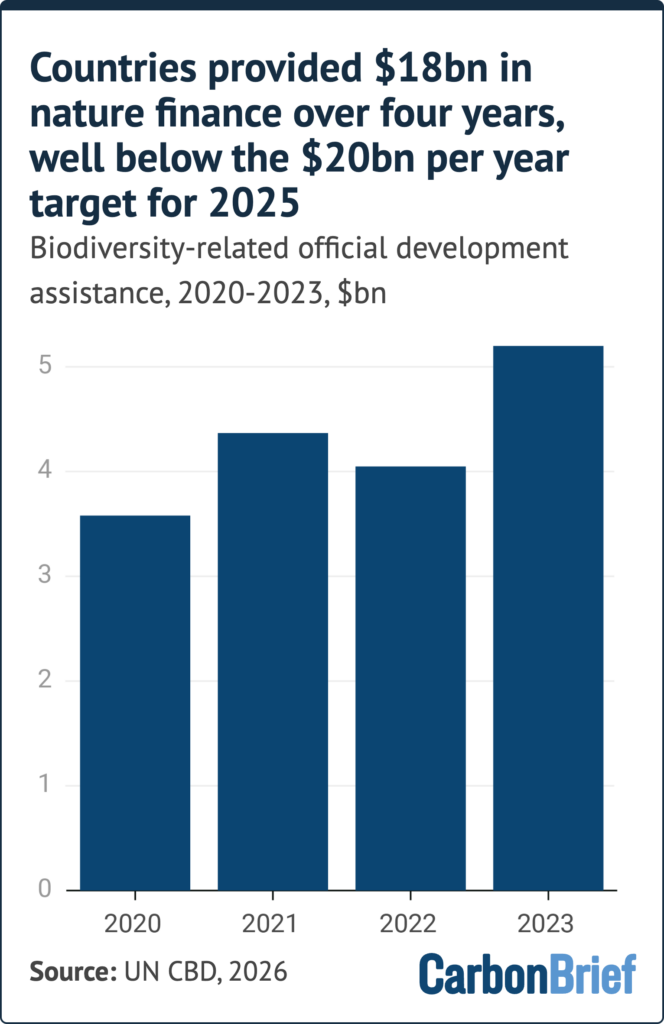
The report states that reporting countries raised a cumulative total of just $17.7bn in international public funding for biodiversity, across four years from 2020-23, as shown in the figure below. This amounts to an average of just $4.4bn per year.
These figures are supported by a report from the Organisation for Economic Co-operation and Development (OECD), which suggests that global biodiversity finance reached $74.9-92.4bn per year between 2023 and 2025.
It adds that, of this, international public finance contributed around $16.1bn per year on average – nearly $4bn below the 2025 goal.
Moreover, the OECD report says that only $7.9bn in 2023 to $8.5bn in 2024 was “biodiversity-specific” funding, with another $5.7bn and $6.5bn, respectively, coming in the form of funds for other priorities, in which support for biodiversity was a secondary aim.
While the GBF sets targets for nature finance in 2025 and 2030, developed countries should be making similar contributions every year, according to thinktank Third World Network.
Faltering initiatives
There are two main channels of international public finance that developed countries can use to meet their biodiversity finance commitments under the GBF. These are official development finance (ODF) and the Global Biodiversity Framework Fund (GBFF).
Separate figures for these channels also show financing falling behind the subtargets set out in the GBF.
This includes the Global Biodiversity Framework Fund (GBFF), which was established at COP15 in 2022.
It is currently housed under the Global Environment Facility (GEF) and reports directly to the biodiversity COP.
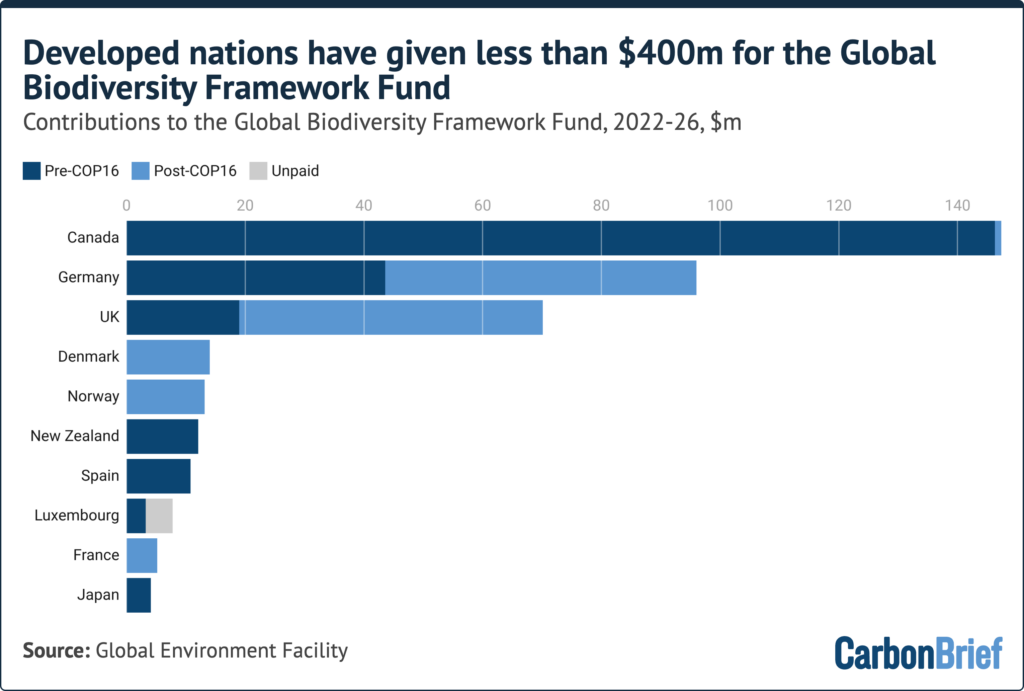
Despite an initial flurry of pledges for the initiative, developed nations had contributed less than $400m to the fund, as of July this year, according to data shared with Carbon Brief by the GEF.
Between August 2023 and 30 June 2026, the GBFF has received only $387.2m in signed commitments from 11 countries and one subnational government (Quebec in Canada).
The figure below shows that, after the initial pledges ahead of COP16 in 2024, there have only been a handful of new contributions to the fund.
Elsewhere, the Cali fund was created at the COP16 nature negotiations in Colombia in 2024.
It is the first-ever global fund for companies profiting from genetic data to contribute to conservation goals.
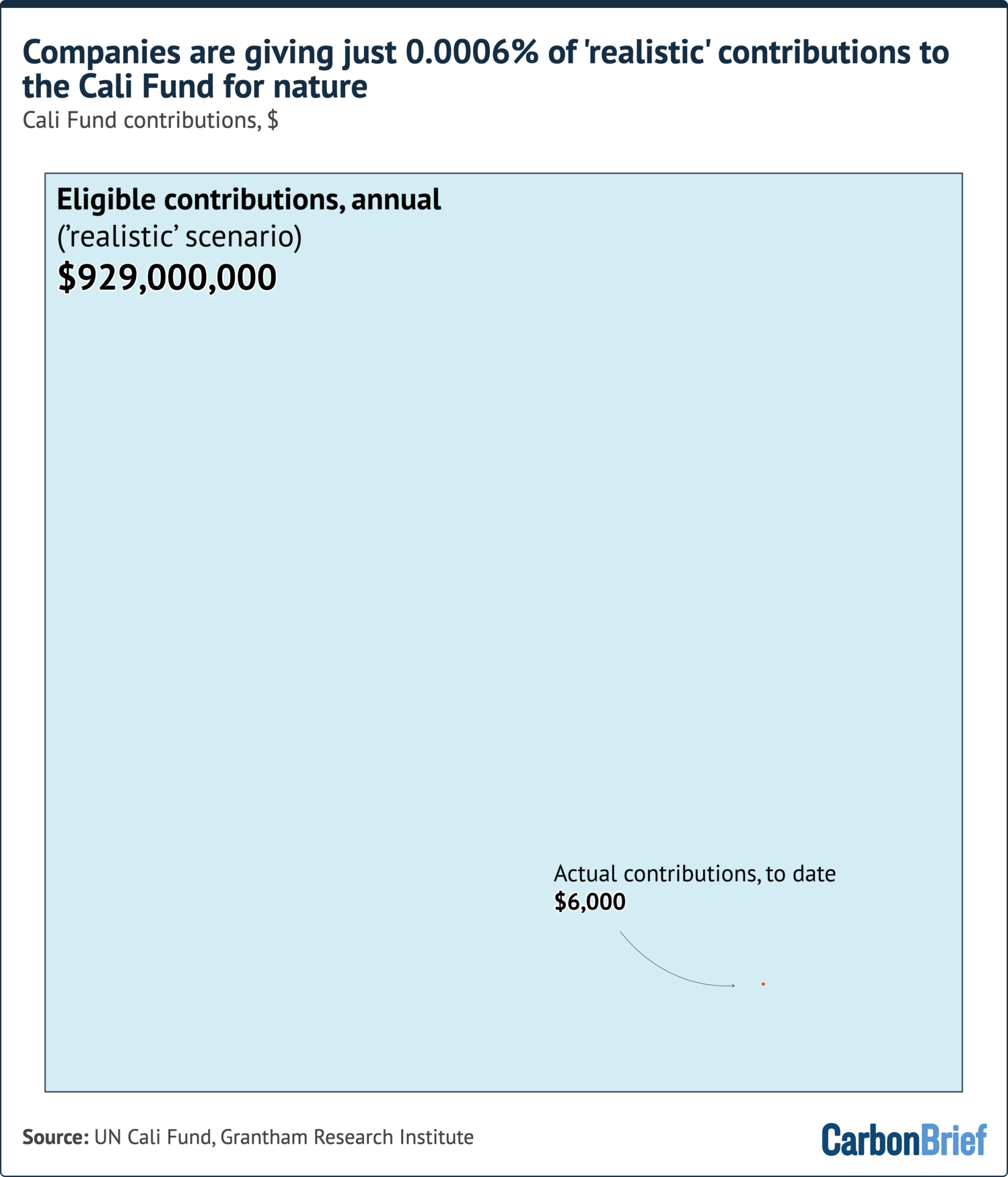
According to a working paper from the Grantham Research Institute at the London School of Economics, if all 21,690 eligible firms shared their profits according to the fund’s rules, they could raise $3.6bn for nature annually. The paper adds that, under a realistic uptake from companies, this could generate $929m annually for nature.
To date, however, the fund has received only two contributions, totalling $6,000.
Finance gap ‘fight’
Ahead of COP17 in Armenia, experts tell Carbon Brief that finance will be the most closely watched element of the stocktake of progress.
For developing countries that “hold most of the world’s biodiversity and bear the greater burden of implementation” of nature targets, the need for this financing is “very real”, says Lim Li Ching of the Third World Network speaking to Carbon Brief. She adds:
“These amounts fall far short of the GBF’s target 19. Developed countries have regrettably not met their legal obligations…[T]his failure should not be used as an excuse to pivot to the private sector or market-based mechanisms, which struggle to raise finance at scale and often deepen social and ecological harm.”
Options for private and “innovative” finance include debt-for-nature swaps, biodiversity offsets and carbon credits, but these are harder to monitor and have often faced criticism.
The Cali Fund is one avenue for companies to contribute directly to the CBD’s goals, with dedicated, transparent allocations for conservation projects and Indigenous peoples.
Dr Siva Thambisetty, associate professor of law at the London School of Economics, tells Carbon Brief that the fund is still a voluntary measure and it is up to countries “to create a constructive, ethical obligation” for companies to contribute. She adds:
“The private sector is doing what it always does: minimising outgoings and liability and maximising freedom to operate. I don’t believe the shift we need can be generated internally by businesses alone without outside pressure. States with jurisdiction over business need to take action.”
A non-profit initiative called the Cali Watch finds that “not a single government” has passed a law requiring companies to contribute to the fund. It estimates that eight companies alone should contribute more than $2bn, as part of what it calls their “Cali debt”.
Dr June Rubis, the Indigenous peoples and local communities lead on the Cali Fund’s steering committee, tells Carbon Brief that she is “worried about the pace” at which biodiversity finance is moving. Rubis continues:
“Each part of the finance architecture needs to start sending credible signals at the same time: developed countries on the $20bn commitment; donors on predictable finance for the GBFF; companies on Cali Fund contributions; and the Cali Fund itself on allocation and access. If one part moves while the others are repeatedly deferred, confidence in the wider biodiversity bargain becomes harder to sustain.”
She points out that for Indigenous peoples and local communities, “success also depends on whether finance can actually be accessed” to support communities’ priorities. She concludes:
“[H]eadline commitments matter, but so do the pathways through which money reaches people.”
The post COP17: Developed countries ‘fall far short’ of UN targets for nature finance appeared first on Carbon Brief.
COP17: Developed countries ‘fall far short’ of UN targets for nature finance
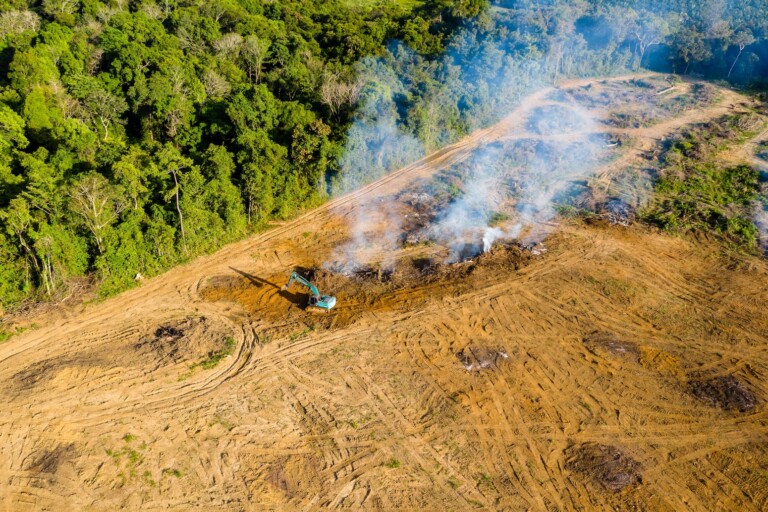
Latin American governments cracked down on forest clearing in 2025, leading global deforestation to fall by the most this decade, but political shifts and the likely impact of a strong El Niño threaten to undo those “fragile” gains, a new report has found.
Seven million hectares of forests – roughly the size of Ireland – were lost last year, a 15% drop from 2024. This marks the first meaningful slowdown in deforestation since 145 countries committed to ending deforestation by 2030 at COP26 in Glasgow in 2021, according to an annual assessment of the pledge.
But the researchers cautioned that the world remains 70% off track from fulfilling that promise and, despite progress in Latin America, deforestation in tropical Africa, home to the Congo Basin, kept rising. For the first time, it nearly matched losses in Latin America – a trend the report’s publishers called “particularly ominous”.
Erin Matson, a lead consultant at Climate Focus and one of the report’s authors, said the slowdown in the rate of deforestation “is welcome news”, but last year’s figures “look good in part because previous years look so bad”.
She added that, at the moment, last year’s progress should be seen as an “exception and not a new trajectory because the underlying problem has not gone away”.
Lula’s policies drive progress
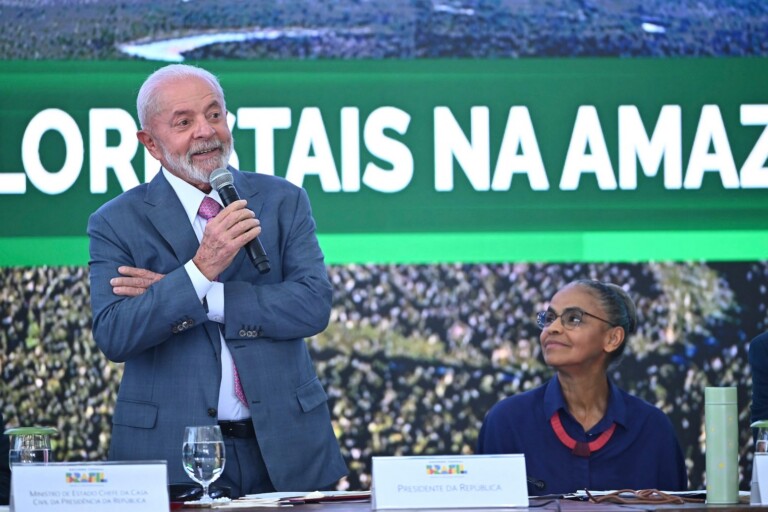
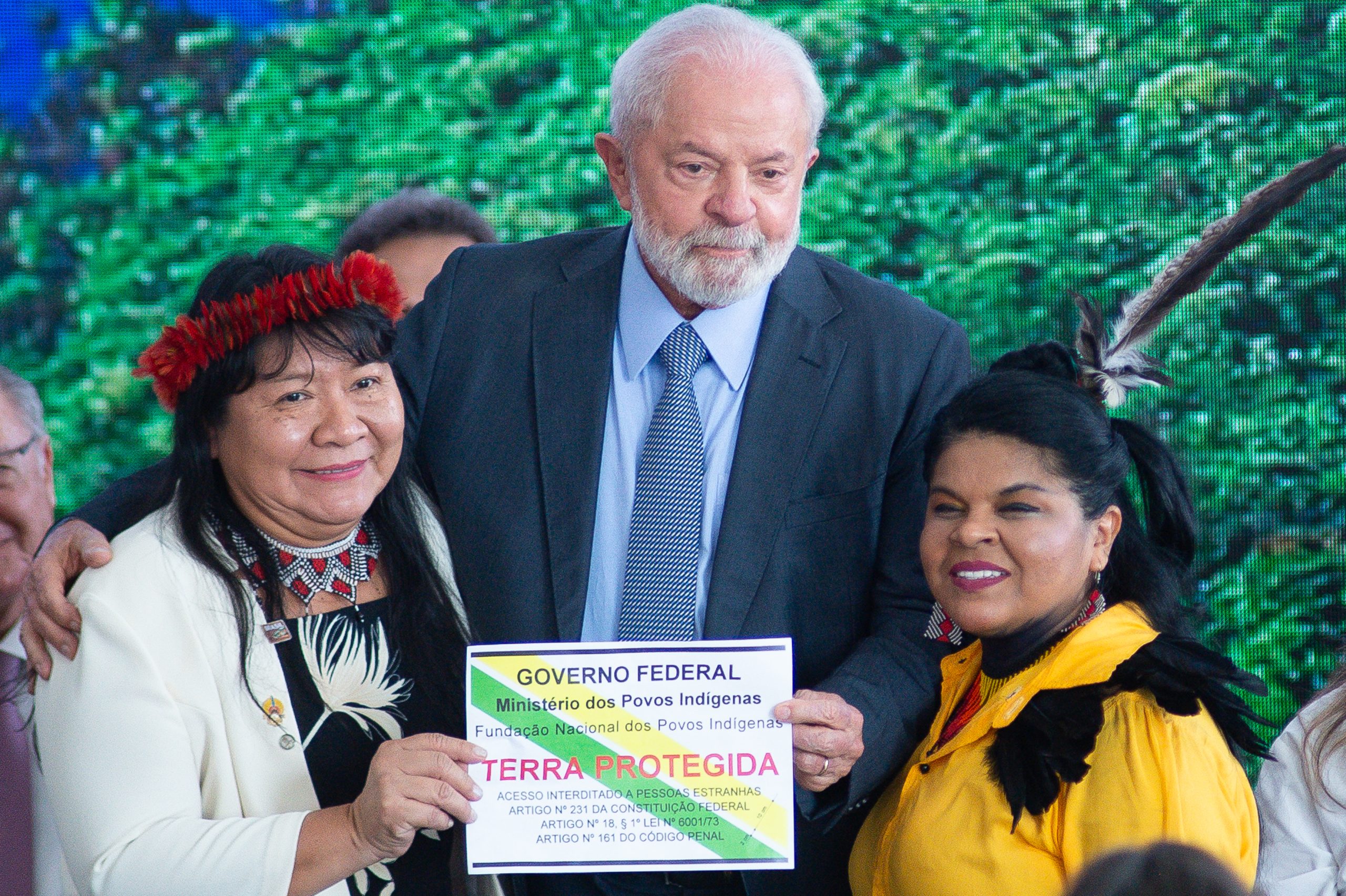
The decline in deforestation was primarily driven by reduced expansion of agriculture and cattle ranching in the Brazilian Amazon rainforest, thanks to a new deforestation action plan introduced by the Lula government and stronger enforcement measures, the report found.
“Brazil provides a concrete example of how national policies can be successful,” said Ana Flávia Corleto, legal analyst at Climate Policy Initiative in Brazil. “The combination of near real-time monitoring and targeted enforcement has contributed to a historical reduction in deforestation alerts in the Amazon, with a 36% decline between August 2025 and July 2026”.
-
Brazil confident new rainforest fund will reach $10bn donor milestone
Brazil’s environment minister said the Tropical Forest Forever Facility has raised billions in record time – which he hopes will convince more investors
