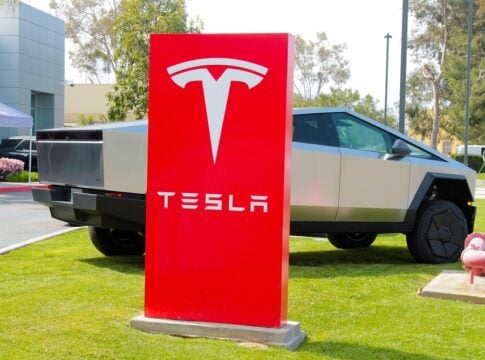
A new regulatory filing in the European Union shows that several major carmakers will not join the 2026 carbon credit pool led by Tesla. The filing lists Stellantis, Toyota Motor Corporation, and Subaru Corporation as absent from the Tesla-led alliance for the coming compliance year.
The change highlights an important shift in the European auto market. Carbon credit trading has become a major financial lever for electric vehicle makers, especially Tesla. At the same time, legacy automakers are investing heavily in electric and hybrid vehicles to reduce their dependence on regulatory credits.
EU Filing Reveals Breakup in Tesla’s Carbon Credit Alliance
The European Union allows automakers to join “emissions pools” to meet strict fleet-wide carbon targets, as shown below. In these alliances, companies combine their fleets when regulators calculate average CO₂ emissions.
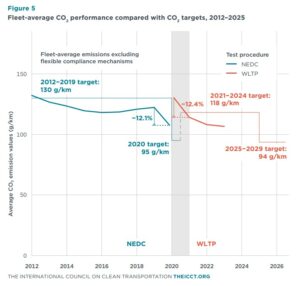
Carmakers with high emissions can offset them by joining a pool led by a low-emission manufacturer such as Tesla.
According to an EU filing dated February 27, 2026, Tesla is recreating its carbon credit pool for the year. However, Stellantis, Toyota, and Subaru are not currently listed as members.
The absence marks a change from 2025. That year, the Tesla pool included a large group of automakers: Tesla, Stellantis, Toyota, Subaru, Ford, Honda, Mazda, Suzuki, and Leapmotor. These partnerships helped companies comply with EU emissions targets while their EV production ramped up.
For 2026, the pool appears smaller. Current participants include Tesla alongside Ford Motor Company, Honda Motor Company, Mazda Motor Corporation, and Suzuki Motor Corporation.
However, companies can still join later. Automakers are allowed to enter pooling agreements until December 2026, leaving the door open for changes during the year.
How Tesla Turns Carbon Credits Into Billions in Revenue
Tesla’s role in carbon pools comes from its all-electric lineup. Since the company sells only zero-emission vehicles, its fleet emissions are far below EU regulatory limits. This creates excess regulatory credits. Tesla can sell those credits to other automakers that struggle to meet the limits.
Globally, Tesla has earned nearly $2 billion in 2025 from emissions credits, according to its report filings. The EV maker has earned a total of around $12.4 billion since 2017.
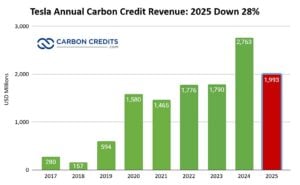
These revenues have historically played an important role in Tesla’s profitability. In several earlier years, regulatory credits accounted for a large share of the company’s net income.
In Europe alone, analysts previously estimated that Tesla’s pooling arrangements could generate more than €1 billion in annual credit revenue. For traditional automakers, buying credits is often cheaper than paying regulatory fines.
Under EU rules, companies that fail to meet emissions targets face penalties of €95 per gram of CO₂ above the limit for every car sold. This can add up quickly for large manufacturers selling millions of vehicles each year.
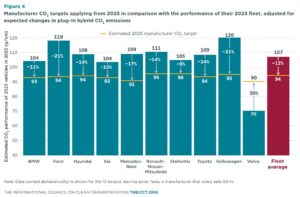
Carbon credit pooling, therefore, acts as a compliance bridge while companies transition their fleets to electric vehicles.
Why Some Automakers Are Leaving the Pool
The absence of Stellantis, Toyota, and Subaru from the 2026 pool may reflect several strategic changes across the industry.
First, the European Commission adjusted the compliance timeline. Instead of assessing emissions strictly for 2025, regulators now allow compliance based on the average emissions between 2025 and 2027.
This change gives automakers more flexibility. Companies that expect their emissions to fall in the next two years may decide they no longer need to buy credits immediately.
Second, many legacy manufacturers have expanded their production of hybrid and electric vehicles. For example:
- Toyota has one of the world’s largest hybrid fleets.
- Stellantis has expanded its EV lineup across brands such as Peugeot, Opel, Fiat, and Jeep.
- Subaru sells hybrid vehicles and is developing more EV models with Toyota.
These changes could reduce their reliance on Tesla’s credits in the short term. There are also corporate partnerships reshaping the market. Stellantis has a joint venture with Leapmotor, which sells EVs in Europe and could help offset emissions within the group.
Europe’s Strict Climate Rules Are Reshaping the Auto Market
The EU has some of the world’s strictest vehicle climate rules. Under the bloc’s current standards, automakers must steadily cut average fleet emissions. These targets support the EU’s broader climate goal of reducing greenhouse gas emissions 55% by 2030 compared with 1990 levels.
The long-term objective is even more ambitious. The EU plans to phase out sales of new gasoline and diesel cars by 2035, effectively shifting the market toward zero-emission vehicles.
As a result, the European EV market has grown rapidly. Battery-electric vehicles (BEVs) accounted for 15% in 2024. In 2025, this share rose to 19%, reflecting continued EV market growth amid stricter emissions rules.
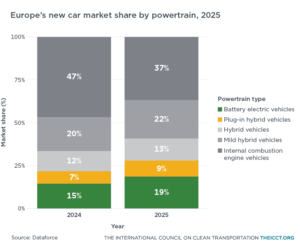
Hybrid vehicles also play a large role in the transition. Many manufacturers use hybrids to reduce fleet emissions while EV adoption grows.
Tesla’s EV Dominance Still Anchors the Carbon Credit Market
Despite changes in the credit market, Tesla remains one of the most influential players in the global EV industry. The company delivered about 1.81 million vehicles in 2024, making it one of the largest electric car producers worldwide. However, deliveries dropped to 1.6 million in 2025.
- Tesla’s main models include: Model 3, Model Y, Model S, and Model X.
The carmaker also continues to expand its production footprint. Major factories operate in the United States, China, and Germany. The company’s Gigafactory Berlin-Brandenburg plays a key role in supplying EVs to the European market.
However, BYD has overtaken Tesla in EV sales in 2025, both in the EU market and globally.
As EV adoption rises, the role of regulatory credits may gradually shrink. More automakers will meet emissions targets using their own electric vehicles rather than buying credits. Yet, credits still provide a useful financial buffer for Tesla during the transition period.
Are Carbon Pools a Temporary Bridge for the Auto Industry?
Carbon credit pooling reflects the uneven pace of the automotive transition. Some companies, like Tesla, moved early into fully electric vehicles. Others are still shifting large gasoline and diesel fleets toward cleaner technology.
Pooling allows the industry to comply with regulations while maintaining vehicle supply and avoiding sudden price increases.
Yet, the system may evolve. As more automakers scale EV production, fewer companies will need to buy credits. This could gradually reduce the value of Tesla’s carbon credit business, as the 2025 sales drop shows.
At the same time, tightening climate policies and rising EV demand could create new market dynamics.
For now, Tesla remains at the center of the regulatory credit ecosystem. The 2026 EU filing shows that alliances are shifting, but the underlying system still plays an important role in the global transition to low-carbon transportation.
The coming years will reveal whether carbon pools remain a major financial tool or become a temporary bridge as the auto industry moves toward fully electric fleets.
- READ MORE: BYD Banks 6.2M Carbon Credits Potentially Worth US$217M Under Australia’s EV Efficiency Scheme
The post Tesla’s Carbon Credit Empire Faces a Shake-Up as Stellantis, Toyota, Subaru Exit EU Pool appeared first on Carbon Credits.
Carbon Footprint
The real cost of 1 tonne of CO2: Translating carbon into hectares
Every business carbon footprint report ends with a number, the amount of carbon emissions produced by the business, less the amount of carbon reduced and offset, given in tonnes of CO₂. Many of the people who sign off on that number, including those who paid for it, cannot picture what it represents on the ground. A tonne is a unit of mass. CO₂ is invisible. The link between the amount offset in the report and a real piece of restored forest somewhere in the world is almost never indicated.
![]()
Carbon Footprint
Finding Nature Based Solutions in Your Supply Chain
Carbon Footprint
How Climate Change Is Raising the Cost of Living
Americans are paying more for insurance, electricity, taxes, and home repairs every year. What many people may not realize is that climate change is already one of the drivers behind those rising costs.
For many households, climate change is no longer just an environmental issue. It is becoming a cost-of-living issue. While climate impacts like melting glaciers and shrinking polar ice can feel distant from everyday life, the financial effects are already showing up in monthly budgets across the country.
Today, a larger share of household income is consumed by fixed costs such as housing, insurance, utilities, and healthcare. (3) Climate change and climate inaction are adding pressure to many of those expenses through higher disaster recovery costs, rising energy demand, infrastructure repairs, and increased insurance risk.
The goal of this article is to help connect climate change to the everyday financial realities people already experience. Regardless of where someone stands on climate policy, it is important to recognize that climate change is already increasing costs for households, businesses, and taxpayers across the United States.
More conservative estimates indicate that the average household has experienced an increase of about $400 per year from observed climate change, while less conservative estimates suggest an increase of $900.(1) Those in more disaster-prone regions of the country face disproportionate costs, with some households experiencing climate-related costs averaging $1,300 per year.(1) Another study found that climate adaptation costs driven by climate change have already consumed over 3% of personal income in the U.S. since 2015.(9) By the end of the century, housing units could spend an additional $5,600 on adaptation costs.(1)
Whether we realize it or not, Americans are already paying for climate change through higher insurance premiums, energy costs, taxes, and infrastructure repairs. These growing expenses are often referred to as climate adaptation costs.
Without meaningful climate action, these costs are expected to continue rising. Choosing not to invest in climate action is also choosing to spend more on climate adaptation.
Here are a few ways climate change is already increasing the cost of living:
- Higher insurance costs from more frequent and severe storms
- Higher energy use during longer and hotter summers
- Higher electricity rates tied to storm recovery and grid upgrades
- Higher government spending and taxpayer-funded disaster recovery costs
The real debate is not whether climate change costs money. Americans are already paying for it. The question is where we want those costs to go. Should we invest more in climate action to help reduce future climate adaptation costs, or continue paying growing recovery and adaptation expenses in everyday life?
How Climate Change Is Increasing Insurance Costs
There is one industry that closely tracks the financial impact of natural disasters: insurance. Insurance companies are focused on assessing risk, estimating damages, and collecting enough revenue to cover losses and remain financially stable.
Comparing the 20-year periods 1980–1999 and 2000–2019, climate-related disasters increased 83% globally from 3,656 events to 6,681 events. The average time between billion-dollar disasters dropped from 82 days during the 1980s to 16 days during the last 10 years, and in 2025 the average time between disasters fell to just 10 days. (6)
According to the reinsurance firm Munich Re, total economic losses from natural disasters in 2024 exceeded $320 billion globally, nearly 40% higher than the decade-long annual average. Average annual inflation-adjusted costs more than quadrupled from $22.6 billion per year in the 1980s to $102 billion per year in the 2010s. Costs increased further to an average of $153.2 billion annually during 2020–2024, representing another 50% increase over the 2010s. (6)
In the United States, billion-dollar weather and climate disasters have also increased significantly. The average number of billion-dollar disasters per year has grown from roughly three annually during the 1980s to 19 annually over the last decade. In 2023 and 2024, the U.S. recorded 28 and 27 billion-dollar disasters respectively, both setting new records. (6)
The growing impact of climate change is one reason insurance costs continue to rise. “There are two things that drive insurance loss costs, which is the frequency of events and how much they cost,” said Robert Passmore, assistant vice president of personal lines at the Property Casualty Insurers Association of America. “So, as these events become more frequent, that’s definitely going to have an impact.” (8)
After adjusting for inflation, insurance costs have steadily increased over time. From 2000 to 2020, insurance costs consistently grew faster than the Consumer Price Index due to rising rebuilding costs and weather-related losses.(3) Between 2020 and 2023 alone, the average home insurance premium increased from $75 to $360 due to climate change impacts, with disaster-prone regions experiencing especially steep increases.(1) Since 2015, homeowners in some regions affected by more extreme weather have seen home insurance costs increased by nearly 57%.(1) Some insurers have also limited or stopped offering coverage in high-risk areas.(7)
For many families, rising insurance costs are no longer occasional financial burdens. They are becoming recurring monthly expenses tied directly to growing climate risk.
How Rising Temperatures Increase Household Energy Costs

The financial impacts of climate change extend beyond insurance. Rising temperatures are also changing how much energy Americans use and how utilities plan for future electricity demand.
Between 1950 and 2010, per capita electricity use increased 10-fold, though usage has flattened or slightly declined since 2012 due to more efficient appliances and LED lighting. (3) A significant share of increased energy demand comes from cooling needs associated with higher temperatures.
Over the last 20 years, the United States has experienced increasing Cooling Degree Days (CDD) and decreasing Heating Degree Days (HDD). Nearly all counties have become warmer over the past three decades, with some areas experiencing several hundred additional cooling degree days, equivalent to roughly one additional degree of warmth on most days. (1) This trend reflects a warming climate where air conditioning demand is increasing while heating demand generally declines. (4)
As temperatures continue rising, households are expected to spend more on cooling than they save on heating. The U.S. Energy Information Administration (EIA) projects that by 2050, national Heating Degree Days will be 11% lower while Cooling Degree Days will be 28% higher than 2021 levels. Cooling demand is projected to rise 2.5 times faster than heating demand declines. (5)
These projections come from energy and infrastructure experts planning for future electricity demand and grid capacity needs. Utilities and grid operators are already preparing for higher peak summer electricity loads caused by rising temperatures. (5)
Longer and hotter summers also affect how homes and buildings are designed. Buildings constructed for past climate conditions may require upgrades such as larger air conditioning systems, stronger insulation, and improved ventilation to remain comfortable and energy efficient in the future. (10)
For many households, this means higher monthly utility bills and potentially higher long-term home improvement costs as temperatures continue to rise.
How Climate Change Affects Electricity Rates
On an inflation-adjusted basis, average U.S. residential electricity rates are slightly lower today than they were 50 years ago. (2) However, climate-related damage to utility infrastructure is creating new upward pressure on electricity costs.
Electric utilities rely heavily on above-ground poles, wires, transformers, and substations that can be damaged by hurricanes, storms, floods, and wildfires. Repairing and upgrading this infrastructure often requires substantial investment.
As a result, utilities are increasing electricity rates in response to wildfire and hurricane events to fund infrastructure repairs and future mitigation efforts. (1) The average cumulative increase in per-household electricity expenditures due to climate-related price changes is approximately $30. (1)
While this increase may appear modest today, utility costs are expected to rise further as climate-related infrastructure damage becomes more frequent and severe.
How Climate Disasters Increase Government Spending and Taxes
Extreme weather events also damage public infrastructure, including roads, schools, bridges, airports, water systems, and emergency services infrastructure. Recovery and rebuilding costs are often funded through taxpayer dollars at the federal, state, and local levels.
The average annual government cost tied to climate-related disaster recovery is estimated at nearly $142 per household. (1) States that frequently experience hurricanes, wildfires, tornadoes, or flooding can face even higher public recovery costs.
These expenses affect taxpayers whether they personally experience a disaster or not. Climate-related recovery spending can increase pressure on public budgets, emergency management systems, and infrastructure funding nationwide.
Reducing Climate Costs Through Climate Action
While this article focuses on the growing financial costs associated with climate change, the issue is not only about money for many people. It is also about recognizing our environmental impact and taking responsibility for reducing it in order to help preserve a healthy planet for future generations.
While individuals alone cannot solve climate change, collective action can help reduce future climate adaptation costs over time.
For those interested in taking action, there are three important steps:
- Estimate your carbon footprint to better understand the emissions connected to your lifestyle and activities.
- Create a plan to gradually reduce emissions through energy efficiency, cleaner technologies, and more sustainable choices.
- Address remaining emissions by supporting verified carbon reduction projects through carbon credits.
Carbon credits are one of the most cost-effective tools available for climate action because they help fund projects that generate verified emission reductions at scale. Supporting global emission reduction efforts can help reduce the long-term impacts and costs associated with climate change.
Visit Terrapass to learn more about carbon footprints, carbon credits, and climate action solutions.
The post How Climate Change Is Raising the Cost of Living appeared first on Terrapass.
-
Climate Change10 months ago
Guest post: Why China is still building new coal – and when it might stop
-
Greenhouse Gases10 months ago
Guest post: Why China is still building new coal – and when it might stop
-
Greenhouse Gases2 years ago嘉宾来稿:满足中国增长的用电需求 光伏加储能“比新建煤电更实惠”
-

Climate Change2 years ago嘉宾来稿:满足中国增长的用电需求 光伏加储能“比新建煤电更实惠”
-
Climate Change2 years ago
Bill Discounting Climate Change in Florida’s Energy Policy Awaits DeSantis’ Approval
-
Renewable Energy7 months agoSending Progressive Philanthropist George Soros to Prison?
-
Carbon Footprint2 years agoUS SEC’s Climate Disclosure Rules Spur Renewed Interest in Carbon Credits
-
Greenhouse Gases11 months ago
嘉宾来稿:探究火山喷发如何影响气候预测

