

Steven Stone is acting director of the United Nations Environment Programme’s Office of Science
In 1934, American economist Simon Kuznets presented a paper to Congress advocating for a new way of measuring economic performance.
The United States was reeling from the Great Depression, and Kuznets – a future Novel prize winner – wanted to gauge just how badly the country’s economy had been dented.
His metric, which would come to be known as gross domestic product (GDP), was a breakthrough. But as pioneering as it was, Kuznets saw its limitations.
“The welfare of a nation can scarcely be inferred from a measure of national income,” he wrote in the 1934 paper.
Some nine decades on, we have largely forgotten that message. GDP has become a barometer of economic progress, a kind of one-number-that-rules-them-all upon which national policies turn and governments rise and fall.
With the climate crisis deepening by the day – as evidenced by the heatwaves and wildfires now searing Europe – our attachment to GDP is looking like a problem.
In a single-minded pursuit of GDP growth, humanity is inadvertently feeding several environmental crises that, over the long run, threaten to make most of us poorer, sicker and more miserable. Climate change alone could slice 20 per cent off global GDP by 2100 – a staggering number.
Clear-cutting boosts GDP not wealth
We need to broaden our vision and definition of economic success before it’s too late.
I grew up in the 1970s and 80s surrounded by the mixed hardwood forests of the northeastern United States. For me, the trees were a refuge, a place to run, discover and savor the history and mystery of the land and its people.
Those experiences with my friends were more important than the amount of money in my pocket. And they led to a realization early on in my career as an economist: that wealth is about more than just income.
This is one of GDP’s most significant oversights.
With every forest we clear cut and every ounce of fossil fuel we burn, GDP rises. But through those actions, we are whittling away at the natural world, which supplies us with food, water, medicine, clean air and countless other essentials.
-
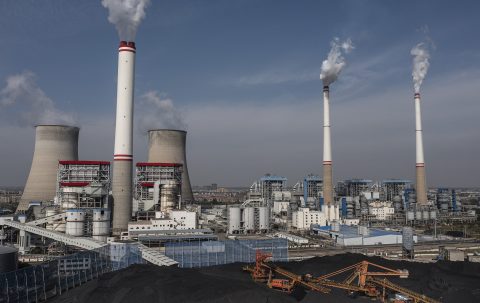
China’s coal power rebounds as record clean energy goes to waste
Long-term contracts guarantee coal plants buyers regardless of demand, crowding out renewables, report finds -
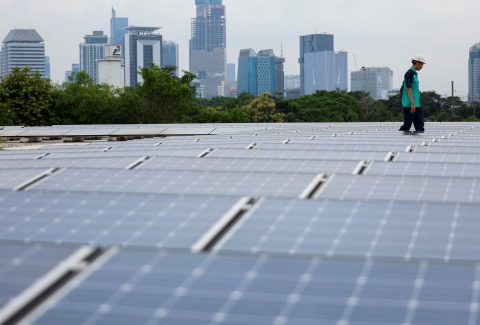
Southeast Asia’s fragile grids threaten billions in clean energy investment
Renewables developers need reliable electricity infrastructure and stable policies to help the region meet climate goals and surging demand for power
By focusing only on GDP, we’re ignoring what’s happening to the natural assets on which our prosperity ultimately depends. It’s like we’re driving a car and only looking at the speedometer, not the energy remaining in the battery.
That is the difference between measuring income versus measuring wealth.
The answer to this dilemma lies in looking beyond GDP. We must start considering a broader range of indicators when making policy decisions.
From an environmental perspective, that means measuring and valuing natural assets like forests, water, soil, biodiversity and clean air. By assigning a value to nature, decision-makers can better understand the economic consequences of, say, strip-mining a mountain top or letting plastic waste overwhelm a river.
There is still some debate over how exactly to do this kind of natural capital accounting. But that’s not a reason to dismiss it, as many have done. It took years of refinement to end up with the GDP formula we have today.
Costa Rica’s example
The idea of looking beyond GDP isn’t only a theoretical debate. Countries and communities around the world have started to make economic decisions based on their natural assets. A prime example is Costa Rica, a biodiversity hotspot where a years-long effort to conserve land and seascapes has led to a boom in tourism. That in part helped elevate the country into the club of high-income nations.
This kind of environmentally focused economic decision making can pay huge dividends. By stabilizing the climate, ending pollution and halting the loss of the natural world, humanity could save millions of lives a year and create US$20 trillion in economic benefits annually by 2070, found the Global Environment Outlook 7, a 2025 report from the United Nations Environment Programme (UNEP). The report was funded by the European Union among others.
I began my career as an economist before moving to UNEP, which focuses on solving the world’s thorniest environmental problems. During that time, I’ve come to appreciate that “wealth” means more than simply “income.” True prosperity means being able to provide for ourselves now and into the future. Anything short of that is an empty kind of affluence – and ultimately doomed to be short-lived.
As deadly heat blankets our cities, species slip into extinction and the planet struggles with rising toxicity and pollution, I am convinced that we can do better at measuring what matters. And that means updating and expanding how we measure economic progress.
The post As fires burn and temperatures soar, it’s time to imagine a world beyond GDP appeared first on Climate Home News.
As fires burn and temperatures soar, it’s time to imagine a world beyond GDP

Next week, diplomats from around the world will descend on Yerevan, Armenia, to negotiate a series of decisions under the UN Convention on Biological Diversity (CBD).
Between 19 and 30 October, 196 parties will gather to hammer out the precise wording of the dozens of legal texts that make up the decisions under the Conference of the Parties (COP) to the CBD.
This year’s summit is particularly significant, as it marks the halfway point between the agreement of the Kunming-Montreal Global Biodiversity Framework and the deadline for achieving its targets.
The CBD has found that countries are currently not on track to meet 22 out of the framework’s 23 targets.
During the fortnight, delegates will also be negotiating decisions relating to the two supplemental protocols to the CBD: the Cartagena Protocol, which covers biosafety; and the Nagoya Protocol, which covers access and benefit-sharing for the use of genetic resources.
(The Cartagena and Nagoya Protocols, which are each governed by a “meeting of the parties”, or “MOP”, have fewer parties than the CBD as a whole, with 173 and 141, respectively.)
Carbon Brief is tracking the progress of countries towards consensus on dozens of negotiating texts using the interactive table below.
The tracker includes texts from the COP, as well as the MOPs for the Cartagena and Nagoya protocols. It also includes draft decisions from the most recent subsidiary body meetings, as these form the starting point for the negotiations in Yerevan.
The CBD has three subsidiary bodies: the subsidiary body on scientific, technical and technological advice (SBSTTA), the subsidiary body on implementation (SBI) and the subsidiary body on article 8(j) and other provisions (SB8J).
SB8J focuses on issues related to the Indigenous peoples and local communities. It was established at COP16 in Cali, Colombia, in 2024.
The first two columns of the interactive tracker list the topic of each agenda item and the relevant body, with subsequent columns including dates, page counts and links to the original documents.
The table is searchable and can be sorted using the arrows in the header.
Areas of disagreement in UN draft texts are denoted by square brackets. Counting the brackets in a particular iteration of a text therefore gives a sense of how far parties are from reaching consensus.
The bracket column is colour-coded, with dark green indicating a low number of brackets and red indicating a high number of brackets remaining.
Texts can also present parties with choices using “options” or alternatives (“alt”), which are counted together in the sixth column of the table.
The key discussions in Yerevan will centre around two agenda items in particular. The first is the global review, which will assess progress towards the GBF and make recommendations for accelerating action.
The second is finance, which can be separated into two parts: resource mobilisation and the financial mechanism. On resource mobilisation, biodiverse global south countries are likely to push for an increased amount of international finance for conservation.
Disagreement over the creation of the financial mechanism led to the suspension of COP16 in Cali in October 2024, as parties failed to find agreement on the mobilisation of finance before the end of the summit.
Global south countries want the establishment of a separate financial mechanism under the control of the CBD; global north countries largely prefer to maintain the existing mechanism, which sits under the Global Environment Facility.
At the resumed session of COP16 in Rome in early 2025, countries agreed on a roadmap that would lead to the establishment of a permanent mechanism.
related

Analysis: Lula presidency saved at least 20,000km2 of Brazilian Amazon since 2022

Why land-use emissions have fallen by a third this century – in six charts

Analysis: 84% of nations miss deadline to identify ‘nature-harming’ subsidies by 2025

UK withdraws millions in funding from world’s second-largest rainforest in Congo
The post Interactive: Tracking negotiating texts at the COP17 biodiversity summit appeared first on Carbon Brief.
Interactive: Tracking negotiating texts at the COP17 biodiversity summit
A beacon of love
On an outer island of Fiji, two thousand nautical miles from Sydney, is a shining light of hope and resilience for our troubled world.
The island of Kioa is home to a Tuvaluan community who migrated from their atoll of Vaitupu in the late 1940s. It is a land of warm hearts, big smiles, and deep cultural roots; a place where the sound of a conch still summons the island together, where islanders paddle out to fish in carved outrigger canoes, and healthy happy children walk barefoot to school.
Here, culture is life. Kioans live sustainably through their traditional knowledge and practices. The island is alive with song, dance and the rhythms of a life tied to the tides, the winds, and the seasons.

Facing the future
Greenpeace has been lucky to have a relationship with Kioa for a number of years now, and we are continually learning from this remarkable community.
Last week, as part of our Voyaging Oceania project, we returned to the island. Our purpose was twofold —- to carry messages from the island to leaders gathering in Nadi this week for the Pacific Pre-COP, and to support the Kioa community in their efforts to improve water security for the island.
Unlike Tuvalu itself, with its eight atolls, Kioa is a mountainous, forested and richly fertile island. It will remain habitable far into the future. Kioans did not initially migrate from Vaitupu due to climate change, but the move was prophetic. They now have a lifeboat.
However, even Kioa faces challenges on our rapidly warming planet, in particular when it comes to water. Climate change is shifting once reliable rainfall patterns. On top of this, the island is already feeling the effect of this year’s intensifying El Niño event, which for Fiji means reduced rainfall and prolonged dry spells.
Right now, fresh water has to be carefully rationed, and is only available for a few hours a day. During last week’s visit aboard our campaigning ship Oceania, Greenpeace was privileged to work with the Kioa community on a new solar-powered water distribution project for the island.
Designed and led by the island, the project involves using a solar pump to move water from a reliable source to a storage tank and then using gravity to distribute the water around the village.
It was a lesson in how local knowledge and ingenuity can be the backbone of today’s climate solutions. To build a dam around the source, the local community knew the exact spot where they could gather gravel at low tide to mix with the cement. They took only what was needed, knowing that all resources must be carefully conserved. Kioa has no roads and no machinery, and it was an all-of-island effort to carry the materials up to the project site, including many heavy bags of sand and rock.
Such projects truly bring to life the vision of a resilient, locally-led, fossil fuel free Pacific.