

The future of solar energy in South Carolina is glowing with potential, as highlighted in The Economic Impact of the Solar Industry in South Carolina. This report, prepared by Dr. Joseph C. Von Nessen of the University of South Carolina, offers a compelling look at how the state’s solar industry is poised to deliver profound economic benefits while helping meet rising energy demands.
By 2035, the solar sector is projected to quadruple its current annual economic impact, injecting up to $19 billion into the state’s economy over the next decade. This growth in the solar sector will create more than 3,000 jobs and stimulate South Carolina’s economy while utilizing a maximum of 1.4 percent of agricultural land, allowing the state to position itself as a leader in solar development.
The Palmetto State has every reason to embrace a bright, sustainable energy future, but a lot has to happen for South Carolina to take advantage of this potential.
Is South Carolina ready for solar growth?
Legislative and utility program opportunities exist. Is the workforce ready? What about other land options besides agricultural land?
Legislation and Utility Programs
House legislation has been pre-filed to help move things forward. It is now up to legislators to ensure that renewables legislation will continue accelerating solar generation in South Carolina.
In addition to legislation, utility programs can be an opportunity or a roadblock for solar growth. Programs such as Duke Energy’s PowerPair, being piloted in North Carolina, can boost the opportunity to generate electricity from solar. Residents, public entities, businesses, and industry would all benefit from this opportunity. These programs need to be opened up to provide this opportunity to make these entities resilient.
Workforce
With this growth comes a need for more people in the solar industry to install, sell, and fulfill management and administrative roles at solar companies. Is South Carolina ready? Are the technical colleges and universities providing solar workforce training? Are high schools educating on renewable energy? There are great programs at Coastal Carolina University, Lexington Richland 5, and Richland School District Two; and new programs like the one by Solar United National are also paving the way for the solar workforce. The South Carolina Energy Office is a great resource for energy workforce training.
Let’s learn from these programs, expand education, and grow the solar workforce so South Carolina is ready for the demand.
It’s not just agricultural land
This new report acknowledges that 1.4% of agricultural land is a conservative estimate, which is correct. In addition to agricultural land, solar can also be installed on the roofs of homes, multifamily buildings, communities, churches, commercial buildings, land adjacent to churches, warehouses/distribution centers, roofs of industrial facilities, land adjacent to industrial facilities, military bases, healthcare facilities, etc.

South Carolina’s future is so bright we have to wear shades. Let’s harness this sun to generate electricity and usher in a bright future for the next generation.
The post South Carolina’s Solar Future is Bright appeared first on SACE | Southern Alliance for Clean Energy.

Renewable Energy
About Two-Thirds of Americans Will Never Call the Lake North of New York “Lake America”
 At what point did 30% of the U.S. electorate become so tuned into a criminal sociopath’s wanting to rename places in the Western Hemisphere in an effort towards his own self-aggrandizement?
The only interesting question that remains is what if any trajectory does this nation have to recover some level of dignity once Trump is removed from the presidency.
Some say it will take generations. No one knows for certain.
About Two-Thirds of Americans Will Never Call the Lake North of New York “Lake America”
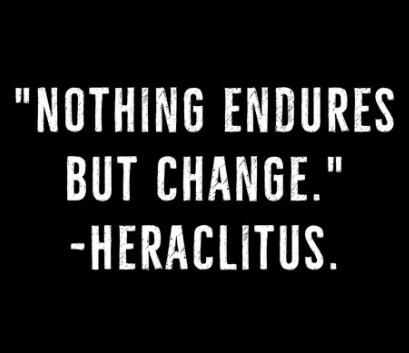 “No man ever steps in the same river twice, for it’s not the same river and he’s not the same man.” — Heraclitus
One of humankind’s greatest thoughts is tied up in this quote from the ancient Greek philosopher Heraclitus. It’s right up there with “I think therefore I am,” and “The unexamined life is not worth living.”
But where the last of the three are indisputable, what up with this “persistence of change” stuff?
It’s true that the aspects of people and things change. The walls of the Grand Canyon are constantly shifting, but no sensible person thinks it’s a different place than it was millions of years ago.
Most of the cells in my body die and are replaced in a matter of a few months, and my attitudes and beliefs change day by day. But my beloved kindergarten teacher, Alice Adams, will exist in my memories until the day I die.
What Heraclitus left of us is intellectually stimulating, but it doesn’t affect how we function as human beings.
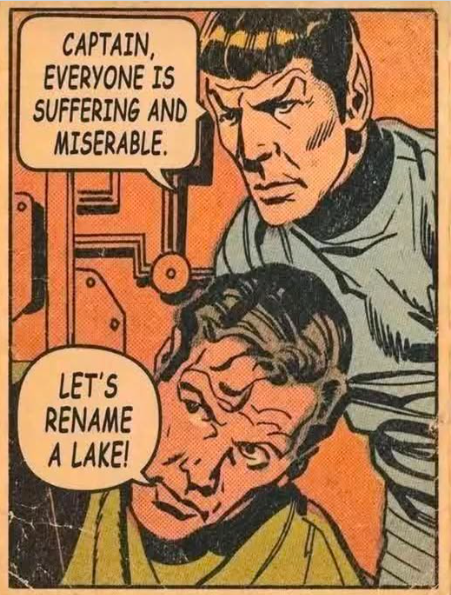 Americans have a wide variety of needs; affordability, healthcare, ending the war, and justice for Trump and his administration and probably at the top.
Nowhere on the list is the distraction that accompanies renaming a body of water.


About Two-Thirds of Americans Will Never Call the Lake North of New York “Lake America”
Pacific Islands Forum leaders, Albanese must not lose focus on Pacific priorities of climate and ocean

Explainer: The CMIP7 emissions scenarios – and how they explore future climate change
-
Climate Change1 year ago
Guest post: Why China is still building new coal – and when it might stop
-
Greenhouse Gases1 year ago
Guest post: Why China is still building new coal – and when it might stop
-

 Greenhouse Gases2 years ago
嘉宾来稿:满足中国增长的用电需求 光伏加储能“比新建煤电更实惠”
-

 Climate Change2 years ago
嘉宾来稿:满足中国增长的用电需求 光伏加储能“比新建煤电更实惠”
-
Climate Change2 years ago
Bill Discounting Climate Change in Florida’s Energy Policy Awaits DeSantis’ Approval
-

 Renewable Energy10 months ago
Sending Progressive Philanthropist George Soros to Prison?
-
Greenhouse Gases1 year ago
嘉宾来稿:探究火山喷发如何影响气候预测
-

 Carbon Footprint2 years ago
US SEC’s Climate Disclosure Rules Spur Renewed Interest in Carbon Credits