
Connect with us

Published

on

regenerative agriculture

Danish carbon credit company, Agreena’s “AgreenaCarbon Project” reached a major milestone by becoming the first large-scale arable farming initiative verified under Verra’s Verified Carbon Standard (VCS) VM0042 Improved Agricultural Land Management v2.0 methodology.

This achievement advances carbon markets by providing verified, traceable, and compliance-ready credits supported by measurable, field-level data. By issuing 2.3 million Verified Carbon Units (VCUs), the project enables farmers and corporates to drive real climate action and align with global sustainability goals.

Mandy Rambharos, the Chief Executive Officer of Verra, commented:

“The AgreenaCarbon Project is extremely important because it demonstrates how soil carbon projects can scale. It spans vast areas of land across multiple countries in Europe – from Ukraine to Spain – showing the breadth and reach of its impact. By implementing VM0042 and ensuring the right protocols, we can guarantee the quality and integrity of the carbon credits generated. This gives us confidence that these projects truly have the ability to scale.”

AgreenaCarbon: Setting a New Benchmark for Agriculture-Based Carbon Credits

The press release highlights that the AgreenaCarbon Project operates across 1.6 million hectares of regenerative farmland spanning countries including the UK, Denmark, Ukraine, Moldova, Romania, Lithuania, Latvia, Estonia, Bulgaria, and Spain. Its success in securing VCS verification underscores the credibility and integrity of its carbon credits.

Unlike conventional farming initiatives that primarily focus on yield, Agreena’s approach emphasizes soil health, biodiversity restoration, and measurable greenhouse gas reductions.

Through its holistic solution, Agreena finances farmers’ transition toward regenerative practices, rigorously verifies their impact using AI-driven digital measurement, reporting, and verification (dMRV), and offers corporates access to high-quality nature-based carbon offsets.

The verification process, following its validation earlier in 2025, confirms that the project has delivered verifiable carbon benefits from historic practices implemented in 2021, 2022, and 2023.

Simon Haldrup, CEO and co-founder of Agreena, added:

“The verification of the AgreenaCarbon Project reaffirms Agreena as a leader in regenerative agriculture, proving that soil carbon sequestration can be measured, verified, and trusted at scale. This milestone empowers farmers – the true climate heroes – to adopt new practices through verified carbon credits, while giving corporate buyers the confidence to invest in meaningful climate action. Agreena is proud to be building the world’s largest verified supply of soil carbon credits, bringing the first large-scale wave of high-quality credits to market.”

Delivering Climate Solutions with Proven Impact

Agreena’s regenerative practices have already contributed to achieving the following carbon reduction milestones:

  • Nearly 1.2 million tonnes of CO₂ have been cut through improved farming methods, equivalent to removing 261,000 cars from the roads for an entire year.

  • Over 1.1 million tonnes of CO₂ have been captured and stored in soils, matching the yearly carbon footprint of 90,000 individuals.

These results are independently verified by accredited third-party agencies, ensuring that every credit issued reflects real, field-based impact.

Farmers are the backbone of this effort. Oleksandr Mustipan, a farmer involved with Agreena, described the project as transformative: “Working with Agreena has truly been a game-changer. It enabled us to scale up regenerative practices faster and more effectively than I ever could alone. The verification process validates our contribution and motivates us to continue making a difference.”

For corporates, these credits offer a trusted mechanism to meet ESG targets while supporting agricultural ecosystems. Leading firms such as Radisson Hotel Group have already pre-ordered a substantial share of the credits, underscoring market confidence in Agreena’s offering.
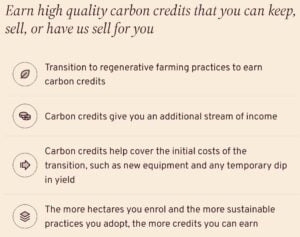
AgreenaCarbon carbon credits
Source: AgreenaCarbon

Growing Carbon Credits with Regenerative Agriculture

Agriculture is responsible for 22% of global anthropogenic emissions, making soil management a critical pillar in climate mitigation strategies. Conventional farming practices, reliant on chemical inputs and intensive tillage, have degraded soil health and diminished its carbon-storing potential.

In contrast, regenerative practices focus on rebuilding organic matter, enhancing biodiversity, and fostering long-term resilience.

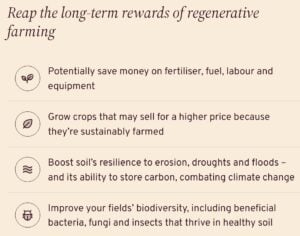
Key practices employed across Agreena’s projects include:

  • Cover cropping helps lock carbon into the soil while improving nutrient cycling.
  • Crop rotations promote soil structure and reduce disease pressure.
  • Residue management, minimizing soil disturbance, and protecting microbial life.
  • Reduced or no-tillage techniques, lowering emissions, and preserving soil integrity.

These interventions not only generate carbon removal credits by storing atmospheric CO₂ in the soil but also contribute avoidance credits by reducing emissions from fertilizer use or energy consumption. The combined effect of such practices offers a diversified credit profile that meets varying market needs.
regenerative agriculture AgreenaCarbon
Source: AgreenaCarbon

How Regenerative Practices Are Redefining Agriculture

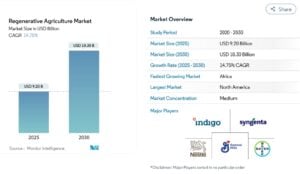
According to Mordor Intelligence, the regenerative agriculture market is poised for rapid expansion. With an estimated market size of USD 9.2 billion in 2025, projections indicate growth to USD 18.3 billion by 2030, reflecting a 14.75% CAGR.

The report further explains several factors that are driving this momentum:

Corporate Commitments

Major food and beverage companies are investing heavily in regenerative sourcing. Nestlé pledged CHF 1.2 billion to source half its priority materials from regenerative farms by 2030, while PepsiCo is funding USD 216 million to transition 7 million acres. These initiatives are expanding through supply chains, offering growers premium contracts and stable revenue.

Government Incentives

Policies are increasingly supporting regenerative practices. The USDA’s USD 3.1 billion program rewards verified soil improvements, and 25% of Europe’s CAP payments now target eco-friendly schemes. Denmark’s mix of taxes and subsidies further encourages sustainable farming.

Consumer Preferences

Growing demand for climate-friendly products is pushing brands to highlight regenerative practices. 63% of food companies now include regenerative agriculture in their sustainability plans, creating new market opportunities for growers.

Financial Risk and Opportunity

Banks and investors are factoring soil-carbon gains into lending strategies. Verified projects help reduce financing risks, leading to lower interest rates and easier access to capital for sustainable farming initiatives.
regenerative agriculture
Source: Mordor Intelligence

Driving Trusted, Scalable Climate Action with Verra

The AgreenaCarbon Project’s verification by Verra marks a pivotal moment in agriculture-based carbon markets. It confirms not only the methodology but also the soil’s wider potential as a climate solution.

By combining financial support, scientific rigor, and farmer-focused practices, it is driving regenerative agriculture into the mainstream and creating new revenue streams through nature’s restoration.

Tech-Enabled Growth for Regenerative Agriculture

Furthermore, the company uses cutting-edge technology to unlock scalable solutions in regenerative agriculture. By leveraging satellite imagery, machine learning, and sensor networks, its dMRV system verifies every credit with accurate, field-level data. This approach prevents fraud, boosts transparency, and helps farmers adopt practices faster by easing technical challenges.

Agreena also integrates with tokenized carbon marketplaces and digital platforms to lower transaction costs, making it easier for smallholders and large enterprises to participate. As verification processes streamline, confidence in regenerative carbon credits continues to rise.

As corporations pursue reliable carbon offsets and consumers demand climate-resilient food, the regenerative agriculture market is poised for dramatic growth. Verified, scalable, and supported by field-level data, Agreena’s carbon credits lead the next wave of climate action—benefiting farmers, businesses, and the planet alike.

The post Scaling Sustainable Farming: AgreenaCarbon’s 2.3 Million Verified Carbon Credits Redefine Regenerative Agriculture appeared first on Carbon Credits.

Continue Reading

Carbon Footprint

Rivian (RIVN) and Redwood Deploy 10 MWh Second-Life Battery Storage at Illinois Factory

Published

on

American EV maker Rivian and battery recycling leader Redwood Materials are showing how retired EV batteries can do more than power cars. Their new partnership at Rivian’s Illinois manufacturing plant uses second-life batteries as stationary energy storage, creating a model that could support factories, strengthen the grid, and lower electricity costs.

The project starts with more than 100 used Rivian battery packs. Together, they will deliver 10 megawatt-hours of dispatchable energy at Rivian’s Normal, Illinois facility. That stored energy will help the plant reduce electricity use during peak-demand periods, cut costs, and ease stress on the power system.

The numbers behind the opportunity are much larger. The press release reveals that by 2030, the U.S. is expected to need more than 600 gigawatt-hours of energy storage to support rising electricity demand, stabilize peak loads, and power expanding digital infrastructure. Simply put, it is equivalent to the total energy output of the Hoover Dam running continuously for two months.

Rivian Founder and CEO RJ Scaringe said,

“EVs represent a massive, distributed and highly competitive energy resource. As energy needs grow, our grid needs to be flexible, secure, and affordable. Our partnership with Redwood enables us to utilize our vehicle’s batteries beyond the life of a vehicle and contribute to grid health and American competitiveness.”

Second-Life Batteries Move Beyond Recycling

The Rivian-Redwood system gives retired EV batteries a second job before recycling. Redwood will integrate the battery packs into a stationary storage system using its Redwood Pack Manager software. The technology allows batteries with different levels of degradation and chemistries to work together safely.

This is important because EV batteries often remain healthy long after vehicles retire. Many can still serve for years as stationary storage assets. This creates a powerful circular economy model. Instead of going straight to recycling, batteries can generate added value while supporting energy needs.

redwood battery
Source: Redwood Materials

The supply potential is significant. Redwood already receives more than 20 GWh of batteries each year, equal to roughly 250,000 EVs. The company says that by 2030, end-of-life batteries could supply more than 50% of the entire energy storage market.

And this could make second-life batteries a major domestic energy resource.

JB Straubel, Redwood Materials Founder and CEO, also commented on this development. He said,

“Electricity demand is accelerating faster than the grid can expand, posing a constraint on industrial growth. At the same time, the massive amount of domestic battery assets already in the U.S. market represents a strategic energy resource. Our partnership with Rivian shows how EV battery packs can be turned into dispatchable energy resources, bringing new capacity online quickly, supporting critical manufacturing, and reducing strain on the grid without waiting years for new infrastructure. This is a scalable model for how we add meaningful energy capacity in the near term.”

Data Centers Drive Storage Demand

The timing is critical because electricity demand is accelerating.

Artificial intelligence, cloud computing, and hyperscale data centers are pushing power demand sharply higher. Research from the Belfer Center cited,

The Lawrence Berkeley National Laboratory predicts that data center demand will grow from 176 terawatt hours (TWh) in 2023 (or, about 4.4% of total U.S. electricity consumption) to between 325-580 TWh (6.7-12.0%) by 2028.

Secondly, according to the Battery Council International, data center demand is expected to quadruple by 2030, again driven by AI and cloud computing. This surge is one reason stationary battery systems are becoming essential.

BESS

Battery Energy Storage Systems, or BESS, help store electricity and release it when demand spikes. They support peak shaving, frequency regulation, microgrids, and backup power.

Uninterruptible Power Supply (UPS) systems play a different role. They provide immediate short-term power support for critical systems such as data centers, telecom networks, and emergency infrastructure, where even brief outages can cause major disruption.

Together, UPS and BESS are becoming critical to keeping digital infrastructure running.

Market Size

Speaking about market size, the global commercial and industrial battery energy storage market is forecast to reach $21 billion in value by 2036, driven by AI-fueled data center construction, according to research from Globe Newswire.

This is where the Rivian-Redwood model becomes useful. It connects second-life batteries to one of the fastest-growing needs in the energy system. The modular structure of repurposed battery systems may also allow faster deployment than traditional infrastructure, which can take years to build.

Circular Economy Meets Energy Security

The project also supports energy security. Using domestic battery assets for storage can reduce dependence on imported energy storage systems. It may also help defer billions of dollars in grid infrastructure upgrades. This is vital when the U.S. is looking for ways to expand electricity capacity faster.

Second-life batteries can also help during high-stress events. During heat waves or peak demand events, stored energy can be discharged instantly to reduce strain on the grid and avoid buying higher-cost electricity.

It creates economic and reliability benefits at the same time.

The partnership also shows how batteries are evolving from transportation assets into broader infrastructure assets. And this shift can have wide implications for manufacturing, utilities, defense facilities, and digital infrastructure.

Market Competition and Technology

Redwood faces competition from established players in the energy storage market. Tesla has been running Megapack as a first-life business, while Redwood is building a parallel market in second-life batteries.

The Redwood Pack Manager technology acts as specialized software that enables battery packs with different degradation levels and chemistries to work together safely. This capability is crucial for second-life applications where batteries have varying performance characteristics.

Second-life batteries are gaining traction in industrial applications. Battery costs have fallen to historic lows, making these projects increasingly viable economically.

A Blueprint for the Next Phase of Clean Energy

Rivian and Redwood’s 10 MWh deployment represents a practical solution to two major challenges: managing retired EV batteries and meeting surging industrial energy demand. The project demonstrates how automakers can extract additional value from their battery investments while supporting grid stability.

As AI-driven electricity demand continues climbing and EV adoption accelerates, second-life battery projects could become standard practice across the automotive industry. The success of this Illinois pilot may influence how other manufacturers approach end-of-life battery management, creating a new revenue stream while supporting America’s clean energy transition

This project suggests one answer is to connect those two problems. Old EV batteries can become new energy infrastructure.

The post Rivian (RIVN) and Redwood Deploy 10 MWh Second-Life Battery Storage at Illinois Factory appeared first on Carbon Credits.

Continue Reading

Carbon Footprint

How Carbon Credits Help Address Residual Emissions From Large Events

Published

on

If you’re considering the environmental impact of hosting an event, you might focus on logistics like energy efficiency, the food you serve, or the event materials distributed to attendees. While focusing on these types of areas can help soften the event’s environmental footprint and greenhouse gas emissions, it’s hard to build a truly sustainable event based on operational choices alone.

The problem is that events, especially large ones like conferences or major sporting events, tend to involve decisions outside your control, like how attendees travel to your event and how they consume resources at the event venue. These factors can create a significant negative impact, even when sustainability measures are in place.

Carbon emissions from people flying in to attend, one of the largest contributors to event related greenhouse gasses, can easily overshadow the emissions you avoid by reusing name badge lanyards from previous events, for example. And you might put out compost bins next to landfill and recycling containers, but at a busy, crowded event, an attendee might haphazardly throw whatever trash they have on hand into whatever bin they first see.

That’s not to say you shouldn’t try to focus on logistics, as sustainability isn’t all or nothing. Every step helps. And you may be able to make meaningful progress toward sustainability goals, based on choices like venue location, reducing reliance on traditional power plants, and improving energy savings through more efficient or renewable energy sources, such as swapping diesel generators for solar ones.

But if you really want to make your event net zero or at least get closer to minimizing environmental impacts, buying high quality carbon credits and other environmental credits, like renewable energy certificates, is often critical.

Doing so isn’t a shortcut to event sustainability. Instead, carbon credits can help you account for the areas outside your control, like travel emissions, as well as taking responsibility for the emissions impact of all the little details that you cannot reduce or avoid. Many carbon credit projects work to store carbon or support initiatives where emissions are actively reduced or carbon removed from the atmosphere, often at a large scale.

To ensure credibility, it’s important that carbon credits follow strict verification standards aligned with global frameworks like those supported by the United Nations. This helps prevent issues like double counting, where the same emissions reduction is claimed more than once.

Terrapass makes it easy to buy carbon credits for both individuals and businesses. You can buy credits that align with emissions from specific events like weddings, those that help address the impact of flying, or other personal or corporate packages based on your emissions goals.

Case Study: The Olympics

How Carbon Credits Help Address Residual Emissions from Large Events

The Olympics haven’t always had the best environmental reputation, such as with the legacy of host cities spinning up massive new sporting facilities that soon become abandoned. Recent Olympic Games, however, have made environmental sustainability and social responsibility more of a focal point.

For example, the Paris 2024 Games included significant sustainability efforts, such as with 95 percent of the venues being temporary or from preexisting infrastructure. Event organizers also added grid connections so that nearly all energy consumption came from renewable sources, reducing dependence on fossil fuel-based power plants and increasing overall energy savings, instead of relying as much on sources like diesel generators.

Yet despite reducing emissions by more than half compared to the preceding Rio and London summer Olympics, the Paris Games still had a carbon footprint of 1.59 million tCO2e, which was more than Netflix’s total Scope 1 to 3 emissions that year, for comparison. Nearly half of those emissions came from spectators traveling to the Games, indicating how hard it is to cut your way to zero while still maintaining the power of live events.

So, Paris 2024 spent €12.1 million on carbon sequestration and avoidance credits that matched the 1.59 million tCO2e residual emissions total. This included financing projects such as cooking systems in several African countries, solar projects in Senegal and Vietnam, deforestation protection in Guatemala and Kenya, and mangrove restoration in Senegal. These types of initiatives help store carbon and contribute to carbon removed from the atmosphere on a large scale. The Organising Committee also financed some forestry projects within France to more directly compensate for emissions within its control.

Another type of credit usage showed up recently during the Milano Cortina 2026 Olympics. Their commitment to using virtually all clean electricity during the Games was made possible in part by Italian electricity company Enel procuring Guarantees of Origin, essentially a European version of renewable energy certificates, that correspond with renewable energy, as PBS reported.

And for the upcoming LA 2028 Olympics, the host has established an internal carbon price as a way to incentivize efficiencies while also generating funds for the LA28 Resilience Champions Fund. This will finance local improvements rather than international carbon offsets. For example, the fund will focus on areas including cooling solutions like native tree planting, wildfire resilience such as by planting fire resilient native plants, and ocean protection such as through beach cleanups.

Going forward, carbon credits could become even more important to Olympic events, considering that in 2020, the International Olympic Committee (IOC) set a requirement that, starting in 2030, all host cities would need to go even further by making the Games climate positive. Granted, that has arguably since been softened, such as with Brisbane 2032’s contract being adjusted to make being climate positive more of a goal than a necessity.

Still, carbon credits and similar financing mechanisms will likely continue to provide ways for host cities to address unavoidable emissions, such as those associated with flying, while reducing their overall negative impact. In addition to addressing emissions, carbon credits also typically provide co benefits that support health and other positive outcomes in local communities.

Terrapass offers carbon credits across a broad range of project types, such as reforestation and landfill gas capture. You can support a mix of projects and their associated benefits with a monthly subscription of carbon credits for just $8.50 per employee that offsets what many businesses emit during normal operations, or you could build a carbon credit portfolio that aligns more with specific events if you’re hosting.

Using Carbon Offsets for Your Own Events

While you’re probably not hosting an Olympic sized event, similar strategies can be scaled to all sorts of other sustainable event planning, ranging from conferences to parties.

To fully balance emissions, an event organizer would ideally calculate total emissions. Depending on the scale of your event, this might require working with a third-party sustainability consultant that can assist with carbon accounting, or you might be able to use online carbon footprint calculators.

Even if you can’t map out all of your emissions, you might calculate some of the largest sources, like flight emissions. A virtual event might avoid a big chunk of these travel emissions, but that might run counter to your goals of facilitating in person bonding that’s hard to replicate online. So, if you’re hosting a company retreat in another city, for example, you could add up the flight miles among your employees and calculate the associated emissions.

While this doesn’t account for everything, such as on-site emissions like hotel energy usage and food, it can give you a good starting point. By at least purchasing flight carbon offsets, organizers can take responsibility for what is typically one of the largest emissions components of any large event, particularly those tied to greenhouse gasses. Meanwhile, you can make operational choices for your corporate event, like choosing a sustainable venue, reducing reliance on fossil fuel-based power plants, and improving energy savings through efficient practices.

You also may be able to buy carbon credits that align with the approximate emissions from specific types of events. For example, Terrapass sells carbon offsets for weddings, which you can scale according to how many guests you have and whether you also want to account for honeymoon emissions and the impact on water systems.

Whether you’re hosting a personal event or a large corporate one, Terrapass offers a mix of ready to buy carbon offset packages, or our team of sustainability experts can help you develop a custom carbon offset plan as you aim to balance your carbon footprint. By supporting verified projects that operate at a large scale, you can address emissions responsibly while contributing to meaningful climate solutions.

Talk to a Sustainability Expert Today

The post How Carbon Credits Help Address Residual Emissions From Large Events appeared first on Terrapass.

Continue Reading

Carbon Footprint

EV Batteries Need Nickel: Why Class 1 Supply Is Becoming Critical Amid Global Conflict

Published

on

EV batteries

Disseminated on behalf of Alaska Energy Metals Corporation.

The electric vehicle (EV) revolution is unfolding at full speed. EV sales, battery factories, and electrification plans are all increasing rapidly across the world. But behind this clean‑energy success story lies a growing risk that few people fully grasp: the supply of high‑purity nickel — known as Class 1 nickel — is under increasing strain.

While overall nickel output appears large, the specific kind of nickel that powers EV batteries is far harder to secure. Add in rising geopolitical tensions and energy price shocks, and the result is a supply chain that is both fragile and critical.

EV demand

Nickel’s Role in the EV Revolution

Nickel is a key ingredient in the lithium‑ion batteries that power most long‑range electric vehicles. Modern battery chemistries like NMC (Nickel‑Manganese‑Cobalt) and NCA (Nickel‑Cobalt‑Aluminum) use large amounts of nickel because it improves energy density, which helps EVs travel farther on a single charge.

Nickel chemistries

  • As a result, demand for nickel from EV batteries is soaring. IRENA data suggested that global demand for nickel used in EV batteries could reach more than 1.09 million tonnes by 2030 under current trends, depending on battery technology and adoption rates.

As per analysts and industry pundits, as EV markets grow across the U.S., Europe, China, and other regions, this nickel demand is only expected to rise further. What makes this particularly challenging is that EV battery producers only accept Class 1 nickel — nickel that is at least 99.8% pure and suitable for conversion into nickel sulfate, which is essential for battery cathodes.

NICKEL CHEMISTRIES

Why Class 1 Nickel Is Scarce

On the surface, the global nickel supply seems large. Countries like Indonesia have rapidly increased production, and numerous mines operate in Asia, Russia, and Latin America. But most of this nickel is Class 2, a lower‑purity type used mainly in stainless steel production, which cannot easily or cheaply be turned into battery‑grade material.

This means the world may have enough nickel in total, but the kind that matters most to the EV industry is limited. This structural imbalance between total output and battery‑grade supply is now one of the EV sector’s biggest supply challenges.

According to McKinsey, Class 1 supply growth is lagging demand growth. Some analysts project that even by 2025, primary Class 1 capacity may only supply around 1.2 million tonnes, compared with demand closer to 1.5 million tonnes, indicating a shortfall right when EV adoption accelerates.

nickel supply

Global Conflict Adds Supply Risk

Geopolitics is also heightening uncertainty. Russia, historically one of the largest producers of high‑grade nickel, saw its exports disrupted after the Ukraine war began. Sanctions and shifting trade relationships have forced automakers and battery makers to look for alternatives.

Meanwhile, an analysis from S&P Global explained how instability in the Middle East may not directly affect nickel mining, but it does influence everything from energy costs to shipping routes. Critical passages like the Strait of Hormuz handle significant volumes of global oil and gas. Any disruption there can increase fuel prices, which raises costs throughout the mining, refining, and logistics chain.

Since nickel production and refining are energy‑intensive, rising energy costs feed directly into higher production costs. In this way, even conflict far from nickel mines can tighten the Class 1 supply chain.

Processing Bottlenecks Drive Hidden Risk

Another often overlooked factor is processing. Much of the world’s nickel comes from lateritic ores, especially in Indonesia and the Philippines. To turn these ores into battery‑ready nickel sulfate requires a complex High‑Pressure Acid Leach (HPAL) process that depends heavily on sulfuric acid and stable energy inputs.

Disruptions to sulfur supply — linked closely to global energy markets — can slow down or increase the cost of HPAL operations. Analysts have highlighted that future price swings in battery‑grade nickel could be driven not just by ore availability but by these processing input risks tied to sulfur and acid supply.

So even if mines produce enough nickel ore, the ability to convert it into usable battery material can become the real bottleneck.

A Two‑Tier Nickel Market

As a result of these pressures, the nickel world is dividing into a clear two‑tier market:

  • A surplus of lower‑grade Class 2 nickel
  • A shortage of high‑purity Class 1 nickel demanded by EV makers

This gap is expected to grow as EV battery demand rises more sharply than Class 1 production capacity. Data from IEA shows that demand for nickel in cleantech applications, mainly EVs, could more than double from around 560 kilotonnes in the early 2020s to over 1,349 kilotonnes by 2030.

nickel demand
Source: IEA

Yet most new refining capacity is focused on processing laterite ores, and planned Class 1 expansions are relatively limited. This makes high‑purity nickel increasingly strategic.

Tight Battery Nickel Amid Shifting Market Trends

The same S&P report has emphasized this imbalance as a core structural challenge in the nickel market. While overall nickel supply may at times appear ample, the availability of battery‑grade nickel remains tight and vulnerable to both demand shifts and supply disruptions.

Furthermore, tracking the broader nickel market trends showed that industrial demand dynamics and tariff uncertainty have at times weighed on prices, even as battery‑grade demand continues to grow.

This mixed picture of soft prices amid growing strategic demand underscores how complicated the nickel supply story has become.

The Rising Value of Sulphide Nickel in North America

Not all nickel sources are equal. Sulphide nickel deposits — found in places like parts of Canada, Australia, and Alaska — are much easier to process into high‑purity Class 1 material than laterites. They also tend to have lower emissions and simpler refining paths.

Sulphide Nickel: Scarce but Strategic

Not all nickel sources are equal. Sulphide nickel deposits found in places like parts of Canada, Australia, and Alaska are much easier to process into high‑purity Class 1 material than laterites. They also tend to have lower emissions and simpler refining paths.

However, sulphide deposits are rare compared with laterite ores. Most of the easy‑to‑develop sulphide assets have already been mined. Discoveries are limited, making existing and new sulphide projects more strategically valuable.

This is why automakers and governments in Western countries are placing greater attention on domestic and North American projects as they seek to reduce reliance on geopolitically sensitive supply chains.

Alaska Energy Metals’ Nikolai Project and Cleaner Supply Chains

A high‑profile case is the Nikolai project in Alaska, developed by Alaska Energy Metals Corporation or AEMC. It contains not just nickel but also copper, cobalt, and platinum group metals — all important for EV batteries and broader clean energy technologies.

Projects like this offer several key advantages:

  • Cleaner processing pathways
  • Simpler conversion to battery‑grade nickel
  • Stronger environmental, social, and governance (ESG) transparency

As of March 10, 2025, the nickel junior shows a major increase in contained metals. The resource estimate also confirms the presence of a treasure trove of energy transition metals: copper, cobalt, platinum, and palladium.

  • The Indicated category now includes 5.6 billion pounds of nickel and 1.77 billion pounds of copper, and along with the value of the other metals equal to 11.03 billion pounds of nickel equivalent metal. This marks a 46% increase from the previous estimate.
  • The Inferred category holds 9.38 billion pounds of nickel and 2.43 billion pounds of copper, and along with the value of the other metals equal to 17.98 billion pounds of nickel equivalent metal. This represents a sharp 122% increase, highlighting the scale of new resource growth.
aemc nickel
Source: AEMC

As automakers push to decarbonize their supply chains, these attributes are becoming more valuable, not just economically but also in regulatory and brand terms.

Friendshoring and Supply Security

The concept of “friendshoring” — sourcing critical materials from politically stable and allied regions — is gaining traction. Governments in the U.S., Europe, and elsewhere are funding and incentivizing projects that can produce strategic minerals like nickel in safer jurisdictions.

This shift aligns with national security goals as well as corporate sustainability targets. Securing battery metals in friendly regions helps reduce exposure to conflicts and sanctions while supporting long‑term industrial planning.

Outlook: Quality Over Quantity

In the early days of the EV transition, the focus was simply on increasing battery production. Today, the conversation has shifted. It is no longer enough for the world to produce more nickel — it must produce the right kind of nickel.

High‑purity, battery‑grade nickel is becoming one of the most strategic materials in the energy transition. Its supply chain is deeply influenced by geopolitics, processing challenges, and shifting industrial priorities.

Conflicts like the Russia‑Ukraine war, energy price shocks, and sulfur supply vulnerabilities have all shown how fragile the nickel ecosystem can be. At the same time, demand projections through 2030 make it clear that EV adoption will continue pushing nickel demand higher.


DISCLAIMER 
New Era Publishing Inc. and/or CarbonCredits.com (“We” or “Us”) are not securities dealers or brokers, investment advisers, or financial advisers, and you should not rely on the information herein as investment advice. Alaska Energy Metals Corp. (“Company”) made a one-time payment of $90,000 to provide marketing services for a term of three months. None of the owners, members, directors, or employees of New Era Publishing Inc. and/or CarbonCredits.com currently hold, or have any beneficial ownership in, any shares, stocks, or options of the companies mentioned.

This article is informational only and is solely for use by prospective investors in determining whether to seek additional information. It does not constitute an offer to sell or a solicitation of an offer to buy any securities. Examples that we provide of share price increases pertaining to a particular issuer from one referenced date to another represent arbitrarily chosen time periods and are no indication whatsoever of future stock prices for that issuer and are of no predictive value.

Our stock profiles are intended to highlight certain companies for your further investigation; they are not stock recommendations or an offer or sale of the referenced securities. The securities issued by the companies we profile should be considered high-risk; if you do invest despite these warnings, you may lose your entire investment. Please do your own research before investing, including reviewing the companies’ SEDAR+ and SEC filings, press releases, and risk disclosures.

It is our policy that information contained in this profile was provided by the company, extracted from SEDAR+ and SEC filings, company websites, and other publicly available sources. We believe the sources and information are accurate and reliable but we cannot guarantee them.

CAUTIONARY STATEMENT AND FORWARD-LOOKING INFORMATION

Certain statements contained in this news release may constitute “forward-looking information” within the meaning of applicable securities laws. Forward-looking information generally can be identified by words such as “anticipate,” “expect,” “estimate,” “forecast,” “plan,” and similar expressions suggesting future outcomes or events. Forward-looking information is based on current expectations of management; however, it is subject to known and unknown risks, uncertainties, and other factors that may cause actual results to differ materially from those anticipated.

These factors include, without limitation, statements relating to the Company’s exploration and development plans, the potential of its mineral projects, financing activities, regulatory approvals, market conditions, and future objectives. Forward-looking information involves numerous risks and uncertainties and actual results might differ materially from results suggested in any forward-looking information. These risks and uncertainties include, among other things, market volatility, the state of financial markets for the Company’s securities, fluctuations in commodity prices, operational challenges, and changes in business plans.

Forward-looking information is based on several key expectations and assumptions, including, without limitation, that the Company will continue with its stated business objectives and will be able to raise additional capital as required. Although management of the Company has attempted to identify important factors that could cause actual results to differ materially, there may be other factors that cause results not to be as anticipated, estimated, or intended.

There can be no assurance that such forward-looking information will prove to be accurate, as actual results and future events could differ materially. Accordingly, readers should not place undue reliance on forward-looking information. Additional information about risks and uncertainties is contained in the Company’s management’s discussion and analysis and annual information form for the year ended December 31, 2025, copies of which are available on SEDAR+ at www.sedarplus.ca.

The forward-looking information contained herein is expressly qualified in its entirety by this cautionary statement. Forward-looking information reflects management’s current beliefs and is based on information currently available to the Company. The forward-looking information is made as of the date of this news release, and the Company assumes no obligation to update or revise such information to reflect new events or circumstances except as may be required by applicable law.


Disclosure: Owners, members, directors, and employees of carboncredits.com have/may have stock or option positions in any of the companies mentioned: .

Carboncredits.com receives compensation for this publication and has a business relationship with any company whose stock(s) is/are mentioned in this article.

Additional disclosure: This communication serves the sole purpose of adding value to the research process and is for information only. Please do your own due diligence. Every investment in securities mentioned in publications of carboncredits.com involves risks that could lead to a total loss of the invested capital.

Please read our Full RISKS and DISCLOSURE here.

The post EV Batteries Need Nickel: Why Class 1 Supply Is Becoming Critical Amid Global Conflict appeared first on Carbon Credits.

Continue Reading

Trending

Copyright © 2022 BreakingClimateChange.com

