

Sara Vinson always wanted to do all she could for the environment around her, from installing solar panels to her Covington, Georgia home in 2019, to co-founding Sustainable Newton to educate her community about federal incentives for household clean energy and energy efficiency. So, after unexpected car trouble in 2019, Sara had no doubt that it was time to make the switch to driving an electric vehicle and stop having to pay for the maintenance of an internal combustion engine (ICE) car – and she hasn’t looked back.
Read on to learn more about Sara’s process of purchasing both new and used EVs, her husband’s experience driving an EV work truck as a contractor, and the misconceptions they’ve both debunked over the past five years – from the ease of charging on road trips to the durability of an electric truck. As members of the Clean Energy Generation, there is a way for each of us to help power the EV movement. Whether that means advocating for charging infrastructure in our communities, making the switch to an EV, or learning more to make our communities healthier and safer, for today and for future generations – all together, we are making a difference.

Sara Vinson with her new Volkswagen ID.4.
Explain your first experience of buying an EV?
We transitioned to our first EV in 2019. I had gone through Al Gore’s Climate Reality Project training in Atlanta that April, and one of the things they challenge you with is to come up with your own slide presentation to present to community groups. In my presentation, I had a slide proclaiming that my next car would be an EV. But I didn’t know that would happen so quickly. Just a few months later, in August, I took in my Mini Cooper – which I had been driving for years and loved and cared for – for a routine oil change, during which something happened and the engine was destroyed. In the end, the business owner wouldn’t take responsibility for the damage that had been done, and my last words for him were, “My next car will be an EV, and I will never need another oil change again!”
So my husband and I immediately started looking. At first, we did consider buying a hybrid EV, but one of our hesitations with the hybrids was that I would still need to get an oil change and all the other maintenance that comes with a normal combustion engine vehicle. We ended up purchasing a used Volkswagen e-Golf and had it delivered to our house. However, we hadn’t installed any kind of charging apparatus, and when the car was delivered, it only had 13 miles of charge on it – they had not charged the car before they delivered it to us. What we quickly learned is we could actually just plug it right into the wall, so we did. Within a couple of weeks, we had an electrician come out and install a charger, allowing us to charge a lot faster than just plugging into the wall.

Sara Vinson charging her used Volkswagen e-Golf.
What was your motivation for transitioning to an electric vehicle?
Before having to purchase an EV, I’d known EVs were the coming technology. I had heard what the car companies were saying – namely General Motors, saying that by 2035, all of their cars would be EVs. My husband and I knew an EV was in our future, but we just didn’t know how quickly it would come.
I knew I wanted to do all I could for my environment, so the initial motivation was reducing our family’s carbon footprint, but it’s been great to see the savings an EV can bring. I’ve been driving an EV now for almost five years, so I haven’t gone in for a single oil change or really any services. In 2021, we made the jump to the new Volkswagen ID.4. They include these service checkpoints that are free when you buy the new car, so I’ve gone in for those, but there’s been no maintenance costs for the used Volkswagen e-Golf or the new Volkswagen ID.4. It’s been great because those oil changes and the cost of gasoline can really add up.
When we had our EV home charger installed, we took advantage of a Georgia Power financial rebate for installing your charger. We bought the first EV in 2019 before there were any federal tax credits, like the Inflation Reduction Act (IRA) in 2022. However, for our second EV, the new Volkswagen ID.4, we were able to get the $7,500 tax credit from the IRA, and same recently with my husband’s Ford Lightning.
Were there misconceptions that you had when considering whether or not to buy one that were debunked?

RANGE ANXIETY
The Volkswagen e-Golf had a range of 150 miles, which was fine for the type of driving I was doing at that time, just around Covington. It was also enough to get me comfortably to the Atlanta airport and back, to get to my parents who live on the northern side of Atlanta and back, or to get to Athens, Georgia and back, each about 90 miles roundtrip. We even took it on a trip to Chattanooga – we had to make one stop, but we were able to stop at the Telus Science Museum, where they offered free level two (L2) charging at that time. We were able to get the miles we needed but also enjoy lunch and a visit to a museum we’d never seen before. We were surprised when we got to Chattanooga that the hotel we were staying at also offered free charging.
The new Volkswagen ID.4 we bought in 2021 offered increased range to about 250 miles, and that has been good because it’s allowed us to travel further without needing to charge. We’ve gone up to Virginia and other places around the Southeast. You hear all sorts of horror stories about people not being able to charge but we just haven’t had that experience. We recently went to Charleston, South Carolina and stopped at a Nissan dealership because at the time Nissan dealers were required to have fast chargers to promote their EVs. It turns out that many dealers don’t want to mess with making people pay for charging, so it was free and they were very welcoming. Similarly, we went to Greenville, South Carolina recently, and their city is offering free L2 and fast charging.
Range anxiety is real, but there are apps like Plugshare that show you how many chargers really are out there. On these apps, you can read the reviews of charging stations to see whether they’re working or not. On our trip to Virginia a year ago, we took back roads through the mountains. We knew that going up a mountain uses more charge, so we had to be really careful. Plugshare allows you to plot a route, and it tells you if your specific EV will have enough miles to get to the next destination or if you need to add a stop to charge, and to check the reviews and rating of each station.
EVS AREN’T JUST SEDANS
In 2022, my husband, who is a contractor and had long been driving a Chevy Silverado, was able to get a Ford Lightning to use as his work truck. For him on a day-to-day basis, it has been a reliable truck, even as just the base model without all the bells and whistles. Additionally, I have a farm business – it’s just a small farm, but when I have to make deliveries around town, I use the truck. It’s been great to be able to make those deliveries in an EV and not feel that I’m adding carbon emissions to my community.

Sara’s husband’s Ford Lightning, which he uses as his work truck as a general contractor.
KEEPING THE POWER ON + SAVING MONEY
We didn’t get the whole home charging option for the Ford Lightning because it is much more expensive. But even without the charging system, in a power outage, we are able to run an extension cord from the truck and power our refrigerator, our modem, and more. It’s been really great in those situations to be able to keep the things we want running just with the battery from the truck.
And the savings are clear as day to us: my husband went from paying $68 every two weeks to fill his Chevy Silverado to now paying less than $1 per week to charge his Ford Lightning.
CHARGING AN EV ≠ COLLAPSING THE GRID
Part of the savings above are because we’re on the Georgia Power electric vehicle time of use plan, which makes electricity very inexpensive at night, when we charge our EV.
I know other utility companies don’t have the time of use plan we have; very few people in our county are on Georgia Power so can’t take advantage of it like we can. But I think that together we’ll get there because especially in the summer, when people are running their air conditioners, utility companies don’t want people to come home and plug in their cars and increase already-high demand. In order to get people to charge at night when there’s less demand, from industry and residential, more utilities are going to have to adopt a time of use plan for their customers.
Do you notice EV infrastructure increasing around your community?
The city of Covington is an electricity provider and has installed L2 chargers at two locations around the Covington Square, an area that draws tourists who come to visit filming locations for The Vampire Diaries, Sweet Magnolias, and other television shows and films. The city also recently installed a DC fast charging station close to an I-20 exit. In addition, Covington is working with Clean Cities Georgia to access federal grants in order to install more public chargers and as well as chargers for the city’s own electric vehicles. Right now, the City of Covington has just two EVs in their fleet, but I’m hoping that number will grow as they see firsthand the savings on fuel and maintenance.
Besides the chargers that the city of Covington has installed, I’m noticing chargers popping up at local hotels and newer apartment complexes. Oxford College of Emory University has a charging station, and the City of Oxford has a charging station along with a Tesla that they use as a police vehicle.
You hear all sorts of horror stories about people not being able to charge but we just haven’t had that experience.
What advice do you have for someone who is considering making the switch to an EV?
Just go ahead and make that leap. A big tip I have is that new EVs are obviously nice, but there are a lot of good deals on used EVs at this time. Look for a 2021 to 2023 EV with low mileage, and give it a try. Some of the older EVs now may not have the fast charging capacity that newer ones have – my first EV, the used Volkswagen e-Golf, only had L2 charging capacity, so it was slower charge and I wouldn’t have been able to take advantage of the fast chargers that you want to use if you are traveling. The newer EVs all have the fast charging capacity, but there are some fantastic deals on used EVs these days.
GET INVOLVED IN THE CLEAN ENERGY GENERATION
As members of the Clean Energy Generation, we all have the power to make a difference where we can in reducing our environmental impact and bettering our communities. Like Sara, we can move step by step in our journey to electrifying our cars, whether it’s first attending an event to learn more about EVs, purchasing a used EV before a new one, or researching if an EV is suitable for your work vehicle. We all have the potential to learn more and share solutions with others, and when we join together, the possibilities are endless.
Join the Clean Energy Generation
Join Our Next Clean Energy Generation Call
#CEGMemberStories
The post Sara Vinson: How Vowing Against Oil Changes Led to a Family Love of EVs appeared first on SACE | Southern Alliance for Clean Energy.
Sara Vinson: How Vowing Against Oil Changes Led to a Family Love of EVs

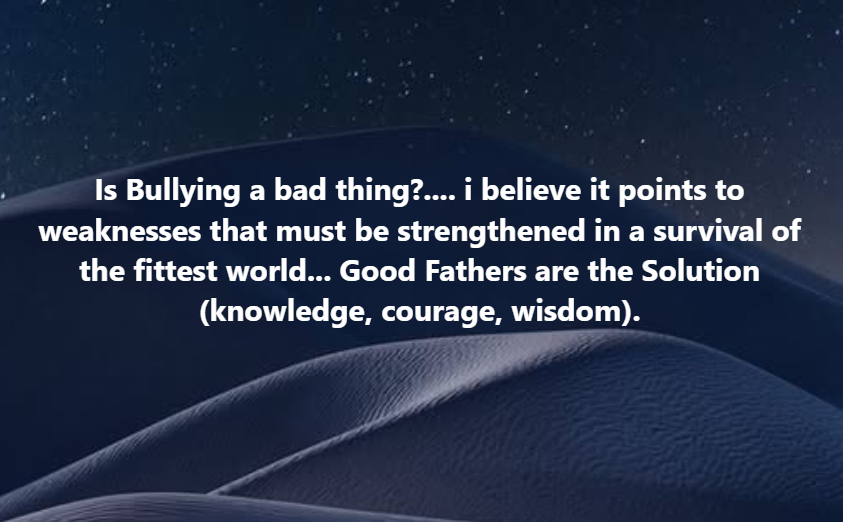 Does this guy have a solid point?
Is war a bad thing? What about rape and torture?
Do they point to weaknesses that must be strengthened?
Is Bullying a Bad Thing? Not if We Want a Society of Brutality
 Maybe the protestors are less concerned about length of time in office, and more with criminal authoritarianism.
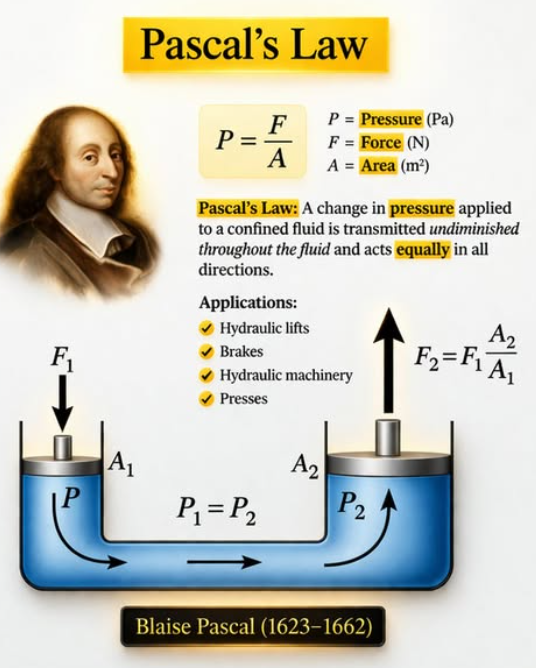 I have such respect for Pascal that I considered naming our son after him. (My wife wasn’t having it. Maybe if we lived in France?)
Pascal made important contributions to both math and physics but he’s perhaps best known for his philosophic “wager,” that it makes sense to believe in God, since if He exists, you’ll be very glad you did, and if He doesn’t, you haven’t lost anything. I counter that this is not how we accept or reject religious tenets.



-
Greenhouse Gases8 months ago
Guest post: Why China is still building new coal – and when it might stop
-
Climate Change8 months ago
Guest post: Why China is still building new coal – and when it might stop
-

 Greenhouse Gases2 years ago
嘉宾来稿:满足中国增长的用电需求 光伏加储能“比新建煤电更实惠”
-
Climate Change2 years ago
Bill Discounting Climate Change in Florida’s Energy Policy Awaits DeSantis’ Approval
-

 Climate Change2 years ago
嘉宾来稿:满足中国增长的用电需求 光伏加储能“比新建煤电更实惠”
-
Climate Change Videos2 years ago
The toxic gas flares fuelling Nigeria’s climate change – BBC News
-

 Carbon Footprint2 years ago
US SEC’s Climate Disclosure Rules Spur Renewed Interest in Carbon Credits
-

 Renewable Energy5 months ago
Sending Progressive Philanthropist George Soros to Prison?