Connect with us

Published

on

Today, we’re getting in the winter spirit by spotlighting five remarkable marine animals that depend on cold and icy environments to thrive.

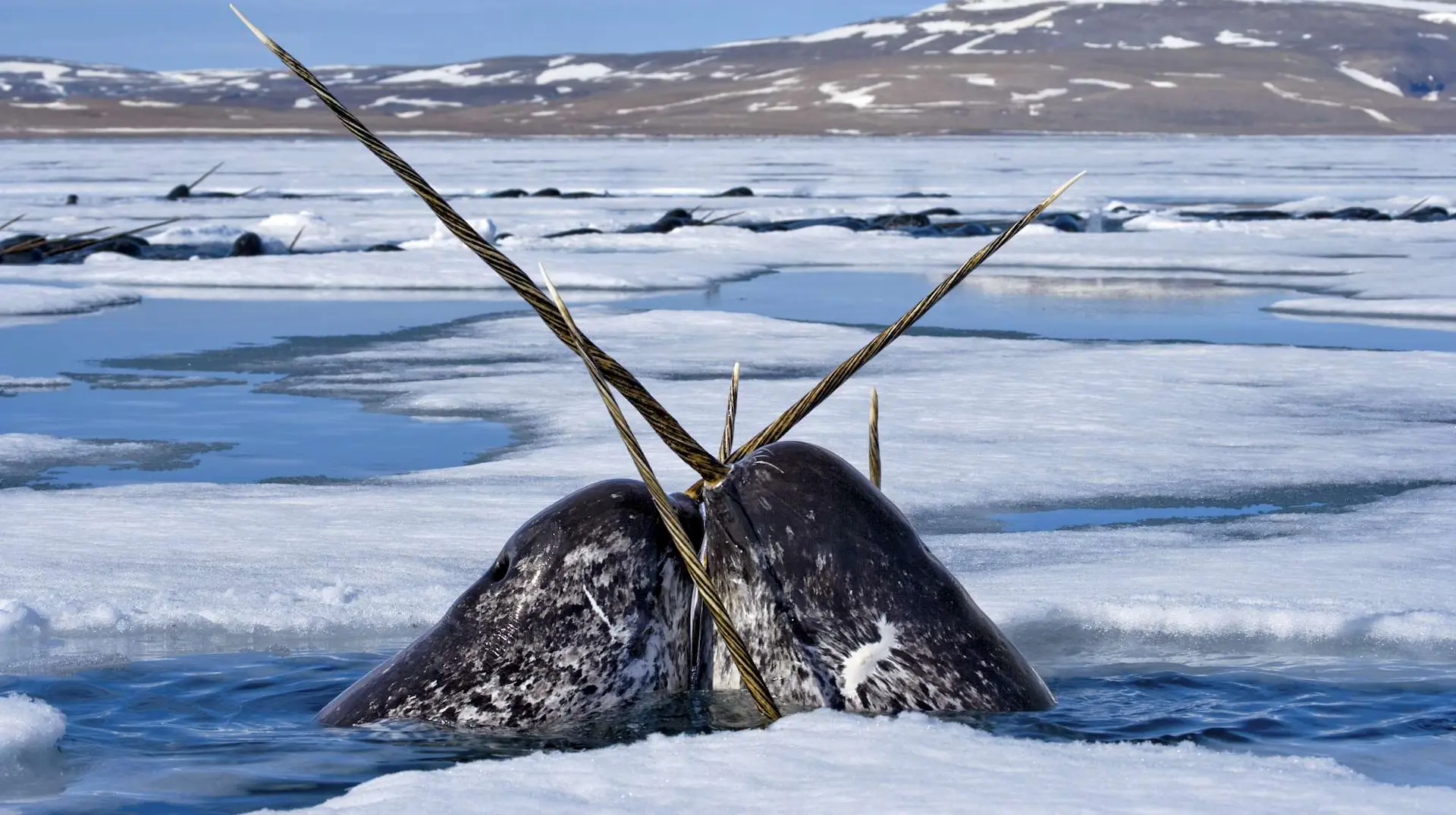
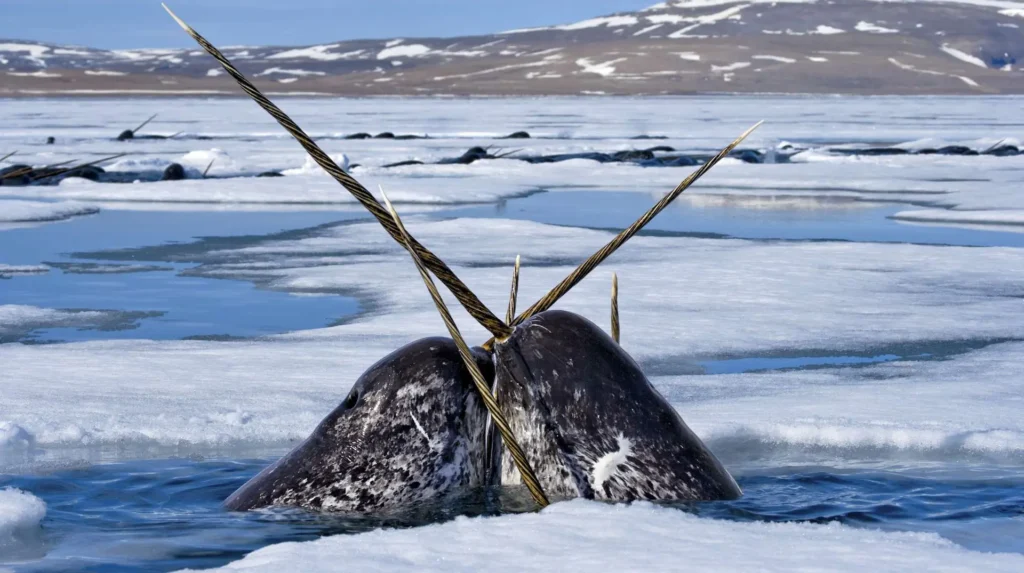
1. Narwhals

Narwhals are often called the “unicorns of the sea” because of their long, spiraled tusk. Here are a few more fascinating facts about them:

  • Believe it or not, their tusk is actually a tooth used for sensing their environment and sometimes for sparring.
  • Narwhals are whales. While many whale species migrate south in the winter, narwhals spend their entire lives in the frigid waters of the circumpolar Arctic near Canada, Greenland and Russia.
  • Sea ice provides narwhals with protection as they travel through unfamiliar waters.

2. Walruses

Walruses are another beloved Arctic species with remarkable adaptations for surviving the cold:

  • Walruses stay warm with a thick layer of blubber that insulates their bodies from icy air and water.
  • Walruses can slow their heart rate to conserve energy and withstand freezing temperatures both in and out of the water.
  • Walruses use sea ice to rest between foraging dives. It also provides a vital and safe platform for mothers to nurse and care for their young.

Get Ocean Updates in Your Inbox

Sign up with your email and never miss an update.

This field is hidden when viewing the form

Name(Required)


By providing your email address, you consent to receive emails from Ocean Conservancy.
Terms & Conditions and Privacy Policy

This field is hidden when viewing the form
Email Opt-in: Selected(Required)

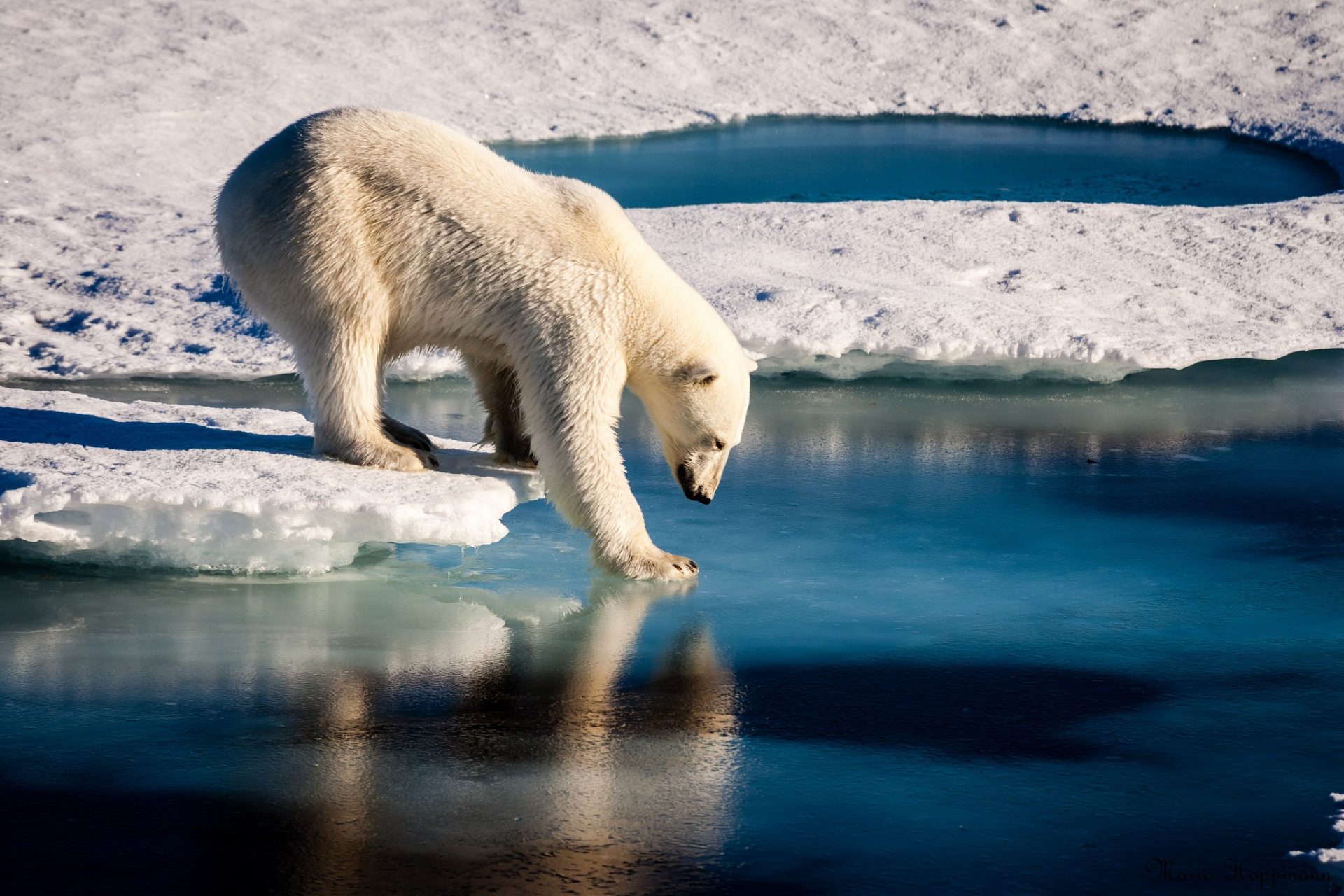
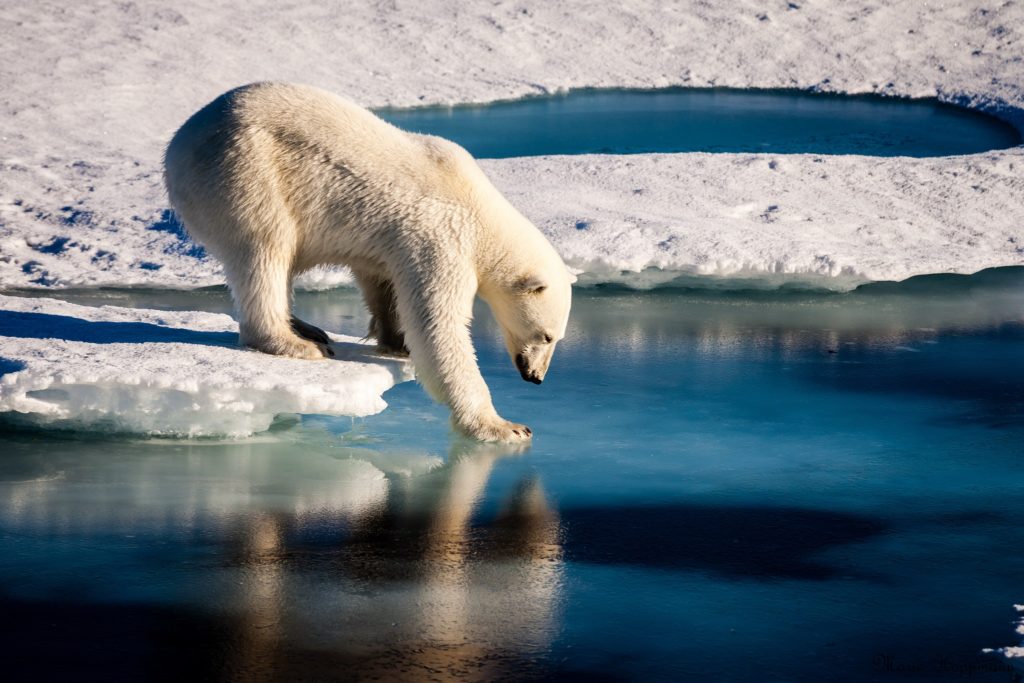
3. Polar Bears

Polar bears possess several unique traits that help them thrive in the icy Arctic:

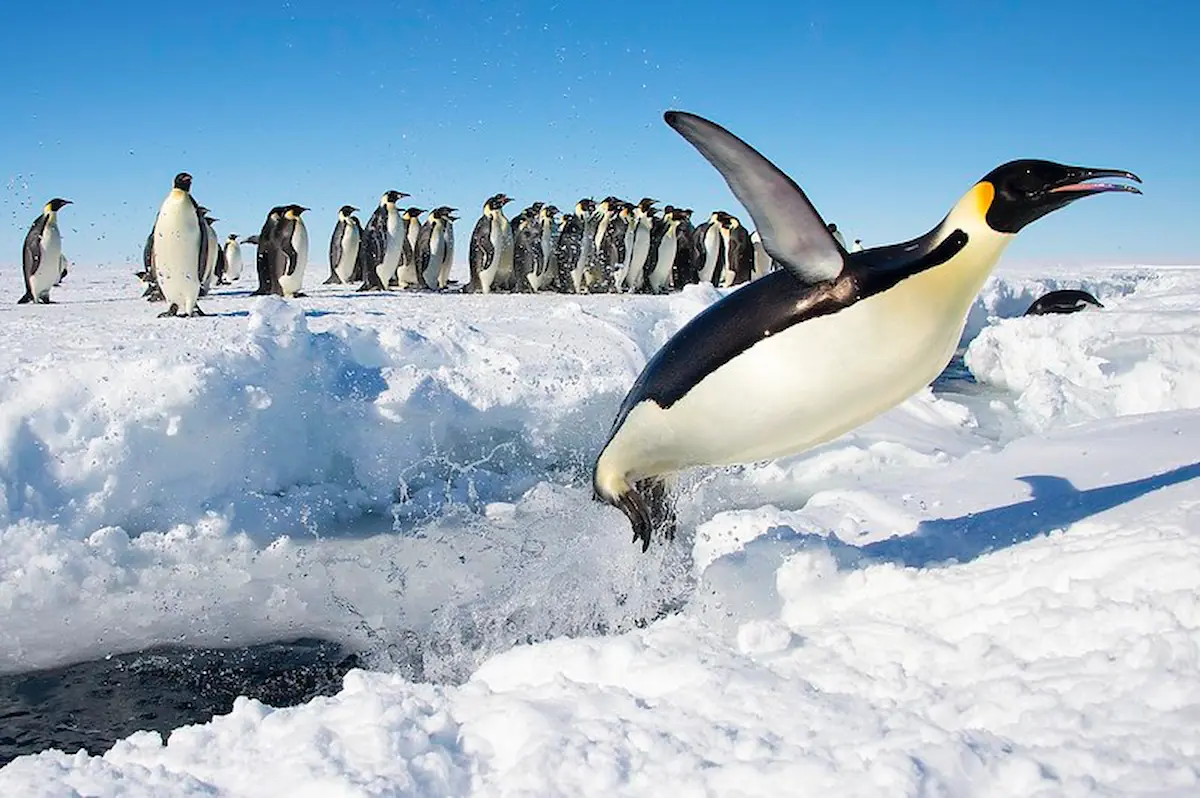
4. Penguins

Penguins are highly adapted swimmers that thrive in icy waters, but they are not Arctic animals:

  • Penguins live exclusively in the Southern Hemisphere, mainly Antarctica, meaning they do not share the frigid northern waters with narwhals, walruses and polar bears.
  • Penguins spend up to 75% of their lives in the water and are built for efficient aquatic movement.
  • Sea ice provides a stable platform for nesting and incubation, particularly for species like the Emperor penguin, which relies on sea ice remaining intact until chicks are old enough to fledge.

5. Seals

Seals are a diverse group of carnivorous marine mammals found in both polar regions:

  • There are 33 seal species worldwide, with some living in the Arctic and others in the Antarctic.
  • There are two groups of seals: Phocidae (true seals) and Otariidae (sea lions and fur seals). The easiest way to tell seals and sea lions apart is by their ears: true seals have ear holes with no external flaps, while sea lions and fur seals have small external ear flaps.
  • Seals need sea ice for critical life functions including pupping, nursing and resting. They also use ice for molting—a process in which they shed their fur in the late spring or early summer.
Defend the Central Arctic Ocean Action

Some of these cold-loving animals call the North Pole home, while others thrive in the polar south. No matter where they live, these marine marvels rely on sea ice for food, safety, movement and survival.

Unfortunately, a rapidly changing climate is putting critical polar ecosystems, like the Central Arctic Ocean, at risk. That is why Ocean Conservancy is fighting to protect the Central Arctic Ocean from threats like carbon shipping emissions, deep-sea mining and more. Take action now to help us defend the Central Arctic Ocean.

Learn more

Did you enjoy these fun facts? Sign up for our mobile list to receive trivia, opportunities to take action for our ocean and more!

The post 5 Animals That Need Sea Ice to Thrive appeared first on Ocean Conservancy.

5 Animals That Need Sea Ice to Thrive

Continue Reading

Ocean Acidification

Ocean of Data

Published

on

By Qi-Fan Wu (Niels Bohr Institutet, University of Copenhagen)

In 1943, when Warren McCulloch and Walter Pitts showed that neurons could be represented by simple electrical circuits, they laid the first foundation for machines that could learn, adapt, and predict. In 2023, when ChatGPT became widely used, my Introduction to Python professor found that it could answer every question correctly on his course exam. In the history of machine learning, there has been a repeated oscillation between “extremely high expectations” and “deep skepticism.” What is machine learning? What should we expect from machine learning, and when should we be skeptical about it? Should the same principle also be applied to other numerical models?

The goal of machine learning is to make computers “learn” from “data”. From an end user’s perspective, it is about understanding your data, making predictions and decisions. Intellectually, it is a collection of models, methods and algorithms that have evolved over more than a half-century now [e].  Just as the human brain, neural networks, as one of the most popular machine learning methods, are theoretically capable of learning complex relationships from data. Theoretically, Neural Networks can compute any function in the world. No matter what the function is, there is guaranteed to be a neural network so that for every possible input x, the output value f(x) (or some close approximations) is output from the network (Figure 1). This result holds even if the function has many inputs and many outputs [a]. However, universal approximation only describes what neural networks are capable of, while the actual goal of machine learning is to fit an unknown function from a finite set of samples, ideally faster than traditional numerical methods.

Figure 1: This figure explains how neural networks turn inputs into outputs and approximate complex functions. The upper panel is a comparison between a biological neuron and an artificial neural unit, showing how weighted inputs, a threshold, and the sigmoid function transform inputs into an output that represents the neuron’s activation level. The lower panel is a visual construction showing how sigmoid neurons can approximate a continuous function. The sigmoid function maps any real input to (0,1), with large weights it behaves like a step function, two steps form a bump, and many bumps can be added to approximate a target function before the final sigmoid produces the neural-network output.

In this blog, however, I do not want to focus on large language models that help with writing, coding, and basic background research. Instead, I want to discuss the training and use of special-purpose AI models, such as neural networks, for solving problems in physics, which is also the main topic of my PhD project. Nowadays, an increasing number of scientists are working on AI-related topics, including climate physics. If we think of the physical world as a forward dynamics model, then given the current state and the action to be taken, machine learning aims to predict the next state, while the entire world can be viewed as a huge digital database.

However, after the initial “extremely high expectations,” machine learning has also raised “deep skepticism”. In physics, especially climate physics, the “close approximations” mentioned earlier, together with the lack of standardized workflows, are often the source of trouble. The figure below shows rather discouraging results from reproducing ML-for-PDE-solving studies using stronger baselines.

Figure 2: This figure summarizes results from [b], a review of AI methods for solving fluid-mechanics partial differential equation (PDE) compared with standard numerical methods. Upper panel shows distribution of reported AI performance claims across baseline types. Although most studies reported faster performance, most of these positive results were based on comparisons against weak baselines rather than strong numerical methods. Lower panel shows examples from papers showing how reported AI advantages change when weaker baselines are replaced by stronger numerical baselines. In many cases, the claimed speedup is substantially reduced, disappears, or becomes slower under the stronger comparison.

As the quote attributed to von Neumann goes, “With four parameters I can fit an elephant, and with five I can make him wiggle his trunk.” All models are wrong, including physics-based numerical methods and climate models, but many are useful because different well-performing models can still reveal different aspects of the same physical system [c].  The physicist Paul Dirac reached a similar conclusion long ago: due to the limitations of human cognitive ability, scientific theories cannot be both closed and complete at the same time [d]. This means that we cannot have perfect, exact theories. He saw that theories based on approximations could sometimes have a considerable amount of beauty in them, and he began to infer that perhaps all theories of nature are, ultimately, only approximations [d]. Personally, I think the same rule could apply to machine learning models, and indeed to all models.

My journey on the METEOR made me appreciate the importance of data even more from a modeler’s perspective, and it deepened my belief that the people who create datasets deserve more applause and respect from the entire scientific community. Because of model uncertainty, data, especially observational data, become extremely important for understanding reality. Nature itself is the ultimate database, and its ocean of data is too vast to be compressed into a single dataset.

Machine learning models and climate reanalysis systems require these high-quality data to be reliable in real-world applications. Traditional numerical weather prediction and climate models, including general circulation models, have comprehensive physical foundations but require enormous computational resources, have limited spatial resolution, and struggle to integrate multi-source observations such as station, satellite, and radar data [e]. Although AI-based weather models have developed rapidly in recent years, they still suffer from inconsistent training datasets, time periods, and regions, varying evaluation metrics, and a lack of standardized code and experimental workflows – issues similar to those previously mentioned for AI-based approaches to solving PDEs in fluid mechanics [e]. Under these circumstances, data collected by METEOR, along with all observational data, are necessary for accurately modeling weather and climate, as well as for developing model architectures for them (Figure 3). A good model should embody a trinity of observational results, physical insight, and mathematical formalism. These three aspects should correspond perfectly, with no redundancy.

Figure 3: Schematic of the global observing system used to collect data for modeling. Adapted from [f].

But what exactly can we do to make progress under data-limited conditions? And which scientifically important problems can be clearly formulated and addressed within an analytical modeling framework? These questions remain like dark clouds hanging over scientists working in related fields. A model that is mathematically beautiful and physically simple may still be inconsistent with observations. Some models considered correct may be mathematically unattractive, and their physical mechanisms may not be clearly explained either. My personal opinion is that, when dealing with this kind of situation in the age of AI, we may still need to rely on our own intuition (and even guessing), trying to understand reality with the help of many scientists who use observations and models to sail by night and expand the boundaries of human knowledge through tiny steps.

Note: Artificial Intelligence’s (AI) stated goal is to mimic human behavior in an intelligent manner, and to do what humans can do, which includes artificial “creativity” like driving cars, playing games, responding to consumer questions, etc. In that sense, AI seeks to create muscle and mind of humans, and mind requires learning from data, i.e. Machine Learning. However, Machine Learning helps learn from data beyond mimicking humans. Having said that, the boundaries between AI and ML are getting blurry day-by-day.

References:

[a] Charniak, E. An Introduction to Deep Learning. Cambridge, MA: MIT Press, 2019; 192.

[b] Nick McGreivy. I got fooled by AI-for-science hype—here’s what it taught me. 2025. https://www.understandingai.org/p/i-got-fooled-by-ai-for-science-hypeheres

[c] Fisher, A.; Rudin, C.; Dominici, F. All Models Are Wrong, but Many Are Useful: Learning a Variable’s Importance by Studying an Entire Class of Prediction Models Simultaneously. Journal of Machine Learning Research 2019, 20(177), 1–81.

[d] Dirac, P. A. M. The Principles of Quantum Mechanics. Oxford University Press: Oxford, 1930.

[e] Bansal, H.; Grover, A.; Jewik, J.; Nguyen, T.; Sharma, P. ClimateLearn: Benchmarking Machine Learning for Weather and Climate Modeling. In Advances in Neural Information Processing Systems 36; 2023; pp 75009–75025. https://doi.org/10.52202/075280-3279.

[f] Global Observing System (GOS). World Meteorological Organization. https://community.wmo.int/site/knowledge-hub/programmes-and-initiatives/global-observing-system-gos

Ocean of Data

Continue Reading

Ocean Acidification

How to thrive on a German ship (by and for non-Germans)

Published

on

By Nathalie Rodríguez Lara (GEOMAR), Federico Scarscelli (GEOMAR), Ajit Subramanian (LDEO), Qi-fan Wu (University of Copenhagen), Eduardo Lima (UFPE), Herbert Barbosa (UFPE), Joelle Habib (LOV) and Zengchao Xu (GEOMAR)

So, you have been invited to participate in an oceanographic research vessel? Congrats! Oh, it’s German… well. Here are some tips that will be especially useful in the following days.

The writers showing you the way for thriving in a scientific German vessel. Photo taken by Herbert Barbosa

We shall start with food. Everyone needs it after all.

As with all ships, the Meteor has some hard rules on mealtimes, so be aware of the hour and get ready to enjoy some German delicacies. Keeping the mealtimes is important because the staff must clean up and prepare for the next meal. However, if you are working, you can ask for your food to be put aside for you to eat later.

First of all, breakfast. For the first bite after getting up (or before going to bed, in case you had the night shift), you can always expect a large variety of eggs, cheese, ham, and bread. Moreover, in the Meteor breakfast menu, you even get a little surprise dish each day, featuring a specialty Hausmannskost, or traditional homemade recipe, usually chosen among north Germany’s delicacies. These recipes are made for people that work hard all day, so of course the hearty meals are there to sustain hours on hours of manual labour, with strong flavour as well. Some of our favourites are the Schlemmerschnitte, Bremen Knipp, Wurstschnitzel and, of course, one of Germany’s greatest, the Zwiebelmettbrötchen. Yes, they are quite heavy compared to a nice yogurt, but they will provide you with enough energy for any scientific endeavour or challenge you will face.

As you walk towards the Messe be ready to say Moin, hello, Morgen, morning or any variety of greeting for the day to anyone who passes you by. Even when this is not customary on German land, it is most imperative that you do it on a German ship. Otherwise, be prepared to be greeted by a very loud “Morgen” at 7 am and a disapproving look.

“Mahlzeit” you say as you enter lunch time, a greeting for mealtimes meaning quite literally “mealtime”. A selection of food is served buffet style, so you may choose your desired quantity and meal type. Vegetarian options are included at every meal for those who prefer it, and you can never forget bit of potato on the side. On Sunday, the cooks usually prepare some traditional “family lunch” menu, as a way to enjoy a small moment of home feeling, even when it is far away on land. Even in the hottest day in the Tropical Atlantic, you will immediately feel like celebrating Christmas at your German friend’s home.

For dinner, a similar situation can be expected: a selection of food awaits you at the Messe including everything you need for a good Abendbrot, or evening bread, to those initiating on the German lifestyle.

A lot of attention shall be put on shoes and clothes for all mealtimes. The Messe is to be enjoyed by everyone, so no dirty safety shoes or dirty work clothes shall cross the door (leave the shoes outside, if you must). Sit down with your fellow scientist, eat with people, talk to them, ponder about all the life choices that led you to this point in time and the contributions your days at sea will do to science. Let yourself enjoy the company of other humans and DO NOT use your phone!

Oh, look at the clock, its 15:00! Well, dear reader, I shall introduce you to the great German culture of “Kaffee und Kuchen” or coffee and cake. Every afternoon, the kitchen lays out a variety of sweet little treats for you to enjoy, only a piece though, as everyone should enjoy this lovely tradition. Those in not so friendly terms with caffeine, may also find various selections of teas or even a glass of milk. Perhaps some chocolate or snacks (at your own cost), if you prefer. What’s more, as you see your fellow men work tirelessly under the sun, bring some cake to them, offer a little break from science, and enjoy the long-lived tradition of pastries.

Regarding the work on board, although there is a predefined shift schedule, some activities require most people to be available to help, such as mooring recovery and deployment. Offer a hand with those who need it, using the ancient spells “Do you need some help?” and “Do you want to switch?”. It is very much appreciated by those on deck, who have been bearing the load of the sun and hours of manual labour, and who probably haven’t had a nice meal yet.

Scientific work can only be achieved through collaboration of several moving parts and lives that would have not met otherwise. Photos taken by Naomi Krauzig and Peter Brandt

For the ones not so familiar with the German language, we offer two very useful work-related words: “stop” and “weiter”, meaning stop and continue. If you want to become a real professional and show off some advanced German skills, you can also add “schneller” and “langsamer”: faster and slower. Keep them in your heart and in your mind, and when the moment comes, you will find them more useful than not.

And, of course, after a tiring day of work, there are smiles, conversations, and music, along with the good feeling that comes from a job well done. Walk into the common areas for the evening: talk with people, maybe play a good round (or two) of Kniffel; perhaps join the kicker or pingpong tournament, a movie night sounds good, or just looking at the stars and the vastness of the night sky would suffice for today.

Leisure time is just as important as work. Play Kniffel, kicker, juggle, talk with others or admire the wonders the world has to offer. Photos taken by: Leonie Jaeger, Nadja Baumann and Naomi Krauzig.

Another thing to keep in mind is house-keeping rules.

Follow your steward rules. Your cabin is your personal space, keeping it tidy and clean helps you and the housekeeping crew. Remember to leave your door open if you are not sleeping and take care of your shower curtain so it dries properly, we do not want mold on a ship!

Since we are already here, some general advice for life at sea.

An important aspect of life at sea is, sadly, sea sickness. It’s as common as it’s normal, everyone has tips and tricks. Here is ours: bring your pills, also known as Reisetabletten, take them every day and see how it works for you, maybe you are lucky and don’t need them after a few days. But never be too careless, the sea is as vast as it is treacherous, and big waves can change your internal balance easily. So, keep your pills close and keep them safe.

Be aware of the time changes, crossing the Atlantic may feel like a timeless void but time zones still exist to the rest of the world. The captain will announce the changes in time zone, moving an hour forward or backwards as needed, so be aware of this, keep an eye on the clocks and be prepared for a bit of a longer, or shorter, day ahead.

We thought of giving advice on science, but that’s what you are here for. Do not fret. Do your work and do it well. Trust that the knowledge that has brought you to this vessel can contribute, and be contributed, by those around you. Both the scientists and the crew are welcoming (but you have to follow the rules both for safety reasons and to work well in a limited shared space) and make a good effort to communicate in English, even if it is not so comfortable for all of them to so. So, dear reader, may your equipment be efficient, your samples uncontaminated and your results significant. Have a good trip, enjoy the camaraderie of new friends, and remember to enjoy these crazy days ahead.

Gute Reise und viel Spaß!

The whole M219 wishes you safe travels and good science! Photo taken by Nadja Baumann

How to thrive on a German ship (by and for non-Germans)

Continue Reading

Ocean Acidification

What can PIES tell us about the current system?

Published

on

By Tina Hans (GEOMAR)

One main objective of the cruise is to investigate the large-scale ocean currents in the tropical Atlantic. For that purpose, we are maintaining several long-term observatories at the seafloor and in the water column. Additional to the moorings which have been described in the previous blog “Keeping the record alive”, we deployed and recovered close to the Brazilian coast so-called PIES. They have – as some might say unfortunately – nothing to do with pastries but are oceanographic instruments that measure the pressure at the seafloor as well as the time an acoustic signal takes to travel from the instrument to surface, where the signal is reflected, and back. We deployed six of those instruments across the continental shelf off Brazil at depth ranging from 150 metres to 3000 metres. These deployments are the result of a collaboration with the University of Bremen. We also successfully recovered one PIES that spent just over three years at the seafloor at a depth of 500 metres. With the data of the recovered PIES, we could extend our time series of seafloor pressure measurements at 500 metres depth. This time series, which goes back until 2013, spans now 13 years.

Pictures of a PIES deployment (left), a recovered PIES (upper right), and a PIES ready for deployment (lower right). Photos taken by Leonie Jaeger, Mario Müller, and Naomi Krauzig.

This still leaves the question of what the pressure at the seafloor can tell us about ocean currents. To answer this, one needs to know that the ocean dynamics are largely governed by a balance of two physical forces: the pressure gradient force and the Coriolis force. Essentially, when water ‘piles up’ somewhere, a current is created which attempts to even out the differences, and the direction of this current is deflected due to the Earth’s rotation. This force balance can also be used to directly relate the difference in pressure between two locations to the mean velocity in between these locations. We make use of this relation by measuring the seafloor pressure not just off Brazil but also off Angola at a similar latitude. With the combination of these measurements, we can calculate the mean north-/southward velocities across the Atlantic between Brazil and Angola. From this velocity we can then derive the strength of the Atlantic Meridional Overturning Circulation (AMOC).

However, there is one caveat: the pressure sensors are drifting over time. This makes it impossible to make statements about long-term trends, but we can still make statements about the seasonal to interannual variability of the AMOC. Therefore, the measurements of the PIES can be used to better understand the large-scale currents in the tropical Atlantic. In a next step, we are now using these measurements to better understand the linkage of the AMOC to climate variability in the tropics.

Time series of seafloor pressure at 500 metres depth at the continental shelf off Brazil. The different colours indicate the different instruments which have been deployed since 2013. The measurements of the PIES that was recovered during this cruise is coloured in green. The black line shows monthly mean values. Pressure changes can be induced by changes in the water level (a change of 0.05 decibar roughly corresponds to 5 centimetres) or by changes in the temperature and salinity characteristics of the water column above the instrument. When looking at the time series, distinct seasonal and interannual variability is apparent. No long-term variability is visible as this is removed with removing the instrumental drift.

What can PIES tell us about the current system?

Continue Reading

Trending

Copyright © 2022 BreakingClimateChange.com