Get to know the City of Yogyakarta
The city of Jogjakarta or better known as Jogja is a city located in the Province of the Special Region of Yogyakarta, Indonesia. Jogja has a rich history and is known as the center of culture and education in Indonesia.
Jogja has many interesting tourist spots, such as Borobudur Temple, Prambanan Temple, Yogyakarta Palace, Taman Sari, and many more. Apart from that, Jogja is also famous for its culinary specialties such as Gudeg, Bakpia, and Wedang Ronde which can be found easily in various places in Jogja.
The distinctive characteristics of Jogja are local wisdom and traditional culture that are still very well preserved, where Jogja people really appreciate customs and politeness. Apart from that, Jogja is also known as a student city, with many well-known universities such as Gadjah Mada University and Yogyakarta State University.
Overall, Jogja is an interesting city to visit because it has a variety of natural beauty, culture, history and culinary delights that are very interesting and unique.
Implementation of Environmentally Friendly Energy in the City of Jogjakarta
The city of Jogjakarta is one of the cities that continues to strive to preserve the environment and implement environmentally friendly programs. One example is the implementation of environmentally friendly energy which is growing in Jogja.
Along with population growth and technological developments, the use of fossil energy in Jogja is increasing. However, the government and people of Yogyakarta realize the importance of preserving the environment and are trying to reduce the use of fossil energy by implementing various environmentally friendly energy programs.
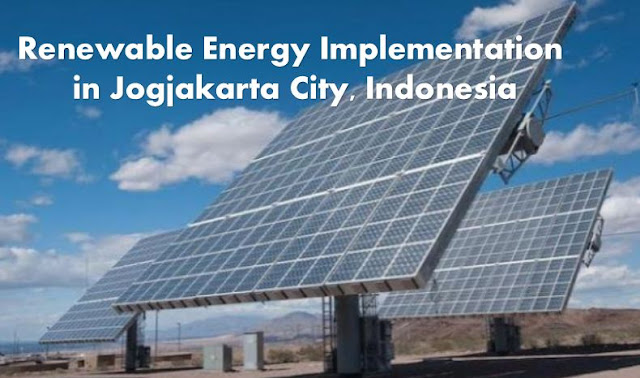
One of the environmentally friendly energy programs that has been successfully implemented in Jogja is the use of solar energy. Many buildings and houses in Yogyakarta use solar panels as a source of electrical energy. In addition, the government is also developing a tree planting program and urban greening to reduce the harmful effects of air pollution and improve air quality in Jogja.
Not only that, Jogja is also developing an environmentally friendly transportation program by encouraging the use of electric vehicles and the development of a more efficient public transportation network. In addition, the people of Jogja are also increasingly aware of the importance of using environmentally friendly energy by reducing the use of plastic and replacing it with more environmentally friendly alternatives.
In the implementation of environmentally friendly energy, cooperation between the government, society and industry players is very important. In Jogja, the government continues to encourage industry players to use environmentally friendly energy by providing incentives and educational programs. In addition, the people of Jogja are also active in developing environmentally friendly energy programs in their respective environments.
By continuing to develop an environmentally friendly energy program, Jogja can become one of the cities that sets an example in preserving the environment. Through the implementation of effective and efficient environmentally friendly energy programs, Jogja can have a positive impact on the environment and society as a whole.
Application of Friendly Energy in the Jogjakarta City Government Office environment
The Jogjakarta City Government as an example of a government institution that cares about environmental sustainability also implements an environmentally friendly energy program in government offices.
One of the programs implemented is the use of LED lamps which are more energy efficient and more durable than incandescent lamps. In addition, the use of energy-efficient office equipment such as computers and printers with the Energy Star label is also implemented.
The Jogjakarta City Government also installed solar panels on the roof of government office buildings to generate electricity that is environmentally friendly and reduces the use of fossil energy. In addition, the use of recycled paper is also applied in government offices.
The city greening program is also implemented around the government office environment to give a green feel and fresh air. In addition, the government is also encouraging the use of electric vehicles as a means of transportation within government offices.
Efforts to implement environmentally friendly energy in government offices can have a positive impact on the environment and society. In addition, as an institution that provides direction and policies, the Jogjakarta city government can also set a positive example in preserving the environment.
The implementation of environmentally friendly energy is not only carried out by the city government, but also by other institutions such as the Jogjakarta City Police. The Jogjakarta City Police have made several efforts to encourage the use of environmentally friendly energy, including:
Installation of Energy Saving Lamps
The Jogjakarta City Police have installed energy-saving lamps such as LED lamps in office buildings and highways. LED lamps have a longer life and lower energy consumption compared to conventional incandescent lamps, thereby saving energy and operating costs.
Use of Electric and Hybrid Vehicles
The Jogjakarta City Police have also used electric and hybrid vehicles as an effort to reduce greenhouse gas emissions and save on the use of fossil fuels. Electric and hybrid vehicles are also more environmentally friendly because they do not produce a noisy engine sound.
Implementation of Integrated Waste Management
The Jogjakarta City Police have also implemented integrated waste management, including by separating the types of organic and non-organic waste. Organic waste will be processed into compost and used for agricultural purposes, while non-organic waste will be recycled into materials that can be reused.
These efforts show that the Jogjakarta City Police have contributed to encouraging the implementation of environmentally friendly energy. It is hoped that these efforts will have a positive impact on the environment, health and sustainability of the City of Jogjakarta.
Implementation of Eco-Friendly Energy in Jogjakarta City Tourism
Implementation of environmentally friendly energy can also be carried out in the tourism sector in Jogjakarta City. Some of the efforts that can be made to encourage the application of environmentally friendly energy in the tourism sector in Jogjakarta City are as follows:
Utilization of Renewable Energy Sources
Renewable energy sources such as solar panels and wind turbines can be used to meet energy needs in hotels and tourist spots. In addition, the use of renewable energy can also reduce operational costs and provide added value for tourists who are attracted to environmentally friendly destinations.
Promotion of Use of Environmentally Friendly Transportation
Promotion of the use of environmentally friendly transportation such as bicycles or public transportation can be done to reduce greenhouse gas emissions from private vehicles. In addition, the promotion of environmentally friendly transportation can also help reduce congestion in the city.
Implementation of Integrated Waste Management
Integrated waste management can be carried out at tourist attractions to ensure that waste is processed properly and does not damage the surrounding environment. In addition, integrated waste management can also increase tourist awareness about the importance of keeping the environment clean.
Utilization of Environmentally Friendly Technology
Environmentally friendly technologies such as the use of energy efficient lighting and cooling systems, the use of motion sensors to regulate energy use in rooms, and efficient wastewater treatment systems can be applied in hotels and tourist spots.
These efforts can help increase awareness about the importance of implementing environmentally friendly energy in the tourism sector in Jogjakarta City. In addition, the application of environmentally friendly energy can also provide added value to tourism destinations in Jogjakarta City and increase the attractiveness of tourists looking for environmentally friendly destinations.
Friendly Energy Project in Jogjakarta City
There are several friendly energy projects that are being and have been carried out in the City of Jogjakarta, including:
Highway Installation of LED Lighting Project
Solar Panel Projects in Government Buildings
Jogja City Greening Project
Electric Vehicle Project as a Means of Transportation
Energy Saving Project in Government Office Building.
However, these projects generally do not have specific names, but are better known by the programs or policies implemented by the Jogjakarta City Government to reduce the use of fossil energy and increase the use of environmentally friendly energy.
In addition to the projects previously mentioned, there are several other projects that are being or have been carried out in the City of Jogjakarta to encourage the application of environmentally friendly energy, including:
Program on the Use of Natural Gas as Vehicle Fuel
Project for Planting Coconut Trees on the Roadside to Reduce CO2 Emissions
B20 Fuel Usage Program (20% Biodiesel) for Service Vehicles
Project for the Development of a Micro Hydro Power Plant on the Progo River
Energy Saving Lamp Subsidy Program for the Community.
These projects cover various aspects of the use of environmentally friendly energy, both in the fields of transportation, fuel use, and the development of alternative energy sources. It is hoped that with the implementation of these projects, the City of Jogjakarta can become a city that is more sustainable and environmentally friendly.
Companies that have contributed to the Implementation of Environmentally Friendly Energy in the City of Jogjakarta
There are several companies that have contributed to the implementation of environmentally friendly energy in the City of Jogjakarta, including:
PT PLN (Persero)
PT PLN (Persero) as an electricity supply company in Indonesia, has contributed to the application of environmentally friendly energy in the City of Jogjakarta through the development of solar power plants and micro-hydro power plants. In this project, PT PLN (Persero) plays the role of project executor supported by the Jogjakarta City Government.
PT Pertamina (Persero)
PT Pertamina (Persero) has contributed through the use of 20% biodiesel fuel (B20) for official vehicles in the City of Jogjakarta. B20 fuel is made from a mixture of biodiesel and diesel which is more environmentally friendly and can reduce greenhouse gas emissions.
PT Surya Semesta Internusa Tbk
PT Surya Semesta Internusa Tbk is a company engaged in the property sector and has built several office buildings in the city of Jogjakarta by implementing energy-efficient technology and equipment such as LED lights, automatic room temperature regulation, and an air conditioning system with freon which is more environmentally friendly.
PT Nestlé Indonesia
PT Nestle Indonesia has contributed to the use of renewable energy in its dairy factory in Jogjakarta City. The factory has installed solar panels that can produce electricity that is environmentally friendly and reduces the use of fossil energy.
Conclusion about the Implementation of Environmentally Friendly Energy in the City of Jogjakarta
The City of Jogjakarta has made various efforts to encourage the implementation of environmentally friendly energy to create a more sustainable and environmentally friendly environment.
The Jogjakarta City Government has issued various programs and policies to encourage the use of renewable energy, save energy, and reduce greenhouse gas emissions.
Several projects that have been carried out in the City of Jogjakarta include installing LED lights, greening the city, using natural gas and biodiesel as vehicle fuel, as well as the construction of solar and micro-hydro power plants. In addition, the role of companies in contributing to the application of environmentally friendly energy is also very important.
Through these various efforts, it is hoped that the City of Jogjakarta can become a city that is more sustainable, healthy and comfortable to live in. In addition, the application of environmentally friendly energy can also reduce operational costs and increase energy use efficiency which can have a positive impact on the finances and economy of the City of Jogjakarta.
In encouraging the application of environmentally friendly energy in the City of Jogjakarta, the participation of these companies is very important in creating a more sustainable and environmentally friendly environment.
https://www.exaputra.com/2023/03/renewable-energy-implementation-in.html
Renewable Energy
How the VEU Program Works: Step by Step for Homeowners
Renewable Energy
LM Wind Power Cuts 60% of Denmark Staff
Weather Guard Lightning Tech

LM Wind Power Cuts 60% of Denmark Staff
The crew discusses LM Wind Power’s dramatic layoff of 60% of remaining Danish staff, dropping from 90 to just 31 workers. What does this mean for thousands of wind farms with LM blades? Is government intervention possible? Who might acquire the struggling blade manufacturer? Plus, a preview of the Wind Energy O&M Australia 2026 conference in Melbourne this February.
Learn more about CICNDT!
Register for ORE Catapult’s UK Offshore Wind Supply Chain Spotlight!
Sign up now for Uptime Tech News, our weekly email update on all things wind technology. This episode is sponsored by Weather Guard Lightning Tech. Learn more about Weather Guard’s StrikeTape Wind Turbine LPS retrofit. Follow the show on Facebook, YouTube, Twitter, Linkedin and visit Weather Guard on the web. And subscribe to Rosemary Barnes’ YouTube channel here. Have a question we can answer on the show? Email us!
If you haven’t downloaded your latest edition of PES Wind Magazine, now’s the time issue four for 2025. It’s the last issue for 2025 is out and I just received mine in the Royal Mail. I had a brief time to review some of the articles inside of this issue. Tremendous content, uh, for the end of the year.
Uh, you wanna sit down and take a good long read. There’s plenty of articles that affect what you’re doing in your wind business, so it’s been a few moments. Go to peswind.com Download your free copy and read it today. You’re listening to the Uptime Wind Energy Podcast, brought to you by build turbines.com.
Learn, train, and be a part of the Clean Energy Revolution. Visit build turbines.com today. Now here’s your hosts, Alan Hall, Joel Saxon, Phil Totaro, and Rosemary Barnes. Welcome to the Uptime Wind Energy [00:01:00]Podcast. I’m your host, Alan Hall in the Queen city of Charlotte, North Carolina. I’ve got Yolanda Padron in Texas.
Joel Saxon up in Wisconsin and Rosemary Barnes down under in Australia, and it has been a, a really odd Newsweek. There is a slow down happening in wind. Latest news from Ella Wind Power is they’re gonna lay off about 60% of their staff in Denmark. They’ve only have about 90 employees there at the moment.
Which is a dramatic reduction of what that company once was. Uh, so they’re planning to lay off about 59 of the 90 workers that are still there. Uh, the Danish media is reporting. There’s a lot of Danish media reporting on this at the moment. Uh, there’s a letter that was put out by Ellen Windpower and it discusses that customers have canceled orders and are moving, uh, their blade production to internal factories.
And I, I assume. That’s a [00:02:00] GE slash Siemens effort that is happening, uh, that’s affecting lm and customers are willing to pay prices that make it possible to run the LM business profitably. Uh, the company has also abandoned all efforts on large blades because I, I assume just because they don’t see a future in it for the time being now, everybody is wondering.
How GE Renova is involved in this because they still do own LM wind power. It does seem like there’s two pieces to LM at the minute. One that serves GE Renova and then the another portion of the company that’s just serving outside customers. Uh, so far, if, if you look at what GE Renova paid for the company and what revenue has been brought in, GE Renova has lost about 8.3 billion croner, which is a little over a billion dollars since buying the company in 2017.
So it’s never really been. Hugely profitable over that time. And remember a few months ago, maybe a month ago now, or two months ago, the CEO of LM [00:03:00] Windpower left the company. Uh, and I now everyone, I’m not sure what the future is for LM Windpower, uh, because it’s, it has really dramatically shrunk. It’s down to what, like 3000 total employees?
I think they were up at one point to a little over when Rosie was there, about 14,000 employees. What has happened? Maybe Rosemary, you should start since you were working there at one point.
Rosemary Barnes: Yeah, I dunno. It always makes me really sad and there’s still a few people that I used to work with that were there when I went to Denmark in May and caught up with a bunch of, um, my old colleagues and most of them had moved on because a lot of firing had already happened by that point.
But there were still a few there, but the mood was pretty despondent and I think that they guessed that this was coming. But I just find it really hard to see how with the number, just the pure number of people that are left there. I, I find it really hard to see how they can even support what they’ve still [00:04:00] got in the field.
Um. Let alone like obviously they cut way back on manufacturing. Okay. Cut Way back on developing new products. Okay. But you still do need some capabilities to work through warranty claims and um, you know, and any kind of serial issues. Yeah, I would be worried about things like, um, you know, from time to time you need a new, a new blade or a new set of blades produced.
Maybe a lot of them, you know, if you discover an issue, there’s a serial defect that doesn’t, um, become obvious until 10 years into the turbine’s lifetime. You might need to replace a whole bunch of blades and are you gonna be able to, like, what’s, what is gonna happen to this huge number of assets that are out there with LM blades on there?
Uh, I, yeah, I, I would really like to see some announcements about what they’re keeping, you know, what functionality they’re planning to keep and what they’re planning to excise.
Joel Saxum: But I mean, at the end of the day, if it’s, if [00:05:00] the business is not profitable to run that they have no. Legal standing to have to stay open?
Rosemary Barnes: No, no, of course not. We all know that there, there’s, you know, especially like you go through California, there’s all sorts of coast turbines there that nobody knows how to maintain them anymore. Right. And, um, yeah, and, and around there was one in, um, in Texas as well with some weird kind of gearbox. I can’t remember what exactly, but yeah, like the company went bankrupt, no one knew what to do with them, so they just, you know, like fell into disrepair and couldn’t be used anymore.
’cause if you can’t. Operate them safely, then you can’t let no one, the government is not gonna let you just, you know, just. Try your luck, operate them until rotors start flying off. You know, like that’s not really how it works. So yeah, I do think that like you, you can’t just stay silent about, um, what you expect to happen because you know, like maybe I have just done some, a bit of catastrophizing and, you know, finding worst case scenarios, but that is where your mind naturally goes.
And the absence of information about what you can expect, [00:06:00] then that’s what. People are naturally gonna do what I’ve just done and just think through, oh, you know, what, what could this mean for me? It might be really bad. So, um, yeah, it is a little bit, a little bit interesting.
Allen Hall: Delamination and bottom line, failures and blades are difficult problems to detect early.
These hidden issues can cost you millions in repairs and lost energy production. C-I-C-N-D-T are specialists to detect these critical flaws before they become expensive burdens. Their non-destructive test technology penetrates deep to blade materials to find voids and cracks. Traditional inspections, completely.
Miss C-I-C-N-D-T Maps. Every critical defect delivers actionable reports and provides support to get your blades. Back in service, so visit cic ndt.com because catching blade problems early will save you millions. Yolanda, what are asset managers [00:07:00] thinking about the LM changes as they proceed with orders and think about managing their LM Blade fleet over the next couple of years, knowing that LM is getting much smaller Quicker?
Yolanda Padron: Yeah, and this all comes at a time when. A lot of projects are reaching the end of the full service agreements that they had with some of these OEMs, right? So you already know that your risk profile is increasing. You already know. I mean, like Rosie, you said worst case scenario, you have a few years left before you don’t know what to do with some of the issues that are being presented.
Uh, because you don’t count with that first line of support that you typically would in this industry. It’s really important to be able to get a good mix of the technical and the commercial. Right? We’ve all seen it, and of course, we’re all a little bit biased because we’re all engineers, right? So we, to us it makes a lot of sense to go over the engineering route.
But the pendulum swung, swung so [00:08:00] far towards the commercial for Ella, the ge, that it just, it. They were always thinking about, or it seemed from an outsider’s point of view, right, that they were always thinking about, how can I get the easiest dollar today without really thinking about, okay, five 10 steps in the future, what’s going to happen to my business model?
Like, will this be sustainable? It did Just, I don’t know, it seems to me like just letting go of so many engineers and just going, I know Rosie, you mentioned a couple of podcasts ago about how they just kept on going from like Gen A to Gen B, to Gen C, D, and then it just, without really solving any problems initially.
Like, it, it, it was just. It’s difficult for me to think that nobody in those leadership positions thought about what was gonna happen in the [00:09:00]future.
Rosemary Barnes: Yeah. I think it was about day-to-day survival. ’cause I was definitely there like saying, you know, there’s too many, um, technical problems that Yeah. When I was saying that a hundred, a hundred of versions of me were all saying that, a lot of us were saying it.
Just in the cafeteria amongst ourselves. And a lot of us, uh, you know, a bit more outspoken Danish people don’t really believe a lot in a strict hierarchy. So certainly people were saying it to directors and VPs and CEOs, but, um, yeah, it was, uh, I think it was more about like the commercial reality of today is that there won’t be a commercial.
Tomorrow to experience these engineering problems if we don’t make these, um, decisions. Now, if, if that makes sense. As a really complicated way of saying we need to be able to sell this product, otherwise we’re not gonna sell anything. And then no one will be, no one will have a job in 10 years regardless.
So. We’ll solve, you know, whatever quality problems that arise from doing too many new technologies at once, at [00:10:00] least we’ll be, the company will still exist to be able to have a go at solving them if we, you know, make these sales. Um, which it won’t if we don’t. So I think that that would be the, like the other point of view, like it’s really easy to say now, oh yeah, we should have, um, we shouldn’t have done that, but yeah, I, I’m pretty sure management’s gonna tell you why they did it is for the sales.
Joel Saxum: This is an odd case being lm an ex Danish company now owned by GE Renova, which is a US based company.
Allen Hall: Global.
Joel Saxum: Global really. But yeah, but when we get into this, too big to fail type thing, right? So like Siemens cesa, having the German government back them up with a note, um, when they were having troubles a year and a half ago.
Uh. Is there a award like the too big to fail in the United States where the government bailed out the auto worker or the auto manufacturers and stuff like that. I don’t see that happening here because the company’s too small. But at what level do governments [00:11:00] intervene? Right? So it’s, I know every government’s gonna be different and every, but there’s have their own criteria and there’s not a hard set, probably line or metric of like, oh, you have this much impact on society, so we must support you to make sure you survive.
Well, when Rosemary, when you say like in, when you were there, you were there five years ago, 2020, right before COVID. Right. At that point in time, 20% of the world’s blades were LM blades of the global fleet. Well, if that’s was true still, that would be a hundred thousand plus turbines in the global fleet.
That would be LM blades. And if we have. Issues with them and we can’t solve them. I think one, one of the, one of the things that we’re, that we’re probably thankful for is there is that many, so there has been a lot of independent engineering expertise that’s been able to fix some of them. A lot of independent ISPs, you know, out there, service companies, blade repair companies that have been able to figure out how to make these things even, you know, regardless of getting the layup pattern or layup designs or any kind of engineering information from, from Malam [00:12:00] or from the OEMs.
Um, we have been able to maintain them, so that’s good. But is there a level where, I know Alan, you were shaking your head, but is there a level where anybody steps in from a government standpoint to save lm?
Allen Hall: I would almost bet that Renova has talked to the Danish government. Somebody at LM has, I would have to think that they have already.
And has been, at least in the press, no response. And with this latest announcement, it doesn’t seem like the Danish government wants to be involved. So my, my take on it is they have an American stamp on ’em right now, and Denmark and the United States are not playing nice to one another. So why would I help ge?
Why would I do that? And that’s not a bad response.
Rosemary Barnes: Potentially it wouldn’t even have to be necessarily the US or the Danish government that might have to get involved, because I know in Australia, and I’m, I can’t believe it’s different anywhere else. You have to be able to safely operate, uh, an asset like a, a wind turbine.
And that’s, um, some, [00:13:00] a responsibility of both the asset owner and the operator, but also the manufacturer and so they can compel to provide the information that you need to operate safely. I’ve always wondered how, um, ’cause you know, all the OEMs not talking, uh, LM or GE specifically here, they, they don’t really give away enough information to, um, operate assets safely, in my opinion.
So that is the key thing that you just, you can’t lose otherwise. You’re going to end up with blades that have to be scrapped or that you have to, you know, guess that it’s probably okay and then see how it goes. And, you know, that’s. Good a lot of the time, but it’s, it’s gonna make things less safe into the future.
You would expect to see more blade failures if you saw that happening a lot. So, you know, I would at least wanna make sure that you’re keeping, keeping people, keeping those models and keeping the people that know how to run them. Enough of them around. [00:14:00] Or making them publicly available.
Allen Hall: Don’t miss the UK Offshore Wind Supply Chain Spotlight 2025 in Edinburg on December 11th.
Over 550 delegates and 100 exhibitors will be at this game changing event. Connect with decision makers, explore market ready innovations and secure the partnerships to accelerate your growth. Register now and take your place at the center of the UK’s offshore Wind future. Just visit supply chain spotlight.co.uk and register today.
How soon before ING Yang puts in an offer to buy LM and or TPI? That’s gonna happen in the next six months. It has to.
Joel Saxum: What about instead of buying the factory, what if someone rises from the ashes and just buys the molds?
Allen Hall: I think you have to eat the workers. I think that’s gonna be the trouble,
Joel Saxum: but I don’t think you want them.
Allen Hall: Wow. That’s a hot take.
Joel Saxum: But honestly, like the quality coming out now, and I’ll, and I will caveat this as well, the [00:15:00] quality is not their, the quality is not all their fault. The quality of some respects is the way it was designed for manufacturing. But there is issues that we have seen and has been, have been uncovered that have been in the news, in the, in the free press that show that stuff happening in factories that shouldn’t be happening.
So do you actually want that or do you, this is why I say someone rises from the ashes and, and or, and creates something with a bunch of inco, you know, like knowing the pitfalls and the, the, the things that have happened that are bad, the things that can go well that are good. You know, when we talk to some of the people in the industry that have been around blade manufacturing, and they, and they have told us, man, we’ve seen.
Quality, uh, control mechanisms thrown on the shelves, even though we know they work just because people, defactor didn’t wanna use them for whatever reason. I don’t, you know, you don’t know, um, whether it’s inspection, whether it’s, you know, robotics this, or whether it’s [00:16:00] this solution here. Like there’s a possibility that we could do this way better.
Maybe there’s this case right now where someone is like, you know what, robotics, let’s do this. Let’s try to make it happen. Let’s get rid of this incumbent knowledge of automated blades and start fresh from a. Scratch
Allen Hall: my other hot take was GE sells their wind business,
Joel Saxum: the entire wind business.
Allen Hall: Yeah.
Joel Saxum: To who
Allen Hall: Ing Yang or somebody?
Anybody,
Rosemary Barnes: if they wanna do that, I’d recommend doing it in the, um, current administration would probably be the most likely to allow that to happen because I would imagine that, uh, another time that people might not be so happy that, uh, the US has therefore no wind turbine manufacturer.
Allen Hall: Does anybody else not think so that that’s a possibility.
They’re not listening to offers right now.
Joel Saxum: I would say Mitsubishi maybe. I don’t think Ming Yang. I don’t think some, I don’t think a Chinese, no, but I do think a Korea and a Japanese, a German
Allen Hall: could do it.
Joel Saxum: Yeah. Well, that would entertain the offer. [00:17:00]
Rosemary Barnes: What about one of the large ISPs buying, you know, the ability to, you know.
Properly, properly service blades for, you know, many, many, many manufacturers. There’s a lot of knowledge that you’d get there. Um, the ability to replace blades, maybe it splits into two and there’s, you know, one company takes it for manufacturing into the future, and which case they’re probably just buying factories and not really worried about much else.
And then somebody else buys molds and, um, knowledge. Models, those sorts of things
Joel Saxum: as a pitch for what exactly what you’re saying. So now let’s go back to, um, was it Larry Fink who said that they’re in investing in infrastructure, big time in the future, energy infrastructure is the future, da, da, da. And they, or like BlackRock’s been throwing money at everything, right?
They’ve been just buying, buying, buying, buying, buying. If some, someone came to them with the right [00:18:00] plan, there’s where your capital could come from. Who is it? Right? You know, that there’s players out there that may not be in the ISP world, I think is, p is interesting, Rosemary, but like a, a next era that’s like this with GEs,
Allen Hall: Adani,
Joel Saxum: a Donny’s in too much hot water to to, to make a deal with that, to let the SEC allow that.
Rosemary Barnes: Here’s my hot take. So LM started at the lm, it stands for lco Mills Fabric, which means, um, furniture manufacturer, right? So they started out making furniture, then they were making, um, caravans, I believe, and then there were, so that was all wood. Then they started making caravans outta fiberglass. Then they started making boats because those are also fiberglass and wood kind of things.
Then they moved into wind turbine blades and became LM glass fiber. So now they’re only doing fiberglass things. And then it was LM wind power. They only were doing wind power. Maybe, you know, [00:19:00] are they gonna go into, I don’t know, making airplanes next, or, or rockets, or are they gonna take a step backwards and, you know, go back into furniture?
Allen Hall: How do you put a value on a company that’s losing money?
Joel Saxum: That’s where I was going, Mr. Hall, October of 2016 when GE bought them, they paid one point. Six, 5 billion US dollars. I don’t think that that’s was probably a too wild of a price back then, but there’s no way that they’re worth that much now with what has has happened.
That being said, say they’re worth, I don’t know, I’m just gonna throw a number out there. Say they’re worth 800 million, half of that. I don’t see that as like a crazy amount for someone else, like Rosemary said, that may be crossing industry silos to pick up. Some factories, some, some composites knowledge, some other things as well, as long as they get, get into it.
With the understanding that this is a fire sale and [00:20:00] things need to be fixed,
Rosemary Barnes: isn’t, um, ozempic Danish? So there must be some, build, some Danish billionaires. Maybe there’s gonna be some national pride that that kicks in and makes somebody want to, you know, like Denmark is quite known for wind power. Um, if you combine, you know, the demise of LM with vest also.
Announcing a whole lot of job cuts. I, it’s not such a fast stretch to think that some Danish billionaire is gonna be like, you know what, Denmark should still have wind industry and I’m gonna make sure it happens.
Allen Hall: No shot. I don’t see it. I, it would be awesome if they did
Joel Saxum: Maersk, lm,
Allen Hall: but Meers doesn’t wanna lose money.
Why you, why would you invest in something that’s going to lose money for the next five years? Who’s doing that today?
Joel Saxum: Let’s just do a little comparison. So TPI claiming bankruptcy the other day when we looked at the Val, the market cap of them, they’re publicly traded. They were a hundred million, weren’t they?
Like a couple, six months ago,
Allen Hall: [00:21:00] $1.5 million.
Joel Saxum: Oh my God. It’s 1.5 million. Do you mean you could buy TPI over 1.5 million?
Allen Hall: I can get a second mortgage and have a pretty good take of that business. It has no value because it’s not making money. You, you’ve, it’s EBITDA times X.
Yolanda Padron: It’d be really interesting to see like an is like them turning into an ISB.
Like I will fix everything that I manufactured, gear, the molds, or like I will replace the parts.
Rosemary Barnes: It’s hard as well. I just make a few blades here or there. Um, because they only get cheap when you make thousands of them. But that said like sometimes people have to pay, at least in Australia, like it’s not uncommon that you need a new blade.
You have to pay a million dollars for it. So in that case, you know, like that’s apparently, you know, TPI, you buy TPI for one and a half and you make two blades in your first year. Then you know,
Yolanda Padron: you make a blade set, you’re done.
Joel Saxum: Yeah. So they were worth a hundred million in market cap a year ago today. [00:22:00] So it’s like a 99.6% decrease since last year.
Allen Hall: When you file bankruptcy, stuff like that happens. Here’s gonna be the rub. Whoever decides to do whatever with it, they’re gonna have to have a lot of cash because I guarantee you vendors have not been paid or. Or vendors are asking for money upfront before they make a delivery, and that’s not the way that GE likes to operate.
GE likes to operate. I buy this thing and then six months later I pay you half and another six months later, I may pay the remaining half. They don’t like to pay things upfront and. It’s gonna be a problem.
Joel Saxum: Net 180, and then on day 179, they’re gonna find a magic error in your invoice and it resets the clock.
Allen Hall: Australia’s wind farms are growing fast, but are your operations keeping up? Join us February 17th and 18th at Melbourne’s Poolman on the park for Wind Energy o and m Australia 2026, where you’ll connect with the [00:23:00] experts solving real problems in maintenance asset management and OEM relations. Walk away with practical strategies to cut costs and boost uptime that you can use the moment you’re back on site.
Register now at WM a 2020 six.com. Wind Energy o and m Australia is created by Wind professionals for wind professionals because this industry needs solutions, not speeches. So looking for something to do in February while America is in the middle of a winter snowstorm. You wanna go to Australia for?
Wind O and M Australia 2026 and it is going to be February, what, Joel?
Joel Saxum: 17th and 18th at the Pullman on the park in sunny. Melbourne
Allen Hall: and Rosemary, what’s on the schedule for the event in Sunny Australia?
Rosemary Barnes: Well, it’s, uh, agenda just full of the topics that Australian operators are talking about at the moment.
Um, there’s, you are gonna be [00:24:00] topics on compliance. Um, also training is a, a big thing. Training and resources to get workforce up to speed. Um, also some on big data and ai, they’re catchy. Uh, yeah, hyped up terms. But can you actually do something useful with it? I mean, you definitely can, but how do you, um, and then just heaps of stuff about just specific asset management problems that people are having be a lot of talking about problems.
And there’s also gonna be a lot of talking about solutions. So that’s kind of the point. It’s the, it’s the place where you can get. Both sides. ’cause I think, yeah, both sides are very important.
Joel Saxum: I think one, one of the things that is was good about the event last year and we’re excited about this year as well, is we tried to fit in as many networking opportunities as we could.
We’ve got a lot of coffee breaks. We’ve got breakfast, we’ve got a cocktail hour, we’ve got lunches, we’ve got all these things, and it’s kind of designed around keeping the whole crew together in one spot. So we’re able to share information, have those conversations. Oh, you have this asset. Oh, I [00:25:00] know this one.
Um, operators, speaking to operators, speaking to ISPs about specialties fixes. What are you doing? Could we implement that in our fleet? Those kind of things, right? And that’s about the, we, we talk on the podcast and in our daily lives regularly. Everybody here in the podcast is about collaboration and sharing information and sharing knowledge, and that’s the way that we’re gonna forward the, uh, industry.
So we’re really excited. Again, again, this is round two. We’re bringing this event down to Australia. Last year was great. I think we had basically every major operator represented, uh, at the event. And we’re gonna repeat that again this year.
Rosemary Barnes: I really like the size of it. Last year, I think we were about 170 or 180, which was our limit for that, that event, we did sell out this year.
We, uh, increased that a little bit to 250. Um, but it’s a good size. It’s not like, I don’t know if there’s any other, um, introverts out there, but usually when I go to an event, I get so exhausted from just. Uh, I don’t know the, the pressure of if there’s [00:26:00] an exhibition hole that you’re supposed to wander around and, you know, like the last conference I went to had like probably 20 parallel streams and it’s just like, what am I supposed to see?
Oh, these sessions all sound similar, which is gonna be the good one. Um, and then you’re trying to meet up with people as well. This event, it’s targeted enough. It’s one session. You’re gonna find probably at least 95% of the sessions interesting if you are working in wind energy, o and m in Australia. So you just go there, you sit down, you watch the interesting information, and every single person that you run into when you at lunch or coffee or whatever, every every single person is gonna be someone you can have an interesting conversation with.
So it’s just. It’s a lot, uh, it’s a lot easier for someone who, I mean, you, Americans, you’re all, uh, it’s like national law, right? That you have to be extroverted. It’s not allowed to be any kind of other personality type in America. But in Australia, there’s a lot of, uh, a lot of introverts. And, uh, I would say that this is a much, much more introvert friendly event than [00:27:00] your typical big, big, broad conference.
Allen Hall: Well, you won’t want to miss Wilma 2026. In order to get, what are those 250 seats, you need to register and you need to register now. So visit wma w om a 2020 six.com and. Get signed in, get registered, and we’ll see you in Australia in February. That wraps up another episode of the Uptime Wind Energy Podcast.
Thanks for joining us as we explore the latest in wind energy technology and industry insights. If today’s discussion sparked any questions or ideas, we’d love to hear from you. Just reach out to us on LinkedIn and don’t forget to subscribe so you never miss an episode. And if you found value in today’s conversation.
Please leave us a review. It really helps other wind energy professionals discover the show and we’ll catch you here next week on the Uptime Wind Energy [00:28:00] Podcast.
https://weatherguardwind.com/lm-wind-denmark/
Renewable Energy
Saving Electricity
My father was big on turning off lights because he was frugal.
Another reason, of course, that affects those of us tied to the grid, is to do one’s part in lowering the consumption of fossil fuels.
-
Climate Change3 months ago
Guest post: Why China is still building new coal – and when it might stop
-
Greenhouse Gases3 months ago
Guest post: Why China is still building new coal – and when it might stop
-
Climate Change2 years ago
Spanish-language misinformation on renewable energy spreads online, report shows
-
Greenhouse Gases1 year ago嘉宾来稿:满足中国增长的用电需求 光伏加储能“比新建煤电更实惠”
-
Climate Change Videos2 years ago
The toxic gas flares fuelling Nigeria’s climate change – BBC News
-
Climate Change1 year ago嘉宾来稿:满足中国增长的用电需求 光伏加储能“比新建煤电更实惠”
-
Carbon Footprint2 years agoUS SEC’s Climate Disclosure Rules Spur Renewed Interest in Carbon Credits
-
Renewable Energy4 months ago
US Grid Strain, Possible Allete Sale