

 Here’s an interesting article that begins:
Gone are the days of the unyielding God-fearing mother as the archetype of good parenting, suggests a recent article from the Los Angeles Times. According to multiple reports, research has shown that a secular upbringing may be healthier for children. According to a 2010 Duke University study, kids raised this way display less susceptibility to racism and peer pressure, and are “less vengeful, less nationalistic, less militaristic, less authoritarian, and more tolerant, on average, than religious adults.” But the list of benefits doesn’t stop there.
Insofar as my wife and I are non-religious, we thought it was simply wrong to impose the notion of an omniscient, omnipotent, and potentially vengeful God on our kids, if only because doing so would be hypocritical in the extreme.
Children face an entire array of challenges as they try to make sense of the world around them; they don’t need a whole new layer of complication, contradiction, and the rejection of science.
We knew our kids would be exposed to religion at some point early in their lives–from their cousins, friends, and so forth–and they would be able to make their own choices in this regard.
Moreover, I reasoned that if they want to know what my wife and I believe on the subject, they can ask.



To the a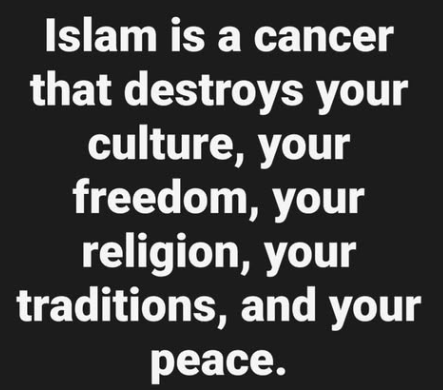 uthor of the meme here, I would suggest that hate and ignorance are far more aggressive forms of cancer.
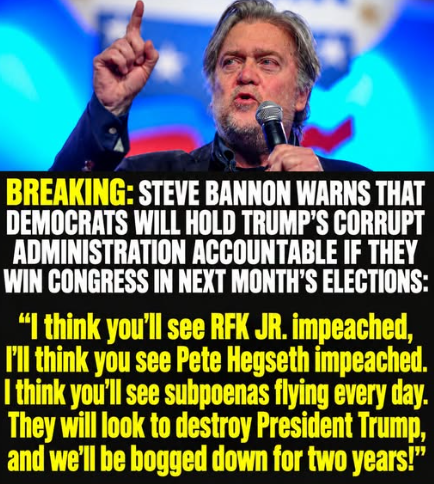 Yes, Hegseth and RFK, Jr. will be gone, but I think what’s going to happen first is the decapitation of the snake itself, i.e., the removal of Trump from the presidency.
Based on the news on social media, this could happen via the 25th Amendment, based on Trump’s mental deterioration. In my view, that’s a shame. If he’s not criminally prosecuted, this nation will be deprived of letting the American people and the rest of the world know that rule of law still matters in the United States.
Steve Bannon on the Consequences of a Blue Tsunami in November
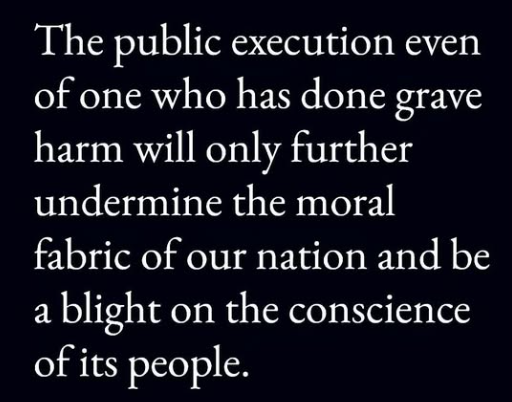 When I was young, I heard someone say, “The first execution this country televises will be the last one ever performed here.”
I think he was right at that time. You’d have millions of people watch that barbarism and realize that it was done in their name.
But today, we’re a far more insensitive, brutal, and stupid people that we were 50 years ago. If you doubt that, just look at the quality of the people at the top of the federal government–people like RFK, Jr., Hegseth, and Trump.



-
Climate Change1 year ago
Guest post: Why China is still building new coal – and when it might stop
-

 Greenhouse Gases2 years ago
嘉宾来稿:满足中国增长的用电需求 光伏加储能“比新建煤电更实惠”
-
Greenhouse Gases1 year ago
Guest post: Why China is still building new coal – and when it might stop
-

 Climate Change2 years ago
嘉宾来稿:满足中国增长的用电需求 光伏加储能“比新建煤电更实惠”
-

 Renewable Energy12 months ago
Sending Progressive Philanthropist George Soros to Prison?
-
Climate Change2 years ago
Bill Discounting Climate Change in Florida’s Energy Policy Awaits DeSantis’ Approval
-
Greenhouse Gases1 year ago
嘉宾来稿:探究火山喷发如何影响气候预测
-

 Climate Change2 years ago
Analysis: China’s CO2 falls 1% in Q2 2024 in first quarterly drop since Covid-19