


As per reports, Qatar has taken a major step in sustainability. In Q2 2024, it issued its first sovereign green bonds worth $2.5 billion. This marked its entry into the global sustainable finance market and set records for the Middle East, Central and Eastern Europe, and Africa. The issuance is split into two tranches: $1 billion for five years and $1.5 billion for ten years. Both were priced at record-low spreads over US Treasuries.
The Ministry of Finance confirmed strong global interest. Bids exceeded three times the offered amount. This demand shows that investors want green assets in emerging markets. It also positions Qatar as a leader in sustainable finance.
Qatar’s Green Bond Milestones: Setting a Benchmark for the Gulf
Qatar is also updating its sovereign green assets register. This register tracks projects financed through green bonds, ensuring accountability and transparency. The government released its first allocation report, showing investors how proceeds are used.
By improving disclosure standards, Qatar sets an example for Gulf states on attracting responsible capital. The register builds a foundation for long-term credibility in sustainable finance.
Driving Climate Resilience Through Policy
Qatar is advancing climate resilience through its National Adaptation Plan (NAP). This plan protects the economy, people, and at-risk coastal areas from climate threats. These efforts support the Qatar National Vision 2030, which aims to balance economic growth with ecological protection.
New sustainable finance regulations will align capital flows with climate goals. These measures support the Qatar Central Bank’s Sustainable Finance Framework, guiding banks to invest in renewable energy, energy efficiency, and other climate-friendly initiatives.
Unlocking Qatar National Vision 2030
The green bond debut connects to the broader goals of the Qatar National Vision 2030 (QNV 2030). Launched in 2008, this framework aims to transform Qatar into a sustainable society by 2030.
QNV 2030 is structured around four pillars:
-
Human Development: Enhancing education, healthcare, and research for citizens.
-
Social Development: Building a cohesive society based on cultural values and global partnerships.
-
Economic Development: Diversifying the economy beyond hydrocarbons and fostering private sector growth.
-
Environmental Development: Preserving natural resources during modernization.
These pillars shape every national strategy, including the 2024–2030 development plan. As the target year nears, the vision serves as a guide for balancing modernization and environmental care.
Catalyzing Regional Green Finance Growth
Qatar’s $2.5 billion bond issuance is a regional game changer. As the first GCC country to issue sovereign green bonds, Qatar paves the way for others in the Gulf. Its success shows that global investors want to support credible, sustainable projects in the Middle East.
This precedent may inspire other countries in the region to explore sustainable finance options, such as green bonds or green Sukuk. Such moves would accelerate the Gulf’s shift towards ESG-aligned investments and improve regional competitiveness.
Building Policy Momentum and Market Confidence
The issuance benefits from clear regulatory support. The Qatar Central Bank’s Sustainable Finance Framework ensures green capital funds projects with measurable environmental impact. By embedding sustainability into finance, Qatar creates an environment for banks and investors to engage in the green economy.
This momentum reassures investors while promoting innovation in financial products. For example, sustainable Sukuk and green infrastructure funds are likely to gain traction, expanding options for stakeholders.
Attracting Global Capital and Investment
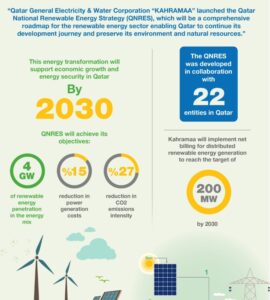
Qatar aims to attract up to $75 billion in sustainable investments by 2030. The sovereign green bond is a vital step. Proceeds will fund high-standard projects in renewable energy, sustainable water management, energy efficiency upgrades, and green buildings.
Targeted investments signal that Qatar is serious about aligning economic growth with climate goals. This diversifies the investor base, drawing interest from global funds focused on ESG portfolios.
Supporting Qatar’s Environmental and Economic Transformation
The green bond proceeds will support projects with significant environmental benefits. Priority areas include:
-
Renewable Energy: Scaling solar, wind, and clean energy sources to reduce fossil fuel reliance.
-
Energy Efficiency: Retrofitting infrastructure to lower consumption and emissions.
-
Water Management: Expanding conservation and recycling to protect scarce resources.
-
Green Buildings: Constructing and upgrading properties to meet sustainability standards.
By funding these sectors, Qatar reduces emissions and diversifies its economy away from hydrocarbons—a crucial challenge for Gulf economies.
Boosting Investor Trust and Global Standing
The strong demand for the green bond reflects investor confidence in Qatar’s stability and long-term vision. The issuance shows Qatar can deliver projects that meet global climate goals while maintaining fiscal discipline.
Ahmed Ali Al-Hammadi, Head of Sustainable Finance at Qatar National Bank, stated that Qatar’s actions demonstrate how green finance boosts sustainability and economic growth. He believes other GCC entities will probably follow suit.
Aligning with Global Climate Goals
Qatar’s entry into the green bond market matters beyond the region. It aligns with the United Nations Sustainable Development Goals (SDGs) and supports the Paris Agreement. By raising funds for climate-resilient projects, Qatar helps limit the temperature rise. It also positions itself as a responsible global partner.
This issuance also enhances Qatar’s global reputation, showing that hydrocarbon-dependent economies can shift to greener paths without sacrificing growth.
A New Era for the Middle East’s Green Finance Market
The country’s green bond success opens a new chapter in Middle Eastern finance. It shows that innovative financial tools and strong policies can attract global investment. These efforts also support national climate goals.
Qatar sets high standards for transparency and accountability. This creates a model for others in the region. Its progress shows that sustainable finance isn’t just a trend. It’s a powerful force for a low-carbon future.
- FURTHER READING: China’s First-Ever Sovereign Green Bond Hits Global Market: Will It Power Its Net Zero Ambitions?
The post Qatar Issues $2.5B Green Bonds: A New Era for Gulf Sustainable Finance appeared first on Carbon Credits.

EU carbon credit claims changed on 27 September 2026, the day the Directive (EU) 2024/825 began to apply across the European Union. The change is narrow. It changes how a company can talk about the credits it buys. A product can no longer be called neutral on the strength of compensation alone; however, every specific, evidenced statement about what a company measured, reduced, and funded stays fully available.

The post Promoting Improved Cooking Practices in Nigeria appeared first on Terrapass.



-
Climate Change1 year ago
Guest post: Why China is still building new coal – and when it might stop
-

 Greenhouse Gases2 years ago
嘉宾来稿:满足中国增长的用电需求 光伏加储能“比新建煤电更实惠”
-
Greenhouse Gases1 year ago
Guest post: Why China is still building new coal – and when it might stop
-

 Climate Change2 years ago
嘉宾来稿:满足中国增长的用电需求 光伏加储能“比新建煤电更实惠”
-

 Renewable Energy12 months ago
Sending Progressive Philanthropist George Soros to Prison?
-
Climate Change2 years ago
Bill Discounting Climate Change in Florida’s Energy Policy Awaits DeSantis’ Approval
-
Greenhouse Gases1 year ago
嘉宾来稿:探究火山喷发如何影响气候预测
-

 Climate Change2 years ago
Analysis: China’s CO2 falls 1% in Q2 2024 in first quarterly drop since Covid-19