


Puro.earth, a global platform for engineered carbon removal, has secured €11 million in Series B funding. Nasdaq led the round, with support from Fortum Innovation and Venturing.
The investment marks a significant milestone for the company and the broader carbon removal market, which is expected to expand rapidly over the next decade. The funds will help Puro.earth boost its infrastructure, support suppliers better, and speed up the issuance of reliable carbon removal credits.
Strengthening the Backbone of Carbon Removal
The new funding will support Puro.Earth’s efforts to expand its infrastructure for issuing CO₂ Removal Certificates (CORCs). These certificates show verified carbon credits for removing one metric ton of carbon dioxide from the air. This is done using methods like biochar, enhanced rock weathering, and direct air capture.
Key areas where the investment will be deployed include:
- Enhancing supplier onboarding to bring more carbon removal projects into the system.
- Improving digital monitoring, reporting, and verification (dMRV) tools to ensure transparency.
- Scaling credit issuance to meet rising demand from corporations with net-zero commitments.
- Building stronger links between credit buyers and project developers.
These initiatives are designed to make carbon removal a trusted and reliable part of the global climate toolkit.
Passing the One Million Credit Milestone
Puro.earth has already achieved a major industry milestone: the issuance of more than 1 million CORCs since its launch in 2019. Each certificate represents one verified metric ton of carbon dioxide removed. Notably, the platform doubled its issuance volume in just a year, underlining how quickly demand and supply are scaling.
The company expects the next million CORCs to be issued by mid-2026, showing exponential growth potential. For context, the credits issued to date are equivalent to removing the annual emissions of around 250,000 passenger cars. This progress shows how quickly engineered carbon removal is moving from a niche market to a mainstream climate solution.
Why the Funding Matters
Puro.earth’s Series B financing will help unlock several critical steps for scaling the carbon removal industry. With better infrastructure and closer supplier ties, the platform can boost CORC issuance. It can also widen the range of removal methods available.
This matters because companies around the world are under pressure to meet net-zero pledges. Access to trusted carbon removal credits provides a pathway for organizations to address residual emissions after reducing their own footprint.
High-quality credits show that corporations are serious about climate leadership. This impresses regulators, investors, and customers.
Jan-Willem Bode, President of Puro.earth, reiterate this saying:
“With this latest round of funding, we’re strengthening the systems that facilitate scale in CDR deployment and enhancing our customer offerings to better support the growing demand for durable engineered removals. Our approach is grounded in science, market discipline, and transparency. This is what our ecosystem of buyers and suppliers demands— Nasdaq and Puro.earth are well-placed to meet this need by combining financial infrastructure and climate expertise to foster innovation and accelerate the carbon market growth.”
Rising Demand for Engineered Carbon Removal
The global carbon removal market is still in its early stages, but demand is accelerating. In 2024, purchases of durable removal (CDR) credits totaled 8 million metric tons of CO₂.

Biochar projects made up most of the certified credits. Puro.earth was the top registry for these methods.
Market forecasts point to exponential growth. Analysts estimate that the carbon removal market, valued at about $2.7 billion in 2023, could grow to as much as $100 billion annually by 2030–2035. Such growth depends on stronger policy support, buyer confidence, and technological advances that reduce costs.
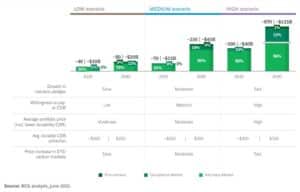
Government policies are already playing a role. The U.S. Inflation Reduction Act offers incentives for carbon removal. Meanwhile, the European Union is creating its own certification frameworks. These measures encourage companies in energy, finance, aviation, and technology to look into lasting carbon removal credits.
What Sets Puro.earth Apart in the Carbon Market
With the backing of Nasdaq and Fortum, Puro.earth is positioning itself as a central hub in the carbon removal ecosystem. The company’s platform has several features that strengthen its credibility:
- Rigorous methodologies:
CORCs use conservative baselines. This ensures credits show only extra, verifiable removals. - Transparency:
Digital tools track and verify carbon storage, helping buyers trust the credits they purchase. - Scalability:
By focusing on engineered removals such as biochar and direct air capture, Puro.earth connects buyers with solutions that can expand rapidly.
This approach sets Puro.earth apart from project-level registries. Those registries have faced criticism for integrity issues. The platform aims to rebuild buyer trust in carbon markets by creating a strong framework at the jurisdiction level.
Strengthening ERW Credibility
Recently, Puro.earth has launched a public consultation. This aims to enhance its Enhanced Rock Weathering (ERW) method, the first engineered carbon removal approach of its kind. The revision aims to align with the latest scientific advances and its own General Rules and ICVCM benchmarks.
Key updates are:
- Stricter measurement methods now require two ways to verify CO₂ removal.
- Sampling guidance for soil chemistry is clearer.
- There’s explicit accounting for carbon loss factors, like plant uptake and river transport.
The new method adds uncertainty discounts and needs strong statistical checks. This boosts both scientific accuracy and market trust.
Barriers Ahead: High Costs and Market Fragmentation
Despite the positive outlook, challenges remain. High costs continue to be a barrier for many engineered carbon removal projects. Market fragmentation means many standards and methods compete for attention. This can confuse buyers. In addition, demand has not yet caught up with potential supply.
In 2021, the voluntary carbon market reached a peak of 516 million metric tons in transactions, but volumes fell to around 84 million tons by 2024. Forest and land-use projects fell sharply. This made buyers more cautious about offset integrity.

Jurisdictional and engineered solutions from Puro.earth can help with these issues. However, building trust will take time.
Still, analysts see the potential for a $250 billion carbon removal market in the future. Institutional support, like Nasdaq’s role in this funding round, can boost confidence and speed up adoption.
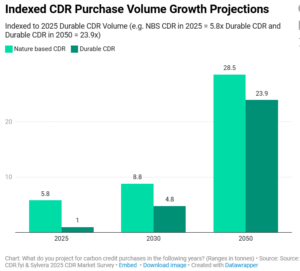
Can Puro.earth Lead a $100B Market?
The outlook for carbon removal is both challenging and promising. Demand for verified credits is growing, yet it remains far below the levels needed to align with global climate goals.
Analysts estimate that by 2050, the world will need to remove billions of tons of CO₂ annually to stay within safe temperature limits. For platforms like Puro.earth, this means scaling quickly, building trust, and ensuring credits meet the highest integrity standards.
With the €11 million Series B funding, Puro.earth is taking important steps in that direction. The company aims to close the gap between bold climate promises and real outcomes. They’re doing this by:
- Strengthening supplier infrastructure
- Improving digital verification
- Supporting more project developers
As the world approaches the 2030 milestone, engineered carbon removal will play a bigger role in net-zero strategies. If Puro.earth meets its growth goals, it could create a multi-billion-dollar carbon removal industry. This would also help make corporate climate goals a reality. In this way, the company’s progress reflects both the urgency and the opportunity of building a sustainable carbon removal market.
- READ MORE: Microsoft (MSFT Stock) Tops Q2 2025 Record-Breaking Surge in Durable Carbon Removal Credit Purchases
The post Puro.earth Secures €11M as Nasdaq Backs Engineered Carbon Removal Boom appeared first on Carbon Credits.

EU carbon credit claims changed on 27 September 2026, the day the Directive (EU) 2024/825 began to apply across the European Union. The change is narrow. It changes how a company can talk about the credits it buys. A product can no longer be called neutral on the strength of compensation alone; however, every specific, evidenced statement about what a company measured, reduced, and funded stays fully available.

The post Promoting Improved Cooking Practices in Nigeria appeared first on Terrapass.



-
Climate Change1 year ago
Guest post: Why China is still building new coal – and when it might stop
-

 Greenhouse Gases2 years ago
嘉宾来稿:满足中国增长的用电需求 光伏加储能“比新建煤电更实惠”
-
Greenhouse Gases1 year ago
Guest post: Why China is still building new coal – and when it might stop
-

 Climate Change2 years ago
嘉宾来稿:满足中国增长的用电需求 光伏加储能“比新建煤电更实惠”
-

 Renewable Energy12 months ago
Sending Progressive Philanthropist George Soros to Prison?
-
Climate Change2 years ago
Bill Discounting Climate Change in Florida’s Energy Policy Awaits DeSantis’ Approval
-
Greenhouse Gases1 year ago
嘉宾来稿:探究火山喷发如何影响气候预测
-

 Climate Change2 years ago
Analysis: China’s CO2 falls 1% in Q2 2024 in first quarterly drop since Covid-19