

Weather Guard Lightning Tech
Nordex Crypto Theft, Goldwind Turbine Asbestos
Allen covers positive developments like EDF’s 261 MW Serra das Almas wind farm in Brazil, Ørsted’s offshore progress in the US, and Shell’s hydrogen deal in Germany. Then the troubling stories: a Nordex technical manager caught mining cryptocurrency inside turbines, and the discovery of asbestos in Goldwind turbine brake pads across multiple Australian wind farms.
Sign up now for Uptime Tech News, our weekly email update on all things wind technology. This episode is sponsored by Weather Guard Lightning Tech. Learn more about Weather Guard’s StrikeTape Wind Turbine LPS retrofit. Follow the show on Facebook, YouTube, Twitter, Linkedin and visit Weather Guard on the web. And subscribe to Rosemary Barnes’ YouTube channel here. Have a question we can answer on the show? Email us!
The wind industry is having quite a week. Some stories are blowing in the right direction. Others… well… you’ll see.
Let’s start with the good news.
In Brazil… EDF power solutions just powered up the Serra das Almas wind farm. Two hundred sixty-one megawatts. Fifty-eight Danish Vestas turbines spinning in Bahia state. Six hundred thousand homes… now running on wind.
Up in the United States… Ørsted is making waves with two offshore wind projects. Revolution Wind and Sunrise Wind. Cable installation is underway. Offshore substations are being commissioned. By next year… more than sixteen hundred megawatts will be flowing into Connecticut… Rhode Island… and New York.
Over in Germany… Shell is turning wind into hydrogen. They’ve signed a five-year power deal with Nordsee One. Starting in two thousand twenty-seven… offshore wind will feed a one hundred megawatt electrolyzer. Clean electricity making clean fuel. To power everything from trucks to chemical plants.
But now… the other stories.
In the Netherlands… a technical manager at Nordex wind farms thought he’d found the perfect side hustle. He had the keys. He had the access. He had giant wind turbines spinning out free electricity twenty-four hours a day.
And he had a plan.
Between August and November of two thousand twenty-two… the man installed three cryptocurrency mining rigs at the Gieterveen wind farm. He plugged them straight into a Nordex router. Inside a substation.
Then he drove to Waardpolder. Another wind farm. He climbed inside the turbines. And he hid two Helium network nodes. Connected them to Nordex’s internal network.
Month after month… while the turbines spun… his crypto wallet grew.
Nobody noticed. Why would they? He was the technical manager. He belonged there.
But then… Nordex got hit with something much worse. A ransomware attack. The Conti cybercrime crew. The company was scrambling. Investigating their networks. Looking for breaches.
That’s when they found his mining rigs.
The courts heard the case earlier this month. The prosecutor was not amused. This wasn’t just theft. This was a man who’d been trusted with critical infrastructure. Giant turbines. Automated systems. Industrial networks.
The prosecutor wanted two hundred forty hours of community service.
But the judges saw something else. A first-time offender. A man suffering from depression and burnout. Someone who admitted everything.
They cut the sentence in half. One hundred twenty hours.
Plus four thousand one hundred fifty-five euros in damages. About forty-four hundred dollars.
And if he doesn’t pay? Fifty-one days in custody.
If he doesn’t complete his community service? Sixty days in jail.
The court made one thing crystal clear. He’d shown no concern for the potential disruption to the turbines. No concern for the company’s trust. No concern… that he was running a side business… inside critical infrastructure.
But here’s the story that’s really stopped the industry cold.
In Tasmania… at the Cattle Hill wind farm… inspectors made a disturbing discovery. Asbestos. In the brake pads. Inside the turbine tower lifts.
Now… Tasmania is just the beginning.
The turbines were built by Goldwind… And Goldwind supplies turbines to wind farms all across Australia. New South Wales. Victoria. Queensland.
WorkSafe Victoria and SafeWork NSW confirmed Friday… asbestos has been found at multiple wind farm sites. White Rock. Gullen Range. Biala. Clarke Creek. Moorabool. Stockyard Hill.
The brake pads were imported into Australia. Importing asbestos has been illegal there… since two thousand three.
Beijing Energy International says the risk is extremely low. Access to affected turbines is restricted. They’re working with regulators. Testing is underway.
But here’s what everyone’s thinking…
Last week… asbestos was found in colored sand products from China. Schools shut down. Childcare centers closed. In the Australian Capital Territory. Queensland. South Australia.
Now it’s wind turbines.
So the wind industry had quite a week.
Clean power spinning up in Brazil.
Offshore cables going down in America.
Hydrogen flowing in Germany.
Cryptocurrency crimes in the Netherlands.
And asbestos… hiding inside turbines… from China.
And that’s the wind industry news for the 24th of November 2025.
Join us tomorrow for the Uptime Wind Energy Podcast.
https://weatherguardwind.com/nordex-goldwind-asbestos/

 I may have mentioned that I’m lucky enough to be a part of a group of boyhood friends from our prep school in Philadelphia that meets monthly on Zoom.
Yesterday the question came up as to how our political beliefs are formed, and the group found my input somewhat shocking.
First, from what I can understand from neurologists, our brains are “wired” to function in certain ways. Via some combination of genetics, epigenetics, and early experiences, we are incapable of looking at the world in a fundamentally different way than we do now. I am no more capable of being a Trump supporter than I am of starting as quarterback in the NFL or memorizing the first 22K digits of pi, the way certain savants can.
This is validated by studies showing that our political philosophies are shaped by the way our brains fire under certain circumstances. When experimental subjects were hooked up to electronics that monitored their brain activities were shown pictures that depict certain threats, the results from self-described “liberals” and “conservatives” differed considerably. When shown photographs of kittens and mountain ranges, both groups processed those images in the same regions of the brain. But when shown photographs of snakes and tarantulas, conservatives were far more likely to process these images through the amygdala, the “fight-or-flight,” or “reptile” brain that kicks in when we interpret something as a danger to our survival.
I’m not losing my mind about immigration into the U.S.; I’m unconvinced that hordes of immigrants from our south or the Muslims from the Mideast are destroying our nation.
Why is that? My brain is wired to doubt it. For whatever reason, I’m more inclined to think that I’m one of 8 billion people on this planet that have almost identical goals and ideals. We all want to survive, to love our children, to be productive and responsible human beings, and to appreciate beauty.
On top of that, I’m a follower of Sam Harris, neuroscientist, author, and philosopher, whose work has shown that free will is an illusion. He points to a study whose findings are that, when we make up our minds in an instant to do a certain thing, say lift our finger from a table at a certain point of our choice, that our brains have made that decision a full half-second before.
Needless to say, there is a ton more to understand here about Sam Harris and his work on this subject. I urge readers to take that step forward.
Weather Guard Lightning Tech
Nordex Invests in Türkiye, Vestas Wins First V182 Order
Allen covers Nordex’s Türkiye expansion, Chinese turbine makers seeking European partners, Vestas’ first V182 order, and two Pennsylvania repowers.
The Uptime Wind Energy Podcast is brought to you by Weather Guard Lightning Tech, creators of the StrikeTape Ultra LPS retrofit. Subscribe to Uptime’s Substack newsletter. And check out Rosemary’s “Engineering with Rosie” Youtube channel. Have a question we can answer on the show? Email us!
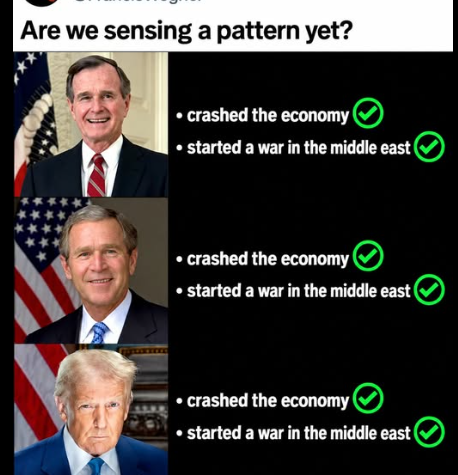 I’m not sure it’s as simple as this, insofar as Bush 41 and 43 weren’t criminal sociopaths.
I happened to be driving through Manhattan on the very day that Colin Powell was addressing the United Nations just a few miles away and claimed, and I think honestly, that Saddam Hussein had “weapons of mass destruction,” and must be stopped by a U.S. military invasion.
Contrast that against what we’re doing in Iran. Fifteen years ago, the Joint Comprehensive Plan of Action (JCPOA), included Iran, the P5+1 nations (the United States, China, Russia, France, the United Kingdom, and Germany), alongside the European Union made an agreement in which most of the developed world agreed that Iran must not have a nuclear weapon.
That stood firmly in place until Trump’s latest war crime, which is costing lives and choking the world economy, solely to defend our president’s neuroses.



-
Climate Change1 year ago
Guest post: Why China is still building new coal – and when it might stop
-

 Greenhouse Gases2 years ago
嘉宾来稿:满足中国增长的用电需求 光伏加储能“比新建煤电更实惠”
-
Greenhouse Gases1 year ago
Guest post: Why China is still building new coal – and when it might stop
-

 Climate Change2 years ago
嘉宾来稿:满足中国增长的用电需求 光伏加储能“比新建煤电更实惠”
-

 Renewable Energy11 months ago
Sending Progressive Philanthropist George Soros to Prison?
-
Climate Change2 years ago
Bill Discounting Climate Change in Florida’s Energy Policy Awaits DeSantis’ Approval
-
Greenhouse Gases1 year ago
嘉宾来稿:探究火山喷发如何影响气候预测
-

 Climate Change2 years ago
Analysis: China’s CO2 falls 1% in Q2 2024 in first quarterly drop since Covid-19