


NIO, a top Chinese electric vehicle (EV) maker, keeps pushing boundaries with its advanced battery swap technology and bold plans for global expansion. The EV maker recently launched its first battery swap station in France, a move that marks a key milestone in its European expansion strategy.
The facility sits in Chalon-sur-Saône between Paris and Lyon. This offers a new option for EV charging. It also reflects NIO’s commitment to offering a more convenient and sustainable charging solution for drivers.
NIO’s Power Swap Stations let drivers exchange a dead battery for a fully charged one. This swap takes less than five minutes, so there’s no need to wait for batteries to charge. This method cuts downtime, eases charging worries, and allows for heavy daily use.
Thus It’s great for taxis, ride-hailing services, and commercial fleets. As of mid-2025, NIO has built over 2,400 Power Swap Stations globally, including more than 2,100 in China and 50+ in Europe. The company aims to reach 1,000 stations outside China by 2025.
NIO’s Role in Decarbonizing Transportation
NIO’s battery swap technology supports grid balancing and energy storage, key tools for a low-carbon economy. The swap stations act as virtual power plants (VPPs), storing energy and helping distribute it more efficiently during peak and off-peak hours. This reduces strain on energy grids and integrates renewable sources like wind and solar more smoothly.
This system plays a significant role in reducing lifecycle emissions. NIO’s centralized battery charging is different from traditional EV charging.
With traditional charging, carbon intensity changes based on the power grid. But NIO allows users to schedule charging when grid emissions are low, which enables:
- battery health optimization,
- extends battery life, and
- reduces electronic waste.
Watch below how its power swap stations work:
The company had completed 30 million swaps in late 2023, cutting around 891,693 metric tons of CO₂. That’s about 28 kilograms of CO₂ saved per swap—the same as avoiding 80 kilometers of driving in a gas-powered car or matching the annual carbon absorption of 3 mature trees. These savings show how NIO’s swap model boosts EV convenience and contributes to meaningful emissions reductions.
On the Road to Net Zero: NIO’s Emission Targets and Progress
NIO has set a clear goal to reach carbon neutrality across its operations and entire supply chain by 2045, with interim steps to curb emissions along the way. In its 2024 ESG report, NIO shared solid progress toward this goal.
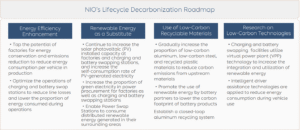
For example, the manufacturing facilities used 56.6% renewable electricity. This is a big jump from 2023 levels, which accounted for about 97,000 MWh of clean power. This increase came from a 74.5% rise in renewable use compared to last year.
The Chinese EV maker reported the following greenhouse gas (GHG) emissions for the year 2024.

The company showed great results in material recovery and recyclability, too. It achieved a 98.8% recoverability rate and a 91.4% recyclability rate for sold vehicles. These figures reflect NIO’s dedication to a circular economy, designing products for reuse and minimizing waste.
Moreover, NIO joined the Science-Based Targets initiative (SBTi) and implemented an internal carbon pricing (ICP) system. These moves show its commitment to tracking and managing emissions and align with global standards.
In 2024, NIO took a more active role in global climate discussions. It participated in COP29 and hosted a forum titled “Green and Low‑Carbon Development of China’s Automobiles,” reinforcing its reputation as a thought leader in clean mobility.
As a member of the UN Global Compact since 2016, NIO aligns its values and business operations with UN sustainability goals, emphasizing corporate responsibility in climate action.
Moreover, NIO reported a 12% reduction in average manufacturing emissions per vehicle year-over-year, reflecting energy-saving improvements and greener factory operations. Its Factory Two (F2) was recognized as a “Super Automotive Factory” and a “2024 Green Factory” by provincial authorities. These achievements show NIO’s ability to hit measurable sustainability targets.
Together, these efforts show that NIO is not just making promises; it is delivering measurable results on the path to net-zero emissions. Its method combines renewable energy adoption, smart carbon management, material recycling, and active participation in global ESG platforms.
Three Brands, One Carbon-Cutting Strategy
NIO’s multi-brand approach allows it to reach a wide range of consumers while maximizing its carbon reduction impact. The flagship NIO brand offers premium electric vehicles equipped with smart energy systems and advanced autonomous driving features. In 2024, NIO launched the ONVO brand, targeting the mass market with more affordable EVs that directly compete with Tesla’s Model Y.
In 2025, the company launches Firefly. This compact EV line targets city drivers and competes with BMW’s Mini and Mercedes’ Smart cars. Prices will start at about $20,400. This full-spectrum strategy positions NIO to drive emissions reductions across luxury, mainstream, and budget-friendly segments.
Tapping into Carbon Credit Markets
The global carbon credit market will grow quickly. Estimates suggest its value could reach between $7 billion and $35 billion by 2030. By 2050, it may soar to $250 billion.
NIO is well-positioned to benefit from this trend. It has received TÜV Rheinland certifications for its greenhouse gas emissions data and product carbon footprint. This is a key step for companies that want to sell verified carbon credits.
Global Growth and Strategic Partnerships
NIO is accelerating its global presence with the following initiatives:
- Battery swap station rollout in France, Norway, Germany, Netherlands, Sweden
- 2024 partnership with Shell for EV infrastructure in China and Europe
- Expansion plans into Hungary and Spain
- EU incentives and rising demand for zero-emission vehicles
- In-house battery production for cost savings and supply chain control
- Partnerships with CATL and other battery suppliers
- Support for the Battery-as-a-Service (BaaS) model
- EV purchase without battery ownership
- Lower upfront costs, wider accessibility
The Road Ahead for NIO and Clean Transportation
As the global EV market continues to grow—expected to hit 20 million units in sales by 2025—NIO is positioning itself as a major player in decarbonized mobility. China, NIO’s home base, made up more than 60% of global EV production and sales in 2024. This gave NIO a big edge in size and know-how.
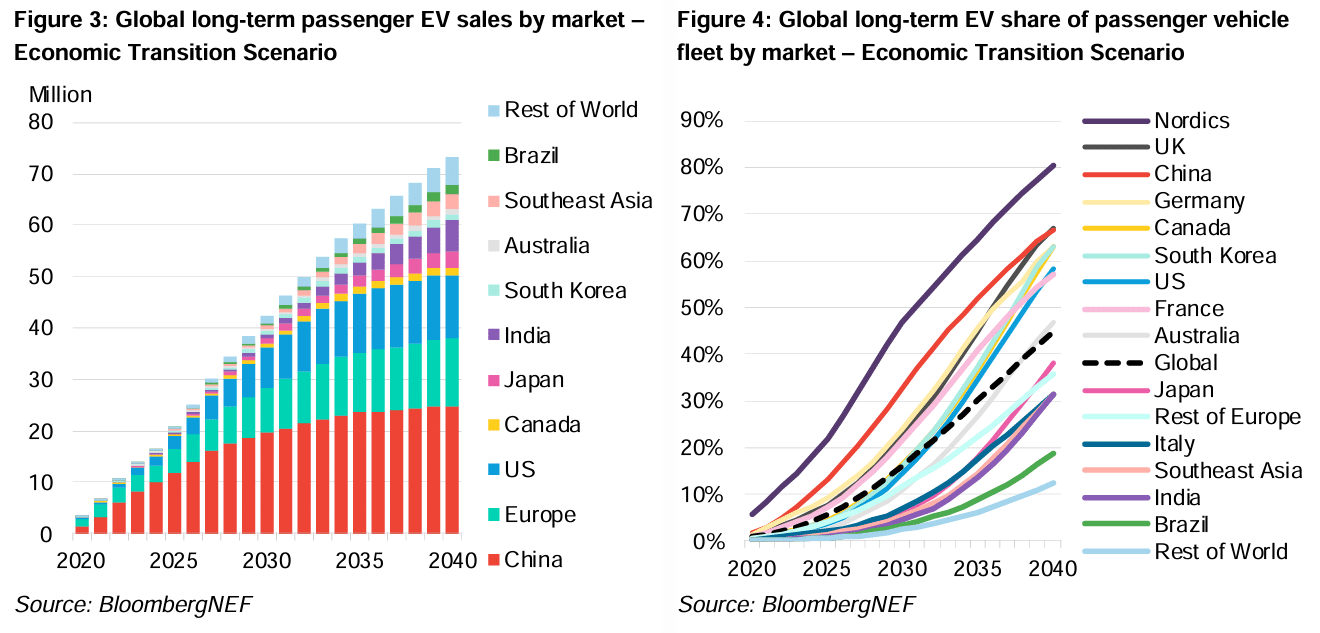
Battery swapping offers a scalable solution that complements traditional charging infrastructure. As EV adoption increases, demand for faster, more efficient energy solutions will rise. NIO’s integrated ecosystem of vehicles, battery swaps, and software gives it a unique edge in this space.
NIO is a great example for ESG investors and clean tech watchers. It shows how electrification and digital tech can cut carbon emissions, help achieve net-zero goals, and change the future of mobility.
- READ MORE: Lucid Group (LCID Stock) Sets New EV Standard: Highest Efficiency and 30% Lower Emissions
The post NIO’s (Stock) Race to Net Zero with EV Battery Swaps That Power Down Emissions appeared first on Carbon Credits.

EU carbon credit claims changed on 27 September 2026, the day the Directive (EU) 2024/825 began to apply across the European Union. The change is narrow. It changes how a company can talk about the credits it buys. A product can no longer be called neutral on the strength of compensation alone; however, every specific, evidenced statement about what a company measured, reduced, and funded stays fully available.

The post Promoting Improved Cooking Practices in Nigeria appeared first on Terrapass.


-
Climate Change1 year ago
Guest post: Why China is still building new coal – and when it might stop
-

 Greenhouse Gases2 years ago
嘉宾来稿:满足中国增长的用电需求 光伏加储能“比新建煤电更实惠”
-
Greenhouse Gases1 year ago
Guest post: Why China is still building new coal – and when it might stop
-

 Climate Change2 years ago
嘉宾来稿:满足中国增长的用电需求 光伏加储能“比新建煤电更实惠”
-

 Renewable Energy12 months ago
Sending Progressive Philanthropist George Soros to Prison?
-
Climate Change2 years ago
Bill Discounting Climate Change in Florida’s Energy Policy Awaits DeSantis’ Approval
-
Greenhouse Gases1 year ago
嘉宾来稿:探究火山喷发如何影响气候预测
-

 Climate Change2 years ago
Analysis: China’s CO2 falls 1% in Q2 2024 in first quarterly drop since Covid-19