

In 2024, carbon emissions hit a record high, with more than 41 billion tonnes of planet-heating CO2 pumped into the Earth’s atmosphere. From aviation to agriculture, every industry contributed a share of those emissions, mainly through the use of fossil fuels.
If the world is to start reducing emissions and reach net zero in the second half of the century, as promised under the Paris climate agreement in 2015, we need to know exactly where those emissions are coming from. Crunching the data offers up estimates of which sectors release the most greenhouse gases – but this is a far harder task at the corporate level.
There are the major fossil fuel firms, both state-run and private – such as Shell, Saudi Aramco, ExxonMobil or Coal India – which we know play an outsized role. But according to the World Bank, 90% of global businesses are small and medium-sized enterprises.
Understanding their environmental impact – and how they contribute to the emissions of larger companies further up the value chain – is complex but essential if climate action goals set by both governments and the private sector are to be met, experts say.
While businesses have long been aware of the need to curb their emissions, the process of collecting data on their supply chains, and knowing what to do with it, can serve as a barrier to action. And without regulation to make companies set and meet targets to reduce their carbon pollution, monitoring and analysing emissions has so far been a voluntary effort.
Problem with a wide scope
The first attempt to properly account for company-level emissions started almost 25 years ago with the Greenhouse Gas Protocol. Its corporate standard was developed in 2001 in response to the UN’s Kyoto Protocol on limiting the emissions of wealthy countries, and covered reporting of the seven greenhouse gases covered by that agreement.
The GHG Protocol was formed by two non-profit organisations: the World Resources Institute and the World Business Council for Sustainable Development. Its work has become a standard bearer in the field of carbon accounting, with its guidance used by thousands of corporations, and updates to its rules closely followed.
The protocol’s lasting contribution was to create the concept of ‘scopes’, which separate a company’s emissions into three distinct categories. Scope 1 covers all emissions from direct sources a company owns or controls. Scope 2 is indirect emissions from purchasing energy. Scope 3 emissions are all other indirect emissions within a company’s supply chain.
Comment: SBTi needs tighter rules on companies’ indirect emissions
Defining Scope 3 – and how to adequately account for and offset those emissions – has proved a difficult task. These emissions can include everything from business travel to a company’s financial investments. The GHG protocol has 15 separate categories on Scope 3 emissions, reflecting the wide range of where they might be found.
These categories are themselves divided into ‘upstream’ and ‘downstream’; for example, upstream could include the use of any vehicle a company doesn’t own but is in the service of its business. Downstream can cover activities such as how products are treated at the end of their life.
“Scope 3 has proven to be one of the most challenging topics to be addressed among the business community,” said Ramiro Fernandez, campaign director at Race to Zero, a UN-backed climate campaign. “For years the climate business community has been developing methodologies and metric frameworks to account for the emissions of companies’ value chains.”
The knottiness of the issue means that many companies are reluctant to engage with tackling this category of emissions. A 2024 survey of 300 large public companies by consultancy firm Deloitte found that while three-quarters disclose their Scope 1 emissions, and around half Scope 2, the figure falls dramatically to 15% for Scope 3.
Threat to 1.5C goal
Sustainability experts warn that ignoring Scope 3 emissions is self-defeating and puts at risk the Paris Agreement goal of limiting global temperature rise to 1.5C above pre-industrial times, given that an estimated 75% of the average company’s emissions fall into that category, according to CDP, a non-profit that helps businesses disclose their environmental impact.
“If we fail to address Scope 3, corporate net-zero pledges cannot be achieved,” said Sanda Ojiambo, CEO and executive director of the UN Global Compact, a voluntary initiative supporting sustainability in business.
“Most business-related emissions come from Scope 3, which means neglecting them keeps us on a dangerous path to exceeding 1.5C [of global warming],” she added.
The Science Based Targets initiative, originally set up to ensure that corporate climate plans are in line with the Paris Agreement, has approved 7,000 targets over the past 10 years. Notably, the initiative requires all companies to include Scope 3 emissions in their long-term emissions reduction targets.
Ojiambo told Climate Home the UN Global Compact is working with thousands of businesses to ensure that Scope 3 emissions are “no longer an afterthought but a core pillar of corporate climate strategies”.
Comment: SBTi’s rigid emissions rules don’t reflect business reality
In tech we trust
The thorny challenge of reducing Scope 3 emissions has given rise to a host of solutions aimed at making it easier. Ways to tackle the problem include engaging with suppliers, investing in data collection and using technology to track emissions across the whole life cycle of products.
German software company SAP, for example, is attempting to integrate carbon data with financial data to create a “green ledger”. This system assigns carbon emissions to a company’s transactions, with a dashboard showing the impact of greenhouse gas intensity on operating income, gross margin and net revenue. The hope is that this process will generate real-world numbers rather than relying on estimates, as most businesses do today.
James Sullivan, global head of product management at SAP Sustainability, said the software will “change business practice… to accurately account for, analyse and report carbon footprints”. The ledger is the latest in a range of data-driven services the company and its peers are putting into the market to help businesses wrestle with emissions that are beyond their immediate control.
Locating accurate data on all Scope 3 emissions – and then calculating how they have reduced over time – can seem like a Herculean task. Where data gaps exist, the GHG Protocol advises using secondary data based on industry averages, government statistics, or public databases that are representative of a company’s activities. But using such generic data at scale may not provide an accurate picture of emissions or the impact of corporate action to stem them.
Sullivan believes that better data is key to solving the Scope 3 puzzle. “A major advancement is the widespread understanding that managing Scope 3 emissions requires high-quality data and transparency into supply chains,” he said. “It is crucial for businesses to integrate sustainability data into core business processes.”

Getting ahead of competitors
Companies like SAP are confident their technological solutions are having a tangible impact on that front. Sullivan pointed to one of its customers, Martur Fompak International, a Turkish supplier of seats for the automotive sector. As a result of using SAP’s technology, Sullivan said the company has reported a 52% reduction in transportation-related carbon emissions and a 34% decrease in emissions linked to its automotive seats.
Martur Fompak achieved this, in part, through tracking emissions across its products’ entire lifecycle, from where the materials were sourced to where they were sent and used. The software analysed the carbon footprint of different fabrics and suggested lower-impact alternatives. It also provided real-time monitoring of the company’s energy consumption at more than 600 work centres, and created new delivery routes for its drivers.
Ojiambo noted that many large companies are making emissions reductions a condition of doing business with them and weaving such criteria into their procurement contracts. This could give suppliers like Martur Fompak a major incentive to lower their emissions in order to gain a competitive edge.
“Suppliers are feeling the pressure, but the smartest ones see this as an opportunity rather than a burden,” she added.
Business contribution to NDCs
The current global political climate has made sustainability concerns a convenient punchbag, with US President Donald Trump’s anti-green agenda already encouraging many companies to scale back their environmental ambitions. Across the Atlantic, the European Commission is planning to water down a package of sustainability rules originally intended to be world-leading.
The mood music is not exactly positive. According to the Financial Times, some participants at January’s World Economic Forum in Davos reported that ambition around tackling Scope 3 emissions was “crumbling” among business executives.
This comes at a time of record heat and more frequent extreme weather events, when scientists are concerned at the pace of change in the Earth’s climate and its effects. To tackle this, countries are due to submit stronger national climate plans by September, including emissions reduction targets for 2035, as required by the Paris Agreement.
These plans, known as Nationally Determined Contributions (NDCs), are a clear example of where businesses could play a bigger role in supporting government efforts to fight climate change but currently lack the capacity, partly due to a lack of data and other resources.
Tom Cumberlege, a director at The Carbon Trust, who leads the consultancy’s work on value chain analysis and strategy, said NDCs that are able to leverage both public and private funding for implementation “could be a win-win” for governments and businesses.
“It can reduce the risk of investing in projects – such as energy efficiency improvements or renewable assets in the supply chain – and contribute to effective emissions reductions at a national level,” he explained.
Achieving NDC targets will require businesses to align their own climate action plans with those of governments and their suppliers. “Companies have an increasingly important role to play in engaging and supporting their own value chain to be part of the contribution [to NDCs],” said Fernandez of Race to Zero.
“Transitioning to net zero requires a whole of society approach,” he added. “Even with all the uncertainties and lack of clarity, companies have to reduce their Scope 3 emissions if we want to have any chance of remaining within the 1.5C threshold.”
The post Neglecting ‘Scope 3’ emissions could sink corporate climate action appeared first on Climate Home News.
Neglecting ‘Scope 3’ emissions could sink corporate climate action

June Rubis is a steering group committee member for the Cali Fund, from Sarawak in Malaysian Borneo.
At COP16 in Cali, governments made a significant commitment: at least half of the funding from the new Cali Fund should support the self-identified needs of Indigenous Peoples and local communities, including women and youth. It was a watershed moment for multilateral benefit-sharing.
The challenge now is to translate that commitment into access arrangements that recognise the different institutions, priorities and decision-making processes of Indigenous Peoples and local communities.
For generations, biodiversity and traditional Indigenous knowledge have provided significant value to companies who depend on nature’s genetic diversity to discover new drugs that fight diseases, create products that improve health, and grow crops resilient to extreme heat and flooding events. While some compounds are sampled directly from the source country, increasingly the digital blueprints are held in online public databases which are freely accessible to use for innovation and research.
Countries urged to ramp up “insufficient” nature policies at COP17
The Cali Fund was established at COP16 to encourage commercial users of Digital Sequence Information, or DSI, to share benefits arising from its use. Estimates suggest it could generate over $3.5 billion a year – a stark contrast to the modest $10,656 currently committed to the fund from just five SMEs, underlining how much progress must be made at COP17 over the next two weeks.
The COP16 decision that set up the fund offers two routes for money to reach Indigenous Peoples and local communities: through government authorities, and through direct payments to institutions identified by Indigenous Peoples and local communities themselves.
Varied ways of organising
Indigenous Peoples and local communities organise through a wide range of institutions. Some have national or regional organisations experienced in managing international grants. Others work through territorial organisations, customary institutions, community associations, cooperatives or networks. Some have professional finance teams and audited accounts; others have extensive experience governing territories, collective resources or conservation work without having been organised around international funding requirements.
For direct access, some questions are already apparent. Which institutions should be able to receive funds? How should they be identified? What fiduciary standards should apply? How should safeguards and accountability work where institutional capacities differ? What support may be needed where institutions have strong community mandates but less experience with international finance?
Comment: Protecting nature is a public duty, not a Wall Street profit opportunity
If access is designed mainly around institutions that already meet the expectations of large international finance mechanisms, early funding will tend to favour those already familiar to funders. They will gain further experience and become better positioned for future funding, while institutions with less administrative capacity may remain outside the system despite strong community mandates and long histories of stewardship.
These first decisions matter most, because they set the terms for everyone who follows.
The role of intermediaries requires care. Some Indigenous organisations may want a fiscal host to hold and manage funds on their behalf. Communities may choose to work through an NGO they trust. Government-facilitated arrangements may work well in particular national contexts.
What matters is the function an intermediary performs and the authority that comes with it. Providing administrative support is different from deciding which Indigenous organisations qualify, which priorities can receive support, or how success will be assessed. Direct access means communities keep that decision-making authority.
Decision-making power
The COP16 decision refers to institutions that Indigenous Peoples and local communities identify. But authority among Indigenous Peoples does not sit in one kind of body. It may sit with territorial organisations, customary institutions, community associations or combinations of these. Legal recognition and customary authority do not always align neatly.
Global deforestation slowed in 2025 but Brazil’s election could undo “fragile” gains
An important feature of the Cali Fund’s governance is that Indigenous Peoples and local communities participate as full members of the Steering Committee, rather than as observers. Seven Indigenous Peoples and local community representatives, one from each of the seven socio-cultural regions, participate in consensus-based decision-making alongside representatives of governments and UN entities. Six additional representatives from civil society, scientific institutions and the private sector participate as observers.
That representation carries responsibility. Institutional legitimacy, access and representation take different forms across the seven socio-cultural regions. Indigenous Peoples and local communities members therefore have an important role in bringing those differences into the Fund’s governance and in ensuring that arrangements developed for one context do not become the assumed model for everyone else.
Safeguards and clear responsibilities
COP17 can establish the core principles and direction, while allowing operational pathways to develop in ways that respond to different regional contexts. The decisions countries take in Yerevan will shape how that flexibility is realised in practice.
The choices made around access will influence which institutions are able to participate, which routes become established and which forms of authority are recognised within the funding architecture. The aim should be an architecture with enough structure to maintain confidence while allowing for different forms of Indigenous and community governance.
A credible direct-access pathway will need safeguards, financial oversight and clear responsibilities. This would give the 50% commitment a stronger institutional foundation.
The Cali Fund’s importance will ultimately depend not only on how much funding reaches Indigenous Peoples and local communities, but on whether they are able to determine how the money is accessed, governed and used. This requires access pathways that recognise their institutions, priorities and decision-making processes, rather than requiring them to conform to a single predetermined model.
The post COP17 must settle who decides how Cali Fund money is disbursed appeared first on Climate Home News.
COP17 must settle who decides how Cali Fund money is disbursed
The UK government has approved extraction at the Jackdaw gas field in the North Sea, despite acknowledging that this decision could make it harder for Britain to convince other countries to move away from fossil fuel production.
UK energy secretary Miatta Fahnbulleh approved the drilling on Wednesday after months of high-profile debate, fuelled in part by interventions from US President Donald Trump. She argued that the project would boost energy security in the wake of the Middle East fossil fuel crisis, protect hundreds of jobs and add £2.9 billion ($3.88bn) to the UK economy.
She said Jackdaw’s gas would be cleaner than imported gas and would not prevent the UK from meeting its legally-binding carbon targets and its goal of net zero by 2050. As the field is already licensed, she said extraction was consistent with the Labour Party’s 2024 manifesto promise not to issue any new oil and gas licenses.
The same morning, the government announced a new Energy Wealth Fund to reinvest oil and gas revenues in the climate transition. It will start with £2 billion ($2.67bn) from the government and be topped up over time with tax revenues from offshore oil and gas production.

Climate campaigners in the UK and abroad were quick to condemn the decision, while a leading legal expert told Climate Home News it goes against the advice of the International Court of Justice. Meanwhile, the government’s own documents reveal that it recognises the drilling could damage the UK’s reputation and its ability to push forward the global transition away from fossil fuels.
“Climate leadership” blow
The 92-page decision document says Fahnbulleh “acknowledges that international standing on climate is important and accepts that a decision to grant consent may not further the UK’s international climate leadership.”
It adds: “She acknowledges concerns about the potential implications for the UK’s credibility and influence – including the difficulty inherent in encouraging other states to move away from fossil fuel production while the UK continues, in a limited and transitional way, to draw on its own domestic resources.”
While noting that Jackdaw has not been issued with a new license – just permission to extract gas – the document says Fahnbulleh “accepts this does not fully resolve the underlying tension in the UK’s position” but “considers this alongside the substance of the UK’s wider record [on emissions reduction], which remains significant”.
It continues that she accepts these concerns are “legitimate” and weigh against approving gas extraction, but only gives this argument a “moderate negative weight” set against the benefits of gas production.
“Huge” wrong signal
In international climate talks, the UK has long supported the transition away from fossil fuels and is one of very few major oil and gas producers to ban new licenses. Across the North Sea, the Norwegian government continues to make offshore areas available for oil and gas exploration through annual licensing rounds.
Climate experts and campaigners shared the concern, acknowledged in the decision document, that approving Jackdaw could set a precedent for fossil fuel production elsewhere. Sam Fankhauser, professor of climate change economics at Oxford University, said the direct climate impact of Jackdaw is “much smaller than the debate around it would suggest” but the “wrong signal it sends, however, is huge”.
-
Carbon capture industry faces tough future, as UK raids green spending
Despite a spate of projects getting underway, the mood at an industry conference in London this week was low with government subsidies set to shrink -
Paris Agreement committee names three countries snubbing it over NDCs
More than 30 countries have failed to submit an NDC, but only three have repeatedly ignored the committee’s efforts to engage with them -
Turkish giant sponsoring COP31 cut climate goals then cashed in on oil boom
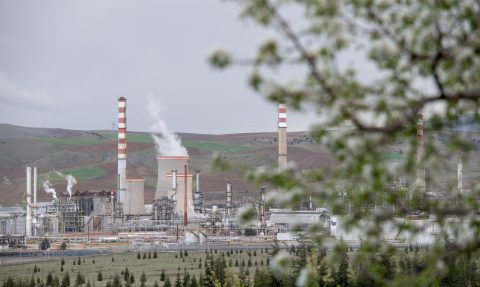
COP31 sponsors should be screened for “climate integrity”. Yet Koç Holding has become a top partner while its oil refiner runs flat out and its climate targets slip


Bob Ward, policy and communications director at the Grantham Research Institute on Climate Change, said that while Jackdaw’s output will be very small, “it will signal to other fossil fuel producers that they too should carry on with business as usual, less than a month before the COP31”.
Kenyan campaigner Mohamed Adow, director of Power Shift Africa, called the decision “a serious blow to Britain’s international climate credibility” as “the UK cannot expect developing countries to move away from fossil fuels while giving the green light to new drilling in its own backyard”.
International Court of Justice
In July 2025, the International Court of Justice (ICJ) advised that government failure to take appropriate climate action “including through fossil fuel production” may amount to an internationally wrongful act.
The UK voted in favour of a United Nations resolution welcoming the advisory opinion. Yet, in its Jackdaw decision document, it notes that the ICJ opinion is not legally binding and says the UK does not accept the court’s opinion that the customary international law duty to prevent significant harm to the environment applies to climate change.
Fahnbulleh concludes that, although it will have “significant effect on the environment”, gas drilling in Jackdaw “would not lead to significant harm to the environment” – and so does not breach any duty to prevent such harm. Instead, the government document says the duty should be considered “as a matter of policy rather than legal obligation”.
Margaretha Wewerinke-Singh, who led Vanuatu’s legal team pushing for the ICJ’s advisory opinion, told Climate Home News that treating the duty as a matter of policy rather than legal obligation is “not how international law works”. “An advisory opinion is not a judgement,” she said, “but it states the law as it stands, and that law binds the UK whether or not it accepts it.”
“Even as a matter of policy,” she added, “the decision asks the wrong question: whether Jackdaw on its own would cause significant harm. The Court found that accumulated emissions are already causing significant harm. What matters is whether approving new production is consistent with the stringent due diligence the duty requires.”
Public support for decision
While the decision was criticised by climate campaigners and the opposition Green party, polling reported by Politico suggests that 55% of British adults support drilling at Jackdaw, with just 14% opposed. Even supporters of the UK’s net zero target back new drilling by more than two to one, the polling found.
Jackdaw is one of two North Sea oil and gas fields the government has been debating whether to extract more from for months. While Jackdaw is a small gas field, the other, Rosebank, is a much larger field that holds mostly oil.
Rosebank’s emissions are estimated to be around seven times higher than Jackdaw’s. Fahnbulleh told Sky News that Rosebank is “different” to Jackdaw because its oil would be exported, whereas Jackdaw’s gas will be used in the UK, adding that she will consider it “in its own right”.
The Guardian reported on Wednesday that UK officials say Fahnbulleh is minded to refuse approval for Rosebank. She has not yet taken a final decision on Rosebank, the newspaper said, but a ruling is expected later this year.
The post UK approves gas drilling despite admitting blow to “climate leadership” status appeared first on Climate Home News.
UK approves gas drilling despite admitting blow to “climate leadership” status