Connect with us

Published

on


Agricultural Robots

Modern Agriculture: Rise of the Robot Farmers

The fields of our future might look a lot different than the ones we see today. Gone are the days of backbreaking manual labor and dependence on unpredictable weather patterns. 

Modern agriculture is embracing a new era of automation, where robots are steadily replacing human hands in tending to our crops.

Planting the Seeds of Change

Imagine a fleet of autonomous tractors gliding across vast fields, meticulously planting seeds at precise intervals. This is no longer science fiction, but a reality rapidly transforming the agricultural landscape. Robotic planting machines equipped with GPS and AI can map fields, determine soil conditions, and plant seeds with optimal spacing and depth, leading to higher yields and reduced waste.

Weeding Out the Inefficiencies

One of the most tedious and time-consuming tasks in agriculture is weeding. But robots are coming to the rescue, armed with sophisticated computer vision and dexterous manipulators. These weed-seeking machines can identify and remove unwanted plants with laser precision, minimizing the need for herbicides and protecting the environment.

Harvesting the Rewards of Precision

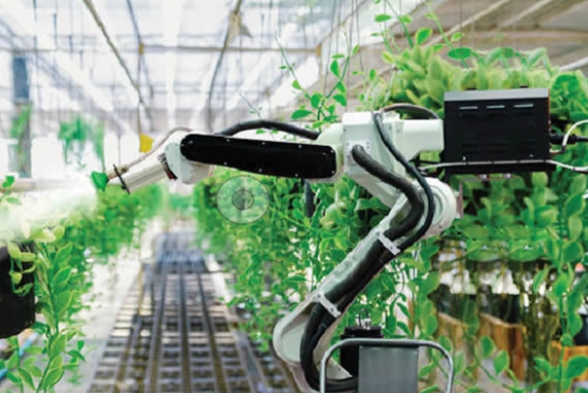
The robots don’t stop at planting and weeding; they’re also revolutionizing harvesting. Imagine robotic arms, programmed with delicate movements, gently picking delicate fruits or meticulously selecting vegetables based on color and ripeness. This level of precision minimizes damage and ensures only the highest quality produce reaches our tables.

Beyond the Brawn: The Brains of the Operation

The rise of agricultural robots is not just about replacing muscle power; it’s about harnessing the power of data and artificial intelligence. These robots are equipped with a network of sensors that collect real-time data on soil moisture, temperature, and even plant health. This information is then fed into AI algorithms that analyze the data and make informed decisions about irrigation, fertilization, and pest control.

The Benefits of a Robotic Revolution

The integration of robots into agriculture promises a multitude of benefits:

  • Increased Productivity and Efficiency: Robots can work tirelessly 24/7, significantly boosting productivity and efficiency compared to traditional manual labor.
  • Reduced Labor Costs and Shortages: The aging farm workforce and the exodus from rural areas can be addressed by robots, alleviating labor shortages and reducing labor costs.
  • Improved Sustainability: Precision agriculture enabled by robots minimizes resource waste, reduces reliance on harmful chemicals, and promotes more sustainable farming practices.
  • Enhanced Food Security: By optimizing yields and reducing losses, robots can contribute to improved food security and stability, especially in areas facing challenges like climate change.

Challenges and Concerns

Despite the exciting possibilities, the rise of agricultural robots also raises concerns:

  • High Initial Investment Costs: The upfront cost of purchasing and maintaining robots can be a significant barrier for small-scale farmers.
  • Job Displacement: While robots create new opportunities, they may also lead to job losses in traditional agricultural roles.
  • Ethical Considerations: Questions arise about the ethical implications of relying on machines to manage our food production systems.

The Future of Farming: Humans and Robots in Harmony

The future of agriculture is not about robots replacing humans; it’s about humans and robots working together in harmony. Farmers will remain crucial for their knowledge, expertise, and ability to adapt to changing conditions. Robots will serve as powerful tools, augmenting human capabilities and enabling farmers to make data-driven decisions for optimal crop production.

As we embrace this new era of agricultural robotics, it’s essential to address the challenges and ensure that this technological advancement benefits both farmers and consumers, promoting a sustainable and food-secure future for all.

Agricultural Robots

Agricultural Robots: Statistics and Data Shaping the Future of Farming

The rise of agricultural robots is transforming the farming landscape, promising increased efficiency, sustainability, and food security. Let’s delve into the data and statistics that paint a picture of this burgeoning industry:

Market Growth:

  • The global agricultural robots market is estimated to reach USD 30.5 billion by 2028, growing at a CAGR of 17.7% from 2022 to 2028. (Source: Future Market Insights)
  • North America currently dominates the market, accounting for 38.9% of the global revenue share in 2022. (Source: Future Market Insights)
  • The Asia Pacific region is expected to witness the fastest growth in the coming years, driven by factors like rising labor costs and government initiatives promoting automation. (Source: Mordor Intelligence)

Robot Types and Applications:

  • The market is segmented into various robot types, including:

    • Field robots for planting, weeding, and harvesting.
    • Livestock robots for milking, feeding, and monitoring animal health.
    • Indoor farming robots for managing vertical farms and controlled environments.
  • Field robots currently hold the largest market share, followed by livestock robots and indoor farming robots. (Source: MarketsandMarkets)

  • Fruit and vegetable harvesting is the leading application for agricultural robots, followed by planting and weeding. (Source: Mordor Intelligence)

Impact and Benefits:

  • Agricultural robots can increase yields by up to 20% through precision planting, weed control, and optimized irrigation. (Source: World Economic Forum)
  • They can reduce labor costs by up to 50%, addressing labor shortages and increasing farm profitability. (Source: ABI Research)
  • These robots can minimize pesticide and herbicide use by targeting specific weeds and pests, promoting environmental sustainability. (Source: The Guardian)

Challenges and Concerns:

  • The high initial investment cost of robots can be a barrier for small-scale farmers.
  • Job displacement due to automation is a concern that needs to be addressed through reskilling and training programs.
  • Ethical considerations regarding the use of robots in food production need to be carefully evaluated and addressed.

The Future of Agricultural Robots:

  • Advancements in artificial intelligence, sensor technology, and machine learning will lead to more sophisticated and adaptable robots.
  • Increased collaboration between robotics companies, farmers, and policymakers is crucial for developing and implementing sustainable solutions.
  • The focus will shift towards human-robot partnerships, where robots augment human capabilities and enable data-driven decision-making for optimal crop production.

As the data suggests, agricultural robots are not just a futuristic trend; they are rapidly becoming a reality with the potential to revolutionize the way we grow food. By addressing the challenges and capitalizing on the opportunities, we can harness the power of these machines to build a more sustainable and food-secure future for all.

Agricultural Robots

Table of Agricultural Robots: Statistics

Statistic Dat Source
Global Market Value (2028) USD 30.5 billion
Future Market Insights
CAGR (2023-2028) 17.7%
Future Market Insights
Dominant Region (2022) North America (38.9% share)
Future Market Insights
Fastest Growing Region Asia Pacific
Mordor Intelligence
Market Segments Field robots, Livestock robots, Indoor farming robots
MarketsandMarkets
Leading Market Share Field robots
Mordor Intelligence
Leading Application Fruit and vegetable harvesting
Mordor Intelligence
Yield Increase Potential Up to 20%
World Economic Forum
Labor Cost Reduction Potential Up to 50%
ABI Research
Pesticide/Herbicide Use Reduction Potential Significant reduction
The Guardian
Main Challenge High initial investment cost
Other Challenges Job displacement, Ethical considerations
Future Trend Advancements in AI, sensor technology, and machine learning
Future Focus Human-robot partnerships

Note: This table is not exhaustive and can be further expanded based on your specific interests. If you have any particular data points or statistics you’d like to see included, please let me know!

Agricultural Robots

Agricultural Robots: The Companies Leading the Automation Revolution

The fields of the future are teeming with metallic life. Gone are the days of backbreaking manual labor; agriculture is entering a new era where robots are reshaping how we grow food. From planting and weeding to harvesting and data analysis, these tireless machines are transforming the industry, promising increased efficiency, sustainability, and food security. Let’s delve into the world of agricultural robots and meet some of the companies leading the charge:

1. Naïo Technologies (Japan)

Naïo Technologies is a pioneer in autonomous field robots, developing machines that navigate fields with precision and perform various tasks. Their flagship robot, the Scout™, is a weed-killing marvel that uses cameras and lasers to identify and eliminate unwanted plants, reducing herbicide use and protecting the environment.

2. Iron Ox (United States)

Iron Ox is redefining farming by bringing it indoors. Their robotic farms are controlled environments where AI-powered robots tend to crops with utmost precision. This vertical farming approach minimizes water and resource usage, making it ideal for urban areas and reducing reliance on unpredictable weather conditions.

3. Blue River Technology (United States)

Blue River Technology tackles the problem of weeds not in the field, but during harvest. Their LettuceBot™ is a marvel of engineering, gently guiding romaine lettuce heads through a vision system that identifies weeds and removes them with targeted bursts of air, ensuring pristine harvests without damaging delicate produce.

4. Abundant Robotics (United States)

Abundant Robotics is focused on automating the apple-picking process, a notoriously labor-intensive task. Their robots, affectionately called “ARMies,” use advanced perception systems and gentle grippers to navigate orchard trees and pick apples with remarkable dexterity, minimizing bruising and maximizing fruit quality.

5. Ecorobotix (Switzerland)

Ecorobotix focuses on developing robots for smaller farms and vineyards. Their Rosalie™ robot is a multi-talented assistant, capable of weeding, mowing, and even spraying, making it a versatile tool for organic farmers who prioritize sustainability and precision agriculture.

These are just a few examples of the many companies pushing the boundaries of agricultural robotics. With constant advancements in technology and AI, the future of farming promises even more sophisticated robots capable of performing complex tasks and adapting to diverse agricultural needs. As these innovations take root, the fields of tomorrow may not just be greener, but also filled with the whirring hum of robotic helpers, ensuring a bountiful harvest for generations to come.

Remember, the rise of agricultural robots is not about replacing farmers; it’s about empowering them with powerful tools to work smarter, not harder. The human touch and expertise will always be crucial in managing and adapting to changing conditions. The future of agriculture lies in a harmonious collaboration between humans and robots, working together to cultivate a sustainable and food-secure future for all.

https://www.exaputra.com/2024/01/modern-agriculture-rise-of-agricultural.html

Renewable Energy

Why Education Is Such a Low Priority

Published

on

What Karl Marx said here has been repeated by many dozens of people over the years, notably George Carlin (see below).

Why Education Is Such a Low Priority

Continue Reading

Renewable Energy

Wind Industry Lifting Innovation with Gregory Kocsis

Published

on

Weather Guard Lightning Tech

Wind Industry Lifting Innovation with Gregory Kocsis

Allen and Joel are joined by Gregory Kocsis, lifting technology expert, to discuss the gap between European and US crane operations. They cover multi-brand blade handling tools, up-tower cranes, and why the aftermarket service sector is driving innovation in major component replacements.

Sign up now for Uptime Tech News, our weekly email update on all things wind technology. This episode is sponsored by Weather Guard Lightning Tech. Learn more about Weather Guard’s StrikeTape Wind Turbine LPS retrofit. Follow the show on FacebookYouTubeTwitterLinkedin and visit Weather Guard on the web. And subscribe to Rosemary Barnes’ YouTube channel here. Have a question we can answer on the show? Email us!

Welcome to Uptime Spotlight, shining light on wind. Energy’s brightest innovators. This is the Progress Powering tomorrow.

Allen Hall: Greg, welcome to the program.

Joel Saxum: Thank you guys. Nice to meet you.

Allen Hall: we have a lot to talk about today. there’s so many heavy lifts. Complex lifts on ships, lifts on, and mountaintops lifts in really odd places. it’s getting more complicated as we go along, and obviously Joel and I talked to a lot of operators and one of the things they complain about more recently is, Hey, we’re having trouble with lifts and we’re having damage that we didn’t have in the past.

And it’s complicated, and the access to cranes is more complicated. Everything’s become more complicated. What are some of the issues that you see on the other end of the spectrum, being in that [00:01:00] business?

Gregory Kocsis: Yeah. Basically what I see that, so I, I work both, in the last decade in both US and Europe.

and I can see that there’s no lack of technologies. there’s a lot of tech that’s, solving a lot of issues. but mostly what you can see that there’s a slight gap. I would say that, There’s two, two prong. the US it seems, some of the farm are really big, and that’s good for scale.

but the, technologies are a little bit behind, I would say 10, 15 years sometimes. so that also means that the. The solutions that they use to, to change a blade or change a gearbox or how to lower a full, rotor, it’s always, lower tech and based on practicalities.

Joel Saxum: Greg, why do you think that is?

Do you think it’s just simply because, yeah, like the eu, so you’ve done a lot of work in the eu, of course, onshore, offshore, and globally. But in the EU it [00:02:00] seems like tighter quarters maybe, harder to get around some of the wind farms. Is, does that drive some of the difference in innovation?

Because like you said, you there’s the innovation is there, the tooling is there. The EU has been doing it for a while. It’s just that in the states it seems like we’re more, for lack of a better term, like agricultural about things. It’s kinda Hey, this has worked for 40 years, so this is what’s how we’re gonna do it.

Gregory Kocsis: Yeah, it’s always some, nature driven forces are there. So in the, in, for example, if you look at Germany, there’s, a lot of owners and the size of sites are three turbines, four turbines. And if you look at the platform that’s available around turbine is very limited. I was also on a site last year in, North Germany where basically, the truck could park right next to the turbine, but they had to clear some trees, in order to, make sure that they can put the full rotor down. Because since, since they installed it, forest grew, [00:03:00] much, much more. That was another case in, Rotterdam when we were right next to the channel and they had to, close the road.

that was, docking. To the ships, back and forth every, half an hour when they had to lift the blade and it was going across the road. So when you’re in situations like this and there’s not a lot of space around the turbines, you have to start thinking that, how can we do this quicker?

How can we do this safer? Because you can see that there’s a lot of planning that goes, with this as well. And then you need to make sure that, it’s more predictable, what you’re doing. So I think that. That’s one of the main driver for these technologies. if I put it simple terms that the more single crane operation for MCRs, and technologies that allow a single crane exchange, is, more pushed because of this rather than in the US where you can get maybe two smaller, cranes and then you just sling it, [00:04:00] and then take it down with two cranes.

Joel Saxum: Yeah, you’ve got all kinds of space, right? Half of our wind farms are in pasture or farm fields. I wouldn’t say half. We say the majority of our wind farms are in pa pasture, and you’ve got space. The only thing limiting you is, how big the pad is really Right. And bring some cribbing in. You can basically get done with the same technology you’ve been using for cranes for years and years and with that as well, I think that, one of the things we talked about in our kind of, chat off air was. the workforce over here is a little bit different as well. So the workforce over here is sometimes a, a slinger or someone who’s holding a tagline. They got a green hard hat on, and they’re a warm body because they need people, they need help.

because we’re doing things at such scale. Whereas in the eu, that’s just not the case. you’re not gonna be allowed to be around operations like that unless you’ve been thoroughly trained for a couple years. And, so, that situation with the workforce is a little bit different. So it’s almost easier to not be [00:05:00]consistently and continuously innovating and training people on new things.

But with that, we’re, leaving ourselves behind in the game, right? There’s cost savings to be had, there’s time savings to be had that we’re just not harvesting.

Gregory Kocsis: Yeah, absolutely. And as you mentioned that the, benefits in, Europe at these, lower scale, that also allows that, some of these smaller ISPs, they can excel what they’re doing.

So they can have a crew of 10, 15 people and they focus on, some turbines, but they. When they do a campaign, that doesn’t mean that they have to go through a hundred turbines. They, do one disassembly or two disassembly or three, and it just stays at that scale. So they can actually manage to get by with the smaller crew and then really, get really experienced, on this.

While I think in the US there’s quite a lot of push on. We cannot just do one. Because if you look at the size of sites, there’s [00:06:00] also one site consists between 80 and 120 turbines. And if you draw an an area that, let’s say a two hour driving range that can summarize 2000 turbines. And that also means that when something happens there, you also wanna do it at scale.

So you cannot get away with 10, 15 people you need. 30, or you need five, five different crews. And then where can you get these people? How quickly can you train them? And I think that’s actually the good thing is that if we could manage to, to, pull the experience that we have in Europe, that would be good to scale it up because that’s the drawback of Europe, that when you, once you have something great.

You cannot scale it up and then put a specialized tool cost above or across, 2000 turbine exchanges.

Allen Hall: Is there a movement to bring more technology over from the eu, particularly because, the tools are a little more specialized, [00:07:00] but you’re reducing risk. Is it just that, the larger wind farms, be it in the United States, be it in Australia or there’s a lot of places on the planet where the wind farms are big Brazil.

Another case in point, are there cases where it needs to have more technology transfer? They’re doing it a certain way. In Germany, it’s cleaner, more efficient. It takes those people to do it. It’s safer, it’s repeatable. Have we just not broached that yet? Because it doesn’t seem like there’s a lot of technology transfer in terms of lifts from the EU to many other places.

Gregory Kocsis: I think the main, if you look at it that what is the driver on this is who’s responsible for an MCR operation. And if you look at the turbine’s lifetime, it’s all about. Who’s, responsible for the service. And in us, typically the turbine, especially next era, likes to buy new turbines with zero, zero involvement from the OEMs they want to [00:08:00] take over from the get go.

and then typically in, in Europe we have, 10, 15 or whole, lifetime service contracts. if you look at a pie that who, takes care of the turbine? I would say that. 40% is, in the hands of, the asset owners or ISPs. and that’s also growing. So I think it was, would make that estimated that 40% will, will shift towards, 60.

So that, that is the drive that I can see that more of this chunk is getting, getting bigger. And you can see players that are already globally existing, like Deutsche intech, that. That’s quite big in the US and Europe that they started to do that transition, and then take that technology that they could experience in different sites and then put this to the service side.

But that’s, the difficult part, that even though that slice is [00:09:00] fairly big, it’s spread across small companies. And as a small company, if you pick one in Denmark or you pick one in the Netherlands, for them to collaborate on a project or assist on a project in US or Australia or Brazil, it’s quite costly.

So then the question comes at who’s. Who’s footing the bill? is it the service company? Is it the asset owner? Is the crane company chipping in? Or how is the collaboration working? And there’s no rule of thumb that applies everywhere for these. So it’s case by case that how, big is it? How many turbines are we talking about?

What kind of turbines, how far are we out in the service contract?

Joel Saxum: It brings in a couple of questions, right? Why are we having this block of, lifting and crane operation innovations? Is it when the OEMs are responsible? They have, they know their say blade types, they know their hub types. They know their MCE, they know their drivetrain components, so they know and they have the designs [00:10:00] and the drawings of what their existing tooling needs would be or how to connect to them.

So they’re able to build out these tools that work for them Now. Going from that to being a, say a crane company or an EPC building turbines. You are building multi-brand turbines, multi-brand sites. Not only multi-brand, but multi-unit, different technologies, different blade types. So all of your fixtures need to be different and there’s not very many universal tools out there.

how do we get to the point where we can build more universal tools or more tooling that can work for everybody?

Gregory Kocsis: Yeah, definitely. I think it’s. The OEMs are holding all the cards, on this one. So that, that also means that when you’re under a service contract, then that means that the OEM as you said, they have the tooling, they have the work procedure, and, in this case, if you try to imagine the MCR, it starts with.

What parts do you have to shut down in the turbine? What do you have to disconnect? What do you have to plan on the ground? So [00:11:00] we could isolate it and talk just about the tools. and that was actually part of my work in the previous company that I worked at. We, tried to figure out that what kind of universal tools, can we make for these, purposes, but we also face the fact that many of the ISPs that are coming, they have the demand for, can you give me a Swiss knife that solves everything?

And I have nothing from the OEM. So where should we get that? How heavy is that hub? where are the lifting points on the blade? Where is the COG? and then these lack of informations that are difficult together on the market. and the OEM is not really keen to share it either,

Allen Hall: but why wouldn’t they want to share that information?

Greg? I’m trying to understand where they’re coming from. It would make everybody’s life easier. And lower the cost of operation. If they had standardized lifting points, particularly like generators and gear boxes, that would make a lot of [00:12:00] sense to me. It’s like any other industry where there’s hoists and lifts that are standardized, but in wind, endeavor seems to come across that way.

Everybody’s got their own specialized design, don’t they? See the revenue. They could generate from that, that, or the lower the cost that their, customers would have to, put out for lifts and repairs by making it standardized. And, where’s the IEC committees in all this and dvs of the world?

Gregory Kocsis: they can definitely see the money, and I think that’s, the big issue, because they, like to earn money as well. So if you look at. What is an OEM earning on selling turbines? Its OTs. What is the OEM Earning on service contracts. That’s where the dough is. So they like these as well, and this is monetizing the market that.

They like that they control these kind of information because that drives the, let’s say, the desperate customers to fall back on the [00:13:00] safety net of an OEM service contract. so it would be actually the disadvantage, in the short term, with the current business model. for the OEM if they would open up a little bit more.

On the other hand, I think right now we have a lot of, asset owners that grew quite big, like EDP, next era that have, a lot of, turbines. it’s for, many years now. So some of the fleet, if you look at the old vest, V 40 sevens, I think. But NextEra has couple thousands of them. that also means that they have a lot of knowledge on these legacy turbines as well.

The knowledge is there, the OEMs, but there’s no clear drive on why should they open up. and there’s a knowledge, bulk of knowledge at the service providers like Deutsche Technique. There’s a bulk of knowledge, with big, asset owners. But this is not shared across and there’s no consensus of, [00:14:00]let’s look at it, how we can, make tools that are better.

Because I think the, business model is missing that. How can we make sure that everyone will benefit from this?

Joel Saxum: Yeah. It was like we, we talked about off air as well. the, when we talk lifting, what also goes hand in hand with lifting is transportation fixtures. and I’ve heard stories of heavy lift vessels having to completely cut off and reel on new fixtures to ship new blades. And that just seems like what a waste of money, time and effort. of course people are making money doing that, but at the end of the day, that hurts LCOE for wind in energy, right? Because there’s just more cost put into the supply chain that doesn’t.

Really need to be there or shouldn’t need to be there. so I, I would like to see us get to the stage where we’re doing, where we have some multi-brand tools or some universal tools in the lifting world. and so that’s a question I wanna ask you then, Greg. we’ve been [00:15:00] talking in generalities around some things.

Can you share with us some of these tools that we may not know in the states that exist in the EU that you guys are using?

Gregory Kocsis: Yeah, for sure. Yeah. The way I look at it. And then you said it’s also, connected with cranes, is that if you look at some numbers, there’s 35,000 crane call outs globally.

Every year where the crane has to go on site and then some of these big things have to be lifted. Now, this is not including the offshore vessels. and that, if you look at these and break down the numbers, you have to lift something that’s big. out of these 35,000, 15,000 would be.

Blades or blade bearings. So that means that you have to do something with the blade. You have to take off the blade for the blade’s sake, or you have to take off the blade for the, bearing’s sake. And then the other, tent and, thousand is for the, transformer. so the [00:16:00] generator, and the gearbox, that these are the big things.

I think, as you said, blade damage is the most. Particular thing that you shouldn’t break and it’s easy to break is the blades. So that was the primary focus also, with, some of the company that has worked before. So the one of these universal blade handling tools, that we have, different, solutions from, Germany, a couple of them from Denmark, that the premise is that you can have a single crane and then, the blade tool itself.

can either adapt, to the blade itself or there’s some slight modifications that you have to do and then it can handle multi-brand. So that would mean that you have one tool and it can handle a range of blades.

Allen Hall: That, that seems like an obvious win for an operator or groups of operators in a certain location like Texas where there’s are variety of turbines.[00:17:00]

If I had a multi-brand blade lifting tool, why? Why hasn’t that seen wider adoption by a number of operators? Just basically saying, Hey, everybody, throw in 20% of the cost and we’ll just park this tool in the middle of Texas when we need it, we’ll just pull it out. Seems, that seems obvious, but it hasn’t happened.

Gregory Kocsis: If, you look at the tech level of such a tool comparing to the tech level that they used to on a daily basis, it’s, that’s where the gap is because if, they have a tool that’s, you start including it, there’s self-balancing system in it, there’s hydraulics in it, and they. Then they know that then someone needs to know about this.

Who’s gonna be that? Is it their own guy? Or is someone coming with the tool every time that they use this? On the good side, we can see that, for example, Vestas made their tools for Vestas blades. and then they, instead of, a universal seating, they use [00:18:00] proprietary seating for each blade. you know what you’re.

You wanna lift, you prep the tool accordingly, and then it’ll fit so that works for Vestas. And I think more and more crews are, are using these, Vestas technologies, but I think that. The cool thing would be that to have these tools and start using the tools that are not just, for one OEM, but try to utilize these, multi, multi-brand sites and, make sure that, couple of these tools available.

So you also have, resilience that if something breaks down that the whole project is not dying. Yeah, I would say the gap based on the tech availability and the learning curve itself, how to do it is, that’s the most thing that holds it back.

Joel Saxum: Let me get, your opinion on a couple other technologies here as we’re talking lifting technologies.

up tower cranes have been, I wouldn’t say it, it’s not a resurgence, it’s a, it just [00:19:00] splashed under the scene here in the last few years. You got a couple companies doing it and some doing it offshore, some doing onshore. we’ve spoken to a few of ’em on the podcast. What’s your opinion on the usage of these things and where they’re good, where what, what pros, cons they have?

What are your thoughts?

Gregory Kocsis: I think it’s great. I, back in the day when I was at the Danish Trade Council in 2019, I think it was, back then when RA started to have this project with Aon back then, now RWE, where they bought one, and they said that, We’ll start testing this. We are gonna be the pioneers in this because on paper, it works really nice that you have less containers moving around, less, setup, less footprint of the crane itself.

I think with these, if we’re talking about theile cranes, it has its place where it makes. Most sense. So for example, one, one case that I’ve heard that, the [00:20:00] northern, part of the country and also in Canada, there, there could be some times of the year when the roads are shut down and then you cannot carry these heavy loads.

and then moving around one of these up tower cranes, it’s easier. so it’s not gonna be delayed by weather. So definitely for these that you would have a case that. For the next six to seven months, your crane is not available because we cannot transport it. Then you can swoop in with this and definitely solve it.

it does need some setup time, so when, the site is fairly close, and the pads are close to each other, moving a conventional crane from site to site is actually easier, than p this down and move it to the next. So it also depends on how many, how many turbines do you want to take care of in the region?

Joel Saxum: Yeah. I think large campaigns, it’s tougher to justify them for, they don’t work as well. but one-offs, access [00:21:00] issues. smaller, quicker things. they’re definitely a use case for ’em.

Gregory Kocsis: Another thing I’ve seen it, I think a year ago it was not in, in Spain, that they also looked at a technology that how you can, for example, lower the blade, utilizing a fixture in the hub, that you just bring this small thing up and use the turbine itself as its own fixture to lower this.

And that would mean that you have. a hoist, on the top. And then you just need a smaller mobile crane, on the bottom to tip the blade when it comes down. I think these are also very cool things because that means that you don’t need the whole, big multi, multi container big cranes to, to set up for, the smaller thing.

And if you need to take care of one blade, when there’s no unbalanced road or no crazy thing, you just need to do a blade bang exchange. Then this could also save, a lot. But, that [00:22:00] also comes to the same book that this is fairly new and this is even newer than the up tower cranes. So we’re talking about, this is, let’s say in still in the prototype phase when they testing the first editions, in the past two years.

Allen Hall: So will we see more, new technology coming outta Europe, or is the demand going to. Drive the technology where there’s turbines going in. I’m thinking of Australia. We’ve talked to some operators there, they’re gonna use some innovative techniques to assemble towers that have been around several years, and no one in Europe really has taken advantage of it in the states, not even thinking about it, but the rapid expansion in large farms in Australia, is that where the hot center’s gonna be for lifting in new technology over the next couple of years?

Gregory Kocsis: I would say so,

Allen Hall: yeah.

Gregory Kocsis: Australia is also an upcoming market for these. but as we talked about what drives this, [00:23:00] it, it will be driven by where is the most independent service provider or where is the most contracts that are run out of the OEM and the asset owner took the liberty that we are gonna take the decision and we are gonna, we are gonna test this.

Allen Hall: So that’s just very interesting, look into the industry because I do think. Where Australia is a little bit different is that they have been in mining and big, heavy iron projects forever and they’re not afraid to get involved in heavy lifts. That’s just something that they do all the time versus the middle of Kansas where that doesn’t tend to happen so much.

So is the technology moving towards Australia and towards Asia? In general because offshore’s gonna be there, onshore, ISS gonna be there. And what should we expect over the next, couple of years then, in terms of crane and lifting technology, will we [00:24:00] see, just bigger, more massive cranes doing heavier lifts or is it gonna be more innovation?

there’s, I

Gregory Kocsis: think it’s two sides of this. So there’s always one side where you look at what’s happening with the new installations. And the new installations are driven by bigger. Things, larger things that are more fragile, especially with the blades. so that, that’s the technology that goes there, that how can we, we are really at the transport limit, on, both macel and blades when we’re talking about these new things.

So I think the, the. Innovation in that sense will go on that direction. And the new installation that, how can we make these even bigger things to be possible to transport and put together in terms of the, the aftermarket and the old turbines. It’s a very different perspective. and the, you can also see a lot of [00:25:00] innovations there, but the, but the stakeholders are very different, so I, don’t think still that the OEM will be heavily involved in this.

and do platform close cross collaborative options. but we are entering a stage where some of these bigger players are also, global. So E-D-P-E-D-F, they, in energy, I think they’re one of the innovative ones. They, they exist across the pond as well. So they’re starting to do this knowledge transfer within, their organizations and that, that.

That, that are kick starting some small things. And then you can see the, it’s the neighbor effect when you can see that, oh, it works there, why can’t we get there? so it will slowly, organically grow that way.

Allen Hall: I think it’s gonna be an interesting next couple of years because as turbines have gradually gotten larger, the two megawatt turbine, which exists primarily in the United States, [00:26:00] is a dying breed.

3, 4, 5, 6, 7 megawatt turbines are gonna become the standard, and lifts are gonna get more complicated, obviously, and the challenges will be there, but it, seems like we’re. at the time where the lifting technology and the financial aspects are gonna come together, we’re gonna close some of these loops and it will be a better situation for a lot of people.

It’s time. And I, think if you’re out, if you’re listening to this podcast and you haven’t looked at some of the lifting technologies, you need to call Greg or get ahold of Greg. And how do they do that? Do they, can they find you on LinkedIn?

Gregory Kocsis: Yeah, absolutely. I think the easiest way is to find me on LinkedIn.

My contacts are also there, so you can find my emails there or just ping me with a message and then we, and we take it from there.

Allen Hall: And it’s Greg Coxs, K-O-C-S-I-S. Make sure you put that in LinkedIn correctly. K-O-C-S-I-S or you’re never gonna find Greg. Greg, thank you so much for being on the podcast because there’s so much happening in [00:27:00] the lifting world.

It’s hard to keep track, and it is a global industry, so it’s nice to talk to somebody who’s in touch with all of it. Absolutely.

Gregory Kocsis: My pleasure.

Wind Industry Lifting Innovation with Gregory Kocsis

Continue Reading

Renewable Energy

Vaccination Science Rejected

Published

on

During the lives of us Boomers, science has completely or virtually eliminated smallpox, polio, diphtheria, tetanus, measles, mumps, rubella, chickenpox, and whooping cough.

Looks like the folks in Florida, who reject science want to invite dread diseases back into our lives.

Can it get any worse?

The black plague? Wanna brings back rats?

Stupidity prevails; it’s one of the few things we’re still good at.

Vaccination Science Rejected

Continue Reading

Trending

Copyright © 2022 BreakingClimateChange.com