


Microsoft has taken big steps toward reaching its climate goals. The company has agreed to buy up to 3 million nature-based carbon removal credits from EFM, a U.S.-based forest management firm. This multi-year deal shows Microsoft’s serious commitment to using natural ways to fight climate change.
On top of that, Microsoft has invested $300 million in EFM’s Fund IV. This funding will help climate-smart forestry projects in Washington State’s Olympic Peninsula.
Nature’s Power: How Forests Help Fight Climate Change
Nature-based solutions help remove carbon dioxide (CO₂) from the air. They include:
- Planting new forests,
- Improving forest management, and
- Agroforestry, which combines trees with farming
Microsoft plans to use these credits to meet its goal of becoming carbon negative by 2030. That means the company wants to remove more carbon from the atmosphere than it emits.
EFM’s projects focus on reforestation, sustainable forestry, and land conservation. Studies show that forests can absorb about 30% of global CO₂ emissions every year. By working with EFM, Microsoft supports healthy ecosystems and helps restore damaged lands.
Some studies suggest that nature-based solutions could cut CO₂ by 12 gigatonnes yearly by 2030 if used widely. For Microsoft, these projects help balance emissions from hard-to-reduce activities. This includes data center operations and cloud services.
Why Microsoft Invested $300 Million in EFM Fund IV
The $300 million investment by Microsoft is both an environmental and a business strategy. The carbon credit market is growing fast. According to the MSCI report, the market could grow to $7–35 billion, driven by:
- Rising demand for credible carbon removal credits,
- Corporate climate goals, and
- A shift toward higher-quality, transparent projects.
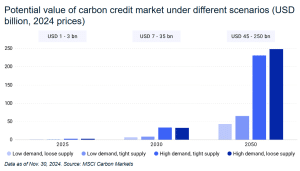
Companies are buying more credits to meet 2030 targets, boosting market trust. MSCI projects even greater growth by 2050, with the market potentially reaching $45–250 billion as interest in reliable, high-standard carbon credits continues to increase globally.
By investing in EFM’s fund, Microsoft supports sustainable forestry practices that store carbon, improve biodiversity, and create local jobs. EFM uses climate-smart forestry. This includes longer harvest cycles, planting many tree types, and protecting watersheds. These actions not only pull CO₂ out of the air but also make forests stronger against wildfires, pests, and climate stress.
Microsoft has said that it will use returns from this fund to help cover future carbon removal costs. This makes its sustainability strategy more financially sustainable over the long term.
Beyond Carbon Credits: Microsoft’s Big Climate Picture
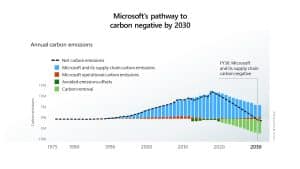
This deal with EFM fits into Microsoft’s larger climate plan. In 2020, the company pledged to be carbon negative by 2030 and to remove all the carbon it has emitted since its founding in 1975 by 2050. The company is also working to run on 100% renewable energy by 2025 and to reduce emissions from its supply chain.

The company is also developing advanced digital tools to measure and track carbon removal projects. Its Planetary Computer uses satellite images and artificial intelligence (AI) to monitor land changes and forest health, helping partners like EFM verify their impact.
Why Companies Are Turning to Nature-Based Solutions
More companies are investing in nature-based solutions. A 2023 BloombergNEF report says that emerging markets need over $1.5 trillion for clean energy and carbon removal by 2030. This investment is crucial to meet global climate goals. Carbon credits from nature projects are one piece of the puzzle.
In 2024, over 400 global companies, like Amazon and Google, said they would buy more high-quality carbon removal credits. These companies view nature-based solutions as a cost-effective way to achieve short-term climate goals. They also aim to reduce their direct emissions over time.
The World Bank says that if companies invest $800 billion in nature-based climate solutions by 2030, we could create more than 80 million jobs around the world. This would especially benefit rural areas. Projects like EFM’s can deliver climate benefits while supporting local communities.
The Carbon Credit Boom: What’s Next for Nature and Tech?
Experts believe that the carbon market will keep growing quickly.
- McKinsey & Company says that demand for carbon credits might grow 15x by 2030. This could reach 1.5 to 2 billion metric tonnes of CO₂ equivalent each year.

Microsoft’s partnership with EFM shows how companies can combine technology, finance, and nature to fight climate change. By using AI, remote sensing, and data analytics, projects like these can be tracked and improved over time, making them more reliable and transparent.
However, experts also warn that carbon removal credits are not a replacement for cutting emissions. Companies still need to reduce their pollution as much as possible before relying on carbon offsets. The Science-Based Targets initiative (SBTi) stresses that offsets should only be used to balance emissions that cannot yet be eliminated.
Microsoft’s collaboration with EFM is an important example of how nature and technology can work together to tackle climate change. The purchase of up to 3 million carbon removal credits and the $300 million forestry investment show a strong commitment to both environmental restoration and economic growth.
These efforts help Microsoft get closer to its 2030 climate targets while setting an example for other companies. As the carbon removal market grows, partnerships like this will likely become more common. They offer a way to store carbon, support ecosystems, and create jobs — all key parts of building a sustainable future.
The post Microsoft’s $300M Bet on Forests: How A 3M Carbon Credit Deal Shapes Its Climate Strategy appeared first on Carbon Credits.

EU carbon credit claims changed on 27 September 2026, the day the Directive (EU) 2024/825 began to apply across the European Union. The change is narrow. It changes how a company can talk about the credits it buys. A product can no longer be called neutral on the strength of compensation alone; however, every specific, evidenced statement about what a company measured, reduced, and funded stays fully available.

The post Promoting Improved Cooking Practices in Nigeria appeared first on Terrapass.


-
Climate Change1 year ago
Guest post: Why China is still building new coal – and when it might stop
-

 Greenhouse Gases2 years ago
嘉宾来稿:满足中国增长的用电需求 光伏加储能“比新建煤电更实惠”
-
Greenhouse Gases1 year ago
Guest post: Why China is still building new coal – and when it might stop
-

 Climate Change2 years ago
嘉宾来稿:满足中国增长的用电需求 光伏加储能“比新建煤电更实惠”
-

 Renewable Energy12 months ago
Sending Progressive Philanthropist George Soros to Prison?
-
Climate Change2 years ago
Bill Discounting Climate Change in Florida’s Energy Policy Awaits DeSantis’ Approval
-
Greenhouse Gases1 year ago
嘉宾来稿:探究火山喷发如何影响气候预测
-

 Climate Change2 years ago
Analysis: China’s CO2 falls 1% in Q2 2024 in first quarterly drop since Covid-19