

Governments have again failed to agree on a schedule for producing key climate science reports as deep divergences blocked progress at a meeting of the U.N.’s Intergovernmental Panel on Climate Change (IPCC) last week.
At the talks in Sofia, Bulgaria, most countries supported a faster process that would see three flagship reports assessing the state of climate science delivered by mid-2028, in time for the next global stocktake – the UN’s scorecard of collective climate action.
But a group of high-emitting developing countries made up of China, India, Saudi Arabia, Russia and South Africa – backed by Kenya – opposed an accelerated timeline, citing concerns that it would be harder to include scientists from the Global South, three sources present at the talks told Climate Home.
Governments were unable to reach a decision for the second time this year after “fraught talks” in January ended with the same outcome. The issue will be debated again at the next gathering in February 2025, while a separate expert meeting is tasked with drafting the outline of those reports by the end of 2024.
Fight over climate science
Adão Soares Barbosa, IPCC representative for Timor-Leste within the Least Developed Countries (LDCs) group, expressed his disappointment over the lack of agreement in Sofia resulting from “strong polarisation in the room”.
“If the assessment reports are not able to feed information into the global stocktake process, what are they good for?” he said, speaking to Climate Home.
Joyce Kimutai, who represented Kenya at the Sofia talks, said her country’s opposition to the proposed shortened timeline was “absolutely not intended to frustrate the process” but to highlight the challenges countries with more limited resources would be facing.
“With such a tight timeline, it is likely that we will produce a report that is not comprehensive, not robust. We found that very problematic,” she told Climate Home on Monday.

IPCC delegates exchange views in an informal huddle in Sofia, Bulgaria. Photo: IISD/ENB | Anastasia Rodopoulou
The primary purpose of the IPCC is to provide credible scientific assessments to the UN’s climate body (UNFCCC) and national decision-makers. The findings of its reports – which are usually compiled over several years by scientists working on a voluntary basis around the world – have been highly influential. They synthesise the latest research on climate change, as well as efforts to curb planet-heating emissions and adapt to the impacts of global warming.
The sixth series, whose final report was issued in March 2023, played a prominent role in informing the first UNFCCC global stocktake which resulted in governments agreeing for the first time to begin “transitioning away from fossil fuels” at COP28 in Dubai last December.
But some fossil fuel-rich countries like Saudi Arabia – which have pushed back against clear language on the need to cut production – have previously opposed strong recognition of IPCC reports in UNFCCC negotiations.
The UN climate body has officially requested that its scientific counterpart align its activities with the timeline of the next global stocktake. The IPCC’s input will be “invaluable” for the international review of climate action, Simon Stiell, chief of the UN climate body, told the IPCC meeting in January.
Reputation ‘at risk’
As he opened the session in Sofia, the IPCC chair Jim Skea warned of a “complex and testing” agenda.
The discussion over the report production schedule would have “far-reaching implications in terms of the timeliness of our products, and the inclusivity of both our own processes and the science that is being assessed”, he added.
Scientists and government officials were presented with a proposal drafted by the IPCC secretariat – its administrative arm – which would see the assessment reports completed between May and August 2028. That would be a few months before the global stocktake process is scheduled to end in November 2028.
The IPCC must produce its flagship report in time for the next UN global stocktake
A majority of countries, including EU member states, the UK, the US and most vulnerable developing nations, supported the proposal, stressing the importance of the scientific reports feeding into the global stocktake, according to sources and a summary of discussions by the IISD’s Earth Negotiations Bulletin. Many supporters added that the IPCC’s reputation would otherwise be at risk.
Small island states and least-developed countries argued that IPCC input is crucial for those that lack capacity to produce their own research and are most vulnerable to the immediate impacts of climate change, according to the IISD summary.
But a dozen developing countries – with India, Saudi Arabia and China being the most vocal – opposed speeding up the process, arguing that more time is needed to ensure greater inclusion of experts and research from the Global South, which would result in “robust and rigorous” scientific output.
South Africa, Russia, Kenya, Algeria, Burundi, Congo, Jordan, Libya and Venezuela expressed similar views, according to IISD.
More time for more voices
India said that “producing the best science needs time, haste leads to shoddy work”, while Saudi Arabia claimed that the shortened timeline would “lead to incomplete science and would be a disservice to the world”, according to the IISD summary of the discussions.
Kenya’s Kimutai told Climate Home that producing scientific literature and reviewing submissions takes a lot of time and, unlike their counterparts in richer countries, scientists in the Global South can rarely count on the help of junior researchers at well-funded institutions.
“We love this process – we find it important,” she added, “but we’re trying to say that, while it may be an easy process in other regions, it is not for us”.
As first airline drops goal, are aviation’s 2030 targets achievable without carbon offsets?
The IPCC has long struggled with ensuring adequate representation of expert voices from the Global South. Only 35% of the authors working on its sixth and latest assessment report hailed from developing countries, according to a study published in the journal Climate, up from 31% in the previous cycle.
In Sofia, several delegates pointed out that the IPCC is working to improve inclusivity and that a slight extension of the schedule would not be the solution. Similar views were aired by forty IPCC authors from developing countries in a letter circulated ahead of last week’s talks, urging countries to ensure that the reports are ready in time for the global stocktake.
While recognising concerns over the inclusion of under-represented communities, they argued that it would not be achieved by allowing more time but through “deliberate efforts to counterbalance long-standing inequalities” in the research world.
Writing for Climate Home, Malian scientist Youba Sokona, one of the letter’s authors, warned that the IPCC risks losing its relevance and influence over global climate policy-making if its output cannot be used in the global stocktake.

IPCC Chair Jim Skea gavels the session to a close. Photo: Photo by IISD/ENB | Anastasia Rodopoulou
Despite lengthy exchanges, scientists in Sofia could not find a solution and decided to postpone a decision on the timeline until the next IPCC session in February 2025, when countries will also need to agree on the outline of the reports’ content.
Kenya’s Kimutai has proposed a compromise that would see reports on adaptation and mitigation completed in time for the global stocktake, with a third on the physical science of climate change coming in later.
Richard Klein, a senior researcher at the Stockholm Environment Institute (SEI) and a lead author of previous IPCC reports, told Climate Home the ongoing row was “problematic”. “With these delays, a shorter [report] cycle in time for the global stocktake may not be feasible anymore, which in turn makes it less likely we will see ambitious nationally-determined contributions (NDCs) after that process,” he warned.
Expert scientists from the IPCC will meet again this December at a “scoping” session to sketch out a framework for what the assessment reports should include.
Barbosa of Timor-Leste is worried that those discussions will also become “heavily politicised”.
“We are concerned that high-emitting developing countries will try water down the work on emission-cutting measures and keep out strong messages on things like the need to phase out fossil fuels,” he told Climate Home.
(Reporting by Matteo Civillini; editing by Megan Rowling)
The post IPCC’s input into key UN climate review at risk as countries clash over timeline appeared first on Climate Home News.
IPCC’s input into key UN climate review at risk as countries clash over timeline

Climate Change
GREENPEACE GAS PROTEST DAY TWO: Activists spend first night on Woodside’s Scarborough gas platform, “in this for the long haul”
- NEW footage and photos available here and on Instagram – more being uploaded today.
- Interviews available with campaigners on board the Rainbow Warrior on request.
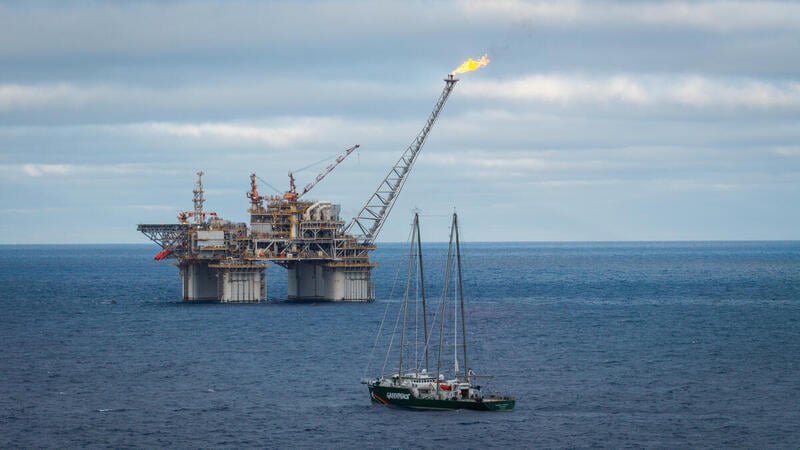
Greenpeace Australia Pacific activists have slept overnight on Woodside’s Floating Production Unit and dropped a massive 12×14-metre banner reading “Stop Woodside’s Dirty Gas. Save Scott Reef”.
Two activists have set up temporary hanging tents on the South East pillar, while the other two returned to the Rainbow Warrior late yesterday afternoon, after fulfilling their initial role. The activists will occupy the platform for as long as possible.
The environmental advocacy group is peacefully protesting Woodside’s plans to drill for oil and gas at Scott Reef as part of its Browse proposal.
Sakyo Noda, one of the Greenpeace Australia Pacific activists, said: “As a Japanese person living in Australia, I feel incredibly passionate about stopping Australia’s gas exports to Asia.
“Despite what the gas industry tells us, Australia’s gas is not helping to decarbonise Asia. It is simply not true. We shouldn’t be allowing fossil fuel companies like Woodside to extract new fossil fuels, let alone at extraordinary places like Scott Reef”.
Aboard the Rainbow Warrior, Geoff Bice, WA Campaign Lead at Greenpeace Australia Pacific, added, “Everyone is in good spirits. We’re in it for the long haul.”
Links:
Photos and video of Scott Reef here
Audio and footage of yesterday’s press conference here
Content and live updates will be uploaded to a live blog and Instagram
In-person interviews in Perth with David Ritter, CEO of Greenpeace Australia Pacific, can be organised. Dial-in, SimSat and Zoom interviews with Geoff Bice, WA Campaign Lead at Greenpeace Australia Pacific, currently aboard the Rainbow Warrior, can be organised.
Saturday, 17 October 2026
7.18 AM AWST
Hi folks! We’re joining you live from the Rainbow Warrior where we will be providing you with updates as our four activists continue scaling and occupying Woodside’s gas platform. The activists are peacefully protesting against Woodside’s latest gas expansion plans, the Browse project, which would see up to 57 toxic wells drilled at Scott Reef.
“Right now our activists are scaling Woodside’s massive Floating Production Unit. They are scaling the South-East pillar and the underside of the Helideck. They’ll be setting up camp soon and have plenty of provisions with them – so stick around!”
5:45 AM AWST
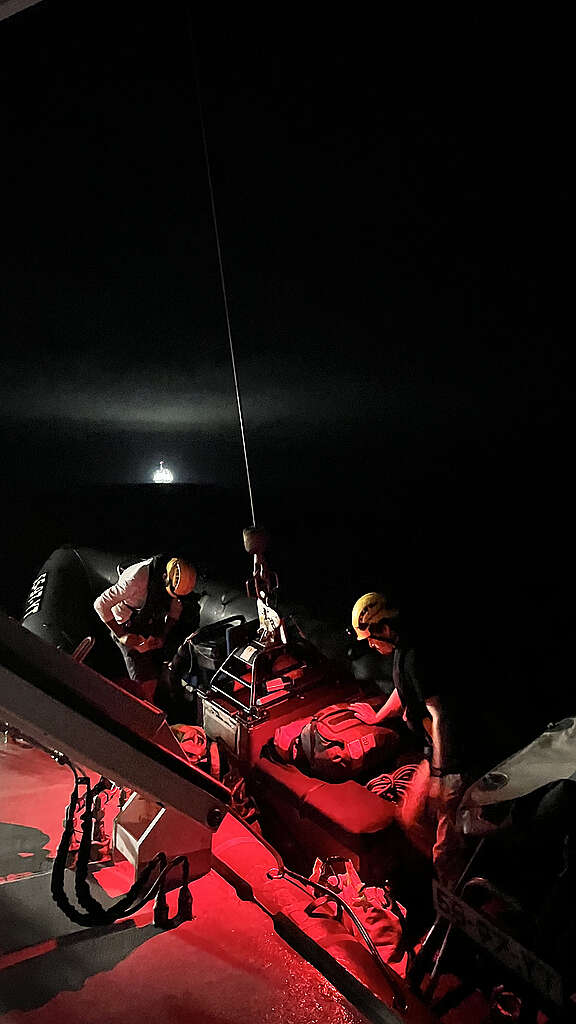
Our RHIBS are in the water! We’ve deployed our four activists and our ship crew on our small fast boats, headed to the gas platform. We’re carrying crew and equipment, plenty of food, all of our safety climbing gear, some big banners, cameras and a whole lot of heart… someone even has something to read after they get settled in.
5:26 AM AWST
Before sunrise activists prepared to launch RHIBS from the Rainbow Warrior.
Looking for a front seat view?
You can follow along with the Live Rainbow Warrior bow cam here!
Looking for more?
Follow us on Instagram for a peek behind the scenes and hear from our Rainbow Warrior crew.
Live blog: Greenpeace activists occupy Woodside gas project to save Scott Reef
Climate Change
Greenpeace activists climb and occupy Woodside’s Scarborough gas project calling on the Australian government to “Stop Woodside’s Dirty Gas” and “Save Scott Reef”
PERTH, Saturday 17 October 2026 — Four Greenpeace Australia Pacific activists are scaling and occupying a Floating Production Unit at Woodside’s Scarborough gas project off the coast of Western Australia, displaying banners reading: “Stop Woodside’s Dirty Gas. Save Scott Reef.”
- Photos and video available here and here. More will be uploaded throughout the day.
- Content and live updates will be uploaded to a live blog and to Instagram
Early this morning at 05:45 AWST, Greenpeace Australia Pacific activists launched from the Rainbow Warrior, Greenpeace’s flagship vessel, scaling and attaching themselves to a Floating Production Unit (FPU), a key piece of gas processing infrastructure at the Scarborough gas field over 200km off the coast of Exmouth.
Woodside has since confirmed it has initiated a temporary shut down of the FPU.
Greenpeace Australia Pacific is occupying the gas platform in peaceful protest of Woodside’s plans to drill for oil and gas at Scott Reef as part of its Browse proposal.
David Ritter, CEO at Greenpeace Australia Pacific, said: “Greenpeace Australia Pacific is taking action today to expose the unacceptable risk to Scott Reef posed by Woodside’s plans.
“Australians love our oceans. Woodside’s reckless Browse gas proposal would turn the magnificent Scott Reef into an industrial gas zone. Woodside wants to drill up to 57 toxic wells around Scott Reef, Australia’s largest oceanic reef, home to nesting green sea turtles, and endangered species like pygmy blue whales and the dusky sea snake; it is a place like nowhere else on Earth.
“Woodside has an alarming track record of oil spills, incidents and environmental neglect, and can’t be trusted with our oceans. From whaling in Albany in the seventies, to Woodside’s threat to Scott Reef today, there’s more than fifty years of history, of Greenpeace taking action off WA’s coasts to protect our oceans.
“There’s no future in new gas projects. Our future is in secure homegrown renewable energy, green industry and exports, where communities and places like Scott Reef are protected — there’s no future in dirty gas shipped offshore.
“The prospect of drilling for oil or gas on the Great Barrier Reef would be considered absolute madness today, but that is exactly the decision before the government: save Scott Reef or risk its destruction at the hands of a gas corporation.”
From aboard the Floating Production Unit, Dr Chris Holden, Greenpeace Australia Pacific activist said: “As a doctor, when I see new fossil fuel projects like Woodside’s Browse project being put forward, I can’t help but think about the impact this is going to have on the health of our communities and planet, and feel a sense of duty to act.
“Not only will this project do irrevocable harm to nature at Scott Reef, it will have a terrible impact on our climate, putting all of our lives at risk.
“On the Rainbow Warrior I’m carrying a copy of the 2025 Lancet countdown report, which warns that health impacts of climate change are worsening, with millions dying needlessly each year due to fossil fuel dependence, growing emissions, and failure to adequately adapt.
“With warnings like this from the leading global health professionals, our government simply can’t allow fossil fuel projects like Woodside’s Browse project to go ahead. It is their duty to do what is in the best interest of our communities.”
Almost half a million people have signed a petition calling on the government to Save Scott Reef and Woodside’s Browse gas project.
-ENDS-
Notes:
- Dial-in, SimSat and Zoom interviews with Geoff Bice, WA Campaign Lead at Greenpeace Australia Pacific, currently aboard the Rainbow Warrior, can be organised separately
Media contact:
Greenpeace Australia Pacific media team on +61 406 231 892 or +61 407 581 404

GREENPEACE GAS PROTEST DAY TWO: Activists spend first night on Woodside’s Scarborough gas platform, “in this for the long haul”

Making Billions by Harming Others

Is a Team of Is a Bunch of MAGA Thugs Beating the Snot Out of a Woman a New Low, or Is it What We Now Need to Expect?
-
Climate Change1 year ago
Guest post: Why China is still building new coal – and when it might stop
-

 Greenhouse Gases2 years ago
嘉宾来稿:满足中国增长的用电需求 光伏加储能“比新建煤电更实惠”
-
Greenhouse Gases1 year ago
Guest post: Why China is still building new coal – and when it might stop
-

 Climate Change2 years ago
嘉宾来稿:满足中国增长的用电需求 光伏加储能“比新建煤电更实惠”
-

