

Shanxi province in northern China is the country’s largest coal producer, leaving its coal-reliant economy and workers particularly exposed to the nation’s pledge to transition away from fossil fuels.
A new survey of Shanxi residents, exploring attitudes to climate change and the “just transition”, offers a rare insight into the views of Chinese people on the frontline of this policy drive.
While the province has installed significant new clean energy capacity, coal-related industries contributed around 80% of the province’s tax revenues and 55% of its jobs in 2022.
Indeed, Shanxi could lose more than 240,000 coal jobs by 2050 as China’s energy transition continues, according to energy thinktank Global Energy Monitor (GEM).
In an April 2025 speech, Chinese president Xi Jinping said the energy transition needed to “strike a balance between multiple goals including environmental protection, economic growth, job creation and poverty alleviation”.
So far, however, provincial policies relating to the energy transition have not been translated into “something…tangible to peoples’ lives”, says Tom Wang, executive director of People of Asia for Climate Solutions, a climate advocacy group and one of the groups who designed, carried out and helped analyse the results of the recent survey.
The survey asked almost 10,000 people in Shanxi about their views on China’s climate policies, the impacts on their local economy and whether they felt prepared for the energy transition. A detailed methodology can be found at the end of the article.
In this interview, Wang discusses the motivations for carrying out the survey and outlines its key findings.
The interview has been edited for length and clarity.
- On the importance of coal to Shanxi’s economy: “Millions of people and their families rely on coal-related jobs, such as coal miners, coal-truck drivers, coal power plant workers or coal-washing workers.”
- On the lack of awareness of climate change in some communities: “The most vulnerable communities, by which I basically mean the coal community, don’t really know about climate change. They know about the energy transition, they know a little bit about big policies…but they don’t really understand them.”
- On media narratives: “Most state-owned media talk a lot about climate change, peaking carbon emissions, renewable energy, the energy transition and so on…However, the media does not explain what that means for people’s everyday lives.”
- On the interest in low-carbon industry jobs: “People are quite happy to move on, if they are provided with good training and strong support to help that transition go smoothly.”
- On the importance of fast action: “2025 and 2026 will be two critical years for this province. They will be when we make our next five-year plan, the 15th five-year plan, which will cover 2026-2030. This will also be the five years we start to physically see the job losses in the coal mining industry, because of China’s overall climate policies.”
- On why young people were concerned about coal mines and power plants closing: “We have spent so much energy and resources on educating and preparing our young people for the coal industry, instead of preparing them for the transition.”
- On what needs to be done next: “We need to prepare our two communities – the coal community and the young generation – today. We cannot afford to wait any longer. We need to tangibly start to train people and raise new sectors, or at least raise incomes.”
- On the need for inter-provincial support: “The [richer] provinces should step up and say: ‘Look, brothers, you have supported our economies and now it’s time for us to help you.’”
Carbon Brief: Why did you want to conduct this survey? Why did you want to focus on Shanxi?
Tom Wang: I always say working on coal is my job, but, at the same time, it’s a personal issue for me, because I’m from Shanxi province. I grew up with coal, thinking that it was a necessary part of life. We burned coal for cooking, heating and even festival celebrations. But I also lost quite a lot of people in my family – my cousins and uncles, who were coal miners or working for coal-fired power plants – either because of coal-mine accidents or air pollution.
Shanxi province is the world’s largest coal producer. [Note: The province’s coal output reached 1.3bn tonnes in 2024.]…Every year, whether China’s economy is performing well or badly, we contribute around one-third of its coal. Millions of people and their families rely on coal-related jobs, such as coal miners, coal-truck drivers, coal power plant workers or coal-washing workers. Around you, your cousins, classmates or friends [are working in the coal industry].
Even in my first job as a teacher, part of my pay would come from money made from coal. So it was a big part of my life. That’s why we have to address coal in China, including – or even starting with – Shanxi.
And then there is the bigger context. Internationally, after COP28 and COP29, we talk about a coal phase-down, if not a coal phase-out. Then, domestically, China is working towards its dual-carbon goals – targeting a carbon emissions peak before 2030 and carbon neutrality by 2060…This means we have five years to achieve a carbon emission peak and it also means that coal consumption should start to decline next year.
Therefore, Shanxi cannot depend on the coal economy. We have been relying so heavily on coal mining, coal sales and coal exports to other provinces. That income-generating industry is going to disappear very soon…which means millions of people’s jobs and livelihoods will undergo dramatic changes.
For more than a decade, Shanxi province’s own policies have also covered the energy transition. It’s worrisome that these policies have remained [high-level], without being translated into something more tangible to people’s lives.
People are not prepared. Coal miners are not prepared. Their wives are not prepared. The coal-truck drivers are not prepared. The metallurgical coal industry is not prepared. That’s why we wanted to do this survey and interview as many people as possible. We ask two simple questions: do you know about and support the energy transition – and are you prepared?
CB: What do people in Shanxi think about the energy transition, climate change and climate policy?
When it comes to climate change, awareness levels are very different between different demographic groups. For example, government workers and people with higher income or education levels know about climate change.
Some people [in the survey] could identify things happening around them, such as temperatures getting warmer every year, drought periods getting longer, how last winter we didn’t have any snow – and they found these worrisome, based on their own experiences of how the province should be.
Some people even mentioned extreme weather events, including heatwaves and a week-long rainstorm that ruined a lot of Shanxi province’s ancient temples – the most valuable thing that we have.
However, the most vulnerable communities, by which I basically mean the coal community, don’t really know about climate change. They know about the energy transition, they know a little bit about big policies, such as the dual-carbon goals – they say they know about these buzzwords, but they don’t really understand them.
CB: In the survey, people would say they supported the ‘dual-carbon goals’ when asked about them specifically, but then were not as supportive of implementation measures, such as closing coal mines or coal-fired power plants. Why is that?
TW: This is uniquely Chinese, because most state-owned media talk a lot about climate change, peaking carbon emissions, renewable energy, the energy transition and so on. The visibility of all these ‘big words’ is really high.
However, the media does not explain what that means for people’s everyday lives. They are just copy-pasting [readouts of] policies from the State Council into their newspaper. For them, that’s ‘job done’, but it doesn’t really make sense to ordinary people. That’s how Chinese media works.
That is why the survey finds that, although more than 70% of people are aware of words like carbon emissions peak, or that they’re aware of the energy transition, it doesn’t mean they know what these words mean or how to interpret them.
But when we interpret these policies for them and explain that the energy transition means we are going to use less coal, they can understand…and feel the impact on their lives quite sharply.
That’s why there’s such a gap. [People say they] support everything the government does, whether or not they understand what that means. However, when you ask if they support something that would change their life completely – for the better or for the worse – they have to think twice.
CB: The survey also asked people what they would like to see prioritised in a just transition away from coal. What did respondents say was important to them?
TW: Two things stood out to me. First, I often talk about a mechanism called JET-B. We all know JET-P, the Just Energy Transition Partnership. However, in Shanxi province, what we really need is the JET-B, a Just Energy Transition Brotherhood.
The rich provinces in China, which are mostly along the east coastline – for example, Jiangsu, Guangdong, Shanghai, Zhejiang, Fujian, Shandong – relied heavily on Shanxi’s coal in the past decades to develop their economies. [The JET-B calls on them to] support Shanxi with its energy transition.
Many [respondents] agreed with this! They expect other richer provinces to support us, because the whole province knows that we have been providing so much coal to other provinces, instead of using it ourselves.
Also, the people of Shanxi are actually willing to change or improve their own skill-sets. They know how dangerous it is to work in the coal industry, both because of accidents and because of pollution. There is a high awareness of the lack of a future for the coal industry among respondents. People are quite happy to move on, if they are provided with good training and strong support to help that transition go smoothly.
CB: In the report, you chose to pull out the responses from coal sector workers and young people as special focus areas. Why?
TW: Almost a half of [Shanxi’s] population works one way or another in or for the coal industry – they would have been a huge part of the survey whether we focused on them or not. But we did want to find out particularly how the coal community feels, because they will be the community who are most directly and immediately impacted by the energy transition.
Their responses are very important as an indicator to policymakers. They will have to be the very first group of people to be retrained and they should be supported in the transition into a cleaner and healthier future.
Prospects for the young generation are also a huge concern in Shanxi. We are losing many young people to other provinces – like a talent drain. Also, the energy transition and climate change are always about the future generations. I wanted young people to feel ownership over this topic and I wanted to hear about their [feelings towards their] own province. Do they want to stay here? Do they want to leave? What is keeping them here, or what is pushing them away?
These answers are valuable for policymakers because young people are leaving and trying to make a living [in other provinces]. Ironically, historically, we have a reputation of being the “stubborn province” – a community of people who refuse to leave their hometowns, because we are so attached to this place.
I don’t know why this is! I guess [the community feels] we have such a beautiful history, beautiful nature and lovely people. There are many reasons to be proud of being from Shanxi, but we are losing so many young people.
2025 and 2026 will be two critical years for this province. They will be when we make our next five-year plan, the 15th five-year plan, which will cover 2026-2030. This will also be the five years we start to physically see the job losses in the coal mining industry, because of China’s overall climate policies.
At the same time, in late 2024 and early 2025, Shanxi was put into the spotlight for its rich tourism opportunities. I’m not sure how familiar you are with the area?
CB: I have been to Shanxi before – to Datong, Pingyao and a couple of other areas…
TW: …so you saw the beautiful grottos in Datong and the ancient temples? When I was talking about [the week-long] rainstorm in 2021 that damaged our ancient cities and towns, I was talking about Pingyao!
I would feel so guilty if we weren’t able to hand down a beautiful Shanxi province to future generations. That is why the voice of the young generation is so interesting to me.
CB: It struck me how young people in Shanxi responded to the questions. Just over a quarter felt they did not have the skills they needed for a clean-energy economy and around half were worried about the closure of coal mines and coal-power plants. What can be done to address their concerns?
TW: In Shanxi province we have universities that are dedicated to the coal industry. These young people are trained to become engineers, coal miners, metallurgical coal factory technicians or steel factory workers. We have spent so much energy and resources on educating and preparing our young people for the coal industry, instead of preparing them for the transition away from coal.
Young people don’t know how to prepare for the energy transition. And then there’s the current job market. Shanxi’s economy is so weak – in 2024, our province had the lowest economic growth rate in China.
Shanxi is not supposed to have the weakest growth, theoretically speaking – we have both heavy industry and a services industry. But we didn’t do very well last year because coal prices were rising and falling and China was importing a lot of coal from other countries, which meant Shanxi lost market share for coal in 2024.
At the same time, Shanxi is not very good at setting up new industries. For example, China’s AI industry is getting stronger. Shanxi province is full of mountainous regions that could provide natural cooling environments for big data centres.
Data centres require two things: cooling and energy. Shanxi has both: natural cooling and energy, including a lot of renewable energy – curtailment is a big problem for us.
We have all of this potential but we’re not translating it into good, decent, healthy, strong, futuristic, sustainable jobs. That’s why the young generation doesn’t feel confident.
CB: What lessons should be taken away from the survey?
TW: We need to prepare our two communities – the coal community and the young generation – today. We cannot afford to wait any longer. We need to tangibly start to train people and raise new sectors, or at least raise incomes.
Communications are also critical. We, as communicators, know the importance of communications, but policymakers – and sometimes even China’s journalists – do not know that yet. I want to see more opinion leaders or TikTok influencers from my province [talking about Shanxi’s transition away from coal].
Wouldn’t it be beautiful to see a coal miner from Datong [which was once China’s largest coal production and export base] become a tour guide on TikTok and show that he can still make decent money without coal?
We need to inspire people. Young people and the coal community are feeling lost and sad, they don’t know what to do. We need to find the different seeds of possibilities and highlight that all these doors are out there. They might look as if they’re closed, but with a little pushing they will open.
That’s what I would like our policymakers and investors, as well as NGOs – although we don’t have many of them! – to say. And the [richer] provinces should step up and say: “Look, brothers, you have supported our economies and now it’s time for us to help you.” Not necessarily even with money, it could be with technology.
For example, once, I almost cried when I was visiting a museum in another province, because it was so well set-up and curated. As a tourist, I really appreciated its beauty.
The subject the exhibition was focused on was only 300 years old, whereas in Shanxi province so many of our artifacts are more than 500 years old. But we don’t have the investors and technologies, or even the awareness, to make our museums that attractive.
Having artists, professors, historians or curators come from these rich provinces and make our heritage stay here and shine [would be helpful] – it doesn’t have to be financial support that they send! We have this piece of gold but it isn’t shining because our policymakers aren’t doing their jobs and our people aren’t aware of its value.
As a final thought, a speaker at one of our recent conferences was a coal miner who was also a poet. One of his collections was called “Seeking starlight in the coal pit”.
That metaphor reminded me about an English poem I had read. The UK was probably the world’s very first coal-mining country and there’s a lot of poetry and poets that came out of the UK’s coal community as well. And it just so happened that a UK coal-miner poet also wrote a very similar poem. [The poem is titled “The stars are twinkling”.]
It is beautiful that two coal miners from two different centuries, countries and language groups both became poets who wrote about standing in a coal mine and seeing the stars.
Note on the survey methodology: According to the survey report, the findings of the report were primarily sourced from a survey, supplemented by in-depth interviews with 30 individuals representing a range of industries.
The survey was hosted on Credamo, an online survey website, and was open from 17 July 2024 to 18 August 2024. The survey organisers recruited 201 students from universities in Shanxi province as volunteers to promote the survey and gather responses. Volunteers were asked to ensure that at least one of every three responses they gathered was collected in-person.
In total, 9,776 complete responses were gathered. Respondents who responded to control questions incorrectly, or took less than seven minutes to complete the survey, had their responses removed, leaving 6,035 valid responses.
Among the respondents with valid responses, 44% were men, 54% were women, with 2% selecting ‘other’. Respondents were located in 11 towns or cities across Shanxi province: Changzhi (25%), Taiyuan (15%), Linfen (10%), Yuncheng (9%), Datong (7%), Jincheng (7%), Shuozhou (6%), Lüliang (6%), Xinzhou (5%), Jinzhong (5%) and Yangquan (3%). The survey respondents skewed young, with 55% aged 24 years old or younger. 57% of respondents completed a university degree.
The interview was conducted by Anika Patel on 2 April 2025 via Zoom.
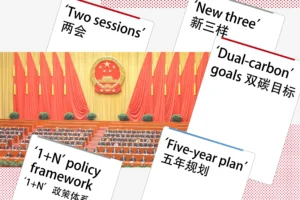



The post Interview: What the people of China’s coal-rich Shanxi think about climate change appeared first on Carbon Brief.
Interview: What the people of China’s coal-rich Shanxi think about climate change

Climate Change
Scientists Deploy First Satellite Tag on a Leatherback Sea Turtle in Ecuador to Better Reveal Gaps in Ocean Protection
Tracking the turtle’s movements could help identify where high-risk fishing areas overlap with the critically endangered species.
Just after 3 a.m. on a recent Friday morning, a 4.5-foot-long leatherback sea turtle covered her freshly dug nest with sand, sweeping and packing it into place with steady strokes of her flippers just above the high tide along a remote, rugged stretch of Ecuador’s Pacific coast.
The UN’s flagship climate fund has selected five locations for its new regional offices, a move aimed at bringing it physically closer to developing countries and making its finance easier to access.
After fraught discussions during a meeting last week, the board of the Green Climate Fund (GCF) decided in a secret vote on Saturday to open regional offices in Panama City, Amman in Jordan, Suva in Fiji, Nairobi in Kenya and Abidjan in Côte d’Ivoire. The African office will be split across two locations to better serve the continent with the largest number of countries and projects supported by the fund.
The decision marks a significant shift for the fund, which has operated from its headquarters in Songdo, South Korea, since its launch in 2013.
“This is a landmark moment for [the] GCF,” said the fund’s executive director Mafalda Duarte. “It has taken a lot of work, careful negotiation and persistent advocacy for a model that will bring us closer to the countries, to our partners and the communities we were created to serve”.
‘Less delay, more action’
The new offices are expected to act as the GCF’s front line, working more closely with governments, the private sector and civil society to improve access to climate finance and support the delivery of projects aimed at cutting emissions and strengthening resilience to climate impacts.
Welcoming the decision in a LinkedIn post, Fiji’s Permanent Secretary for the environment and climate change Sivendra Michael described it as “a win for the entire Pacific”, citing “long hours” and “tough negotiations” behind the outcome. “Less delay, more action — real support where it matters most,” he added.
-
Can new CEO steer Global Center on Adaptation back on course?
Madagascar’s Rindra Rabarinirinarison takes the helm of the troubled organisation promising to prioritise fundraising, rebuild trust with donors and hone its mission

A total of 43 countries applied to host the new offices, with 16 making a final shortlist after the GCF secretariat assessed bids on criteria including cost, connectivity and the ability to attract a “world-class workforce” through quality of life and access to international schools.
Panama emerged as the top-ranked location overall, according to a document seen by Climate Home News, while some selected hosts, including Amman and Abidjan, scored lower than rival candidates in their regions.
Establishing the new hubs is expected to cost an initial $6.5 million, but the fund anticipates these upfront expenses will be offset over time through operational savings, including lower staff and travel costs.
First Palestinian entity approved
The GCF board also accredited the first organisation in Palestine that will be able to directly apply for and access funding.
Created by the Palestinian Authority in the West Bank, the Municipal Development and Lending Fund supports local infrastructure projects and services. Working with partners, including the World Bank, it is developing projects to help communities cope with escalating climate risks such as drought and extreme heat.
In the West Bank, which is occupied by Israel, just under half of the population lives in areas classified as having high to very high climate exposure, according to a recent study.
The post Green Climate Fund picks locations for five developing country hubs appeared first on Climate Home News.
Green Climate Fund picks locations for five developing country hubs
Farmers and fishermen in the Maldives have long relied on an ancient calendar to guide their daily lives.
The Nakaiy system divides the year into 27 distinct periods, each named after a star or constellation in the night sky.
Any one period in the calendar tells you about expected weather and tidal patterns, navigational routes, and fishing conditions. The Nakaiy was created through centuries of careful observation and local knowledge, passed down through families as an essential tool for survival.
But things are now changing. The climate crisis is leading to more extreme weather events across the Indian Ocean island nation and upending the Nakaiy calendar.
“When you go and speak to communities and ask them what kind of impacts they are facing, a lot of elders will tell you that the weather, it doesn’t follow the calendar anymore,” explained Aishath Reesha Suhail, a programme officer in the Maldives’ Ministry of Tourism and Environment.
As the effects of climate change worsen, it is a real prospect that the Nakaiy may be abandoned by local people, representing a major cultural loss to the Maldives.
‘Systemic and growing threat’
With extreme weather becoming the norm, communities are observing a domino effect of consequences in their everyday lives. The slow onset of heritage loss is now being seen across continents, but notably among small islands in remote parts of the ocean.
“Climate change represents a systemic and growing threat to cultural heritage worldwide,” a UNESCO spokesperson told Climate Home, adding that the World Heritage Committee has identified climate change as “one of the most significant long-term risks affecting properties across all regions.”
UNESCO, the UN body for education, science and culture, defines the loss of cultural heritage as “the erosion of traditional knowledge systems, craftsmanship, social practices and identity, particularly where communities are displaced or livelihoods disrupted”. A clear example is historical sites and even entire islands washed into the ocean as a result of rising sea levels and coastal erosion.
The Maldives is dealing with such a situation now. The Koagannu Cemetery is a 900-year-old resting place, located on the country’s southernmost atoll, a mere 50 metres from the shoreline. The monument’s intricate coral gravestones are being actively threatened by the encroaching Indian Ocean.
The government and local community have responded to this challenge with emergency protection measures. Sandbags and concrete structures have been installed along the coastline, complemented by large numbers of palm trees to create a seawall. A wider solution is ‘beach nourishment’, a common practice in the Maldives where sand from elsewhere is brought in to replace what has been lost through erosion. Taken together, these solutions have so far protected the cemetery.
Among the many issues climate change creates, cultural heritage is not always front of mind. In the Maldives, one of the main barriers people face is awareness. “Most of what we are dealing with relates to the erosion of our islands along with areas such as fisheries… but we are quite limited in our capacity to do something about it,“ Suhail said.
“We don’t understand the full breadth of the issue at present because we haven’t been able to do extensive research on the matter,” she added. However, assessing the extent of the damage – and how to respond effectively – is a key priority for the government, outlined in its latest climate plan, known as a Nationally Determined Contribution, and as part of its National Adaptation Plan process.
Fishing is at the core of the country’s culture and identity, employing thousands of people. Most dishes include fish – “we have it for breakfast, lunch and dinner,” Suhail noted – but the climate crisis and overfishing are shifting how and when communities can fish. Tuna makes up 98% of all fish caught in the Maldives, but warmer ocean temperatures are changing migratory patterns, pushing the species into deeper, colder waters.
As a critical economic and cultural resource, the government has outlined a range of solutions to protect the fisheries sector in its first Biennial Transparency Report to the UN. These include using real-time tracking data to improve the efficiency of fishing operations; investing in canneries to increase fish storage; and diversifying away from tuna through marine farming.

Culture and nature go hand-in-hand
The same pattern is playing out elsewhere.
Palau and the Maldives are not close to one another. The two states are separated by around 4,000 miles and sit in different corners of the ocean. But both are experiencing very similar climate challenges, based on their position as a set of scattered, low-lying islands surrounded by an imposing body of blue water.
In the same way as the Maldives, Palau’s cultural heritage is closely tied to “land, coastlines and traditional food systems,” according to Toni Soalabla, at the Palau Office of Climate Change.
“Many of the places that hold stories, history and identity of our communities are located along the coast and are increasingly exposed to erosion and sea level rise,” she said.
One of these places is Ngerutechei village, reportedly the oldest in Palau, and home to ancient stone paths and carvings. The village provides a glimpse into the past social values and culture of the people in this western Pacific nation.
As part of the development of Palau’s National Adaptation Plan, the government has worked with local leaders to identify similar sites of cultural significance. The plan encourages communities to use their own knowledge to create protective measures for these sites.
Climate change is also prompting communities to take up traditional land and food practices again. These include cultivating taro, a stable food source that has historically supported water, soil and food security on the islands.
“These systems developed over generations in response to local environmental conditions, so strengthening them today is both a climate adaptation measure and a way of maintaining cultural knowledge that might otherwise fade,” said Soalabla.
Cultural practices in Palau have developed alongside the natural ecosystems that people rely on to survive. It is within this context that researchers believe adaptation policies should be created. Recognising this relationship “can strengthen both community identity and environmental resilience at the same time”, according to Soalabla.


Heritage on the global stage
The issue of cultural loss has not gone unnoticed in international climate negotiations.
Small island states such as the Maldives have used their role at the UN to push for greater awareness and action, with some key successes.
In 2015, the Paris Agreement established a Global Goal on Adaptation (GGA) which recognised that countries needed to do something about climate change now and not later. However, it took six years before a framework and a set of adaptation targets were agreed at the UN climate summit in Glasgow to pursue this goal.
From this came the establishment of seven overall themes – from poverty eradication to access to health – to guide adaptation action and a set of around 60 indicators to measure progress against the targets.
World leaders invited to see Pacific climate destruction before COP31
Emilie Beauchamp, an adaptation specialist at the International Institute for Sustainable Development (IISD), said that “cultural heritage was highlighted as one of the global priorities [of the GGA Framework] and is one of the seven themes, so it is considered very important by the international community.”
The much-debated set of indicators, only finalised in Belém at last year’s COP30, include five related to cultural heritage with a focus on preserving cultural practices and important sites that are “guided by traditional knowledge, Indigenous Peoples’ knowledge and local knowledge systems”. A spokesperson for UNESCO said the inclusion of heritage indicators “marks an important recognition that climate impacts extend beyond economic losses”.
While critics said the set of final indicators was rushed through by the Brazilian presidency, they now serve as guidance for national governments that wish to implement plans to protect their common heritage. The missing piece of the puzzle remains how to finance these plans – something notably absent from the Belém text, which made clear that the adaptation indicators “do not create new financial obligations or commitments, nor liability or compensation”.
The lack of financial commitments proved disappointing for many small states grappling with how to prevent their cultural history from being entirely forgotten, especially at a time when adaptation finance remains below requirements. A recent UNEP report found that developing nations would need an estimated US$310 billion per year in 2035 to adapt to climate change, while current public financing was around $26 billion.
At these low levels “only a small percentage of what the framework outlines could be implemented,” according to Beauchamp.

The challenge of cultural heritage
When looking at low-lying islands on a map, they can appear as specks of land amid a vast ocean. Many of the stories from these remote places go unnoticed. But the specks represent millennia of human culture that is slowly being lost to the ocean.
While the international community has now recognised the problem and solutions exist, the recurring issue of scarce finance may prevent governments from taking sustained action. Island communities have already been forced to move home as sea levels rise, leaving behind their cultural connections to a place.
The value of any cultural asset, or of human heritage, can be judged by how it is engaged with over generations. Without human intervention, many historical sites, language, cuisine and other local customs would become a forgotten part of history. The rapid onset of climate change brings the role of cultural heritage into sharp relief, challenging communities to decide in real time what they value, what deserves saving, and how to achieve that.
Stories of cultural loss are not confined to small islands but it is here where the challenge is presenting most acutely. The experiences of these vulnerable nations in protecting their heritage will provide the litmus test for effective adaptation responses elsewhere.
Adam Wentworth is a freelance writer based in Brighton, UK.
(Main image: The Isdhoo Havitha is an ancient Buddhist monastery in the Maldives, located moments from the shoreline. Photo: Ashwa Faheem)
The post Island nations fight to save cultural heritage from climate change appeared first on Climate Home News.
Island nations fight to save cultural heritage from climate change



-
Greenhouse Gases8 months ago
Guest post: Why China is still building new coal – and when it might stop
-
Climate Change8 months ago
Guest post: Why China is still building new coal – and when it might stop
-

 Greenhouse Gases2 years ago
嘉宾来稿:满足中国增长的用电需求 光伏加储能“比新建煤电更实惠”
-
Climate Change2 years ago
Bill Discounting Climate Change in Florida’s Energy Policy Awaits DeSantis’ Approval
-

 Climate Change2 years ago
嘉宾来稿:满足中国增长的用电需求 光伏加储能“比新建煤电更实惠”
-
Climate Change Videos2 years ago
The toxic gas flares fuelling Nigeria’s climate change – BBC News
-

 Renewable Energy5 months ago
Sending Progressive Philanthropist George Soros to Prison?
-

 Carbon Footprint2 years ago
US SEC’s Climate Disclosure Rules Spur Renewed Interest in Carbon Credits