Connect with us

Published

on

Weather Guard Lightning Tech
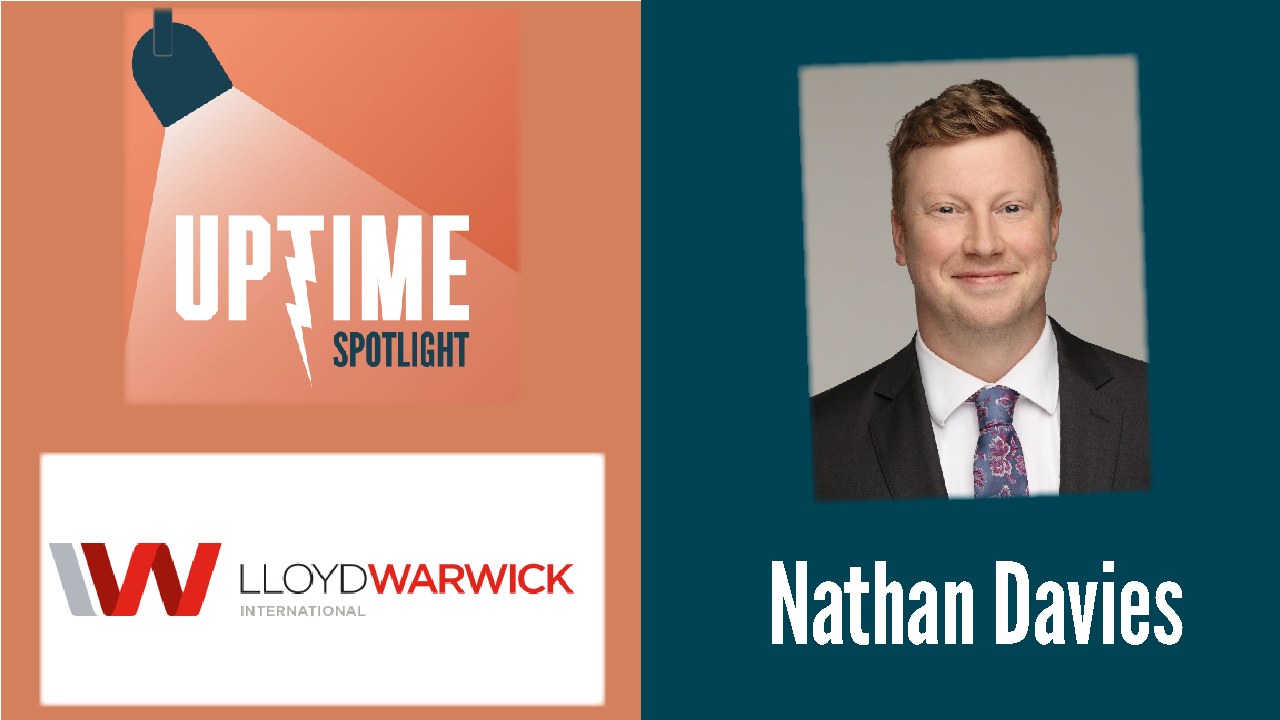
Inside Wind Turbine Insurance with Nathan Davies

Allen and Joel are joined by Nathan Davies from Lloyd Warwick to discuss the world of wind energy insurance. Topics include market cycles, the risks of insuring larger turbines, how critical spares can reduce downtime and costs, why lightning claims often end up with insurers rather than OEMs, and how AI may transform claims data analysis.

Sign up now for Uptime Tech News, our weekly newsletter on all things wind technology. This episode is sponsored by Weather Guard Lightning Tech. Learn more about Weather Guard’s StrikeTape Wind Turbine LPS retrofit. Follow the show on YouTubeLinkedin and visit Weather Guard on the web. And subscribe to Rosemary’s “Engineering with Rosie” YouTube channel here. Have a question we can answer on the show? Email us!

Welcome to Uptime Spotlight, shining light on wind. Energy’s brightest innovators. This is the Progress Powering tomorrow.

Allen Hall: Nathan, welcome to the program. Thank you for having me. So you are, you’re our link to the insurance world, Nathan, and there’s been so many changes over the past 12, 24 months, uh, not just in the United States but worldwide. Before we get too deep into any one subject, can you just give us a top level like, Hey, this is what’s happening in the insurance world that we need to know.

So there’s

Nathan Davies: obviously a lot of scope, a lot of development, um, in the wind world. Um, you know, there’s the race to scale. Um, and from an insurance perspective, I think everybody’s pretty tentative about where that’s going. Um. You know, the, the theory that are we trying to [00:01:00] run before we can walk? Um, what’s gonna happen when these things inevitably go wrong?

Uh, and what are the costs gonna be that are associated with that? ’cause, you know, at the moment we are used to, to claims on turbines that are circa five megawatts. But when we start seeing 15 megawatt turbines falling over. Yeah, it’s, it’s not gonna be a good day at the office. So, um, in the insurance world, that’s the big concern.

Certainly from a win perspective at least.

Joel Saxum: Well, I think it’s, it’s a valid, uh, I don’t know, valid bad, dream. Valid, valid risk to be worried about. Well, just simply because of like the, the way, uh, so I’ve been following or been a part of the, that side of the industry for a little while here the last five, six years.

Um. You’ve seen The insurance world is young in renewables, to be honest with you. Right. Compared to a lot of other places that like say the Lord Lloyd’s market, they’ve been writing insurance for hundreds of years on certain [00:02:00] things that have, like, we kind of know, we know what the risks are. We, and if it develops something new, it’s not crazily new, but renewables and in wind in specific haven’t been around that long.

And the early stuff was like, like you said, right? If a one megawatt turbine goes down, like. That sucks. Yeah. For everybody, right? But it’s not the end of the world. We can, we can make this thing happen. You’re talking, you know, you may have a, you know, your million, million and a half dollars here, $2 million here for a complete failure.

And then the business interruption costs as a, you know, with a one megawatt producing machine isn’t, again, it’s not awesome, but it’s not like it, uh, it doesn’t break the books. Right. But then when we’re talking 3, 4, 5, 6. Seven megawatts. We just saw Siemens cesa sell the first of their seven megawatt onshore platforms the other day.

Um, that is kind of changing the game and heightening the risk and makes things a little bit more worrisome, especially in light of, I mean, as we scaled just the last five, [00:03:00] 10 years, the amount of. Failures that have been happening. So if you look at that and you start expanding it, that, that, that hockey stick starts to grow.

Nathan Davies: Yeah, yeah, of course. And you know, we, we all know that these things sort of happen in cycles, right? It’s, you go, I mean, in, in the insurance world, we go through soft markets. We go through hard markets, um, you know, deductibles come up, the, the clauses, the restrictions, all those things get tighter. Claims reduce.

Um, and then you get sort of disruptors come into the market and they start bringing in, you know, challenging rates and they start challenging the big players on deductibles and preferential rates and stuff like that. And, and then you get a softening of the market, um, and then you start seeing the claims around up again.

But when you twin that with the rate of development that we see in the renewables worlds, it’s, it’s fraught for all sorts of. Weird and wonderful things happening, and most of them are quite expensive.

Joel Saxum: Where in that cycle are we, in [00:04:00] your opinion right now? So we, like when I first came into the market and I started dealing with insurance, it was very, we kept hearing hardening, market hardening, market hardening market.

But not too long ago, I heard from someone else that was like, Hey, the market’s actually getting kind of soft right now. What are your thoughts on that? And, and or may, and maybe we let, let’s precursor that there’s a lot of people that are listening right now that don’t know the difference. What is a hard market?

What is a soft market? Can you give us that first?

Nathan Davies: When you’re going through a soft market, it’s, it’s a period where they’ve either been, um, a limited volume of claims or the claim values have been quite small. Um, so, you know, everybody gets. It’s almost like becoming complacent with it, right? It’s like, oh, you know, things are going pretty well.

We’re having it. It looks like the operators, it looks like the maintainers are, are doing a pretty good job and they know all of the issues that are gonna be working through in the lifetime of these products. So for the next however many years, we can anticipate that things are gonna gonna go pretty well.

But as you see those [00:05:00] deductibles come down, you start getting more of the attritional claims, like the smaller values, um, the smaller downtime periods, all that sort of thing, start coming in as claims. And all of a sudden insurers are like, well, hang on a second. All of a sudden we’ve got loads and loads of claims coming in.

Um. All of the premium that we were taking as being bled dry by, by these, these attritional claim. Um, and then you get like a big claim coming. You get a major issue come through, whether it’s, you know, a, a serial issue with a gearbox or a generator or a specific blade manufacturer, and all of a sudden the market starts to change.

Um, and insurers are like, well, hang on a second. We’ve got a major problem on our hands here. We’re starting to see more of this, this specific piece of technology being rolled out, um, worldwide. Um, we are in for a lot of potential claims on this specific matter in the future, and therefore we need to protect ourselves.

And the way that insurers do that is by [00:06:00] increasing or deductibles, um, increasing their premiums, all that sort of thing. So it’s basically that. Uh, raises the threshold at which a claim can be presented and therefore minimizes the, the outlay for insurers. So that’s sort of this, this cycle that we see. Um, I mean, I can’t, I’ve, I’ve only been in loss adjusting for six years, so I can’t say that I’ve seen, you know, um, multiple cycles.

I’ve, I’m probably at the end of my first cycle from a hardening to a softening market. Um. But also, again, I’m not in the underwriting side of things. I’m on the claims side of things, so I own, I’m only seeing it when it’s gone wrong. I don’t know about everything else that the insurance market sees.

Joel Saxum: Yeah, the, the softening part, I think as well from a macro perspective, when there’s a softening market, it tends to bring in more capital.

Right. You start to see more, more and more companies coming in saying, Hey, I’ve got, [00:07:00] and when I say companies, I mean other capital holders to beat for insurance, right? Like these, the big ones you see, the big Swiss and German guys come in and going, like, I got, I got $500 million I’ll throw into renewables.

It seems like to be a good, pretty good bet right now. And then the market starts to change and then they go, uh, oops. Yeah.

Nathan Davies: And that’s it. You know, you’ve got the, the StoreWatch of the renewable insurance market like your G cubes and, and companies like that who’ve been in the game for a very long time.

They’ve got a lot of experience. They’ve been burned. Um, they know what they want to touch and what they don’t want to touch. And then you get. Renewables, everybody wants to be involved. It covers their ESG targets. It’s, it’s a good look to move away from, you know, your, your oil and your coal and all the rest of it.

So, of course, companies are gonna come into it. Um, and if they’re not experienced.

Allen Hall: They will get banned. How much reliance do operators have at the moment on insurance? Because it does seem like, uh, Joel and I talk [00:08:00]to a lot of operators that insurance is part of their annual revenue. They depend upon getting paid a certain amount, which then opens up the door to how sort of nitpicky I’ll describe it as the claim.

They’ll file. Are you seeing more and more of that as, uh, some of the operators are struggling for cash flow, that there are going after more kind of questionable claims? Um, I think it depends on

Nathan Davies: the size of the operator. So you’ve, you’ve obviously got your, your big players, you’ve got your alls and your rws and all of those sort of guys who, the way that they manage their insurance, they’ve probably got, you know, special purpose vehicles.

They’ve got, um, sites or clusters of sites that they manage finances independently. They don’t just have the one big or pot. It’s, it’s, it’s managed sort of subdivisions. Um. Those, those guys, we don’t typically tend to see like a big push for a [00:09:00] payment on account partway through a claim. It’s, it’s typically sort of the smaller end of the scale where you might have, um, an operator that manages a handful of smaller, um, assets.

The way that we look at it is if you don’t ask, you don’t get, so when we talk to an insured, it’s like. Present your costs, you know, we’ll review them and it’s, it’s better that you present all of your costs and insurers turn around and say, you’re not eligible for this. You know, that that element of it will be adjusted, um, rather than not present something.

And it’s like, well, you know, your, your broker then comes further down the line when they say you could have claimed that element of, of the cost. So, um. Typically that’s the approach that we take is, is present everything and we’ll work through and let you know which elements aren’t claimable.

Joel Saxum: When we’re talking insurance policies, there can be, you know, like an operator, an owner of a turbine asset can have them.

Then there is construction policies and [00:10:00] there’s the EPC company might have a policy and ISP may have a policy. So, so many policies because at the end of the day, everybody’s trying to protect themselves. Like, we’re trying to protect the bottom line. Tr that’s what insurance us for, that’s why we’re here.

Um, but so, so, so, so gimme a couple things. Like in your opinion as, let’s look, well, I wanna stay in the operator camp right now, say, during a non non-commission policy, a actual operating policy, wind farm is in the ground, we’re moving along. What are some of the things that, from an, from a loss adjuster’s perspective, that a operator should be doing to protect themselves?

I mean, besides. Signing an insurance contract. Yes. But is it, is it good record keeping? Is it having spares on site? Is it, what does that look like from your perspective when you walk into something,

Nathan Davies: if you were to take the insurer’s dream operator, that would be somebody who, and you, you’ve kind of hit the nail on the head with a lot of those points, Joel, the, the.

The golden [00:11:00] operator would have like a stash of critical spares because the last thing they want to be relying on is, um, an OEM who, you know, they, they’ve, they’ve stopped manufacturing that bit of kit three years ago. They now want to sell you the latest and greatest. It’s 18 months lead time or something like that.

Oh yeah, absolutely. And so you are now having to look at potentially refurbishment through. Whether that’s through sort of approved, um, processes or not. Um, you might be looking at, um, sort of, um, aftermarket providers. You know, there, there’s, as soon as you are looking at an aged asset, you are, you are in a really complicated position in terms of your repairability.

Um, because, you know, a as we know, you get to sort of that three, five year period after you’ve purchased the product, you’re in real jeopardy of whether or not it’s gonna be. Gonna have that continued support from the original equipment manufacturer. So [00:12:00] critical spares is a really good thing to, it’s, it’s just obviously a really good thing to have.

Um, and how you can manage that as well is if you have, um, a customer of sites that are all using the, the same equipment, you could sort of share that between you. There, there could be. Um, so we, we’ve sinned that where, um. An umbrella company has multiple sites, multiple SPVs. Um, they were all constructed at the same sort of time.

They’ve got the same transformers, you know, the same switchgear, same infrastructure, and they hold a set of spares that cover these, all these sites. ’cause the last thing you want to do is buy a load of individual components for one site. You are then paying to maintain them, to store them to, you know, there’s, there’s a lot of costs that come with.

Along with that, that you, you don’t wanna be covering. If that’s just for the one site and it’s the [00:13:00] eventualities, that may never happen. So if you’ve got multiple sites and you can spread those costs, all of a sudden it’s a lot more, um. Could

Joel Saxum: you see a reality where insurers did that? Right? Where like a, like a, like a consortium of insurance companies gets together and buys, uh, half a dozen sets of blades and generators and stuff that they know are failures that come up, or they have a pool to pull from themselves to, to avoid these massive bi claims.

Nathan Davies: Yeah. I mean maybe there’s, maybe there’s the potential for a renewables pool. I mean, it’s always. Complicated. As soon as you start trying to bring sort of multiple companies together with an agreement of that sort of scale, it’s gonna be challenging. But, um, I mean, yeah, in an ideal world, that would be be a great place to be.

Um, so critical spares is, that’s, that’s a key thing we, we have seen. So we, we’ve got, um, one account that we work with that they’ve actually got a warehouse full of critical spares. [00:14:00] So they, they have a lot of, um, older turbine models, um, sort of typically, um, 2015 through to, well, yeah, from about 2012 to 2015.

Um, these sites were commissioned so they knew there was a, a finite lifetime, uh, replacement blades, generators, gear, boxes, what have you, and it’s like we’ve. A huge number of assets. So what we should do is retain certainly a number of gearboxes and generators that you, we can utilize across, um, the fleet.

And obviously they then keep a rolling stock of refurbishment and repairs on those. But they, they basically included in their, their premium spreadsheet, they’ve got all of their individual sites. Then they’ve got a warehouse that is full of all their spares, and that is an inuring asset, is their warehouse full of critical spares.

Joel Saxum: So what

Nathan Davies: happens to

Joel Saxum: that

Nathan Davies: person then? Does

Joel Saxum: their premiums go [00:15:00] down? Because they have those spares, they’ve got really low deductibles on their bi. So there’s a business case for it probably, right? Like if you’re sitting there, if you’re, if you’re, you’re an accountant, you can figure that out and say like, if we hold these spares for this fleet, like if you’re, if you’re a fleet, if you have a homogenous fleet, say you’ve got a thousand turbines that are basically all the same model.

W you should have centrally located amongst those wind farms, a couple of blade sets, a couple of generators, couple of pitch bearings, couple of this, couple of that. And you can use them operationally if you need to, but it’s there as spares, uh, for insurance cases. ’cause you’ll be able to re reduce your insurance premiums or your insurance deductibles.

Allen Hall: That’s remarkable. I don’t know a lot of operators in, at least in the United States that have done that, I’m thinking more of like Australia where it’s hard to get. Parts, uh, you, you probably do have a little bit of a warehouse situation. That’s really interesting because I, I know a lot of operators are thinking about trying to reduce their premiums and simple things like that would, I would imagine it make a huge difference [00:16:00] in what they’re paying each year and that that’s a smart move.

I, I wanna ask about the IEC and the role of certification in premiums. What does it mean and how do you look at it as an industry? Uh, one of the things that’s happening right now is there’s a number of, I think some of the major IEC documents in, in our world, in the lightning world are going through revision.

Does that, how do, how do you assess that risk that the IEC specs or the sort of the gold standard and you have the certification bodies that are using them to show that the turbines are fit for purpose. Is there a reliance upon them? Does, does it help reduce premiums if there’s an I-E-C-I-I, I’m not even sure how the industry, the insurance industry looks at it.

Or is it more of how the turbines perform in the first year or two, is how, what’s gonna really gonna drive the premium numbers? I mean, insofar as

Nathan Davies: I eecs, it’s, that’s a really tough question. It’s, it’s [00:17:00]interesting that you ask that. ’cause um, I mean certainly from the lightning perspective, the, the IEC. We look at on that the blades need to withstand a lightning strike of a known value, but even within that, they, within the IEC, there’s an allowance of like 2%, I think, um, for blade strikes that can still cause damage even if they’re within the rate of capacity of the LPS.

Um, so in the insurance world, this is a big gray area because each, um, operator has a, a turbine, uh, has a blade failure because of a lightning strike. They’ll then immediately go to the OEM and say, um, you know, we’ve had had a lightning strike, we’ve had a blade failure. Can you come and repair or replace the blade?

Sure, no bother. Um, down the line, we have an insurance claim for this repair or replacement. And insurers are like, well, what’s the lightning data? And if that’s within the [00:18:00] LPS standard, it’s like, well, why have. Why is this not covered under warranty? And, you know, you, your OEMs will always turn around and say, force majeure.

Um, it’s, it’s that 2%. So the IEC, even though that’s, you know, it’s, it’s best standards, it still has a degree of allowance that, um, the OEMs can slip through and be like, well this, this falls with insurance. And again, I can only speak for what I’ve seen, but that is. We see, I’d say, um, Lloyd Warwick, we probably see 50 plus notifications a year for blade damage from lightning and, um, almost every time if it’s within the capabilities of the LPX, the OEM or say towards majeure and Atlanta with insurers.

Allen Hall: Well, is there a force majeure for gearboxes or generators or transformers? [00:19:00] Is, is there a 2% rule for transformers? I don’t, I don’t think so. Maybe there is, but it is, it, it is a little odd, right, that, that there’s so many things that are happening in the insurance world that rely upon the certification of the turbine and the sort of the expected rates of failure.

I have not seen an operator go back and say, we have a 3% rate of, of damage of my transformers, so therefore I wanna file a claim. But that, that doesn’t seem to occur nearly as often as on the lightning side where it’s force majeure is used probably daily, worldwide. How do we think about that? How do we, how do we think about the transformer that fails versus the lightning damage?

Are they just considered just two separate things and uncontrollable? Is that how the insurance industry looks at it? If we, if we would

Nathan Davies: talk about transformers. So the fact is that we see on those can vary from, you know, it’s, it’s a minor electrical component that that goes, um, [00:20:00] which is relatively easy to pin down.

But then at the other end of the spectrum, you’ve got a fire where it’s. You know, with all, all the will in the world, you could go in and investigate, but you’re not gonna find the cause of that fire. Um, you know, the damage is so great that you, you could probably say, well, the ignition point is there because that’s where the most damages occurred and it’s spread out.

But, but how is that occurred? The know, and we, we do have that, that happens not frequently, but um. You know, as an engineer, I, I want to get to the bottom of what’s caused things, but, but all too often we come away from a claim where it’s like we don’t know exactly what’s caused it, but we can’t confirm that it’s excluded in the policy and therefore it, it must be covered and, you know, the claim is valid.

Um, so in, in terms of causation and the standards and all the rest of it.

Joel Saxum: It goes to an extent. So this is a, this is another [00:21:00] one. So Alan was talking about lightning and blades. Then we talked about transformers a little bit. I wanna talk about gear boxes for just a second, because gearbox usually, um, in, in my, my experience in, in the wind world, claims wise, it’s pretty black and white.

Was it, did it, did it fail? This is how it failed. Okay. Blah, blah, blah. Did was maintenance done at blah? So I heard the other day from someone who was talking about, uh, using CMS. On their, on their gener, on their, uh, gearbox, sorry. So it was an operator said, Hey, we should be, and, and a company coming to them saying, well, you should be monitoring CMS.

This is all the good things it can do for you operationally. And the operator, the owner of the turbine said, I don’t want it, because if I know there’s something wrong, then I can’t claim it on insurance if it fails. Does that ring

Nathan Davies: true to you? Part of our process would be to look at the data. Um, so we know nine times out of 10 there is condition [00:22:00] monitoring, there is start out there, there, all this stuff.

The operator, um, assistance tools, and if we can look at a gearbox vibration trend. Um, along with, you know, bearing temperature, uh, monitoring and all that sort of thing. And if you can see a trend where the vibrations are increasing, the temperatures are increasing, um, and there’s no operator maintain maintenance intervention, then, you know, if, if you, if you’ve received an alarm to say, Hey, there’s something wrong with me, you should probably come and have a look and you’ve done nothing about it, then.

It’s,

Joel Saxum: it’s not great. Okay. So, so that, so that it rings, it kind of in a sense, rings true, right? That what that operator was saying, like the way their mind was working at that stage. ’cause this is, this is during, again, like, so we, Alan and I from the uptime network and just who we are, like we know a ton of people, we know [00:23:00] solutions that are being sold and, and this her about this.

And I was like, man, that seems like really shortsighted, but there’s a reality to it that kind of makes sense, right? If they don’t have. I, it, it just seems unethical, right? It seems like if I don’t have the budget to fix this and I don’t wanna look at it, so I’m just waiting for it to fail. I don’t want the notifications so then I can claim it on insurance.

’cause I don’t wanna spend the money to go fix it. Like, seems, seems not cool.

Nathan Davies: Yeah. So the, I mean the, the process, the process of the insurance claim, if, if you want to look at it in almost an over simplistic way, um, a claim is notified. Um, to trigger an operational policy, there needs to be proof of damage, right?

So in this instance, your gearbox has failed, whether that’s gear, teeth have have been pulled off, you’ve had a major bearing failure, whatever it is. So there’s your damage. So insurers are now [00:24:00] engaged. Um, the rules of the game. It’s now on insurers to prove that whatever has caused that damage is an exclusion.

So in this instance, um, you know, that might be wear and tear, gradual deterioration, uh, could be rust. Um, and, and part of that is poor workmanship. Um, so if they have knowingly like. Cover their shut, their eyes covered, their ears just ignored this gearbox slowly crunching its way to, its, its inevitable death.

You know, it, it’s not reasonably unforeseen. It’s not an unpredictable event. This was going to happen if you can see that, that trend, um, towards the failure, um, and in that light, it would, in theory be an uninsured event. Um, but [00:25:00] we know that. 90 plus percent of owner operators have, at least on their drive train, they have some sort of condition monitoring, whether that’s, you know, temperature sensors, vibration sensors, uh, noise sensors, you know, all that sort of stuff.

We know that it’s there, but what’s really interesting in the claims process is. The first thing that we’ll ask is, where’s your proof of damage? Let’s see your alarm data, your scarda data, all this sort of thing.

Joel Saxum: Does the RFI get responded to?

Nathan Davies: Yeah, yeah, yeah. Um, and it’s like, oh no, we, you know, we don’t have the SCARDA data.

And we’ve had instances where a company, a company had turned around and said, oh, we don’t have any SCARDA data for the time of this event. It’s like, oh, that’s interesting. And worked our way through the process. And eventually insurers were like, you know what? We’re, we’re gonna deny this one. We’re not.

Things aren’t adding up, we are not happy with it. Um, and all of a sudden out the woodwork, we get scar data, we get the, the insured’s, um, failure report, [00:26:00] which I mean, there was computational flow dynamics. There were, there were like all sorts of weird and wonderful data that had been thrown into the, this failure analysis.

And it’s like, well, you’ve done our jobs for us. Why did you not just hand this over at the beginning? We know that this stuff exists, so. Just, just playing, playing dumb itch. It’s just a frustration really.

Allen Hall: It does seem like the operators think of loss adjustment in insurance companies as having a warehouse full of actuaries with mechanical calculators and they’re back there punching numbers in and doing these calculations on.

I lost this gearbox from this manufacturer at, at this timeframe, and, and I understand all this data. That’s not how it works, but I do think there’s this, uh, assumption that that. Uh, there’s a in wind energy that because of the scale of it, there’s a lot of, of backend research that’s happening. I, I don’t think that’s true, or, I mean, you can tell me if it’s true or not, [00:27:00] but I don’t think so.

But now, in the world of AI where I can start to accumulate large sets of data and I have the ability to process it with just a single person sitting in front of a laptop, is it gonna get a little harder for some of these claims that have Mercury, just really shady histories to get? Approved.

Nathan Davies: I, I think that’s inevitable.

You know, whenever we go and speak to an insurer, you know, insurers are always interested, are interested in what’s the latest claims data, what are the trends that we’re seeing, all this sort of thing. So we’ll sit down with them for an hour and a half and we’ll say, oh, this was interesting. This is what went well, this is what didn’t go so well.

And then they always sort of grab us just as we’re about to leave and we’ve, we’ve said our goodbyes, and they’re like, so you guys have a. Claims database. Right? Every time. Yep. And it’s like, how’d you feel about, about sharing your data? And it’s, it’s every insurer without failure. They’re like, let’s see your claims [00:28:00] database.

Okay. Right. So we can share, we can share some information. Obviously it needs to be sanitized. We don’t want to provide identifying information, all that sort of stuff. You’re looking at thousands and thousands of lines of data. And the big problem that we have with any database like this is, it’s only as good as the data that’s been entered, right?

So if, if every claims handler, if every loss adjuster is entering their own data into this database, my interpretation of, of a root cause failure, maybe different to somebody else’s. So what we are gonna start seeing in the next year to three years. Is the application of AI to these databases, to to sort of finesse the poor quality data that’s been entered by multiple, you know, it’s, it’s too many cooks.

Spoiled broth. All of these people have entered their own interpretation of data, will start to see AI finesse [00:29:00] that, and all of a sudden the output of it will be. Really, really powerful, much better risk models. Yeah. And I think that’s, that’s inevitable in the next two to five years. Um, and I think insurers will, but again, the, we go back to the cyclic thing.

So the, the data that we have is the claims that we’ve had over the past however many years, but all the while that the OEMs are manufacturing. New gearboxes, new generators, new blades. We don’t know about the problems that are gonna come out the woodwork. We can tell you about failures that might happen on aged assets, but we can’t tell you about what’s gonna fail in the future.

Allen Hall: Well, is there an appetite to do what the automobile world is doing on the automobile insurance? Have basically a plugin to monitor how the driver is doing the State Farm drive safe and [00:30:00] save. Yeah. Your little black box is, is that where eventually this all goes? Is that every turbine’s gonna have a little black box for the insurance company to monitor the asset on some large scale, but then that allows you then to basically to assess properly what the rates should be based on the actual.

Data coming from the actual turbines so that you, you can get a better view of what’s happening.

Nathan Davies: I mean, it’s challenging because obviously you can only get so much from, from that monitoring data. So arguably that’s, that’s like the scarda data. But then there’s, there’s the multiple other inputs that we’re looking at.

I’d say the vast majority of claims come from some form of human intervention. And how do you record that? Human intervention.

Allen Hall: Right? You, it’s like getting an oil change in your car. If the guy forgets to put the oil plug in. Pretty much you’re, you’re gonna get a mount down the road and engine’s gone. [00:31:00] And that’s, that may be the, that may be ultimately where this all goes.

Is that a lot of it’s just human error.

Nathan Davies: Yeah. It’s, you know, we, we can take the, the operating data, you can start to finesse maintenance reports and, and try to plug that into this data stream. But you can guarantee, like you can absolutely bet your bottom dollar, but when there’s an insurance claim and it’s like.

That one key document that you need that will answer that question, nobody knows

Allen Hall: where it is. This has been a great discussion and Nathan, we need to have you back on because you provide such great insights as to what’s happening in the insurance world and and the broader wind energy world and. That’s where I like talking to you so much.

Nathan, how do people get a hold of you? Can they reach you via LinkedIn?

Nathan Davies: Yeah, I’m on LinkedIn. Um, you can also find me, um, on the Lloyd Warwick website. Sounds great.

Allen Hall: Nathan, thank you so much for being on

Nathan Davies: the podcast. Right. Appreciate it. Thank you so much [00:32:00] guys.

Inside Wind Turbine Insurance with Nathan Davies

Continue Reading

Renewable Energy

Commercial Solar Solutions: Real Case Studies by Cyanergy

Published

on

Instead of reacting to the next power bill shock, many Australian businesses are starting to think forward.

Every day, more and more Australian companies are asking a simple question we all seek an answer to: How can we reduce energy costs without compromising performance?

Well, for many, the answer lies in commercial solar power, and Cyanergy is one of the Australian companies helping businesses take that step with confidence.

With hands-on experience delivering commercial solar solutions across a wide range of industries, from farms and sporting clubs to breweries and large manufacturing facilities, Cyanergy’s real-world projects demonstrate how tailored solar systems can transform energy usage and significantly reduce operating expenses.

In this blog, we’ll explore what commercial solar power is, why it matters today, and how Cyanergy’s real-world case studies illuminate the path to a cleaner, more profitable energy future, both financially and environmentally

Let’s get into it!

What Are Commercial Solar Solutions? |Why does this matter?

Solar solutions for commercial applications are photovoltaic (PV) systems designed to meet the energy needs of businesses, large facilities, and organizations. This system often consumes much more power than residential households.

Commercial solar systems typically include:

  • Solar PV panels that capture sunlight and convert it to electricity
  • Inverters and electrical integration are used to convert DC to usable AC power
  • Monitoring and performance systems are installed to track energy generation
  • Optional battery storage to support energy autonomy and peak demand management

Unlike residential solar, commercial systems are scaled to handle larger loads and are often optimized for financial return, corporate sustainability goals, and energy independence.

Why Australian Businesses Are Turning to Solar Now?

Throughout the world, many companies are adopting solar power for several compelling reasons. It is already proven
that solar can:

  1. Reduce Operational Costs
  2. Electricity prices are volatile and often increasing worldwide. Incorporating a solar panel helps businesses lock
    in
    energy cost savings by
    producing electricity on-site rather than relying exclusively on grid power.

  3. Strong Financial Returns
  4. Commercial solar systems can pay back their investment in just a few years, far shorter than the 25 to 30 years
    the
    panels last. This ultimately means, after that, you are left with decades of essentially free electricity.

  5. Sustainability and Brand Value
  6. Customers, employees, and stakeholders increasingly value organizations that visibly commit to environmental
    responsibility.

  7. Energy Security
  8. Generating power locally reduces reliance on external sources and grid outages, a huge advantage for businesses
    with
    continuous operations.

    This mix of economic, environmental, and operational benefits makes commercial solar a smart choice for
    forward-looking organizations and commercial
    property
    owners
    .

4 Proven Solutions Through Real Case Studies by Cyanergy

To understand how these benefits play out in real situations, let’s dive into several commercial solar projects executed by Cyanergy. These case studies show diverse applications of solar power and tangible outcomes for different kinds of businesses.

1. Kew Golf Club (VIC): Sporting Facility Goes Solar

At a local golf club that relied on consistent electricity for lighting, clubhouse operations, and course facilities, Cyanergy installed an 88 kW commercial solar system to reduce costs.

Key Results

  • Payback period: around 63 months (5 years)
  • Annual savings: $26,165, a 50% drop in electricity costs
  • Energy generated per year: 141 MWh

This project demonstrates that not only industrial property but also community-oriented facilities can benefit greatly from solar power.

Beyond cost savings, the golf club also reinforced its commitment to sustainability, attracting eco-conscious members and reducing its carbon footprint.

Why This Matters?

Solar is not limited to manufacturing or heavy industry. In Australia, many Sports clubs, community centres, and similar facilities often have high energy use during peak daylight hours, which can be supported by solar.

2. Sparacino Farms: Where Agriculture Meets Solar Innovation!

Whether for irrigation, cooling, processing, or storage, agricultural operations have faced rising energy costs for a long time.

Similarly, Sparacino Farm was suffering from high electricity costs. For this family-run farm, Cyanergy implemented a 99.76 kW solar system that revolutionised their energy expenses.

Project Highlights

  • Electricity cost dropped: from $48,000 to $12,000 per year
  • Monthly savings: roughly $3,000
  • Payback period: 30 months (2.5 years)
  • Annual clean energy production: 87 MWh

This dramatic turnaround showcases how rural and agricultural businesses can achieve some of the fastest returns on solar investments.

In environments where a roof, sunlight, or a shed space is available, solar becomes both a strategic and practical choice.

The Sparacino farms example proves that solar isn’t just an environmental sustainability, it’s a core business decision that can significantly improve margins.

3. Philter Brewing: Crafting Sustainability

Sustainability often aligns naturally with brand identity, and for Philter Brewing, this was a perfect match.

With the help of Cyanergy, the brand installed an 86 kW system to slash power costs and support green operations.

Project Impact

  • Annual energy generated: 99 MWh
  • Annual savings: $29,130, cutting electricity costs from $81,900 to $52,770
  • Payback period: 45 months (3.75 years)

The brewery not only reduced operating expenses but also strengthened its reputation as an environmentally conscious brand, a powerful differentiator in a competitive market.

4. Uniplas Mouldings International: Heavy Industry Solar Success

In one of Cyanergy’s most impactful case studies, a large industrial manufacturer significantly transformed its energy profile with solar. And that’s Uniplas Mouldings International!

Project Features

  • Total installed solar: 490 kW, executed in staged phases
  • Timeline: Stage 1 (200 kW) completed in just 4 weeks
  • Subsidy optimisation: Accessed three sets of government incentives
  • Payback period: as short as 37 months
  • Annual generation: 752 MWh
  • Energy cost savings: Lowered from $647,000 to $456,000 per year

Big industrial energy users can unlock dramatic operational savings with solar, saving hundreds of thousands of dollars a year while achieving rapid ROI that justifies investment sooner, without delay.

Beyond Case Studies: Cyanergy’s Approach to Commercial Solar

Across all these projects, Cyanergy’s methodology shares some common themes that contribute to success:

1. Customized System Design

We all know that no two energy profiles are identical, whether it’s a golf club or a manufacturing plant.

At Cyanergy, we design systems tailored to the business’s actual energy usage, site orientation, and financial goals. So you don’t have to worry about adding a solar solution.

2. Financial Optimization

From government incentives to financial investment planning, Cyanergy helps businesses structure their solar projects to reduce upfront costs and improve payback timelines.

3. End-to-End After-Sale Support

Proper solar implementation requires more than panels; it requires site assessment, design, installation coordination, monitoring, and performance guarantee.

At Cyanergy, we support clients at every step, from early energy audits to post-installation support.

4. Monitoring and Reporting

Tracking system performance and energy generation ensures ongoing optimization and confidence in the investment.

Our real-time monitoring tools empower business owners to understand exactly how solar contributes to their bottom line.

The Transformative Role of Solar in Business Strategy

The benefits of commercial solar extend far beyond the energy generated or the energy cost that’s reduced. Overall, solar is a strategic business asset that impacts:

Profitability: Lower operating costs mean more available working capital, whether for reinvestment, dividends, or growth initiatives.

Resilience: Energy independence provides a hedge against market volatility in electricity pricing.

Sustainability Credentials: Solar investments signal that your organization is serious about environmental stewardship, which is crucial to investors, customers, and regulators alike.

Employee and Community Engagement: A company that commits to clean energy signals a long-term vision, strengthening morale and community trust.

Takeaway Thoughts

Cyanergy’s real case studies show how businesses from farms to breweries to industrial giants have harnessed solar to cut costs, stabilize operations, and enhance sustainability.

Whether your organization is exploring its first solar project or looking to scale existing efforts, the data is clear: smart solar investment delivers measurable ROI and long-term value.

As energy dynamics continue to evolve, solar power will become increasingly relevant, and companies that act now will secure economic and environmental advantages for years to come.

So, it’s time for you to take the next move! For more information, contact us today and win a free solar quote!

Your Solution Is Just a Click Away

The post Commercial Solar Solutions: Real Case Studies by Cyanergy appeared first on Cyanergy.

https://cyanergy.com.au/blog/commercial-solar-solutions-real-case-studies-by-cyanergy/

Continue Reading

Renewable Energy

Inside ATT and SSE’s Faskally Safety Leadership Centre

Published

on

Weather Guard Lightning Tech

Inside ATT and SSE’s Faskally Safety Leadership Centre

Allen visits the Faskally Safety Leadership Centre with Mark Patterson, Director of Safety, Health, and Environment at SSE, and Dermot Kerrigan, Director and Co-Founder of Active Training Team. They discuss how SSE has put over 9,000 employees and 2,000 contract partners through ATT’s innovative training program, which uses actors and realistic scenarios to create lasting behavioral change across the entire workforce chain, from executives to technicians. Reach out to SSE and ATT to learn more!

Sign up now for Uptime Tech News, our weekly newsletter on all things wind technology. This episode is sponsored by Weather Guard Lightning Tech. Learn more about Weather Guard’s StrikeTape Wind Turbine LPS retrofit. Follow the show on YouTube, Linkedin and visit Weather Guard on the web. And subscribe to Rosemary’s “Engineering with Rosie” YouTube channel here. Have a question we can answer on the show? Email us!

Welcome to Uptime Spotlight, shining Light on Wind. Energy’s brightest innovators. This is the Progress Powering tomorrow.

Allen Hall: Mark and Turnt. Welcome to the show. Thank you.

Mark Patterson: Thank you.

Allen Hall: We’re in Scotland, present Scotland and per Scotland, which is a place most people probably haven’t ventured to in the United States, but it is quite lovely, although chilly and rainy. It’s Scotland. We’re in December. Uh, and we’re here to take a look at the SSE Training Center.

And the remarkable things that active training team is doing here, because we had seen this in Boston in a smaller format, uh, about a year ago almost now.

Dermot Kerrigan: Just Yeah,

Allen Hall: yeah. Six months

Dermot Kerrigan: ago.

Allen Hall: Yeah. Yeah. It hasn’t been that long ago. Uh, but IC was on me to say, you gotta come over. You gotta come over. You gotta see the, the whole, uh, environment where we put you into the police room and some of the things we wanna talk about, uh, because it, [00:01:00] it does play different.

And you’re right, it does play different. It is very impactful. And it, and maybe we should start off first of Mark, you’re the head of basically health and safety and environment for SSE here in Perth. This is a remarkable facility. It is unlike anything I have seen in the States by far. And SSE has made the commitment to do this sort of training for.

Everybody in your employment and outside of your employment, even contractors.

Mark Patterson: We have been looking at some quite basic things in safety as everybody does. And there’s a fundamental thing we want to do is get everybody home safe. And uh, it’s easier said than done because you’ve gotta get it right for every single task, every single day.

And that’s a massive challenge. And we have like 15,000. 15,000 people in SSE, we probably work with about 50,000 contract [00:02:00] partners and we’re heavily dependent, uh, on get our contract partners to get our activities done. And they’re crucial.

Speaker: Mm-hmm.

Mark Patterson: And in that it’s one community and we need to make sure everybody there gets home safe.

And that’s what drove us to think about adding more rules isn’t gonna do it. Um, you need to give people that sense of a feeling, uh, when a really serious sense of cars and then equip them with tools to, to deal with it. So. We’ve all probably seen training that gives that sense of doom and dread when something goes badly wrong, but actually that needs to be.

Coupled with something which is quite powerful, is what are the tools that help people have the conversations that gets everybody home safe. So kind of trying to do two things.

Allen Hall: Well, SSC is involved in a number of large projects. You have three offshore wind farms, about a more than a thousand turbines right now.

Wind turbines onshore, offshore, and those offshore projects are not easy. There’s a lot of complexity to them.

Mark Patterson: Absolutely. So look, I I think [00:03:00] that’s, that’s something that. You’ve gotta partner with the right people. If you wanna be successful, you need to make it easy for people to do the right thing. Yeah, as best you possibly can.

You need to partner with the right people, and you need to get people that you need to have a sense that you need to keep checking that as you’re growing your business. The chinks in your armor don’t grow too. But fundamentally there’s something else, which is a sense of community. When people come together to, to do a task, there is a sense of community and people work, put a lot of discretionary effort into to get, uh, big projects done.

And in that, um, it’s a sense of community and you wanna make sure everybody there gets home safe to their friends and family. ’cause if we’re all being honest about it, you know, SSE is a brilliant company. What we do is absolutely worth doing. I love SC. But I love my family a fair amount more. And if you bought into that, you probably bought into the strategy that we’re trying to adopt in terms of safety.

Uh, it’s really simple messaging. Um,

Allen Hall: yeah. That, that is very clear. Yeah. And it should be [00:04:00]well communicated outside of SSEI hope because it is a tremendous, uh, value to SSE to do that. And I’m sure the employees appreciate it because you have a culture of safety. What. Trigger that. How long ago was that trigger?

Is this, this is not something you thought up yesterday for sure.

Mark Patterson: No, look, this, the, the, what we’ve done in the immersive training center, um, really reinforces a lot of things that we’ve had in place for a while, and it, it takes it to the, the next level. So we’ve been working probably more than 10 years, but, uh, certainly the.

Seven years we’ve been talking very much about our safety family, that’s the community and SSE with our contract partners and what we need to do. And part of that is really clear language about getting people home safe. Uh, a sense that you’ve, everybody in it that works with us has a safety license. And that license is, if it’s not safe, we don’t do it.

It’s not a rural based thing. It’s how we roll. It’s part of the culture. We’d, we, uh, have a culture where, and certainly trying to instill for everybody a culture. Where [00:05:00] they’ve got that license. If, if they think something’s not right, we’ll stop the job and get it right. And even if they’re wrong, we’ll still listen to them because ultimately we need to work our way through, right?

So we’ve been, we’ve thought hard about the language we wanted to use to reinforce that. So the importance of plan, scan and adapt. So planning our work well, thinking through what we need to do. Not just stopping there though, keeping scanning for what could go wrong. That sense that you can’t remember everything.

So you need to have immediate corrective actions and that immediate sort of see it, sort of report it. If you see something that isn’t right, do something about it. And that sense of community caring for the community that you work with. And those are the essence of our, our language on safety and the immersive training.

Uh, is not trying to shove that language down everybody’s throats again, particularly our contract partners, but it’s, it’s helping people see some really clear things. One is if a [00:06:00] really serious incident occurs at what, what it feels like here. And I’ve spent a lot of time in various industries and people are different when they’ve been on a site or involved when there’s been a really serious incident and you need to do something to.

Get that sense of a feeling of what it feels like and actually make people feel slightly uncomfortable in the process. ’cause that’s part of it,

Allen Hall: right? Yes.

Mark Patterson: Because you know,

Allen Hall: you remember that.

Mark Patterson: You remember that. Yeah. We’ve had, you know, we’ve had people say, well, I felt very uncomfortable in that bit of the training.

It was okay. But was, I felt very uncomfortable. And you know, we’ve talked about that a lot.

Allen Hall: Yeah.

Mark Patterson: We know you kinda should because if there’s something wrong with you, if you don’t feel uncomfortable about that. But what’s super powerful on the guys in at TT do brilliantly. Is have facilitators that allow you to have that conversation and understand what do you need to do differently?

How do you influence somebody who’s more senior? How do you, how do you bring people with you so that they’re gonna [00:07:00] do what you want ’em to do after you’ve left the building? And. Just pointing the finger at people and shouting at them. Never does that. Right? Uh, rarely does that. You’ve gotta get that sense of how do you get people to have a common belief?

And,

Allen Hall: and I think that’s important in the way that SSE addresses that, is that you’re not just addressing technicians, it’s the whole chain. It’s everybody is involved in this action. And you can break the link anywhere in there. I wanna get through the description of why that. Process went through ATTs head to go.

We need to broaden the scope a little bit. We need to think about the full chain from the lowest entry worker just getting started to the career senior executive. Why chain them all together? Why put them in the same room together? Yeah. Why do you do that?

Dermot Kerrigan: Well, behavioral safety or behavioral base safety kind of got a bad rep because it was all about.

If we could just [00:08:00] make those guys at the front line behave themselves,

Allen Hall: then everything’s fine,

Dermot Kerrigan: then everything’s fine.

Allen Hall: Yes.

Dermot Kerrigan: But actually that’s kind of a, the wrong way of thinking. It didn’t work. I, I think,

Allen Hall: yeah, it didn’t work.

Dermot Kerrigan: What the mess, the central message we’re trying to get across is that actually operational safety is not just the business of operational people.

It’s everybody’s business.

Allen Hall: Right.

Dermot Kerrigan: You know? Um, and. Yeah, everybody has a role to p play in that, you know? Right. So site based teams, back office support functions, everybody has a role to play. And, you know, there’s a strand in, in this scenario where, uh, an incident takes place because people haven’t been issued with the right piece of equipment.

Which is a lifting cage.

Allen Hall: Yes.

Dermot Kerrigan: And there’s a whole story about that, which goes through a procurement decision made somewhere where somebody hit a computer and a computer said no because they’d asked for too many lifting cages when they, somebody could have said, you’ve asked for five lifting cages, it’s takes you over the procurement cap.

Would four do it? [00:09:00] Yes, that would be fine. That would be fine. Yeah. As it is, they come to a crucial piece of operation. This incr this, you know, this crucial piece of kit simply isn’t there. So in order to hit the deadline and try and make people happy, two ordinary guys, two technicians, put two and two together, make five, and, and one of them gets killed, you know?

Yeah. So it’s, we’re, we’re trying to show that, that this isn’t just operational people. It’s everybody’s business.

Mark Patterson: Well, that’s why we worked with you in this, because, um, we saw. Why you got it in terms of that chain? Um, so in, in the scenario, it’s very clear there’s a senior exec talking to the client and actually as SSE.

We’re sometimes that client, we’ve got big principal contractors that are doing our big construction activities. We’ve got a lot in renewables and onshore and offshore wind obviously, but, and the transmission business and in thermal, so, uh, and distribution. So I’ll list all our businesses and including customer’s business, but we’ve got some big project activities where we’re the client sometime we’re the principal contractor [00:10:00] ourselves.

And we need to recognize that in each chain, each link in that chain, there’s a risk that we say the wrong thing, put the wrong pressure on. And I think what’s really helpful is we have in the center that sort of philosophy here that we get everybody in together mixed up. Probably at least half of our board have done this.

Our executive team have all done this. Um, people are committed to it at that level, and they’re here like everybody else sitting, waiting for this thing to start. Not being quite sure what they’re gonna go through in the day. Um, and it’s actually really important you’ve got a chief exec sitting with somebody who’s, um, a scaffolder.

That’s really important. ’cause the scaffolder is probably the more likely person to get hurt rather than chief exec. So actually everybody seeing what it’s like and the pressures that are under at each level is really important.

Allen Hall: SSC is such a good example for the industry. I watched you from outside in America for a long time and you just watch the things that happened.

[00:11:00] Here you go. Wow. Okay. SSC is organized. They know what they’re doing, they understand what the project is, they’re going about it. Mm-hmm. Nothing is perfect, but I, I think when we watch from the United States, we see, oh, there’s order to it. There’s a reason they’re doing these things. They’re, they’re measuring what is happening.

And I think that’s one of the things about at t is the results. Have been remarkable, not just here, but in several different sites, because a TT touches a lot of massive infrastructure projects in the uk and the success rate has been tremendous. Remember? You wanna just briefly talk about that?

Dermot Kerrigan: Yeah. But we, we run a number of centers.

We also run mobile programs, which you got from having seen us in the States. Um, but the first, uh, center that we, we, we opened was, was called. Epic, which stood for Employers Project Induction Center, and that was the Thames Tideway Tunnel Project, which is now more or less finished. It’s completed. And that was a 10 year project, 5 billion pounds.

Allen Hall: Wow.

Dermot Kerrigan: Um, [00:12:00] and you know, unfortunately the fact is on, on that kind of project, you would normally expect to hurt a number of people, sometimes fatally. That would be the expectation.

Allen Hall: Right. It’s a complicated

Dermot Kerrigan: project, statistic underground. So, you know, we, and, and of course Tide, we are very, very. Very pleased that, uh, in that 10 year span, they didn’t even have one, uh, serious life-changing injury, uh, let alone a fatality.

Um, so you know that that’s, and I’m I’m not saying that what ATTs work, uh, what we do is, is, is, is directly responsible for that, but certainly Epic, they would say Tideway was the cornerstone for the safety practices, very good safety practices that they, they put out. Uh, on that project, again, as a cultural piece to do with great facilities, great leadership on the part of the, of the, of the executive teams, et cetera, and stability.

It was the same ex executive team throughout that whole project, which is quite unusual.

Allen Hall: No.

Dermot Kerrigan: Yeah. [00:13:00] Um, so yeah, it, it, it seems to work, you know, uh, always in safety that the, the, the, the tricky thing is trying to prove something works because it hasn’t happened. You know?

Allen Hall: Right, right. Uh, prove the negative.

Dermot Kerrigan: Yeah. Um,

Allen Hall: but in safety, that’s what you want to have happen. You, you do know, not want an outcome.

Dermot Kerrigan: No, absolutely not.

Allen Hall: No reports, nothing.

Dermot Kerrigan: No. So, you know, you have to give credit to, to organizations. Organizations like SSE. Oh, absolutely. And projects like Tideway and Sted, uh, on their horn projects. Who, who have gone down this, frankly, very left field, uh, route.

We we’re, you know, it is only in the last 10 years that we’ve been doing this kind of thing, and it hasn’t, I mean, you know, Tideway certainly is now showing some results. Sure. But, you know, it’s, it’s, it, it wasn’t by any means a proven way of, of, of dealing with safety. So

Mark Patterson: I don’t think you could ever prove it.

Dermot Kerrigan: No.

Mark Patterson: And actually there’s, there’s something [00:14:00]fundamentally of. It, it kind of puts a stamp on the culture that you want, either you talked about the projects in SSE, we’ve, we’ve done it for all of our operational activities, so we’ve had about 9,000 people through it for SSE and so far about 2000 contract partners.

Um, we’re absolutely shifting our focus now. We’ve got probably 80% of our operational teams have been through this in each one of our businesses, and, uh, we. We probably are kind of closing the gaps at the moment, so I was in Ireland with. I here guys last week, um, doing a, a mobile session because logistically it was kind of hard to come to Perth or to one of the other centers, but we’re, we’re gradually getting up to that 80%, uh, for SSE colleagues and our focus is shifting a bit more to contract partners and making sure they get through.

And look, they are super positive about this. Some of them have done that themselves and worked with a TT in the past, so they’re. Really keen to, to use the center that we have [00:15:00] here in Perth, uh, for their activities. So when, when they’re working with us, we kind of work together to, to make that happen. Um, but they can book that separately with you guys.

Yeah. Uh, in, in the, uh, Fastly Center too.

Allen Hall: I think we should describe the room that we’re in right now and why this was built. This is one of three different scenes that, that each of the. Students will go through to put some realism to the scenario and the scenario, uh, a worker gets killed. This is that worker’s home?

Dermot Kerrigan: Yeah. So each of the spaces that we have here that, that they denote antecedents or consequences, and this is very much consequences. Um, so the, the, the participants will be shown in here, uh, as they go around the center, uh, and there’s a scene that takes place where they meet the grown up daughter of the young fella who’s been right, who’s been, who’s been tragically killed.

Uh, and she basically asks him, uh, asks [00:16:00] them what happened. And kind of crucially this as a subtext, why didn’t you do something about it?

Allen Hall: Mm-hmm.

Dermot Kerrigan: Because you were there,

Allen Hall: you saw it, why it was played out in front of you. You saw, you

Dermot Kerrigan: saw what happened. You saw this guy who was obviously fast asleep in the canteen.

He was exhausted. Probably not fit for work. Um, and yet being instructed to go back out there and finish the job, um, with all the tragic consequences that happen,

Allen Hall: right?

Dermot Kerrigan: But it’s important to say, as Mark says, that. It’s not all doom and gloom. The first part of the day is all about showing them consequences.

Allen Hall: Sure. It’s

Dermot Kerrigan: saying it’s a,

Allen Hall: it’s a Greek tragedy

Dermot Kerrigan: in

Allen Hall: some

Dermot Kerrigan: ways, but then saying this doesn’t have to happen. If you just very subtly influence other people’s behavior, it’s

Allen Hall: slight

Dermot Kerrigan: by thinking about how you behave and sure adapting your behavior accordingly, you can completely change the outcome. Uh, so long as I can figure out where you are coming from and where that behavior is coming from, I might be able to influence it,

Allen Hall: right.

Dermot Kerrigan: And if I can, then I can stop that [00:17:00] hap from happening. And sure enough, at the end of the day, um, the last scene is that the, the, the daughter that we see in here growing up and then going back into this tragic, uh, ending, uh. She’s with her dad, then it turned out he was the one behind the camera all along.

So he’s 45 years old, she’s just passed the driving test and nobody got her 21 years ago. You know,

Mark Patterson: I think there, there is, there’s a journey that you’ve gotta take people through to get to believe that. And kind of part of that journey is as, as we look around this room, um, no matter who it is, and we’ve talked to a lot of people, they’ll be looking at things in this room and think, well, yeah, I’ve got a cup like that.

And yes. Yeah. When my kids were, we, we had. That play toy for the kids. Yes. So there is something that immediately hooks people and children hook

Allen Hall: people.

Mark Patterson: Absolutely. And

Allen Hall: yes,

Mark Patterson: they get to see that and understand that this is, this is, this is, could be a real thing. And also in the work site, uh, view, there’s kind of a work site, there’s a kind of a boardroom type thing [00:18:00] and you can actually see, yeah, that’s what it kind of feels like.

The work sites a little bit. You know, there’s scuffs in the, on the line, on the floor because that’s what happens in work sites and there’s a sense of realism for all of this, uh, is really important.

Allen Hall: The realism is all the way down to the outfits that everybody’s worn, so they’re not clean safety gear.

It’s. Dirty, worn safety gear, which is what it should be. ’cause if you’re working, that’s what it should look like. And it feels immediately real that the, the whole stage is set in a, in the canteen, I’ll call it, I don’t know, what do you call the welfare area? Yeah. Okay.

Dermot Kerrigan: Yeah.

Allen Hall: Okay. Uh, wanna use the right language here.

But, uh, in the states we call it a, a break room. Uh, so you’re sitting in the break room just minding your own business and boom. An actor walks in, in full safety gear, uh, speaking Scottish very quickly, foreign American. But it’s real.

Mark Patterson: I think

Allen Hall: it feels real because you, you, I’ve been in those situations, I’ve seen that that break the,

Mark Patterson: the language is real and, uh, [00:19:00] perhaps not all, uh, completely podcast suitable.

Um, but when you look at it, the feedback we’ve got from, from people who are closer to the tools and at all levels, in fact is, yeah. This feels real. It’s a credible scenario and uh, you get people who. I do not want to be in a safety training for an entire day. Um, and they’re saying arms folded at the start of the day and within a very short period of time, they are absolutely watching what the heck’s going on here.

Yes. To understand what’s happening, what’s going on. I don’t understand. And actually it’s exactly as you say, those subtle things that you, not just giving people that experience, but the subtle things you can nudge people on to. There’s some great examples of how do you nudge people, how do you give feedback?

And we had some real examples where people have come back to us and said even things to do with their home life. We were down in London one day, um, and I was sitting in on the training and one of the guys said, God, you’ve just taught me something about how I can give feedback to people in a really impactful [00:20:00] way.

So you, so you explain the behavior you see, which is just the truth of what the behavior is. This is what I saw you do, this is what happened, but actually the impact that that has. How that individual feels about it. And the example that they used was, it was something to do with their son and how their son was behaving and interacting.

And he said, do you know what? I’ve struggled to get my son to toe the line to, to look after his mom in the right way. I’m gonna stop on the way home and I’m gonna have a conversation with him. And I think if I. Keep yourself cool and calm and go through those steps. I think I can have a completely different conversation.

And that was a great example. Nothing to do with work, but it made a big difference to that guy. But all those work conversations where you could just subtly change your tone. Wind yourself back, stay cool and calm and do something slightly different. And I think that those, those things absolutely make a difference,

Allen Hall: which is hard to do in the moment.

I think that’s what the a TT training does make you think of the re the first reaction, [00:21:00] which is the impulsive reaction. We gotta get this job done. This has gotta be done. Now I don’t have the right safety gear. We’ll, we’ll just do it anyway to, alright, slow. Just take a breather for a second. Think about what the consequences of this is.

And is it worth it at the end of the day? Is it worth it? And I think that’s the, the reaction you want to draw out of people. But it’s hard to do that in a video presentation or

Dermot Kerrigan: Yeah.

Allen Hall: Those things just

Dermot Kerrigan: don’t need to practice.

Allen Hall: Yeah. It doesn’t stick in your brain.

Dermot Kerrigan: You need to give it a go And to see, right.

To see how to see it happen. And, and the actors are very good. They’re good if they, you know. What, whatever you give them, they will react to.

Mark Patterson: They do. That’s one of the really powerful things. You’ve got the incident itself, then you’ve got the UNP of what happened, and then you’ve got specific, uh, tools and techniques and what’s really good is.

Even people who are not wildly enthusiastic at the start of the day of getting, being interactive in, in, in a session, they do throw themselves into it ’cause they recognize they’ve been through [00:22:00] something. It’s a common sense of community in the room.

Dermot Kerrigan: Right.

Mark Patterson: And they have a bit of fun with it. And it is fun.

Yeah. You know, people say they enjoy the day. Um, they, they, they recognize that it’s challenged them a little bit and they kinda like that, but they also get the opportunity to test themselves. And that testing is really important in terms of, sure. Well, how do you challenge somebody you don’t know and you just walking past and you see something?

How do you have that conversation in a way that just gets to that adult To adult communication? Yeah. And actually gets the results that you need. And being high handed about it and saying, well, those are the rules, or, I’m really important, just do it. That doesn’t give us a sustained improvement.

Dermot Kerrigan: PE people are frightened of failure, you know?

Sure. They’re frightened of getting things wrong, so give ’em a space where they, where actually just fall flat in your face. Come back up again and try again. You know, give it a go. And, because no one’s, this is a safe space, you know, unlike in the real world,

Allen Hall: right?

Dermot Kerrigan: This is as near to the real world as you want to get.

It’s pretty real. It’s safe, you know, uh, it’s that Samuel Beckett thing, you know, fail again, [00:23:00] fail better,

Allen Hall: right?

Mark Patterson: But there’s, there’s a really good thing actually because people, when they practice that they realize. Yeah, it’s not straightforward going up and having a conversation with somebody about something they’re doing that could be done better.

And actually that helps in a way because it probably makes people a little bit more generous when somebody challenges them on how they’re approaching something. Even if somebody challenges you in a bit of a cat handed way, um, then you can just probably take a breath and think this. This, this guy’s probably just trying to have a conversation with me,

Allen Hall: right.

Mark Patterson: So that I get home to my family.

Allen Hall: Right.

Mark Patterson: It’s hard to get annoyed when you get that mindset. Mindset

Allen Hall: someone’s looking after you just a little bit. Yeah. It does feel nice.

Mark Patterson: And, and even if they’re not doing it in the best way, you need to be generous with it. So there’s, there’s good learnings actually from both sides of the, the, the interaction.

Allen Hall: So what’s next for SSE and at t? You’ve put so many people through this project in, in the program and it has. Drawn great results.

Mark Patterson: Yeah.

Allen Hall: [00:24:00] How do you, what do you think of next?

Mark Patterson: So what’s next? Yeah, I guess, uh, probably the best is next to come. Next to come. We, I think there’s a lot more that we can do with this.

So part of what we’ve done here is establish with a big community of people, a common sense of what we’re doing. And I think we’ve got an opportunity to continue with that. We’ve got, um, fortunate to be in a position where we’ve got a good level of growth in the business.

Allen Hall: Yes,

Mark Patterson: we do. Um, there’s a lot going on and so there’s always a flow of new people into an organization, and if people, you know, the theory of this stuff better than I do, would say that you need to maintain a, a sense of community that’s kind of more than 80%.

If you want a certain group of people to act in a certain way, you need about 80% of the people plus to act in that way, and then it’ll sustain. But if it starts. To drift so that only 20% of people are acting a certain way, then that is gonna ex extinguish that elements of the culture. So we need to keep topping up our Sure, okay.

Our, our [00:25:00] immersive training with people, and we’re also then thinking about the contract partners that we have and also leaving a bit of a legacy. For the communities in Scotland, because we’ve got a center that we’re gonna be using a little bit less because we’ve fortunate to get the bulk of our people in SSE through, uh, we’re working with contract partners.

They probably want to use it for. For their own purposes and also other community groups. So we’ve had all kinds of people from all these different companies here. We’ve had the Scottish first Minister here, we’ve had loads of people who’ve been really quite interested to see what we’re doing. And as a result of that, they’ve started to, uh, to, to step their way through doing something different themselves.

So,

Allen Hall: so that may change the, the future of at t also. And in terms of the slight approach, the scenarios they’re in. The culture changes, right? Yeah. Everybody changes. You don’t wanna be stuck in time.

Dermot Kerrigan: No, absolutely.

Allen Hall: That’s one thing at t is not,

Dermot Kerrigan: no, it’s not

Allen Hall: stuck in time.

Dermot Kerrigan: But, uh, I mean, you know, we first started out with the centers, uh, accommodating project.

Yeah. So this would [00:26:00] be an induction space. You might have guys who were gonna work on a project for two weeks, other guys who were gonna work on it for six months. They wanted to put them through the same experience. Mm. So that when they weren’t on site. That they could say, refer back to the, the, the, the induction and say, well, why ask me to do that?

You know, we, we, we both have that experience, so I’m gonna challenge you and you’re gonna accept challenge, et cetera. So it was always gonna be a short, sharp shock. But actually, if you’re working with an organization, you don’t necessarily have to take that approach. You could put people through a little bit of, of, of, of the training, give ’em a chance to practice, give ’em a chance to reflect, and then go on to the next stage.

Um. So it, it becomes more of a, a journey rather than a single hard, a single event experience. Yeah. You don’t learn to drive in a day really, do you? You know, you have to, well, I do transfer it to your right brain and practice, you know?

Allen Hall: Right. The more times you see an experience that the more it’s memorable and especially with the, the training on how to work with others.[00:27:00]

A refresh of that is always good.

Dermot Kerrigan: Yeah.

Allen Hall: Pressure changes people and I think it’s always time to reflect and go back to what the culture is of SSE That’s important. So this, this has been fantastic and I, I have to. Thank SSC and a TT for allowing us to be here today. It was quite the journey to get here, but it’s been really enlightening.

Uh, and I, I think we’ve been an advocate of a TT and the training techniques that SSC uses. For well over a year. And everybody we run into, and in organizations, particularly in win, we say, you, you gotta call a TT, you gotta reach out because they’re doing things right. They’re gonna change your safety culture, they’re gonna change the way you work as an organization.

That takes time. That message takes time. But I do think they need to be reaching out and dermo. How do they do that? How do, how do they reach att?

Dermot Kerrigan: Uh, they contact me or they contact att. So info at Active Trading Team, us.

Allen Hall: Us. [00:28:00] There you go.

Dermot Kerrigan: or.co uk. There you go. If you’re on the other side of the pond. Yeah.

Allen Hall: Yes. And Mark, because you just established such a successful safety program, I’m sure people want to reach out and ask, and hopefully a lot of our US and Australian and Canadian to listen to this podcast. We’ll reach out and, and talk to you about how, what you have set up here, how do they get ahold of you?

Mark Patterson: I’ll give you a link that you can access in the podcast, if that. Great. And uh, look. The, the risk of putting yourself out there and talking about this sort of thing is you sometimes give the impression you’ve got everything sorted and we certainly don’t in SSE. And if the second you think you’ve got everything nailed in terms of safety in your approach, then, then you don’t.

Um, so we’ve got a lot left to do. Um, but I think this particular thing has made a difference to our colleagues and, and contract partners and just getting them home safe.

Allen Hall: Yes. Yes, so thank you. Just both of you. Mark Dermott, thank you so much for being on the podcast. We appreciate both [00:29:00] of you and yeah, I’d love to attend this again, this is.

Excellent, excellent training. Thanks, Alan. Thanks.

Inside ATT and SSE’s Faskally Safety Leadership Centre

Continue Reading

Renewable Energy

Never Thought I’d Be Defending the Second Amendment

Published

on

Perhaps the take-away here is: Don’t expect anything coming out of the Trump administration to make sense.

Never Thought I’d Be Defending the Second Amendment

Continue Reading

Trending

Copyright © 2022 BreakingClimateChange.com