

Weather Guard Lightning Tech

Improved Monitoring for Better Lightning protection of Wind Turbines
A proposed change to the IEC 61400-24 Lightning Protection specification has generated a robust discussion on how collecting lightning data can lead to better lightning protection for wind turbines. As we see it, the proposed amendment would have operators collect more of the same lightning specific research data we already have, increasing the LCOE without offering any new or actionable data for the wind industry.
Please contact the IEC with your questions and concerns. The period for public comment runs through November 2, 2023, but you can contact the IEC at any time to request information about the standards. Lightning expert Allen Hall and Weather Guard Lightning Tech Chief Commercial Officer, Joel Saxum, reviewed the proposed changes in depth in a recent episode of the Uptime Wind Energy podcast. Listen to the discussion here.
What We Already Know about Lightning Damage on Wind Turbines
Over the past 100 years or so, this industry has done an excellent job of measuring the current parameters on lightning activity.
Polytech has performed what is probably the most recent, major research collection, instrumenting about 1,100 turbines around the world, measuring current parameters and then analyzing the frequency and probability of lightning strikes that are outside of the LPL 1 requirement. (LPL 1 is essentially the highest-level IEC requirement for wind turbine blades, and the generally accepted standard for which to test.)
What Polytech found was that the current parameters fall within and are aligned with the existing IEC spec; that is, the data from the previous hundred years, in terms of lightning strike current flow, matches what has most recently been seen on turbines.
On the one hand, that’s great, because it means all of the existing lightning data collected, back to the 1920s and 1930s, from the Empire State Building to towers in Switzerland, Italy, and all over the world, matches the standard that we’ve been testing for.
Requiring monitoring of more of the same data won’t improve lightning protection systems.
Actionable Data to Improve Lightning Protection
The new data that’s needed –or new parameters, really – would explain what happens in the attachment phase, the high voltage phase of the lightning strike. Additionally, research we’ve been working on for a number of years related to aerodynamics and how lightning moves on and attaches to the blade will move the industry forward and improve lightning protection systems. Learn more
The good news is that today,there are some very cost-effective waysto get actionable data to better manage and maintain equipment. Expensive monitoring systems are not necessary.
Owners don’t need to know about all the lightning metadata from activity around their farms. They just need to know which turbine has been struck, and whether it was damaged.
Getting the Data You Need to Protect Your Assets
In numerous discussions with owners, it’s clear that most of them don’t know how many lightning strikes they’re taking. When you look at the real lightning data on turbines, you see that some turbines are taking many more lightning strikes than thought.
Would you believe up to 36 strikes on one turbine in one year?
Lightning location services can provide owners with proximate and statistical information. If you know when the lightning strike occurred, a reliable lightning location service can tell you the amplitude of the lightning strike, the peak amplitude, the specific energy, and the rate of rise. However, they cannot tell you 100% if a specific turbine was struck but, they will give you a good idea!
Now, all of those things would be recorded on the monitoring systems being proposed for turbines under the potential amendment to IEC 61400-24. But there’s no need to monitor blades at a scientific level.
We’ve been asked a lot of questions about monitoring systems, and what we always recommend is this: if you’re going to have a monitoring system, make sure that it provides easy to digest and actionable data. We don’t want to see data science projects for every wind turbine manager, that’s when action gets lost.
Lightning Location Services: What you Need to Know
Unfortunately, some lightning location services that have a lot of subscribers are not accurate enough on strike location to be useful. You can’t waste a technician’s time; you need to be able to say, “look at that one.”
There are also two general “rules of thumb” in the industry and inherent in the IEC spec that don’t hold up.
One is assuming that lightning turbine strikes are collected in an area of roughly three times the tip height. When we look at actual, real-world data, that 3X number is way, way too small. It’s probably closer to 5- or 10 times, varying based on the lightning location system used and the wind farm location in the world.
You could think that a lightning strike happened 600 meters from your turbine, and you’d ignore it – missing potential damage.
Also, because lightning location services have trouble locating some types of strikes accurately, particularly upward lightning strikes, you can get a false sense of security from some lightning location services.
What we know from the data we already have is that a lot of lightning strikes that happen near turbines don’t hit the turbine, and a lot of lightning strikes that appear to be far away actually do hit.
In other words, there are several ways you could look at the lightning strike map and make a mistake.
The only way to know for 100% that your turbine has been struck is to put a monitor on the turbine. How you monitor and what you monitor for is key. Find out more
Using a lightning location service is by far the cheapest option for monitoring, but you have to weigh the cost of the service and the efficacy of your data. Still, even with the lowest-cost option, you’re being proactive and getting actionable data. It is much better to actively monitor your assets through a lightning location service than not at all.
Another option is the Ping Lightning + Acoustic Monitoring System. It is the least expensive on-turbine monitor, and the one system that currently offers a built-in lightning sensor that indicates when a tower has been struck, and an acoustic sensor that listens for any blade damage. The combination clearly aligns the lightning strike to blade damage. An alert tells a technician which turbine to look at and what to look for, so you’re not wasting a technician’s time.
Or you can be a big spender and start instrumenting, in the neighborhood of $3,000- to $10, 000 range per turbine – and you’ll get massive amounts of fantastic data to sort through.
But you don’t need it. You just need to know which turbine has been struck.
You don’t need to know which blade has been struck. For onshore turbines, you don’t need an instrument to figure out which blade has been struck. A pair of binoculars is going to tell you that. It leaves a pathway; you can see it if there is damage.
Questions about stopping the damage you see? Contact me
Here are my recommendations for lightning monitoring systems:
At a bare minimum, subscribe to a lightning location service and monitor for strikes. This will get you going in a direction to be proactive about possible damage you may have taken. If the collection area is actually larger than the IEC standard says, then inspect the 3 closest turbines to a strike after a storm. This motivated inspection is better than no inspection, or worse, trying to inspect an entire wind farm after a convective storm.
To get first line actionable information on lightning strikes, you need a lightning detector at a minimum, and it is nice to have a damage monitor. There are good ones that are inexpensive and simple to install and operate. That’s your second-lowest cost option and my favorite.
Thirdly, instrument your turbines like a University project. It will cost a lot but, if you have some clever data science gurus on your team – they may discover some trends. However, at the end of the day, operations and maintenance personnel simply need to know what turbines to inspect.
To prevent lightning damage, you need to upgrade your LPS system. The fact that this IEC standard update has been proposed indicates that the IEC standard isn’t doing an adequate job protecting blades from lightning damage. Who, how, and what = StrikeTape from Weather Guard Lightning Tech – reach out for more information on how we have protected airplanes, fixed structures, and 13,000 + blades globally..
Should You Wait for the Insurance Industry to Weigh In?
I don’t have a crystal ball, but I have been in the field with numerous owners who are looking at property damage and business interruption cost claims.
At some point, probably soon, insurance companies that are spending way too much time writing and reviewing claims for lightning damage that shouldn’t exist – because we adhere to the current IEC standard – will step in to make some corrections.
In case you’re lucky enough to have not experienced a lightning damage claim, let me explain how things can get out of control.
Property damage and business interruption costs are two separate things that are typically covered under the same policy. Initially, you may say, “we have a lightning strike and we’ve got to stop the turbine. Since it’s only going to cost us $100, 000 to fix, we won’t hit our deductible.”
However, once that turbine has been stopped for 30 days, you have a Business Interruption (BI) claim. Business interruption claims can quickly amount to three- to five times the cost of the property damage. So, upgrading your LPS system to avoid that damage makes sense.
More sense than monitoring for data we don’t need.
 Questions about lightning protection or about the proposed amendment Annex L for the IEC 61400-24 Lightning Protection? Contact me.
Joel Saxum, Weather Guard Lightning Tech’s Chief Commercial Officer, reviewed the proposed IEC standards for Lightning Protection with lightning expert Allen Hall on October 19,2023. In the discussion, they offered several cost-effective alternatives for wind owners and operators who want to improve lightning protection and reduce the LCOE in a discussion.
Improved Monitoring for Better Lightning protection of Wind Turbines

It’s actually surprising that it took so long for Trump to favor Putin in Russia’s war with Ukraine.
Trump loves all the things that Putin stands for: brutality against dissidents, defying the law, war crimes, lies, and fascism.
If it were possible, Trump would enjoy the same absolute power that Putin has, and Kim Jong Un has in North Korea.
 To his credit, Trump is astute when it comes to the timing of his atrocities. Had he abandoned Ukraine in favor of Putin’s Russia too early, the American people would have been outraged.
Now, after Iran, detention centers, gas prices, farm failures, killing clean energy, years of support for white nationalism, gutting U.S. education, and so forth, Trump’s backing Russia seems perfectly normal.
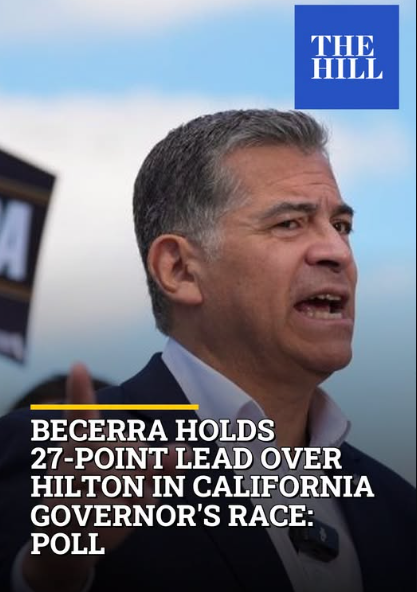 Bercerra comes with some baggage, but at least he’s not endorsed by Trump.
The bulk of California’s population lives on or near the Pacific Coast, and consists of affluent and well-educated people who want to see Trump removed, convicted, and incarcerated. Yes, the inland folks are largely farmers, but their numbers are far too small to elect a Republican in the GOP of today, with this corruption, ignorance, racism, and cruelty.


-
Climate Change1 year ago
Guest post: Why China is still building new coal – and when it might stop
-

 Greenhouse Gases2 years ago
嘉宾来稿:满足中国增长的用电需求 光伏加储能“比新建煤电更实惠”
-
Greenhouse Gases1 year ago
Guest post: Why China is still building new coal – and when it might stop
-

 Climate Change2 years ago
嘉宾来稿:满足中国增长的用电需求 光伏加储能“比新建煤电更实惠”
-

 Renewable Energy12 months ago
Sending Progressive Philanthropist George Soros to Prison?
-
Climate Change2 years ago
Bill Discounting Climate Change in Florida’s Energy Policy Awaits DeSantis’ Approval
-
Greenhouse Gases1 year ago
嘉宾来稿:探究火山喷发如何影响气候预测
-

 Climate Change2 years ago
Analysis: China’s CO2 falls 1% in Q2 2024 in first quarterly drop since Covid-19