


The Integrity Council for the Voluntary Carbon Market (ICVCM) has officially endorsed five carbon credit methodologies: three for biochar and two for Improved Forest Management (IFM) as meeting its Core Carbon Principles (CCPs). One additional IFM methodology received conditional approval, pending adjustments.
This decision marks a significant milestone for Verra and other carbon market stakeholders, signaling stronger quality assurance for nature-based climate solutions.
ICVCM: Setting a High Bar for Carbon Credit Quality
The ICVCM is an independent, non-profit body dedicated to ensuring voluntary carbon markets deliver credible climate action. Its CCP label acts as a global benchmark for high-quality carbon credits.
To earn this label, a methodology must meet strict criteria outlined in the ICVCM’s Assessment Framework, which defines what “high quality” means in practice. The CCP label provides buyers with a simple, trustworthy way to identify credits with real climate impact.
Biochar Methodologies Approved
The ICVCM has given its CCP stamp to the following three biochar methods:
- CAR – U.S. and Canada Biochar (Version 1.0)
- Isometric Biochar Production and Storage (Version 1.0)
- Verra VM0044 Biochar Utilization in Soil and Non-Soil Applications (Version 1.2)
What is biochar?
Biochar is a carbon-rich material created by heating biomass—such as crop residues or wood—under low-oxygen conditions through a process called pyrolysis. This method locks carbon into a stable form, preventing it from decaying and releasing greenhouse gases.
When added to soil or used in other applications, biochar stores carbon for hundreds or even thousands of years. Beyond its climate benefits, biochar can improve soil health and crop yields.
Rising Market Demand
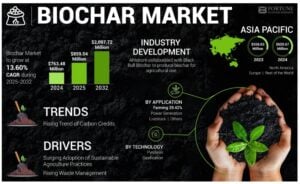
Biochar has become one of the fastest-growing sectors in the voluntary carbon market. According to MSCI, demand for biochar carbon credits has doubled every year for the past two years.
All three newly approved biochar methods are fresh to the market, with no credits issued yet.
- Under the Isometric methodology, 25 projects are registered, expected to produce 500,000 credits in 2026.
- For Verra’s VM0044, three projects are registered, forecasted to deliver 249,000 credits annually.
Annette Nazareth, Chair of the ICVCM, noted,
“Biochar is a rapidly growing segment of the carbon market and the approvals announced today underscore the credibility of this emerging climate solution. We look forward to seeing more projects developed under these newly approved methodologies, adding to the pool of high integrity credits that will soon be available to buyers.”
IFM Methodologies Approved
Improved Forest Management projects focus on better forestry practices that increase carbon storage and cut emissions. Strategies include:
- Extending harvest rotation periods
- Setting aside conservation zones
- Using reduced-impact logging techniques to limit forest and soil damage
Currently, IFM projects make up around 4% of the voluntary carbon market. The two IFM methods are:
- Verra VM0045 Improved Forest Management Using Dynamic Matched Baselines from National Forest Inventories (Version 1.2)
- ACR – IFM on Non-Federal U.S. Forestlands (Version 2.1), with specific leakage deduction requirements
Verra’s New Approach to Forest Carbon Accounting
Verra’s VM0045 is a new methodology that shifts from traditional, static models to dynamic baselines built on continuously updated national forest inventory data. This provides a more accurate and transparent measure of a project’s carbon impact.
No credits have yet been issued under VM0045, but two projects are in validation, with expectations to issue 258,000 credits annually.
Mandy Rambharos, CEO of Verra, said,
“The ICVCM’s approval of these methodologies is a defining milestone for nature-based solutions and the carbon markets, ensuring carbon credits deliver real, measurable, and lasting climate impact. Whether it’s transforming waste biomass into carbon-storing biochar or helping forests thrive through smarter management, these methodologies are about real-world action for real-world impact. This decision is a powerful endorsement of high-integrity climate solutions that not only reduce emissions but also bring tangible benefits to communities and ecosystems around the world.”
ACR’s IFM Methodology with Leakage Deductions
The ACR IFM on Non-Federal U.S. Forestlands (Version 2.1) includes rules to address leakage—the risk that reduced timber harvesting in one area causes increased harvesting elsewhere.
Projects that lower total wood product output compared to the baseline must apply a 10–20% leakage deduction, based on standard IFM practices. This ensures unintended emissions outside the project area do not offset climate benefits.
Version 2.1 has 18 listed projects covering nearly 500,000 acres, but no credits have been issued yet. The ICVCM is still reviewing Version 2.0, with a decision expected in September.
Conditional Approval: CAR Mexico Forest Protocol
The CAR Mexico Forest Protocol (Version 3) received provisional approval, contingent on two changes:
- Leakage Accounting Update – CAR must revise its leakage values to align with the latest research.
- Permanence Requirement – A minimum 40-year permanence commitment must be in place while tonne-year accounting is assessed in the context of common Mexican forestry practices.
The methodology has already issued 8.1 million credits, but it’s unclear how many will qualify for CCP labeling after these changes.
Why These Approvals Matter
The ICVCM’s endorsements send a strong signal to carbon credit buyers and developers. Projects certified under CCP-approved methodologies are seen as scientifically sound, environmentally robust, and market-ready.
For biochar, the approvals come at a time when demand is skyrocketing, positioning it as a credible long-term carbon removal tool. For IFM, the focus on accurate baselines and leakage control enhances trust in forest-based credits—an area that has sometimes been criticized for overestimating climate benefits.
These decisions also raise the bar for transparency and accountability in the voluntary carbon market, encouraging other methodologies to adopt stricter, evidence-based practices.
With the newly approved methods, developers can move forward with confidence, knowing their projects meet the highest integrity standards. Buyers, in turn, can purchase credits backed by rigorous science and verified climate benefits.
The post ICVCM Backs Verra’s Biochar and IFM Methods as High-Integrity Climate Solutions appeared first on Carbon Credits.

The accounting differences that decide whether your nature investment shows up in inventory, in BVCM, or nowhere at all.
The question reaches a procurement team about three weeks before the next sustainability committee meeting. Someone has read about insetting. Someone else has just signed off on an offset purchase. The CSO wants to know if the two are interchangeable. The answer is no, and the GHG Protocol Land Sector and Removals Standard is the reason why.
This article walks through what each term means at audit-grade specificity, what the standards actually say about how each gets counted, and how to decide which tool fits which target. The insetting vs offsetting question is one of the most-searched in corporate climate strategy, and one of the most poorly answered. By the end of this piece, you should be able to brief a committee on the difference without notes.
The two definitions, in plain English
Offsetting means buying carbon credits generated outside your value chain and retiring them against your residual emissions. The reduction happens somewhere else, financed by you, and the credit is the receipt.
Insetting means investing in emission reductions or removals inside your own value chain, typically with suppliers, where the reduction is directly linked to the products and services you buy. The reduction happens inside the boundary of your Scope 3 inventory, and the accounting treatment is fundamentally different.
The shorthand from the University of Oxford’s Nature-based Insetting Initiative is useful: insetting is what you do with the supply chain you have; offsetting is what you do with the supply chain you do not have.
What the GHG Protocol Land Sector Standard actually says
The GHG Protocol Land Sector and Removals Standard, finalised in 2024 after a multi-year pilot, sets the rules for how land-based emission reductions and removals enter corporate inventories. The Standard distinguishes between inventory accounting (Scope 1, 2, and 3) and project or intervention accounting (a separate methodology for crediting).
For insetting, the practical implication is that supplier-level interventions, when properly measured and attributed, can reduce your Scope 3 category 1 (purchased goods and services) emissions in your inventory. The reduction is not a credit retired against the inventory; it is a lower inventory number, period.
For offsetting, the credit is retired separately. It can be reported as a contribution toward a net-zero claim under the SBTi Beyond Value Chain Mitigation framework or as part of a VCMI Carbon Integrity claim, but it does not lower the inventory number.
A practical consequence: if your Science Based Target requires a 50% absolute reduction in Scope 3 emissions by 2030, insetting moves you toward the target. Offsetting does not. This single point of difference reshapes the procurement decision.
When insetting counts toward Scope 3 (and when it does not)
Insetting counts toward Scope 3 only when several conditions are met:
- The intervention must occur with an entity in your value chain.
- The emissions reduction or removal must be measured against a defensible baseline.
- The reduction must be attributed to your share of that supplier’s output, not double-counted with other buyers.
- It must follow the inventory accounting rules in the GHG Protocol Land Sector Standard, not the project accounting rules used to generate credits.
The most common failure mode is double counting. If your supplier sells the same reduction as a credit on the voluntary market and also reports it to you as a Scope 3 reduction, the math breaks. The Standard requires you to address this risk, typically by purchasing and retiring the supplier-issued credit as part of your inventory or by contractual provisions that prevent the supplier from selling the reduction twice.
When insetting does not count toward Scope 3: when the intervention sits with a supplier you do not buy from, when the baseline is not defensible, when the attribution is unclear, or when the documentation does not survive audit. Those cases default to Beyond Value Chain Mitigation, which is still useful but operates on a different ledger.
The procurement and supplier engagement question
Insetting is harder than offsetting. That is the unfashionable truth most buyers eventually confront. Offsetting is a transaction; insetting is a relationship.
To run an insetting program, you need supplier mapping precise enough to know which farms or facilities sit at which Scope 3 boundary. You need an engagement model that gets suppliers to participate, which usually requires multi-year commitments and shared economics. You need an MRV architecture that measures the right things and produces audit-ready documentation. And you need a contractual structure that prevents double counting and protects both sides.
The trade-off you receive in return is significant. Reductions count against your inventory rather than your residual. Supplier relationships deepen, which protects sourcing continuity. Yield and quality improvements often follow regenerative interventions, which reduces your input cost over time. And the regulatory file, under CSRD, CSDDD, EUDR, and the SBTi FLAG Guidance, is materially stronger.
Choosing the right tool for the right target
A practical decision rule. If your target is a science-based Scope 3 reduction and you operate in a FLAG sector or source FLAG commodities, insetting is the structurally correct tool. If your target is a net-zero claim that includes neutralising hard-to-abate residual emissions outside your value chain, BVCM via high-integrity offsets is the structurally correct tool. Most companies with material Scope 3 exposure need both, in different proportions, sequenced over time.
The sequencing matters. Insetting takes longer to stand up but produces a permanent reduction in the inventory. Offsetting can be transacted faster but does not change the inventory and now sits under tighter claim restrictions. Treat them as complementary tools with different jobs, not as substitutes. The Accountability Framework Initiative and the IUCN Global Standard for Nature-based Solutions both provide useful guardrails for the insetting side, with biodiversity, human rights, and benefit-sharing requirements that go beyond carbon math.
If you are mapping a Scope 3 reduction roadmap and need to scope which interventions count toward your inventory versus which sit in Beyond Value Chain Mitigation, the carbon and sustainability experts at Carbon Credit Capital can help you structure a nature-based supply chain investment program that fits your FLAG exposure, your target architecture, and your audit horizon. Schedule a consultation.
Net zero is often described as a balancing act: cut what you can, account for the rest, and reach zero on the ledger. That framing is useful, but it leaves something out. It treats every tonne of carbon as interchangeable and every route to zero as equally sound, while the science tells a more specific story.

Malawi has lost a striking share of its forests over the past three decades. Woodlands that once covered well over a third of the country now cover less than a quarter, and the pressure on what remains is increasing. Behind those figures sit two practical questions: what is driving the loss, and what reverses it?




-
Climate Change1 year ago
Guest post: Why China is still building new coal – and when it might stop
-
Greenhouse Gases1 year ago
Guest post: Why China is still building new coal – and when it might stop
-

 Greenhouse Gases2 years ago
嘉宾来稿:满足中国增长的用电需求 光伏加储能“比新建煤电更实惠”
-

 Climate Change2 years ago
嘉宾来稿:满足中国增长的用电需求 光伏加储能“比新建煤电更实惠”
-
Climate Change2 years ago
Bill Discounting Climate Change in Florida’s Energy Policy Awaits DeSantis’ Approval
-

 Renewable Energy10 months ago
Sending Progressive Philanthropist George Soros to Prison?
-
Greenhouse Gases1 year ago
嘉宾来稿:探究火山喷发如何影响气候预测
-

 Carbon Footprint2 years ago
US SEC’s Climate Disclosure Rules Spur Renewed Interest in Carbon Credits