

Fossil fuels and climate change are increasing electric bills for Georgia Power customers. The Georgia Public Service Commission is currently considering approval of Georgia Power’s plan for the future, called an Integrated Resource Plan or IRP. That plan will not protect customers from further bill increases driven by fossil fuels and climate change; in fact, the Georgia Power plan doubles down on fossil fuels that risk high bills directly and further drive climate change, which drives high bills through extreme weather events and storms.
You may have heard recent announcements from Georgia Power and the Public Service Commission (PSC) that they have negotiated a “base rate freeze” in exchange for not having a rate case “this year.” “This year” happens to be the first time two Georgia PSC commissioners are coming before the voters in five years. Georgia Power and the PSC make this sound like customers should expect their electricity bills to stop increasing. But that’s not the full picture. Georgia Power can increase bills in three ways over the next year:
- In a resource procurement docket later this year,
- In a docket to cover costs to recover from storms and extreme weather, and
- In a docket to recover fuel costs
Fuel Costs Drive Up Bills
Over the past few years, Georgia Power customer bills have increased significantly, with the largest single increase coming when Georgia Power had to adjust bills in reaction to high gas prices. Further increases will happen when Georgia Power adds storm costs and another fuel cost to bills.

Source: Southern Environmental Law Center, January 2025
Electric utilities, including Georgia Power, have passed all fuel costs directly to customers since the oil crisis of the 1970s. That means that if fuel prices go up, those additional costs do not impact the returns that Georgia Power shareholders receive; they only impact Georgia Power’s customer bills.
Georgia Power requests PSC approval for an update to the fuel cost portion of customer bills about every 3 years. If Georgia Power has under-recovered fuel costs to date, in other words, if Georgia Power paid more for fuel than it expected, it will ask the Commission to increase the fuel cost portion of customer bills.
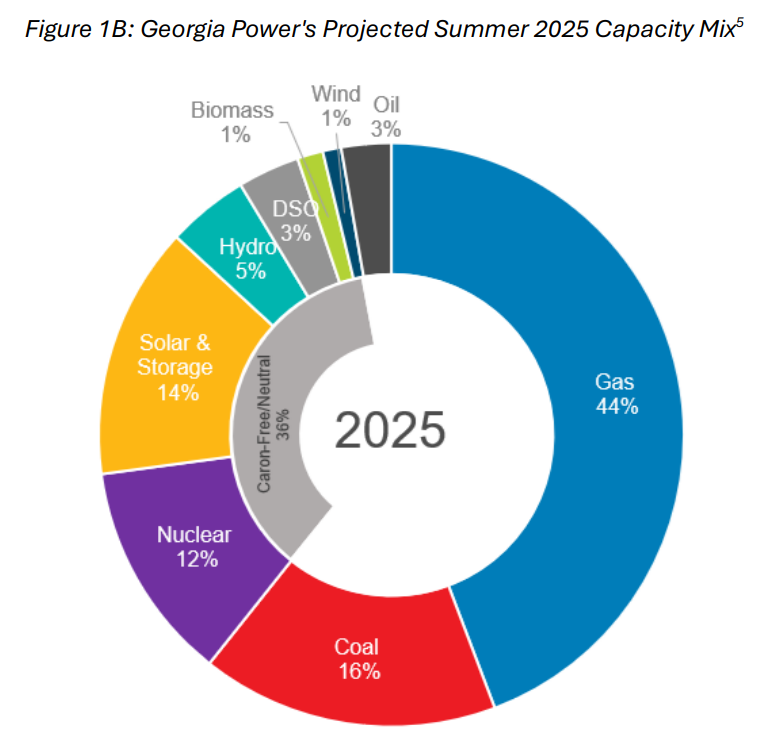
Georgia Power’s 2025 Capacity Mix by Fuel Type, Source: Georgia Power’s 2025 Integrated Resource Plan
Georgia Power has increased the share of its power that is generated by gas, which was its largest source of capacity in 2025. Georgia Power’s IRP proposed further increases in gas capacity, which will increase the risk of higher and higher customer bills as the price of gas fluctuates. “Natural” gas is a global commodity, and volatility in gas prices can be driven by any number of factors, as was seen when prices hit record volatility in the first quarter of 2022 and remained high that entire year in reaction to Russia’s invasion of Ukraine, among other issues.
It is basic common sense that if a system relies more on fuel-based resources, particularly resources with fuels that have volatile prices, the fuel costs that are passed on to customers will be higher and more volatile. Fuel cost is simple multiplication: the MWh generated by a fuel type multiplied by the price of fuel for that generator. Georgia Power can hedge and enter into various contracts for different fuels that can change the overall impact of the fuel cost on the margins, but the only way to reduce exposure to high and volatile bills is to reduce reliance on these fuels to supply electricity. Again, Georgia Power’s IRP proposes to do the opposite. It proposes to add 8,000-9,000 MW of new gas to meet load growth from data centers and manufacturing, while only adding 1,000 MW-4,000 of new renewable resources. This is despite the fact that renewables continue to be the least costly and are faster to deploy than gas.
“Renewable energy sources like wind and solar power are needed to meet rapidly growing energy demand in the United States amid near-term obstacles to increasing natural gas capacity,” NextEra CEO John Ketchum, June 10.
Climate Change Drives Up Bills
The second way that fossil fuels are driving up Georgians’ electricity bills is by further contributing to climate change.
The links between carbon dioxide emissions and a warming climate have been known for decades; yet, Georgia Power is proposing to continue to operate two large coal plants far into the future despite this knowledge and despite the other known pollution from coal power plants. Communities that live in the shadows of these coal plants deserve clean air and water.
Just as destructive but perhaps more insidious is electric utilities claiming to reduce emissions while building new methane gas power plants. It is true that the burning of methane, or “natural” gas, produces less carbon dioxide per MWh than coal. But it is also true that methane is leaked directly into the atmosphere throughout the process of drilling for, transporting, storing, and burning methane gas. And methane is a more potent greenhouse gas in the near term. In fact, the replacement of coal with gas to generate electricity is likely a major contributor to the fact that we are seeing worse and worse impacts of climate change every year.
I don’t need to remind anyone in the Southeast of the devastation we saw across the region, including in Georgia, from Hurricane Helene last year. That devastation led Georgia Power and other utilities to fix damage to their infrastructure to get the lights back on for their customers. This is an important role for the utility, but it can be expensive, particularly when storms are so destructive.
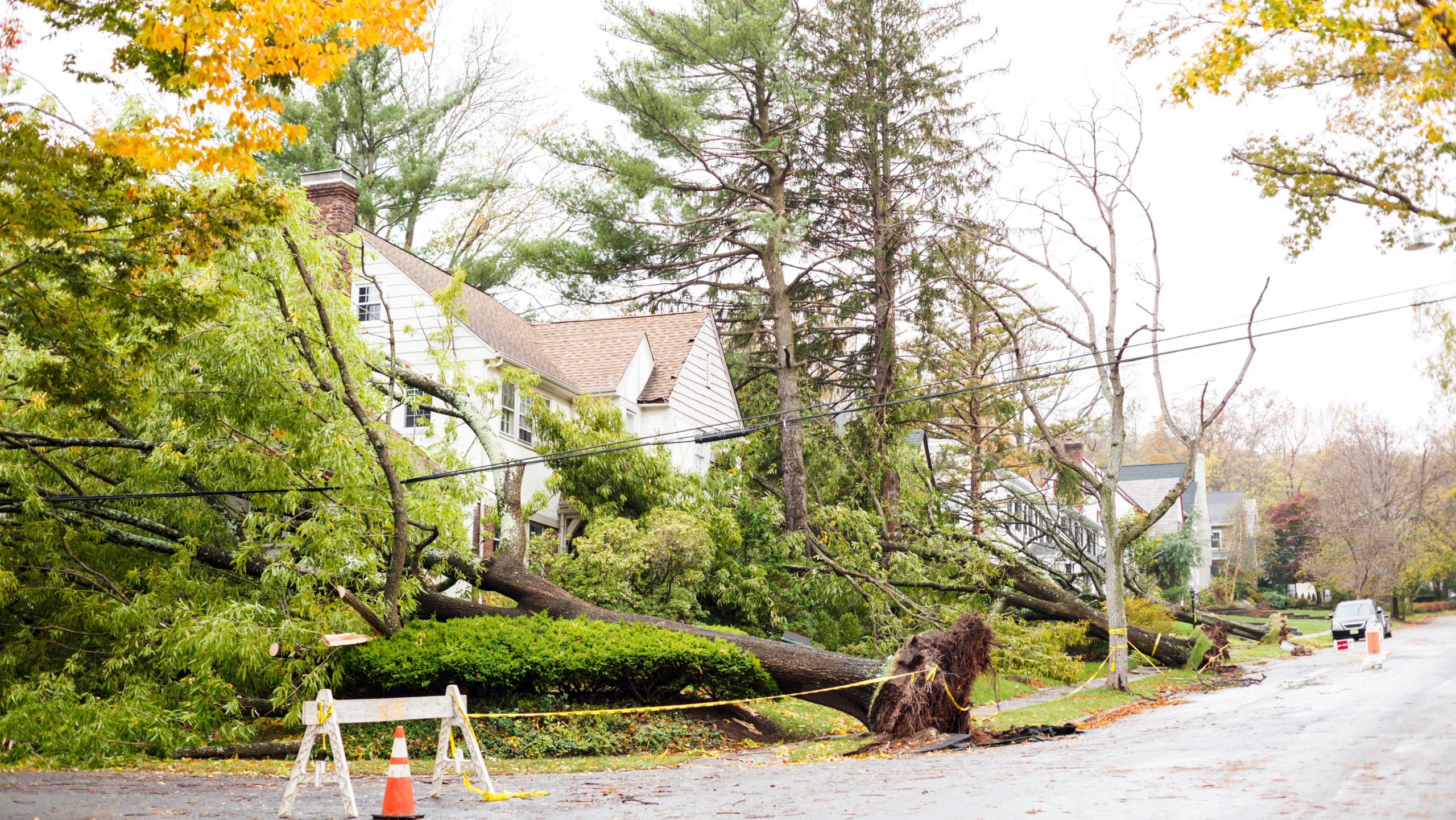
As part of its proposal to skip a rate case until 2028, Georgia Power proposes a separate process in the Spring of 2026 to get approval from the PSC to add a charge on customer bills for the costs associated with storms through the end of 2025. That includes a whopping $862 million as of March 31, 2025.
Going into 2025’s hurricane season with warmer-than-average ocean surface temperatures and cuts to NOAA and the weather service, that figure is expected to go up.
If you’re in a Hole, Stop Digging
If fossil fuels and climate change are already leading to high bills, adding more fossil fuels is not a solution. If you are in a hole and trying to get out, the first step is to stop digging yourself deeper into that hole.
If the Georgia Public Service Commission really wanted to protect customers from high and volatile bills, in the near and long-term future, it would direct Georgia Power to reduce, not increase, its use of fossil fuels.
The post Freezing Out Georgia Customers: Election Year Deal with Georgia Power Won’t Keep Electric Bills from Rising appeared first on SACE | Southern Alliance for Clean Energy.

Weather Guard Lightning Tech

Ørsted Finishes Drone Trial, Iberdrola Exits South Korea
Allen covers Ørsted’s Hornsea 2 drone trial, the DeepWind test site, Germany’s proposed land rent cap, and Iberdrola’s Korea exit.
The Uptime Wind Energy Podcast is brought to you by Weather Guard Lightning Tech, creators of the StrikeTape Ultra LPS retrofit. Subscribe to Uptime’s Substack newsletter. And check out Rosemary’s “Engineering with Rosie” Youtube channel. Have a question we can answer on the show? Email us!
 The vast majority of Americans have liberal views. We favor a woman’s right to choose abortion, high-quality public education, affordable healthcare, clear air and water, the use of science in policymaking, equal rights for minority ethnicities and religions, and efforts to trim the enormous gap between rich and poor.
It would be very interesting to know what percentage of U.S. voters believe that liberals hate America, that we believe our country “is fundamentally evil and the only remedy is destroying our nation with mass migration (sic).”
Trump’s approval rating is about 30%, and a few percent of that is the amoral super-rich. So, possibly it’s in the high 20s.
But aren’t there at least some MAGA folks who would concede that educated people don’t necessarily hate America? My mother lived on a steady diet of Fox News, but even she had respect for Bernie Sanders, about whom she said, “I admire his sincerity, misguided though it is.”
An Important Republican Position: The Left Really IS “Radical”–But Who Believes This?
 Whoa. Let’s take a step back. Is it really either A or B?
You could on the side of the morons, those incapable of any level of critical thinking, like the author of the meme here.



-
Climate Change1 year ago
Guest post: Why China is still building new coal – and when it might stop
-

 Greenhouse Gases2 years ago
嘉宾来稿:满足中国增长的用电需求 光伏加储能“比新建煤电更实惠”
-
Greenhouse Gases1 year ago
Guest post: Why China is still building new coal – and when it might stop
-

 Climate Change2 years ago
嘉宾来稿:满足中国增长的用电需求 光伏加储能“比新建煤电更实惠”
-

 Renewable Energy12 months ago
Sending Progressive Philanthropist George Soros to Prison?
-
Climate Change2 years ago
Bill Discounting Climate Change in Florida’s Energy Policy Awaits DeSantis’ Approval
-
Greenhouse Gases1 year ago
嘉宾来稿:探究火山喷发如何影响气候预测
-

 Climate Change2 years ago
Analysis: China’s CO2 falls 1% in Q2 2024 in first quarterly drop since Covid-19