

Weather Guard Lightning Tech

Exclusive Wind Industry Insights with PES Wind’s Stefann Perrigot
This week, we’re re-running one of our favorite interviews with Stefann Perrigot, director at PES Wind Magazine. Perfect timing, seeing that the magazine’s latest edition features Allen’s article! Stefann gives an inside look at PES Wind’s dedication to exclusive industry articles, thoughtful debates on issues like blade upkeep and VR safety training, and an editorial process focused on insight and integrity. Be sure to read the latest edition by visiting peswind.com!
Sign up now for Uptime Tech News, our weekly email update on all things wind technology. This episode is sponsored by Weather Guard Lightning Tech. Learn more about Weather Guard’s StrikeTape Wind Turbine LPS retrofit. Follow the show on Facebook, YouTube, Twitter, Linkedin and visit Weather Guard on the web. And subscribe to Rosemary Barnes’ YouTube channel here. Have a question we can answer on the show? Email us!
Pardalote Consulting – https://www.pardaloteconsulting.com
Weather Guard Lightning Tech – www.weatherguardwind.com
Intelstor – https://www.intelstor.com
Allen Hall: Welcome back, I’m Allen Hall. This is the Uptime Wind Energy podcast. As you’re listening to this episode, Joel Saxum and I are on an airplane to Amsterdam, hopefully. And we are going to be at Blades Europe Forum, which is a massive event talking all about wind turbine blades. And we hope to see a number of people that have been on the podcast at that conference and we’re gonna hopefully meet a bunch of new people there too.
This week for the podcast we’re going to highlight one of the interviews from earlier this year and it’s with Stefann Perrigot, director of PES Wind. And the latest issue of PES Wind just came out, and if you don’t have your copy, you can get a free copy online at peswind.com. And the cover story on PES Wind for this issue is about lightning. It’s written by yours, truly. So this is a really good episode. It’s a good interview with Stefann Perrigot, but if you haven’t downloaded that PES Wind, go ahead and get that done because the, there’s a, I’ve seen advance of some of the articles that are inside that. It’s a really good, really good issue of that magazine and it includes a story about lightning from yours, truly. So here again is Stefann Perrigot, Director of PES Wind.
Allen Hall: I am Allen Hall, president of Weather Guard Lightning Tech, and today’s special guest is Stefann Perrigot director at PES Wind and PES Wind is a website that provides news and information about the wind energy industry. It is part of the Power and Energy Solutions network, which also includes websites dedicated to solar energy, energy storage, and other renewable energy technologies.
PES Wind’s, website features, articles about new wind projects, technology developments, and industry trends. In addition to its website, PES Wind also publishes a quarterly magazine, which is beautiful. The magazine features in-depth articles about wind energy topics, as well as interviews with industry experts.
If not familiar with PES Wind, you should be. So, Stefann, welcome to the program.
Stefann Perrigot: Appreciate being here. It’s been a long time coming. Yes, it has actually. And I’ve been asked a few times by a number of my clients on the, you know, especially at the recent global offshore wind on the, on the floor itself to say, you know, when are you getting on?
So Unfortunately, I wasn’t able to do it at the show itself, but you know, here I am now and it’s a pleasure to be here.
Allen Hall: Just a couple of touch points here where we get started. I think when you read PES Wind, you realize, wow, this is, this magazine is brilliant, right? There’s a, a lot of good information in every magazine Plus has beautiful photos.
The magazine itself looks exquisite. How long have you guys been at this making this magazine?
Stefann Perrigot: So a bit about us. You know, we’ve been going sort of nearly 20 years now, but it used to be a renewable energy publication. And then we soon realized that we needed to essentially split it into a pure wind publication and a pure solar publication.
So we did that. And then ever since then, it’s just sort of grown in terms of the, the, you know, the content, the quality, and we’re refining it all the time. So it’s just been getting better and better and, and, you know, and the sort of type of companies we work with. And the type of you know, interviews and people that we’re working with is getting stronger, which is increasing, you know, the value of the content.
And yeah, so for that we’re really, really pleased.
Allen Hall: Yeah, your magazine does not include press releases, which I think is very fascinating because a lot of information you get in regards to wind energy or just press releases.
Stefann Perrigot: I mean, that’s a, you know, for us, a a, you know, a conscious decision, we, we, you know, we’re happy to put press releases on our website.
We just believe a press release is, is for that, you know, if we’re going online for immediate release to be read and digested, you know, whether that’s on an email campaign, or just on, you know, online. But for us, The print version, it has to be exclusive to us. So we’re trying to keep the editorial integrity extremely high.
It can’t be seen anywhere else before it’s seen within our publication. Obviously, you know, after that you know, people can read it, share it on LinkedIn or, you know, via any other platform they want. But until it’s. Gone out with us, then, you know that that’s kind of where we’re at.
Allen Hall: Well, and the thing about PES Wind is that it’s written by industry experts.
All the articles are from people in the industry who are very knowledgeable about the subject of which they’re writing about. Absolutely. You are, you are one of them. I, I am one of them. Actually, just full disclosure, I’ve written a couple of articles and I have been through the editorial process that that PES Wind puts everybody through.
The quality of content is only there because of the editing that happens behind the scenes, which no one sees except for the people writing the articles. It’s, it’s a tremendous amount of work that goes in the, the, the standards are extremely high. It’s like writing a college level paper as, because your editing staff is magnificent, by the way.
Stefann Perrigot: So for us, that’s what we pride ourselves on. You know, we, we, we not only feel we have. The best looking publication in the market. We, we know, we spend a lot of money on the look and the feel of the publication. But that is, you know, none of that really matters until you know, you, you actually get into the content and the content is key.
We really pride ourselves on editor integrity. Again, like we said about press releases, it’s not just a case of putting anything you want in there. You have to, you know, submit the editorial, for instance. But then it does go through an editorial process and sometimes editorials can be rejected or, you know, sent back with some pointers.
Something we, we, we do quite strongly is to point out where I. Where things can be improved or suggestions on topics. And especially for, for, for us, we know what works through our vehicles. So we know what works well for p a s. We know what works in the print magazine. We know what works well on LinkedIn.
You know, for, for instance, in terms of traction. So we’re trying to just do a, a, you know, a, a combination of keeping it very, it’s very slick, very strong. And most importantly, we want people to want to read it. You know, that’s, that’s what it’s all about.
Allen Hall: I, I wanna read every time I get it, first of all, it, it comes from the Royal Mail, so I always have special mail coming in, so I, I know it’s something special, and then when you open, you’re like, wow, this, this looks great.
It’s always a a little surprise to see it and to thumb through it immediately to, to see all the content that’s in it. There’s a lot of. Steep content. This is not shallow stuff. You, if you’re interested in wind energy, this is a, a magazine to read because it explains what’s going on behind the scenes a little bit.
And that’s, that, that, that is eyeopening, because otherwise you wouldn’t understand some of the reasoning and rationale for what is happening in the industry.
Stefann Perrigot: We’re, we’re trying to keep things as fresh and as topical. Topical and as up to date as possible. So you know, people ask us about an editorial calendar and we just say we don’t have a strict editorial calendar, purely because we don’t know what’s gonna be happening in the market in a month’s time, let alone six months.
So, We try to be reactive to the market. We try to see what’s going on. So a lot of the independent articles can be from associations or projects that are taking place, but right up to date. And that also goes on to to, to the clients that we’re working with. You know, the projects are probably just right up to date.
So the technology or, or, you know if it’s in a product, You know, we can say what’s happening right now. And then that, again, that keeps it interesting for the reader.
Allen Hall: Oh, it, it really does. And how many eyeballs, how many people are reading this every quarter?
Stefann Perrigot: For the print version, we’ve got 26,000 copies.
We have currently, I’ve just, just on LinkedIn, so. We do a combination. So obviously we’ve got the, the print publication, which we, we send out, we then send out a full digital version of the publication, and our e circulation is just over 35,000. So the print magazine would go out, then the digital magazine goes out.
And currently, just literally today on our LinkedIn PSS Wind LinkedIn page, it’s got. 2 million post impressions in the last 30 days. So, wow. You know, we’re really proud of that, especially because we only started the, the PSS win page around five months ago now, and that, that was a conversation with yourself.
And I’d spoken to a, you know, a few others who were asking me, how come, you know, how come you don’t have it? And the reason for that at the time, and it’s still true to, to, to this day, is because. I like to share the, the articles myself. It comes, it gets the, a more personal approach to sharing, sharing the articles and the people that have the exclusive articles within the publication see the benefit of that because the, the, the amount of views and the amount of likes and the comments are, you know, are far greater.
Went through myself. As opposed to sharing on the PS page. But the PS win page is there also for, you know, content videos and also sharing the full, you know, the full publication, which the last full publication that we shared as a P D F on that page had, has now over 70,000 views. So, you know, we’re really pleased with that though.
Allen Hall: There obviously is a huge demand for. Wind knowledge and wind insight. Yeah. That, that speaks to that.
Stefann Perrigot: It’s not just us, you know, there are plenty of, you know, there are plenty of other companies out there yourselves doing a podcast, which I think is fantastic. I wanted to use the the, the, the slogan that we want to be, you know, the voice of wind energy.
But I think you’ve probably taken that by now. So, I’ll let you have that, but, you know, but that’s, that’s, that’s what we, you know, we, we really do wanna be the, you know, the voice of, of of wind, you know, wind energy and, and what’s going on right now. And we want to, you know, we wanna share that, share it with, with people on your, you know, your listeners, but also people On LinkedIn, you know, where people are, you know, hanging about now through, through work and, and looking for, for, for the right type of information.
And that can only add value to, to us as a company, but more importantly to, to the people that we’re
Allen Hall: working with. And you see things before the rest of the industry does because they have to submit articles to you before things go out to the rest of the world. What are, what are some of the more intriguing things we should be looking forward to over the next couple of months?
Stefann Perrigot: Blade maintenance and blade integrity seems to be really key and topical right now. And obviously the use of robots, the use of technology is, is really speeding up and. Five, well, more than five years ago, it was, you know, drone drones were sort of the, the new thing now that’s sort of been surpassed by you know, you’ve got companies like, you know, blade Bug that you know well with using their robots arrows that, you know, with their type of robots.
But something we had, we featured in the last magazine, which I think will be big, is the VR virtual reality, you know, with the headsets for, for safety. We worked with a company called Synergy xr. They’re a, they’re a Danish company. When I, when I go to the shows and the events, now everybody’s got the headsets on, so from, from just demon demonstrations of their own products.
But for me, you know, the safety aspect is, is where I see the, the, the, you know, the sort of the, the big push because people can, you know, rather than going offshore to learn that they can do it virtually. And all the safety aspects are, are sort of taken away. You could learn before going out and actually, you know, harming yourself.
Allen Hall: Well, and I, I think, you know, we discussed earlier in, in going to shows and there’s a lot of shows in different parts of the world. You’ve really focus on four and I thought that was really fascinating because I’ve been to probably half of the shows you mentioned and, and. It’s a totally different vibe.
There are some shows that have a, a lot of people, and there’s just a buzz in the, in the hallways, and there are other shows that are interesting and they’re just glad to see everybody, but they’re just not the same. Which shows, what shows are PES Wind really invested in right now?
Stefann Perrigot: So for us, we, because like I said, we only produce the four publications per year.
So for, for the end of this year, we’ve got our September issue, which we’re, we’re putting together right now. And that’s a fair ahead of the Hussam Wind Energy event in Germany. And then the, our last issue is in November ahead of the offshore energy event in Amsterdam which has a big offshore wind focus as well.
But yeah, so generally they’re ahead of next year, it will be March ahead of the, the Wind Europe event in Bilbao. But we’ve also teamed up with the I P F in New Orleans. So that’s gonna be our first issue. And then June is always ahead of the global offshore wind, which is in the uk. Then September next year, which is our big one, which is ahead of Wind Energy, Hamburg, and then again November ahead of offshore energy.
But next year. The wind energy Hamburg one is for, for us. Well, I, I would say for the industry, not only the biggest show to be at, but everybody will be there, has the, you know, the biggest buzz and it’s great. And for us, we’re already making bookings for that issue now. So you know, it’s fortunate. Well, yeah, it’s good for us to, To sort of already look that far ahead.
And I’m sort of, I’m contacting clients already just to say, look, I know it’s early, but these are the dates. And because we’re, because we, you know, 30 sort of rang 30 to 35 companies tops. We, we sort of, you know, call it, that’s enough. So we, yeah, we, it’s not hard for us to fill the space.
Allen Hall: That is amazing.
I guess that all makes sense. And if you’re going to those shows, for sure. Those, and I think those are the shows to really show up to. And yeah, if, if one thing about PES Wind magazine, when we were in Copenhagen for the conference in Copenhagen, there are a lot of copies of PES Wind in the hallways and at the booze because everybody wants to, you know, they wanna see it, right?
They wanna see it, they wanna see what’s in it. They’re talking about what’s in it. It, it becomes part of that show, conference news piece that everybody wants to be a part of. Right. And yeah, if you’re, if you’re you know, a, a company that wants to get some eyeballs on your products, I. Where else are you gonna go besides PES Wind?
I think it makes total sense because you, and you do a good job of being at the shows and promoting the magazine too. You guys are hustling out there.
Stefann Perrigot: Yeah, and I think it’s the, for us at that point, it’s our sort of our, our, the hard work’s done. And it’s almost our time to sort of go out, meet the clients, meet potential new clients.
But, you know, we, I sort of we’re quite happy then because, you know, the, the, the magazine’s done, the magazine’s at the show. And it’s time for us Yeah. To promote it. We want people to see it. We want people to be engaged. We want people to read it. And ultimately, you know, we like the feedback. You know, was it a good issue?
Are there things we can do better? And, you know, I’ve spoken in the past to many times, you know, we’re, we’re experts at, well we’re, we’re pretty good at what we do, but we don’t say we know everything and we’re happy to, to listen to ideas, listen to feedback. Could you do this? You know, can you try this? You know, and, and even down to you know, promote different things on LinkedIn, different ideas.
You know, we’re, we’re, we’re open to ideas and just to see what can we do next? What can we help you know, help our clients do. Yeah.
Allen Hall: And the LinkedIn piece is really fascinating to me. Be we are on LinkedIn as a company and I think a lot of companies in wind are there. That is a real community that maybe five years ago did not really exist at this level.
It’s really grown substantially.
Stefann Perrigot: Yeah, and it has, and I, and I’m, I’m always amazed how some companies still haven’t embraced it enough. You know, I mean, I’ve had, I’ve had companies where I’ve shared their article. And they haven’t say, reshared it or commented on it or, or you know, and, and I sort of think you’re missing a trick.
’cause it’s, you know, it’s, it’s, you’ve done for, even for the client, they’ve done all the hard work already. They’ve invested in it time, money, effort, and they’ve got that piece now. And that’s what I say to, to our clients, just to say, here it is, share. I, I will share it on LinkedIn, but feel free to, you know, to share it and spread it and get that message out there because that’s, that’s key.
That’s what they, that’s what they’ve. Invested in us for, and now you’ve got that piece and you know, let it out. I say
Allen Hall: Right, let people see it. I, I, I agree with you. There it, it, that is a little odd. I know. I, we’ve seen the same thing from some other companies and I always wonder like, why you have a great product.
You just get, make more noise. And if you’re in PES Wind, you’re making a tremendous amount of noise, then amplify it. Right. Use LinkedIn to amplify it.
Stefann Perrigot: Because of the amount of time and effort, like we say, and the, and the quality of the publication, we’re now finding more and more. Companies want to be associated with the brand as well.
So it’s kind of, if we’re associated with that, it just, it means we’re, we’re also of that level, you know? And it, it just means, oh, oh, we’re in that PSS magazine. It just, it, you know, there’s that. Nice link between quality and quality, and that’s what we, you know, that’s what we try to say to people and that that’s from startup companies all the way up to companies, you know, with a hundred thousand employees.
There is no difference in the process with us. We don’t, we treat every single company with the exact same approach. Whether, you know, a one man band or a hundred thousand in their company, it doesn’t make a difference. You know, we, we will give everyone the same amount of time, the same amount of expertise we wanna do a great job for, for, for each client.
Because again, if we do a good job, they’re happy, they’ll come back to us, even, you know, whether it’s straight away or again. And also they’ll tell people so that’s what, you know, that’s what we strive to do.
Allen Hall: Exactly. Well, and what is the process? If I’m a company and I, I want to have a, an editorial or an article, I.
About my whizzbang product and I need to get the, I need to get the information out to the world. How does that process start? Like, can you just walk us through what that looks like?
Stefann Perrigot: Yeah, absolutely. I mean, generally it’s companies I’ve, I’ve approached and sometimes we, I’ve, I’ve had a company today email just say, you know, I’ve, I’ve actually picked up the, the PS WIN magazine at the Global Offshore Wind event.
And, you know, how, how do I get in, what, what do I need to do? So I. It’s a case of Yeah. You know, so they’ll, they’ll, they’ll, they’ll come to us direct or, you know, we’ll, we’ll, we’ll approach companies if there’s certain topics we really want to cover. And then it’s just a case of saying, okay, what type of package do you want?
You know, we, we, we try to offer everybody what we would call our premium sponsorship package, which is obviously inclusion in the print magazine. The, the editorial in print online, so on the digital magazine as well as all the, you know, all the, the LinkedIn promotion. And it just gives an overall, Feel for what we do to generate the best results for, for them as a, you know, as a, as a client.
’cause it’s, like I say, essentially, we, we wanna do a good job. We want people to, to recognize it, to read it, to give them feedback because then again, they’ll come back to us. And like, you know, we talk about LinkedIn and I’ve spoken to you about your own article. You, you know, we post it twice. And you know, I said to you the first time I posted it, it had over 10,000 views.
I posted it again last week or, or this week and it’s now over 14,000 on the second time. So just, and that’s just me and I, I noticed. Because I took note it got reposted 10 times this time and 10 times last time. So when you think it’s 24,000 views, just me. But all of those people reposting it.
It’s just, you know, it’s generating even more. And that’s like, you know, you understand when I was saying about. LinkedIn and reposting and just getting out there. That’s, that’s good for you. It’s good for us. You know, and that’s, that’s what we’re trying to do.
Allen Hall: Oh yeah. It’s good for everybody. And if, I think one of the maybe little scary parts, if you go down the PES Wind pathway is that you, you have to write an article, right?
You have to spend a couple of hours, maybe a couple of days. Writing a piece and, and that’s the scary part for most people, right? But when you get to the editorial staff on PES Wind, they’re super helpful. Like you, you know what works and what doesn’t work and, and how to phrase things and how, what the approach is.
You, you walk people through that process. So it’s not, it’s not overwhelming.
Stefann Perrigot: Now, and we’re here to like, you know, we can do as little or, or, or, you know, some companies will supply us with a fantastic article that, that’s very well written, doesn’t need much editing, and it’s thought provoking and, you know, it’s, it’s a, it, it still goes through the, the, the process of going through the editorial board in terms of is it quality?
Does it meet our, you know, our standards? Will it, you know, will it be good for them? You know, give the value give the, the publication value. And then other companies say to us, okay, look, Pretty much we’re, we don’t really know what to do. What’s the, what’s the approach? And then we can lead them all the way through it with our editors can, you know, write a piece for them or we can give them guidance and interview.
We can obviously do interviews as well, which work very, very well. The interviews are fantastic. I’d personally like to, I would always say to a company, work with us in two issues in the year. And then always have an interview, and then separately an article. The interviews work very, very good because they put, you know, generally put a face to the name of the company and it’s quite nice for people to like yourself if you’re at an event.
Everybody knows you, so it’s okay. Oh, there, there’s Allen. He’s in, you know, he’s in p Ss and it’s, it’s, it’s just a nice, nice approach. Or like I said, I had a, I had a an email today from Covestro the material company. So they were asking us about getting involved in the September issue, you know, What are your thoughts?
And I, you know, I, they, they gave me what they thought would, would be their thoughts on, on an article. And I said, look, that, I think that would be perfect. But again, if you can make it controversial, if you can make it thought provoking, you know, if you can, it, it’s about generating debate or generating, generating a, you know, some sort of talk.
So some companies might say, well, I don’t like that. Well, I don’t think that’s the right approach. Okay, well, tell me why. And then it’s good for you. Good for them.
Allen Hall: Yeah, I, I do think there needs to be some pushback in wind and some new ideas in the wind industry. We’re seeing obviously, some problems that are large scale problems that are happening.
And one way to get over those problems is to be a little bit pro thoughtful, broken, and say, Hey, maybe there’s a different way to go about solving some of these problems. And I think PES Wind does a really good job of that, of, of making you think a little bit like, oh, I, I never. I thought about this as a way to, I, I’ll give you the ly, right?
So LY detects birds in a very unique way, and it slows down wind turbines that are in the bird’s path. Not all the wind turbines, just the ones in the pathway. Like, oh, that’s a really unique way of trying to solve that problem. Crazy, isn’t it? Oh yeah, it’s insane. Rosemary Barnes, right? Our co-host on the Uptime podcast walked us through how well that system works.
So I read about, in PES Wind, I learned a lot about it and I then I talked to Rosemary, it’s my backup. She goes, oh yeah, that system is magnificent in terms of keeping power losses to a minimum and saving a whole bunch of birds. I would never have known that without PES Wind.
Stefann Perrigot: And again, that’s what we’re trying to do.
You know, we’re trying to get the, there, there, there will be companies that haven’t. You hadn’t, haven’t heard of or hadn’t heard of their technology. And again, other companies, you might just know the brand, so you don’t really know what they’re doing. And again, in, in the publication we we’re, we’re really trying to educate the market, you know, so educate them on what, not only the technology, but the uses, the needs, you know, and, and identifying a problem, but here’s the solution to go with it.
So, Again, it works very, very well.
Allen Hall: So how long does it usually take for an article once it gets into you? So I write an article, I’m sitting here in Massachusetts. I’m writing this controversial article about lightning protection of wind turbine blades. I send it over to the uk. I. And then how long does that process take?
Just just walk everybody through how long it takes to get it back and get it released.
Stefann Perrigot: Generally a few. It can be, you know, a week to two weeks because we, we want to obviously get a chance to there. There’s, ’cause it goes through a few processes in terms of not just one editor will have a look at it.
There’ll be an editor that will. We’ll look at it from you know, technical standpoint. There’ll be an editor just in terms of, you know, the actual language. Because obviously we’re dealing with a lot of foreign foreign companies as well. So we’ve got specialists that can deal with, you know, the language side of things and then technical side of things.
So it goes through a few processes and then obviously we, we would get it designed so, and then sent back to the client as if it would look in the magazine. And then again, they have, they still have time to say, Like it, or, you know, or can we change this and move that? So it’s, again, it’s very flexible and ultimately we’re wanting to get the best for the client within the publication as long as it falls within our guidelines.
Allen Hall: Yeah. So it really is a, a, it’s somewhat quick process. It isn’t like you submit it, then two months later you get an email like, yes, it has been accepted. It’s not like, A research paper, if everybody’s familiar with research papers.
Stefann Perrigot: The reason we did only do four per year is just to give the clients enough time in between each issue to actually spend the time to, to write it.
You know, we we’re not saying it’s January, so you’ve got a couple of weeks. ’cause then the February issue’s coming out, then the March issue. We want people to take their time. We want people to really think about what they’re writing and think about how they’re going to approach the reader. You know, it’s not just about saying, Hey, we’re, we’re this company and we’ve got the best at this, this, this.
It’s about, okay, what am I trying to, to to get across? And you know, something we, we speak about is the tone that we want, the tone of the, of the company to come through. But through our
Allen Hall: vehicle, you can read into who they are as a company. And I think that makes life a little bit easier. And if I, I’ve worked with many of the companies that show up in PES Wind and.
I know the flavor of the company before I even really engage with them because I’ve, I’ve read about them. Yeah. It’s magnificent. Well, Stefann, it’s been really good having you on the podcast. Stefann. How do companies reach out to you?
Stefann Perrigot: How do they connect with you? Send me an email. That’s the best way.
Reach out to me on LinkedIn. I have so many companies reaching out to me on LinkedIn now. And that’s, you know, that’s the best way.
Allen Hall: Yeah. And if, if you’re interested in reading PES Wind, just go on the web,
Stefann Perrigot: absolutely. www.peswind.com. Yeah, take a look. Have a look at the, you know, the digital versions and you know, if you want a print copy.
Send me an email. Sounds great.
Allen Hall: All right, Stefann, thank you so much for being on the podcast. I really appreciate you
Stefann Perrigot: joining us. I appreciate you having me. Thank you very much.
Exclusive Wind Industry Insights with PES Wind’s Stefann Perrigot

 It depends on what you believe.
Fox News will tell you that our southern border is no longer being overrun, that we’ve discovered that vaccinations are unsafe, that we’re standing up against Sharia Law, we’re preventing Iran from building a nuclear weapon, prices are coming down (or soon will be), Trump is an honest and effective servant of the American people and that the U.S. is once again respected on the world stage.
We live in a country where tens of millions of idiots believe every word of this.
Weather Guard Lightning Tech
Uptime’s Takeaways from Hamburg 2026
The crew discusses Hamburg takeaways, including the industry mood, bigger blade risks, and OEM announcements.
The Uptime Wind Energy Podcast is brought to you by Weather Guard Lightning Tech, creators of the StrikeTape Ultra LPS retrofit. Subscribe to Uptime’s Substack newsletter. And check out Rosemary’s “Engineering with Rosie” Youtube channel. Have a question we can answer on the show? Email us!
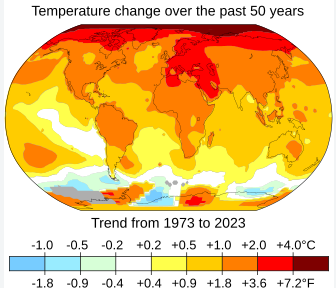 I met a guy today from a rural part of Central England–“nothing but farms and pubs,” as he put it. His father was an epidemiologist working for the United Nations, and so, as a boy, he lived all over the world and grew up largely in developing countries that suffered from horrific diseases.
He and his wife had the conversation one would expect from such people:
- Why are we so content to ignore climate change that is ruining our planet?
- Why are people so indifferent to the suffering of others?
- How is it possible that billionaires expect to live well here on Earth while 99.9% of us suffering with wildfires, devastating storms, blistering heat, losses of landmasses, and desertification?
- At the end of the day, is money really that precious?
Obviously, not everyone thinks this way, but to be in something of a “lovefest” for just a few minutes was a great relief.
relief.



-
Climate Change1 year ago
Guest post: Why China is still building new coal – and when it might stop
-

 Greenhouse Gases2 years ago
嘉宾来稿:满足中国增长的用电需求 光伏加储能“比新建煤电更实惠”
-
Greenhouse Gases1 year ago
Guest post: Why China is still building new coal – and when it might stop
-

 Climate Change2 years ago
嘉宾来稿:满足中国增长的用电需求 光伏加储能“比新建煤电更实惠”
-

 Renewable Energy11 months ago
Sending Progressive Philanthropist George Soros to Prison?
-
Climate Change2 years ago
Bill Discounting Climate Change in Florida’s Energy Policy Awaits DeSantis’ Approval
-
Greenhouse Gases1 year ago
嘉宾来稿:探究火山喷发如何影响气候预测
-

 Climate Change2 years ago
Analysis: China’s CO2 falls 1% in Q2 2024 in first quarterly drop since Covid-19