

The EU could be investing tens of billions of euros each year into activities that damage biodiversity, according to a new report from WWF.
With biodiversity declining at an unprecedented rate around the world, the EU intends to put nature on a “path to recovery” by 2030, in line with global goals.
Finance is a key part of this and the bloc has pledged to raise at least €20bn in nature funding each year by the end of the decade.
However, a new report estimates that EU countries could be spending between €34-48bn each year on projects that can end up damaging biodiversity in sectors such as agriculture, forestry and fisheries.
It is “pretty shocking” to see the potential scale of funding that EU countries are “pouring into harmful practices”, the lead author of the report tells Carbon Brief.
A policy expert, who was not involved in the report, says the findings may increase pressure on the EU to track its harmful subsidies, but criticised some of what the report counted as ‘“harmful”.
Tackling harmful subsidies
There is no standard definition for “biodiversity-harmful subsidies”, but, essentially, they are government incentives that supplement income or lower costs for certain activities that end up damaging biodiversity.
Agriculture, fishery and energy subsidies are most commonly termed “harmful”, but damage can also be caused by subsidies for other sectors, including forestry, infrastructure, transport, construction and water.
Subsidies that harm nature and the environment cost the world around $1.8tn each year, according to a 2022 report from two coalition industry groups – equivalent to the entire GDP of Canada.
There are a number of global goals in place to reduce these harmful subsidies.
The Kunming-Montreal Global Biodiversity Framework, the global deal for nature signed at the UN COP15 biodiversity summit in 2022, includes a target to cut biodiversity-harming incentives, including subsidies, by at least $500bn per year by 2030. The target also aims to identify such incentives by 2025, although the EU has so far not done so.
The new analysis finds that the EU is allocating between €34-48bn every year to subsidise activities that harm biodiversity. The table below shows the upper and lower estimates for each sector examined.
| Sector | Lower estimate of biodiversity harmful subsidies (€) | Upper estimate of biodiversity harmful subsidies (€) |
|---|---|---|
| Agriculture and forestry | 31.35bn | 32.57bn |
| Fisheries | 60m | 140m |
| Transport infrastructure | 1.69bn | 14.07bn |
| Water | 1.33bn | 2.09bn |
| Total | 34.43bn | 48.87bn |
This largest proportion of funding comes from the Common Agricultural Policy (CAP), the EU’s farming-subsidy programme, which accounts for almost one-third of the bloc’s total budget. (See “agricultural impact” below.)
The subsidies include funds that support “unsustainable” farming, land-use changes, river fragmentation and deforestation, according to the report. It adds that these activities can have knock-on effects on biodiversity, including habitat loss, ecosystem degradation and species extinction.
Prof Alan Matthews, a European agricultural policy expert at Trinity College Dublin, says the findings start a “good debate” about measuring these subsidies. He tells Carbon Brief:
“I see the report as contributing to the pressure on the EU…to actually come up with its own identification of what the subsidies are, so that they can begin then in the next few years to actually reduce them.”
Direct links
The study, conducted by the Netherlands-based economics consultancy Trinomics for WWF, looks at the biodiversity-harming elements of the EU’s long-term budget, the 2021-27 Multiannual Financial Framework.
It focuses on direct financing for the agricultural, forestry, fishery, transport and water sectors that may be damaging to biodiversity. This financing includes grants, loans and direct payments.
It does not look at indirect subsidies, such as tax breaks, or infrastructure investments that disproportionately benefit certain industries, such as tax reductions on fertilisers.
Tycho Vandermaesen, the policy and strategy director at WWF EU and lead author of the report, says there is an overlap between subsidies that damage biodiversity and those that exacerbate climate change, such as fossil fuel subsidies. But the climate impacts were not examined in the report. He says:
“We have taken a very conscious choice here to only look at biodiversity-harmful subsidies because this is one of the most under-highlighted environmentally harmful subsidies – in contrast to climate or fossil-fuel subsidies, which have by now been well researched.”
Matthews notes that the overall findings of the report are in line with previous research, but he criticises some parts of the methodology, such as including a very wide range of direct payments for farmers, as potentially harmful.
In response, Vandermaesen says the assumption on the harmful nature of direct payments for farmers is based on findings in existing studies.
On Monday, the EU Council approved a targeted review of the CAP to assess, among other things, plans to give farmers “greater flexibility” to comply with environmental terms for their direct payments.
The report is clear that there are uncertainties and a lack of up-to-date information on EU spending in some sectors. It says the findings are estimates and that more comprehensive analysis would be required to fully measure these subsidies.
Agricultural impact
Agriculture and forestry receive the most funding for biodiversity-damaging activities out of any sector examined in the report, as shown in the chart below.

The report notes that several EU funds “allocate money in a way that encourages large-scale unsustainable farming or forestry practices”.
These include direct farmer payments based on farm size, which can incentivise boosting industrial livestock numbers and expanding conventional crop production – “both of which harm the environment”, according to the report.
It estimates that around 60% of CAP funding – meaning more than €30bn each year – can be considered harmful to biodiversity.
The current CAP plan, which took effect in 2023 and will remain until 2027, included more environmental measures than previous iterations of the policy. But critics told Carbon Brief in 2021 that the plan was riddled with “loopholes” and unlikely to bring significant change to the sector.
Agriculture accounts for more than 10% of the EU’s greenhouse gas emissions. Globally, the sector is also a key driver of forest loss, causing 80% of deforestation as forest lands are cleared to make space for livestock, palm oil and soya beans.
Looking at other sectors, the report outlines that 5-12% of the European Maritime, Fisheries and Aquaculture Fund – a fishery funding programme – is put towards biodiversity-harmful subsidies.
This is up to 2.5 times higher than the money from this fund aiming to protect and restore biodiversity, the report says.
The report says it is “challenging” to accurately estimate the impact that building transport infrastructure can have on biodiversity, noting that it can fragment habitats and ecosystems. It estimates that the EU spends anywhere between €1.7bn and €14bn each year on roads, railways and other transport infrastructure that could be harmful to biodiversity.
Funds used for certain water infrastructure, such as flood control dams, could also harm biodiversity, the research notes.
Making changes
The report contains a number of recommendations to put an end to these subsidies, including implementing a legally binding framework to phase out biodiversity-harmful subsidies on both EU and national levels. It adds:
“Inclusiveness and social awareness need to be included in the phase-out of biodiversity-harmful subsidies to avoid regions or industries being left behind or struggling with the transition.”
Vandermaesen says that consulting with the impacted sectors and giving a clear pathway to diverting these subsidies is a “really important” step. He adds:
“We do not want to see a situation where, from one day to the next, these subsidies are basically stopped without the involvement of these communities.”
The report recommends diverting the funding instead for public investments to protect and restore ecosystems and to put in place “ambitious” national biodiversity plans ahead of the COP16 biodiversity summit, which is scheduled to be hosted by Colombia later this year.

WWF recently asked European political parties whether they would commit to redirecting fossil fuel and other environmentally harmful subsidies towards the “green transition”. All parties that responded expressed a readiness to redirect these subsidies, but the NGO says that “only a few have committed to enshrining this redirection into law”.
The subsidies report includes a number of case studies of nature-harming subsidies across Europe.
A forest recovery plan in France, financed partly by the EU, has had “adverse effects” on forests, the report outlines. Almost nine out of 10 projects financed by the plan in 2021 and 2022 involved clearcutting of trees, which can weaken ecosystems.
The report details another example in Bulgaria, where farmers were permitted to let animals graze in areas of the country’s national parks to help preserve open areas.
This led to “vegetation being trampled, water being polluted and wildlife being disturbed”, the report says. To mitigate these effects, park administrations requested €760,000 from the country’s EU-funded environment programme.
These examples “illustrate how complex it can be actually on the ground to deliver these positive results”, Matthews says, adding:
“In quite a number of the case studies, actually the subsidies were intended to be positive for biodiversity. But it seems that the way they were implemented…They had these sort of perverse outcomes.”


The post EU spending up to €48bn on nature-harming activities each year, report says appeared first on Carbon Brief.
EU spending up to €48bn on nature-harming activities each year, report says

SYDNEY, Wednesday 26 August 2026 — New 2026 Sustainability Reports released by supermarket giants Coles and Woolworths this week demonstrate the retailers are failing on their commitments to end deforestation in their supply chains.
Adele Chasson, Nature Policy Lead at Greenpeace Australia Pacific said:
“These so-called sustainability reports are revealing. Despite their public commitments in 2024 and 2025, neither Coles nor Woolworths have taken deforestation-linked beef off their shelves. Meanwhile, bulldozers continue to tear up forests and bushland, pushing wildlife closer to extinction and causing mass toxic runoff to flow into the Great Barrier Reef. Millions of native animals like koalas are losing their homes to beef pastures each year, while the big supermarkets put off action.
“Australians would be shocked to know that beef on the shelves of our biggest supermarkets could be pushing threatened species to the brink of extinction. Collectively Coles and Woolworths have made more than $2 billion in profits in the last year, profiting from the destruction of wildlife and precious Australian nature. Coles and Woolworths owe it to shoppers to deliver on their promises and end deforestation in their supply chains now.
“As big beef buyers, Coles and Woolworths have an essential role to play in keeping Australia’s unique forests standing. They can help stop the Great Barrier Reef from being poisoned by runoff and protect iconic forest wildlife by taking deforestation off their shelves. It’s time these big companies put their money where their mouths are and follow through on their promise of sourcing and supplying deforestation-free beef.”
New Zealand’s parliament has adopted a controversial new law blocking a whole avenue of climate litigation and shutting down its most advanced corporate lawsuit, which has been blamed by the government for shaking business confidence and investment.
The Climate Change Response (Tort Liability) Amendment Bill, expected to take effect in the coming days after it is formally signed by the Governor-General, prevents all current and future civil claims for climate loss or harm under tort law.
Justice minister Paul Goldsmith said last week that the aim was to give businesses “certainty around their climate change obligations”, noting it would not alter the government’s responsibilities under the Climate Change Response Act 2002 nor business obligations under the Emissions Trading Scheme.
“Our response to climate change is best managed by the Government at a national level and not through piece-meal litigation in the courts,” he added in a statement.
Such litigation, he said, “risks developing a new regime that contradicts the framework Parliament has already enacted” to tackle climate change.
South Africa’s top court blocks Shell’s offshore oil exploration right
Constitutional Court rules that Shell and its partners failed to consult affected communities and did not properly consider environmental risksPeruvian farmer loses climate case against RWE – but paves way for future action
Experts say that despite dismissing the lawsuit, the ruling sets a precedent by confirming that climate science can establish legal liability for the damage caused by emissions
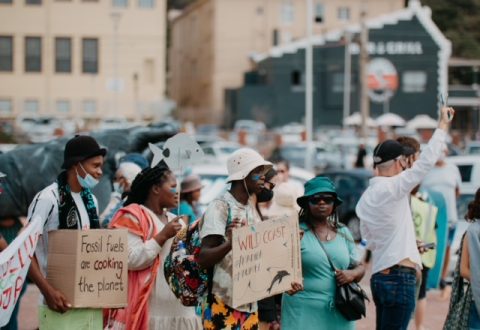

Goldsmith singled out a key domestic climate lawsuit brought by Northland iwi leader and activist Mike Smith against six big companies: dairy firms Fonterra and Dairy Holdings, energy firms Genesis Energy and Z Energy, New Zealand Steel and coal mining firm BT Mining. A seventh original defendant, Channel Infrastructure, was dropped after it permanently decommissioned its Marsden Point oil refinery.
Smith argued that these companies had caused him harm under public nuisance and negligence law, as well as a third breach of a duty to cease contributing to climate change that has yet to be tested domestically. He did not seek financial compensation, instead asking for the companies to immediately stop emitting or contributing to net greenhouse gas emissions.
In one of the most advanced corporate climate accountability lawsuits in the world, a trial had been scheduled for April 2027 after the Supreme Court unanimously allowed the case to continue.
Corporate lobbying in the shadows
Smith described the passing of the bill as “deeply concerning”, particularly as it coincided with the Supreme Court hearing another of his climate lawsuits. In that case, Smith v Attorney-General, he argues that the government’s response to climate change and its impacts on Māori communities in particular breaches rights to life and culture.
“That timing raises profound questions about the separation of powers and the rule of law,” said Smith. “Whatever one’s view of the merits of these cases, it is deeply troubling when parliament intervenes to remove a legal pathway while the courts are actively considering fundamental questions about climate responsibility, rights and the crown’s obligations.”
The bill – which says that no person (including the government) can be found liable in tort for emissions-related climate change effects – followed major lobbying efforts by the companies defending themselves in Smith’s lawsuit. They outlined a proposed legal amendment in a briefing note to the government in 2024.
The centre-right government has been fiercely criticised over its lack of transparency in relation to this lobbying activity. The national ombudsman recently found that the Prime Minister’s Office effectively withheld information requested by the Environmental Law Initiative about meetings, discussions and conversations regarding Smith’s case.
Green groups fail to stop bill
The bill sparked huge concern among environmental campaigners in New Zealand and elsewhere. Greenpeace Aotearoa called it a “shocking abuse of executive power” and the vast majority of submissions to a parliamentary inquiry said it should be rejected.
But in the end, it was adopted with little resistance, moving relatively smoothly through parliament, passing its third reading by 67 votes to 53. Sam Bookman, climate law lecturer at Melbourne Law School, told Climate Home News he was not surprised by this, given that the coalition government has a secure majority.
A complaint has been made to the UN special rapporteur on climate change and human rights by Smith, the National Iwi Chairs Forum Pou Tikanga and youth coalition Climate Clinic Aotearoa over what they see as the government’s heavy-handed approach. Smith is also challenging the new law in yet another lawsuit.
“Pathetic”: New Zealand plans to barely cut emissions between 2030 and 2035
Bookman thinks it “very unlikely” that such a challenge will succeed, noting that New Zealand’s constitution is firmly anchored in parliamentary sovereignty.
But the expert in climate law does not see the bill as the end of legal action in the country, noting that New Zealand has a “sophisticated climate litigation landscape with a growing number of specialist and experienced lawyers and NGOs”.
The country is also approaching its next general election in November, and some opposition parties have pledged to restore access to the courts if elected.
Amanda Larsson, global project lead on agriculture for Greenpeace International, said: “This law deserves to be tested, and I strongly encourage the international climate litigation community to unite and help defend New Zealanders’ fundamental right to hold polluters accountable before this becomes a global blueprint.”
Copycat legislation on the rise
New Zealand’s move is part of a small but growing legislative effort to shut down climate litigation around the world.
In the US, Republican politicians introduced legislation in the House and Senate in April that would shield fossil fuel firms from climate liability lawsuits. Similar laws have already been passed at state level in Tennessee, Utah, Iowa and Louisiana.
The German state of Bavaria has put forward a similar proposal to the Federal Council, aiming to block private climate claims as well as the recognition and enforcement of foreign judgments imposing such liability. There are also proposals to limit available remedies and actions in the Netherlands and Belgium.
UN General Assembly backs “climate obligations” set by world’s top court
Bookman said he expects more efforts to counter climate damages litigation and advised plaintiffs to think about how to respond, including drawing on broader support in opposing them.
“Even though it’s very hard for plaintiffs to win these types of cases, companies are very eager to avoid the expense, embarrassment and political accountability that come even with unsuccessful lawsuits,” he said.
The post New Zealand moves to protect business with law curtailing climate litigation appeared first on Climate Home News.
New Zealand moves to protect business with law curtailing climate litigation
Bhima Yudhistira Adhinegara is the Executive Director of the Center of Economic and Law Studies (CELIOS), an Indonesia-based economic think tank. Muhammad Zulfikar Rakhmat is the Director of the China-Indonesia desk at CELIOS.
Indonesia produces around 60% of the world’s nickel, a metal used to manufacture batteries for electric vehicles (EVs) – more than any other country in the world. But in 2026, the government sharply reduced how much of its nickel can be extracted from the ground.
Production quotas were reduced by around 40% this year compared to 2025. Weda Bay, the largest nickel mine on Earth, had its allowance cut by more than 70% and exhausted its full-year quota by the end of May, halting mining entirely; it cannot resume large-scale extraction until next year unless regulators grant an extension.
The policy has sparked a vivid debate in Indonesian policy circles: how can the country shift its strategy from a decade of mining vast quantities of cheap nickel to producing a high-value and low-carbon material that the rest of the world wants for EV batteries.
The cuts aren’t a silver bullet to clean up Indonesia’s nickel industry, whose smelters are powered by coal – the most polluting fossil fuels. But alongside stricter enforcement of environmental rules, it is one side of efforts to produce more sustainable nickel for a premium.
Restricting Indonesia’s nickel output
Production quotas were introduced to stop the collapse of nickel prices because of oversupply in the market. Prices had fallen more than 40% in 2023 alone and kept sliding as Indonesian supply kept growing, hitting a four-year low of around $13,900 a ton in late 2025.
Critics called the recent tightening of production quotas proof that Indonesia’s nickel strategy has failed, arguing that the industry shouldn’t need to throttle its own output to survive. But when assessed against what the policy was supposed to do – push up nickel prices – it has worked. Prices jumped to $20,000 a ton in May, the highest since 2024.
-
Big banks’ lending to coal backers undermines Indonesia’s green plans
Foreign banks involved in Indonesia’s $20-billion Just Energy Transition Partnership have also funded companies working on coal power expansion, a TBIJ and Climate Home News investigation reveals -
Southeast Asia’s fragile grids threaten billions in clean energy investment
Renewables developers need reliable electricity infrastructure and stable policies to help the region meet climate goals and surging demand for power

Chinese industry groups representing companies that have invested billions to mine and refine the country’s nickel were furious, warning Indonesia’s president Prabowo Subianto that the cuts put $50 billion worth of investment at risk. But much of that Chinese capital is sunk into smelters and processing plants built specifically to run on Indonesian ore, and cannot simply be moved elsewhere. That gives Jakarta more room to hold its ground than the warning suggests.
Stronger environmental enforcement
Since the start of the year, Indonesia’s forestry task force has seized more than four million hectares of land from mines and plantations operating illegally in protected forests, collecting over two trillion rupiah ($113 million) in fines.
This included 148 hectares seized from Weda Bay for lacking a forestry permit. The share of nickel produced from illegal small-scale mining also fell from about a quarter in 2022 to roughly 10% by 2024.
The crackdown responds to serious environmental damages in the nickel industry. On Obi Island, a waste pond collapsed after heavy rain in June 2025, flooding three villages and killing a resident. Internal company tests found chromium-6 – a carcinogen – in the water, in quantities far above the legal limit. The footprint of another mine near Raja Ampat, which is home to some of the world’s richest coral reefs, grew 60-fold in just eight years.

The market is responding to early cleanup efforts. Low-carbon nickel now sells for a real premium, roughly $18,800 to $19,300 a ton compared with $17,900 to $18,300 otherwise, as carmakers seek to source cleaner materials to comply with the European Union’s new emissions rules for imports.
In turn, this is incentivising the industry to do more to green its operations. Vale Indonesia’s smelter in South Sulawesi now runs almost entirely on hydropower, for example.
None of this addresses coal use, however. Major Indonesian nickel producers still emitted an estimated 15 million metric tons of greenhouse gases in 2023. Indonesia may be cracking down on illegal mining and rewarding cleaner producers but it is still running its mines on the dirtiest fuel available.
Unequal benefits
For Indonesia to truly benefit from producing cleaner and high-value nickel, it needs to reap the economic benefits too. Although the industry has boosted the country’s economic growth, the reality on the ground tells a different story.
Konawe in Southeast Sulawesi is home to a major smelting complex. Growth in the district jumped from 6% to 22% between 2015 and 2023, driven almost entirely by the nickel industry, according to a study by the Lowy Institute study. At the same time, poverty levels increased slightly and unemployment remained unchanged.
-
Nickel mining for electric vehicles is destroying lives in Indonesia
Indonesia’s abundant nickel reserves are crucial for a low carbon world. But extracting them is ruining local peoples’ lives and causing rampant deforestation -
Indonesia turns traditional Indigenous land into nickel industrial zone
Indonesia supplies the EV industry with critical battery materials but the sector’s rapid expansion is infringing the rights of Indigenous peoples -
Indonesia’s failing Just Energy Transition Partnership is a cautionary tale
The government has abandoned its plan to shut down a major coal plant, which was a key part of the deal, raising doubts about the donor-backed approach


In Halmahera, another epicentre of the nickel industry, spending by the poorest fifth grew just 5% between 2019 and 2022, compared with 28% for the wealthiest fifth, according to a separate study.
Part of the reason for this inequality is the system for transferring mining royalties to district authorities where the mines are located. In theory, they are entitled to the largest share. But in practice, payments are delayed, companies routinely dispute what they owe and royalties are pooled and distributed across a larger area.
The Natural Resource Governance Institute has found that decentralisation handed local governments power to approve new mines faster than they could build their capacity to manage them. Higher output raises national income on paper, but local governments remain constrained by fiscal rules and infrastructure costs that scale with mining.
None of this makes the 2026 quota cuts a mistake. Indonesia has every right to defend its pricing power over a resource it controls. But limiting extraction isn’t going to fix underlying issues around environmental enforcement and revenue-sharing. That requires rules that are consistently enforced, royalties that reach communities living by the mines, and a plan to wean smelters off coal.
The post Indonesia’s nickel production cuts are not enough to create a sustainable industry appeared first on Climate Home News.
Indonesia’s nickel production cuts are not enough to create a sustainable industry



-
Climate Change1 year ago
Guest post: Why China is still building new coal – and when it might stop
-
Greenhouse Gases1 year ago
Guest post: Why China is still building new coal – and when it might stop
-

 Greenhouse Gases2 years ago
嘉宾来稿:满足中国增长的用电需求 光伏加储能“比新建煤电更实惠”
-

 Climate Change2 years ago
嘉宾来稿:满足中国增长的用电需求 光伏加储能“比新建煤电更实惠”
-
Climate Change2 years ago
Bill Discounting Climate Change in Florida’s Energy Policy Awaits DeSantis’ Approval
-

 Renewable Energy10 months ago
Sending Progressive Philanthropist George Soros to Prison?
-
Greenhouse Gases1 year ago
嘉宾来稿:探究火山喷发如何影响气候预测
-

 Carbon Footprint2 years ago
US SEC’s Climate Disclosure Rules Spur Renewed Interest in Carbon Credits