

The European Commission has rejected requests by green groups to review the status of 16 controversial projects it has designated as “strategic” to shore up the bloc’s supply of critical minerals needed for the energy transition, despite environmental concerns.
Campaigners accused the European Union’s executive arm of being more interested in labelling projects as “strategic” to accelerate their development than ensuring they meet its environmental standards.
Legal experts told Climate Home News that despite the EU’s rhetoric on developing sustainable mining standards, it will be very difficult for local communities and NGOs to use the judicial system to enforce compliance with environmental safeguards.
Earlier this year, the European Commission labelled 47 mineral extraction, processing and recycling projects within EU member states as “strategic“, granting them preferential treatment for gaining permits and easier access to EU funding.
-
Europe’s lithium rush leaves mineral-rich communities in the dark
Local residents are seeking more information and want stronger guarantees that mining won’t harm the nature on which their incomes depend -
South Africa’s platinum mine dumps get a second look as clean energy lifts demand
Mining firms say extracting minerals from tailings is a sustainable way to boost global supplies, but local communities want to see benefits this time around -
COP30 draft text includes energy transition minerals in UN climate first
A draft negotiating text on defining principles for a just transition to clean energy systems recognises the social and environmental risks associated with mining critical minerals


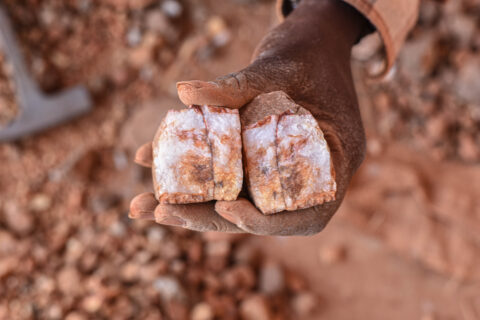
Spanning from the north of Sweden to Portugal and southern Spain, these projects are due to help the EU reach targets for sourcing more of the minerals it needs for clean energy and digital technologies within its own borders in an environmentally friendly way, while reducing its dependence on imports from China.
However, NGOs and local communities have accused the European Commission of a lack of transparency and of failing to engage civil society over the selection of these projects, most of which are in the early stages of development and are yet to obtain the necessary permits or conduct detailed environmental impact assessments.
Civil society groups challenged the decision to include around a third of projects on the strategic list, arguing that the commission had not properly assessed their sustainability. They also cited risks of social and environmental harm and human rights violations.
EU: Environmental compliance lies with member states
In total, 11 requests for review covering 16 of the projects planned within the EU were filed under the Aarhus Regulation, which gives NGOs the right to ask the European Commission to review administrative decisions if they are considered to violate the bloc’s environmental law.
In a single response shared with green groups this week, and seen by Climate Home News, the commission found that the requests to review the projects’ status were “unfounded”.
“A thorough assessment confirmed that all points raised by the NGOs had already been properly addressed during the selection process. All the projects concerned therefore retain their status as strategic projects,” a European Commission spokesperson told Climate Home News. They did not respond to detailed questions about their assessment.
Under the EU’s Critical Raw Materials Act, which was adopted last year, the commission can designate mineral projects as strategic if they meet a shortlist of criteria, including that the project “would be implemented sustainably” and monitor, prevent and minimise environmental and adverse social impacts.
The strategic status can be revoked if projects no longer meet the criteria.
However, the commission said it was not its job to carry out a full and detailed assessment of whether the projects fully comply with EU environmental laws, adding that it is only required to make an “overall assessment”.
Rather, it argued, member states have the responsibility to ensure the projects fully comply with EU environmental standards including impacts on biodiversity and ground water as well as waste management.
The commission also refused to examine the social impacts of the projects on community livelihoods, health and human rights – which could arise from environmental degradation – arguing that this was outside the scope of the review mechanism under the Aarhus Regulation.
Campaigners have strongly criticised the response.
“Cosmetic”sustainability criteria
Ilze Tralmaka, a lawyer at Client Earth, told Climate Home News the commission’s decision showed that the designation of mineral projects as “strategic” doesn’t make them safe or sustainable, despite creating a legal presumption that they serve the public interest and protect public health and safety.
“While on paper, there is mention of sustainability, in practice, it’s almost cosmetic,” she said. “It seems the environmental standards are just briefly looked at and that the policy of declaring these projects as strategic is more important than real engagement with the sustainability criteria.”
Client Earth argues that while securing supplies of minerals for the energy transition is a legitimate goal, the status of strategic project is being “misused” to fast-track questionable mining projects.
Tralmaka said the European Commission should engage where there are “unanswered questions, or if there is credible information about these projects being potentially unsafe”.
Client Earth was part of a group of NGOs that challenged the decision to designate the Barroso lithium project in Portugal as a strategic project.

“Textbook example of how not to do a green transition”
London-listed Savannah Resources is planning to dig four open pit mines in the northern Barroso region to extract lithium from Europe’s largest known deposit. The company says it will extract enough lithium every year to produce around half a million batteries for electric vehicles.
However, local groups have staunchly opposed the mining project, citing concerns over waste management and water use as well as the impact of the mine on traditional agriculture in the area.
Earlier this year, a UN committee found that Portugal had failed to respect citizens’ rights to information and public participation in the case of the Barroso project. Portuguese authorities denied the breach.
Efforts to green lithium extraction face scrutiny over water use
The commission said it was satisfied with the project’s overall sustainability credentials and that campaign groups should take a case to their national court if they are concerned about the legality of any project.
“This decision shows that the EU is willing to trade rural lives and irreplaceable landscapes for a political headline,” said Nik Völker of MiningWatch Portugal. “The truth is, the Mina do Barroso mine offers minimal benefits and enormous risks: a textbook example of how not to do a green transition.”
Savannah Resources did not respond to a request for comment.
“Murky” standards make legal challenge hard
Simon Simanovski, a business and human rights attorney with German law firm Günther Rechtsanwälte, has advised dozens of communities affected by projects designated as “strategic” under the EU’s Critical Raw Materials Act over the past year.
For him, the commission’s response creates a disconnect between its role as a decision-making body and the responsibility for enforcing the bloc’s environmental laws, by pushing it to member states. That, he said, creates “murky standards”.
This, he added, will make it “really difficult” to challenge inadequate environmental safeguards through the courts. “It means that there is no effective judicial protection… and that the projects will happen,” he told Climate Home News.
However, Simanovski still expects some campaign groups to try filing a case before the general court of the European Court of Justice to challenge the European Commission’s response and ask it to review its assessment of the projects.
Simanovski represents communities in Serbia that are also challenging the “strategic” designation of the Jadar lithium mine – one of an additional 13 “strategic projects” located outside EU countries – which has seen massive local opposition.
The commission is expected to respond to requests to review those external strategic projects in January.
The post EU refuses to review “strategic” mineral projects for energy transition appeared first on Climate Home News.
EU refuses to review “strategic” mineral projects for energy transition

Next week, diplomats from around the world will descend on Yerevan, Armenia, to negotiate a series of decisions under the UN Convention on Biological Diversity (CBD).
Between 19 and 30 October, 196 parties will gather to hammer out the precise wording of the dozens of legal texts that make up the decisions under the Conference of the Parties (COP) to the CBD.
This year’s summit is particularly significant, as it marks the halfway point between the agreement of the Kunming-Montreal Global Biodiversity Framework and the deadline for achieving its targets.
The CBD has found that countries are currently not on track to meet 22 out of the framework’s 23 targets.
During the fortnight, delegates will also be negotiating decisions relating to the two supplemental protocols to the CBD: the Cartagena Protocol, which covers biosafety; and the Nagoya Protocol, which covers access and benefit-sharing for the use of genetic resources.
(The Cartagena and Nagoya Protocols, which are each governed by a “meeting of the parties”, or “MOP”, have fewer parties than the CBD as a whole, with 173 and 141, respectively.)
Carbon Brief is tracking the progress of countries towards consensus on dozens of negotiating texts using the interactive table below.
The tracker includes texts from the COP, as well as the MOPs for the Cartagena and Nagoya protocols. It also includes draft decisions from the most recent subsidiary body meetings, as these form the starting point for the negotiations in Yerevan.
The CBD has three subsidiary bodies: the subsidiary body on scientific, technical and technological advice (SBSTTA), the subsidiary body on implementation (SBI) and the subsidiary body on article 8(j) and other provisions (SB8J).
SB8J focuses on issues related to the Indigenous peoples and local communities. It was established at COP16 in Cali, Colombia, in 2024.
The first two columns of the interactive tracker list the topic of each agenda item and the relevant body, with subsequent columns including dates, page counts and links to the original documents.
The table is searchable and can be sorted using the arrows in the header.
Areas of disagreement in UN draft texts are denoted by square brackets. Counting the brackets in a particular iteration of a text therefore gives a sense of how far parties are from reaching consensus.
The bracket column is colour-coded, with dark green indicating a low number of brackets and red indicating a high number of brackets remaining.
Texts can also present parties with choices using “options” or alternatives (“alt”), which are counted together in the sixth column of the table.
The key discussions in Yerevan will centre around two agenda items in particular. The first is the global review, which will assess progress towards the GBF and make recommendations for accelerating action.
The second is finance, which can be separated into two parts: resource mobilisation and the financial mechanism. On resource mobilisation, biodiverse global south countries are likely to push for an increased amount of international finance for conservation.
Disagreement over the creation of the financial mechanism led to the suspension of COP16 in Cali in October 2024, as parties failed to find agreement on the mobilisation of finance before the end of the summit.
Global south countries want the establishment of a separate financial mechanism under the control of the CBD; global north countries largely prefer to maintain the existing mechanism, which sits under the Global Environment Facility.
At the resumed session of COP16 in Rome in early 2025, countries agreed on a roadmap that would lead to the establishment of a permanent mechanism.
related
Analysis: Lula presidency saved at least 20,000km2 of Brazilian Amazon since 2022
Why land-use emissions have fallen by a third this century – in six charts

Analysis: 84% of nations miss deadline to identify ‘nature-harming’ subsidies by 2025
UK withdraws millions in funding from world’s second-largest rainforest in Congo
The post Interactive: Tracking negotiating texts at the COP17 biodiversity summit appeared first on Carbon Brief.
Interactive: Tracking negotiating texts at the COP17 biodiversity summit
A beacon of love
On an outer island of Fiji, two thousand nautical miles from Sydney, is a shining light of hope and resilience for our troubled world.
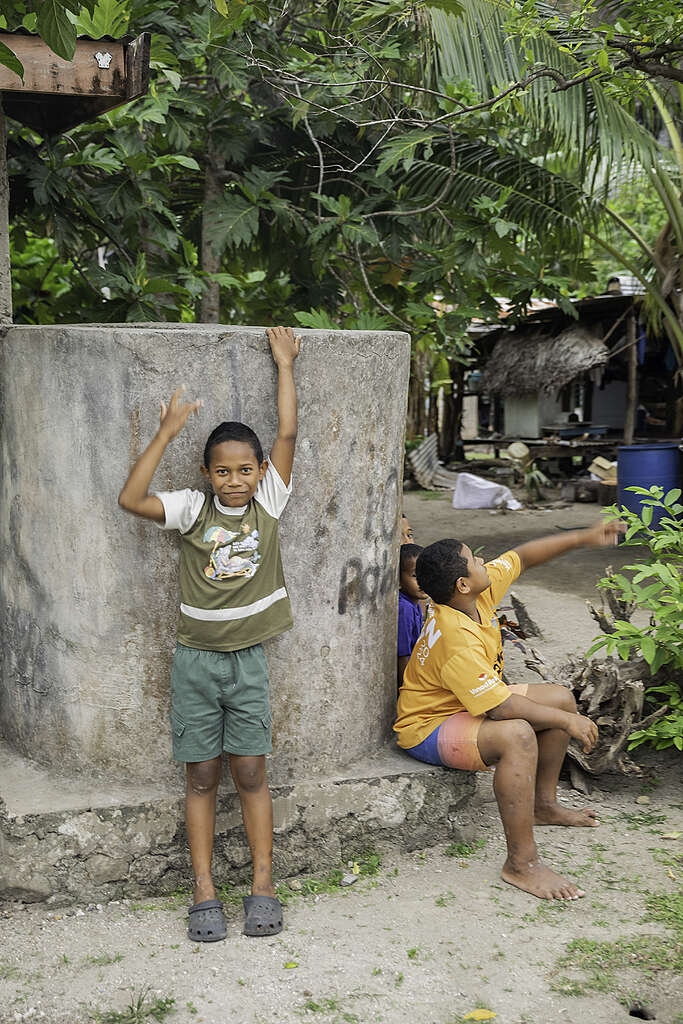
The island of Kioa is home to a Tuvaluan community who migrated from their atoll of Vaitupu in the late 1940s. It is a land of warm hearts, big smiles, and deep cultural roots; a place where the sound of a conch still summons the island together, where islanders paddle out to fish in carved outrigger canoes, and healthy happy children walk barefoot to school.
Here, culture is life. Kioans live sustainably through their traditional knowledge and practices. The island is alive with song, dance and the rhythms of a life tied to the tides, the winds, and the seasons.
Facing the future
Greenpeace has been lucky to have a relationship with Kioa for a number of years now, and we are continually learning from this remarkable community.
Last week, as part of our Voyaging Oceania project, we returned to the island. Our purpose was twofold —- to carry messages from the island to leaders gathering in Nadi this week for the Pacific Pre-COP, and to support the Kioa community in their efforts to improve water security for the island.
Unlike Tuvalu itself, with its eight atolls, Kioa is a mountainous, forested and richly fertile island. It will remain habitable far into the future. Kioans did not initially migrate from Vaitupu due to climate change, but the move was prophetic. They now have a lifeboat.
However, even Kioa faces challenges on our rapidly warming planet, in particular when it comes to water. Climate change is shifting once reliable rainfall patterns. On top of this, the island is already feeling the effect of this year’s intensifying El Niño event, which for Fiji means reduced rainfall and prolonged dry spells.
Right now, fresh water has to be carefully rationed, and is only available for a few hours a day. During last week’s visit aboard our campaigning ship Oceania, Greenpeace was privileged to work with the Kioa community on a new solar-powered water distribution project for the island.
Designed and led by the island, the project involves using a solar pump to move water from a reliable source to a storage tank and then using gravity to distribute the water around the village.
It was a lesson in how local knowledge and ingenuity can be the backbone of today’s climate solutions. To build a dam around the source, the local community knew the exact spot where they could gather gravel at low tide to mix with the cement. They took only what was needed, knowing that all resources must be carefully conserved. Kioa has no roads and no machinery, and it was an all-of-island effort to carry the materials up to the project site, including many heavy bags of sand and rock.
Such projects truly bring to life the vision of a resilient, locally-led, fossil fuel free Pacific.