

Welcome to Carbon Brief’s DeBriefed.
An essential guide to the week’s key developments relating to climate change.
This week
UN climate focus
PACT FOR THE FUTURE: The UN general assembly meeting in New York signed off on a plan for countries to work together to tackle large global challenges, “with climate change one of the headline topics”, EuroNews reported. The agreement reaffirmed global pledges to transition away from fossil fuels, but did not raise global ambitions, the outlet noted.
ACTION OVER WORDS: Amid the summit, developing countries “pleaded” with richer nations to end the “lip service” and take more action on climate change, Reuters reported. Samoan environment minister Cedric Schuster told reporters that “we need all countries, but particularly the G20, to lead the way” on emissions cuts and climate finance, the outlet said.
AMAZON BLAZES: Brazil’s president Luiz Inácio Lula da Silva mentioned Amazon fires in his UN general assembly opening speech, but “not the fact they’re adding to criticism of his administration’s own environmental stewardship”, the Associated Press said. The country’s portion of the Amazon rainforest recorded 38,000 fires last month – the highest in August since 2010, the newswire said.
Around the world
- ‘LIFE-THREATENING’: At least three people were killed and 1.3m left without power in “dangerous” Hurricane Helene, which made landfall over Florida on Thursday, CBS News reported. Sea surface temperatures have been “exceptionally warm” in the Gulf of Mexico – about 2C above normal for this time of years, BBC News said.
- COAL POWER: The Australian government cleared the way for three coal mines to extend their operations for a further 30-40 years in a move that has been criticised as “counter to action on climate change”, ABC News reported.
- BIG JOB: Former World Bank climate chief Rachel Kyte was appointed as the UK’s climate envoy – a position “axed” by former prime minister Rishi Sunak, according to the Guardian.
- GREENWASHING SPAT: French oil and gas company TotalEnergies is expected to appeal a South African advertising regulator ruling that it was “misleading” to “tout its commitment to ‘sustainable development’ in a campaign with the country’s national parks”, the Financial Times said.
- AI GOES NUCLEAR: Microsoft agreed to buy power from the Three Mile Island energy plant, “the site of the worst nuclear accident in US history”, which is set to reopen in 2028 “after improvements”, BBC News said. It added the deal is intended to bolster clean energy as “power-hungry data centres for artificial intelligence (AI) expand”.
£1.7bn
The extra funds the UK needs to spend on nature in the next two years to meet a flagship international target, according to Carbon Brief analysis, also covered by the Guardian.
Latest climate research
- Climate change doubled the likelihood of the heavy rainfall behind floods in central Europe earlier this month, a World Weather Attribution study found.
- Research in Atmospheric Science Letters explored the “new paradigms and challenges” for scientists researching extreme weather.
- The frequency of warm, dry and high fire-risk weather conditions have “surged” in parts of South America, including the Amazon region, in the past few decades, a study in Communications Earth and Environment found.
(For more, see Carbon Brief’s in-depth daily summaries of the top climate news stories on Monday, Tuesday, Wednesday, Thursday and Friday.)
Captured

The UK’s last coal-fired power plant will close this month, ending a 142-year era of burning coal to generate electricity. It is the first major economy – and first G7 member – to phase out coal power. This chart shows the use of coal for electricity in the UK from 1880-2025, in millions of tonnes. Read Carbon Brief’s Q&A on how the country reached this milestone.
Spotlight
Rights for River Ouse

This week, Carbon Brief visits a river that could be the first in the UK to gain its own rights.
The River Ouse runs for 35 miles across east and west Sussex in England, winding through the town of Lewes and meeting the English Channel at Newhaven.
Since last year, the Ouse has been at the heart of community discussions in Lewes on what it means to give a river a voice – similar to a person – amid a growing global movement to grant legal rights to nature.
Lewes district council approved a motion on River Ouse rights in February 2023, agreeing to develop and consider a river rights charter in two years.
Ahead of the district council cabinet considering this charter next February, Carbon Brief visited the town to hear about the steps towards the Ouse gaining legal rights.
‘Eco-centric view’
Matthew Bird, a Lewes Green town councillor (pictured right) who put forward the 2023 motion, told Carbon Brief that the charter will be comparable to the universal declaration on river rights used in other parts of the world:
“It [will contain] things like the right to flow, the right to be free from pollution, the right to native biodiversity, the right to have a voice…The key thing for us is that it’s seeing things from an eco-centric point of view as much as you’re able to.”
The Ouse, as with many rivers, faces threats from climate change, pollution, biodiversity loss and invasive species such as Himalayan balsam – a fast-spreading plant with explosive seed pods.
Bird, who is also the director of the Love Our Ouse campaign, said that those involved in the motion aspired for a more holistic approach to tackling these issues. He told Carbon Brief:
“We’re just so focused on sewage [in the Ouse] that all those other really challenging issues were sort of drowned out. It felt like river rights, rights of nature could almost be a framework for looking at that.”
One focus of the movement is to grant the river the “right to restoration”.
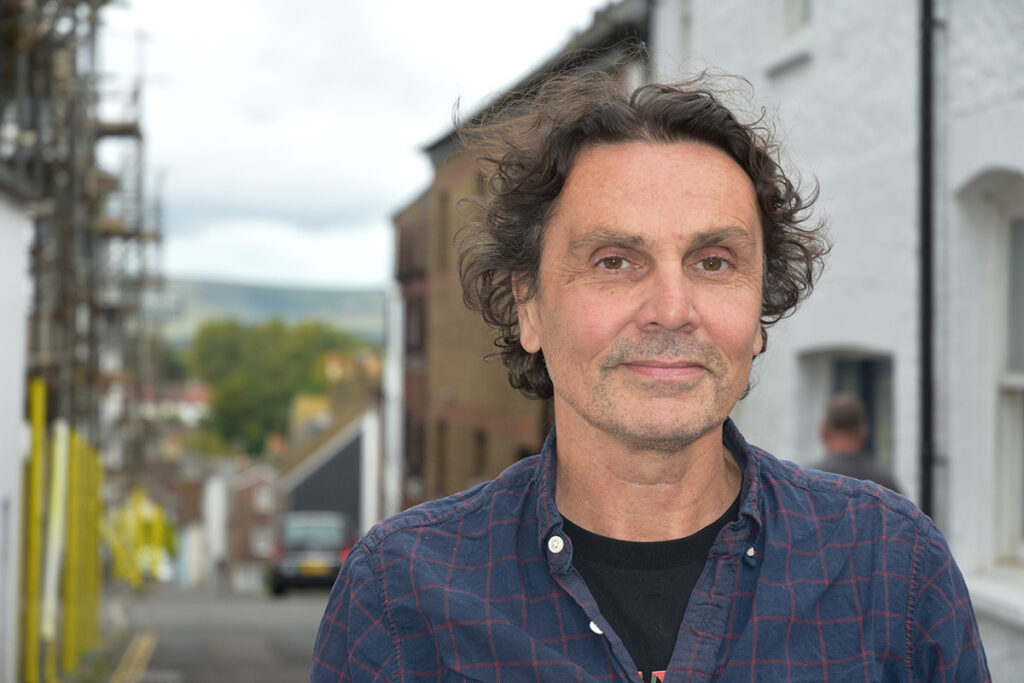
Restoring and protecting rivers has proven to be an effective adaptation measure against increasing flood risk. Lewes was badly flooded in 2000 after the Ouse burst its banks following heavy rainfall. Hundreds of people were evacuated.
Rights for rivers
Local campaigns are ongoing in other parts of the UK to give rights to rivers such as the Cam, Don and Medway.
Further afield, a city in Brazil “legally recognised its waves as living beings” earlier this month. Ecuador was the first country in the world to include nature rights in its constitution in 2008.
Emma Montlake, the director of casework at the Environmental Law Foundation, who is also involved with Love Our Ouse, said that the charter, if approved, “will be a declaration by the local authority that they accept that the river has these rights”. She told Carbon Brief:
“The charter will also introduce a governance structure that can represent the river. Whether that’s an inter-species council or a citizens’ assembly.”
It will take longer to give legal rights to the river, however, “because there’s no national legislation to pin this on” in the UK, she added:
“It’s about giving nature a voice that it doesn’t currently have. We have lots of legislation, we have protections for habitats and species, we have different regulations for permitting, for pollution. But…our laws are not adequate to protect nature.”
Watch, read, listen
ICE JOB: Researchers spoke to the British Antarctic Survey’s podcast Beyond the Ice about their field work studying the “rapidly” changing Thwaites Glacier in West Antarctica.
NOT-SO GREEN: DeSmog mapped the influence of Ireland’s “powerful farming lobby”, highlighting the “damage the [agricultural] sector is wreaking on Ireland’s climate targets”.
HEATING UP: The New York Times explored Nigeria’s “cooling crisis” amid scarce electricity and rising temperatures.
Coming up
- 29 September: Austria parliamentary elections
- 30 September-4 October: International Maritime Organization (IMO) marine environment protection committee meeting, London
- 1-2 October: 9th Forest Europe ministerial conference, Königswinter, Germany
Pick of the jobs
- African Climate Foundation, senior strategist for African Energy Futures Initiative | Salary: Unknown. Location: Remote
- Washington Post, accountability reporter, climate and environment | Salary: $97,400-$162,300. Location: Washington DC
- ClientEarth, lawyer, clean air, water and soil | Salary: €4,938 p\m in Brussels, €5,612 p\m in Berlin, €61,346 p\y in Madrid. Location: Berlin, Brussels or Madrid
- The Commonwealth, national climate finance adviser, Tuvalu | Salary: £50,727. Location: Tuvalu
DeBriefed is edited by Daisy Dunne. Please send any tips or feedback to debriefed@carbonbrief.org.
This is an online version of Carbon Brief’s weekly DeBriefed email newsletter. Subscribe for free here.


The post DeBriefed 27 September 2024: UN ‘pact for the future’; UK turns its back on coal power; River ‘rights’ appeared first on Carbon Brief.

Jacynta Fa’amau is a Pacific campaigner at global grassroots climate movement 350.org and a secretariat member of Pacific Climate Warriors.
The first thing that struck me was the sheer size of Queensland’s Saraji coal mine. Standing at the edge of the enormous pit, my brain scrambled for words as I scanned the earth’s open wound – a whole island could probably fit inside it.
Looking down, I noticed footprints of an emu and a koala, pressed and dried in what was once a puddle – signs of how drought had driven animals in desperate search of water, so dangerously close to the coal trucks and heavy machinery ahead.
Earlier this year, I joined a small group of Pacific Islanders on a journey through the Bowen Basin to learn from First Nations communities battling Australia’s mammoth coal industry. Of the more than 40 coal mines operating in the area, BHP & Mitsubishi Alliance’s Saraji mine is one of the largest. So it came as a painful shock to us when in August, the Australian government approved the mine’s extension just months after our visit.
-
As COP31 co-host, Australia should make its polluters pay for climate damage
With UN climate funds running short on cash, now is the time to start taxing the companies whose emissions are driving harm in the Pacific and other vulnerable parts of the world -
At pre-COP, UN climate chief warns of heat threat to mothers and babies
The spotlight on maternal health came on the first day of the pre-COP31 meeting in Fiji, where Pacific concerns are set to top the agenda as ministers gather for talks

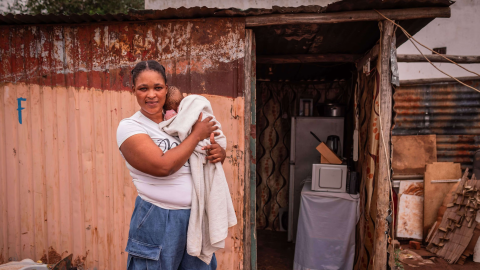
Witnessing coal extraction is devastating. It is bad enough to see what pillaging tonnes of coal can do to a mine’s immediate surroundings: dry creek beds, dwindling wildlife, denuded land. But to know that this coal will be shipped across the ocean, bring air pollution, and eventually lead to the destruction of Pacific islands thousands of miles away is another kind of heartbreak.
Rising ocean waters
I’m an Australian-born Samoan. In 2002, I visited my family home for the first time. My father took me to the rural community where generations of my family were raised. He did not have the words to describe how much has changed since rising ocean waters had taken away almost a third of the beach.
I learned of how we had to relocate my great‑great‑grandparents’ grave to higher ground twice in the last 15 years. Of how my cousins have to paddle out further to sea to catch fish, since warmer waters have destroyed much of the reef. Of how the ocean crashes so close to my uncle’s home that he had to build a new house further away.
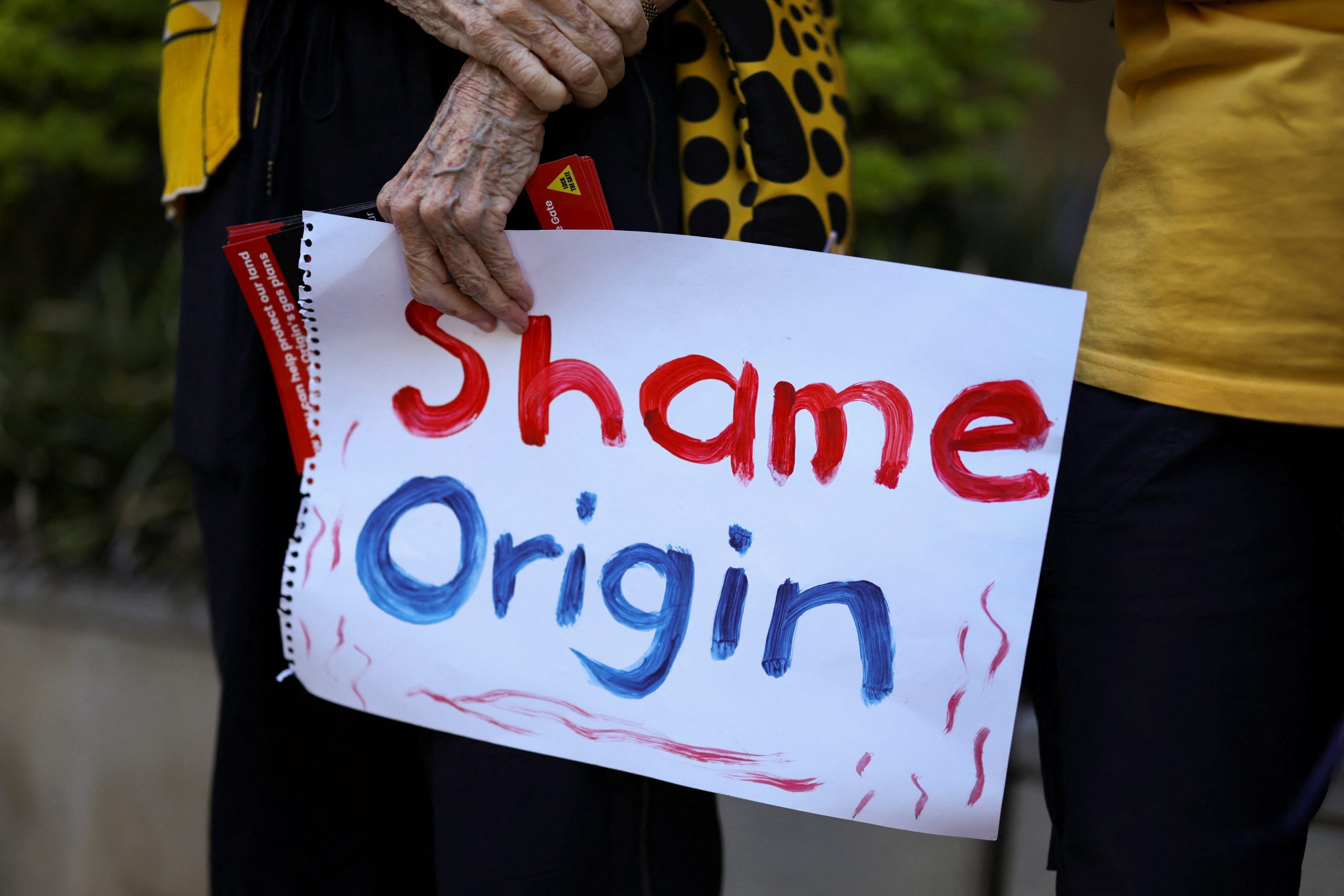
We saw reflections of our own climate destruction in the Pacific when we shared these stories with our First Nations relatives at the edge of the Saraji mine. Murrawah Johnson and Teila Watson, both Birri Gubba and Gangulu women, made clear connections between their struggles and ours. “We don’t get to inherit our land and we don’t get to inherit our traditional roles. We are fighting a war on extinction,” Murrawah said.
Coal extraction devastated their lands and cultures – totems have disappeared, fresh water has become scarce – while the effects of using it have devastated ours. “King tide, cyclones, all the violence that has been enacted on your country and people is because of the violence that has been allowed here, to us and our country,” Teila said.
Wearing the mantle of climate leadership
This week, Australia is assuming the mantle of climate leadership as co-president and head of negotiations of this year’s UN Climate Change Conference, COP31. It will lead on deliberating the summit’s priorities as world leaders and climate negotiators descend on Fiji and Tuvalu for the pre-COP meetings.
Ironically, just days before the pre-COP began, the New South Wales Independent Planning Commission approved the largest-ever coal project the state has seen, set to emit an extra 800 million tonnes of carbon emissions. I joined the Pacific Climate Warriors and other communities in submitting about 4,000 appeals to oppose the project – yet these all fell on deaf ears.
-
Fossil fuel expansion threatens COP31 hosts’ credibility, experts warn
Türkiye and Australia are pushing coal, oil and gas at home with no national timeline for their own fossil fuel phase-out -
This Australian coal community is co-designing its own green future
The mining town of Collie offers a promising example of how to survive – and even thrive – amid the global transition to net-zero emissions
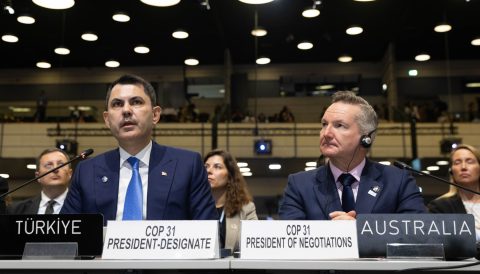

But the fight is not yet over. The project still requires federal approval to proceed, so every promise that Australia makes while at the helm of the climate talks counts. These promises will be measured against actual decisions it makes at home: to either lock us into more decades of climate pollution, or begin shutting down coal and gas once and for all.
Pacific leaders have made it clear that countries must align their policies with the 1.5-degree warming goal, a limit that we already know will be breached within the decade. Any chance of keeping this still within reach requires an immediate end to fossil fuel expansion and concrete plans to phase out existing projects. But success will be an uphill battle if COP31’s own head of negotiations refuses to lead by example.
Australia remains the second-largest coal exporter in the world. It is one of the very few industrialised countries under the Paris Agreement’s Annex I that still has no coal phase-out plan. Since 2022, the Albanese government has approved 37 new, expanded or extended coal, oil and gas projects. It is thus unsurprising that its own mitigation policies have been rated by Climate Action Tracker as “insufficient”, even without factoring in fossil fuel exports and related expansion.
Keeping 1.5C alive
Australia must course-correct to earn the mantle it has been given, especially by Pacific nations that backed the country’s bid for the COP31 co-presidency. As a first step, the government must end all coal expansion and explicitly declare a coal phase-out date. It’s the only way to show that it’s capable of leadership that moves beyond endlessly deliberating the “if”, and starts implementing the “how” of keeping the 1.5C target alive.
The dread I felt staring down at the abyss on the edge of that coal mine months ago still exists. I carry it with me as I show up at the pre-COP to demand that leaders heed the calls of Pacific people. But it is tempered with resolve to keep our lands and communities alive. We remain steadfast in our efforts to secure an outcome that protects people everywhere and brings us back below 1.5 degrees as soon as possible.
The post