

Welcome to Carbon Brief’s DeBriefed.
An essential guide to the week’s key developments relating to climate change.
This week
Biden’s farewell
HEAVY-HEARTED HANDOVER: Outgoing US president Joe Biden used his final televised speech from the Oval Office to issue warnings about climate change and social media disinformation, BBC News reported. The Democrat pointed to “powerful forces” with “unchecked influence” set on “eliminat[ing]” the steps his government had taken to tackle climate change. This came after a separate valedictory address on Monday – covered by NPR – where Biden called on Donald Trump to carry forward his work on climate.
TRUMP LOOMS: Chris Wright – Trump’s pick to head the US Department of Energy – told senators at a confirmation hearing that he would support all forms of energy, including wind and solar power, and that he believed climate change was a “global challenge that we need to solve”, the New York Times reported. This came after the US Supreme Court said it would not hear an appeal from oil and gas companies trying to block climate lawsuits, according to the Associated Press.
Tragedy in Los Angeles
GRIM RECORDS: As the Los Angeles wildfires continue to burn, officials have confirmed that the death toll has risen to 25, the Los Angeles Times reported. Meanwhile, Al Jazeera noted that the Eaton fire is now the “most destructive and deadliest” wildfire in southern California’s history, while the Palisades fire is the “second most destructive”. Carbon Brief covered the causes, impacts and political and media response to the wildfires.
CLIMATE TO BLAME: A rapid attribution study found that climate change was responsible for around 25% of the “fuel” available for the fires, according to CNN. The research – carried out by scientists at the University of California, Los Angeles – said the fires have been “larger and burned hotter than they would have in a world without planet-warming fossil fuel pollution”.
MYTHS SPREAD: As the fires continued to burn, prominent right-wing figures spread “bigoted criticism” about the response to – and cause of – the fires, according to the Guardian, including narratives blaming the fire department’s diversity and inclusion initiatives. France 24 reported that California governor Gavin Newsom accused Elon Musk – leading shareholder of Twitter and Trump confidante – of spreading “lies”.
Around the world
- ZERO MOVEMENT: The Net Zero Asset Managers (NZAM) initiative suspended all activities after investment giant Blackrock withdrew from the voluntary group last week, reported the Times.
- GRID SPLURGE: Bloomberg reported that China State Grid – the nation’s “largest” power network operator – is gearing up to spend a record 650bn yuan ($89bn) this year, as it looks to “keep pace with surging renewable generation”.
- DRIED-UP RIVERS: The Guardian explained how a “historic” drought in Suriname’s interior has dried up rivers, triggered food and water shortages, and disrupted communities’ access to transport, health care and education.
- BP LAYOFFS: The fossil fuel giant BP announced plans to cut 4,700 jobs, or 5% of its workforce, in a bid to “save costs” and “revive” its share price, reported the Financial Times.
$250-$275 billion
The total estimated economic damage and loss of the Los Angeles wildfires, according to AccuWeather.
Latest climate research
- A study in Geophysical Research Letters found “profound changes” in the seasonal cycle of sea level on the US mid-Atlantic coast. The researchers said that maximum sea level in the area had risen by 82% from 1980-99 to 2000-20.
- Leaks from the Nord Stream gas pipeline in 2022 resulted in the largest amount of methane emitted from a short-term incident on record, according to a new study in Nature.
- A paper in Science Advances found that converting forests into cropland “may be an ineffective climate adaptation strategy for improving nutrition” in Nigeria.
(For more, see Carbon Brief’s in-depth daily summaries of the top climate news stories on Monday, Tuesday, Wednesday, Thursday and Friday.)
Captured
The chart above illustrates the institutional affiliations of the authors of the top 25 most-shared climate papers of 2024, broken down by continent. It shows that 85% of authors of the most-mentioned climate papers of 2024 are affiliated with institutions from the global north, whereas only two authors are from Africa. The findings come from Carbon Brief’s full analysis of the 25 most featured climate-related papers of 2024, which was published this week.
Spotlight
‘Cli-fi’ comes of age
Carbon Brief reports on a new literary prize which aims to grow the climate fiction genre.
It is 2025. Wildfires have scorched southern California, while a right-wing US president has been elected on a ticket to axe “wasteful” government programmes.
This is not a summary of recent news headlines, but the setting of Octavia E Butler’s 1993 novel Parable of the Sower, seen by many as an early classic of the climate fiction – or “cli-fi” – genre.
Thirty years after Butler’s prescient tale was published, cli-fi is rising in prominence.
Cli-fi prize
This spring, the inaugural UK Climate Fiction Prize will announce its first winner, awarding £10,000 to a novel that engages with climate change.
Imran Khan, one of the founders of the prize, told Carbon Brief the aim of the prize was to expand a genre that had been growing in recent years. He said:
“We wanted to try to tilt the field in favour of more stories that centre the possibilities of what the future looks like if we start to take climate more seriously – both the good and the bad. We didn’t want it just to be climate dystopias. We wanted to be stories of hope, change and possibility as well.”
The nine books on the longlist make for an eclectic reading list, spanning genres, continents and different planets.
In the mix is the Booker Prize-winning Orbital by Samantha Harvey, a meditation on the beauty and fragility of Earth, told from the vantage point of astronauts circling it. It is facing off against And So I Roar by Abi Daré, which explores themes of climate justice through the eyes of a teenage girl from Nigeria, and The Mars House by Natasha Pulley, a sci-fi novel about the marriage of an Earth refugee and an anti-immigration Martian politician.
Abby Rabinowitz teaches a climate-fiction seminar to dozens of undergraduate engineering students each year at NYU Tandon School of Engineering. She told Carbon Brief that climate fiction had assumed a “more central role in a literary way” since 2018, albeit from a low baseline.
Rabinowitz said she launched the seminar in 2021 after observing that “very few people had dealt seriously with climate change and the climate crisis in fictions, both in literary works and on the screen”. She said:
“The Day After Tomorrow, which came out in 2004, remains the one climate disaster blockbuster that I’m aware of. That was 20 years ago.”
Parable of the Sower is on Rabinowitz’ syllabus, which she said covers “apocalyptic imaginings, speculative fiction storytelling and metaphorical and allegorical treatments of climate change” in books and film. Kim Stanley Robinson’s The Ministry of the Future, Stephen Markley’s The Deluge and Adam McKay’s film Don’t Look Up also feature.
‘Change the story’
There is some debate about whether climate stories inspire action. A 2018 study of US readers found the majority of cli-fi was prompting them to associate climate change with “intensely negative reactions”, which “could prove counterproductive to efforts at environmental engagement”.
However, the research suggests that non-dystopian climate stories with “positive frames” – at the time in shorter supply – might be able to motivate readers to act.
Climate fiction is important, according to Khan, because it can paint a more “vivid” picture of future warming than scientific data, plus “change the story of what is possible”.
Parable of the Sower – which depicts a climate-ravaged world, but also a protagonist with a vision for change – is a case in point, he said:
“It is one of the best examples of… what really good climate fiction can do. It inspires emotions of rage and anger, but also hope and care. Science alone hasn’t solved this issue – and it won’t solve this issue. We need people to care enough to do something.”
Watch, read, listen
COMBUSTIBLE AGE: The New Yorker placed the Los Angeles fires in the context of historic fires that ravaged US cities – and asked what is next in a climate-changed world.
RADIO DADAAB: A stateless journalist told the story of climate refugees in the world’s second-largest refugee camp via a short Environmental Justice Foundation documentary.
NUDGE UNIT: Neuroscientist, science communicator and UCL Climate Action Unit director Kris de Meyer spoke to Your Brain on Climate about how to tell “stories of action”.
Coming up
- 20 January: US presidential inauguration, Washington DC
- 20-24 January: World Economic Forum annual meeting, Davos, Switzerland
- 23 January: International Energy Agency (IEA) heat pumps workshop, online
Pick of the jobs
- Carbon Brief, data analyst | Salary: Unknown. Location: London or remote
- Climate Change Committee, media and communications senior manager | Salary: £59,782-£66,512. Location: London
- Nature Communications, associate or senior editor (ecology) | Salary: associate editor: $80,000, senior editor: $95,000. Location: New York, Jersey City, Philadelphia or London, hybrid
- WWF DRC, conservation manager | Salary: Unknown. Location: Kinshasa, Democratic Republic of the Congo
- UK Labour Party, climate change, nature, energy and environmental policy assistant for Barry Gardiner MP | Salary: In line with IPSA pay scales. Location: London
DeBriefed is edited by Daisy Dunne. Please send any tips or feedback to debriefed@carbonbrief.org.
This is an online version of Carbon Brief’s weekly DeBriefed email newsletter. Subscribe for free here.


The post DeBriefed 17 January 2025: Trump looms; Fossil fuels made LA fires ‘burn hotter’; Has ‘cli-fi’ come of age? appeared first on Carbon Brief.

Climate Change
Greenpeace Australia Pacific activists in police custody after two-day protest against Woodside’s Browse gas project at Scott Reef
PERTH, Sunday 18 October 2026 — Two Greenpeace Australia Pacific activists are in police custody after occupying a gas platform at Woodside’s Scarborough gas project, in peaceful protest of the fossil fuel corporation’s plans to drill for oil and gas at Scott Reef.
NEW footage and photos of the peaceful protest available here and on Instagram
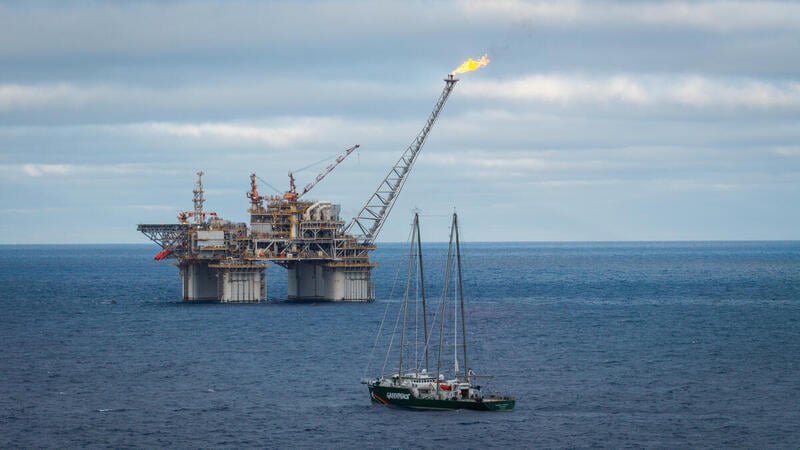
The activists used specialised climbing equipment to scale and attach themselves to a Floating Production Unit (FPU), a key piece of gas processing infrastructure at the Scarborough gas field over 200km off the coast of Exmouth, at around 05:45am AWST on Saturday and proceeded to occupy the platform for two days, displaying banners reading “Stop Woodside’s Dirty Gas. Save Scott Reef.”
Special police forces landed a helicopter on the FPU at around 11:30am AWST. The activists safely removed themselves from their equipment before being taken into police custody around 1:00pm AWST. At the time of writing, no charges have been laid.
David Ritter, CEO at Greenpeace Australia Pacific, said: “It takes guts and conviction to do what our activists have done, peacefully protesting Woodside’s reckless gas plans at Scott Reef.
“Woodside’s plans to drill up to 57 toxic wells at Scott Reef are outrageous. If allowed to go ahead Woodside would turn Scott Reef, Australia’s largest oceanic reef, home to nesting green sea turtles and elusive pygmy blue whales, into an industrial gas zone. Around half a million people have called on our governments to stop Woodside and to save Scott Reef.
“Our activists are highly trained and experienced in these activities. West Australia has a proud history of peaceful, democratic protest at sea, to protect our oceans from environmental threats. From whaling in Albany in the seventies, to Woodside’s threat to Scott Reef today, there’s more than fifty years of history, of Greenpeace taking action off WA’s coast to protect the places we love.
“Peaceful protest has long been part of what has given us so many of the things that are great about Australia and is part of the fabric of our democracy and our national identity.”
“The right to peaceful protest is fundamental to a healthy democracy. From Australia to the Arctic and the Amazon, Greenpeace has been peacefully protesting for more than 50 years to expose the biggest environmental threats around the world. We will not be silenced by corporations like Woodside who actively try to stop everyday people from speaking out against their reckless plans.
“Woodside’s reckless proposal to drill at Scott Reef is an unacceptable risk to Scott Reef and to the climate, which our government should emphatically reject.”
Speaking from the Rainbow Warrior, Captain of the Rainbow Warrior Hettie Geenen, said:
“It felt powerful watching from the Rainbow Warrior as these brave activists scaled Woodside’s enormous and imposing gas infrastructure, which has no place at Scott Reef. We are all out here because we feel an urge to act, in the face of Woodside’s grave threat to Scott Reef and to our climate. Now we ask for the Australian government to act too, and reject Woodside’s reckless Browse project.
“Just before this peaceful protest, the Rainbow Warrior sailed to Scott Reef, where our whole crew got to witness the magic of an untouched, healthy reef ecosystem full of marine life. It was my second time visiting Scott Reef with the Rainbow Warrior. When you see Scott Reef up close and witness its magic first hand, it is impossible not to feel driven to try and protect it.”
The activists sailed to Scarborough on the Rainbow Warrior, Greenpeace’s flagship vessel, which is in the region campaigning to protect Australia’s oceans, including Scott Reef.
-ENDS-
Media contact
Greenpeace Australia Pacific media team in Perth on +61 406 231 892 or +61 407 581 404 or email media.au@greenpeace.org
Climate Change
GREENPEACE GAS PROTEST DAY TWO: Activists spend first night on Woodside’s Scarborough gas platform, “in this for the long haul”
- NEW footage and photos available here and on Instagram – more being uploaded today.
- Interviews available with campaigners on board the Rainbow Warrior on request.
Greenpeace Australia Pacific activists have slept overnight on Woodside’s Floating Production Unit and dropped a massive 12×14-metre banner reading “Stop Woodside’s Dirty Gas. Save Scott Reef”.
Two activists have set up temporary hanging tents on the South East pillar, while the other two returned to the Rainbow Warrior late yesterday afternoon, after fulfilling their initial role. The activists will occupy the platform for as long as possible.
The environmental advocacy group is peacefully protesting Woodside’s plans to drill for oil and gas at Scott Reef as part of its Browse proposal.
Sakyo Noda, one of the Greenpeace Australia Pacific activists, said: “As a Japanese person living in Australia, I feel incredibly passionate about stopping Australia’s gas exports to Asia.
“Despite what the gas industry tells us, Australia’s gas is not helping to decarbonise Asia. It is simply not true. We shouldn’t be allowing fossil fuel companies like Woodside to extract new fossil fuels, let alone at extraordinary places like Scott Reef”.
Aboard the Rainbow Warrior, Geoff Bice, WA Campaign Lead at Greenpeace Australia Pacific, added, “Everyone is in good spirits. We’re in it for the long haul.”
Links:
Photos and video of Scott Reef here
Audio and footage of yesterday’s press conference here
Content and live updates will be uploaded to a live blog and Instagram
In-person interviews in Perth with David Ritter, CEO of Greenpeace Australia Pacific, can be organised. Dial-in, SimSat and Zoom interviews with Geoff Bice, WA Campaign Lead at Greenpeace Australia Pacific, currently aboard the Rainbow Warrior, can be organised.
Saturday, 17 October 2026
7.18 AM AWST
Hi folks! We’re joining you live from the Rainbow Warrior where we will be providing you with updates as our four activists continue scaling and occupying Woodside’s gas platform. The activists are peacefully protesting against Woodside’s latest gas expansion plans, the Browse project, which would see up to 57 toxic wells drilled at Scott Reef.
“Right now our activists are scaling Woodside’s massive Floating Production Unit. They are scaling the South-East pillar and the underside of the Helideck. They’ll be setting up camp soon and have plenty of provisions with them – so stick around!”
5:45 AM AWST
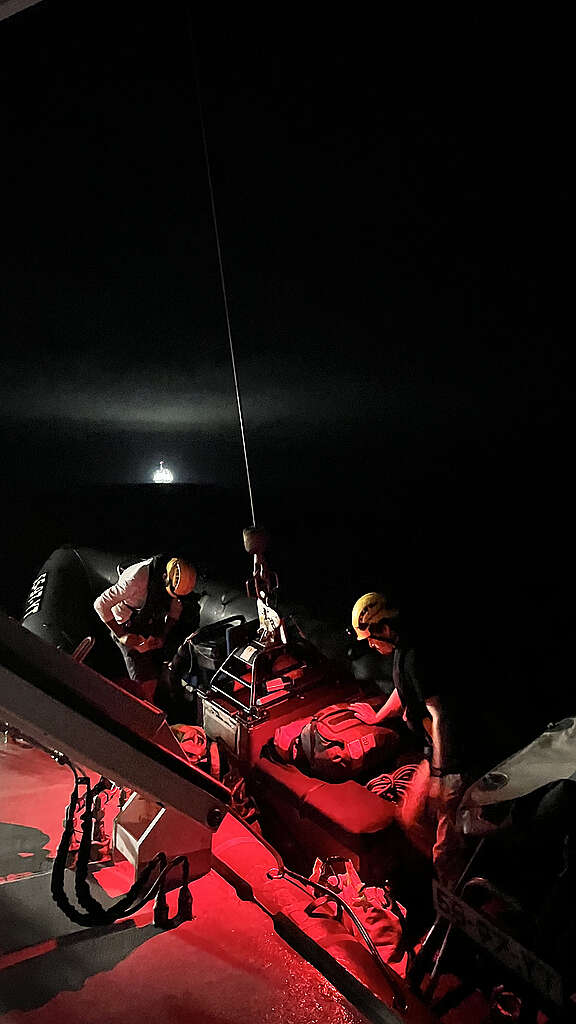
Our RHIBS are in the water! We’ve deployed our four activists and our ship crew on our small fast boats, headed to the gas platform. We’re carrying crew and equipment, plenty of food, all of our safety climbing gear, some big banners, cameras and a whole lot of heart… someone even has something to read after they get settled in.
5:26 AM AWST
Before sunrise activists prepared to launch RHIBS from the Rainbow Warrior.
Looking for a front seat view?
You can follow along with the Live Rainbow Warrior bow cam here!
Looking for more?
Follow us on Instagram for a peek behind the scenes and hear from our Rainbow Warrior crew.
Live blog: Greenpeace activists occupy Woodside gas project to save Scott Reef
