

Welcome to Carbon Brief’s DeBriefed.
An essential guide to the week’s key developments relating to climate change.
This week
El Niño begins
‘DOMINO WEATHER’: The natural weather phenomenon El Niño, which can raise global heat and “bring domino weather effects across the planet”, is now underway, the US National Oceanic and Atmospheric Administration (NOAA) declared on Thursday, reported the Washington Post. The Japanese Meteorological Administration also identified the start of El Niño on Wednesday, said Bloomberg. According to the Japanese weather agency, the event is “expected to intensify in the coming months and become very strong later in the year, persisting into at least December”, reported the outlet.
‘SUPER EVENT’: BBC News reported that “many forecasts suggest this could end up as a so-called ‘super’ El Niño” and be “among the strongest ever recorded”. It added: “Coming on top of decades of human-caused warming, it could bring another record-hot year – most likely in 2027 – with disruption to weather, food supplies and economies running well into that year.”
COP31 hosts eye electrification
‘35 BY 35’: COP31 hosts Turkey and Australia have called for countries to support a target of electrifying 35% of global energy use by 2035, reported Politico. Speaking at climate talks in Bonn, Germany, Turkish minister Murat Kurum said that electrification would be a “flagship priority” at the COP31 summit, noted the publication. Kurum added that “electrifying daily life, from transport to buildings and industry” could “protect families and businesses from volatile energy markets”, said the outlet.
WASTE AND BUILDINGS: Climate Home News reported that electrification was one of three priorities unveiled by the COP31 hosts, with the other two being waste and buildings. On buildings, the COP31 hosts “quietly overhauled [their] goal”, Climate Home News said. It reported: “An initial press statement on Monday set out a target ‘to achieve at least a 25% increase in energy efficiency in buildings by 2035’. But…on Tuesday, that was replaced with a different goal to ‘reduce energy consumption intensity in the building sector by at least 25% by 2035’.”
‘HARDEST’ CHALLENGE: Elsewhere in Bonn, UN climate chief Simon Stiell said “governments must stop revisiting climate commitments and start delivering on them”, South Africa’s Mail and Guardian reported. It quoted Stiell as saying: “Tackling the global climate crisis is the hardest but most important thing humanity has ever tried to do together…We are not yet where we need to be. But we are somewhere we have never been before.”
Around the world
- ETS EXTRA: The EU has agreed “stronger” price controls on “ETS2”, its planned trading system for heating and transport emissions, according to Reuters.
- OCEAN STRESS: The rate of sea level rise has doubled in 10 years amid “severe and accelerating” pressures on oceans, said a UN report covered by Time.
- CLIMATE MIGRANTS: Donald Trump’s “immigration crackdown is largely targeting people from the countries most vulnerable to displacement from climate-driven disasters”, according to Guardian analysis.
- ULTRA-RICH: Investments by the world’s ultra-rich in 2022 are linked to nearly $1tn in climate damages, according to a Greenpeace Africa analysis covered by BusinessGreen.
Two
The number of bidders for Trump’s auction for drilling rights in an Arctic wildlife refuge, with big oil companies “sitting out the sale”, reported Bloomberg.
Latest climate research
- As the Arctic warms, increased iceberg activity could “reshape” deep-sea habitats and “elevate” navigational hazards as maritime traffic expands | Nature
- Around 11% of the population of the world’s “rarest great ape”, the Tapanuli orangutan, is estimated to have perished in an extreme rainfall event in Indonesia in 2025 | Current Biology
- Canada’s forests are shifting from a carbon sink to a carbon source, due to “wildfires disturbances” | Global Change Biology
(For more, see Carbon Brief’s in-depth daily summaries of the top climate news stories on Monday, Tuesday, Wednesday, Thursday and Friday.)
Captured
Solar power has overtaken gas in Asia to become the region’s third largest electricity source behind coal and hydropower, according to Carbon Brief analysis of data from the thinktank Ember. Solar became the third largest electricity source for Asia on an annual basis in April 2026, according to the analysis. In the year to April 2026, solar generated 1,727 terawatt hours (TWh), while gas generated 1,711TWh, it added.
Spotlight
Atlantic current monitoring at risk
This week, Carbon Brief reports on how Trump plans could disrupt efforts to track a major ocean current.
The Irminger Sea, a patch of frigid ocean east of Greenland, plays an outsized role in the Earth’s climate.
Here, surface water that has travelled thousands of kilometres from the tropics grows cold and dense enough to sink to the ocean’s depths – a transformation that must occur for the water to begin a long journey back to the southern hemisphere.
This makes the Irminger Sea an “action centre” for the mighty Atlantic Meridional Overturning Circulation (AMOC), the vast system of ocean currents that keeps temperatures in Europe mild.
Last week, the US government announced plans to dismantle ocean moorings installed in the Irminger Sea which, among other things, collect data on the health of the AMOC.
This came as part of a programme to “descope” the Ocean Observatories Initiative, a $368m network of ocean sensors installed in the Pacific and Atlantic oceans.
Two of the moorings earmarked for removal in the Irminger Sea form part of an internationally funded, trans-Atlantic AMOC monitoring array, known as OSNAP, that stretches from Canada to Scotland.
Experts told Carbon Brief the move by the Trump administration highlights the vulnerability of AMOC observation systems around the world. These deep-sea moorings – scattered across the Atlantic – collect real-time data on, among other things, ocean current, temperature, pressure and biochemistry.
Prof Penny Holliday, chief scientific officer of the UK National Oceanography Centre, told Carbon Brief that the OSNAP array, as well as the RAPID array at 26N, are “entirely dependent” on research grants that have to be “continually reapplied for”.
“Funding is perilous all the time,” she said.
A report prepared last month by scientists for Nordic ministers exploring the security of funding for AMOC observing systems warned that RAPID and OSNAP were in “critical condition” and faced “material exposure over an 18-month horizon”. Meanwhile, other key basin-wide and global components of the global AMOC observing system were rated as “at risk”.
It is not just US funding that is uncertain. The report notes, for example, that the five-yearly funding the UK provides to RAPID and OSNAP is “at risk from 2027 due to year-on-year budget reductions” at the Natural Environmental Research Council.
(RAPID is funded by the US and UK, whereas OSNAP is backed by five different countries, with the US contributing half of the total financial support.)
Report co-author Dr Femke de Jong from the Royal Netherlands Institute for Sea Research told Carbon Brief that “continued AMOC observations” are under pressure in “multiple countries”. She said:
“While the risk of a declining AMOC to society is starting to be recognised, there is not yet a system or institution in place to guarantee a way to monitor it.”
AMOC monitoring arrays are still in their infancy – RAPID, the oldest, was launched in 2004. Two decades of data captured so far shows that the AMOC is slowing down. However, scientists will need many more years of data to be able to confidently link the decline to climate change, rather than natural variability in the ocean.
NOC’s Holliday points to the disconnect between scientific and funder timelines:
“The timescale of observations needed in order to be able to detect a climate change signal from the very naturally variable ocean is around 40-60 years…. [And yet], in the Netherlands, they have to apply for a new grant for their ocean moorings every two years. They are going to have to do that for 40 years.
“This is a very inefficient way of getting funding for what should be critical infrastructure.”
This spotlight first appeared in Cited, Carbon Brief’s new fortnightly newsletter focused on climate research. Sign up for free.
Watch, read, listen
‘BEYOND GROWTH’: A group of economists set out a “roadmap for eradicating poverty beyond growth” in the Guardian.
OIL CAMPAIGN: Politico reported on how “oil industry allies” are campaigning against attribution science, including by working to discredit a US National Academies report that “will examine research into the ways corporate climate pollution is intensifying natural disasters”.
‘FIGHT BACK’: For the Apocalyptic Optimist podcast, Dr Dana Fisher spoke to historian and author Dr Naomi Oreskes about how to “fight back” against climate misinformation.
Coming up
- 8-18 June: Bonn climate talks, Bonn, Germany
- 16-18 June: 11th Our ocean conference, Mombasa, Kenya
- 18 June: International Energy Agency Global Hydrogen Review 2026 report launch
Pick of the jobs
- S-Curve Economics, head of road transport | Salary: £75,000-£80,000. Location: Remote (UK)
- UK Department for Energy Security and Net-Zero, speechwriter to the secretary of state | Salary: £62,595-£69,765. Location: London (hybrid)
- Basque Centre for Climate Change, postdoctoral researcher for JustBioSolar project | Salary: €27,040-€34,320. Location: Bilbao, Spain
- Boston Globe climate science and environment reporter | Salary: Unknown. Location: Boston, US
DeBriefed is edited by Daisy Dunne. Please send any tips or feedback to debriefed@carbonbrief.org.
This is an online version of Carbon Brief’s weekly DeBriefed email newsletter. Subscribe for free here.
The post DeBriefed 12 June 2026: El Niño begins | COP31 hosts eye electrification | Atlantic current monitoring at risk appeared first on Carbon Brief.

Climate Change
After a week of plenty of activity and drama for Greenpeace at sea, I felt like writing to you on a much quieter theme…
Do you have a favourite book, poem or story about the ocean?
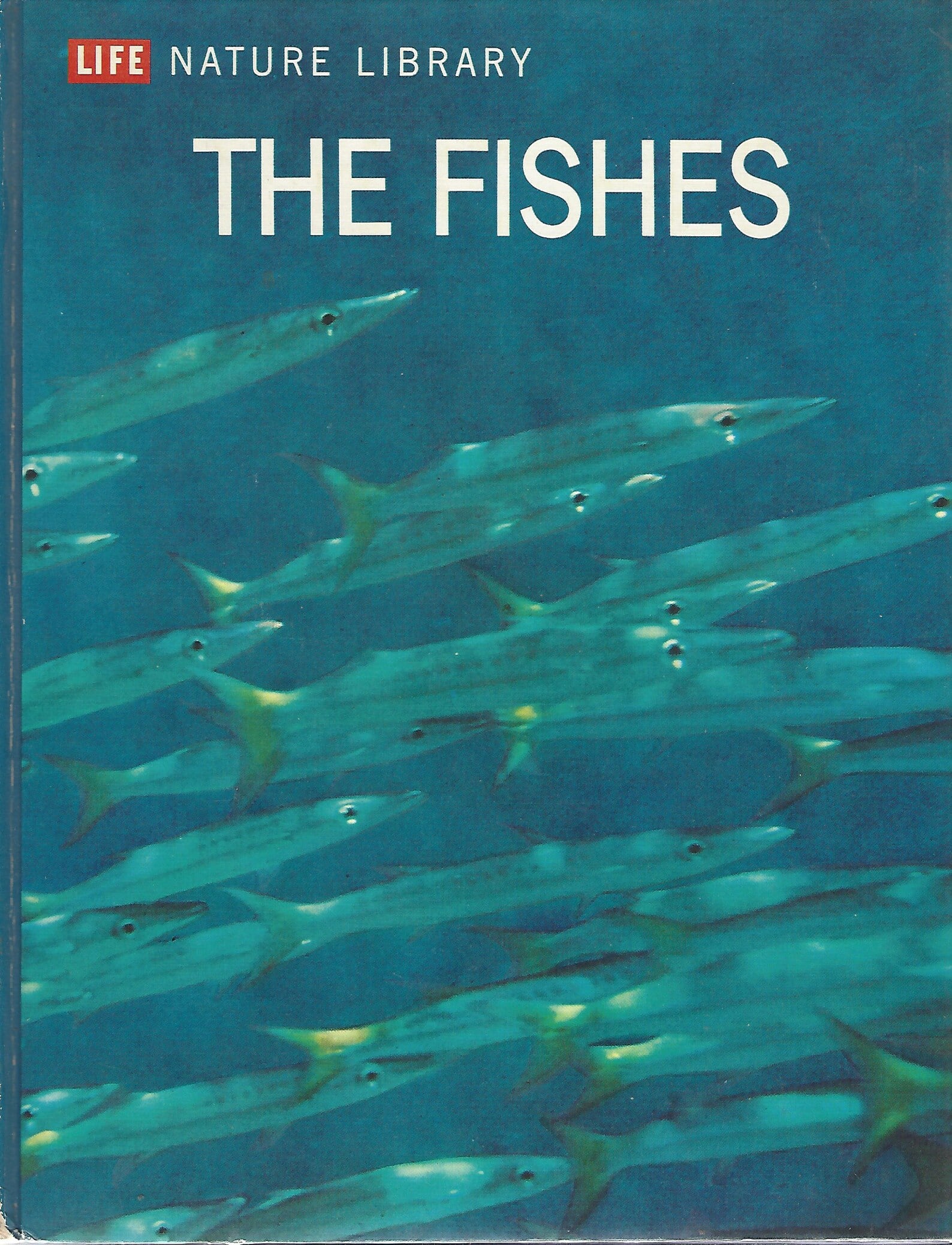
When I was very small, it was the TimeLife book of The Fishes, by F. D. Ommanney, which I remember endlessly poring over, my child’s mind gripped, in total fascination. The cover illustration showed a shoal of barracuda, mid-water and heading upwards, lit up as an iridescent blue by a column of sunlight. Oddly, it is only the cover and the illustrations of the deep sea creatures which I now remember—but I loved that book, as the weakened spine, blunted pages and dog-eared corners attested.
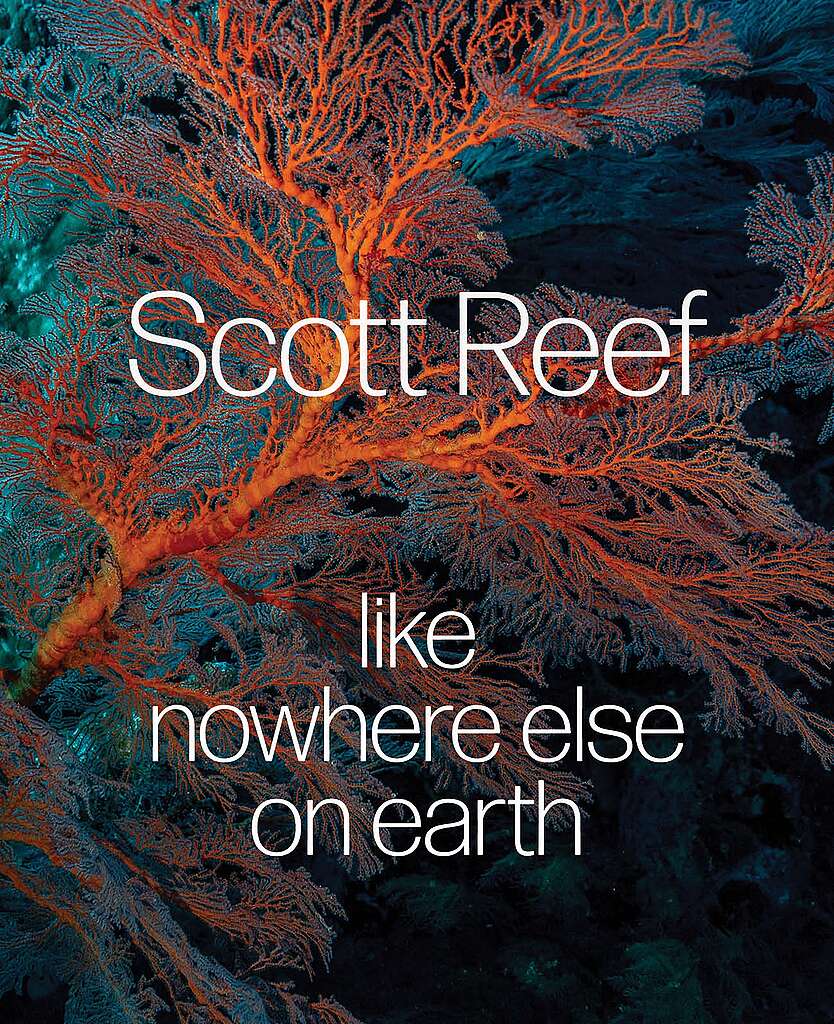
The Fishes has been on my mind recently, because I’ve been working with some dear friends on our own illustrated oceans book, to be published by Upswell Publishing. The book is called Scott Reef: Like Nowhere Else on Earth, and I want to share with you a bit of the story behind its creation.
Scott Reef is absolutely magnificent: Australia’s largest freestanding oceanic reef, brimming with life, including rare and threatened species such as a genetically distinct population of green sea turtles, pygmy blue whales and the wonderfully elegant dusky sea snake. But Scott Reef isn’t near our capital cities; it is way off the north-west coast of WA. And it is threatened with devastation by Woodside, which wants to drill up to 57 toxic wells at the Reef for its vast, dirty Browse gas project.
One of the main challenges in the fight to save Scott Reef from being turned into an industrialised gas zone by Woodside is bringing this incredible location to life for people who haven’t actually experienced it first hand. Because despite its ecological significance and dazzling beauty, ‘Scott Reef’ is also—at least not yet—exactly a household name.
To help get over this barrier, Greenpeace has enabled a number of photographers to travel to Scott Reef by boat (including the Rainbow Warrior) to document its astonishing diversity of colour and life. We then brought these images together in a remarkable photobook, produced by our talented in-house team, which we’ve been putting into the hands of as many leaders as possible—including the MPs whose decisions can determine the Reef’s future.
Back in June this year, I was sharing a copy of our in-house book at a business gathering in Perth when someone pulled me aside. Had we thought about publishing the book commercially? Apart from anything else, he wanted to buy a copy himself! He had a point. We were proud of what we’d created, but a commercially published version could reach a much wider audience and have even greater campaign impact. I immediately turned to my dear friend, Terri-ann White, who runs Upswell Publishing in WA, for advice.
Terri-ann has a huge heart and terrific vision. So many wonderful things in WA owe their existence to her doings, and, true to form, she was immediately encouraging and enthusiastic. “But,” she said, “it would add a whole new dimension if we had some words to accompany the incredible pictures.”
Fair enough, I thought. I could ask a few authors.
“And when would you like it published?” she asked.
“Ideally November,” I answered sheepishly.
Now, in publishing terms, nobody goes from idea to finished work, beautifully produced by a commercial publisher, in just four months. It. Just. Doesn’t. Happen. A book of this scale would ordinarily take nine months, I was told. But Terri-ann was undeterred. “If you can get a rapid turnaround on the writing, I will give it a shot.”
Over the following few days, I sent out 24 emails to prospective writers. To my joy and surprise 23 of them responded almost immediately with an enthusiastic yes!
Terri-ann was somewhat alarmed and perplexed when I told her the good news… we’d discussed a few authors, not more than twenty! “Impossible,” she texted. “Editing is important and you are talking about thousands of words!” But I also know Terri-ann. She does the impossible. And so, here we are… Terri-ann is going to hit that improbable deadline. Scott Reef: Like Nowhere Else on Earth will be on shelves in November.
The contributors are a wonderfully diverse bunch, united by their enthusiasm for Scott Reef — and their extraordinary speed!
It’s a brilliant mix. The book brings together national icons like Peter Garrett, Tim Winton, Mick Dodson, Janet Holmes à Court and Fiona Stanley; the intellectual heft of professors Frank Bongiorno, Jessica Meeuwig, Rick Steiner and Samantha Hepburn; the poetic vision of Prema Arasu, Berndt Sellheim and Saadiah Freeman; the field expertise and passionate first hand witnessing of Imogen Zethoven, Tooni Mahto, Ben Fitzpatrick, Geoff Bice, Olaf Meynecke, Paul Gamblin, Sarah Gittoes and Hayley Baillie; and the determination of emerging activist voices Jackson Reid and Emma Sangalli.
Their elegant words wrap themselves around the sheer wonder of the underwater world, brought to life by the work of the photographers — of whom one, Wendy Mitchell, has also contributed a wonderful essay.
Terri-ann showed me the full physical proofs this week and they are breathtaking. This book contains some of my absolute favourite images of wildlife beneath the waves -– and believe me, after almost 20 years at Greenpeace, I’ve been privileged enough to see some remarkable shots! The essays bring a whole new depth and richness to the story of Scott Reef.
If I am being honest, and maybe a bit sentimental, I hope that a four or five-year-old child somewhere in Australia will spend part of their summer holidays turning the pages of this book, wide-eyed with curiosity and awe at the beauty and strangeness of the creatures that call our oceans home.
Our shared commitment is to make sure that, as those children grow up, the wonders of Scott Reef will exist not just in the pages of the book, but out there in the wild waters off north-western Australia—alive, thriving, and every bit as extraordinary as they are today; a living wonder beneath the waves.
Pre-orders of Scott Reef: Like Nowhere Else on Earth are available here.


Q & A
Sometimes you get asked a question so often that you decide to produce a report to answer it!
We know there is strong public opposition to voter opposition to gas drilling at Scott Reef and fracking in the Kimberley in Western Australia. But I am frequently asked whether, even if people don’t want it, more gas drilling is a necessary evil to sustain WA’s prosperity?
The short answer is an unequivocal ‘No’. The longer answer is our new report, From Gas to Green: Building Western Australia’s Future State, which makes the comprehensive case that Asia’s gas market is declining — while WA has an enormous untapped opportunity to become a global leader in green industries and exports, helping drive the region’s shift away from fossil fuels. The faster that WA embarks on a decisive shift away from gas—and that includes no fracking in the Kimberley, or drilling at Scott Reef — so much the better for the state’s people, ecology and economy.