

Welcome to Carbon Brief’s Cropped.
We handpick and explain the most important stories at the intersection of climate, land, food and nature over the past fortnight.
This is an online version of Carbon Brief’s fortnightly Cropped email newsletter. Subscribe for free here.
Key developments
Drought hits food supplies
BLOW TO AFRICA: “The driest February in decades” swept across a swathe of southern Africa, wiping out crops and jeopardising energy supplies, Bloomberg reported. It cited preliminary data suggesting that large parts of Zambia, Botswana and Zimbabwe had record-low February rainfall last month. The outlet noted that 45% of planted areas in Zambia “have been destroyed” and the president has declared a national disaster. The crop failures have “threatened to send already high food prices surging further”, Bloomberg wrote, noting that in both Zambia and Zimbabwe, prices have risen by about 75% compared to last February. In addition, “dangerously low” water levels in reservoirs in several countries could force the governments to ration power supplies.
‘DIRE NEED OF FOOD’: In the Federated States of Micronesia, in Oceania, thousands of people have been affected by drier-than-normal conditions recorded since December last year, Radio New Zealand (RNZ) reported. The news site interviewed Cromwell Bacareza, UNICEF’s Micronesia field office chief, who said that around 16,000 people – 40% of whom are children – “are in dire need of food”. Bacareza told the outlet: “It’s not an isolated incident, but rather a grim reminder for everyone of the impacts of climate change on vulnerable communities, particularly the small island states.” RNZ cited the US National Weather Service, which has projected that the current El Niño would continue to worsen weather conditions.
SICILY’S ‘SEVERE DROUGHT’: The southern Italian island of Sicily is also under a “severe drought” due to a lack of winter rains, which has forced dozens of towns to ration water for both agriculture and residential consumption, Reuters reported. The newswire added that the risk to agriculture in Sicily was considered a “particular concern” by the EU’s crop monitoring service. Meanwhile, in the Po valley in northern Italy, rice farmers are still dealing with the impacts of a persistent drought that began in 2022 and devastated 7,500 hectares of rice fields last year alone, according to the Guardian. The outlet noted that Italy accounts for about 50% of the rice produced in the EU, and most of it comes from the Po Valley, where arborio and carnaroli rice – used in risotto – is harvested. The Guardian added that farmers have sought to diversify their crops in response to climate change.
Indigenous peoples driving conservation
INDIGENOUS VOICE: El Mostrador reported that the Chilean government has announced that it will involve Indigenous peoples in developing the country’s adaptation plan for its water sector. It added that “citizen participation” workshops will take place during March and April with the 11 Indigenous peoples legally recognised by Chile. El Mostrador quoted Cristian Núñez Riveros, the director general for water in Chile’s public-works ministry: “This will make it possible to recognise [Indigenous peoples’] interrelationship with water, considering their environment, ways of life and productive activities. It will shed light on the impacts of climate change from their voices, considering their practices and contributions to sustainable water management.”
LEADING CONSERVATION: Indigenous and coastal minority women are at the forefront of efforts to conserve Kenya’s “blue forests”, Inter Press Service reported. The women are restoring mangroves and fish ponds near Tsunza, a southern Kenyan coastal village, after fish disappeared from the area following several oil spills between 2003 and 2006, the newswire reported. Elsewhere, the Indigenous Achuar people in the Ecuadorian Amazon, who fought for more than 40 years to stop oil development in the area, now have solar panels in 12 of their villages, the Washington Post reported. The community had previously had little electricity coverage, but a new project has brought solar electricity to schools and homes and even allowed a switch from petrol boats to solar-powered boats.
‘THE SOLUTION’: Nearly 200 representatives of peasant and Indigenous organisations met at the end of February in south-eastern Mexico to address issues that affect them, including climate change, violence and food sovereignty, EFE Verde reported. The meeting organisers told the news agency that the meeting sought to establish actions to defend their rights in the run-up to the Mexican general elections on 2 June. In an interview with the outlet, Jesús Andrade, a member of a group of farmers’ organisations, said “the solution is peasant agroecology, which can cool the planet”. EFE Verde added that activists, NGOs and communities condemned the murder, disappearance and forced displacement of Indigenous communities by organised crime groups.
Spotlight
Dutch farm visit
In this spotlight, Carbon Brief speaks to John Arink, a Dutch organic farmer, on a media trip organised by Clean Energy Wire.
“When I look at the agricultural system at this moment, we have big problems. It is due to the system that the water is polluted…so we have to change the system.”
Amid ongoing farmer protests across the EU, one farmer in the Netherlands recently showcased the less-intensive future he wants for the agriculture sector.
John Arink, an organic farmer, spoke to Carbon Brief and other media outlets on his farm near the village of Lievelde in the east of the Netherlands, around two hours from Amsterdam.

Arink and his family run a small organic farm, shop, hotel and restaurant. He is a small producer by Dutch standards – the average dairy farm in the country has more than 100 cows. Arink has 50, alongside three pigs and 100 chickens.
Walking around the farm, a rooster crowed in an outdoor enclosure with a solar-powered coop, horned cows looked out from their pen and a group of piglets huddled around their feed.
Arink started out as a more conventional, intensive farmer in the mid-1980s. Then he visited a smaller organic farm and saw how animals could be raised with limited use of chemical fertilisers and antibiotics. He said:
“On my way back home, I thought, well, that’s the direction I want to go with my farm. In the 30 years after that, that’s what we did here.”
The Netherlands – a country around one-third the size of England – is the world’s second-largest exporter of agricultural goods, behind the US. Overall in the Netherlands, average farm sizes are getting bigger, but the number of farms is shrinking.
In recent years, the Dutch government had to develop plans to substantially reduce nitrogen emissions from, among other things, manure and chemical fertilisers on farms.
In 2022, the government set targets to cut nitrogen pollution by as much as 70% in some areas by the end of this decade. A voluntary “buy out” scheme for farms is among the measures aimed to reach this goal.
Protests kicked off in 2019 in response to the nitrogen crisis and demonstrations continued over the past few years.
On these protests and the wider farmer outcry across Europe this year, Arink believes that many farmers “cannot look over the hill” to a possible future producing less meat and more plants. He added:
“In Holland, we have some kind of a mantra that says the intensive way of producing milk and meat is very efficient. But it is not when you calculate all of the indirect dues of materials and energy.
“Maybe from the financial point of view, it can be efficient, but we have to look at it in the ecological way. And from that point of view, it’s very inefficient.”
Government formation talks remain ongoing in the Netherlands, months after the country’s general election last November. The next government will be tasked with enforcing the nitrogen reduction measures in the coming years. Arink said:
“That [nitrogen] problem is not to be solved only by farmers, but the whole society.”
News and views
REEF RIFT: Coral reefs around the world are on the brink of a fourth mass bleaching event, which “could see wide swathes of tropical reefs die”, Reuters reported. This follows “months of record-breaking ocean heat fuelled by climate change and the El Niño climate pattern”, the newswire added. Bleaching is triggered by heat stress and “can be devastating for the ocean ecosystem”, Reuters said. Dr Derek Manzello, the coordinator of the US National Oceanic and Atmospheric Administration’s coral reef monitoring authority, told the outlet: “We are literally sitting on the cusp of the worst bleaching event in the history of the planet.” Australia’s Great Barrier Reef “lost nearly a third of its corals” during the last global bleaching between 2014 and 2017, the newswire noted.
RISK FACTOR: The EU is planning to delay its deforestation-risk rating system for countries, which was due to take effect at the end of this year, according to the Financial Times. The law aims to prevent the sale of products that have been produced on deforested land. The rules would categorise countries as posing either a low, standard or high risk for deforestation. Three EU officials told the FT that all countries will be listed as “standard risk, to give them more time to adapt”. The newspaper said that the change came after “several governments in Asia, Africa and Latin America complained that the rules would be burdensome, unfair and scare off investors”. The European Commission declined to comment, the FT said. (Read Carbon Brief’s Q&A on the law for more.)
NIGERIA’S ‘BLUE CARBON’: A mangrove-restoration carbon credit project received an early green light in an “oil-rich Nigerian state”, Bloomberg reported. A UK-based company, Serendib Capital, was granted the rights “to restore the mangroves and seagrass beds” on about 9% of land in Delta State, in southern Nigeria. The outlet said that the project developer claimed this “could potentially sequester, or store away, 5.32m tons of carbon each year”. Huge oil companies “have been blamed for much of the damage that’s historically destroyed the area’s wetlands and farms”, Bloomberg added, noting that “they, in turn, could now become some of the biggest buyers of carbon offsets”. Parts of the carbon offset market have “cooled recently amid increasingly sharp criticism from scientists and experts”, the outlet said.
FARMERS RALLY ON: “Thousands of angry farmers” threw smoke bombs and lit fires near parliament buildings in Warsaw as EU farmer protests continued, Al Jazeera said. Polish farmers demonstrated against EU rules and “cheap Ukraine imports”, according to the outlet, adding that there were also “tractor blockades on roads across the country”. The country’s prime minister, Donald Tusk, “failed to reach an agreement with Polish farmers to end protests”, Euronews reported. Separately, ITV News said that farmers in Wales lined “thousands of wellies…on the steps of the Senedd [parliament] in protest against the Welsh government’s new farming plans”.
AFRICAN AGRI: A report from civil-society groups criticised a $61bn plan to “industrialise African food systems”, saying it would pose a “significant threat to small-scale farmers”, Mongabay reported. The African Development Bank (AfDB) recently released “agricultural development plans” for 40 African countries, aiming to improve food security and productivity. The groups said the initiative’s “emphasis on principal commodity crops, mechanised farming tools and standardised land tenure systems” push towards agro-industrialisation, Mongabay said. The outlet added that the groups believe this would “increase dependency on multinational corporations for seeds and agrochemicals, and lead to the loss of land and biodiversity”. The AfDB did not respond to the outlet’s request for comment.
COASTAL VILLAGE THREAT: Coastal villages in the east of India that were “hit hard by a super-cyclone” 25 years ago have since experienced “a rise in soil and water salinity and subsequent loss of agricultural land, livelihoods and marriage prospects”, according to the Migration Story. The outlet spoke to residents in the villages of Udaykani and Tandahar about the continuing impacts of the super-cyclone that “lashed” the state of Odisha in 1999, which was the “most intense ever recorded in the northern Indian Ocean”. One villager, Vaidehi Kardi, told the outlet: “When the soil turned salty, our crops shrivelled…Gradually, the water, too, turned salty and our lives withered.”
Watch, read, listen
GREEN BURIALS: In a podcast, National Public Radio examined sustainable burials and how costly they can be for your wallet and the planet.
AN OPTION FOR BELIZE: Inside Climate News looked at a “fevered push” from conservationists to “save what’s left” of the tropical rainforest in Belize through carbon offsets.
‘ENVIRONMENTAL CRIMES’: The Diplomat interviewed Prof John McManus, a professor at the University of Miami, to talk about environmental damage in the South China Sea.
‘GREEN GOLD’: In a Financial Times long read, the newspaper’s Brazil bureau chief Bryan Harris explored the agriculture and agribusiness “boomtowns” in the central-west parts of Brazil.
New science
Australia’s Tinderbox Drought: An extreme natural event likely worsened by human-caused climate change
Science Advances
Climate change made low rainfall levels during an “extreme and impactful” drought in Australia from 2017-19 “around six times more likely”, compared to pre-industrial times, new research suggested. This drought “helped create favourable conditions for the most intense and widespread outbreak of forest fires ever recorded in south-east Australia”, the study said. The researchers looked at the characteristics and causes of the “tinderbox drought” in south-east Australia and used modelling to assess how unusual the drought was compared to “natural climate variability”. They found multiple ways in which human-caused climate change may have worsened the drought, but said that other aspects of the drought were “unexpected”.
Bornean tropical forests recovering from logging at risk of regeneration failure
Global Change Biology
When logged forests are restored, they have higher seedling mortality compared to unlogged forests, new research has found. Over a year and a half, researchers examined the diversity, survival and characteristics of more than 5,000 seedlings of 15 species in northern Borneo. Some of the seeds germinated in unlogged forests and some in forests that were logged 30-35 years ago and were subsequently restored either naturally or with restoration techniques such as tree planting. They found that both restoration types had lower species richness and evenness than unlogged forests five-to-six months after the trees began to produce stems.
Giant sequoia (Sequoiadendron giganteum) in the UK: carbon storage potential and growth rates
Royal Society Open Science
A new study revealed that giant sequoias planted in the UK can absorb carbon between 2.5 and 20 times faster than other tree species commonly planted on plantations. The researchers used laser scanning to calculate the above-ground biomass and annual biomass accumulation rates of individual giant sequoia trees at three different sites. They found that the UK trees grew at similar rates as those in the US, “varying with climate, management and age”. The study said that giant sequoias are one of the country’s largest tree species and have “undoubted public appeal”. It added that they “represent a small but potentially important addition to the UK’s carbon sequestration efforts”.
In the diary
- 15 March: Third meeting of the informal advisory group on benefit-sharing from the use of digital sequence information on genetic resources | Online
- 11-13 March: 11th annual World Ocean Summit and Expo | Lisbon
- 18-29 March: First part of the 29th session of the International Seabed Authority | Kingston, Jamaica
- 21 March: International Day of Forests
- 22 March: World Water Day
Cropped is researched and written by Dr Giuliana Viglione, Aruna Chandrasekhar, Daisy Dunne, Orla Dwyer and Yanine Quiroz. Please send tips and feedback to cropped@carbonbrief.org

The post Cropped 13 March 2024: Drought hits food supplies; ‘Mass bleaching’ of coral reefs; Industrialising African ag appeared first on Carbon Brief.

Scientists have vowed to keep working on the next flagship set of reports for the Intergovernmental Panel on Climate Change (IPCC), after a political row over the timeline for their release saw its latest session suspended on Friday evening without agreement.
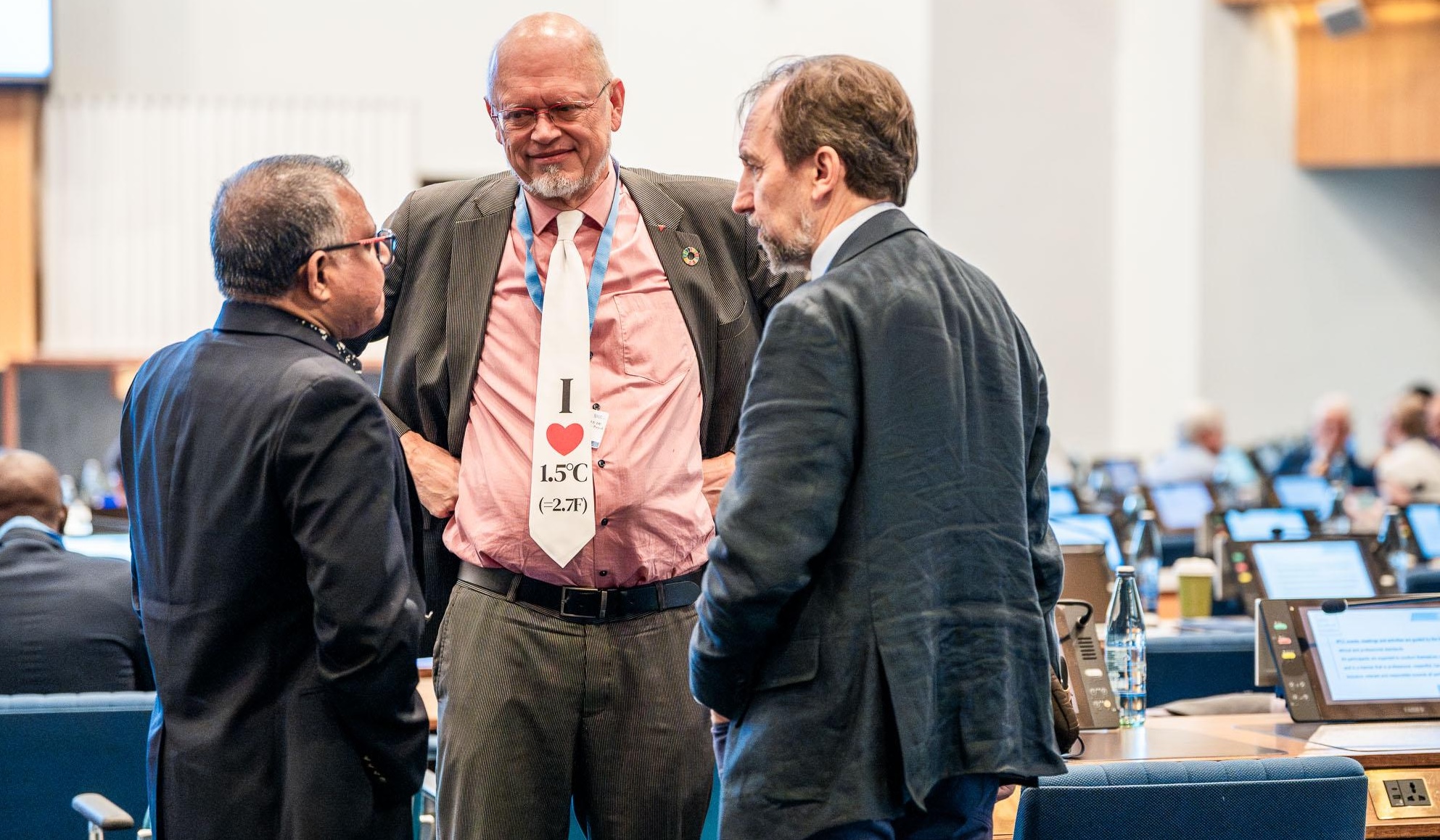
During the weekend, government officials and scientists alike expressed disappointment over the inability to reach a compromise before some delegates from developing countries and small island states had to leave the week-long meeting in Ethiopia to catch flights home.
The disagreement – which has persisted since early 2024 – turns on whether the three key parts of the AR7 assessment should all be published before the conclusion of the UN’s next Global Stocktake of global climate action, which is due to be completed in late 2028.
The IPCC issued a statement after the close of the session, saying that “key agenda items” – the timelines for the three AR7 reports, as well as the IPCC budget – remain open and under discussion. It said the IPCC’s plenary session and its deliberations on the pending agenda “will resume at the earliest opportunity”, giving no further details of when.
IPCC Chair Jim Skea told delegates in closing remarks that recent months had been some of the most turbulent for the climate science panel and that, if there were stronger words than “profound disappointment” he would use them, according to a summary published by the Earth Negotiators Bulletin (ENB). IPCC discussions happen behind closed doors.
IPCC scientists remained committed
In an open letter, issued on Monday, a group of nearly 120 scientists – from a total of 664 AR7 authors – said they “stand committed to continue working to deliver the AR7 reports in a manner that is rigorous, timely and inclusive, in line with our mandate to be policy-relevant”.
“An assessment that arrives after the decisions it is meant to inform cannot serve its purpose,” they emphasised. “The second Global Stocktake in 2028 is such a decision point, and the world should not have to face it without the IPCCʼs latest assessment.”
Europe, small islands and the least developed countries, plus many Latin American and developed nations, want the IPCC to meet this deadline, arguing that the findings from the UN climate science body are irreplaceable in the UN climate policy-making process.
However, around a dozen developing countries plus Russia have argued that the reports should come later in order to allow for greater research input from the Global South – something that, in their view, would make the findings fairer. They also claim that a shorter timeline would put excessive pressure on experts.
-
Who shapes climate science? The equity question facing the IPCC
Early completion of the next global climate science assessment reports risks excluding research from the Global South, which is key to ensuring the findings are fair -
Governments that support climate science must stand firm against naysayers
The IPCC is meeting to decide the timing of its next major report, as some countries try to delay it and weaken the case for faster emissions cuts


The most vocal of this group at last week’s meeting were India and Saudi Arabia, according to the ENB summary and a developed country diplomat. Critics see this push for a longer timeline as an excuse to deprive government decision-makers of the latest science and ease pressure on emerging economies to raise their ambition, particularly on cutting emissions.
Commenting on last week’s meeting, France’s ambassador for climate negotiations Benoît Faraco said a broad coalition of developed and developing countries from all five continents, “united in their support for science and the timeline proposed by scientists”, had withstood pressure “from a few countries” seeking to slow down the process of adopting the IPCC reports.
He added that France would not back down and would “continue to fight tirelessly for science, protect the integrity of information, and convince our partners that without the best available scientific data, we will be less effective in tackling climate change and protecting our populations”.
Inclusivity proposal stalled
In a bid to unlock a solution for the AR7 timeline, countries discussed ways to improve the inclusivity of the IPCC’s work. One option put on the table was for the IPCC to expand its funding for delegates from developing countries to attend some or all of its sessions from one to two participants, according to the ENB summary and a delegate speaking to Climate Home News.
That would increase the costs for the IPCC to complete AR7 by up to a quarter, according to an assessment shared by the secretariat. The panel’s budget is under severe strain and its officials have warned that, without additional voluntary contributions, it risks running out of money before it can deliver on this assessment cycle.
Climate Home News understands that some of the IPCC’s traditional donors – which mainly include European countries, Japan and Australia – indicated a willingness to support funding for an additional developing country participant. But without an agreement over the budget or the timeline for the reports, that option was ultimately not adopted.
‘Disappointed and worried’
The three reports are managed by working groups that collate and draw overall findings from the latest scientific studies and data on the physical effects of global warming around the world, how to adapt to it, and pathways for cutting planet-heating emissions in order to meet the temperature goals of the Paris Agreement.
Winston Chow, an urban climate professor at Singapore Management University who co-chairs Working Group II on adaptation, wrote in a LinkedIn post that he was “disappointed and worried” for the IPCC authors who have worked “extraordinarily hard” to assess the relevant climate science over the past two years.
He said he shared their concern that “the rigour, time and goodwill they’ve invested are now being put at risk by the Panel’s stalemate”.
As science comes under attack at UN talks, climate movement splits over how to respond
For Working Group II, a meeting for 250 experts writing that report is scheduled for January 2027, followed by the approval of a special report on cities and climate change in Singapore next March.
But because the IPCC’s budget has not been confirmed due to uncertainty about the AR7 schedule, travel support for those researchers is at risk, wrote Chow. “If they cannot participate, our assessments will lose vital expertise, perspectives and scientific breadth, and the collective effort of our authors will be undermined,” he warned.
Scientific work continues
Despite the political holdups, he – together with French climate scientist Robert Vautard, co-chair of Working Group 1 – agreed with IPCC head Skea who told the IPCC’s closing session on Friday: “The engine room of the IPCC is working, and it’s healthy.”
Vautard commented in a separate post on LinkedIn after it ended: “The boat is at full steam.” Working groups I and II are due to start revising the first drafts of their reports, while Working Group III on reducing emissions is finalising its first draft which will be out soon, he wrote.
“The most exciting two years of the cycle are ahead, for the authors. The momentum in the engine room is here and now. Trust the engine room!” he added.
The IPCC and some scientists report that progress has been made towards achieving an equitable balance of authors from the Global North and the Global South.
The group of researchers who signed the open letter on Monday noted that “inclusivity is at the heart of how we work”, with author teams bringing together experts from developed and developing countries with diverse backgrounds and at different stages of their careers.
Plea to overcome political differences
The signatories include several scientists from some of the countries opposed to the alignment of all IPCC reports with the Global Stocktake.
“We are committed to an assessment in which the knowledge, experience and priorities of every region are fully reflected, a commitment we share with the leadership of the IPCC.
Equity is built into how our assessment is being drafted,” they added.
They appealed to governments that make up the IPCC “to overcome their political differences and work together as we do as a global scientific community, so that we can deliver the IPCC reports the world needs to hear”.
In a statement published on Monday, IPCC chair Skea said reaching consensus on the schedule for the reports is “vital”. He added that the assessments provide authoritative scientific evidence to inform national climate policies, strengthen adaptation and resilience and support access to climate finance, as well as helping communicate the scale of the climate crisis and the urgency of efforts to tackle it.
The post IPCC scientists vow to press on with climate reports despite political deadlock appeared first on Climate Home News.
IPCC scientists vow to press on with climate reports despite political deadlock