Connect with us

Published

on

Faster electrification is the best way to secure lower energy bills and stronger energy security, according to the Climate Change Committee (CCC).

The government’s official climate advisers have stressed the importance of electrification, noting that electric cars and heat pumps can “put money back into people’s pockets”.

Moreover, the UK’s net-zero targets face “significant risks” unless there is faster progress in electrifying cars, heating and industry, according to the CCC’s latest progress report

The report notes that the government has closed some of the gaps to its upcoming targets and introduced more “credible” plans.

However, challenges remain in the UK’s climate strategy, including accelerating the expansion of heat pumps, cutting emissions from farms and supplying planes with “sustainable” fuels.

The CCC notes that 17% of the emissions cuts required to achieve the UK’s 2030 Paris Agreement climate target are currently not addressed by any government plans at all.

Amid political and industry pressure, the committee also says the government should “stand firm” on its climate goals, including its strategy for encouraging electric-vehicle (EV) sales.

Carbon Brief has covered the CCC’s annual progress reports in 2025, 2024, 2023, 2022, 2021 and 2020.

Overall progress

Today’s progress report is the third since Labour swept to power in 2024.

It arrives amid a “red extreme heat warning”, on the day that parliament will vote on the seventh “carbon budget”, a legally binding limit on UK emissions in 2040.

The report comes at a febrile moment in UK politics, with prime minister Keir Starmer having just resigned and with newly re-elected MP Andy Burnham widely tipped to take his place.

The opposition Conservatives and Reform are lobbying to scrap UK climate goals – and senior Labour figures want to row back on EVs and North Sea oil and gas drilling.

Against that backdrop, the CCC insists that it is the UK’s reliance on fossil fuels – and the second fossil-fuel price shock in four years – that has caused a “cost of living crisis”.

Speaking to journalists ahead of the launch, CCC chair Nigel Topping warned against any moves to weaken UK climate policies. He said:

“U-turns are really damaging to inward investment confidence…[We should] hold the course and focus on electrification…which will unlock very significant savings.”

Whereas the CCC said last year it had become “more optimistic” that UK climate goals could be met under the new government, its latest progress report strikes a more cautious tone.

It says that the UK’s emissions fell by 1.8% in 2025 and that there has been “some positive progress” in terms of delivery over the past year, but that this has been “too slow”.

There was actually an increase in emissions from transport and electricity supplies in 2025, as shown below, despite the expansion of clean power and EVs.
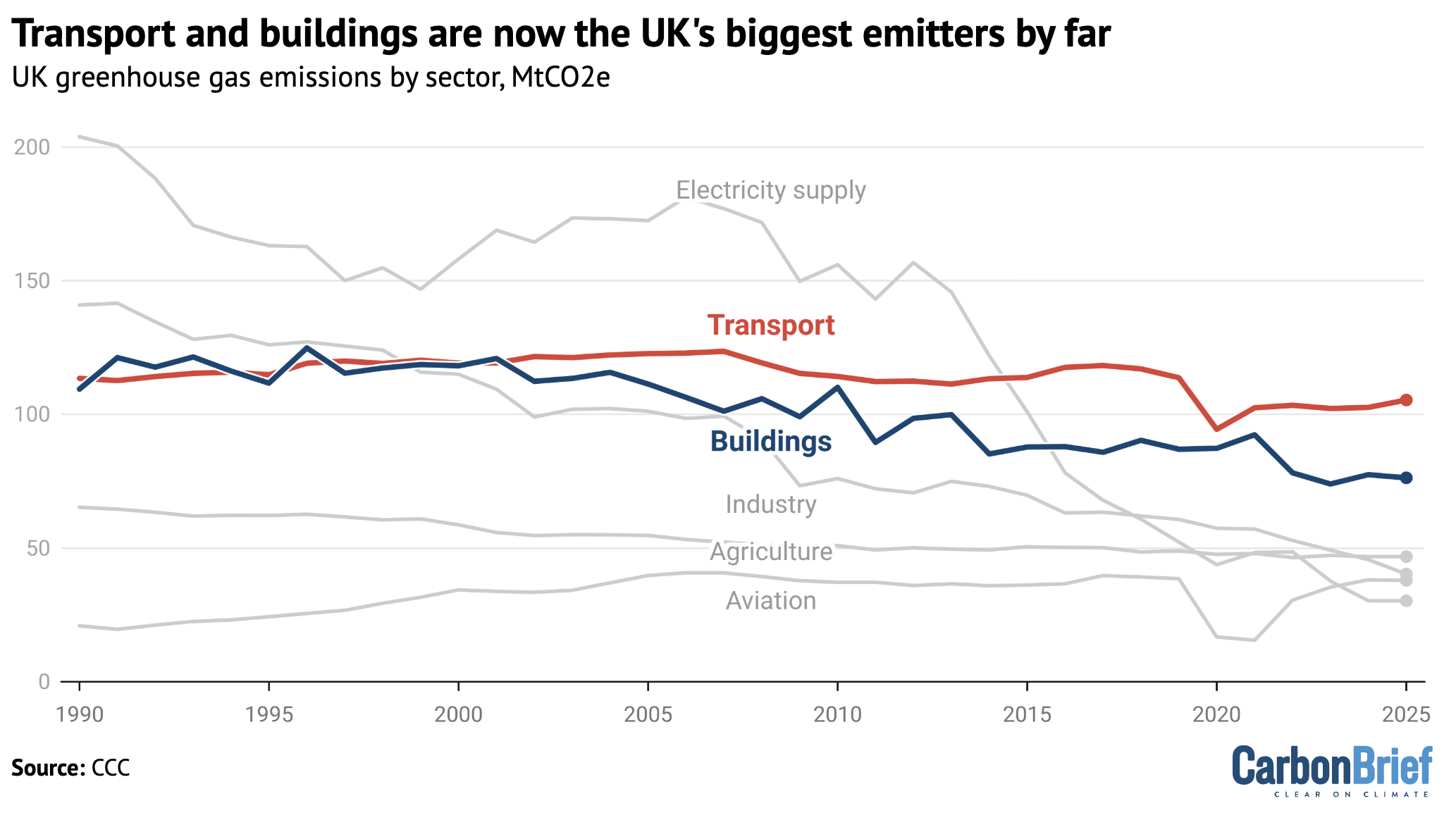
Chart showing that transport and buildings are now the UK's biggest emitters by far
UK greenhouse gas emissions by sector, million tonnes of CO2 equivalent. Source: CCC 2026 progress report.

The UK’s greenhouse gas emissions are now roughly 50% below 1990 levels, the CCC notes, with the lion’s share of this having come from cleaning up the power sector.

In contrast, there has been far less progress in transport, which is now the UK’s largest emitter, as well as in buildings, the second largest.

The CCC stresses that future emissions cuts will need to come from using clean power to decarbonise other sectors – particularly buildings, transport and industry.

It puts a major emphasis on the need to electrify these sectors by more rapidly rolling out EVs, heat pumps and electric heating for industrial sites.

The CCC adds that government plans for meeting future targets, published last year, leave a “significant gap” to the UK’s international climate pledge for 2030. (See: Policy gaps.)

Back to top

The electrification ‘prize’

The most striking aspect of this year’s report is the way it centres on electrification, which the CCC says has been given “insufficient focus” to date.

Electrification has shot up the agenda in recent months, with the COP31 presidency calling for countries to back a global goal for 35% of “final” energy to come from electricity by 2035.

The text of the CCC’s latest report uses the word “electrification” far more often than previous editions, as shown in the figure below.
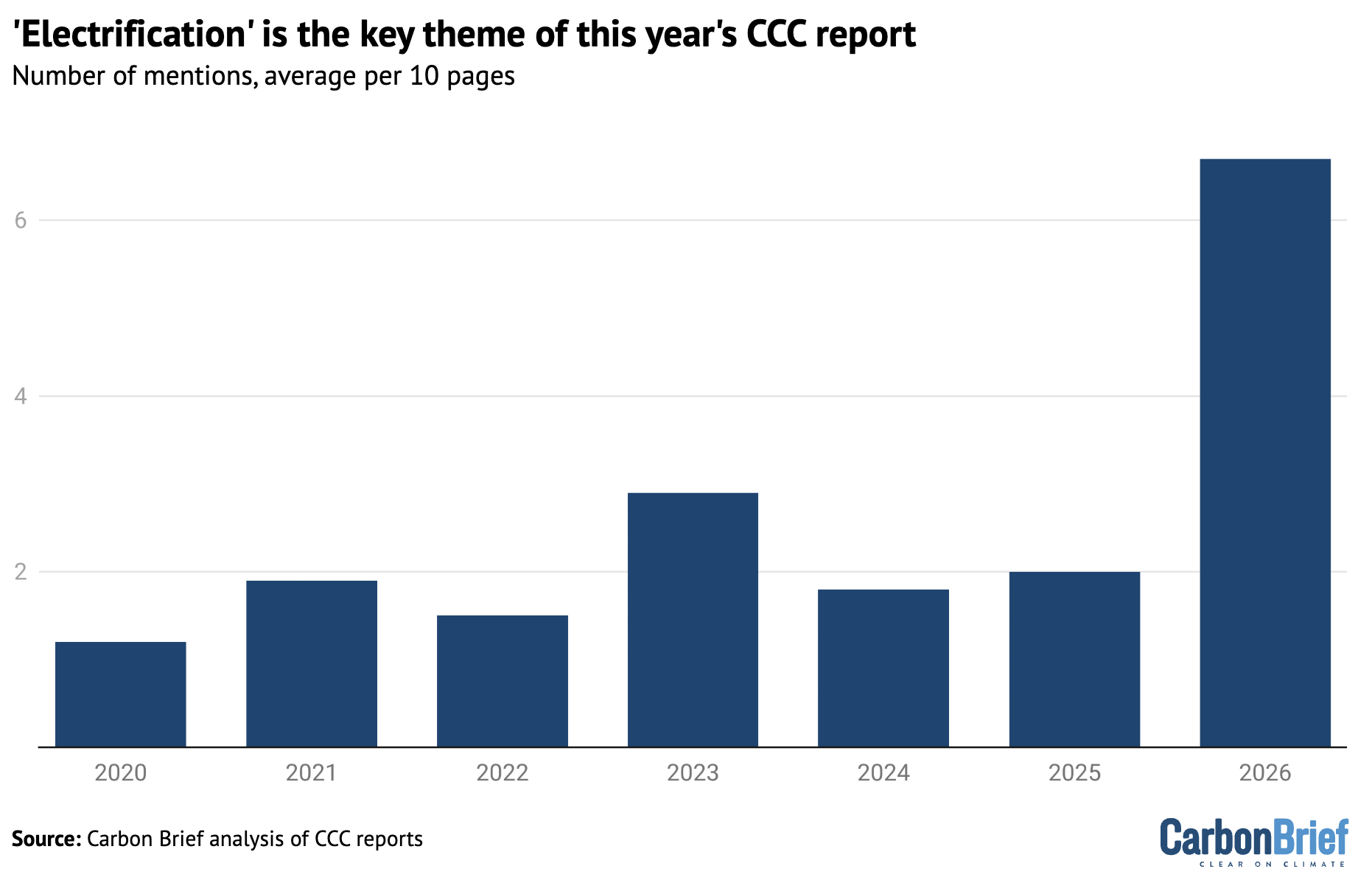
Chart showing that 'electrification' is the key theme of this year's CCC report
Number of times the word “electrification” appears in successive CCC progress reports, average per 10 pages. Source: Carbon Brief analysis of CCC reports.

Early last year, in advice on the seventh carbon budget, the committee singled out electrification as key to cutting UK emissions. It said electrification had won out over alternative options, thanks to rapid cost reductions for technologies such as EVs.

Now, the CCC says that electrification is also the best way to secure lower energy bills, stronger energy security and a host of other benefits.

Topping said these benefits include “putting money back into people’s pockets”, but also cleaner air, stronger energy security and protection from fossil-fuel shocks:

“The prize is really significant here. By 2030 alone, the UK could save up to 80m barrels of oil and 1.5bn therms of gas each year. That would cost almost £8bn at current oil and gas prices.”

The emphasis on the topic is also clear in the CCC press release for its report, which is titled: “Faster electrification would cut UK household bills, say climate advisers.”

The report fleshes this out in a dedicated chapter that explores the financial benefits of electrifying household energy use, including heat and transport.

Topping said that the “home of the future” will be equipped with an EV, a flexible “time-of-use tariff” for its electricity supplies and a heat pump for keeping warm.

Moreover, the report shows that even today, this type of household would cut its annual energy bills by around £1,200, relative to using a petrol car and a gas boiler.

Crucially, this saving, shown in the figure below, includes the high upfront costs of installing an electric heat pump and solar panels. The analysis shows that electrified homes have far lower annual running costs, which easily outweigh this initial outlay.

(Due to “modelling limitations”, the CCC analysis does not consider home batteries, which can help unlock even larger savings.)
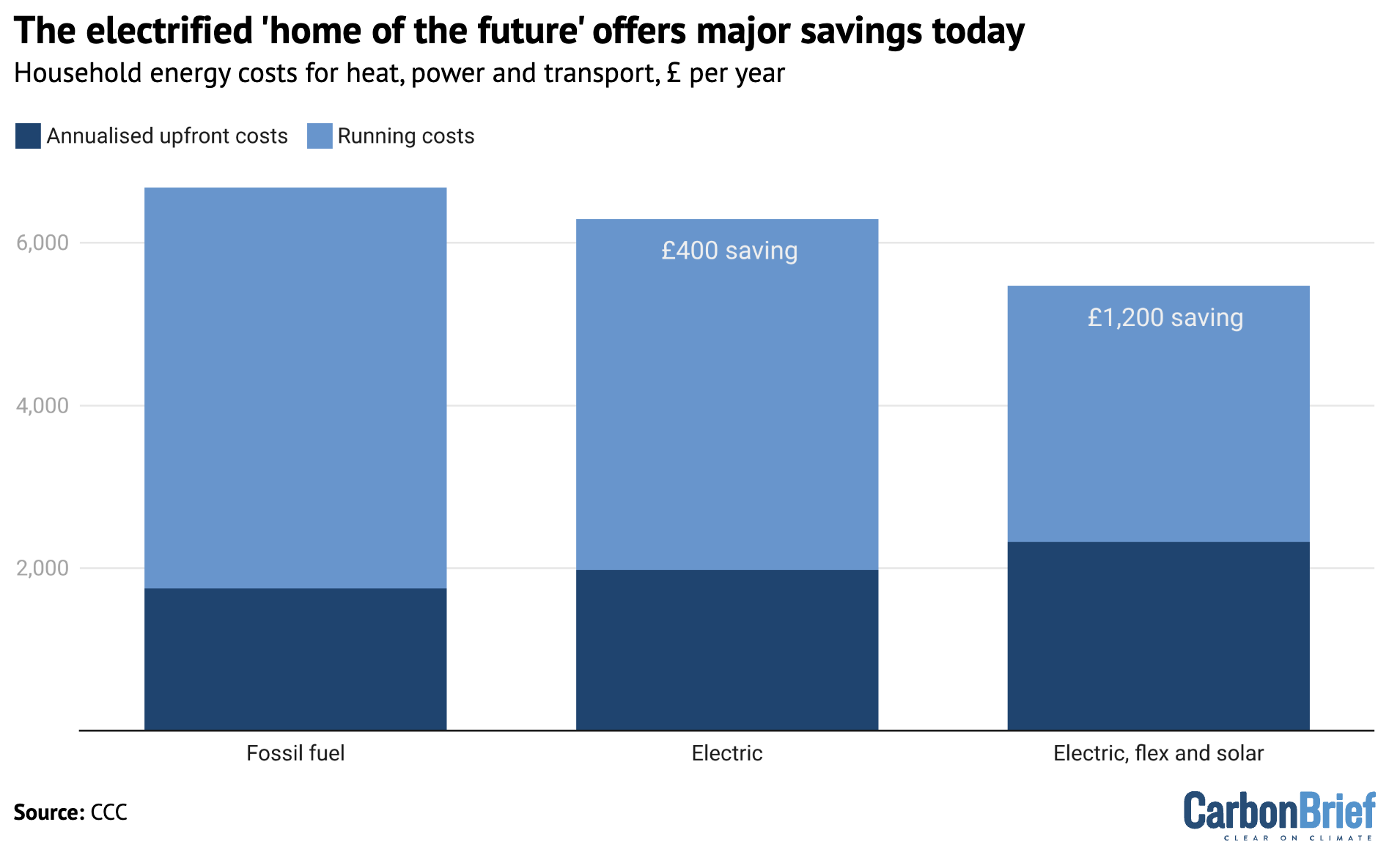
Chart showing that the electrified 'home of the future' offers major savings today
Household energy costs for heat, power and transport, £ per year. The upfront costs of purchasing cars, heating systems, chargers and solar panels are annualised. Source: CCC progress report 2026.

The CCC says that while not everyone is currently in a position to enjoy the financial benefits of electrification, its analysis points to savings both before and after the Iran crisis, as well as for high- and low-income households, with the latter eligible for grants to cover upfront costs.

Even more homes would be able to unlock these benefits if the government acts to resolve barriers, such as high public charging costs, says the CCC.

However, the report says that the government’s current plan to electrify the economy “lacks ambition” and that there are “worrying signs” in some areas, such as heat pumps and electric vans. (See: Road transport and Buildings.)

Ultimately, says the CCC, the best way to encourage faster and wider electrification is to make electricity cheaper. This has been its top recommendation for several years.

Policy gaps

Since the last CCC progress report, the government has published a new “carbon budget and growth delivery plan” (CBGD), explaining how it will cut emissions in the 2030s.

The CBGD “projects slower emissions reductions for surface transport and buildings compared to the previous government’s plan”, according to the CCC.

This reflects both the slow rollout of some technologies – such as heat pumps – and “areas of reduced policy ambition”, including less support for low-income homes to install insulation.

The CCC says that without “sufficient progress on electrification” this year, the UK’s 2030 emissions target “may become out of reach” and future goals would face “significant risks”.

The chart below demonstrates the CCC’s view that the UK is “well on track” to meet its fourth carbon budget, between 2023 and 2027, and that there are “credible policies in place” to meet the fifth carbon budget out to 2032.

However, it also shows the “significant gap” that the CCC says still exists between projected emissions cuts (blue lines) and the UK’s international climate target for 2030, its nationally determined contribution (NDC) to the Paris Agreement (black circle).

(This is particularly notable as the NDC was the first official UK climate goal that was aligned with its 2050 net-zero target. The fourth and fifth carbon budgets were set before the net-zero goal and therefore need to be overachieved.)

Plans that are “credible” or only come with “some risks” are on track to cut emissions to 356m tonnes of carbon dioxide equivalent (MtCO2e) by 2030. This is 11MtCO2e lower than last year, but still a shortfall of 64MtCO2e.
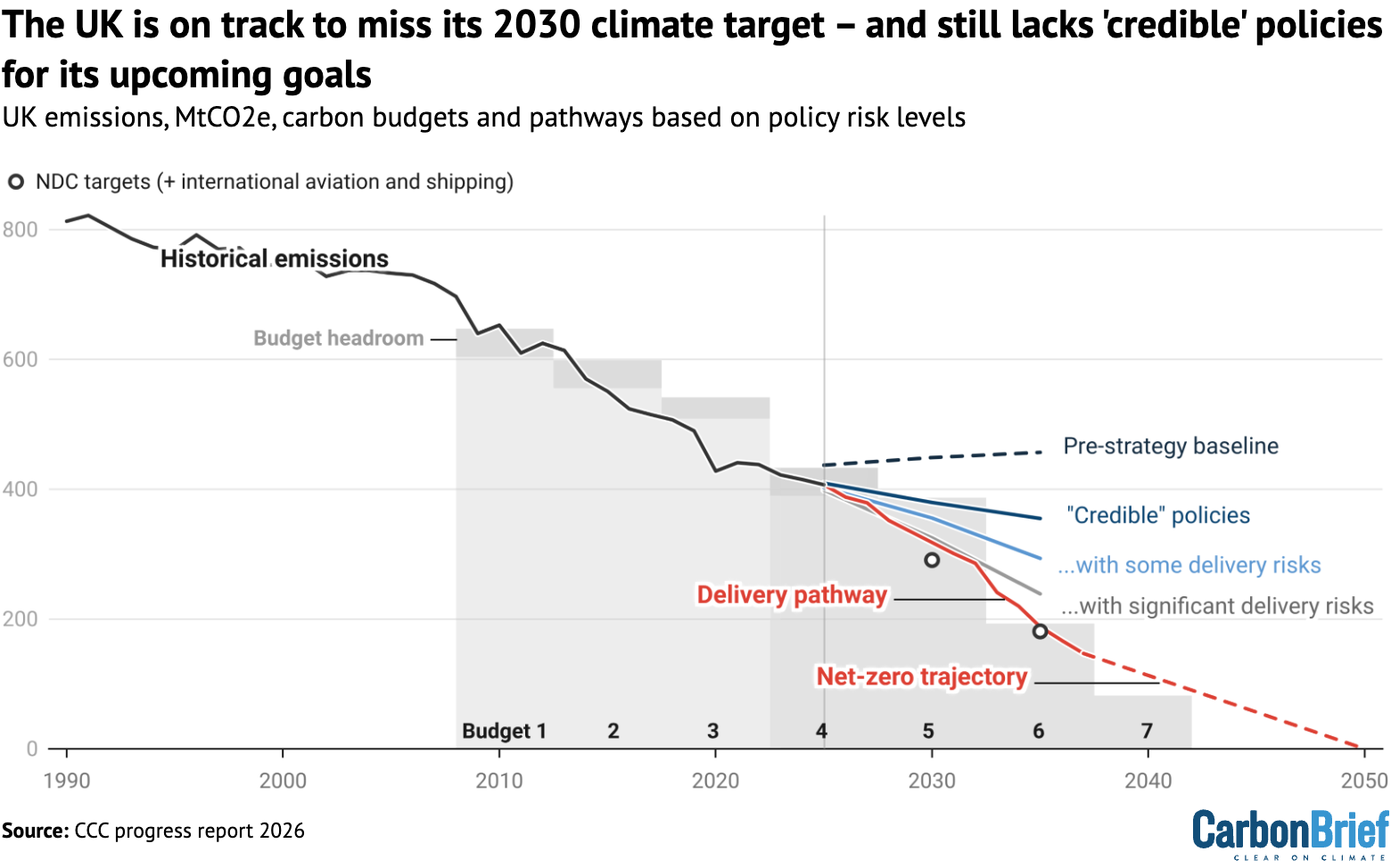
UK greenhouse gas emissions, including international aviation and shipping
UK greenhouse gas emissions, including international aviation and shipping (IAS), MtCO2e. Lines show historical emissions (black) and the UK’s “carbon budget indicative pathway” from the CBGD (red). Projected emissions are shown under what the CCC defines as “credible” policies (dark blue); credible policies, plus those with “some risk” (light blue); and policies that are credible, have some risk or “significant risk” (purple). The dotted black line indicates the trajectory for emissions before any net-zero policies were implemented. The dotted red line indicated an example trajectory to reach the target of net-zero emissions by 2050. Legislated carbon budget levels are shown as grey steps, including the suggested level of the seventh budget for 2038-42. The first five budgets did not include IAS, but “headroom” was left to allow for these emissions (darker grey wedges). Source: CCC 2026 progress report.

Overall, the CCC says there are “credible” plans in place for 44% of emissions reductions by 2030, including those linked to renewable energy, EV sales growth and electrification of steel production at Port Talbot in Wales. Another 15% of reductions come with “some risks”.

The report concludes that there are “significant risks” attached to 19% of emissions cuts, including the expansion of heat pumps, future “sustainable aviation fuel” (SAF) supply and agricultural policies.

There are also 4% of required emissions cuts for which the UK has “insufficient plans”, including much of the electrification of the UK’s heavy industry.

The chart below shows how this assessment compares to previous CCC analysis of government plans, with the share of “credible” government plans increasing.

(As the latest report is based on the new CBGD rather than the previous 2023 plan, the assessments have different levels of baseline emissions and are not directly comparable. However, this chart shows the rough direction of travel.)
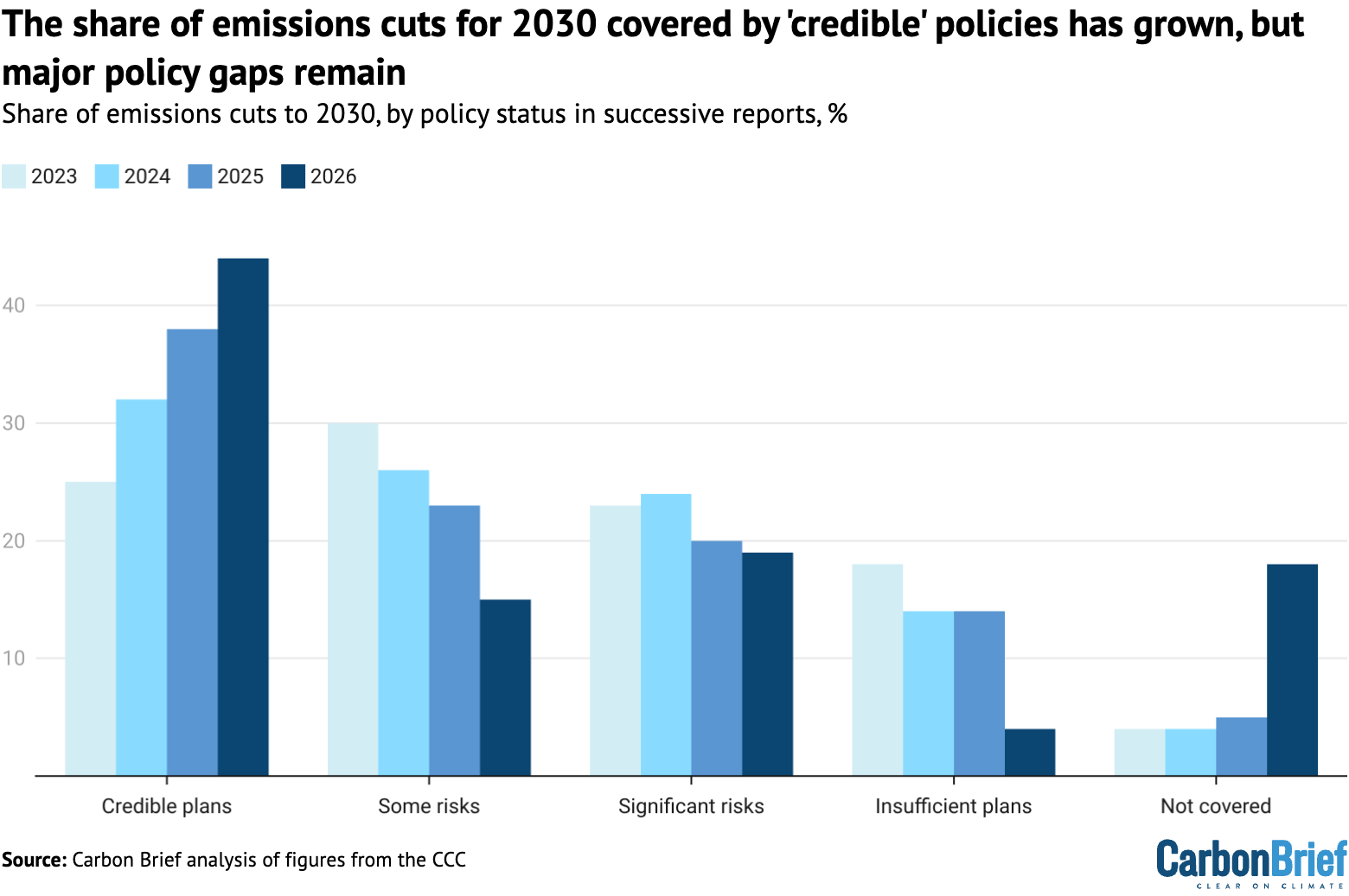
Chart showing the share the emissions cuts for 2030 covered by 'credible' policies has grown, but major policy gaps remain
Share of emissions cuts needed to hit the UK’s 2030 climate goal that are rated by successive CCC reports as being backed by “credible” policies, or that face “some” or “significant” risks to delivery, or where there are “insufficient plans”, %. The chart also shows the share of emission cuts required that are “not covered” by the government plans. Source: Carbon Brief analysis of CCC reports.

As the chart shows, a substantial chunk of the required emissions cuts need to meet the 2030 pledge – 17% of the total – are not covered by the CBGD.

This reflects the fact that the new plan simply does not achieve the 2030 target, according to the CCC, despite the government’s stated commitment to its NDC goal.

(The government’s plan had also acknowledged that it fell short of meeting the 2030 NDC.)

The CCC emphasises that “the government will need to bring forward additional policies and plans to make up this gap”.

The new report suggests several areas – including faster EV growth, more heat-pump installations and more ambitious recycling rates – that would close 17MtCO2e of the 26MtCO2e gap to the 2030 goal.

Unlike the 2030 NDC, the government’s plan does achieve the sixth carbon budget, between 2033 and 2037. However, the committee says “this is largely achieved through additional measures where we have assessed there to be significant risks or insufficient plans”.

Only around three-fifths of the required emissions cuts for the sixth carbon budget are covered by “credible” plans or plans with “some risks”.

According to the CCC, the government is relying on a rapid scale-up of engineered removals beyond 2030, but has provided little detail about how it will achieve this. (See: Other sectors)

“This approach carries substantial risks,” according to the committee.

Back to top

Road transport

Road transport remains the UK’s highest emitting sector and its emissions increased by nearly 3% last year, according to provisional data in the CCC report.

Electric-car sales have continued increasing, reaching nearly a quarter of new sales last year. The number of electric cars on the road surpassed 2m in May 2025.

However, the emissions benefit of this rollout of electric vehicles (EVs) “is likely to have been offset by other factors”, such as driving rates returning nearly to pre-Covid levels, according to the CCC.

The report notes that EV costs “continue to fall” and have met price parity in some parts of the market, with grants providing an extra boost to sales.

The committee’s pathway to net-zero assumes faster emissions cuts from road transport than the government’s pathway. This is largely because it assumes an imminent “tipping point” will be reached, when EVs reach upfront price parity with petrol cars.

Nevertheless, the report says that sales will still “need to accelerate fast” over the next few years and that this will require consistent government support.

The CCC stresses the “key role” of the zero-emission vehicle (ZEV) mandate, which requires manufacturers to sell a rising share of EVs.

There have been reports that the government is planning a “U-turn” after a review of the ZEV mandate. The CCC says it is “essential” that the review “does not lead to further concessions”:

“Doing so would severely undermine prospects of achieving the UK’s 2030 NDC, exacerbate the UK’s dependence on imported oil, and leave more households paying the higher costs of petrol or diesel cars.”

As well as “stand[ing] firm” on the ZEV mandate, the committee says it is important that the government “remove[s] barriers to EV adoption”.

One key policy highlighted by the report is increased access to cheap EV charging, so the one-third of UK homes without off-street parking access can “benefit from lower running costs”.

(CCC analysis suggests that while the average home would save at least £660 a year by switching from a petrol car to an EV, their running costs could actually increase if they have to rely on public charging infrastructure.)

The report also stresses the use of EV “time-of-use tariffs”, which it says can help people save even more money. It notes that “measures to support consumer awareness” of this “could drive further uptake”.

Also, with a new 3p per mile EV tax due to start from April 2028, the committee says it is “essential that this new tax is implemented in a straightforward manner” to minimise the “hassle factor” that could disrupt the EV transition.

While electric-car sales have so far remained slightly ahead of the level needed to hit the ZEV mandate, the CCC notes that both electric van sales and prices are “significantly off track”. Unlike cars, electric vans still cost considerably more than their combustion-engine equivalents.

The committee says government support, including improved access to fast charging and “regulatory reforms”, is also “key”. As an example of the latter, it notes that certain licensing and testing requirements are based on vehicle weight, which puts heavier battery-powered vehicles at a disadvantage.

Finally, the CCC criticises recent policy decisions that incentivise sales of plug-in hybrids (PHEVs) “based on emissions factors which underestimate real-world emissions”. It notes:

“Providing incentives for emissions savings that PHEVs do not deliver distorts the market and risks eating into the demand for EVs.”

Back to top

Buildings

The CCC says that the rate of growth in heat-pump installations in homes slowed last year, rising just 7%, compared to the 56% jump seen in 2024.

Around 52,000 heat pumps were installed in 2025, according to the report. Of these, 31,200 were installed with the support of grants from the “boiler upgrade scheme”.

This was not enough to meaningfully reduce emissions, says the CCC, only delivering around 0.1MtCO2e of extra savings in 2025.

(To eliminate emissions from homes by 2050, heat pump installations in existing homes need to reach 1.4m per year by 2035, according to the CCC.)

Overall, emissions from the buildings sector fell by 1.2MtCO2e in 2025, amounting to a reduction of 1.3% for non-residential and 1.6% for residential buildings compared to 2024.

This was despite the winter months being colder in 2025 than the previous year, generally meaning greater heating demand. This suggests factors other than weather are driving the reduction, it says, such as higher energy prices leading to lower heating use.

The CCC notes that while emissions did drop, this “does not indicate progress on decarbonising home heating”. It adds:

“Without further actions to decarbonise buildings, it is likely that emissions will rebound if energy prices fall or weather conditions revert to average.”

The slowdown in the rate of heat pump installations was largely due to the closure of the ECO scheme, which delivered around one-third of heat pump installations in existing homes over the last three years.

In terms of government policy, the CCC notes that there has been some “positive progress” for buildings, due to the new “warm homes plan” and the “future homes standard”.

The former provides support to help people install electric heat pumps, rooftop solar panels and insulation. In total, 5m homes are expected to benefit from £15bn of grants and loans earmarked by the government for these upgrades by 2030.

While installation rates in the UK in 2025 were significantly below this level, the CCC report says that growth rates in other European markets – and indeed, in the UK between 2023 and 2024 – suggest that higher rates could be achievable.

The CCC notes that while there is £1bn a year earmarked for supporting upgrades of low-income households under the warm homes plan, this is still a “significant decrease in investment” from that provided by ECO.

The future homes standard, meanwhile, is an update to existing regulations in England. From March 2028, new-build homes in England will be required to have on-site renewable energy generation and a low-carbon heating system.

From then on, newly built homes will produce 75% less greenhouse gas emissions than under previous regulations.

The CCC report notes that the installation of heat pumps in new homes, specifically, is currently on track to achieve targets, with 25% of new homes built with a heat pump in 2025. However, it says retrofit installations of existing homes are significantly below where they need to be and “urgently need to accelerate”.

The CCC notes that while there has been some progress in removing policy costs from household electricity bills, the ratio of electricity to gas prices remains a major barrier to heat pump take-up. (See: The electrification ‘prize’.)

It also notes that there has been no action to address this barrier for non-residential buildings.

Fewer than 2% of homes have a heat pump in the UK, it says, placing the nation among the lowest rates of installation in Europe, as seen in the chart below.
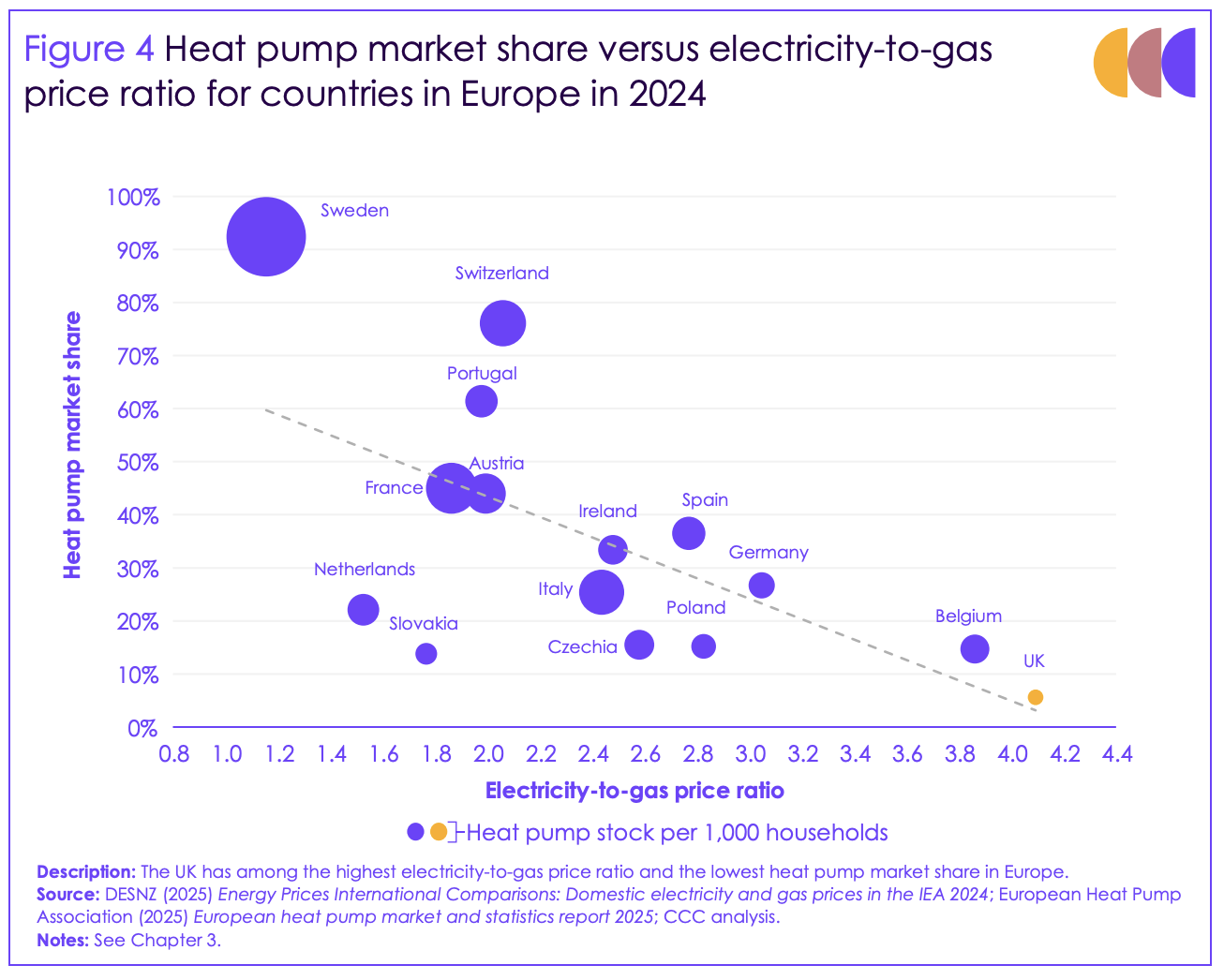
Chart showing heat pump market share versus electricity-to-gas price ratio for countries in Europe in 2024
Heat pump market share vs electricity-to-gas price ratio in Europe in 2024. Credit: CCC.

Back to top

Industry

Industry accounted for the largest share of emissions reduction in the UK in 2025, according to the CCC, with a 5.4MtCO2e (12%) drop from 2024.

As such, sectoral emissions for industry are now 56% lower than they were in 2008. 

This was largely due to the closure of blast furnaces at the Port Talbot steelworks towards the end of 2024, ahead of reopening with new electric arc furnaces. Emissions from iron and steel production therefore fell by 3.2MtCO2e year-on-year in 2025, according to the CCC report.

The rest of the reduction was due to a fall in the output of energy-intensive, which the CCC says is in line with the longer-term trend in UK manufacturing seen since the 1990s.

However, the CCC notes that while some specific progress has been made to decarbonise industry, barriers to further progress remain.

It urges the government to set a clear plan for how electrification can become the economically rational choice for a wide range of industries.

As for buildings, the CCC points to the high electricity prices, relative to gas, as a major barrier to the decarbonisation of UK industry.

Carbon capture and storage (CCS) has taken some “positive steps”, according to the report. This includes the government allocating £9.4bn of funding to support its development.

There has also been a final investment decision for the first CO2 storage facility at a UK manufacturing site and the construction of transport and storage infrastructure for the nation’s first CCS industrial “clusters”.

Back to top

Fossil fuels

The CCC’s report states that “many countries are responding” to the current global energy crisis triggered by the Iran war by “rapidly reducing dependency on fossil fuels”.

It continues that emissions from the UK’s fossil-fuel supply sector fell by 1.5MtCO2e in 2025, in line with the “significant historical decline seen over the last three decades”.

Emissions in the sector are now 45% lower than 2008 levels, it adds.

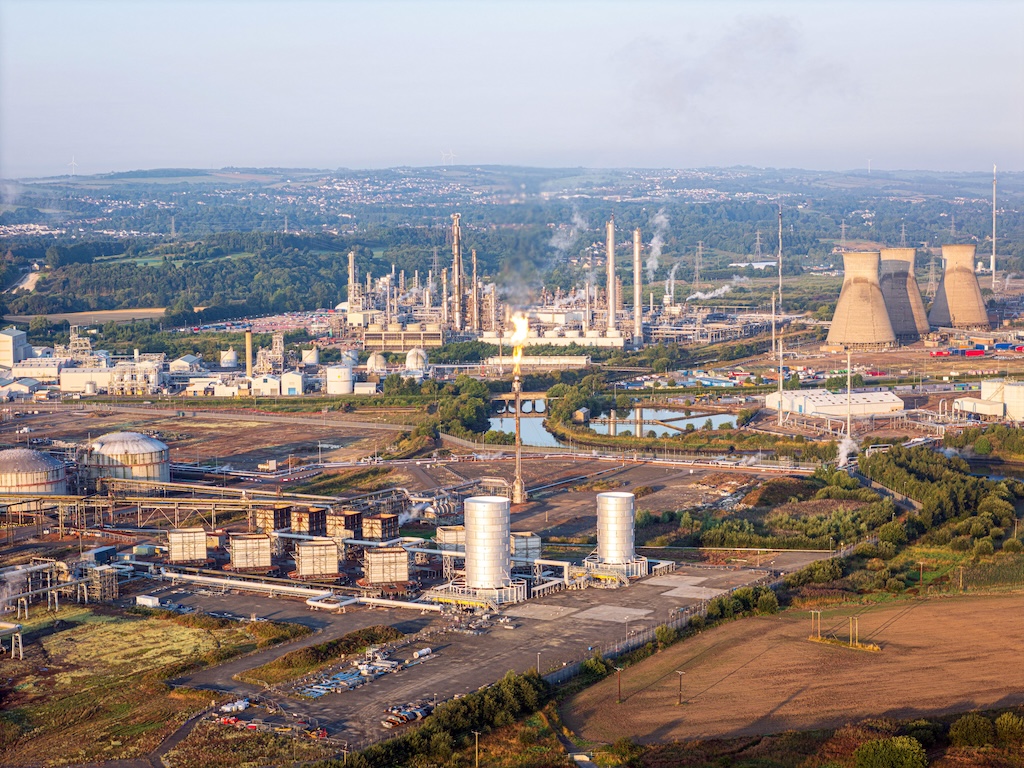
Key drivers of emissions decline from 2024-5 were a fall in emissions from oil refining of 0.9MtCO2e, mostly due to the closure of Grangemouth and Prax Lindsey refineries in 2025, according to the CCC.
Aerial view of industrial complex with towering chimneys and storage tanks under a hazy sky, Grangemouth, Scotland, United Kingdom.
Aerial view of industrial complex with towering chimneys and storage tanks under a hazy sky, Grangemouth, Scotland, United Kingdom. Credit: Andy Smith / Alamy Stock Photo

Declines in production emissions associated with oil and gas were due to the closure of North Sea fields “as they reach the end of life”, says the report.

It adds that this is a “continuation” in a longer-term trend. Production emissions from oil and gas have fallen by 58% since 2008 and by 75% since their peak in 2000. The CCC continues:

“The decline in oil and gas production is expected to continue as oil and gas reserves in the mature North Sea basin are increasingly depleted – the NSTA [North Sea Transition Authority] projects a further decline in combined oil and gas production of 93% by 2050.”

The report does not directly address the Labour government’s policies on oil and gas production in the North Sea.

Labour has ruled out new oil and gas licences – a manifesto commitment that has been subject to intense lobbying from the oil and gas industry and right-wing media. (See Carbon Brief’s factcheck on nine false or misleading myths about the North Sea.)

However, the government has indicated it might approve new projects that already have a licence, if they can pass an environmental impact assessment that will consider the emissions from burning the oil and gas produced.

Speaking at a briefing for journalists, CCC chair Nigel Topping noted that oil and gas production is projected to continue to plummet in the coming decades, regardless of whether the government issues new drilling licences, adding:

“The real road to energy security is not through some marginal drilling decisions, but through electrifying the economy.”

Back to top

Electricity

Emissions from electricity supply rose in 2025, following a 5% increase in unabated gas generation year-on-year.

According to the CCC, this offset the reduction in emissions from coal, with the closure of the UK’s last coal-fired power plant in 2024.

This is in line with Carbon Brief’s analysis from January, which similarly found that there was a small increase in emissions per unit of generation in 2025.

This bucks the trend seen in the UK since 2008, over which period emissions from electricity supply have fallen by 82%.

The CCC says the rise in gas generation was likely due to a combination of factors, including a 12% drop in nuclear generation, an 11% decrease in net imports, underutilisation of wind capacity due to grid constraints and lower-than-average wind capacity additions.

Last year, offshore wind capacity increased by 0.7 gigawatts (GW), bringing the UK’s total to 16.6GW, according to the CCC.

This is expected to more than double to around 37GW by 2032, once the existing pipeline of new projects is built – including those that secured subsidies in the most recent auction for “contracts for difference” (CfDs).

The CCC notes, however, that further additions will be needed to reach the government’s “stretching goals” for offshore wind.

An additional 0.3GW of onshore wind capacity was added in 2025, bringing the national total to 16.4GW. It says between 2.1GW and 2.5GW will need to be added annually up to the end of the decade to meet government targets.

The UK installed more solar capacity in 2025 than in any year since 2015, adding 2.8GW to bring the national total capacity to 21.7GW.

To reach government targets, the CCC says installation of solar power still needs to increase, with around another 5GW required by the end of this decade.

The CCC highlights that faster progress is needed on expanding and modernising electricity networks, as well as deploying storage.

For example, in 2025, some 9.4 terawatt hours (TWh) of wind generation was “curtailed” – when windfarms are paid to turn off – up 77% on 2024.

Back to top

Agriculture and land

The CCC’s report says “emissions in agriculture and land use have not fallen significantly in recent years” and that progress addressing this has been “too slow”.

Cattle and sheep numbers fell by 1% and 2% respectively in 2025, continuing a longer-term trend, with livestock numbers at their lowest since 1990, says the report.

This has led to a reduction in methane emissions from 2022-24, but this was offset by an increase in CO2 emissions in these sectors. It continues:

“This was in part driven by a smaller forestry sink due to an ageing woodland profile and removal of trees for habitat restoration priorities.”

The report adds that household beef and lamb purchases fell by 5% in the last year and have dropped by 9% since 2021, likely “driven by high beef and lamb prices and cost-of-living pressures”.

It continues that one area of “positive progress” is an increase in peatland restoration rates.

Some 21,400 hectares of peatlands were restored in 2025 – a 26% increase on the previous year and around three times the level in 2020, according to the CCC.

It adds that there is grant funding in place for peatland restoration across the country “until at least 2027”.

Tree-planting has seen “more mixed” progress, says the report. Planting rates fell by 25% from 2024-5, following a large boost to forest creation the year before.

The reduction was “driven by funding cuts in Scotland, which continues to lead in the establishment of new woodlands for the UK, planting more than half of the total in 2024-25”, says the report.

It adds that planting rates increased in England and the Department for Environment, Food and Rural Affairs (DEFRA) is expected to launch a woodland creation strategy this year.

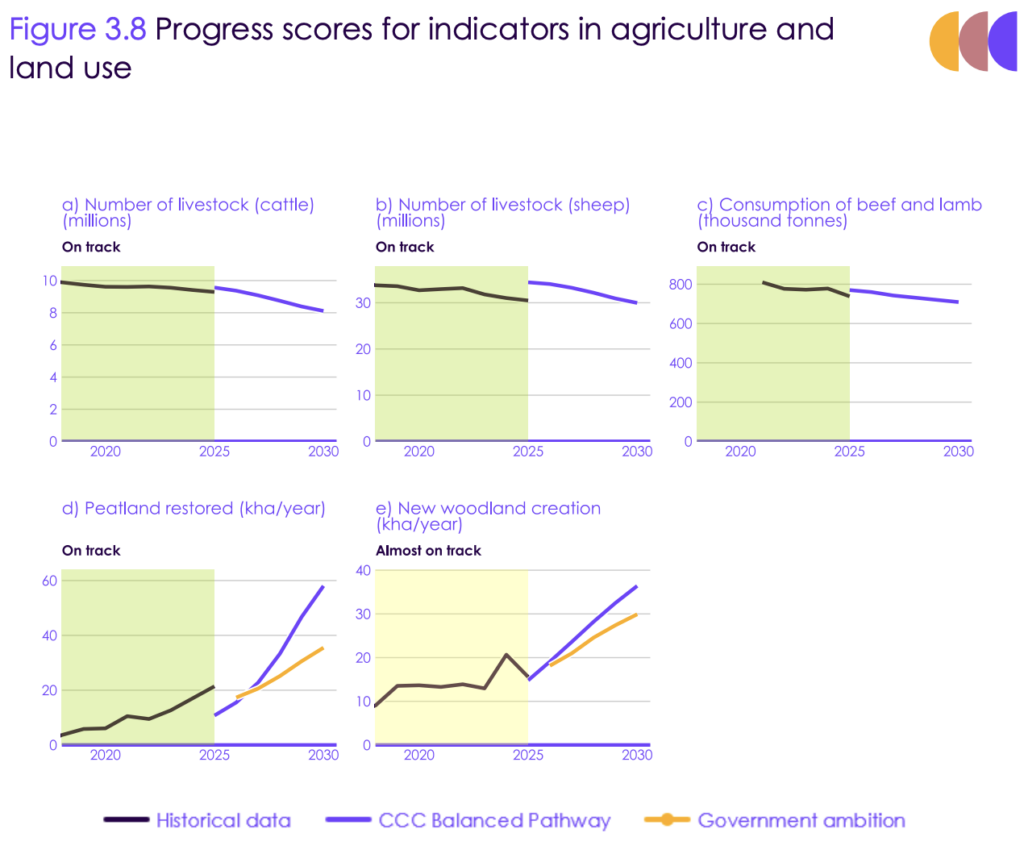
Despite this mixed progress, the chart below shows how the UK government is “on track” on most key agriculture and land use indicators, when compared to the CCC’s central pathway to net-zero and the government’s own ambitions.
The UK government is “on track” on most key agriculture and land use indicators when compared to the CCC’s central pathway to net-zero and the government’s own ambitions.
The UK government is “on track” on most key agriculture and land use indicators when compared to the CCC’s central pathway to net-zero and the government’s own ambitions. Credit: CCC (2026)

The report says that another area of “positive progress” is the publishing of England’s long-awaited land-use framework in March of this year.

The framework used “high-resolution modelling” and found that there is enough land in England to meet climate and nature goals, while also producing more food and building new homes.

To increase progress, the report says that the government should “put policies and incentives in place to ramp up tree-planting and peatland restoration”.

One key upcoming policy development will be the “25-year farming roadmap”, the government’s long-term direction for farming in England. This is due to be published later this year, according to the CCC.

Back to top

Aviation and shipping

Emissions from flights fell by 0.5% in 2025, despite a 3% increase in overall distance flown by UK passengers.

The CCC says this is likely due to fuel-efficiency improvements within the nation’s aircraft fleet and “a small contribution” from the use of “sustainable aviation fuel” (SAF).

The report concludes that fuel-efficiency improvements are “almost on track” compared to the CCC’s net-zero pathway. The share of jet fuel provided by SAF reached 2.5% in 2025, which is above the level set by the government’s SAF mandate.

While people flew more last year, the overall distance travelled via planes is still below the projected levels in the CCC’s pathway for 2025.

The committee says emissions growth from aviation has “slowed down”, but notes that “it is too early to say whether aviation emissions will grow, plateau or decrease in the future”.

Overall, the CCC says there has been “mixed progress” in the aviation sector. This year’s SAF Act included a mechanism designed to drive domestic production of SAFs, but the report stresses that “significant challenges remain around scaling up supply”.

Meanwhile, for the first time, the government plans to use international carbon credits under CORSIA – the UN’s aviation emissions scheme – to deliver its sixth carbon budget. According to the CCC:

“This introduces significant risk, including uncertainty over the availability and quality of high-integrity credits.”

As for shipping, the CCC says this has seen “limited progress”. It welcomes the inclusion of domestic shipping in the UK emissions trading scheme (ETS) as “an important step”, but points out that this is only a small fraction of the sector.

Most emissions come from international shipping. The committee says delays to the International Maritime Organization’s (IMO) net-zero framework – following opposition from the US and big fossil-fuel producers – has “significantly increased” the risk of hitting emissions targets for this sector.

Back to top

Other sectors

The CCC report highlights “significant risks” with the use of engineered removals in the coming years.

The government’s plan for achieving emissions targets over 2033-37 relies on a “rapid ramp-up” of technologies that suck CO2 out of the atmosphere, the report says, but there is still a lack of detail on how this will be achieved.

During this period, the amount of CO2 removed through these technologies is expected to reach an average of 17.4MtCO2e per year.

But the CCC says that 94% of removals planned for 2033-37 have “significant risks or insufficient plans”.

There is greater confidence in achieving planned removals over 2028-32, the report says, but this is due to scaled-back plans and policy progress.

The CCC says it is “essential” for the government to develop a strategy for delivering and monitoring engineered removals, along with “sufficient contingency plans…for any shortfall”.

The report also looks at emissions from waste, which are expected to reduce by an average of 1.1MtCO2e per year between 2024 and 2037.

The CCC has greater confidence in the government’s ability to meet waste goals compared to last year’s assessment.

But the report notes that there has been “little improvement” in recycling rates in UK homes. It says that further policies will be needed to meet plans to reduce waste, boost recycling and prevent waste going to landfill.

Looking at hydrogen, the CCC says there has been “good progress” in developing low-carbon hydrogen, but risks remain due to tight timelines and delays in funding.

The report mentions missed or upcoming deadlines to award contracts for some hydrogen projects and to update the UK hydrogen strategy. It notes that progress on hydrogen “must continue on the ground” in the meantime.

Back to top

The post CCC: Faster electrification of UK will ‘put money back into people’s pockets’ appeared first on Carbon Brief.

CCC: Faster electrification of UK will ‘put money back into people’s pockets’

Continue Reading

Climate Change

EU, UK lead push for electrification as “powerful weapon” against fossil fuels

Published

on

Dozens of governments led by the EU and the UK have pledged to throw their political weight behind a rapid electrification of the world’s economy, billed as a “powerful weapon” for cutting reliance on planet-heating fossil fuels.

At a high-level summit in London’s Mansion House on Tuesday, energy ministers and business leaders were joined by UN secretary-general António Guterres in calling for faster action to curb demand for oil, coal and gas by powering homes, industry and transport with clean electricity.

Electrification – which spans measures such as switching from petrol cars to electric vehicles – has emerged as a key priority in climate and energy policy circles this year.

COP31 co-hosts Türkiye and Australia have made a global target for electricity to meet 35% of final energy demand by 2035, up from around 20% today, the main plank of this year’s action agenda for the UN summit. Reaching that level is necessary to keep the 1.5C warming limit within reach, according to the International Renewable Energy Agency (IRENA).

Turkish COP31 President-Designate Murat Kurum said earlier this month that the host nation would work to forge “a strong global coalition that is ready and determined to act” and promised to facilitate access to technical assistance.

    Rallying support for electrification

    Five months before countries are due to sign on to the pledge, efforts to rally support gathered momentum at London Climate Action Week, as a record-breaking heatwave baking the capital underscored the urgency of weaning the world off fossil fuels.

    Guterres said the world faces an “historic opportunity” to turn the page on its dependence on fossil fuels and fully embrace clean electrification powered by renewables.

    “The age of clean electrification is here,” he added. “The question is whether we can build the grids and storage, mobilize the investment, and deliver the infrastructure at the speed and scale required”.

    Without investment and government policies supporting upgrades in infrastructure, ageing power grids are often unable to handle the growing influx of renewable energy, creating bottlenecks and slowing the energy transition, according to the International Energy Agency (IEA).

    Meanwhile, the high upfront costs of buying electric vehicles, heat pumps and industrial equipment remains a challenge to switch households and businesses away from using fossil fuels across the world, according IEA analysts, despite these technologies being cheaper over their whole lifecycle.

    Global coordination platform

    In a bid to overcome these hurdles, the European Commission and the UK government on Tuesday launched a new platform to coordinate global progress on electrification.

    EU energy commissioner Dan Jorgensen said the goal was to build coalitions, draw up policy recommendations, share best practice and secure new funding to speed up the electrification of homes, industry and transport.

    Brazil’s COP30 presidency, the joint Australia-Türkiye COP31 presidency, Ethiopia’s incoming COP32 presidency, Canada, the Philippines and South Korea joined the initiative at launch.

    Jorgensen urged governments worldwide to “choose transformation over turbulence” and switch to clean electricity to make economies and societies more resilient and shield them from future shocks driven by volatile fossil fuels.

    COP31 leaders unveil global targets, with spotlight on electrification

    For many countries, especially those heavily reliant on imported fossil fuels, the oil and gas crisis triggered by the US and Israeli attacks on Iran and the ensuing blockade of the Strait of Hormuz has driven home the urgency of the clean energy transition.

    The UK’s energy secretary Ed Miliband said on Tuesday that, unlike previous fossil fuel shocks, clean electrification now offers the world a clear alternative.

    “An alternative that cannot be disrupted by foreign wars, that isn’t subject to global shocks because it is locked in stable prices at home, and that can create good jobs and drive growth,” he added, “an alternative that can deliver national security, energy security and indeed climate security.”

    At the recent conference on transitioning away from fossil fuels in Santa Marta, a group of 60 governments led by the Netherlands and Colombia said electrification is one of the areas where they can align work with the UN climate talks.

    Financial reforms needed

    Achieving the electrification target – dubbed the “35 by 35” goal – will require significant financial resources. Investments in power grids alone need to double from their current rate to around $1 trillion each year in the next decade, according to IRENA.

    But Guterres said that developing countries are still “starved from investment” in their clean energy sector. He urged deeper reforms of the global financial architecture by reducing lending risk, lowering the cost of capital and attracting more private investment.

    Surangel Whipps Jr., president of the low-lying Pacific island state of Palau, said faster progress in electrification is a “powerful weapon in our arsenal”. But he warned that the energy transition would stall without “fit for purpose investment that is fast, predictable and accessible”.

    The post EU, UK lead push for electrification as “powerful weapon” against fossil fuels appeared first on Climate Home News.

    EU, UK lead push for electrification as “powerful weapon” against fossil fuels

    Continue Reading

    Climate Change

    Mombasa: Key outcomes from the Our Ocean Conference in Kenya

    Published

    on

    A major ocean conference has ended in Mombasa, Kenya, with just a handful of countries committing to high-level political declarations on banning deep-sea mining, protecting climate-resilient coral reefs and combatting illegal fishing.

    The Our Ocean Conference (OOC) brought together more than 5,000 delegates to discuss marine issues and make voluntary commitments to advance ocean sustainability.

    It was the first time in the conference’s 11 editions that it had been held on African soil.

    African countries played an “important leadership role” at the talks, observers told Carbon Brief, helping to drive ambition on fisheries transparency, a precautionary pause on deep-sea mining and developing proposals for marine protected areas on the high seas.

    Across the three-day conference, attendees also made 320 separate commitments, including new funding for scientific research, improving waste-management programmes to reduce marine pollution and mapping Indigenous groups’ customary waters.

    Some of these commitments were accompanied by announcements of new funding, with a total of $6.4bn “mobilised” across all pledges.

    Several non-governmental organisations also released new reports during the conference, on topics ranging from the implementation of marine protected areas to “climate-resilient” coral reefs.

    Observers told Carbon Brief that the commitments and discussions at the conference were “positive steps”, but added that these pledges must now be backed up by action.

    During the opening ceremony, former US secretary of state John Kerry urged delegates to move “from commitments to implementation”.

    Here, Carbon Brief outlines the key takeaways from the OOC across five major climate-related topics.

    Background

    The OOC was first held in Washington DC in 2014, where it was championed by Kerry.

    The conference aims to “identify action-based solutions and make tangible commitments” towards addressing key issues facing the ocean, such as climate change and overfishing. It does so through voluntary commitments made by governments, non-governmental organisations, civil society groups and others.

    These commitments align with the six “pillars” of the conference:

    • The ocean-climate nexus
    • Marine pollution
    • Marine protected areas
    • Maritime security
    • Sustainable blue economy
    • Sustainable fisheries

    Since then, the conference has been held annually (with the exceptions of 2020 and 2021 during the Covid pandemic), with the host city changing every year.

    Each edition of the conference is very different, attendees told Carbon Brief, and the host country plays a large role in setting the conference’s priorities.

    For example, at the 2024 conference, held in Athens, Greece, shipping and sustainable tourism were discussed at length alongside the six existing pillars.

    At this year’s summit, extra attention was paid to the roles of local communities in achieving a “healthy” ocean.

    Since 2025, the conference has had its own dedicated secretariat, hosted at the research organisation, the World Resources Institute (WRI). (Prior to that, the US Department of State acted as the de-facto secretariat.) 

    Marine protected area, Torre del Cerrano, Pineto, Italy.
    Marine protected area, Torre del Cerrano, Pineto, Italy. Credit: Fabrizio Troiani / Alamy Stock Photo

    Conference participants told Carbon Brief that the OOC has been “highly successful” in achieving its aims over the past decade. 

    An analysis of the first 10 years of the conference, published by WRI in 2025, found that of a total 2,618 commitments made at the OOC, around 1,130 had been completed and a further 1,005 were in progress.

    In Mombasa this year, 104 countries and organisations made a total of 320 voluntary commitments. More than one-quarter of these commitments were made in the “sustainable blue economy” action area.

    According to the preliminary report released by the secretariat at the conclusion of the OOC, the commitments made at the conference represent $6.4bn in “mobilised” finance. However, it is unclear from the report how much of this figure is new committed funding.

    Back to top

    Marine protected areas

    Marine protected areas (MPAs) are one of the six key action areas of the Our Ocean Conference.

    A June 2026 independent assessment of the MPA-related commitments at previous editions of the OOC found that the conference has “made an outsized contribution to global marine conservation efforts”.

    According to the analysis, more than one-third of the Earth’s MPAs stemmed from announcements made at the OOC – a total area of more than 10m square kilometres (km2).

    This progress is the result of nearly two-thirds of MPA-related OOC commitments already fully implemented, the assessment says, while most of the remaining commitments “show evidence of progress”.

    If all pledged MPAs were to be implemented, it would represent protection for around 14.4m km2 or 4% of the ocean.

    The chart below shows the number of pledged actions related to MPAs and other area-based conservation methods that were pledged at the OOC between 2014 and 2025, coloured by the progress made on each commitment.

    Map of marine protected areas around the world
    Degree of completion of MPA commitments made at the OOC between 2014 and 2025. Blue indicates evidence of completion, while yellow shows some evidence of progress and red shows no evidence of progress. Source: Sullivan-Stack et al. (2026)

    Several groups announced new MPAs – or the completion of previously announced MPA designations – at the OOC.

    These included the establishment this year of two new MPAs in the Juan Fernández region of Chile, protecting a total of around 337,000km2 of ocean, and the approval of the Azores Marine Park, which will span 287,000km2 – making it the largest network of protected areas in the north Atlantic Ocean.

    However, despite the progress made in designating MPAs, further work is needed to ensure that these areas are truly protected, experts told Carbon Brief in Mombasa.

    A report released by the Smithsonian Tropical Research Institute (STRI) at the summit detailed the “implementation gap” facing MPAs. It noted that “at least half of existing MPAs remain unimplemented or operationally ineffective”, while just 3.5% of the global ocean is “fully and highly” protected.

    Closing this gap will require “inclusive, sustained and context-sensitive design, management and funding approaches”, continued the report.

    Dr Ana Spalding, the director of STRI’s Adrienne Arsht community-based resilience solutions initiative, told Carbon Brief that, while MPAs are typically evaluated based on their biodiversity outcomes, the communities that rely on ocean ecosystems are also very important to consider. Focusing on just one aspect or the other will result in an MPA that is not effective, she added:

    “There’s going to be a sweet spot between the two.”

    Back to top

    High Seas Treaty

    The Agreement on the Conservation and Sustainable Use of Marine Biological Diversity of Areas Beyond National Jurisdiction – also known as the BBNJ Agreement or the High Seas Treaty – entered into force on 17 January 2026.

    This followed the treaty, achieving the necessary 60 state ratifications on 19 September 2025. The week before the OOC, the east African nation of Comoros became the 90th party to ratify the agreement.

    The first Conference of the Parties for the High Seas Treaty will be held in January 2027 in New York City. At that meeting, parties will be tasked with creating the rules of procedure, establishing the subsidiary bodies and carrying out other foundational work.

    Because so many key decisions will be made at this COP1, it is “imperative” to have as many ratifications as possible before the conference begins, said Rebecca Hubbard, director of the High Seas Alliance, a coalition of non-governmental organisations that advocates for protection of the high seas. She added:

    “We hope that well over 100 countries will be party to the agreement by COP1, so that they can be at the decision-making table.”

    Container ship in the Indian Ocean. Image ID:
    Container ship in the Indian Ocean. Credit: imageBROKER.com / Alamy Stock Photo

    One of the key provisions of the High Seas Treaty is that it creates a mechanism for countries to establish MPAs in international waters. This will be key to achieving the “30 by 30” target of protecting 30% of the world’s land and oceans by 2030, Hubbard told Carbon Brief.

    However, establishing a high-seas MPA under the agreement requires a thorough process, including a review by a scientific and technical subsidiary body, a consultation with parties and a vote by the COP. Thus, in order to achieve the “30 by 30” target, parties will need to act swiftly to begin the process of establishing high-seas MPAs, according to Hubbard. She said:

    “It will be very, very tight. It’s definitely possible, but it requires really strong government leadership and prioritisation.”

    She added that it is “essential” that governments begin forming proposals for high-seas MPAs before the COP meets in January, noting that some countries are already doing so.

    At a side event on 16 June, representatives from South Africa and the EU detailed plans to propose a high-seas MPA that would link two existing protected areas in the sub-Antarctic – one South African and one French. Hubbard told Carbon Brief:

    “That’s a really great example of what we can do with the High Seas Treaty – having developed and developing countries working together, sharing knowledge [and] developing scientific approaches together. I think that’s the hopeful future, collaboration [and] cooperation, that the High Seas Treaty really provides.”

    Also at the summit, Senegal, Mauritania, the Gambia and Guinea-Bissau committed to creating “at least two” transboundary west African MPAs.

    Back to top

    Deep-sea mining

    Although deep-sea mining was not a major focus of the Mombasa talks, it did feature at several side events.

    At a reception held by the Deep Sea Conservation Coalition (DSCC), Prof Rashid Sumaila of the University of British Columbia said the “wrong question is being asked” about deep-sea mining. He continued:

    “It’s not whether they have the minerals, it’s whether extracting them gives a net-positive impact.”

    Sumaila added that evaluating the risk of deep-sea mining will require a cost-benefit analysis that is as “broad and inclusive as possible”.

    At the same reception, the foreign-affairs minister of Malawi, Dr George Chaponda, announced the country’s support of a “precautionary pause” on seabed mining in international waters. This would prohibit mineral exploration in such areas until there is robust scientific evidence showing limited environmental harm.

    In doing so, Malawi became the first African country to support such a pause – and the 41st country overall to support a precautionary pause or moratorium on the activity.

    Chaponda told the assembled guests that Malawi’s existence as a landlocked country did not preclude its involvement in the deep-sea debates, urging:

    “To my fellow landlocked states: geography does not diminish our stake in the ocean.”

    Later in the week, Kenya and Madagascar also announced their support for such a pause.

    In a statement, David Willima, the Africa lead at DSCC, said:

    “The leadership shown by Malawi, Kenya and Madagascar sends a vital signal that African nations are stepping forward to defend the deep ocean and are unwilling to accept the risks of deep-sea mining.”

    Back to top

    Coral reefs

    At the third UN Ocean Conference (UNOC), held in Nice, France, in June 2025, 11 countries and several partner organisations launched the high-level commitment to protect “climate-resilient” coral reefs.

    These are reefs that, according to scientists, have the “best chance of long-term survival in the face of climate change”.

    (UNOC occurs every three years and is specifically focused on achieving the UN Sustainable Development Goal on sustainable ocean use. Unlike the OOC, UNOC results in a negotiated political declaration.)

    A further four countries signed the commitment in Mombasa: Comoros, the Dominican Republic, Kenya and the UK. According to a representative at the launch event, the goal is to reach 31 signatories – representing 80% of the world’s coral cover – by COP31 in Turkey in November this year.

    Signatory governments pledged their commitment to:

    • Identifying climate-resilient reefs and prioritising their protection.
    • Integrating coral-reef protection into national strategies and plans.
    • Enacting policies to reduce the local pressures facing coral reefs, such as overfishing, pollution and overdevelopment.
    • Implementing national reef monitoring programmes and action plans.
    • Ensuring equity and working with local communities in protecting reefs.

    The Mombasa conference also coincided with the presentation of a new study on climate-resilient reefs, covered in the 17 June edition of Carbon Brief’s Cropped newsletter. (The study is currently in the final stages of peer review.)

    Coral reef in Raja Ampat, Indonesia. Credit: Noemi Merz / Ocean Image Bank
    Coral reef in Raja Ampat, Indonesia. Credit: Noemi Merz / Ocean Image Bank

    Building on a 2018 project that identified the 50 coral reefs that “form an optimal portfolio of reefs that are most likely to survive climate change”, the new work mapped more than 165,000km2 of coral reefs across 70 countries. These were found to have the best chances of persisting in the face of climate change and a warming, acidifying ocean.

    Dr Emily Darling, director of coral-reef conservation at the Wildlife Conservation Society and a co-author of the study, told Carbon Brief that “one of the key things countries can do that have these important reefs is elevate them into national policy” across multiple government sectors.

    She added that learning from these reefs will become vital over the coming months as El Niño warms the world’s oceans even further.

    Darling told Carbon Brief:

    “Climate change is not a single blanket on the world’s oceans. There are a lot of pockets of resilience, there are pockets of revolution for corals, and it’s all about finding those places, and how do we support them through the other local pressures that they experience that we know we can manage.”

    Although few monetary coral-related commitments were made at the summit, Norway pledged to allocate NOK 20m ($2m) to the Global Fund for Coral Reefs.

    Back to top

    Fisheries

    One of the major achievements of the summit was the adoption of the Mombasa Declaration to advance fisheries transparency and combat illegal fishing.

    The declaration “recognise[s]” that illegal, unreported and unregulated (IUU) fishing is a major factor driving the unsustainable use of ocean resources and the degradation of marine ecosystems.

    We celebrate growing global momentum toward achieving sustainable ocean management by 2030. Yet we remain deeply concerned about the threats of overfishing, ecosystem degradation, declining biodiversity, and maritime insecurity. We recognize that these issues are enabled by Illegal, Unreported and Unregulated (IUU) fishing and associated human rights abuses. We highlight that opacity in parts of the global seafood sector undermines efforts to combat IUU fishing and associated abuses, and therefore regard increased fisheries transparency as a critical response. Transparency in ownership structures is especially important to ensure that the ultimate beneficial owners responsible for IUU fishing activities are identified and held accountable.
    Excerpt from the preamble to the Mombasa Declaration. Source: The Mombasa Declaration (2026)

    The declaration, which was signed by 16 national governments – eight of them from Africa – commits parties to follow a set of principles laid out in the Global Charter for Fisheries Transparency. This was developed and promoted by a group of civil society organisations known as the Coalition for Fisheries Transparency.

    The commitments in the Mombasa Declaration fall within four broad categories:

    • Supporting transparency and accountability in the fishing industry.
    • Strengthening monitoring of fishing activities and cooperating with enforcement actions.
    • Building capacity and supporting implementation of transparency reforms.
    • Strengthening ocean-observing systems and promoting the use of open-access data.

    The declaration notes that these principles should “apply to and benefit both small-scale and industrial fisheries” and support “broader ocean-management efforts”.

    At a press conference announcing the launch of the declaration, Ghanaian fisheries and aquaculture minister Emelia Arthur called it a “global testament of our collective commitment to transparent fisheries”. She emphasised the importance of the sector to all aspects of life, saying:

    “Fisheries is nutrition. Fisheries is food security. Fisheries is livelihoods. Fisheries is national security.”

    Fishing boat and gannets, Cornwall, UK.
    Fishing boat and gannets, Cornwall, UK. Credit: David Chapman / Alamy Stock Photo

    Several civil society organisations, philanthropies, community groups and governments also made separate fisheries-related commitments at the summit.

    The EU committed €46m ($52m) through its Horizon Europe research programme to fisheries work, including €32m ($36m) for “adaptive co-management strategies” and €14m ($16m) for research on conservation and sustainable management of migratory fishes.

    The EU and Italy both also announced contributions to the European Maritime, Fisheries and Aquaculture Fund.

    The government of Kenya made nine fisheries-related pledges at the summit, including committing to train compliance officers dedicated to combatting IUU fishing, developing management plans for all of its commercial fisheries and establishing bycatch mitigation measures.

    At the summit, the UN Food and Agriculture Organization launched its biannual “state of world fisheries and aquaculture” report.

    According to the report, the world set a new record for fisheries and aquaculture in 2024 – producing a total of 235m tonnes of fish and algae. This total consisted of nearly 92m tonnes of fish from capture fisheries, 103m tonnes of farmed fish and 40m tonnes of algae production.

    Aerial view of a fish farm.
    Aerial view of a fish farm. Credit: Scharfsinn / Alamy Stock Photo

    The amount of fish produced by capture fisheries has remained largely stable since 2000, while aquaculture production has increased by an average annual percentage rate of just under 5%, according to the report.

    While the largest growth has occurred in Africa, Latin America and the Caribbean, the vast majority of aquaculture production – 89% – occurs in Asia.

    The report also says that more than one-third of the world’s marine fish stocks are overfished, with significant variation based on region and species. It adds that climate change may play an increasing role in driving the unsustainability of fisheries in the future:

    “Despite the uncertainty of climate risks in the short, medium and long term, studies on the impacts of climate change on aquatic food systems around the world increasingly document the relevance and potential success of adaptation measures, urging decision-makers to integrate climate change considerations into fisheries and aquaculture planning and management.”

    Back to top

    The post Mombasa: Key outcomes from the Our Ocean Conference in Kenya appeared first on Carbon Brief.

    Mombasa: Key outcomes from the Our Ocean Conference in Kenya

    Continue Reading

    Climate Change

    Did Colombia’s energy transition just come to a halt?

    Published

    on

    Christopher Wright is the principal analyst at CarbonBridge, a decarbonisation consulting firm.

    Less than two months ago, Colombia hosted the world’s first international conference on Transitioning Away from Fossil Fuels. This weekend, however, it appears that Colombia’s first ever leftist presidency has ended. Far-right candidate Abelardo de la Espriella, who was last week strongly endorsed by Donald Trump, will not only take the reins of government but also steer the future of Colombia’s energy transition.

    As the world’s sixth-largest coal exporter, and fourth largest oil exporter in Latin America, Colombia plays a critical role in the world’s energy markets. However, this role had shrunk under President Gustavo Petro’s administration, as it sought to proactively shift the country away from its fossil-fuel based economy, ahead of a potential oil and gas production shortage over the next decade.

    That could all change as De la Espriella’s takes power. Calling himself the Tiger (“El Tigre”), he has promised to focus on deregulation, exploit oil extraction “to the maximum” and leverage the energy sector as a key “engine of growth”.

    Colombia’s world-leading energy transition

    Over the last four years, Colombia has embarked on one of the most rapid and holistic energy transitions anywhere in the world. Shortly after coming to power in 2022, the government of Gustavo Petro halted new oil and gas exploration contracts, suspended all hydraulic fracking pilots, and pledged to end the development of new unabated coal power plants.

    While many of these moves faced domestic and legislative challenges, they were widely praised in climate circles around the world.

    Colombia soon became a pivotal member of the Powering Past Coal Alliance, the Beyond Oil and Gas Alliance and the Fossil Fuel Non-Proliferation Alliance. It then went on to host the biodiversity COP in 2024, launch a $40-billion climate transition investment portfolio, and famously, host the Santa Marta conference earlier this year.

    While fossil fuels still comprise around 7% of Colombia’s GDP and 56% of its total exports, there were already signs that the transition policies had begun to have an effect.

    Coal production last year fell to its lowest level in the last 22 years. According to the Colombian national association of coal producers, coal export volumes declined by 23% in 2025. While the oil sector has not seen an equivalent precipitous drop, production levels have remained historically low since COVID.

    What about its domestic electricity sector?

    Since the 1970s Colombia’s electricity sector has been dominated by large hydro-electric dams, endowing it with some of the lowest carbon electrons anywhere in the world. Today, close to 70% of its electricity supply comes from these large dams.

    However, electricity demand rose by close to 10% under the Petro government. To meet this demand, total installed electricity capacity has expanded by a similar figure, and solar power has made up over 70% of new electricity capacity since.

    As a result, by the end of 2025, gas power generation in the electricity sector had hit its lowest point since 2018. Wind power had doubled, and solar power generation had risen by over 630%. Colombia’s renewable energy association predicts that, by the end of 2026, the country may be home to more than 4.2 GW of installed variable renewable energy capacity.

    Far-right jumps on energy challenges

    Despite the progress, the last three years have been an incredibly challenging period for Colombia’s energy sector.

    During Petro’s first two years in office, inflation remained above 10%, and interest rates stayed above 13% for most of 2023. This put a pause on new energy investments, as foreign direct investment fell by a third since 2022.

    On top of this, Colombia suffered through an El Niño-fuelled drought in 2023-24, crippling its hydro-electric power supply. This forced the country to turn to expensive gas and coal power, just as both sectors had effectively begun to pull back. This sent electricity prices through the roof, increasing nearly 40% in a single year, and led the Petro government to intervene with price controls, aiming to protect everyday Colombians.

      Unsurprisingly, this made energy investors even more cautious. By the end of 2023, GDP growth had plummeted and renewable energy investments fell by 70%. Since then, all the major credit agencies have downgraded the country’s credit rating, making it even shakier to invest.

      As a result, even with the new solar coming online, and 1.2 GW of additional hydro-power from the Ituango dam expected by 2028, the country could still face a major energy deficit by 2027, with permitting delays halting project developments, and 5.1 GW of approved projects unable to reach financial close.

      Challenging domestic debate

      This has led to a challenging domestic debate on energy policy. While 96% of Colombians want to see solar expand further, they have been understandably frustrated by high electricity bills and limited economic growth.

      As a result, De la Espriella’s campaign, which has largely focused on taking a hardline stance to combat growing concerns around security and crime, was relatively open to solar power, but sought to blame Colombia’s current energy crisis on the speed of its current energy transition.

      Branding himself as neither a climate denialist nor “dogmatic environmentalist” the incoming president who will take office in August, will likely seek to revoke the ban on new hydrocarbon exploration contracts, legalise fracking and restructure the national oil company, Ecopetrol.

      While he is unlikely to cancel market-driven projects and may reduce regulatory hold-ups, it is also likely that he will shift away from the government’s recent overwhelming support for long-renewable energy and battery storage projects, which have driven much of the recent uptake in solar power.

      Future of energy transition in doubt

      In a country of close to 54 million people, the final election count was only decided by about 250,000 votes. However, this weekend’s margin belies the magnitude of the shift that will likely now take place.

      With the country facing a potential domestic energy shortage 2027, President-elect De la Espriella has promised to revitalise the hydrocarbon economy, shifting Colombia’s recent energy transition on an entirely new course.

      While this may unlock some regulatory challenges hindering renewables roll-out, broader support mechanisms for solar projects will likely be dismantled, and the broader economic transition abandoned, along with its recent flurry of international climate alliances.

      He will also take his place among a wave of right-leaning Presidents that have swept to power across the continent in the last 18 months. This has seen right-wing electoral victories across Ecuador, Bolivia, Chile, Costa Rica, Argentina and now Colombia, with Peru’s Keiko Fujimori potentially joining the club soon – pending a final vote count.

      With the Brazilian elections scheduled for October, and run-off scenarios between Lula and Flávio Bolsonaro still far too close to call, 2026 will undoubtedly be a pivotal year for Latin America’s energy future.

      The post Did Colombia’s energy transition just come to a halt? appeared first on Climate Home News.

      Did Colombia’s energy transition just come to a halt?

      Continue Reading

      Trending

      Copyright © 2022 BreakingClimateChange.com