Connect with us

Published

on

A major ocean conference has ended in Mombasa, Kenya, with just a handful of countries committing to high-level political declarations on banning deep-sea mining, protecting climate-resilient coral reefs and combatting illegal fishing.

The Our Ocean Conference (OOC) brought together more than 5,000 delegates to discuss marine issues and make voluntary commitments to advance ocean sustainability.

It was the first time in the conference’s 11 editions that it had been held on African soil.

African countries played an “important leadership role” at the talks, observers told Carbon Brief, helping to drive ambition on fisheries transparency, a precautionary pause on deep-sea mining and developing proposals for marine protected areas on the high seas.

Across the three-day conference, attendees also made 320 separate commitments, including new funding for scientific research, improving waste-management programmes to reduce marine pollution and mapping Indigenous groups’ customary waters.

Some of these commitments were accompanied by announcements of new funding, with a total of $6.4bn “mobilised” across all pledges.

Several non-governmental organisations also released new reports during the conference, on topics ranging from the implementation of marine protected areas to “climate-resilient” coral reefs.

Observers told Carbon Brief that the commitments and discussions at the conference were “positive steps”, but added that these pledges must now be backed up by action.

During the opening ceremony, former US secretary of state John Kerry urged delegates to move “from commitments to implementation”.

Here, Carbon Brief outlines the key takeaways from the OOC across five major climate-related topics.

Background

The OOC was first held in Washington DC in 2014, where it was championed by Kerry.

The conference aims to “identify action-based solutions and make tangible commitments” towards addressing key issues facing the ocean, such as climate change and overfishing. It does so through voluntary commitments made by governments, non-governmental organisations, civil society groups and others.

These commitments align with the six “pillars” of the conference:

  • The ocean-climate nexus
  • Marine pollution
  • Marine protected areas
  • Maritime security
  • Sustainable blue economy
  • Sustainable fisheries

Since then, the conference has been held annually (with the exceptions of 2020 and 2021 during the Covid pandemic), with the host city changing every year.

Each edition of the conference is very different, attendees told Carbon Brief, and the host country plays a large role in setting the conference’s priorities.

For example, at the 2024 conference, held in Athens, Greece, shipping and sustainable tourism were discussed at length alongside the six existing pillars.

At this year’s summit, extra attention was paid to the roles of local communities in achieving a “healthy” ocean.

Since 2025, the conference has had its own dedicated secretariat, hosted at the research organisation, the World Resources Institute (WRI). (Prior to that, the US Department of State acted as the de-facto secretariat.) 
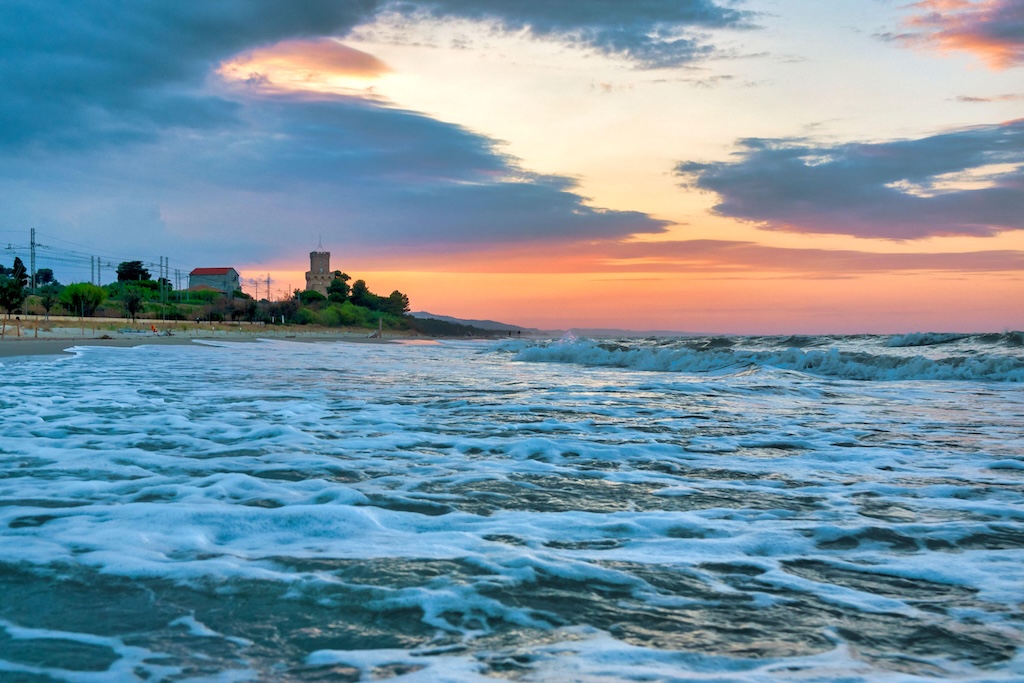
Marine protected area, Torre del Cerrano, Pineto, Italy.
Marine protected area, Torre del Cerrano, Pineto, Italy. Credit: Fabrizio Troiani / Alamy Stock Photo

Conference participants told Carbon Brief that the OOC has been “highly successful” in achieving its aims over the past decade. 

An analysis of the first 10 years of the conference, published by WRI in 2025, found that of a total 2,618 commitments made at the OOC, around 1,130 had been completed and a further 1,005 were in progress.

In Mombasa this year, 104 countries and organisations made a total of 320 voluntary commitments. More than one-quarter of these commitments were made in the “sustainable blue economy” action area.

According to the preliminary report released by the secretariat at the conclusion of the OOC, the commitments made at the conference represent $6.4bn in “mobilised” finance. However, it is unclear from the report how much of this figure is new committed funding.

Back to top

Marine protected areas

Marine protected areas (MPAs) are one of the six key action areas of the Our Ocean Conference.

A June 2026 independent assessment of the MPA-related commitments at previous editions of the OOC found that the conference has “made an outsized contribution to global marine conservation efforts”.

According to the analysis, more than one-third of the Earth’s MPAs stemmed from announcements made at the OOC – a total area of more than 10m square kilometres (km2).

This progress is the result of nearly two-thirds of MPA-related OOC commitments already fully implemented, the assessment says, while most of the remaining commitments “show evidence of progress”.

If all pledged MPAs were to be implemented, it would represent protection for around 14.4m km2 or 4% of the ocean.

The chart below shows the number of pledged actions related to MPAs and other area-based conservation methods that were pledged at the OOC between 2014 and 2025, coloured by the progress made on each commitment.
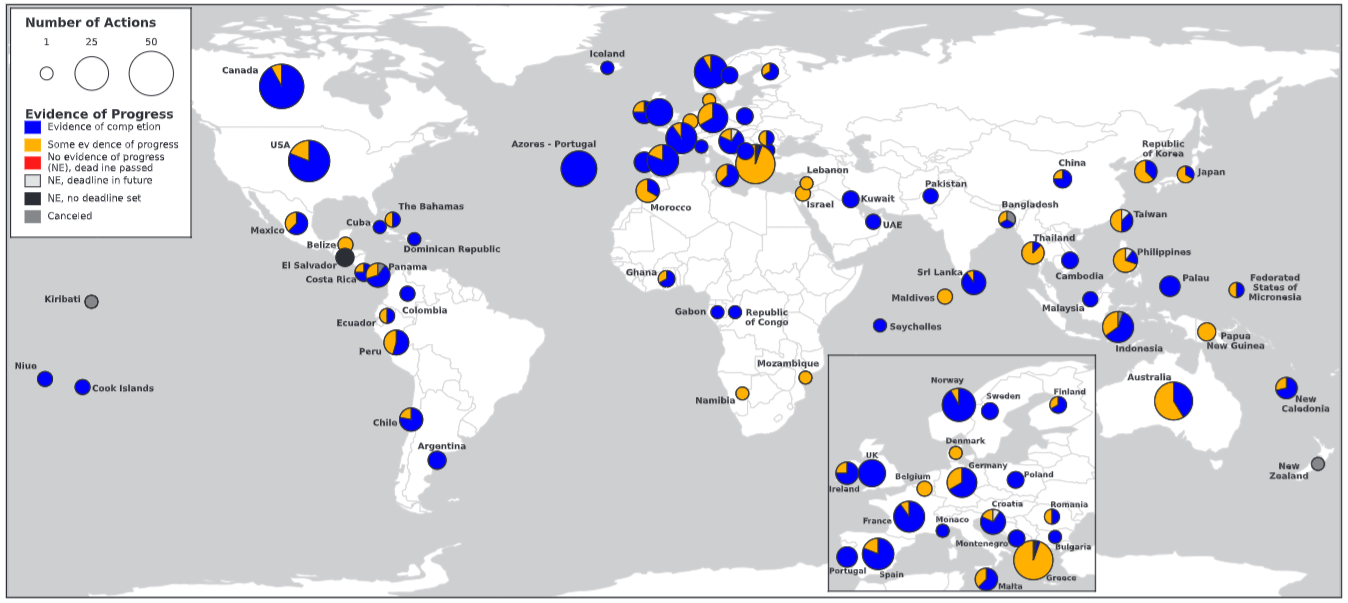
Map of marine protected areas around the world
Degree of completion of MPA commitments made at the OOC between 2014 and 2025. Blue indicates evidence of completion, while yellow shows some evidence of progress and red shows no evidence of progress. Source: Sullivan-Stack et al. (2026)

Several groups announced new MPAs – or the completion of previously announced MPA designations – at the OOC.

These included the establishment this year of two new MPAs in the Juan Fernández region of Chile, protecting a total of around 337,000km2 of ocean, and the approval of the Azores Marine Park, which will span 287,000km2 – making it the largest network of protected areas in the north Atlantic Ocean.

However, despite the progress made in designating MPAs, further work is needed to ensure that these areas are truly protected, experts told Carbon Brief in Mombasa.

A report released by the Smithsonian Tropical Research Institute (STRI) at the summit detailed the “implementation gap” facing MPAs. It noted that “at least half of existing MPAs remain unimplemented or operationally ineffective”, while just 3.5% of the global ocean is “fully and highly” protected.

Closing this gap will require “inclusive, sustained and context-sensitive design, management and funding approaches”, continued the report.

Dr Ana Spalding, the director of STRI’s Adrienne Arsht community-based resilience solutions initiative, told Carbon Brief that, while MPAs are typically evaluated based on their biodiversity outcomes, the communities that rely on ocean ecosystems are also very important to consider. Focusing on just one aspect or the other will result in an MPA that is not effective, she added:

“There’s going to be a sweet spot between the two.”

Back to top

High Seas Treaty

The Agreement on the Conservation and Sustainable Use of Marine Biological Diversity of Areas Beyond National Jurisdiction – also known as the BBNJ Agreement or the High Seas Treaty – entered into force on 17 January 2026.

This followed the treaty, achieving the necessary 60 state ratifications on 19 September 2025. The week before the OOC, the east African nation of Comoros became the 90th party to ratify the agreement.

The first Conference of the Parties for the High Seas Treaty will be held in January 2027 in New York City. At that meeting, parties will be tasked with creating the rules of procedure, establishing the subsidiary bodies and carrying out other foundational work.

Because so many key decisions will be made at this COP1, it is “imperative” to have as many ratifications as possible before the conference begins, said Rebecca Hubbard, director of the High Seas Alliance, a coalition of non-governmental organisations that advocates for protection of the high seas. She added:

“We hope that well over 100 countries will be party to the agreement by COP1, so that they can be at the decision-making table.”
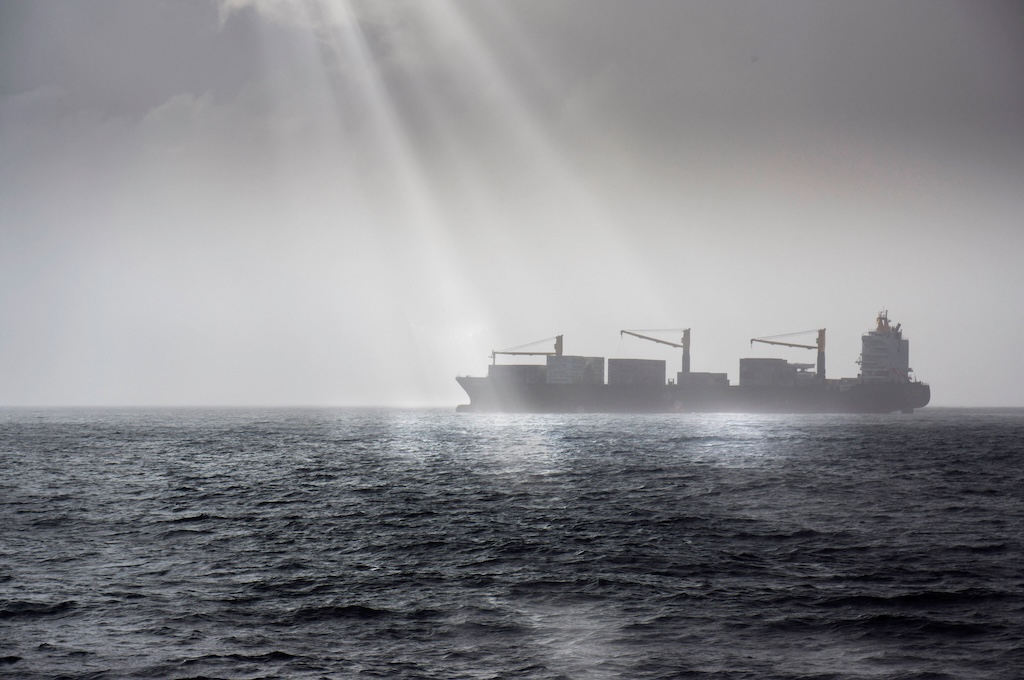
Container ship in the Indian Ocean. Image ID:
Container ship in the Indian Ocean. Credit: imageBROKER.com / Alamy Stock Photo

One of the key provisions of the High Seas Treaty is that it creates a mechanism for countries to establish MPAs in international waters. This will be key to achieving the “30 by 30” target of protecting 30% of the world’s land and oceans by 2030, Hubbard told Carbon Brief.

However, establishing a high-seas MPA under the agreement requires a thorough process, including a review by a scientific and technical subsidiary body, a consultation with parties and a vote by the COP. Thus, in order to achieve the “30 by 30” target, parties will need to act swiftly to begin the process of establishing high-seas MPAs, according to Hubbard. She said:

“It will be very, very tight. It’s definitely possible, but it requires really strong government leadership and prioritisation.”

She added that it is “essential” that governments begin forming proposals for high-seas MPAs before the COP meets in January, noting that some countries are already doing so.

At a side event on 16 June, representatives from South Africa and the EU detailed plans to propose a high-seas MPA that would link two existing protected areas in the sub-Antarctic – one South African and one French. Hubbard told Carbon Brief:

“That’s a really great example of what we can do with the High Seas Treaty – having developed and developing countries working together, sharing knowledge [and] developing scientific approaches together. I think that’s the hopeful future, collaboration [and] cooperation, that the High Seas Treaty really provides.”

Also at the summit, Senegal, Mauritania, the Gambia and Guinea-Bissau committed to creating “at least two” transboundary west African MPAs.

Back to top

Deep-sea mining

Although deep-sea mining was not a major focus of the Mombasa talks, it did feature at several side events.

At a reception held by the Deep Sea Conservation Coalition (DSCC), Prof Rashid Sumaila of the University of British Columbia said the “wrong question is being asked” about deep-sea mining. He continued:

“It’s not whether they have the minerals, it’s whether extracting them gives a net-positive impact.”

Sumaila added that evaluating the risk of deep-sea mining will require a cost-benefit analysis that is as “broad and inclusive as possible”.

At the same reception, the foreign-affairs minister of Malawi, Dr George Chaponda, announced the country’s support of a “precautionary pause” on seabed mining in international waters. This would prohibit mineral exploration in such areas until there is robust scientific evidence showing limited environmental harm.

In doing so, Malawi became the first African country to support such a pause – and the 41st country overall to support a precautionary pause or moratorium on the activity.

Chaponda told the assembled guests that Malawi’s existence as a landlocked country did not preclude its involvement in the deep-sea debates, urging:

“To my fellow landlocked states: geography does not diminish our stake in the ocean.”

Later in the week, Kenya and Madagascar also announced their support for such a pause.

In a statement, David Willima, the Africa lead at DSCC, said:

“The leadership shown by Malawi, Kenya and Madagascar sends a vital signal that African nations are stepping forward to defend the deep ocean and are unwilling to accept the risks of deep-sea mining.”

Back to top

Coral reefs

At the third UN Ocean Conference (UNOC), held in Nice, France, in June 2025, 11 countries and several partner organisations launched the high-level commitment to protect “climate-resilient” coral reefs.

These are reefs that, according to scientists, have the “best chance of long-term survival in the face of climate change”.

(UNOC occurs every three years and is specifically focused on achieving the UN Sustainable Development Goal on sustainable ocean use. Unlike the OOC, UNOC results in a negotiated political declaration.)

A further four countries signed the commitment in Mombasa: Comoros, the Dominican Republic, Kenya and the UK. According to a representative at the launch event, the goal is to reach 31 signatories – representing 80% of the world’s coral cover – by COP31 in Turkey in November this year.

Signatory governments pledged their commitment to:

  • Identifying climate-resilient reefs and prioritising their protection.
  • Integrating coral-reef protection into national strategies and plans.
  • Enacting policies to reduce the local pressures facing coral reefs, such as overfishing, pollution and overdevelopment.
  • Implementing national reef monitoring programmes and action plans.
  • Ensuring equity and working with local communities in protecting reefs.

The Mombasa conference also coincided with the presentation of a new study on climate-resilient reefs, covered in the 17 June edition of Carbon Brief’s Cropped newsletter. (The study is currently in the final stages of peer review.)
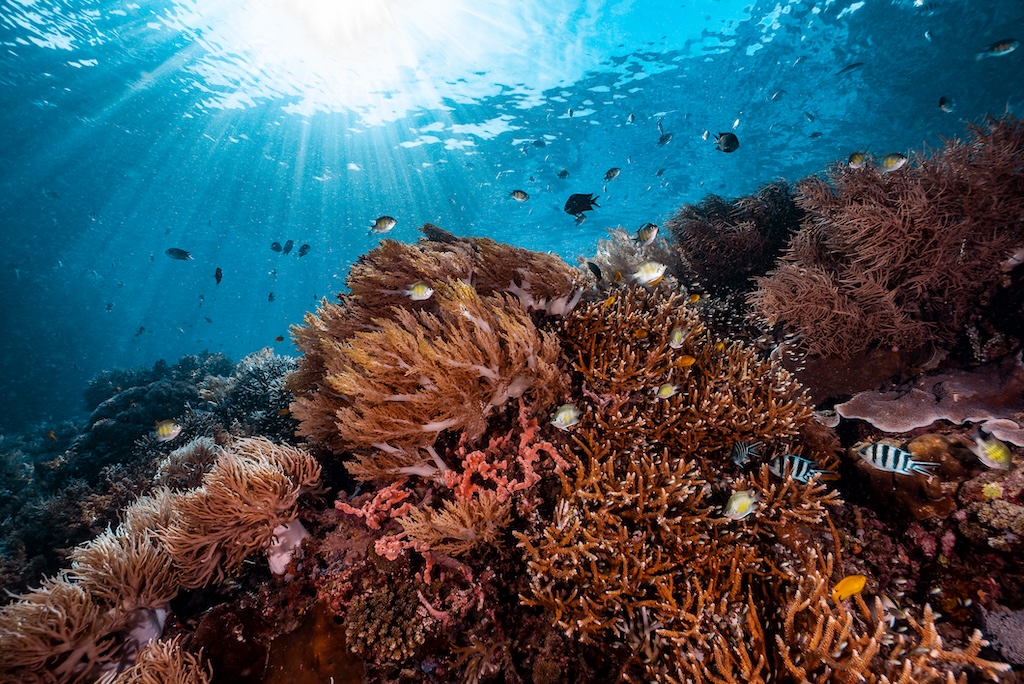
Coral reef in Raja Ampat, Indonesia. Credit: Noemi Merz / Ocean Image Bank

Building on a 2018 project that identified the 50 coral reefs that “form an optimal portfolio of reefs that are most likely to survive climate change”, the new work mapped more than 165,000km2 of coral reefs across 70 countries. These were found to have the best chances of persisting in the face of climate change and a warming, acidifying ocean.

Dr Emily Darling, director of coral-reef conservation at the Wildlife Conservation Society and a co-author of the study, told Carbon Brief that “one of the key things countries can do that have these important reefs is elevate them into national policy” across multiple government sectors.

She added that learning from these reefs will become vital over the coming months as El Niño warms the world’s oceans even further.

Darling told Carbon Brief:

“Climate change is not a single blanket on the world’s oceans. There are a lot of pockets of resilience, there are pockets of revolution for corals, and it’s all about finding those places, and how do we support them through the other local pressures that they experience that we know we can manage.”

Although few monetary coral-related commitments were made at the summit, Norway pledged to allocate NOK 20m ($2m) to the Global Fund for Coral Reefs.

Back to top

Fisheries

One of the major achievements of the summit was the adoption of the Mombasa Declaration to advance fisheries transparency and combat illegal fishing.

The declaration “recognise[s]” that illegal, unreported and unregulated (IUU) fishing is a major factor driving the unsustainable use of ocean resources and the degradation of marine ecosystems.
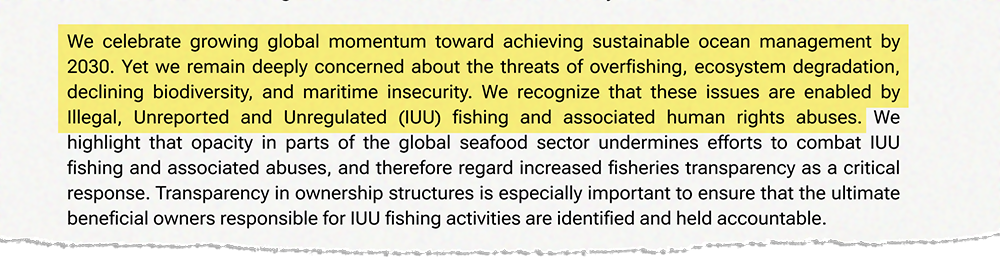
We celebrate growing global momentum toward achieving sustainable ocean management by 2030. Yet we remain deeply concerned about the threats of overfishing, ecosystem degradation, declining biodiversity, and maritime insecurity. We recognize that these issues are enabled by Illegal, Unreported and Unregulated (IUU) fishing and associated human rights abuses. We highlight that opacity in parts of the global seafood sector undermines efforts to combat IUU fishing and associated abuses, and therefore regard increased fisheries transparency as a critical response. Transparency in ownership structures is especially important to ensure that the ultimate beneficial owners responsible for IUU fishing activities are identified and held accountable.
Excerpt from the preamble to the Mombasa Declaration. Source: The Mombasa Declaration (2026)

The declaration, which was signed by 16 national governments – eight of them from Africa – commits parties to follow a set of principles laid out in the Global Charter for Fisheries Transparency. This was developed and promoted by a group of civil society organisations known as the Coalition for Fisheries Transparency.

The commitments in the Mombasa Declaration fall within four broad categories:

  • Supporting transparency and accountability in the fishing industry.
  • Strengthening monitoring of fishing activities and cooperating with enforcement actions.
  • Building capacity and supporting implementation of transparency reforms.
  • Strengthening ocean-observing systems and promoting the use of open-access data.

The declaration notes that these principles should “apply to and benefit both small-scale and industrial fisheries” and support “broader ocean-management efforts”.

At a press conference announcing the launch of the declaration, Ghanaian fisheries and aquaculture minister Emelia Arthur called it a “global testament of our collective commitment to transparent fisheries”. She emphasised the importance of the sector to all aspects of life, saying:

“Fisheries is nutrition. Fisheries is food security. Fisheries is livelihoods. Fisheries is national security.”
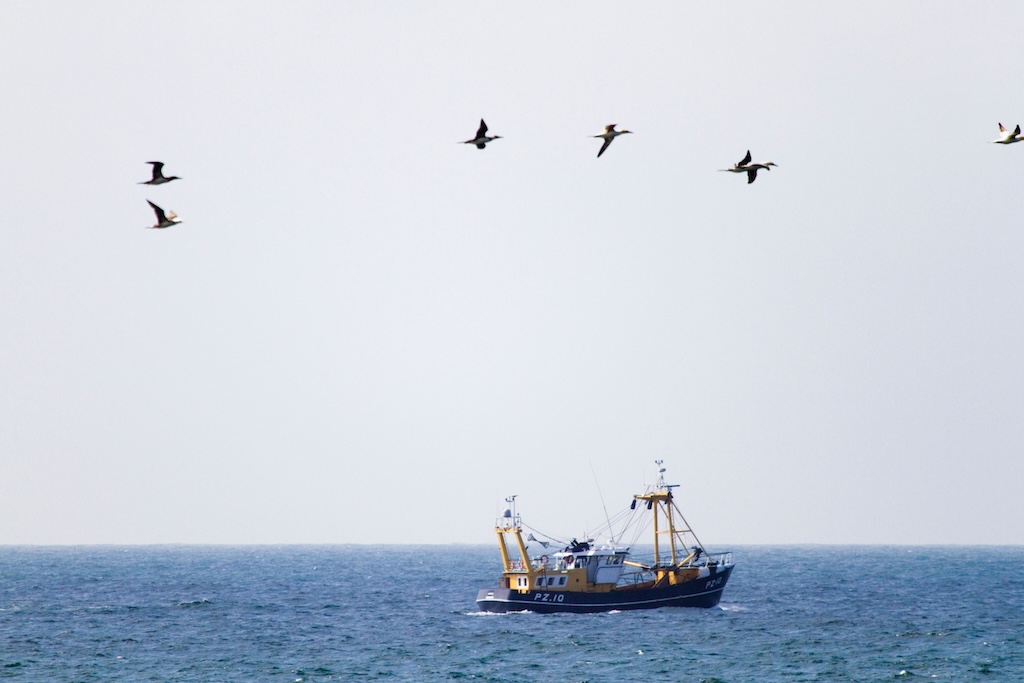
Fishing boat and gannets, Cornwall, UK.
Fishing boat and gannets, Cornwall, UK. Credit: David Chapman / Alamy Stock Photo

Several civil society organisations, philanthropies, community groups and governments also made separate fisheries-related commitments at the summit.

The EU committed €46m ($52m) through its Horizon Europe research programme to fisheries work, including €32m ($36m) for “adaptive co-management strategies” and €14m ($16m) for research on conservation and sustainable management of migratory fishes.

The EU and Italy both also announced contributions to the European Maritime, Fisheries and Aquaculture Fund.

The government of Kenya made nine fisheries-related pledges at the summit, including committing to train compliance officers dedicated to combatting IUU fishing, developing management plans for all of its commercial fisheries and establishing bycatch mitigation measures.

At the summit, the UN Food and Agriculture Organization launched its biannual “state of world fisheries and aquaculture” report.

According to the report, the world set a new record for fisheries and aquaculture in 2024 – producing a total of 235m tonnes of fish and algae. This total consisted of nearly 92m tonnes of fish from capture fisheries, 103m tonnes of farmed fish and 40m tonnes of algae production.
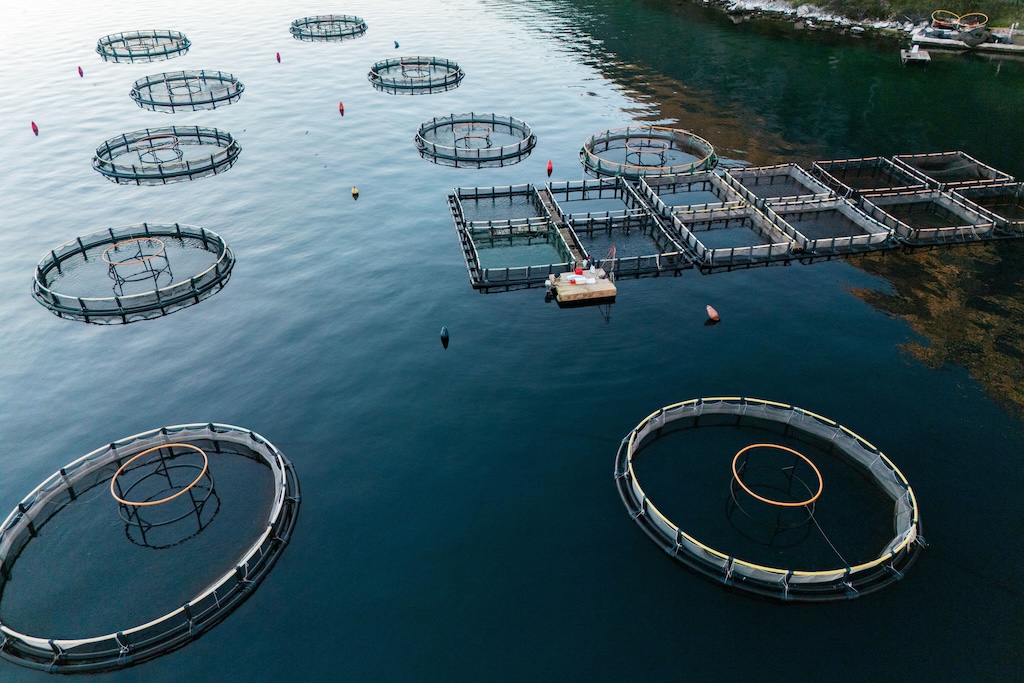
Aerial view of a fish farm.
Aerial view of a fish farm. Credit: Scharfsinn / Alamy Stock Photo

The amount of fish produced by capture fisheries has remained largely stable since 2000, while aquaculture production has increased by an average annual percentage rate of just under 5%, according to the report.

While the largest growth has occurred in Africa, Latin America and the Caribbean, the vast majority of aquaculture production – 89% – occurs in Asia.

The report also says that more than one-third of the world’s marine fish stocks are overfished, with significant variation based on region and species. It adds that climate change may play an increasing role in driving the unsustainability of fisheries in the future:

“Despite the uncertainty of climate risks in the short, medium and long term, studies on the impacts of climate change on aquatic food systems around the world increasingly document the relevance and potential success of adaptation measures, urging decision-makers to integrate climate change considerations into fisheries and aquaculture planning and management.”
Back to top

The post Mombasa: Key outcomes from the Our Ocean Conference in Kenya appeared first on Carbon Brief.

Mombasa: Key outcomes from the Our Ocean Conference in Kenya

Continue Reading

Climate Change

UN seabed regulator defends authority as mining firms seek to halt inquiry

Published

on

The UN body that regulates mining in international waters has defended its authority over ocean governance after two subsidiaries of deep-sea mining firm The Metals Company (TMC) launched legal action to halt an investigation into their conduct.

Speaking at the International Seabed Authority’s (ISA) annual meeting in Kingston on Monday, secretary-general Leticia Carvalho said the regulator’s role “matters more than ever” as governments grapple with growing pressure to exploit the deep seabed for minerals needed for the energy transition.

“The deep seabed belongs to no single country and no corporation; it belongs to all of us,” Carvalho said, describing its resources as “the common heritage of humankind”.

“If we lose sight of this,” she added, “we risk repeating on the ocean floor the same injustices and destruction we still strive to remedy on land.”

The conflict stems from TMC’s attempt to bypass the UN process by applying for US-sponsored ocean mining permits offered last year by the Trump administration. The Canadian firm aims to become the first company to mine the seabed for minerals like nickel, rare earths and manganese used in the production of both clean energy technologies and military equipment.

Several governments, including China, condemned the move as a “violation of international law”. In response, ISA member states agreed to open an inquiry into its licence-holders – among them two of TMC’s subsidiaries – to make sure they have complied with international law. If they are ultimately found to have breached those obligations, their exploration contracts could be revoked.

In June, the two TMC subsidiaries – Tonga Offshore Mining Ltd (TOML) and Nauru Ocean Resources Inc (NORI) – filed claims against the ISA at the International Tribunal for the Law of the Sea (ITLOS), asking the court to suspend the inquiry while the case proceeds. The companies argue they are being targeted “without lawful procedural basis”, “in breach of due process”, and without “good faith”.

Environmental groups have accused The Metals Company of using legal tactics to block the investigation into its subsidiaries.

“We find ourselves in this Orwellian situation where these companies are trying to effectively get an injunction against the ISA from continuing its inquiry,” said Louisa Casson, who leads Greenpeace’s global campaign against deep-sea mining.

“The stakes are so high and that’s why we’re seeing this pretty extraordinary move to try to get an injunction against the ISA,” she added.

    Mining the deep ocean floor

    The ISA has been negotiating a mining code for the deep ocean floor for over 12 years without success. Nearly 40 governments, including the UK, France and Germany, have called for a moratorium or precautionary pause on deep-sea mining until there is sufficient scientific evidence that it can proceed without causing serious harm to marine ecosystems.

    Rather than wait for the UN process, industry frontrunner, The Metals Company, decided to apply for US permits offered by the Trump administration last year. In May, the US National Oceanic and Atmospheric Administration (NOAA) certified TMC’s application to explore 120,000 square kilometers of sea floor.

    The firm wants to mine an area in the Pacific known as the Clarion-Clipperton Zone, which holds critical minerals inside potato-sized rocks found in the deep ocean floor known as polymetallic nodules. The minerals like manganese, nickel and rare earths are used in clean energy technologies like batteries and wind turbines.

    But the area is also a little-understood ecosystem inhabited by thousands of unnamed species. The International Union for Conservation of Nature (IUCN), the world’s largest environmental network, says mining this area would threaten the existence of over half of all molluscs reliant on deep-sea vents.

    A field of manganese nodules in the ocean floor. (Photo: photo by NOAA Office of Ocean Exploration and Research)
    A field of manganese nodules in the ocean floor. (Photo: photo by NOAA Office of Ocean Exploration and Research)

    Governments launch inquiry

    Seeking to discourage companies from bypassing the UN process, the ISA’s member states unanimously agreed to open an inquiry into whether holders of its exploration licences complied with their contractual obligations under the UN Convention on the Law of the Sea (UNCLOS).

    “The stage we’re at now is countries grappling with what they can do about this. What tools do they have to constrain this pathway that would go against international law,” Casson said.

    Both NORI and TOML continue to hold ISA exploration contracts in the Clarion-Clipperton Zone. NORI’s license, however, expires later this month on July 21st and is up for review.

    The inquiry is currently ongoing, but Casson said that if governments decide to cancel NORI’s license, other firms could apply for the ISA permit and compete for mining rights in the area.

    “If that happens, it could really put into jeopardy TMC USA’s application (for US permits) because then suddenly that area could be open for a competing claim,” she explained. “At the moment, TMC is trying to kind of play both sides and shore up the area so that there will be no competition.”

    Deep-sea mining firms push back

    The cases before ITLOS are the first contentious disputes over deep-sea mining to reach the court designed for maritime disputes and the first brought directly by private contractors against the ISA. Among the companies’ legal advisers is former ISA secretary-general Michael Lodge.

    Both NORI and TOML claimed that, unless the inquiry is suspended, there is a “real
    and imminent risk of prejudice” that “may have significant legal and practical consequences” for
    their activities.

    The claim was backed by the Pacific island nation of Nauru, which has sponsored TMC’s push to mine the Clarion-Clipperton Zone and would benefit from the economic activity. The country raised “concerns on the adherence of due process with respect to the treatment of NORI”.

    The mining companies allege that the ISA has singled them out among other applicants by requesting additional documentation, and that the UN auditors did not give them an opportunity to “meaningfully respond” to their concerns.

    The ISA rejected those allegations as “wholly unsupported assertions”. It added that, given TMC’s application for US mining permits, it had done “what any reasonable regulator would do”: with the unanimous support of member states, it opened an inquiry simply to establish the facts.

    A view of the International Seabed Authority council meeting in Kinston, Jamaica. (Photo: Andrés Felipe Carvajal Gómez/ ENB)
    A view of the International Seabed Authority council meeting in Kinston, Jamaica. (Photo: Andrés Felipe Carvajal Gómez/ ENB)

    Delay tactics

    A decision from the maritime court is now expected by July 18, which has added to a “climate of significant regulatory uncertainty”, according to global law firm HSF Kramer.

    As ISA countries meet in Kingston this week, the court’s president asked them “not to act in any way that could hinder any order” the court may make.

    At the hearing representing the ISA, renowned human rights lawyer Philippe Sands said the deep-sea mining firms were engaging in “strategic litigation” meant to delay the inquiry and send the ISA into a years-long legal process.

    “It’s a delaying tactic, and nothing would make them happier than for you to kick this into the long grass for two years while you sort out the merits. That is what they want this Tribunal, the Chamber, to do. You are being instrumentalized in this process,” Sands told the judges.

    The post UN seabed regulator defends authority as mining firms seek to halt inquiry appeared first on Climate Home News.

    UN seabed regulator defends authority as mining firms seek to halt inquiry

    Continue Reading

    Climate Change

    28 quotes from next UK leader Andy Burnham on climate, net-zero and fossil fuels

    Published

    on

    The UK’s incoming prime minister Andy Burnham has remained tight-lipped on his views on climate change during his leadership campaign.

    When asked his views on reversing Labour’s manifesto pledge to stop new North Sea drilling in June – a move that the oil-and-gas industry and right-wing media have pushed for in recent months – he said he had “something of an open mind” on the issue.

    But a trawl of Burnham’s past comments about climate change, net-zero and fossil fuels reveals a different picture.

    Just a year ago in June 2025, Burnham, while mayor of Greater Manchester, gave his support to the fossil fuel treaty – a proposed international pact on phasing out coal, oil and gas – calling it a “lifeline” that “all governments” should join.

    In a video message endorsing the treaty, he also said that “there should be no turning away from net-zero”.

    During his last bid to be Labour leader in 2015, he used similar language, saying:

    “Labour under my leadership will never turn our back on either our duty to tackle climate change or the prospects offered by the green economy.”

    Burnham has spoken about the threat of climate change since at least 2008, noting in 2021 that accelerated action could “create thousands of good jobs”, but also warning that net-zero risked becoming the “next Brexit”.

    Burnham is yet to appoint his cabinet, but there is much speculation that he will select current net-zero secretary Ed Miliband as his chancellor – with their ally Miatta Fahnbulleh having a “strong chance” of taking Miliband’s former position.

    Below, Carbon Brief recounts 28 things that Burnham has said about climate change, net-zero, fossil fuels, energy and transport.

    Climate change

    “Tackling climate change isn’t just about protecting the planet – it’s a powerful opportunity to build a fairer, greener future for our communities and businesses.”

    Calling for local councils to be given more power and money for climate action, 29 November 2025


    “There is little doubt that Greater Manchester’s biodiversity has taken a hit over the years, with habitats being lost, destroyed and becoming less diverse due to the impact of development, climate change, pollution and invasive species…We are committed to delivering a city-region for all residents to enjoy – a fairer, greener and more prosperous place for everyone.”

    Statement after Greater Manchester declared a “biodiversity emergency”, 25 March 2022


    “Over the next decade, if we accelerate our response to the climate crisis, we can create thousands of good jobs, improve homes, overhaul our transport system and make [Manchester] an even better place to live.”

    Greater Manchester Green Summit, 18 October 2021


    “The environment has never been higher on the national and international agenda.”

    Statement after visiting a peat bog restoration project in England, 9 January 2020


    Andy Burnham (left) and others, including members of Massive Attack, endorsing the Fossil Fuel Treaty in June 2025
    Andy Burnham (left) and others, including members of Massive Attack, endorsing the Fossil Fuel Treaty in June 2025. Credit: Fossil Fuel Treaty

    “I think climate change [action] will be driven more quickly from the bottom up, if I’m honest. It’s the will of evolution if you wait for the government to act…When governments aren’t listening you get out and get your voice heard…so I think [climate protesters] deserve our encouragement, not our criticism.”

    Speaking to Manchester Evening News at a student climate protest in Manchester, 24 May 2019


    “Labour under my leadership will never turn our back on either our duty to tackle climate change or the prospects offered by the green economy.”

    Labour leadership candidate speech, 15 July 2015


    “Climate change can seem a distant, impersonal threat – in fact the associated costs to health are a very real and present danger…We need well-designed climate change policies that drive health benefits.”

    Speaking to the Guardian about a study on climate and health, 25 November 2009


    “The Stern report on the economics of climate change has changed the debate, in this country and around the world. It made it clear that the people who could suffer most from a failure to tackle climate change, or from a lack of ambition in our approach to it, are those living in the developing countries. They are the most vulnerable…[and] Stern said that the cost of not acting would be large. That is why the government took various measures in the recent spending review to ensure that we are prepared to face the challenges posed by climate change.”

    Speaking in the UK parliament on the economic impacts of climate change on his final day as chief secretary to the Treasury, 24 January 2008

    Net-zero

    “There should be no turning away from net-zero.”

    Speaking after giving his support to the fossil fuel treaty – a proposed global pact to introduce laws to phase out coal, oil and gas – on behalf of Manchester, 6 June 2025

    Fossil Fuel Treaty Initiative on Bluesky: The Fossil Fuel Treaty is not just a plan, said Mayor Burnham

    “An opportunity is opening up for Britain as other countries move away from net-zero. We should seize that…We can make Britain a green leader. This is not the time to tiptoe, it is the time to commit to this path.”

    Speaking at Innovation Zero World Congress in London, 29 April 2025


    “[We] need a government that fully buys into the 2038 vision because the UK will not get to 2050 unless places like Greater Manchester are freed up to go faster – and we’re ready to go faster.”

    Speaking about Greater Manchester’s aim to reach net-zero by 2038, 19 October 2022


    “In Greater Manchester we have plans to build 30,000 net-zero social rented homes because we recognise that a successful city region needs good quality, affordable accommodation for everyone.”

    Speech on the future of cities, 24 June 2022


    “By building a broad consensus behind the drive to net-zero, we can ensure that the transition is a fair one that delivers social justice as well as climate justice. This is an opportunity for all of us to show how cutting carbon emissions in our cities can make a real difference to our communities – away from the abstractions and rooted in the real world.”

    Panel discussion in Glasgow during the COP26 climate summit, 12 November 2021


    “To the extent that people have picked up anything from COP26, it’s a sense that the drive to net-zero will mean cost and inconvenience for ordinary people and offsetting for the wealthy and entitled. All of a sudden, you can feel how net-zero could become the new Brexit – a debate that gets very divided on class grounds…This has got to be a wake-up call. We cannot let this happen. We need to act now to build a broad social consensus behind the drive to net-zero. How to do that? It starts with taking control of the climate narrative from those steering it in the wrong direction and turning it around…We must show how, if done in the right way, the drive to net-zero is actually an opportunity to reduce the cost of living; to make people’s lives better and society fairer.”

    Writing for the London Standard, 5 November 2021

    
Andy Burnham on X: We need to use Week 2 of COP26

    “The drive to net-zero is a chance to re-industrialise the north of England, this time in a clean way. Create really good jobs, future-facing jobs for people, better public transport, improve people’s homes…If we go quickly towards net-zero, it’s the quickest way to level up the country.”

    ITV interview at COP26, 1 November 2021


    “If we really embrace the drive to net-zero, that is the route to level up the country…But it needs substantial investment, upfront, now, of the kind that Rachel Reeves, shadow chancellor [and chancellor under Keir Starmer’s government], has been talking about. We need long-term predictable funding.”

    Interview with GB News at COP26, 1 November 2021


    “I would have preferred to hear slightly less about carbonated wine and much more about a decarbonised economy.”

    Referencing a UK budget, which included tax cuts for sparkling wine and other drinks, 28 October 2021


    “Decarbonising is not just about lowering costs on to people. It’s the route to get better, cheaper public transport. It’s the route to getting homes that are cheap to run. It’s actually the way we can create thousands of good jobs for the people who live in Greater Manchester. This is the route to levelling up the country by going further and faster on decarbonisation.”

    Speaking to Manchester Confidential, 20 October 2021


    “[I am] asking people to stop seeing the environmental agenda as a cost and a burden agenda. I think this is a barrier that we’ve got to get over. Already in the media interviews I’ve done today, people are saying ‘can you afford it?’, ‘can it be achievable when times are tough?’.

    “My answer to that is, at some point in the 21st century, all homes will be zero-carbon. At some point in this century, all buildings of any kind will be zero-carbon…All cars will be zero-carbon, all public transport will be zero-carbon…The question is: when? And surely the places that embrace those things first are putting themselves in a position of economic strength when it comes to facing up to the future. Rather than seeing the whole agenda as a burden, we’ve got to see it for the benefits that it can bring.

    “There may be a greater upfront cost in a zero-carbon home, but let’s stop thinking, as we tend to do in Britain, of the short-term, the short-termist approach to life. Surely let’s start talking to the public about the lifetime cost.”

    Greater Manchester Green Summit, 21 March 2018


    Fossil fuels

    “I’ve got something of an open mind, you know. I don’t have a sort of fixed position.”

    Speaking on the issue of new North Sea oil and gas in a New Statesman interview, 3 June 2026


    “We would fight this in GM [Greater Manchester]…Communities across the north would face all the danger and disruption while big oil and gas walk away with all the profits.”

    In response to Reform’s call for fracking, on X, 25 August 2025

    Andy Burnham on X: We would fight this in GM

    “I am proud to endorse the fossil-fuel treaty proposal today on behalf of Greater Manchester. It’s not just a plan – it’s a lifeline. It’s a call to end coal, oil and gas, hold polluters accountable…I urge all governments, nationals and subnationals to join this fight.”

    Statement upon endorsing the fossil-fuel treaty, 5 June 2025

    Fossil Fuel Treaty Initiative on X: In a historic moment, Mayor Andy Burnham

    “Fracking is the past, it is not the future.”

    Speech at London climate protest, 20 September 2019


    “I have called for a moratorium on fracking. Far too many potential risks and unanswered questions.”

    On X, 22 June 2015

    Andy Burnham on X: This explains why I have called for a moratorium on fracking

    Energy and transport

    “What I would do, if successful, is lay out a plan for more public control over water, energy, transport, so that over the period we can get those bills down, fares down, and give people and give businesses breathing space.”

    LBC interview, 2 July 2026


    “I am all in favour of tough decisions at a national level. I don’t believe there should be a third runway at Heathrow, for instance. But I think those are decisions for national government.”

    Guardian interview, 13 June 2019


    “There is a debate to be had about aviation, isn’t there? There are changing public attitudes about aviation. Rather than just saying no to people flying, don’t we need to accelerate research into low and zero-carbon forms of aviation?”

    Guardian interview, 13 June 2019


    “Today, I stand alongside the mayors of some of the greatest cities in the world. I’m committed to a cleaner, greener and healthier future for Greater Manchester. Around a third of greenhouse gas emissions in our city-region come from transport.”

    When signing the C40 Fossil-Fuel-Free Streets Declaration, which includes support for zero-emissions vehicles and walking and cycling, on behalf of Manchester, 14 September 2018

    The post 28 quotes from next UK leader Andy Burnham on climate, net-zero and fossil fuels appeared first on Carbon Brief.

    28 quotes from next UK leader Andy Burnham on climate, net-zero and fossil fuels

    Continue Reading

    Climate Change

    A strong El Niño spells more climate pain for the Philippines

    Published

    on

    Suresanathan Murugesu is the country director of Action Against Hunger in the Philippines

    The Philippines is caught in an extreme weather trap. Here, forecasts for a strong El Niño in the months ahead do not just indicate a period of drought – they also point to torrential rain and flooding.

    It could hardly come at a worse time, threatening communities that are still struggling to recover from previous typhoons, such as last year’s Typhoon Tino, as well as two strong earthquakes – in Cebu in September 2025 and last month’s 7.8-magnitude quake in Mindanao.

    Forecasts point to the arrival of one of the most intense El Niños in recent history this year and into 2027, with the United Nations warning that it could be the strongest in decades around the world.

    The peak of the El Niño is expected towards the end of the year, but the weather phenomenon is already estimated to have caused agricultural losses of nearly €30 million (£25.9 million), potentially affecting the livelihoods of 4 million farmers.

      On the climate frontline

      For many, El Niño is a figure in a report or a distant headline, but for those of us who live and work on the ground, it is a reality that is already hitting the most vulnerable families.

      When I travel through the communities of the Bangsamoro Autonomous Region – in the south – or speak with families on the island of Siargao or in the Zamboanga region, I do not see data or graphs.

      I see a father looking at his cracked rice field, wondering how he will pay off the debts from a harvest that is already lost before it has even begun. I see a mother walking under a relentless sun because her village’s well has dried up, carrying the water that sustains the health of her children and her entire community.

      And what we are seeing today – 26 provinces experiencing drought and millions of dollars in agricultural losses – is only the beginning.

      Loss and damage fund delays first project approvals as needs dwarf resources

      Many Filipino families are still trying to rebuild and recover after last year’s typhoons and the two earthquakes. In Mindanao, where the recent magnitude 7.8 earthquake displaced more than 90,000 people and destroyed over 19,000 houses, uncertainty remains about when the people will be able to fully recover and return home. 

      Today, they are trying to protect the meagre possessions they have and, if they are lucky enough to have their home unscathed by typhoons and earthquakes, their homes from flooding; tomorrow, they will have to survive the hardship and impact of drought.

      The effects of El Niño threaten to exacerbate their troubles.

      Struggle for basic needs

      Many low-income Filipino families already face significant challenges to meet their basic needs.

      In our daily visits, we see how life is becoming increasingly difficult for millions of people. Rising fuel and transport costs are driving up the price of basic foodstuffs, making them unaffordable for many families. At the same time, crop failures and income losses are leaving households without livelihoods, while disasters contribute to further suffering.

      A farmer collects rice along the side of the road during a hot day in Candaba, Pampanga, Philippines, April 30, 2024. REUTERS/Eloisa Lopez

      A farmer collects rice along the side of the road during a hot day in Candaba, Pampanga, Philippines, April 30, 2024. REUTERS/Eloisa Lopez

      But we are not just talking about hunger. We are talking about health, safety and dignity. Water shortages are forcing many people to resort to unsafe sources, increasing the risk of disease. And, as is the case in so many crises, it is the most vulnerable who bear the heaviest burden: walking long distances every day to fetch water or food, enduring enormous physical strain and facing risks of violence and insecurity.

      Building resilience

      Faced with this reality, our response is based on a simple idea: to be there before the crisis reaches its most critical point. At Action Against Hunger, we work alongside communities to anticipate the situation, assessing the impact of the drought and activating early response mechanisms to protect their livelihoods and access to water.

      We translate climate forecasts into concrete action plans: from support for farmers to programmes ensuring safe water. All of this is done in coordination with local authorities and international partners, because we know that what we do today will make the difference tomorrow.

      A supercharged El Niño is coming – are we ready?

      The hardest months are yet to come. But the question is not just what will happen, but what we are doing now to prevent it. How many tables will remain empty and how many children will see their health compromised will depend on our ability to act in time.

      We cannot stop El Niño. But we can prevent it from becoming a crisis of human dignity. We cannot afford to look the other way whilst the earth cracks and opportunities disappear. Because behind every statistic, there is a family struggling to get by. And that is a reality we cannot ignore.

      The post A strong El Niño spells more climate pain for the Philippines appeared first on Climate Home News.

      A strong El Niño spells more climate pain for the Philippines

      Continue Reading

      Trending

      Copyright © 2022 BreakingClimateChange.com