
Connect with us

Published

on

Carbon-Finance Project Pioneer TASC Joins Carbon Markets Africa Summit as Diamond Sponsor

Disseminated on behalf of VUKA Group.

“Projects with monumental impact at the grassroots level”

The organizers of the upcoming Carbon Markets Africa Summit have announced the diamond sponsorship of TASC, the award-winning and pioneering carbon finance project developer with a proven track record of innovative climate mitigating techniques and investing in local communities. 

Taking place in Johannesburg from 22 to 23 October, Carbon Markets Africa Summit will gather the continent’s entire carbon markets value chain, from successful early carbon market movers, climate-finance-ready projects, and regulatory bodies to global institutional development organizations and investors.

High-Impact Carbon Projects at Scale

“At its core, TASC is community-driven and we believe in delivering real-world social and environmental impact rooted in rigorous carbon science,” says Shelley Estcourt, TASC’s CEO for Africa. 

Shelley Estcourt, CEO, TASC
Image: Shelley Estcourt, CEO, TASC

She adds: “We focus on delivering high-integrity, high-impact carbon projects at scale.
Historically, we have been focused on cookstoves, but our GRASS* project is a testament to our ability to diversify quite significantly. Backed by a dedicated in-house R&D team, we are constantly innovating and exploring new methodologies, platforms, and country partnerships. We have a big focus on projects that deliver impact at scale, combined with sound carbon modelling and science.”

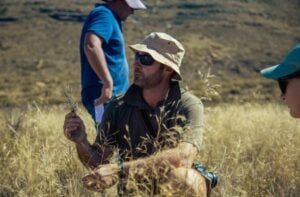
Grassland Restoration and Stewardship in South Africa

TASC is currently active across sub-Saharan Africa and Australia, with expansion plans into other parts of Africa and the Australasian region. Their focus is on jurisdictions with advanced Article 6 carbon market frameworks, where the enabling environment allows for long-term, scalable impact.
TASC south africa

950,000 cookstoves distributed

In 2023, TASC won the Environmental Finance Voluntary Carbon Market Award for its cookstove project. “The award and the associated finance mechanism via Standard Bank were instrumental,” says Estcourt. 

“It enabled us to repay early-stage funding and significantly expand the scope of the programme. To date, we’ve distributed clean cookstoves to over 950,000 households across rural South Africa, with benefits for both community health and carbon reductions.”

TASC cookstoves

Reversing The Effects of Climate Change

TASC’s GRASS project directly tackles the consequences of climate change by restoring degraded rangelands, boosting carbon sequestration, and building long-term resilience for rural communities. 

Escourt: “Climate change has significantly reduced the adaptive capacity of farmers, which sees them to increased drought vulnerability, erosion, bare soils, and more extreme weather impacts. GRASS helps reverse these effects by improving water-holding capacity, stabilising soil temperatures, reducing erosion, and increasing biodiversity across hundreds of thousands of hectares.” 

GRASS is also the world’s first project registered under Verra’s VM0042 methodology, enabling robust monitoring and the generation of certified carbon credits

Important opportunity

As the diamond sponsor of the inaugural Carbon Markets Africa Summit in Johannesburg from 22–23 October, TASC is excited to be part of what Estcourt describes as “an important opportunity to bring thought leaders, developers, policymakers, and buyers into one room. It’s a platform to hopefully accelerate Article 6 readiness, deepen understanding of what high-impact projects look like on the ground, and promote stronger collaboration across the continent.”

She continues: “For buyers, this is your chance to meet developers face-to-face, ask the hard questions, and build real trust in the market. Come and listen to the passion.” 


VUKA Group 

Carbon Markets Africa Summit is organised by VUKA Group, which has more than 20 years’ experience in serving the business community across Africa. The United Nations Development Programme (UNDP) is the official host organisation. 

Event website: About — Carbon Markets Africa

Event dates and location:
Dates:
21 October: Pre-summit day
22–23 October: Summit
Location: Johannesburg, South Africa

Contact details for Carbon Markets Africa Summit: 
Project Lead: Emmanuelle Nicholls 
Cell: +27 83 447 8410  
Email: emmanuelle.nicholls@wearevuka.com  

Contact details for TASC:
Commercial Director: Dr Storm Patel
Email: storm@tasc.je

The post Carbon-Finance Project Pioneer TASC Joins Carbon Markets Africa Summit as Diamond Sponsor appeared first on Carbon Credits.

Continue Reading

Carbon Footprint

Insetting vs Offsetting: Which Actually Counts Toward Your Scope 3 Targets

Published

on

The accounting differences that decide whether your nature investment shows up in inventory, in BVCM, or nowhere at all.

The question reaches a procurement team about three weeks before the next sustainability committee meeting. Someone has read about insetting. Someone else has just signed off on an offset purchase. The CSO wants to know if the two are interchangeable. The answer is no, and the GHG Protocol Land Sector and Removals Standard is the reason why.

This article walks through what each term means at audit-grade specificity, what the standards actually say about how each gets counted, and how to decide which tool fits which target. The insetting vs offsetting question is one of the most-searched in corporate climate strategy, and one of the most poorly answered. By the end of this piece, you should be able to brief a committee on the difference without notes.

The two definitions, in plain English

Offsetting means buying carbon credits generated outside your value chain and retiring them against your residual emissions. The reduction happens somewhere else, financed by you, and the credit is the receipt.

Insetting means investing in emission reductions or removals inside your own value chain, typically with suppliers, where the reduction is directly linked to the products and services you buy. The reduction happens inside the boundary of your Scope 3 inventory, and the accounting treatment is fundamentally different.

The shorthand from the University of Oxford’s Nature-based Insetting Initiative is useful: insetting is what you do with the supply chain you have; offsetting is what you do with the supply chain you do not have.

What the GHG Protocol Land Sector Standard actually says

The GHG Protocol Land Sector and Removals Standard, finalised in 2024 after a multi-year pilot, sets the rules for how land-based emission reductions and removals enter corporate inventories. The Standard distinguishes between inventory accounting (Scope 1, 2, and 3) and project or intervention accounting (a separate methodology for crediting).

For insetting, the practical implication is that supplier-level interventions, when properly measured and attributed, can reduce your Scope 3 category 1 (purchased goods and services) emissions in your inventory. The reduction is not a credit retired against the inventory; it is a lower inventory number, period.

For offsetting, the credit is retired separately. It can be reported as a contribution toward a net-zero claim under the SBTi Beyond Value Chain Mitigation framework or as part of a VCMI Carbon Integrity claim, but it does not lower the inventory number.

A practical consequence: if your Science Based Target requires a 50% absolute reduction in Scope 3 emissions by 2030, insetting moves you toward the target. Offsetting does not. This single point of difference reshapes the procurement decision.

When insetting counts toward Scope 3 (and when it does not)

Insetting counts toward Scope 3 only when several conditions are met:

  • The intervention must occur with an entity in your value chain.
  • The emissions reduction or removal must be measured against a defensible baseline.
  • The reduction must be attributed to your share of that supplier’s output, not double-counted with other buyers.
  • It must follow the inventory accounting rules in the GHG Protocol Land Sector Standard, not the project accounting rules used to generate credits.

The most common failure mode is double counting. If your supplier sells the same reduction as a credit on the voluntary market and also reports it to you as a Scope 3 reduction, the math breaks. The Standard requires you to address this risk, typically by purchasing and retiring the supplier-issued credit as part of your inventory or by contractual provisions that prevent the supplier from selling the reduction twice.

When insetting does not count toward Scope 3: when the intervention sits with a supplier you do not buy from, when the baseline is not defensible, when the attribution is unclear, or when the documentation does not survive audit. Those cases default to Beyond Value Chain Mitigation, which is still useful but operates on a different ledger.

The procurement and supplier engagement question

Insetting is harder than offsetting. That is the unfashionable truth most buyers eventually confront. Offsetting is a transaction; insetting is a relationship.

To run an insetting program, you need supplier mapping precise enough to know which farms or facilities sit at which Scope 3 boundary. You need an engagement model that gets suppliers to participate, which usually requires multi-year commitments and shared economics. You need an MRV architecture that measures the right things and produces audit-ready documentation. And you need a contractual structure that prevents double counting and protects both sides.

The trade-off you receive in return is significant. Reductions count against your inventory rather than your residual. Supplier relationships deepen, which protects sourcing continuity. Yield and quality improvements often follow regenerative interventions, which reduces your input cost over time. And the regulatory file, under CSRD, CSDDD, EUDR, and the SBTi FLAG Guidance, is materially stronger.

Choosing the right tool for the right target

A practical decision rule. If your target is a science-based Scope 3 reduction and you operate in a FLAG sector or source FLAG commodities, insetting is the structurally correct tool. If your target is a net-zero claim that includes neutralising hard-to-abate residual emissions outside your value chain, BVCM via high-integrity offsets is the structurally correct tool. Most companies with material Scope 3 exposure need both, in different proportions, sequenced over time.

The sequencing matters. Insetting takes longer to stand up but produces a permanent reduction in the inventory. Offsetting can be transacted faster but does not change the inventory and now sits under tighter claim restrictions. Treat them as complementary tools with different jobs, not as substitutes. The Accountability Framework Initiative and the IUCN Global Standard for Nature-based Solutions both provide useful guardrails for the insetting side, with biodiversity, human rights, and benefit-sharing requirements that go beyond carbon math.

If you are mapping a Scope 3 reduction roadmap and need to scope which interventions count toward your inventory versus which sit in Beyond Value Chain Mitigation, the carbon and sustainability experts at Carbon Credit Capital can help you structure a nature-based supply chain investment program that fits your FLAG exposure, your target architecture, and your audit horizon. Schedule a consultation.

Continue Reading

Carbon Footprint

Net zero needs nature: a carbon credit guide

Published

on

Net zero is often described as a balancing act: cut what you can, account for the rest, and reach zero on the ledger. That framing is useful, but it leaves something out. It treats every tonne of carbon as interchangeable and every route to zero as equally sound, while the science tells a more specific story.

Continue Reading

Carbon Footprint

Deforestation in Malawi: causes and solutions

Published

on

Malawi has lost a striking share of its forests over the past three decades. Woodlands that once covered well over a third of the country now cover less than a quarter, and the pressure on what remains is increasing. Behind those figures sit two practical questions: what is driving the loss, and what reverses it?

Continue Reading

Trending

Copyright © 2022 BreakingClimateChange.com

