

Located in the heart of the Amazon, it has been billed as Brazil’s first sustainable aviation fuel (SAF) project, but the palm oil producer behind a planned biorefinery in Manaus is now grappling with a financial crisis triggered by concern over possible rights abuses.
Reporting in the region by Brazilian news outlet InfoAmazonia in partnership with Climate Home News, has also found that the company – São Paulo-based Brasil BioFuels (Grupo BBF) – is growing oil palm on three areas subject to sanctions by Brazil’s Ibama environmental agency over illegal deforestation.
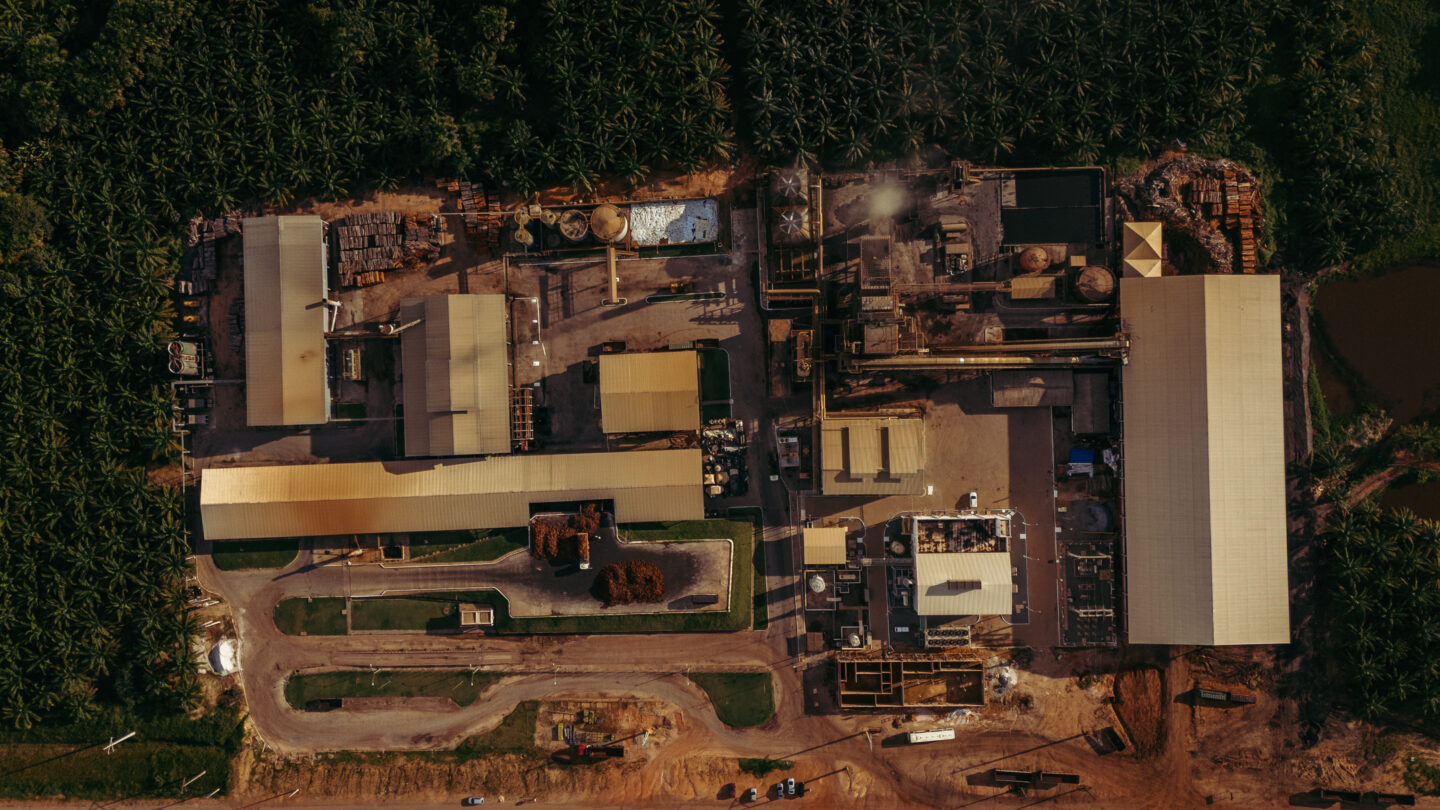
The embargoed plots lie in São João da Baliza, a sparsely populated district strung along the highway where former grazing pasture and biodiversity-rich scrubland have steadily been replaced by neat rows of oil palms. Signs hanging on fences say the crop will be used to make SAF.
Aviation’s Green Dream: Read our investigative series on Sustainable Aviation Fuel
While many locals living in the district’s towns welcome the jobs and economic boost provided by BBF’s palm plantations, Indigenous people and environmentalists see them as a threat to nature, traditional ways of life and the rainforest.
“If these areas are completely replaced by crops for biofuel production, we will lose unique species, many of which are still little known to science,” said Lucas Ferrante, a researcher from the zoology postgraduate programme at the Federal University of Amazonas (UFAM).
BBF, which announced its plans for the Manaus SAF project back in 2022, makes much of the fact that – in line with Brazil’s strict environmental laws – it only grows oil palm on land that was degraded before 2007, rather than freshly deforested land.
Stressing the company’s green credentials in an interview with Brazilian newspaper Valor Econômico last year, CEO Milton Steagall said the firm – which grows palm on about 75,000 hectares (185,000 acres) in the northern Amazon states of Pará and Roraima – “only cultivates the plant in the areas permitted by law”.
“Our sustainable palm cultivation recovers areas already degraded by deforestation and contributes to keeping the Amazon rainforest standing,” he said.

Illegally cleared land
BBF, which says it is the biggest palm oil producer in Brazil, makes palm-based biodiesel that fuels a network of power stations in the Amazon region, supplying some 140,000 customers.
The plan to produce SAF from the same feedstock would be its first foray into a new market that is set to take off in the coming years, as more countries – including Brazil – require their aviation sectors to start using greener fuel.
But InfoAmazonia’s investigation suggests that sourcing rising amounts of SAF from crops like palm that are grown in tropical forest countries – from Brazil to Malaysia – poses a threat to rainforests that are vital stores of climate-heating carbon.
Is the world’s big idea for greener air travel a flight of fancy?
InfoAmazonia identified the illegally deforested areas being used by BBF in southern parts of Roraima by analysing data from the Earth Index platform, which draws on artificial intelligence (AI) and satellite images to determine land use.
The data was then cross-referenced with maps of embargoed areas produced by the government’s Ibama agency. In April this year, the InfoAmazonia team visited the sites and confirmed the existence of the palm crops.
Their analysis found that a total area of 164 hectares (405 acres) close to São João da Baliza had been embargoed by Ibama, meaning the land cannot be used for agriculture.
While the area – roughly equivalent to 250 soccer pitches – represents a small fraction of BBF’s total plantations, the findings highlight the deforestation risks of large-scale oil palm cultivation in the Amazon.

None of the plots are officially registered in BBF’s name – something that is relatively common in Brazil’s land registry – but when InfoAmazonia visited them, the company’s logo could be seen displayed clearly on the fences of each.
Pictures taken with a drone of one of the areas show a field that appears to have been recently planted with palms cutting into a forested area that stretches toward the horizon. A few tall trees dot the newly planted area.
Asked about InfoAmazonia’s findings, BBF said it had never been informed about the issuance of environmental penalties on any of its land in Roraima.
“(The company) has (completed) the environmental licensing processes with the State Foundation for the Environment and Water Resources (FEMARH) in all of its areas, which are necessary for the sustainable cultivation of oil palm in the state of Roraima,” a BBF spokesperson told InfoAmazonia.
Pasture and bananas make way for palm
Palm oil production in Roraima as a whole rose nearly 40 times between 2019 and 2023, according to data from the Brazilian Institute of Geography and Statistics (IBGE).
Even when palm is planted only on degraded land, the spread of plantations puts “indirect pressure” on forested areas, said Eder Carvalho, chief inspector at Ibama’s Roraima branch.
“Old pasture is replaced by palm, with forested areas in turn being cleared to make way for new pasture and banana cultivation,” he said, explaining a process often referred to in climate and environmental risk assessments as “indirect land use change”, or ILUC.
It is because of the high risk of ILUC linked to palm oil cultivation – and the related carbon dioxide emitted when forests are destroyed – that virgin palm oil is not permitted as a feedstock for SAF in Europe.

Large plantations of a single crop, a practice called monoculture, cause other environmental problems, too, opponents say, taking a heavy toll on biodiversity, depleting water supplies and often involving substantial use of pesticides and other agrochemicals.
In the Amazon, researchers say monoculture also depletes the so-called flying rivers – moist air currents – that carry rain to other parts of Brazil.
“The forest stores a lot of water in the soil, and the trees have deep roots, which lead to evaporation that cools the air, keeping the temperature low,” said climatologist Carlos Nobre, from the National Institute for Space Research (INPE), one of the first scientists to study flying rivers.
Green fuel of the future?
Environmental campaigners warn that allowing the use of non-waste vegetable oils like virgin palm oil as a feedstock for SAF would both fuel forest loss and harm the global and local climate in big commodity-producing nations with important rainforest ecosystems such as Brazil, Malaysia and Indonesia.
“We can’t go backwards and return to fuels made from plants, like palm,” said Cian Delaney, a campaign coordinator with the Belgium-based Transport & Environment organisation, adding that no agricultural crop should be used in SAF production.
“This is a fundamental point from an environmental point of view. This cannot open space for the expansion of first-generation crops,” he said.
Air travel’s ‘holy grail’: Jet fuel made from CO2 and water prepares for take-off
Due to such concerns, the EU and Britain require SAF to be made from waste products such as used cooking oil (UCO), as they began this year to mandate SAF blending into jet fuel as a way to reduce air travel’s hefty carbon emissions.
But a months-long investigation by Climate Home and its partner The Straits Times has uncovered an opaque global supply chain for UCO that exposes jet fuel providers and their aviation clients to fraud risks and raises doubts about the climate benefits of the sector’s main green hope for the years ahead.
The US takes a more lenient approach on SAF feedstocks, allowing crop-based SAF derived from corn or sugarcane.
‘Saudi Arabia of SAF’
Brazil, which is set to allow non-waste vegetable oils like palm to be used in SAF production, wants to position itself as a major global player in efforts to decarbonise transport – including flying.
Aviation currently accounts for about 2.5% of global carbon emissions.
The government of President Luiz Inácio Lula da Silva has highlighted Brazil’s potential to become a leading producer of feedstocks for SAF, which it has dubbed the “fuel of the future”.
As part of the government’s plans, airlines operating in Brazil will have to meet emissions-cutting targets by using a SAF fuel blend, starting with a 1% emissions reduction in 2027 that will rise to 10% by 2037.
Since BBF unveiled its trailblazing SAF plan, several more such projects have been announced, with tallow – a byproduct of cattle ranching – soy oil and ethanol made from sugarcane among the planned feedstocks. Brazil unveiled $1 billion in public financing last year for SAF projects, and received more than 70 proposals.
Gilberto Peralta, CEO of Airbus Brazil, told an agricultural investment conference last year that Brazil could become “the Saudi Arabia of SAF”, with its potential production far exceeding domestic needs. Like other SAF advocates, he argues that ample areas of degraded land could be used, without causing further deforestation.
But the controversy over using non-waste feedstocks could be one of the “key challenges” facing Brazil’s nascent SAF industry in competing abroad, said Pedro Guedes, biofuels analyst at Brazilian think-tank E+ Energy Transition Institute.
Human rights warning
Despite the growing hype around green aviation fuel, BBF’s financial difficulties and ongoing debt negotiations with its creditors have clouded its target to launch SAF production at the 2 billion reais ($390 million) biorefinery this year or in 2026.
Asked whether the refinery was scheduled to launch as planned, the company told InfoAmazonia it “will not be able to comment on new business operations due to the complex debt restructuring process”, adding that BBF aimed to “continue its strategic plan and resume sustainable growth of its operations”.
In its first-quarter report this year, the company told investors it faced “difficulty in obtaining new lines of financing to complete long-term projects”, without directly mentioning the refinery.
The company’s financing troubles began in August 2023, when Brazil’s National Human Rights Council (CNDH) recommended that seven banks – among them state development bank BNDES, state-run Banco do Brasil and Banco da Amazônia – should halt loan deals with the company over suspected violations against Indigenous people and others in Acará and Tomé-Açu in Pará, related to land disputes.
For years, tension between some local communities and BBF has simmered in the Amazon region over land ownership and rights – sometimes erupting into violence. The CNDH’s recommendation to banks came months after state prosecutors sought the arrest of a BBF director and its security chief for offences including torture.
The company denies wrongdoing in the case and says it has “suffered continuous invasions” of its properties in Pará since 2021.
‘No hunting, no fishing’
Back in Roraima, beside a muddy unpaved road outside São João da Baliza, signs reading “Private property” and “Hunting and fishing prohibited” stand in front of a plantation of mature oil palms.
The protected Indigenous Territory (TI) of the WaiWái people lies only about 10 km (six miles) away, but local leader Alexandre Waiwai said community members had no interest in hunting on the palm plantations, preferring to search for animals in the forest beyond.

Standing in his wooden house, the walls decorated with bows and arrows, Waiwai said many people feared that animals grazing on the plantations might ingest agrochemicals – despite BBF’s assurance it does not use them on its palm crops.
“Some animals like boar eat palm fruit. We’re afraid of contamination through the meat we hunt and also our water,” Waiwai said.
Villagers also complain about fires in areas surrounding their territory and smoke billowing out of the chimneys of BBF’s industrial plant. Community health worker Vanilda Waiwai said locals report high levels of respiratory problems.
The challenges facing BBF could hold lessons for other firms hoping to launch SAF projects in Brazil.
Guedes, from the E+ Energy Transition Institute, said Brazilian SAF producers expect human rights to be key parameters for entering international markets, adding that the country’s recently created national SAF programme is likely to take into account rights as well as biodiversity safeguards.
“We know we’ll have to present our credentials on human rights. There’s a concern in general (about human rights impacts) and Brazil is aware of that concern,” he said.
This investigation was developed with the support of Journalismfund Europe.

The post Brazilian firm behind SAF plan found growing oil palm on deforested Amazon land appeared first on Climate Home News.
Brazilian firm behind SAF plan found growing oil palm on deforested Amazon land

Next week, diplomats from around the world will descend on Yerevan, Armenia, to negotiate a series of decisions under the UN Convention on Biological Diversity (CBD).
Between 19 and 30 October, 196 parties will gather to hammer out the precise wording of the dozens of legal texts that make up the decisions under the Conference of the Parties (COP) to the CBD.
This year’s summit is particularly significant, as it marks the halfway point between the agreement of the Kunming-Montreal Global Biodiversity Framework and the deadline for achieving its targets.
The CBD has found that countries are currently not on track to meet 22 out of the framework’s 23 targets.
During the fortnight, delegates will also be negotiating decisions relating to the two supplemental protocols to the CBD: the Cartagena Protocol, which covers biosafety; and the Nagoya Protocol, which covers access and benefit-sharing for the use of genetic resources.
(The Cartagena and Nagoya Protocols, which are each governed by a “meeting of the parties”, or “MOP”, have fewer parties than the CBD as a whole, with 173 and 141, respectively.)
Carbon Brief is tracking the progress of countries towards consensus on dozens of negotiating texts using the interactive table below.
The tracker includes texts from the COP, as well as the MOPs for the Cartagena and Nagoya protocols. It also includes draft decisions from the most recent subsidiary body meetings, as these form the starting point for the negotiations in Yerevan.
The CBD has three subsidiary bodies: the subsidiary body on scientific, technical and technological advice (SBSTTA), the subsidiary body on implementation (SBI) and the subsidiary body on article 8(j) and other provisions (SB8J).
SB8J focuses on issues related to the Indigenous peoples and local communities. It was established at COP16 in Cali, Colombia, in 2024.
The first two columns of the interactive tracker list the topic of each agenda item and the relevant body, with subsequent columns including dates, page counts and links to the original documents.
The table is searchable and can be sorted using the arrows in the header.
Areas of disagreement in UN draft texts are denoted by square brackets. Counting the brackets in a particular iteration of a text therefore gives a sense of how far parties are from reaching consensus.
The bracket column is colour-coded, with dark green indicating a low number of brackets and red indicating a high number of brackets remaining.
Texts can also present parties with choices using “options” or alternatives (“alt”), which are counted together in the sixth column of the table.
The key discussions in Yerevan will centre around two agenda items in particular. The first is the global review, which will assess progress towards the GBF and make recommendations for accelerating action.
The second is finance, which can be separated into two parts: resource mobilisation and the financial mechanism. On resource mobilisation, biodiverse global south countries are likely to push for an increased amount of international finance for conservation.
Disagreement over the creation of the financial mechanism led to the suspension of COP16 in Cali in October 2024, as parties failed to find agreement on the mobilisation of finance before the end of the summit.
Global south countries want the establishment of a separate financial mechanism under the control of the CBD; global north countries largely prefer to maintain the existing mechanism, which sits under the Global Environment Facility.
At the resumed session of COP16 in Rome in early 2025, countries agreed on a roadmap that would lead to the establishment of a permanent mechanism.
related
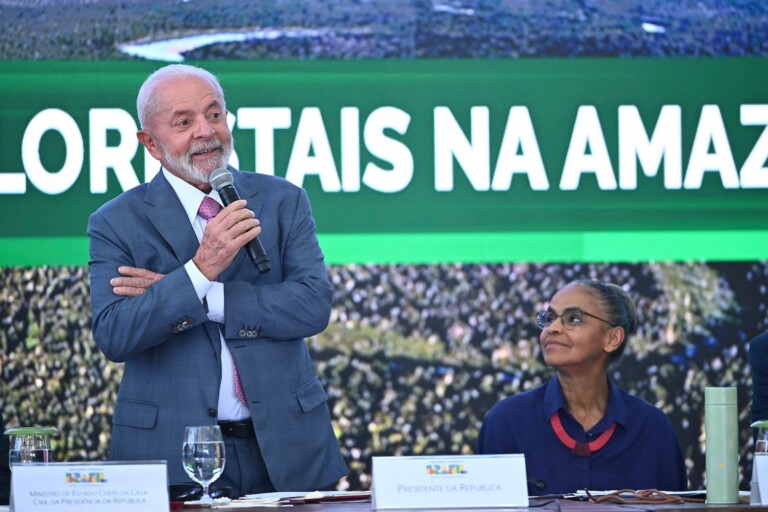
Analysis: Lula presidency saved at least 20,000km2 of Brazilian Amazon since 2022
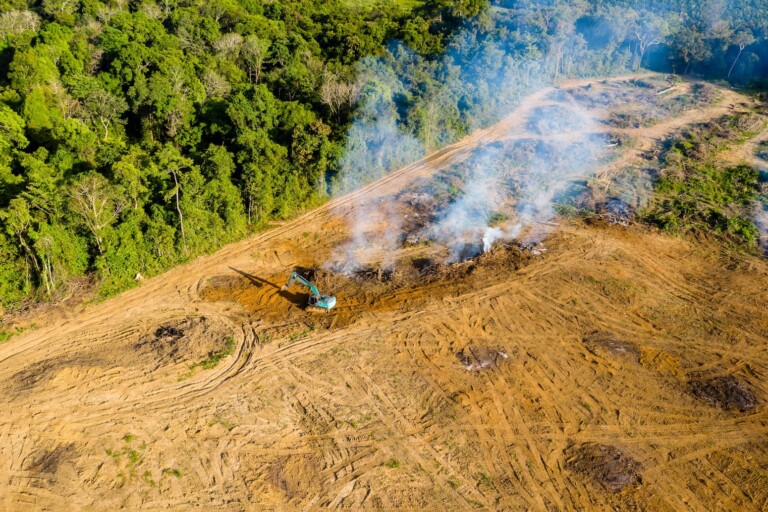
Why land-use emissions have fallen by a third this century – in six charts
Analysis: 84% of nations miss deadline to identify ‘nature-harming’ subsidies by 2025
UK withdraws millions in funding from world’s second-largest rainforest in Congo
The post Interactive: Tracking negotiating texts at the COP17 biodiversity summit appeared first on Carbon Brief.
Interactive: Tracking negotiating texts at the COP17 biodiversity summit
A beacon of love
On an outer island of Fiji, two thousand nautical miles from Sydney, is a shining light of hope and resilience for our troubled world.
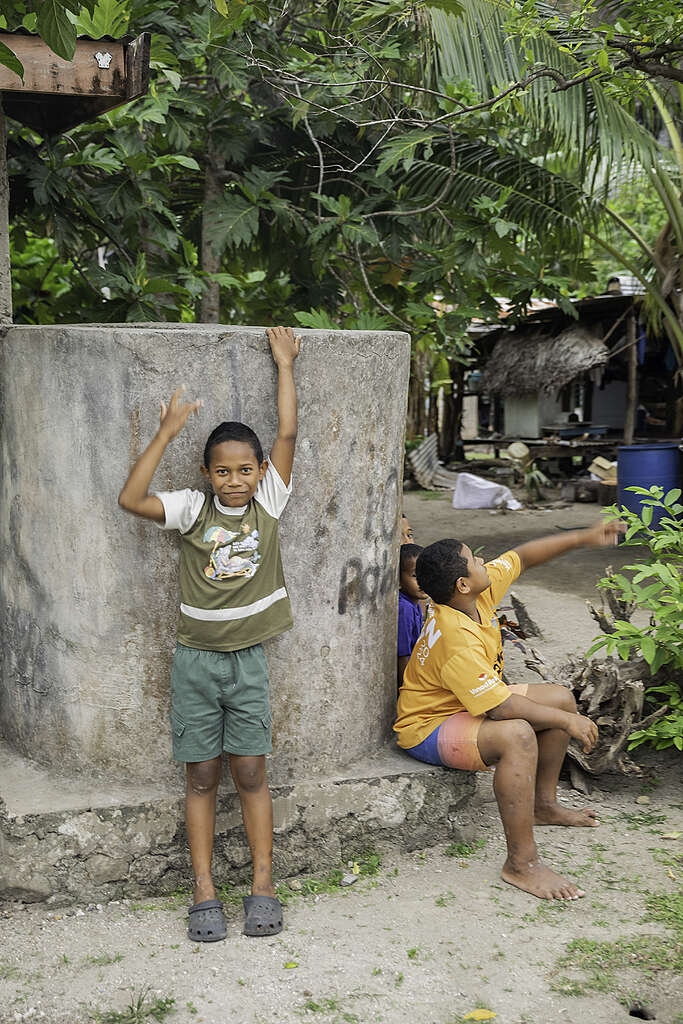
The island of Kioa is home to a Tuvaluan community who migrated from their atoll of Vaitupu in the late 1940s. It is a land of warm hearts, big smiles, and deep cultural roots; a place where the sound of a conch still summons the island together, where islanders paddle out to fish in carved outrigger canoes, and healthy happy children walk barefoot to school.
Here, culture is life. Kioans live sustainably through their traditional knowledge and practices. The island is alive with song, dance and the rhythms of a life tied to the tides, the winds, and the seasons.
Facing the future
Greenpeace has been lucky to have a relationship with Kioa for a number of years now, and we are continually learning from this remarkable community.
Last week, as part of our Voyaging Oceania project, we returned to the island. Our purpose was twofold —- to carry messages from the island to leaders gathering in Nadi this week for the Pacific Pre-COP, and to support the Kioa community in their efforts to improve water security for the island.
Unlike Tuvalu itself, with its eight atolls, Kioa is a mountainous, forested and richly fertile island. It will remain habitable far into the future. Kioans did not initially migrate from Vaitupu due to climate change, but the move was prophetic. They now have a lifeboat.
However, even Kioa faces challenges on our rapidly warming planet, in particular when it comes to water. Climate change is shifting once reliable rainfall patterns. On top of this, the island is already feeling the effect of this year’s intensifying El Niño event, which for Fiji means reduced rainfall and prolonged dry spells.
Right now, fresh water has to be carefully rationed, and is only available for a few hours a day. During last week’s visit aboard our campaigning ship Oceania, Greenpeace was privileged to work with the Kioa community on a new solar-powered water distribution project for the island.
Designed and led by the island, the project involves using a solar pump to move water from a reliable source to a storage tank and then using gravity to distribute the water around the village.
It was a lesson in how local knowledge and ingenuity can be the backbone of today’s climate solutions. To build a dam around the source, the local community knew the exact spot where they could gather gravel at low tide to mix with the cement. They took only what was needed, knowing that all resources must be carefully conserved. Kioa has no roads and no machinery, and it was an all-of-island effort to carry the materials up to the project site, including many heavy bags of sand and rock.
Such projects truly bring to life the vision of a resilient, locally-led, fossil fuel free Pacific.