

The latest move in the sustainable aviation fuel (SAF) sector is Boeing’s partnering with Norway’s Norsk e-Fuel to help develop one of Europe’s first large-scale Power-to-Liquids (PtL) facilities.
This partnership aligns with the aviation industry and ICAO member states’ goal to reach net-zero carbon emissions by 2050. Also, Boeing’s investment will boost SAF production in the Nordics and globally.
Steve Gillard, Boeing’s regional sustainability director for Europe, Middle East, Türkiye, Africa and Central Asia.
“Our support of and collaboration with Norsk e-Fuel underscores the importance of using fossil-free energy to accelerate SAF production, which is key to reducing aviation’s carbon emissions towards 2050. Our partnership to advance e-fuels will help mobilize the commercialization of SAF in the Nordics and across the world, increasing accessibility and availability for our customers as we help build a robust SAF ecosystem.”
Boeing and Norsk e-Fuel Power Up Sustainable Aviation
Norsk e-Fuel, a Norway-based company that supplies fuels to the aviation industry, is pioneering SAF production through its innovative Power-to-Liquids (PtL) process. The company aims to accelerate the transition to renewable aviation by producing electro-SAF (e-SAF).
So What is e-SAF?
Well, this advanced fuel is created by using fossil-free power to generate green hydrogen, which is then combined with recycled CO₂ from biogenic sources. Notably, the CO2 is extracted from the air using innovative Direct Air Capture (DAC) systems.
- The result is a synthetic jet fuel that reduces greenhouse gas emissions by over 90% compared to traditional jet fuel.

Revolutionary Tech Powers Sustainable Fuel Production
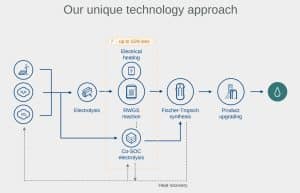
Norsk e-Fuel combines cutting-edge technologies to create sustainable aviation fuel (SAF). The process includes Axens and Paul Wurth’s advanced Reverse-Water-Gas-Shift (RWGS) and Fischer-Tropsch units, along with the Gasel® upgrading unit. All these technologies boost energy efficiency and reduce emissions.
Second, Sunfire’s innovative electrolyzer, based on Solid Oxide Electrolyzer Cells (SOEC), uses steam and CO₂ to produce renewable syngas in one step. Next, the Smart integration of waste heat increases plant output, delivering 30% more fuel with the same energy input compared to gas-fired systems.
Lastly, Climeworks adds direct air capture technology to remove CO₂ directly from the atmosphere. Powered by renewable energy, it uses advanced filters to capture and release CO₂ for use or storage. Together, these technologies transform aviation fuel into a cleaner, greener solution.
Scaling Up: Large-Scale Facilities for a Cleaner Future
As a project developer, Norsk e-Fuel is establishing large-scale production sites to meet the aviation industry’s demand for sustainable fuels. The company works with strategic investors and key partners to bring industrial-scale Power-to-Liquid production to life. Its efforts focus on building a new value chain for sustainable fuels to drive renewable aviation forward.
Lars Bjørn Larsen, CCO of Norsk e-Fuel remarked on this partnership, saying:
“Our goal is to make e-fuels competitive with and eventually replace fossil fuels in critical infrastructures as SAF needs to become readily accessible and affordable for advancing aviation’s decarbonization. Boeing’s investment will further accelerate our project pipeline and will facilitate the broader aviation industry’s transition to net-zero emissions.”
Boeing’s investment in Norsk e-Fuel will aid the EU’s SAF volume targets. It will also boost energy security and the long-term competitiveness of aviation in the Nordic region. Overall, this collaboration has the potential to shape policies for the global SAF industry’s economic viability.
- READ MORE: British Airways Commits £9M to Carbon Removal Credits. Can this Propel Aviation to Net Zero?
Clearing the Skies with SAF
Sustainable aviation fuel (SAF) is transforming the way aircraft are powered by offering a cleaner energy source. It helps reduce the aviation industry’s carbon footprint and dependence on fossil fuels. Despite its benefits, SAF made up only 0.53% of global commercial fuel use in 2024, as per the press release.
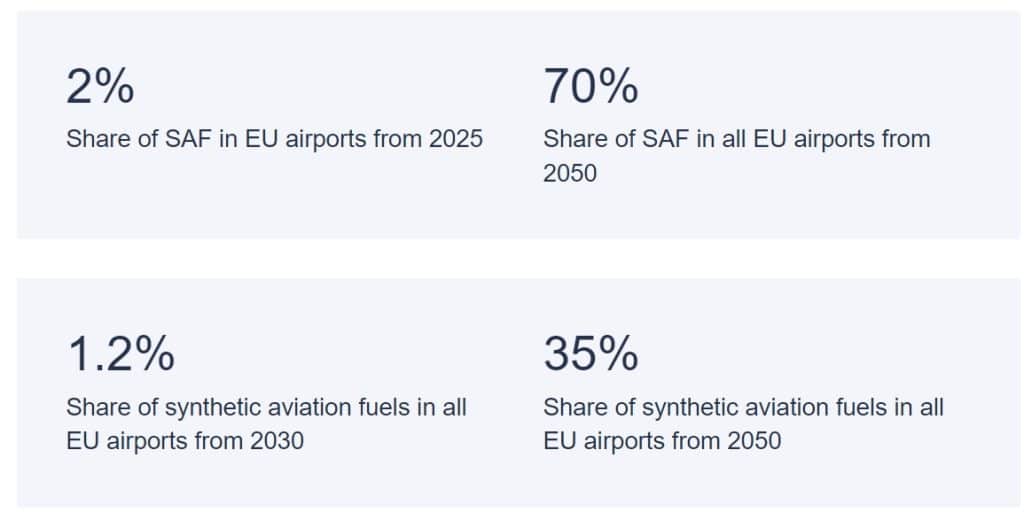
- In Europe, the RefuelEU SAF initiative is driving change. It aims to gradually increase SAF’s share to 6% by 2030 and 70% by 2050.
- For e-SAF, like the fuel Norsk e-Fuel produces, the targets are even more ambitious—1.2% by 2030 and 35% by 2050.
ReFuelEU Aviation, part of the EU’s Fit for 55 package, promotes SAF as the most effective way to lower aviation emissions. Fuel suppliers must blend SAF with traditional jet fuel at EU airports. This regulation supports the EU’s climate goals and will cut aviation CO2 emissions by over 60% by 2050 compared to 1990 levels.
The increased use of SAF also improves air quality by reducing harmful pollutants like CO, NOx, and PM, especially near airports. By embracing SAF, the aviation industry takes a major step toward a sustainable, cleaner future.
Boeing’s “Avoid First, Remove Second” Strategy to Cut Carbon Emissions
Boeing follows an “Avoid First, Remove Second” strategy to lower its carbon footprint. The focus is on avoiding Scope 1 and Scope 2 emissions by using renewable energy, energy-efficient systems, and sustainable aviation fuel (SAF). For emissions that are hard to reduce, Boeing invests in permanent carbon removal to support long-term carbon reduction.
Over the past four years, Boeing has voluntarily offset emissions from its manufacturing sites and business travel. In 2023, these offsets met strict global standards, ensuring they were measurable, verified, and tracked. Boeing also followed the aviation sector’s CORSIA framework for offsets.
The company plans to cut fossil fuel use by investing in renewable energy, energy-efficient infrastructure, and conservation efforts. For harder-to-reduce emissions, Boeing will increase investments in permanent removal technologies.
Sustainability Target
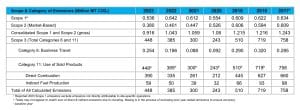
Boeing aims to cut greenhouse gas emissions by 55% by 2030. By the end of 2023, it reduced Scope 1 and Scope 2 emissions by 26% from 2017 levels. It also plans to use 100% renewable electricity to boost clean energy use and conservation efforts.
5 Key Areas to Decarbonize Aerospace
The company’s sustainability report also revealed that they are working with customers and governments to achieve net-zero emissions by 2050. And they are focussing on five key areas:
- Fleet Renewal: New airplanes are 20%-30% more efficient than older ones.
- Operational Efficiency: Boeing helps improve flight operations, air traffic management, and maintenance to cut emissions by up to 10%.
- Renewable Energy: Research on SAF and renewable energy drives sustainability in aviation.
- Advanced Technology: Boeing invests in cleaner designs, efficient propulsion, and advanced digital tools.
- Market-Based Measures: The company offsets emissions from business travel and invests in permanent carbon removal projects.
As Boeing brings its leadership in the SAF industry to this strategic partnership, Norsk e-Fuel adds its advanced technology and a strong network of partners. This includes Norway’s largest air carrier, Norway. Together, they aim to make sustainable aviation a reality, supporting global efforts to achieve net-zero carbon emissions by 2050.
The post Boeing’s Big Move: Boosting EU Aviation with Norsk e-Fuel’s SAF appeared first on Carbon Credits.

EU carbon credit claims changed on 27 September 2026, the day the Directive (EU) 2024/825 began to apply across the European Union. The change is narrow. It changes how a company can talk about the credits it buys. A product can no longer be called neutral on the strength of compensation alone; however, every specific, evidenced statement about what a company measured, reduced, and funded stays fully available.

The post Promoting Improved Cooking Practices in Nigeria appeared first on Terrapass.



-
Climate Change1 year ago
Guest post: Why China is still building new coal – and when it might stop
-

 Greenhouse Gases2 years ago
嘉宾来稿:满足中国增长的用电需求 光伏加储能“比新建煤电更实惠”
-
Greenhouse Gases1 year ago
Guest post: Why China is still building new coal – and when it might stop
-

 Climate Change2 years ago
嘉宾来稿:满足中国增长的用电需求 光伏加储能“比新建煤电更实惠”
-

 Renewable Energy12 months ago
Sending Progressive Philanthropist George Soros to Prison?
-
Climate Change2 years ago
Bill Discounting Climate Change in Florida’s Energy Policy Awaits DeSantis’ Approval
-
Greenhouse Gases1 year ago
嘉宾来稿:探究火山喷发如何影响气候预测
-

 Climate Change2 years ago
Analysis: China’s CO2 falls 1% in Q2 2024 in first quarterly drop since Covid-19