


Atlantis: Mythical Island or Lost Civilization?
The name Atlantis conjures up images of a technologically advanced civilization swallowed by the sea.
While the island’s existence remains shrouded in myth, its allure has captivated people for millennia.
Origins in Plato’s Dialogues:
Our knowledge of Atlantis stems primarily from the writings of Plato, the ancient Greek philosopher. In his dialogues, Timaeus and Critias, written around 360 BC, Plato describes Atlantis as a powerful maritime empire that predated ancient Athens by 9,000 years. He portrays it as a utopia with advanced architecture, technology, and social structures. However, due to its hubris, the island was eventually destroyed by a natural disaster and submerged beneath the waves.
The Debate over Historicity:
While Plato’s dialogues are considered philosophical works, some have interpreted them literally, sparking centuries of debate about the historical existence of Atlantis. Numerous theories have been proposed, attempting to pinpoint its location across various parts of the globe, from the Mediterranean Sea to the Caribbean.
Archaeological Evidence:
Despite persistent searches, no concrete archaeological evidence has conclusively proven the existence of a civilization matching the description of Atlantis. However, the lack of evidence hasn’t deterred enthusiasts who continue to explore various potential locations and historical records.
Enduring Legacy:
Whether real or imagined, Atlantis has left an undeniable mark on history and popular culture. It has inspired countless works of fiction, from literature and film to video games and music. The enduring fascination with Atlantis stems from the human desire to explore the unknown and the allure of lost civilizations.

Where is Atlantis
Since Atlantis is a myth and not a historical location, it doesn’t have a confirmed physical location in the real world. While numerous theories have been proposed throughout history, placing Atlantis in various parts of the globe, none of them hold credible scientific evidence.
Here are some key points to remember:
- Plato’s Description: In his dialogues, Plato mentions Atlantis’ location as beyond “the pillars of Heracles,” commonly interpreted as the Straits of Gibraltar. However, this is a fictional reference within the context of the story and shouldn’t be taken literally.
- Theories and Speculations: Over the centuries, various theories have placed Atlantis in locations ranging from the Mediterranean Sea and the Caribbean to Antarctica and even beyond Earth entirely. These theories often rely on circumstantial evidence, misinterpretations of historical accounts, or even pseudoscience, and lack any concrete proof.
- Scientific Viewpoint: The vast majority of scientists and historians consider the search for Atlantis a pseudoscientific pursuit. There is no credible archaeological or historical evidence to support the existence of Atlantis as a real location.
Therefore, it’s important to approach the question of “where is Atlantis” with a critical lens and understand its status as a myth. While the stories and theories surrounding Atlantis can be intriguing, they shouldn’t be misconstrued as historical fact.

The Enduring Allure of Atlantis: Myth, Mystery, and Legacy
The legend of Atlantis, a technologically advanced civilization swallowed by the sea, has captivated imaginations for millennia. While its existence remains shrouded in myth, its allure stems from a potent mix of:
1. Origins in Plato’s Dialogues:
Our knowledge of Atlantis comes primarily from the writings of Plato, the ancient Greek philosopher. In his dialogues, Timaeus and Critias, written around 360 BC, Plato describes Atlantis as a powerful maritime empire predating Athens by 9,000 years. He portrays it as a utopia with advanced architecture, technology, and social structures. However, due to its hubris, the island was punished by the gods and submerged beneath the waves.
2. The Debate over Historicity:
While Plato’s work is considered philosophical, some interpret it literally, sparking centuries of debate. Numerous theories have been proposed, placing Atlantis in various locations, from the Mediterranean to the Caribbean.
3. The Absence of Concrete Evidence:
Despite persistent searches, no conclusive archaeological evidence has been found to support the existence of a civilization matching the description of Atlantis. However, the lack of evidence hasn’t deterred enthusiasts who continue to explore potential locations and historical records.
4. Enduring Legacy in Popular Culture:
Whether real or imagined, Atlantis has left a remarkable mark. It has inspired countless works of fiction, from literature (Jules Verne’s “Twenty Thousand Leagues Under the Sea”) and film (“Aquaman”) to video games and music. This enduring fascination stems from the:
- Human desire to explore the unknown: The idea of a lost civilization ignites our curiosity about the past and the possibility of hidden worlds.
- Allure of lost knowledge and technology: The notion of an advanced civilization raises questions about what they might have achieved and the knowledge they possessed.
- Symbol of impermanence and hubris: The story serves as a cautionary tale about the dangers of arrogance and the impermanence of even the most powerful empires.
5. Beyond the Myth:
The story of Atlantis, even if purely mythical, offers valuable lessons:
- Humility in the face of the unknown: It reminds us that much remains undiscovered and that our understanding of the past is not complete.
- Importance of storytelling: It highlights the power of stories to shape our perception of the world and inspire creativity.
- Enduring legacy of myths and legends: It demonstrates how narratives can transcend time and continue to resonate with us.
The myth of Atlantis remains a powerful and enduring symbol, captivating us with its blend of mystery, lost knowledge, and cautionary tale. It serves as a reminder of the power of storytelling and the enduring human fascination with the unknown.
The story of Atlantis, even if purely mythical, offers valuable lessons. It serves as a cautionary tale about the dangers of hubris and the impermanence of even the most powerful empires. It also reminds us of the power of storytelling and the enduring legacy of myths and legends.

Fact of Atlantis
As previously mentioned, there is no data or factual evidence to support the existence of Atlantis. It is considered a myth or legend, meaning it is a story passed down from generation to generation, often with fantastical elements, that is not necessarily based on historical reality.
Here’s a breakdown:
- Source: The primary source for the story of Atlantis comes from the writings of Plato, the ancient Greek philosopher, in his dialogues Timaeus and Critias, written around 360 BC.
- Plato’s Account: Plato describes Atlantis as a powerful, advanced civilization that existed thousands of years before his time. However, there’s no evidence to corroborate this claim.
- Archaeological Evidence: Despite numerous searches and investigations throughout history, no archaeological evidence has been found that confirms the existence of a civilization matching the description of Atlantis.
- Scientific Consensus: The vast majority of historians and archaeologists do not consider Atlantis to be a real historical location.
Therefore, while the story of Atlantis is captivating and has inspired countless works of fiction, it is crucial to acknowledge the lack of data and facts to support its historical existence. Instead, it should be understood and appreciated as a powerful and enduring myth.
https://www.exaputra.com/2024/02/atlantis-mythical-island-or-lost.html


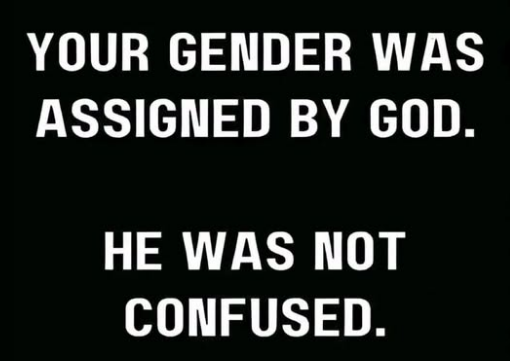 Religious statements fly in the teeth of science, but even the most ardent believers in God are going to have trouble with the meme here.
The reason men have nipples is that their gender isn’t assigned until about six weeks after conception, when chromosomes trigger hormonal changes that differentiate male and female anatomy.
 It’s possible that Americans are so angry that the Trump administration has ruined their country and its democracy that paid advertising for Republican candidates is having no effect on them.
We can only hope.
 Obviously, the endorsement of a much-despised president didn’t help, but what chance did this election-denying moron actually have in a sophisticated state like Minnesota?



-
Climate Change1 year ago
Guest post: Why China is still building new coal – and when it might stop
-
Greenhouse Gases1 year ago
Guest post: Why China is still building new coal – and when it might stop
-

 Greenhouse Gases2 years ago
嘉宾来稿:满足中国增长的用电需求 光伏加储能“比新建煤电更实惠”
-

 Climate Change2 years ago
嘉宾来稿:满足中国增长的用电需求 光伏加储能“比新建煤电更实惠”
-
Climate Change2 years ago
Bill Discounting Climate Change in Florida’s Energy Policy Awaits DeSantis’ Approval
-

 Renewable Energy10 months ago
Sending Progressive Philanthropist George Soros to Prison?
-
Greenhouse Gases1 year ago
嘉宾来稿:探究火山喷发如何影响气候预测
-

 Carbon Footprint2 years ago
US SEC’s Climate Disclosure Rules Spur Renewed Interest in Carbon Credits