

In 2019, a group of major companies from around the world agreed to form the Alliance to End Plastic Waste (AEPW), an alliance that set out to reduce the amount of plastic flowing into the environment by around 15 million metric tons by the end of 2023.
But according to a new report by Unearthed, a Greenpeace investigative journalism team, the initiative members have actually produced more than 1,000 times the amount of plastic than they’ve cleaned up in the 2019 to 2023 timeframe.
The report found that the initiative was established by American Chemistry Council (ACC), a trade association, and a PR company. According to Unearthed, the project aimed to “change the conversation – away from short-term simplistic bans of plastic.”
The Unearthed team examined data provided by Wood Mackenzie, a consultancy firm, and found that five companies that are major players in the alliance, including Shell, ExxonMobil, TotalEnergies, ChevronPhillips and Dow, were producing more plastic in just two days than the total amount of plastic the alliance has cleaned up since 2019.
As Mother Jones reported, these companies produced 132 million metric tons of polyethylene and polypropylene alone in the 2019-2023 timeframe, not including other types of plastics or the plastic produced by other member companies in the alliance.
“The recycling schemes they’re promoting can barely make a dent in all the plastic these companies are pumping out,” said Will McCallum, co-executive director at Greenpeace UK, as reported by Mother Jones. “They’re letting the running tap flood the house while trying to scoop up the water with a teaspoon. The only solution is to cut the amount of plastic produced in the first place.”
AEPW got rid of its target to divert 15 million metric tons of plastic waste last year. According to Packaging Insights, the alliance achieved only 0.2% of its targets and said that the 15 million metric ton benchmark “was just too ambitious.”
As a Planet Tracker spokesperson told Packaging Insights, the alliance’s goal to invest $1.5 billion in plastic waste cleanup over a five-year timeline was just a drop in the bucket compared to the $400 billion going toward expanding plastic manufacturing. So far, members have only invested around $375 million, Unearthed reported.
“It’s hard to imagine a clearer example of greenwashing in this world,” Bill McKibben, environmental campaigner, told Unearthed. “The oil and gas industry — which is pretty much the same thing as the plastics industry — has been at this for decades.”
The Unearthed investigative report comes during the latest round of global plastics treaty negotiations in Busan, South Korea. Alliance members, along with the ACC, have been present for the negotiations and have argued against plastic bans, saying that plastic waste, not plastic production, was the problem.
A 2023 report estimated that without a strong global plastics treaty, plastic consumption could increase from 261 million metric tons in 2019 to 451 million metric tons by 2050. Plastic production already doubled from 2000 to 2019, and the amount of plastic waste could triple by 2060, a 2023 study by the World Economic Forum found.
Aileen Lucero, an EcoWaste Coalition campaigner, told Unearthed, “To fix this planetary health crisis, we need to address the underlying problems of hazardous chemical inputs in plastic manufacturing and the unbridled production of disposable plastics.”
The post Alliance to End Plastic Waste Members Created 1,000x More Plastic Than They Cleaned Up, Greenpeace Investigation Finds appeared first on EcoWatch.
https://www.ecowatch.com/alliance-to-end-plastic-waste-greenpeace-investigation.html

Whether you’re planning to be a guest at a wedding, or attend a prom, gala, or any other special occasion, these ethical and sustainable formal dresses will be just the fit.
A lot of formalwear is made from irresponsibly sourced silk or polyester and is worn just once. It’s time to turn that around!
This guide will share sustainable formal dress options that have frocks you can rock to weddings, dances, galas, concerts, or any other event you have coming up.
How to Find Sustainable Formal Dresses
The most sustainable garment is the one already in your closet!
Do you have a special occasion dress or piece of formalwear that could fit the bill? While wearing an outfit only once to an event has unfortunately become the norm with social media, we can help counteract the culture by normalizing outfit repeating to special occasions again!
Another sustainable option is to make the most of what already exists by borrowing from a friend or family member or swapping with someone you know has a formal dress. This is something my friends and I did for high school dances like homecoming and prom. A friend’s Junior Prom dress became my Senior Prom dress the next year!
If there’s no one with your style and size, you can also expand your search of formalwear by browsing online resale platforms. Vestiaire Collective has a fabulous selection of dresses from designer brands for great prices, as does The RealReal. I’ve used The RealReal site to purchase dresses for weddings and other occasions.
If you just need a special occasion dress for one event, consider rental sites like Rent the Runway that offer affordable ways to get formalwear for a limited time.
If none of these options are available to you or you really feel ready to invest in an extra-special garment that you can wear for years to come, keep scrolling for our list of brands with sustainable and ethical formal dresses.
Brands With Sustainable Formalwear & Special Occasion Dresses
These brands have party-perfect minis, chic cocktail dresses, elegant evening gowns, and even pieces that would make for fabulous sustainable prom dresses!
Note that this guide contains partners and affiliate links. As always, all brands meet rigorous standards for sustainability and are brands we truly love — and that we think you’ll love too!
(You might also want to check out this guide for sustainable wedding dresses or this guide for more causal eco-friendly dresses.)
1. Christy Dawn
Christy Dawn’s dresses are vintage-inspired but totally timeless. Their feminine frocks can be worn as house dresses or semi-formal wear to weddings, bridal showers, baptisms, or other not-quite black-tie occasions. Their dresses are either made from reclaimed fabrics ethically in Los Angeles or from regenerative organic cotton that is sourced in partnership with a small collective in India.
You’ll also find sustainable special occasion dresses from Christy Dawn made with regenerative silk, like the dress pictured here!
Conscious Qualities: Reclaimed or Regenerative Fabrics, Ethical Production
Size Range: XS-3XL (extended sizing collection)
Price Range: $$$
2. Reformation
Reformation is a leader on sustainability among larger fashion brands, between their climate positive roadmap and better material sourcing (including recycled cotton, TENCEL Lyocell, and regenerative fabrics) to their supply chain transparency, limited production model, and circularity practices.
And the brand is making it easy to shop for sustainable special occasion dresses with their selection features like “Going Out Dresses” and “Wedding Guest Dresses”.
Conscious Qualities: Lower Impact Materials, Responsible Production Practices, Decarbonization Initiatives
Size Range: 0 – 12
Price Range: $$ – $$$
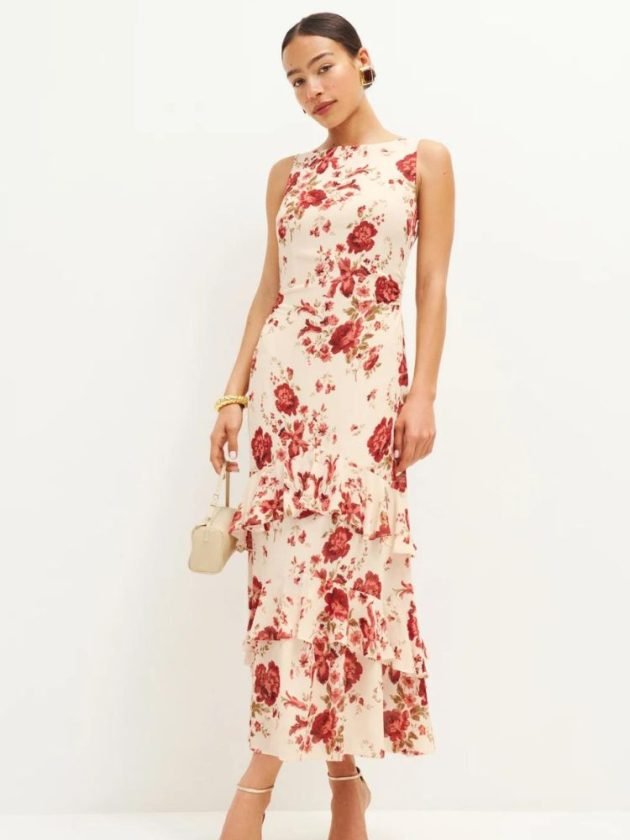
3. Bastet Noir
Making each piece to order using upcycled materials, Bastet Noir is a zero-waste fashion label. The brand’s sustainable formal dresses and other elegant apparel — including silk jumpsuits — are made by women in North Macedonia. 100% of Bastet Noir’s profits are reinvested into the women’s businesses and their children’s education.
Conscious Qualities: Repurposed Materials, Made-to-Order, Gives Back
Size Range: 4-10 + custom sizes
Price Range: $

4. AMUR
Standing for A Mindful Use of Resources, AMUR uses earth-minded fabrics including hemp, linen, cupro (a silky fiber made from cotton linter, a byproduct of cotton production), modal, and recycled polyester. AMUR has some seriously stunning gowns that would make for great sustainable prom dresses or black tie-dress code outfits. AMUR could use more information on their labor standards and production practices though.
Conscious Qualities: Earth-Minded Fabrics
Size Range: XXS-XL
Price Range: $$$$
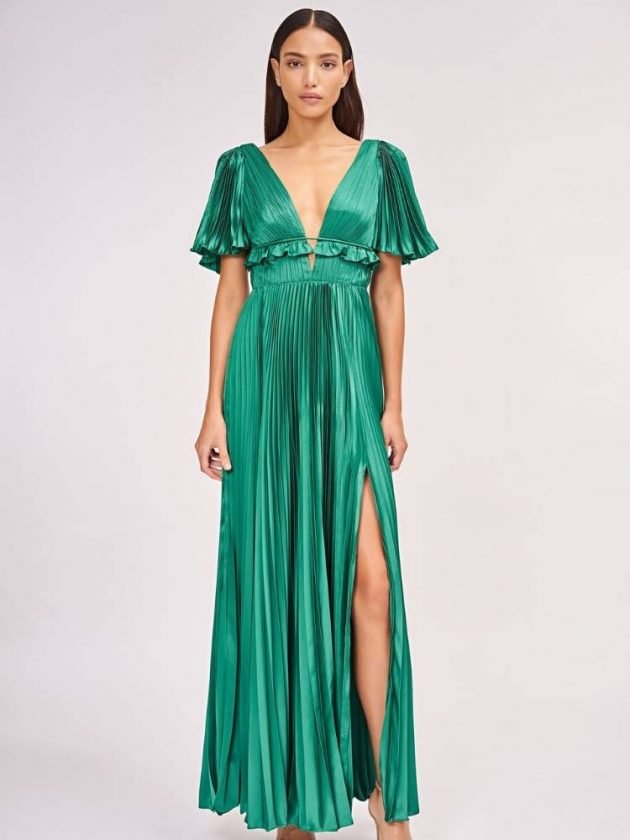
5. BAACAL
Frustrated that brands often stop their size range at 12 despite the average American woman wearing size 16, BAACAL creates conscious clothing for the “true majority”: women who wear sizes 10-22. The plus-size sustainable fashion brand uses upcycled, vintage, and other existing materials for their collections.
Conscious Qualities: Upcycled Fabrics, Small-Batch Collections, Size-Inclusive
Size Range: 10-22 (unique sizing system of 1-4)
Price Range: $$$
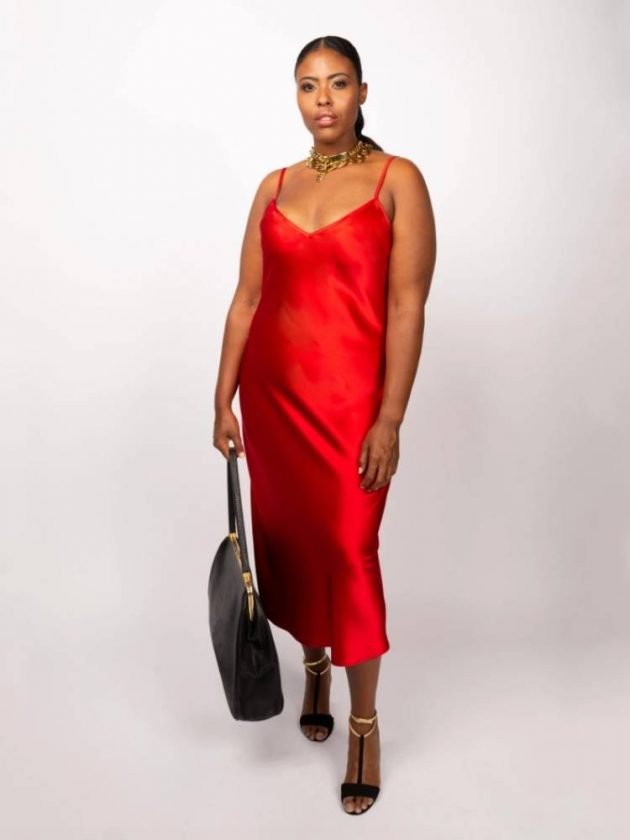
6. Lahive
Bold and unique, Lahive’s stand-out dresses and other ethical formal wear will make a statement at cocktail hour or a night out downtown. The LA-based brand produces their luxe, textural pieces in small batches using upcycled materials in a factory run by solar power.
Conscious Qualities: Upcycled Fabrics, Renewable Energy, Local Production
Size Range: XS-XL
Price Range: $$$

You May Also Want to Check Out:
Eco-Friendly, Ethical, and Vegan Bags
Brands with Elegant Ethically-Made Flats
Sustainable Wedding Dresses for Your Special Day
The post The Best Sustainable Formal Dresses for Special Occasions appeared first on Conscious Life & Style.
https://www.consciouslifeandstyle.com/eco-chic-evening-dresses/?utm_source=rss&utm_medium=rss&utm_campaign=eco-chic-evening-dresses
As you’re planning out a nursery for your newborn or baby on the way, you might be thinking about how you can ensure cleaner indoor air in the room your baby will be spending a whole lot of time in. This guide will help you with one part of that plan: non-toxic dressers, many of which can be easily used as changing tables as well.
What is a Non-Toxic Dresser?
There is a lot to consider in non-toxic furniture, but for the sake of this guide, we’ll focus on only the elements relevant to wood furniture since most dressers are primarily constructed with wood.
You might be thinking: why would I need a wood product to be non-toxic? Isn’t wood a natural material?
This is true, but similar to how natural fabrics like cotton can still be dyed with toxic dyes and treated with chemicals like PFAS (forever chemicals), natural furniture materials can also be stained and finished with harmful substances. Plus, composite wood products are certainly not the same as their solid wood counterparts, which we’ll get into in a moment.
By the way, below I will refer to “VOCs”, which if you haven’t heard this term before, it stands for volatile organic compounds. You can read more about VOCs and the associated health risks from the EPA.
Non-Toxic/Low-Tox Wood
Composite wood, like MDF, is often glued together with glues that can contain high levels of formaldehyde. (Not exactly the kind of toxic, carcinogenic VOC you want your little ones exposed to.)
Given this, I typically recommend looking for solid wood furniture. That said most dressers (even if their constructed with majority solid wood) will often have drawers made of composite wood or use composite wood for other parts of the dresser that aren’t as visible. With that in mind, I would recommend a dresser made with at least partial solid wood and certified non-toxic composite wood elsewhere. When this isn’t possible, look for a certification like GREENGUARD Gold. More on that below.
*Important to note: living trees actually produce formaldehyde, so there are still trace amounts of naturally occurring formaldehyde in even solid wood. But as this study from NC State University explains, most of the emissions of formaldehyde from wood are “produced during hot-pressing of composite panels”, not from the wood itself. In other words: man-made composite wood like plywood, MDF, particle board, and veneers is the much larger concern compared with solid wood.
As with everything in sustainability: there are trade-offs. First off all: the more solid wood that’s used, the more expensive (and heavy!) that dresser is likely to be. And sometimes it could even be cost prohibitive. Additionally, composite wood can sometimes be a more sustainable choice — since it doesn’t waste wood offcuts, but may sacrifice on chemical safety standards.
That’s why I like to provide you with options so you can make the decision that works best for you and your family.
Zero or Low VOC Finishes
Most wood furniture isn’t left raw, but is finished with a wax, oil, lacquer, varnish or other type of finish. Some of these finishes can contain high levels of VOCs.
Look for brands that use low-VOC or zero-VOC finishes. Some brands will even use natural finishes like linseed oil or beeswax.
GREENGUARD Gold Certified
This is the most common non-toxic furniture certification. While this certification does not ensure zero emissions, the GREENGUARD Certification program by UL is a third-party verification that tests for over 10,000 chemical emissions and VOCs to verify low chemical emissions.
Even if a company reports that they use zero-VOC or low-VOC finishes, a GREENGUARD Gold certification is still a smart extra level of protection to look for, since many VOCs can be difficult to measure.
Where to Find Non-Toxic Dressers for A Nursery
Now that we have a foundation for what we are qualifying as a “non-toxic dresser”, let’s dive into our recommendations for where to find these dressers.
Note that some of the following links include affiliate links, which means we may earn a small commission at no additional cost to you if you choose to purchase through these links. This reader support helps us continue to create more resources for low-tox and sustainable living.
1. Green Cradle
Best for: solid wood dressers and chests
Conscious Qualities: Made in US, Solid Wood, Zero VOC Finish
Price Range: $2,199 – $4,099
Shipping: Ships to continental US; contact for AK, HI, and Canada delivery
If you want top of the line quality without compromise, Green Cradle’s solid wood dressers — made from locally sourced wood and finished with natural linseed oil — would be my pick. You can also add on organic cotton changing pads.
Green Cradle has traditional dressers as well as the sweetest chest + drawer combos with hanging space perfectly sized for your little one. That said, Green Cradle is also the most premium priced option on this list.
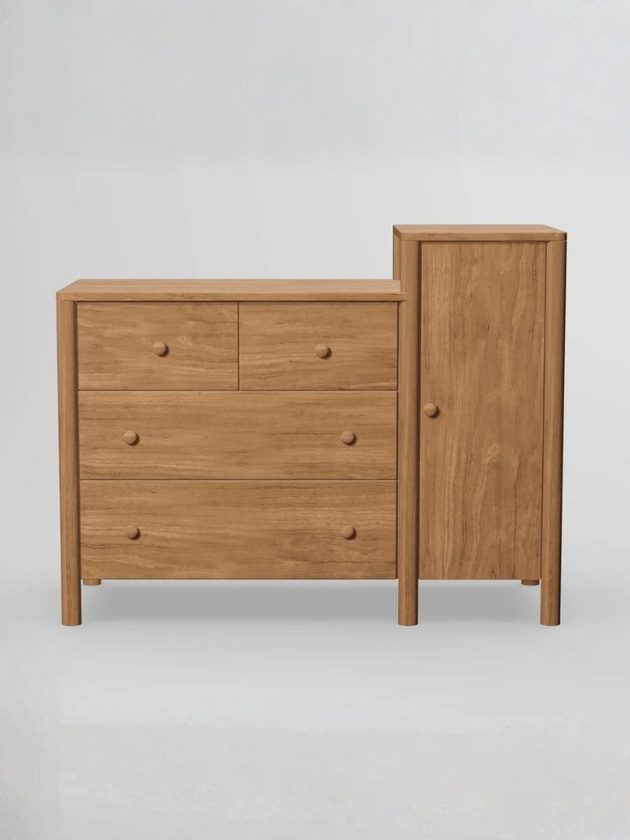
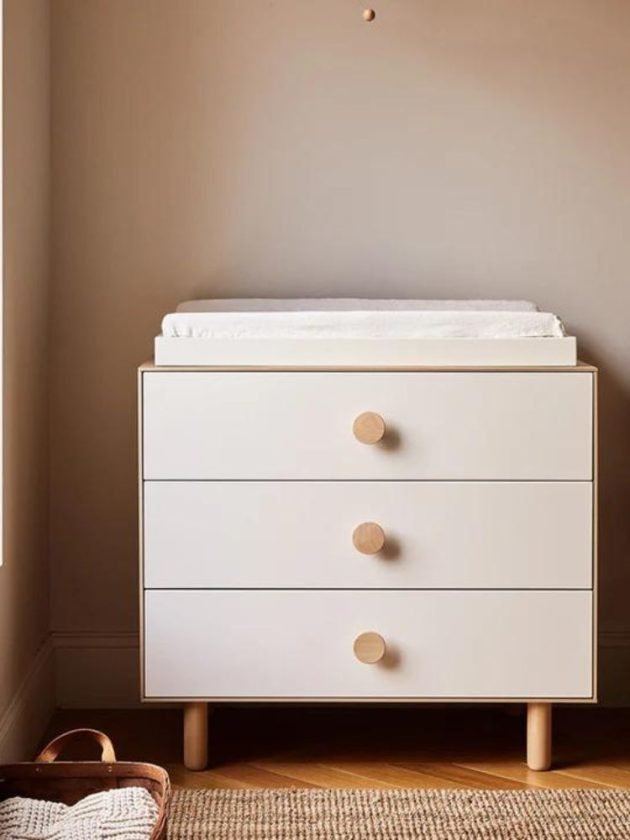
2. Oeuf
Best for: European-crafted design with smart nursery features
Conscious Qualities: Made in Europe, Non-Toxic Water-Based Finishes, FSC-Certified Facility
Price Range: $1,245 – $1,695
Shipping: US-wide delivery via Urban Natural
This family-run eco-friendly children’s furniture company prioritizes intelligent design (like baby changing trays that fit Oeuf’s dressers), quality craftsmanship, and sustainability. The brand’s furniture is made in a Forest Stewardship Council-certified facility in Latvia. However, Oeuf does use baltic birch plywood and “eco-MDF” — so the pieces are not solid wood like Green Cradle.
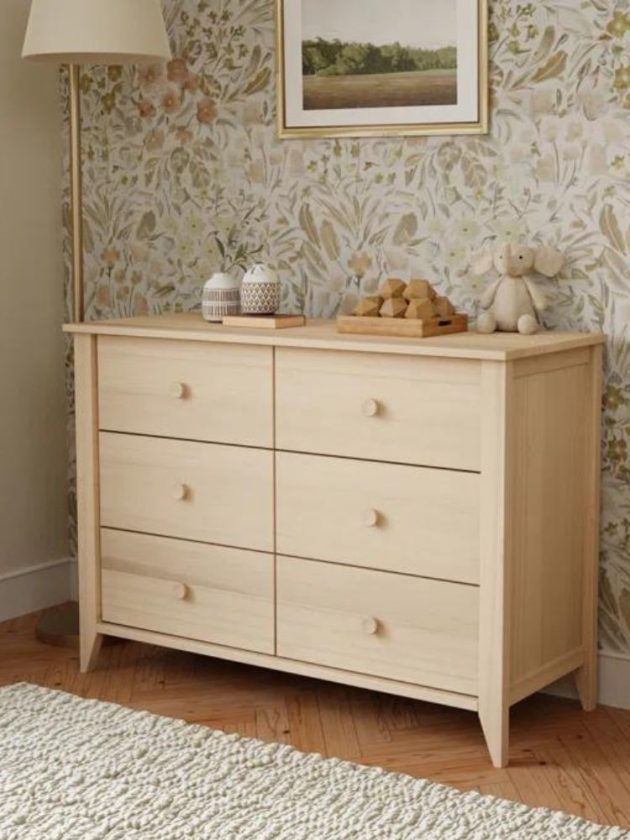
3. Babyletto
Best for: an affordable non-toxic dresser
Conscious Qualities: GREENGUARD Gold Certified Products, Exceeds Anti-Tip Furniture Standards, Sustainably-Sourced Wood
Price Range: $349 – $899
Shipping: Free Delivery in Contiguous US (shipping charges elsewhere priced in cart)
Babyletto offers a more affordable non-toxic dresser options for nurseries. And I think some of the cutest designs! Plus, many of the dressers either include a removable changing tray or are compatible with the brand’s changing trays. That said, as is to be expected with a lower price point, you’ll see more engineered wood — in Babyletto’s case, that’s the drawer fronts and frame. Some reviewers have expressed complaints on the quality, though most products have an above 4.5/5 star-rating.
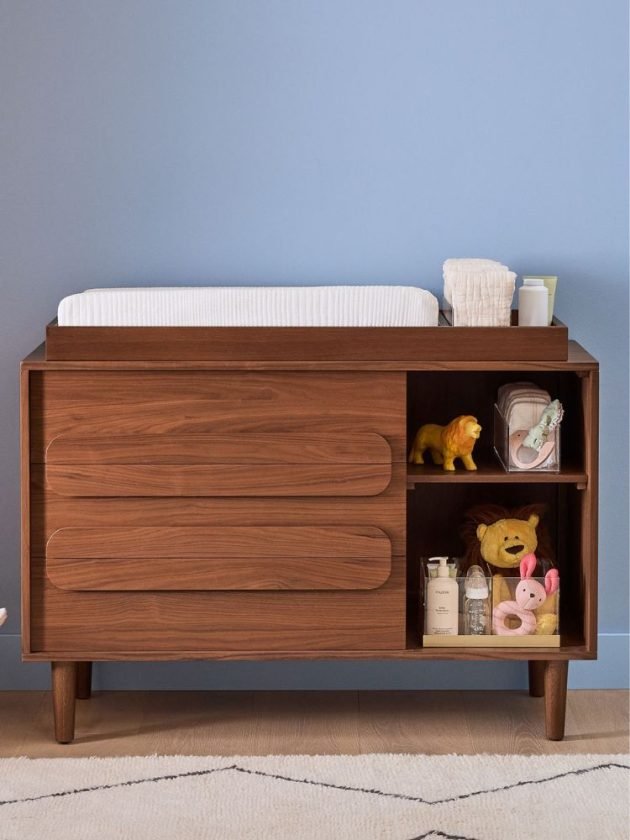
4. West Elm (GREENGUARD Gold Certified Collection)
Best for: on-trend nursery design with GREENGUARD Gold options
Conscious Qualities: GREENGUARD Gold Certified Options, FSC Certified Wood Options, Some Products Made in Fair Trade Certified Factories
Price Range: $499 – $1,949
Shipping: Contiguous 48 U.S. States only for large furniture items
Add a touch of West Elm’s signature design sensibility to your little one’s nursery with the retailer’s selection of GREENGUARD Gold Certified dressers and changing tables. The brand has adorable painted playful dressers for nurseries, but I also appreciate that they have mid-century modern and glam modernist nursery dressers that can easily stay in use as your little one grows up.
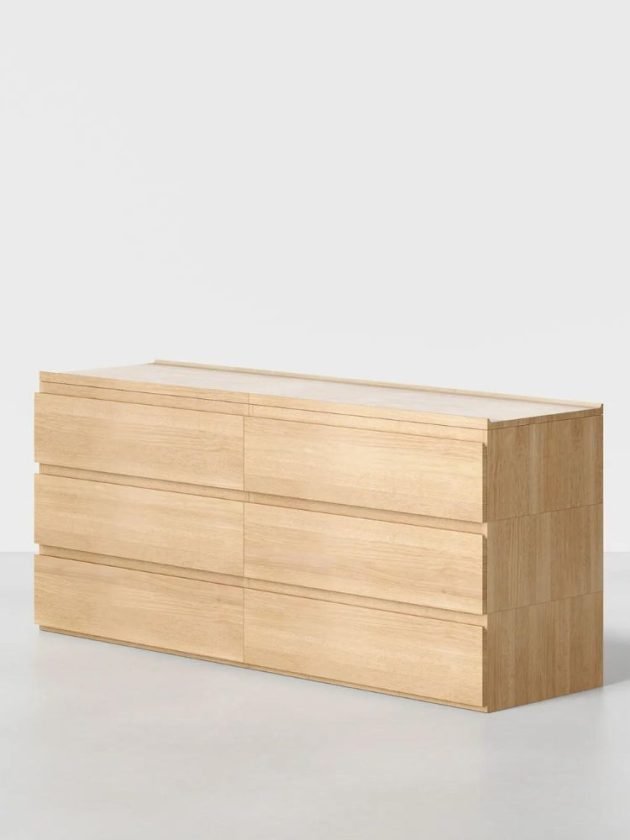
5. Thuma
Best for: a modular dresser that grows with your family
Conscious Qualities: GREENGUARD Gold Certified Product, Upcycled Solid Wood, Tool-Free Assembly, Highly Rated
Price Range: $1,165 – $3,495
Shipping: U.S. and Canada
With nearly 600 reviews ranking this dresser an average of 4.7/5 stars, Thuma is clearly doing something right with their signature non-toxic dresser. While this dresser isn’t specifically marketed for a nursery, the modular approach makes it easy to start small and configure additional drawers as your baby or family grows later on. Meaning this dresser could last you a lifetime, which I consider a key part of sustainability too. There is also the option to add anti-tipping hardware for safety.
6. Pottery Barn Kids (GREENGUARD Gold Certified Options)
Best for: combined changing tables and dressers
Conscious Qualities: GREENGUARD Gold Certified Options, Some Products Made in Fair Trade Certified Factories
Price Range: $499 – $1,899
Shipping: Contiguous 48 U.S. States only for large furniture items
Pottery Barn — West Elm’s more rustic sister brand — also has a number of options for non-toxic changing tables and nursery dressers. The retailer’s dressers are made with a mix of solid wood and engineered wood, but they do have many GREENGUARD Gold certified dressers. I’d just look at each individual product description to confirm whenever purchasing from a larger retailer with a wide selection.
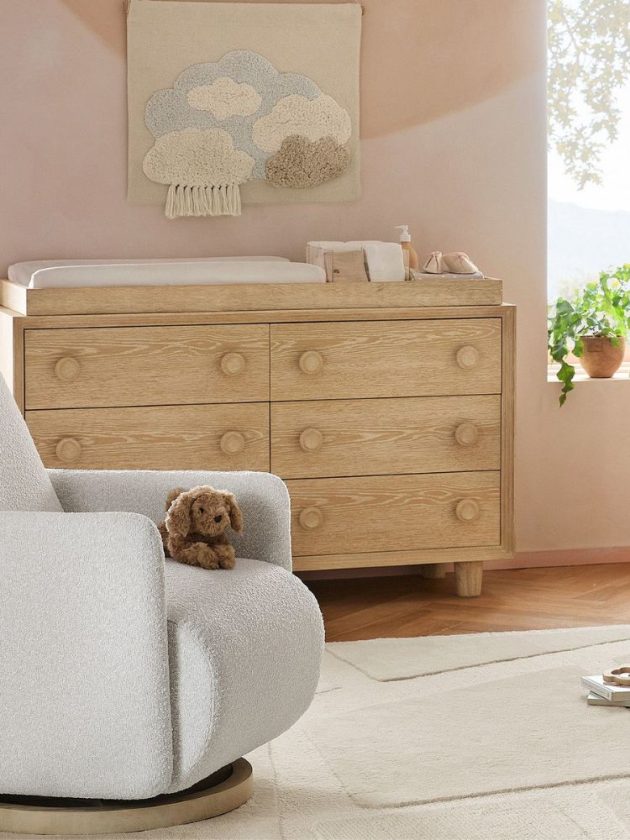
Questions about Non-Toxic Dressers
Can a wood dresser be “organic”?
Typically we wouldn’t use that term. “Organic” is usually a description of a process or certification for grown fibers like cotton on a changing pad cover, not for wood. If you do see “organic dresser” used to describe the wood itself, treat it as a loose figure of speech rather than a real certification. What you might look for instead on a wood piece is the FSC certification (responsible sourcing) and GREENGUARD Gold (low chemical emissions) or zero VOC finishes.
That said, if the dresser doubles as a changing table, you can check whether the changing pad cover is certified organic cotton. That’s where organic would be a real vetted claim.
Does non-toxic mean solid wood?
Not necessarily. Non-toxic is generally a claim referring to low chemical emissions. A dresser can be made from pressed wood, and still emit low chemical emissions and be called “non-toxic”. So if solid wood is important to you, look for that specifically (for example from Green Cradle listed above), not only “non-toxic.”
What is the safest dresser for a nursery?
There are a lot of variables in a dresser selection, from budget and location to personal priorities and aesthetics. But when it comes to chemical safety, I would personally look for solid wood with a zero VOC natural finish as my top choice. That said, those options are going to be the heaviest and often the most expensive. So if that doesn’t work for your situation, I would look for GREENGUARD Gold certified dressers, ideally with solid wood frames, even if the drawers are composite wood. This certification doesn’t ensure zero emissions, but it does test for low emissions.
More Non-Toxic Furniture Guides:
15 Best Non-Toxic Furniture Brands for a Healthier Home
9 Non-Toxic Bedroom Furniture Companies for a Safer Sleep
7 Best Places for Non-Toxic Nightstands
The post 6 Best Non-Toxic and Safe Dressers and Changing Tables for Nurseries (2026) appeared first on Conscious Life & Style.
6 Best Non-Toxic and Safe Dressers and Changing Tables for Nurseries (2026)
As you curate or redesign your evening sanctuary, you may be wanting to limit your exposure to VOCs (volatile organic compounds) and other potentially toxic chemicals. The EPA reports that many VOCs are 2-5 times higher indoors than outdoors, and that these VOCs are widely used in household products, including furnishings. Thus the need for this guide to non-toxic bedroom furniture companies!
What is Sustainable and Non-Toxic Bedroom Furniture?
I know it can be overwhelming to find out that there is relatively little regulation in the U.S. over the chemicals that are allowed to enter our home. If you’re looking for companies that are taking environmental and human safety seriously, there are several non-toxic bedroom furniture brands doing so. Here is some of the criteria I looked for when making this list.
Solid Wood is a Safer Bet
Composite wood products must be stuck together, and that’s typically done with glue that contains formaldehyde. There are some companies making composite wood products with more sustainable alternatives, but I would recommend either sticking to solid wood or looking for an explicit explanation of the alternative glue being used. (Ideally the composite wood product would also be tested by a third party. More on that in a moment.)
In terms of sustainability, look for wood that is reclaimed or responsibly sourced from well-managed forests and at the very least, not coming from old-growth or endangered forests.
Unfinished or Low VOC Finishes
Most wood furniture is finished with some type of finish. These can be natural oil finishes like linseed oil or they may also be polyurethane (plastic material). Generally natural oils and water-based finishes are recognized as emitting lower levels of VOCs. And I’m always a fan of avoiding fossil-fuel products where I can.
Some of the brands on this list even have unfinished wood options, which would be the safest bet.
Natural (or Even Organic) Materials
Synthetic fibers make up 64% of global fiber production. In other words, the majority of fabrics we see today — whether in clothes, home textiles, or upholstered furniture — are either fully or partially synthetic.
Look for materials like natural latex, organic cotton, and linen in your non-toxic bedroom furniture. Even natural materials often are colored with synthetic dyes, but we’re doing the best we can!
Third Party Certifications
To be clear, no certification is going to be perfect but there are several certifying parties adding an extra layer of protection to non-toxic related claims.
GOTS (Global Organic Textile Standard): As is in the name, GOTS is a standard for organic textile processing and certifies the entire supply chain of a textile. It can be used to certify fiber products like fabrics, clothes and mattresses.
GOLS (Global Organic Latex Standard): This standard certifies products, like mattresses, that are made from organic natural rubber latex.
GREENGUARD Gold Certification from UL: This is a globally recognized certification from the Greenguard Environmental Institute that verifies products for low emissions of VOCs indoors.
FSC-Certified (Forest Stewardship Council): The FSC certifies wood and other forest products to ensure that they come from forests meeting certain environmental and social standards.
OEKO-TEX® STANDARD 100: Tests the finished textile for harmful substances — this is a fabric-specific certification, so it covers things like sheets or upholstery fabric, not the wood frame or foam underneath it.
Fair Trade Certified: Verifies that a factory meets standards for fair wages, safe working conditions, and ethical labor practices — this is a certification about how a product was made and by whom, not about the materials themselves.
Where to Find Sustainable and Non-Toxic Bedroom Furniture
With those considerations top of mind, I’ve curated my top picks for sustainably-crafted furniture (and mattresses) for your bedroom.
1. Avocado
Best for: reclaimed wood bedroom furniture and non-toxic mattresses in one place
Categories: Mattresses, Crib Mattress, Kids Mattress, Beds, Bedding, Nightstands, Dressers
Price Range: $750 (Twin platform bed) – $7,999 (California King frame with headboard)
Shipping: Ships furniture within the contiguous U.S.
Conscious Qualities: GOTS and GOLS Certified USA Mattress Factory, FSC-Certified USA Woodshop, GREENGUARD Gold Certified Products
Avocado was first founded as a green mattress company, making GOTS-certified organic non-toxic mattresses that meet STANDARD 100 by OEKO-TEX® standards. The brand has since expanded into bedding and furniture with the same high standards, using sustainably sourced wood, organic fabrics, and zero VOC finishes. But the highlight for me is that the brand makes their mattresses in their own GOTS-Certified facility in California!

2. Savvy Rest
Best for: Fully natural, organic furniture and bedding
Categories: Beds, Mattresses, Pillows
Price Range: $400 (bedside table) – $5,899 (King split top mattress)
Shipping: Free White Glove delivery within continental U.S.; contact for quotes outside 48 contiguous states
Conscious Qualities: Organic & Natural Materials, Zero VOC Finishes, Unfinished Option, USA-Made
Savvy Rest uses the best of the best when it comes to non-toxic bedroom furniture and mattress materials. The beds are made from responsibly sourced Appalachian wood and finished with zero VOC linseed oil, zero-VOC stain or can be left unfinished. The mattresses are made in a GOTS-certified facility with GOLS (Global Organic Latex Standard) certified natural latex, certified organic wool and certified organic cotton.
The highlight for me is their adjustable bed and split top mattress —I haven’t seen a non-toxic bedroom furniture company offer something like this before.
*Use code CONSCIOUSSTYLE20 for 20% off

3. Medley
Best for: Natural latex furniture, from mattress to bed
Categories: Beds, Mattress, Dressers, Nightstands, Accent Chairs, Benches + Ottomans
Price Range: $795 (nightstand) – $6,595 (King bed)
Shipping: Contiguous U.S.
Conscious Qualities: FSC-Certified Wood, GOLS-Certified Latex, USA-Made
Medley’s specialty is contemporary sustainable and non-toxic furniture. Their eco-friendly bedroom furniture is made with responsibly-sourced wood, organic natural latex, OEKO-TEX® STANDARD 100-certified wool, and zero-VOC finishes. The brand also carries a mattress made in Illinois from 100% GOLS-certified latex.
Medley is at the top of my list because of their commitment to safe materials, sustainability, design, durability, and craftsmanship.

4. Birch
Best for: award-winning organic mattresses
Categories: Mattresses, Kids Mattress, Beds, Bedding
Price Range: $199 (metal frame) – $4,498 (Cal King elite natural mattress)
Shipping: Ships to U.S. and Canada
Conscious Qualities: GOTS-Certified Factory, Fair Trade Certified Factory, GREENGUARD Gold-Certified Products
With “Best Organic Mattress” awards from outlets like CNN and Forbes, Birch’s popular mattress is made with quality natural materials like organic cotton, organic wool, and natural latex. Birch’s foundation is made with spruce hardwood and organic cotton; note that their bed frame’s upholstery option is polyester (plastic) fabric, so I would avoid that variant.

5. Cisco Home @ Urban Natural
Best for: design-forward, made-to-order bedroom furniture
Categories: Beds, Dressers, Nightstands, Accent Chairs + Sofas, Benches + Ottomans
Price Range: $3,588 (Twin bed) – $10,979 (King bed)
Shipping: Ships within contiguous U.S.; white glove delivery available with fee
Conscious Qualities: Sustainable Furnishing Council Founding Member, FSC-Certified Wood, Organic Material Options, USA Made,
Cisco Home’s Inside Green collection is your ticket to sustainable and non-toxic bedroom furniture. From upholstered beds to benches, your selection will be made to order with FSC-certified wood, jute, hemp, organic latex, organic cotton and wool. Just note that their default furniture options don’t automatically include their best eco materials, which could be a little confusing, so I want to flag it. For the most eco-minded option, select “Organic Upgrade” on the product pages to get the Inside Green collection version.

6. Healthier Homes
Best for: natural material bedroom seating, storage, and accents
Categories: Accent Chairs, Dressers + Nightstands, Storage, Bedding, Decor
Price Range: $390 (nightstand) – $6,399 (cashmere mattress)
Shipping: Contiguous U.S.
Conscious Qualities: Solid Hardwood, Natural Fabrics, Non-Toxic
Founded by the “world’s first healthy home builders” Jenny and Rusty are on a mission to make non-toxic natural furnishings more easily accessible to their community. Healthier Homes is a destination for all things non-toxic home, from furniture and mattresses to decor and even paint. My favorite piece is their Mindi Organic Wood Bedframe, for a natural elevated boho vibe that showcases the wood’s natural grain without any toxic finishes.

7. Thuma
Best for: minimalist modular bedroom furniture
Categories: Bed, Dresser, Shelving, Bedside Tables, Mattress, Bedding
Price Range: $895 (Twin bed, frame only) – $2,595 (King bed with upholstery)
Shipping: Ships within U.S. and Canada (international customers can use freight forwarder)
Conscious Qualities: Upcycled Solid Rubberwood, GREENGUARD Gold-Certified Products
Everything Thuma sells is thoughtfully designed with functionality top of mind. Thuma’s dresser is modular and adaptable to varying needs with 7 different configurations (including a bedside table). The bed’s pieces are also configurable — buy just a bed frame or add on a headboard and/or cushion knowing that everything is designed to work together seamlessly.
With nearly 21,000 reviews averaging 4.9 stars, this is the brand in this guide I’d feel most confident recommending sight-unseen!

8. My Green Mattress
Best for: organic mattresses for kids and babies
Categories: Mattresses, Kids Mattresses, Crib Mattress, Bed Frames, Bedding
Price Range: $399 (crib mattress) – $2,399 (Cal King mattress)
Shipping: Free shipping within U.S.
Conscious Qualities: GOTS + GOLS Certified Mattresses, USA Made, Zero Wood Stains
The certified organic mattresses from My Green Mattress are all made in their own factory in Illinois. These quality mattresses come with a year-long sleep trial and 20-year warranty so you can rest easy about your purchase. The Amish-made platform bed is made with the same commitments and is left unfinished with zero wood stains.
While the company has certified organic crib mattresses and kids mattresses, they don’t yet have a bed frame for kids. So you may want to head to Green Cradle for the solid wood crib.

9. The Futon Shop
Best for: futons and natural wood bedroom furniture
Categories: Mattresses, Beds, Futons, Dressers & Bedside Tables, Bedding, Crib Mattresses, and even Dog Beds
Price Range: $375 (nightstand) – $4,649 (6-drawer dresser)
Shipping: Contiguous U.S. (custom quotes elsewhere) or free in-store pickup
Conscious Qualities: Organic Materials, Solid Wood Options, Zero VOC Finish Options
If you’re looking for a non-toxic futon frame or sofa bed mattress, The Futon Shop is just your place. The retailer offers organic cotton, natural Dunlop latex, and natural wool mattresses for both sofa beds and regular beds. Many of their futons and platform beds are made with solid wood. Look for the options like this one that say “Chemical Free” or “Natural” for non-toxic bed frames finished with linseed oil only. I also love that the company is women-owned — still a rarity among furniture companies.

Why Non-Toxic Bedroom Furniture Matters
The EPA states that they “from an indoor health perspective”, they have “no authority to regulate household products”, which is concerning to say the least.
That said, the EPA does have the authority to regulate on certain chemical substances in the Toxic Substances Control Act which has protected us from chemicals like asbestos and lead-based paint.
And after California Air Resources Board issues requirements, the EPA released formaldehyde emissions standards for composite wood products, as formaldehyde is a known human carcinogen. (The standards lower the maximum formaldehyde emissions a composite wood product can have, but does not require the emissions to be zero.)
Many states have their own regulations around VOCs. I won’t bore you with the details, but you may want to search for your own state’s stance on VOCs.
All this to say, while there is some regulation around toxic chemicals in our products the standards still allow for many toxic chemicals in what we bring into our home, like furniture. So I hope that this guide has supported you in looking for safer products for your bedroom oasis.
More Furniture Guides:
15 Best Non-Toxic Furniture Brands for a Healthier Home
11 Eco-Friendly and Non-Toxic Beds for a Sustainable Slumber
7 Best Places for Sustainable and Non-Toxic Nightstands
The post 9 Sustainable Non-Toxic Bedroom Furniture Companies for a Safer Sleep appeared first on Conscious Life & Style.
9 Sustainable Non-Toxic Bedroom Furniture Companies for a Safer Sleep



-
Climate Change1 year ago
Guest post: Why China is still building new coal – and when it might stop
-

 Greenhouse Gases2 years ago
嘉宾来稿:满足中国增长的用电需求 光伏加储能“比新建煤电更实惠”
-
Greenhouse Gases1 year ago
Guest post: Why China is still building new coal – and when it might stop
-

 Climate Change2 years ago
嘉宾来稿:满足中国增长的用电需求 光伏加储能“比新建煤电更实惠”
-

 Renewable Energy11 months ago
Sending Progressive Philanthropist George Soros to Prison?
-
Climate Change2 years ago
Bill Discounting Climate Change in Florida’s Energy Policy Awaits DeSantis’ Approval
-
Greenhouse Gases1 year ago
嘉宾来稿:探究火山喷发如何影响气候预测
-

 Carbon Footprint2 years ago
US SEC’s Climate Disclosure Rules Spur Renewed Interest in Carbon Credits