

Weather Guard Lightning Tech
ACP OM&S Falls Short, Vestas CEO Threatens Denmark Exit
Allen reports live from ACP OM&S in Orlando, where the crew discusses high attendance costs, a pay-to-play model that shuts out newcomers, and how the event compares to WOMA. Plus, Vestas CEO Henrik Anderson says he’ll leave Denmark if proposed wealth taxes go through, sparking a debate on executive pay and Danish culture.
Sign up now for Uptime Tech News, our weekly newsletter on all things wind technology. This episode is sponsored by Weather Guard Lightning Tech. Learn more about Weather Guard’s StrikeTape Wind Turbine LPS retrofit. Follow the show on YouTube, Linkedin and visit Weather Guard on the web. And subscribe to Rosemary’s “Engineering with Rosie” YouTube channel here. Have a question we can answer on the show? Email us!
[00:00:00] The Uptime Wind Energy Podcast brought to you by Strike Tape, protecting thousands of wind turbines from lightning damage worldwide. Visit strike tape.com And now your hosts.
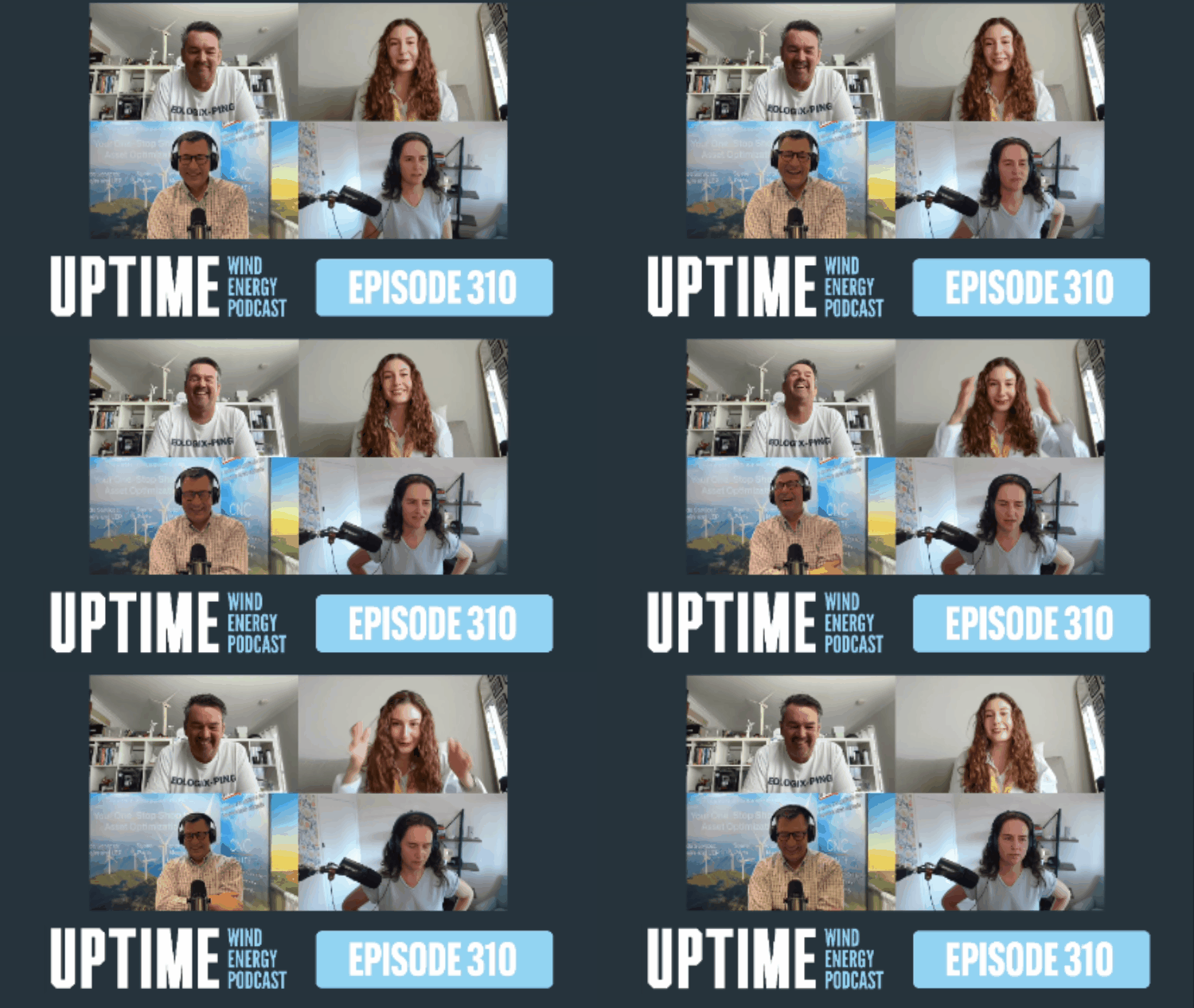
Allen Hall: Welcome to the Uptime Wind Energy Podcast. I’m your host Allen Hall, and I’m here with Yolanda Padron, Rosemary Barnes and Matthew Stead. I am at ACP OM&S in Orlando. Home of Mickey Mouse and we’ve had, uh, this is our second day at OM and S and this is the conference where all the operators and the maintenance and the ISPs and all the new technologies show up to, to discuss their products and try to get some work for the summertime.
Uh, so there’s a, a good number of vendors here. Solars here, not as much best as I would as expected, and obviously a lot to do with wind. [00:01:00] Uh, I know we’ve been talking internally on Slack and amongst one another. This is one of the, the most expensive conferences I have ever attended. It’s about $2,200 to attend just to get yourself into the door.
Rosemary Barnes: And that’s US dollars too.
Matthew Stead: Real dollars.
Allen Hall: Green backs.
Rosemary Barnes: That’s like three and a half times what our event cost. What warmer cost. If you do the conversion
Allen Hall: yes.
Rosemary Barnes: And you get access to what? An exhibition and all of a whole bunch, a variety of amazing, informative, technical topics included with that ticket price, right?
Allen Hall: No.
You get access to the exhibition, they will feed you some, uh, enchiladas and some, uh, free beer, but all the technical talks are extra. You have to pay. Uh, a couple hundred dollars
Rosemary Barnes: enchiladas and beer are a must have that everyone obviously wants, but talking about wind energy, totally optional. Nobody. Now, obviously not everybody is gonna wanna talk about wind energy, [00:02:00] so that’s, that’s an extra ticket that you need for that one.
Allen Hall: Well, in order to go to the, I would call them technical talks, you have to pay for those. They have an A space in the middle of the convention where they’re doing what they call powered cast. Which are kind of modeled on podcasts, uh, that are sort of a produced thing where they have a panel up there.
It’s similar what to where you’d done in Melbourne with Woma, but not with real technical people. The more polishing people. That’s what I saw. I don’t know a lot of the names and I’m pretty used to, to recognizing names of wind and it looks like to be a lot more policy people not. Blade experts or people like that.
Rosemary Barnes: I’m a little bit confused because it’s very different to, you know, I love to complain about the Australian wind energy events, but this sounds very different to the way that it’s run here. Like usually at the exhibitions, the exhibitors pay like a bunch of money to be there, and what they want is people to come see it.
So [00:03:00] usually here the exhibition is. Free to attend because you are there to be advertised to, you know, like it’s not some like amazing, valuable thing to you. It’s super valuable to the exhibitors. That’s why they have to pay, you know, $10,000 plus to, to be there. Right, but you are saying that they’re, they’re charging the, the attendees are, they’re giving the exhibition space away for free then?
Allen Hall: No, the exhibition space costs a tremendous amount of money for a little tiny space. I’m actually in our slot, we share. A slot because the prices are so high, we’re sharing it with AC 8 83 who we love and with C and C onsite, who also we love. So it’s a good combination ’cause we like one another. We’re fun to hang out with, but it’s probably a nine by nine space.
Uh, and then you have to pay for carpet and all the furniture that happens inside of that space, you can easily spend. $10,000 on a salon.
Matthew Stead: Question for you, Allen. So, um, how [00:04:00] does, how does the industry foster, you know, new, new technology, new companies, you know, growth of the industry, new ideas, so, you know, how does this event, um, foster those sorts of things?
Allen Hall: It doesn’t because it’s really, it’s pay to play as Rosemary has pointed out a number of times and is frustrated by. In order to get heard, you have to pay to one, have a booth, or if you want to get up on stage, it costs money. It’s, it’s not a small amount, by the way. So, uh, if you’re a new company, you got a great idea.
You even have traction. Say you’re TRL seven plus and you want to connect with operators, it’s hard to do that here. Uh, the operators tend to be a little gun shy and, and they’re. Off on the side. I, I know some of them obviously, ’cause I, I know who they are, but it isn’t like, uh, the operators are walking around necessarily talking to all the exhibitors.
That’s not how this [00:05:00] works. What generally is happening is the operators are talking, uh, to people that are selling products in these conference rooms on the side. So those things are completely off the show floor. It’s not the best situation. Like, I gotta admit, I’ve been to a lot of other conferences like in aerospace.
Those tend to be a little more free flowing.
Rosemary Barnes: It’s interesting ’cause it’s like, obviously you go to the events because everybody goes to the event and I’m sure you’ve had some great conversations. Um, however, you don’t need to go inside. Like when you go to one of these huge events, you’re trapped inside a windowless room for all day, every day for several days in a row.
Like, why does it need, why does it need to be there if they’re discourage, actively discouraging people from going to any presentations? Why couldn’t you just grab a bunch of friends, you know, put on an open invite, Hey, we’re all gonna the beach this week. Let’s go talk wind energy at the beach. Like, I, I don’t understand why we need to subject ourselves to this sort of, this sort of event.
Like I [00:06:00] just, it it’s gotten out outta control, don’t you think?
Allen Hall: It has. I would never talk wind energy while I’m at the beach. I go, that’s probably one place where I’m not talking wind energy, but there are other nice places you could be. To talk about what’s happening in the industry and, and that’s one of the frustrating pieces about this is, although I love a lot of the people that are here, it’s not a great place to share new ideas or to learn something new.
It’s, it’s mostly a, a meet and greet and catch up a reunion in a sense. Of, Hey, we’re the survivors. That’s it. Part of it is that feel right.
Rosemary Barnes: It’s pretty hard though if you are not like, you know, everybody you need to talk to. And I started doing the same thing, like at the um, one, one of the recent events or one of the events last year in, in Australia.
I was so fed up with it the year before. I’m like, I’m not giving them any money this year. I was at least allowed to go to the exhibition for free at that event. So, you know, at least that’s something, but I mean, I barely even did that. Anyway. What I did was I set up at a cafe near to the event and just, I just [00:07:00]scheduled meetings like back to back for two days.
Um, everyone just came to the cafe. But that’s ’cause I know everybody, right? Like, it’s like someone that’s new to the industry can get nothing out of these events. Now it seems like it’s just, it’s so, it’s so sad. Like where, how, how are you going? Like, you know, people brand new to the industry. You used to be able to go to an event and just be like, okay, I’m gonna just have information overload for two or three days, meet a bunch of great people and I’ll come away feeling like I’m part of this industry.
I just can’t imagine. That happening at the event that you are describing, that someone would, would show up and, you know, come away knowing a lot more about the industry and with, with a bunch of useful connections. Am I right?
Allen Hall: Uh, I think you’re right. There’s were a couple of people that I ran into that were new to the industry, trying to start a service provider or repair business, generally speaking that, or a drone business that we’re trying to get into the, the industry and we’re reaching out and talking to people and.
The thing about [00:08:00] wind is when you actually get ahold of somebody, they will help you. It’s, it’s very, uh, open. What do you do? What are you trying to do? Wherever you talk, who you talk to, here’s some names that will happen, but it is daunting because there’s a lot of people here. You don’t know anybody, and there’s no way to really introduce them.
I think that one of the things that, uh, American C Clean powered. Did, uh, that I noticed was they had like a first timers reunion space, so, or a meeting space so that it had some beach balls and a little Tahiti hut or whatever those tiki hut or whatever that was where you could kind of hang out because you knew.
But I’m not sure that’s the best way to do that. I think, you know, American clean power could do a much better job of knowing who’s first time and connecting them. If the industry’s gonna grow, you need to be taking in new people and new ideas. To it. The only way you’re gonna be able to do that is if you actively make it happen.
Matthew Stead: Did you learn anything new [00:09:00] so far?
Allen Hall: Not new. Uh, I, because we’re doing the podcast and we’re recorded several episodes in the last two days, I was able to ask specific questions like, what are you working on? What’s new? What’s coming out? And that’s the way to get to those answers. But if you’re walking the exhibit four, you would not see a lot of new technology and.
Three years ago, I think four years ago, especially like during COVID, there was some pretty cool technology out on the show floor, uh, but not so much Today, the industry’s matured and, and it’s a tough industry to, to survive in. So what you generally see is companies that have been around 3, 4, 5 years that have made it, that are profitable, that are making good and income, and are providing a service and have sustained businesses, that’s what’s here today.
Yolanda Padron: I think that a CP, the intent behind events like the one you’re, and Allen and the one we’ve, the ones we’ve all been to are, the intent is great, but the [00:10:00] execution isn’t super great. Not just from the the point of view of people coming in from new to the industry and wanting to start an ISP or something, but just from the owner operator.
Point of view, you know, you’re, if you have to pay to go to specific talks or to go to technical talks that you don’t really know how much they’ll benefit you until basically the end of it. Once you see the information that’s gone into it and the practicality of everything that they, they’re talking about, and then when you’re walking in the showroom like four, like it’s a little bit daunting sometimes.
There’s hundreds of companies. Sitting around in kind of like a maze, right? And it’s not always like, oh, you need lightning protection. Like that’s that area. Or you need better locks for your o and m buildings or for your towers or something. It’s that section like you’re just walking around everywhere.
And then just. It kind of turns [00:11:00] into, like sometimes it can turn into just a game of like, if you’re going with a lot of colleagues, like a kind of a drinking day or a day to just see who can collect more freebies. Like I remember one year we had a group chat of like, oh, like every time you saw something cool that was like a, a merchandise thing, like you would put it in the group chat, like E 46 has this.
And then we would all go and get it and it was. I don’t think that’s the intent behind what, what we wanted to do. It really wasn’t what we saw at oma if we’re being completely honest.
Matthew Stead: What I’m hearing is that there’s a really strong need in the US for another event. Is that, is that what I’m hearing?
Allen Hall: I think there needs to be a real technical event run by people who are technical experts.
I think that’s it because there are a lot of new solutions out there, but you’re not gonna find them at OMX. That’s just not the place. Now, I’m sure a CP would dispute that and that’s fine. They [00:12:00] have their own opinion. But I think having attended this for several years and a CP and a number of other, uh, conferences in wins, there’s a small subset that are sharing solutions.
It’s small and maybe there is need for one in America. It’s hard saying, Matthew, I. I think that maybe there’s is a time and place for it. I’m not sure America’s ready for it in, in a broader scope, but maybe something small. Maybe that’s the way to start off, is to do something small. Bring in the people we know and love from around the world have, go back to Rosemary’s point.
Maybe we do something by the, by the pool or by the ocean. Maybe we do talk wind energy for, for an afternoon.
Rosemary Barnes: I understand why you can’t, um, have an event at. A resort. And it was suggested actually to me a couple of times, like people when we were organizing Wilma, why is this in Melbourne? Why isn’t this in the Maldives?
Or you know, some, something like that. And the [00:13:00] one of the reasons like for us, ’cause in our Melbourne event it’s a, you know, it’s a very low cost event. We don’t make any money from it. It’s small. At least half of wind energy People in Australia are living in Melbourne, so it’s very, you know, easy for them to go to that it doesn’t, it doesn’t cost much or take much time.
So that was that reason. But I think that, you know, more broadly, like say we did a global event and we put it in the, in the malice or in Fiji or Hawaii or whatever, like, people aren’t gonna get that approved from their managers, right? So even though you know, you’ve spent, I don’t know how much the technical sessions were, but by the time that you’ve gotten to a CP, if you had to.
Even, you know, fly there in Australian hotel for a few nights, like it’s gonna be, you know, four grand or something. You can get to a nice location, probably an all-inclusive resort for a week, somewhere nice for similar money. Like you would spend more time having quality conversations and it would be, you know, nice and enjoyable, but [00:14:00] your manager is never gonna approve that.
So I think that’s the challenge. To find somewhere that’s like nice and conducive to being relaxed and open, but that doesn’t sound like. So obviously a junket that no one will get approval to go to it. That’s the, that’s the challenge.
Matthew Stead: Um, just this week we got the feedback from the WMA conference. So we got, um, some of the results from the survey and I think, uh, probably the key thing to me was that we achieved 4.6 out of five, um, star rating.
Um, everyone gave it a four or a five. And we know people that give things four out of five actually mean five. So I think we did really well. So, uh, and the feedback was also, um, you know, the technical content, but people want more, more and more, uh, technical content and, and the interaction with people.
Rosemary Barnes: That’s a really, a really key thing to get feedback on if there are. Experts or categories of information that you would like to see covered that haven’t been, because I think, like we talk a lot about how, what the [00:15:00]problems are with a pay to play kind of model where speakers pay and get up and give a sales pitch and you know, there’s a lot of problems with that.
But then when it’s the other way around and you know, we’re choosing speakers that we know are good, then you fall into the risk of having it become cliquey where it’s just, you know, like all our friends over and over again. It’s uh, like hard for us to both vet the quality and bring in people that we don’t know.
So that’s where the outside feedback is gonna make that a lot better. Um, and it takes a long time, you know, you do, ’cause you, you do need to get to know a speaker before you can decide whether they’re gonna get up in the acne. You don’t sell at you for half an hour when they were supposed to, you know, do something informative.
So, would love to hear that feedback.
Matthew Stead: I think the proof is in the pudding because, uh, at for woma, no one said that they were unlikely to attend.
Allen Hall: Oh, I, I would hate to see what the numbers are gonna be for OMS this year. Uh, ’cause you know, you know why I say that? Because a lot of people that have exhibited in the past do not have a booth this year, and they’re walking [00:16:00] around the show.
And to me that’s an alarm signal. They should have a booth. They have good things to talk about. They’re a successful company. They’re doing great things to win, but they feel like this is just too much. It’s too much. Eventually you reach too much. I think we’re there.
Rosemary Barnes: I think it’s been a really good, like, uh, a big event with an exhibition can be a real money maker.
And for, you know, like, uh, assuming that SAP uses this. The money that they make from this event to deliver services for the American Wind Industry. Uh, I mean, you, you know, you can probably argue about how well or not they do that. I don’t have an opinion ’cause I’m not in America. But, you know, like, I, I’m not saying that that’s not the, um, a, a noble goal and a good thing to, for the business to be doing.
However, I think that it, that you can overshoot and, you know, so you can make a, a bunch of money for a few years. You know, you’ve got a good reputation for your event. You’ve got everybody comes to it. You can charge squillions to exhibitors. You can charge squillions more to speakers. You can even start charging people to watch the speakers who have [00:17:00] paid to be there.
Probably, I don’t, I don’t actually know in this case, my assumption. Um, but at some point. Like you’ve cottoned on that, hey, it’s not actually worth paying extra for the, um, you know, to go watch the speakers. And the last one of these, you know, similar Australian events I was at, I was like, Hey, it’s not actually worth me paying to go into there because I can get all the benefits by just being near to it, like then.
Once you don’t have heaps and heaps of people moving through, then exhibitors don’t wanna pay $10,000 to be there. Um, and so like, it’s just, it’s not sustainable to run the event like that. And that’s what I don’t think that, um, a lot of these event organization companies, especially the ones that aren’t run by an industry body, um, the ones that are just run by a company who exist to make money off events.
You know, like they’re not, I don’t think that they’re planning these events to be sustainable in the long term and to improve the industry.
Matthew Stead: Can I ask, um, a question for Yolanda and Allen. Um, so assuming this money for a CP [00:18:00] ends up as lobbying money, do you think lobbying at the moment actually helps?
Allen Hall: Here’s the feeling about it on the floor, and I haven’t talked to everybody here clearly. But the significant percentage I had talked to thinks that the policy efforts have not borne fruit, and that in some aspects, uh, they have increased the tension. Whether they’ve intentionally have done that or not, I don’t know.
But I think the feeling on the floor here, the last two days has been the industry is in a quote unquote downturn or a pause, and they’re waiting till 2028 to see what happens. That’s not the answer I wanted to hear. And also at the state level, I think, uh, the amount of policy changes that are happening are not pro wind, pro solar or pro best, except maybe in a couple of states.
So, uh, you feel like although [00:19:00] American clean power is on a national level, you will also like them to be at a state level, helping move some things forward and stop some of the prohibitions that are happening, or to get some of the permits issued. That’s one of the things that popped up today, talking to someone in the know as that permits are hard to get hold of in some states.
Well, American Clean Power is supposed to be helping with that. I’m not sure that they are, at least if they are, you can’t see anything visible happening. From the outside, which is a shame. That’s really a shame. So, you know where we go from here? I, I, I’m kind of in Rosemary’s camp. I had no idea. Uh, next year gonna be really interesting.
I, I don’t know what the numbers of attendees are. Uh, I’m guessing a couple thousand people are here. I’m guessing, let’s just say it’s 2000 people. I may be off plus or minus. Well, not on the negative side. It’s more than a thousand people here, but it’s not 10,000. That’s for sure.
Yolanda Padron: I think that, uh, someone at Woma summed it up really [00:20:00] well when they said that, um, we need to shift the conversation from this is the right thing to do to this, is this, we should make this to be cost effective and it should be the obvious decision to make.
Right? Just from a financial standpoint. Uh, and I think, I think that’s right from my, uh. Personal interactions with a lot of people in dc I think that lobbying really helps regardless of the political party that one is affiliated to. Um, just, just the way that sometimes our, our system seems to. I not, not to say that anything’s negative, I think it’s, I mean, it’s just the, the way things pan out, uh, oftentimes in the [00:21:00] us.
Um, yeah, I mean, I’ve, I’ve heard from. From both sides.
Allen Hall: Well, to Yolanda’s point, I would say we don’t belong to American clean power because one, it’s expensive and as a small business, does it make sense as the changing policy that helps me? The answer to that historically has been no. It doesn’t mean it’s not gonna happen in the future.
I think a lot of. Companies of our size are saying the same thing. There are some that have been here a lot longer that have knew a CP before it was a CP when it was a, a slightly different organization and they’ve continued on on, on some level just I think because they’re familiar with it. But I think the newcomers are having a heart attack.
And I would consider me to be a newcomer that we’ve been in wind since about 2012 or 2013, so we’ve been in it quite a while at this point. But there’s some old guard here. The new. The new players though, I think are struggling. I think there’s very few new companies that are flashy. Like we saw in San Antonio a [00:22:00] couple of years ago at American Clean Power.
We’re like, wow, there are some boosts here. And man, there’s some firepower happening and some really good marketing and some new products and new ideas. That’s not. That’s not here. Not, not this year.
Delamination and bottom line, failures and blades are difficult problems to detect early. These hidden issues can cost you millions in repairs and lost energy production. C-I-C-N-D-T are specialists to detect these critical flaws before they become a. Expensive burdens. Their non-destructive test technology penetrates deep to blade materials to find voids and cracks.
Traditional inspections completely. Miss C-I-C-N-D-T Maps. Every critical defect delivers actionable reports and provides support to get your blades back in service. So visit cic ndt.com because catching blade problems early will save you millions.[00:23:00]
Denmark has long been the home of the wind industry, but now our proposed new wealth taxes threatening to push one of its most prominent executives out the door. And Henrik Anderson, chief executive officer of Vestas says he will leave Denmark rather than pay the new tax, even if it costs him tens of millions of Broner and exit fees.
Uh, Anderson earned 32 million Kroger last year, and estimates he pays an effective tax rate of 60% already. He argues Denmark already leads Europe in income taxation and adding a wealth tax crosses the line and he, if he goes, he warns senior leadership could follow. Now, that’s a pretty bold statement for someone who was seen as one of the leadership.
Uh, a group of Denmark on the industrial side. Of course,
Rosemary Barnes: I’d argue it’s also culturally, [00:24:00] culturally not a super Danish thing to, to say at least publicly. Um, yeah, I dunno how many Danish listeners we’ve got, but one thing that I learned when I lived there, they’ve got this thing called yte Long. I think it comes from an, an old book, like fictional book, but it does pretty.
Well, Danish people say it pretty accurately describes Danish culture. I’ve just, uh, looked it up. But, um, so it’s Y Y’s law and that has 10, there’s 10 rules in Y’s law and they are, one, you’re not to think that you are anything special. Two, you’re not to think you are as good as we are. Three, you’re not to think you are smarter than we are, or you’re not to imagine yourself better than we are.
You know, it can, it continues down like that. But I just wonder like, is the Danish wind industry, have they flown too close to the sun? Have they become too thought themselves too special? Is this an example of where Denmark Danish people would say, you know [00:25:00] what? Who do you think you are when dentistry, you think that you’re better than us?
You think you’re smarter than us? Do you think that you don’t deserve to contribute to society? Because that is one of the biggest cultural differences that I found in in Denmark, was that people genuinely think that they have the um, responsibility when they’re doing well to make sure that everybody else in society is doing well.
This is an interesting cultural moment for Denmark, is all I would try to say that this to me, I’m very interested to see how Danish people respond to this idea that. We’re gonna, we’re gonna leave now because we don’t wanna share our, uh, wealth with the Danish, with Danish society as a whole
Allen Hall: 32 million kroners, that’s actually extremely low and in the United States.
Uh, there are thousands of companies, much smaller than Vestas, where the CEO is making a lot more than that, and to give half of that, more than [00:26:00] half of that away, so the CEO is taking home a million and US dollars, like 1,000,002, that’s not a tremendous amount of money. I for the responsibility which are on that person’s shoulders.
I could see being a little upset about that. And obviously he travels in circles in which he meets a lot of people that are making a lot more money come to America, stop at a, I don’t know, there’s a lot of places, machine shops that’ll make more money than that. Uh, so I think there’s a right to be upset about it.
You know, the, everything that’s happening in Denmark at the moment, I’m trying to. I feel like Denmark is getting it together. And then these things happen and I start to worry again. Uh, there’s, there’s so many things that have happened in the United States. They’re pushing against Denmark, and I feel, I’m always apologizing to my people I know in Denmark and like, this is another one.
Like, oh, geez, yeah, we, you know, vest can move to America. Oh, no, no, no, no. I want buses to be where it is. Stay [00:27:00] there. But I think there’s opportunities for investors to move and you kind of get the feeling that they’re leaving Denmark slowly. Have you noticed that recently?
Rosemary Barnes: Maybe. I mean, uh, all of those Danish wind energy companies used to manufacture in Denmark and barely, there’s barely any Danish manufacturing now.
So I mean, to a certain extent this is, you know, started a long time ago, but I also think that the, what you described at the tax of the CEO income and the income not being high, it’s not just, uh. Top 1% kind of issue. That’s something that I, I definitely felt it when I worked there, but I think that like, would your average Danish person wish that CEOs were paid more like Americans and that Danish society became more like American with a huge wealth inequality?
I, I’m gonna go out in a limb and say. 90% plus of Danish people would absolutely abhor the idea of that happening there. And they will be very firmly on side of you should be, um, CEOs should not be [00:28:00] making that much money and people that are making a lot of money should be paying a lot of tax to support the rest of society at just, I, I, I’m.
Pretty sure that he is like a really core cultural value.
Matthew Stead: I think he is good at, I mean, things don’t change unless things change. And, um, uh, I think it’s good for him to be pushing and, you know, making this a, a public discussion and a public topic. I mean, if he hadn’t have come out talking about this problem, we wouldn’t have been talking about it.
So, uh, I think yeah. Good on him for raising it and for being brave. I mean, you, like you say, Rosie, um, is not traditional cultural. Values in, in, in Denmark, but, you know, good on him for, for pushing the, pushing the, the, the barrow.
Allen Hall: It’s, it’s hard, right? I think Vestas works in a global community and they see all different kinds of cultures and all kinds of economic systems, and they operate in all of ’em.
And, uh, the CEO of Vestus were in the United States and they have a large manufacturing presence in the United States. Let’s face it. [00:29:00] Uh, easily making 10 million in the United States, maybe more easy. And I don’t think they’re paying him nearly enough for the work that he has done and things that he has accomplished.
You have to admit, the CEO of Vestus has really put a lot of time and effort into that company and has improved it in ways that are somehow, uh, never discussed, but are, in my opinion, immeasurable. So for the long-term health of that company, they are seen as the preeminent wind turbine manufactured today.
That’s hard to do. That wraps up another episode of the Uptime Wind Energy Podcast. If today’s discussion sparked any questions or ideas, we’d love to hear from you. Reach out to us on LinkedIn and don’t forget to subscribe to you. Never miss an episode. And if you found value in today’s this conversation for.
Please leave us a review. It really helps other wind energy professionals discover the show for Rosie, Yolanda and Matthew. I’m Allen Hall, and we’ll see you here next week on the Uptime Wind Energy [00:30:00] Podcast.

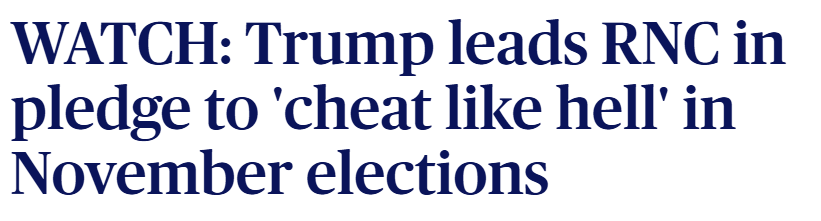 Here, Trump urges voters to “cheat like hell” to help the Republicans win the 2026 primaries.
I have never understood how anyone, regardless of how unintelligent and mean-spirited, could vote for Trump. Now, this whole concept is even harder to grasp.
 There are many countries around the globe whose people have a deep and honest concern for the wellbeing of their planet and its civilization. As shown at left, Costa Rico is most certainly among them.
Perhaps you live in such a nation. I sure wish I could say that I did.
The United States has too many greedy billionaires and too many hateful idiots.
 It was just 25 years ago that the whole world embraced the United States and shared our grief after 9/11.
We’ve taken all that kinship and discarded it as if it were a soiled paper towel.



-
Climate Change1 year ago
Guest post: Why China is still building new coal – and when it might stop
-

 Greenhouse Gases2 years ago
嘉宾来稿:满足中国增长的用电需求 光伏加储能“比新建煤电更实惠”
-
Greenhouse Gases1 year ago
Guest post: Why China is still building new coal – and when it might stop
-

 Climate Change2 years ago
嘉宾来稿:满足中国增长的用电需求 光伏加储能“比新建煤电更实惠”
-

 Renewable Energy11 months ago
Sending Progressive Philanthropist George Soros to Prison?
-
Climate Change2 years ago
Bill Discounting Climate Change in Florida’s Energy Policy Awaits DeSantis’ Approval
-
Greenhouse Gases1 year ago
嘉宾来稿:探究火山喷发如何影响气候预测
-

 Carbon Footprint2 years ago
US SEC’s Climate Disclosure Rules Spur Renewed Interest in Carbon Credits