


Apple Inc. reported strong financial results for its latest quarter. It showed steady growth in its products and services, sending its stock rising to its highest level this year. At the same time, the company is expanding its clean energy and carbon reduction programs as it works toward its 2030 net-zero goal.
Apple’s strategy focuses on balancing profit and sustainability. This approach helps define the company as one of the largest and most influential in the world.
Financial Results Show Steady Growth: Apple’s $102B Quarter
Apple’s fiscal year ending September 2025 marked another period of steady growth and strong cash generation. The company reported $416 billion in total revenue for the year, up from $394 billion in fiscal 2024.
Net revenue for the quarter reached $102.5 billion, 8% higher than the previous year’s result. It reflects solid demand for services and high-end iPhones.

Apple’s Services division, which includes the App Store, Apple Music, iCloud, and Apple TV+, grew faster than hardware. It brought in around $28.8 billion, a 15% increase, in the fourth quarter alone. This segment now accounts for more than one-fourth of total company revenue, helping offset slower growth in device sales.
The iPhone 17 lineup stayed Apple’s top revenue source. This was thanks to strong demand in North America and increased sales in India and Southeast Asia. Meanwhile, Mac and iPad sales stayed stable, with new M4-powered models expected to lift performance in 2026.
Apple shares reached a record high this year at $277.32 on October 31 trading. That price is about 18% higher year-to-date versus the January 31 close. The jump followed strong earnings and renewed investor interest in services and clean energy plans.

Analysts believe the company’s clean energy and sustainability efforts will boost investor confidence. This is important as environmental and social performance are now key metrics in global markets.
Clean Energy Investments Gain Momentum
Apple continues to invest heavily in renewable energy. Its suppliers now operate 17.8 gigawatts (GW) of clean electricity worldwide, enough to power millions of homes. These efforts helped avoid an estimated 21.8 million metric tons of greenhouse gas emissions in 2024 alone.
The tech giant has committed to powering all its global facilities, like data centers, stores, and offices, with 100% renewable energy. As of 2025, Apple reports that this target has already been met for its operations.
Apple is also encouraging suppliers to follow its lead. Over 320 suppliers from 30 countries have joined Apple’s Clean Energy Program. This represents more than 95% of the company’s direct manufacturing spending.

The chart above shows Apple’s global renewable energy portfolio. This includes direct purchases like Power Purchase Agreements (PPAs), investments in solar and wind projects, and clean energy from suppliers in Apple’s Supplier Clean Energy Program.
The 2017–2024 values are based on company disclosures. The 2025 figure represents the most recent reported estimate (Apple’s suppliers achieving 17.8 GW of renewable energy capacity).
- SEE MORE: Apple (AAPL) Expands Renewable Energy Projects Across Europe to Power Its 2030 Carbon-Neutral Vision
In addition to clean energy sourcing, Apple is reducing material-related emissions. Its devices now use:
- 99% recycled rare earth elements in magnets.
- 99% recycled cobalt in batteries.
- 100% recycled aluminum in many product enclosures.
These changes lower emissions and cut the need for new mining. Mining is a major source of industrial carbon emissions.
Apple 2030: The Road to True Carbon Neutrality
Apple’s long-term plan, called Apple 2030, aims to make its entire business carbon neutral by 2030. This includes all emissions from manufacturing, operations, and product use.
Since 2015, the company has already cut its total carbon footprint by over 60%. That means Apple has prevented around 41 million metric tons of CO₂ from entering the atmosphere compared to a decade ago.
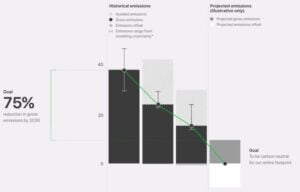
To reach full carbon neutrality, Apple plans to:
- Reduce emissions by 75% from its 2015 baseline.
- Offset the remaining 25% through verified carbon removal projects.
The company is investing in nature-based solutions, such as reforestation and mangrove restoration, as part of its offset strategy. It is also exploring more advanced carbon removal methods, including direct air capture and mineralization.
Apple says its approach focuses on “real and permanent” carbon reductions, rather than temporary offsets. The goal is to ensure that all products — from iPhones to MacBooks — are produced with net-zero emissions by 2030.
Sustainability as a Core Business Strategy
Apple’s clean energy work is closely tied to the company’s supply chain, product design, and long-term growth. The company uses recycled materials and renewable energy. This helps lower its risk of resource shortages and energy price changes. These choices also make production more efficient and less dependent on fossil fuels.
The company is also building resilience against future climate policies. As governments tighten carbon rules, companies with cleaner supply chains may enjoy lower costs and better operations.
Apple’s sustainability efforts also support its growing investor base. Many institutional investors now use environmental, social, and governance (ESG) criteria to evaluate companies. For Apple, good environmental performance keeps it a top ESG-rated company worldwide.
Industry Trends: AI, Energy, and Emissions Collide
The clean energy transition is changing how the tech industry operates. Data centers, manufacturing plants, and logistics networks are major sources of emissions.
Apple, Microsoft, and Google are all working to lower their carbon footprints. At the same time, they are expanding their AI infrastructure. This infrastructure uses a lot of power.
Analysts estimate that global data center electricity use could reach 945 terawatt-hours (TWh) by 2030 — more than double 2024 levels. That’s why access to clean, reliable power has become a key business issue.

In the consumer electronics market, sustainability is also becoming a selling point. More buyers now look for low-carbon, recyclable, or energy-efficient products. Apple’s use of recycled metals and renewable energy helps it meet this demand and strengthen its brand value.
At the same time, the global renewable energy market is booming. Solar and wind capacity is expected to grow by more than 50% by 2030, according to the International Energy Agency. This trend supports Apple’s ability to secure more clean power as its operations expand.
Balancing Growth and Green Goals: The Path Ahead
Apple has two big challenges. It needs to keep its strong financial performance and also meet its environmental commitments. As it grows its AI and cloud services, energy demand will keep rising. The company’s clean energy projects and emission reduction strategies will need to scale accordingly.
If Apple stays on track, it could become one of the first major tech companies to reach net-zero emissions across its entire value chain.
For investors, the combination of steady earnings, rising services revenue, and a strong sustainability record makes Apple a company to watch. Its success shows how environmental responsibility and business growth can move together, even in a rapidly changing global economy.
- READ MORE: Apple Stock (AAPL) Goes Green: 14,000-Acre California Forest Deal Advances Carbon Neutral Strategy
The post Apple’s Earnings and (AAPL) Stock Up, Emissions Down: How Its 2030 Vision Is Paying Off appeared first on Carbon Credits.

EU carbon credit claims changed on 27 September 2026, the day the Directive (EU) 2024/825 began to apply across the European Union. The change is narrow. It changes how a company can talk about the credits it buys. A product can no longer be called neutral on the strength of compensation alone; however, every specific, evidenced statement about what a company measured, reduced, and funded stays fully available.

The post Promoting Improved Cooking Practices in Nigeria appeared first on Terrapass.


-
Climate Change1 year ago
Guest post: Why China is still building new coal – and when it might stop
-

 Greenhouse Gases2 years ago
嘉宾来稿:满足中国增长的用电需求 光伏加储能“比新建煤电更实惠”
-
Greenhouse Gases1 year ago
Guest post: Why China is still building new coal – and when it might stop
-

 Climate Change2 years ago
嘉宾来稿:满足中国增长的用电需求 光伏加储能“比新建煤电更实惠”
-

 Renewable Energy12 months ago
Sending Progressive Philanthropist George Soros to Prison?
-
Climate Change2 years ago
Bill Discounting Climate Change in Florida’s Energy Policy Awaits DeSantis’ Approval
-
Greenhouse Gases1 year ago
嘉宾来稿:探究火山喷发如何影响气候预测
-

 Climate Change2 years ago
Analysis: China’s CO2 falls 1% in Q2 2024 in first quarterly drop since Covid-19