



- What timeline options were delegates debating?
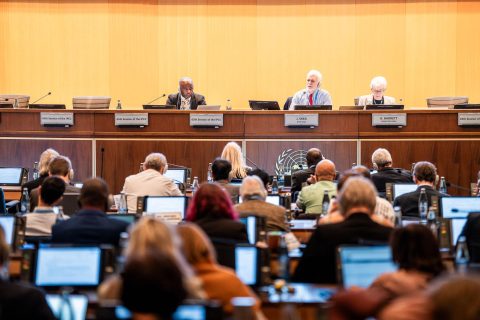
- How did the timeline discussions unfold?
- What were the main points of disagreement?
- Why is the IPCC in a ‘serious funding crisis’?
- How have scientists reacted?
- What other issues remain unresolved?
- How are the IPCC AR7 reports progressing?
- How might the IPCC use AI and enhance gender inclusivity?

Across the sprawling landscapes of Turtle Island, from the western mountains through central prairies, over eastern woodlands, to the northern boreal and tundra, the land carries memory. It speaks through ancient fires, through the whispers of returning smoke, through the cycles of regeneration and loss. Fire is not merely a destructive force but a living relative with agency, voice, and purpose embedded in the land’s sacred balance.
Fire as a Living Relative and Teacher
In Indigenous worldviews across Canada, whether among the Coast Salish, Anishinaabe, Cree, Dene, Mi’kmaq, Inuit, or Métis, fire is understood as more than heat and flame. Fire is a relative: a powerful presence that teaches and transforms. Fire holds knowledge about when and where to flow, how to clear away the old and invite new life, and when to retreat to allow healing. It is a force that must be listened to, respected, and lived with, not tamed or feared.
The land itself contains this fire knowledge, its patterns and rhythms, held not only in the soil and trees but also in the pulse of the more-than-human relations that weave together plants, animals, insects, and waters. These relationships have been cultivated through generations of ceremony, stewardship, and attentive listening.
The Memory of Fires Past: Lessons Written in the Land
For millennia, Indigenous peoples have carried the memories of fire’s many faces: the gentle burns that nurtured wild berries and medicines, the larger fires that shaped forests and grasslands, and the fires that carried warnings and renewal. These memories are more than history; they are living teachings embedded in stories, songs, and place. They remind us how fire once danced in balance with water, wind, and seasons, fostering abundance and diversity.
The land’s hold on this memory reveals how fire traditionally cleared away invasive undergrowth, opened habitats, cycled nutrients, and created mosaic landscapes vital for wildlife. Indigenous fire stewardship was respectful and purposeful, marked by precision, ceremony, and an understanding of fire’s role as a caretaker.
The Changing Land: Fire’s Agency Amidst Drought and Climate Change
Today, this sacred balance is strained as climate change stirs new challenges. Prolonged drought and rising temperatures dry the land beyond its natural resilience. Fire’s agency, once harmonized with the earth’s rhythms, now pulses with growing intensity and unpredictability. Wildfires rage more frequently, far beyond the historical rhythms of many regions, threatening the very life-systems they once helped sustain.
In western forests, ancient conifer refugia for caribou and lynx face pervasive mortality. In central prairies, grasses and wildflowers fail to recover, leaving soil exposed. Eastern woodlands lose their understory of medicinal plants and berries, which are relied upon by birds and smaller mammals. Northern boreal and tundra zones are suffering from the collapse of delicate lichen beds and shrinking habitats for migratory birds.
All the while, fire continues to assert its agency, challenging all beings to remember and adapt.
Honouring Fire Knowledge: Stewarding Indigenous Wisdom for the Land and All Life
To walk respectfully with fire in this changing world demands more than technology or control; it demands honouring Indigenous fire knowledge systems, which see fire as a living relation, as part of the land’s voice.
Non-Indigenous peoples and institutions must listen deeply to this wisdom. Stewardship means recognizing the fire’s spiritual, ecological, and cultural roles as encoded in Indigenous laws, ceremonies, and practices, which are calibrated to the land’s signals and cycles. It means supporting Indigenous leadership with sovereignty over how landscapes are cared for and how fire is welcomed, guided, or restrained.
This stewardship involves:
Recognizing the land’s agency, learning from the land where fire is needed and where it is invited to restore life, not simply extinguished as a threat.
-
- Integrating Indigenous fire timing and techniques, such as controlled or “cool” burns guided by ecological indicators and spiritual guidance, which have been practiced for thousands of years.
-
- Respecting the relational web that includes plants, animals, fungi, and waters as kin with roles in fire’s unfolding.
-
- Bridging knowledge systems where Indigenous knowledge co-creates with scientific understanding, enhancing fire forecasting, monitoring, and response rooted in ecological respect.
Fire as a Call to Renew Kinship and Balance
As drought and dry conditions intensify, the urgency of honouring fire’s role becomes increasingly apparent. Fire teaches humility the lesson that we are part of the land’s family, not masters of it. The fate of biodiversity, including berries, pollinators, game, medicinal plants, soil microbes, and waters, echoes the health of the balance of fire.
In listening to fire’s voice, remembering its cycles, and walking with Indigenous stewardship, humans reclaim responsibility. Fire need not be a force of devastation alone but can become a renewing presence that heals scars, encourages diversity, and sustains future generations of life.
This is not only a strategy for wildfire management, but a sacred path forward, one where agency, memory, and respect guide us toward living in a reciprocal relationship with the land, honouring fire’s place as a vital and sacred relative.
Blog by Rye Karonhiowanen Barberstock
(Image Credit: Jan Kopřiva, Unsplash)
The post When the Land Speaks Through Fire: Indigenous Wisdom, Memory, and Stewardship of the Living Landscape appeared first on Indigenous Climate Hub.
Continue Reading
Three countries have been named by the Paris Agreement’s compliance committee for failing to submit a nationally determined contribution (NDC) and repeatedly snubbing offers of help with their climate plans.
After months of internal debate over whether to identify serial non-responders, the Paris Agreement’s Implementation and Compliance Committee (PAICC) named the three countries which have failed to engage with it over their NDCs on Friday.
It named Democratic Republic of Congo, Senegal and North Korea in a footnote of its annual report, adding that it decided to name them “with a view to facilitating engagement”, adding that representatives of the three nations had been invited to its meeting in early 2027 “with the purpose of identifying any challenges and constraints”.
“The Committee noted the importance of Parties engaging with the Committee in a timely manner, while noting that some delays may be due to the national capabilities and circumstances of the Parties”, the report said.
-
Under US pressure, World Bank says it will back gas “where appropriate”
The US wants the World Bank to expand its gas support while climate campaigners are pushing for it to end – its head spoke this week of limited backing for the fossil fuel -
IPCC scientists vow to press on with climate reports despite political deadlock
After governments again failed to agree a timeline, nearly 120 IPCC authors pledged to complete their assessment on time and with full scientific rigour -
Paris Agreement committee snubbed over missing NDC climate plans
Many governments have still not submitted a nationally determined contribution to the UN, breaching a key requirement of the Paris Agreement
In July, PAICC said 12 countries had ignored its repeated attempts to discuss why they had not published an NDC as required every five years under the 2015 Paris accord.
Members of the committee had been divided over whether to name them, but at a September meeting decided to do so in their annual report to the annual climate COP summit.
By the time the report was published on Friday, only Congo, Senegal and North Korea “had not communicated an NDC or submitted a [Biennial Transparency Report] and had not yet responded to any of the Committee’s notifications, despite several reminders issued by the Committee in this regard”.
Rainforest and renewable energy ambitions
The silence from Congo and Senegal is notable because the former is home to much of the Congo Basin rainforest while the latter has sought billions of dollars in climate finance to support its renewable energy ambitions.
After Brazil, Congo has more rainforest than any country in the world. This forest, and the country’s peatlands, absorb huge amounts of greenhouse gas but are fast being lost to expanding farmland, charcoal production, logging and mining.
Senegal signed a Just Energy Transition Partnership with Canada and wealthy European nations in 2023, to help it meet its renewable energy targets under the-then government of Macky Sall. It was chair of the Least Developed Countries group between January 2022 and December 2023.

Tejas Rao, who is researching the PAICC as part of a doctoral thesis at Cambridge University, said the governments of the three countries should engage with the committee.
“Engagement costs these governments very little and the committee has shown it will listen,” he said.
“Silence leaves the committee with no basis to help, and it leaves the [governments] exposed to the narrative that they are simply disengaged,” he told Climate Home News.
Paris Agreement requirement
The 2015 Paris Agreement requires all parties to publish an NDC every five years outlining their emissions reduction targets, with each plan meant to be more ambitious than the country’s last NDC.
The latest set – the third round of plans, with new targets for 2035 – was due in February 2025. While most countries missed this deadline, all but around 30 – mostly small emitters but including Egypt, Vietnam and Argentina – have now submitted them.
Over the year, the PAICC – which is made up of government climate officials from developed and developing countries – has been communicating with governments that have not submitted NDCs and trying to overcome barriers to them doing so.
Some nations have cited exceptional circumstances as the reason for not submitting an NDC, a process that requires a significant amount of work in tracking emissions and consulting on how to curb them across the economy. For example, a letter from a Sudanese official to the PAICC, seen by Climate Home News, said that the country’s civil war had led to the suspension of its NDC preparation.
-
IPCC scientists vow to press on with climate reports despite political deadlock
After governments again failed to agree a timeline, nearly 120 IPCC authors pledged to complete their assessment on time and with full scientific rigour -
Under US pressure, World Bank says it will back gas “where appropriate”
The US wants the World Bank to expand its gas support while climate campaigners are pushing for it to end – its head spoke this week of limited backing for the fossil fuel -
Who shapes climate science? The equity question facing the IPCC
Early completion of the next global climate science assessment reports risks excluding research from the Global South, which is key to ensuring the findings are fair
The US and Iran are not signed up to the Paris Agreement and so do not have active NDCs, nor does Taiwan, which is not a UN member state.
Rao said that because the PAICC is “facilitative and non-punitive”, naming the countries “is meant to open a door, not close one – the invited consultation is the point”.
“In recent months, governments that explained their constraints, whether capacity, finance or domestic process, have been met with follow-up and support rather than sanction, and the number of silent governments has fallen sharply,” Rao said.
The post Paris Agreement committee names three countries snubbing it over NDCs appeared first on Climate Home News.
Paris Agreement committee names three countries snubbing it over NDCs