

Chevron U.S.A. division Chevron New Energies has announced it is developing a 5 MW hydrogen production project in California’s Central Valley.
The project aims to create lower carbon energy by utilizing solar power, land and non-potable produced water from Chevron’s existing assets at the Lost Hills Oil Field in Kern County, Calif.
The company says this low carbon intensity (LCI) electrolytic hydrogen will be produced through electrolysis.
The facility is designed to produce two tons of LCI hydrogen daily.
“Hydrogen can play a vital role in our journey toward a lower carbon future,” says Austin Knight, vice president for hydrogen at Chevron New Energies.
“Chevron already offers lower carbon fuels like sustainable aviation fuel, renewable diesel and others, and this project is expected to expand the portfolio of solutions Chevron could supply to the region. I’m excited about the scalability of this solution. However, our ability to meet growing hydrogen demand and help build hydrogen fueling infrastructure in California to a commercial scale with more widespread adoption will be strongly led by state and federal energy policies that promote new lower carbon energy solutions.”
Project development is expected to take multiple years, with the start of commercial operations depending on several factors, including final engineering design, timely permitting and obtaining necessary materials.
The post Chevron Solar-to-Hydrogen Production Project in California’s Central Valley appeared first on Solar Industry.
Chevron Building Solar-to-Hydrogen Project in California’s Central Valley

 I may have mentioned that I’m lucky enough to be a part of a group of boyhood friends from our prep school in Philadelphia that meets monthly on Zoom.
Yesterday the question came up as to how our political beliefs are formed, and the group found my input somewhat shocking.
First, from what I can understand from neurologists, our brains are “wired” to function in certain ways. Via some combination of genetics, epigenetics, and early experiences, we are incapable of looking at the world in a fundamentally different way than we do now. I am no more capable of being a Trump supporter than I am of starting as quarterback in the NFL or memorizing the first 22K digits of pi, the way certain savants can.
This is validated by studies showing that our political philosophies are shaped by the way our brains fire under certain circumstances. When experimental subjects were hooked up to electronics that monitored their brain activities were shown pictures that depict certain threats, the results from self-described “liberals” and “conservatives” differed considerably. When shown photographs of kittens and mountain ranges, both groups processed those images in the same regions of the brain. But when shown photographs of snakes and tarantulas, conservatives were far more likely to process these images through the amygdala, the “fight-or-flight,” or “reptile” brain that kicks in when we interpret something as a danger to our survival.
I’m not losing my mind about immigration into the U.S.; I’m unconvinced that hordes of immigrants from our south or the Muslims from the Mideast are destroying our nation.
Why is that? My brain is wired to doubt it. For whatever reason, I’m more inclined to think that I’m one of 8 billion people on this planet that have almost identical goals and ideals. We all want to survive, to love our children, to be productive and responsible human beings, and to appreciate beauty.
On top of that, I’m a follower of Sam Harris, neuroscientist, author, and philosopher, whose work has shown that free will is an illusion. He points to a study whose findings are that, when we make up our minds in an instant to do a certain thing, say lift our finger from a table at a certain point of our choice, that our brains have made that decision a full half-second before.
Needless to say, there is a ton more to understand here about Sam Harris and his work on this subject. I urge readers to take that step forward.
Weather Guard Lightning Tech

Nordex Invests in Türkiye, Vestas Wins First V182 Order
Allen covers Nordex’s Türkiye expansion, Chinese turbine makers seeking European partners, Vestas’ first V182 order, and two Pennsylvania repowers.
The Uptime Wind Energy Podcast is brought to you by Weather Guard Lightning Tech, creators of the StrikeTape Ultra LPS retrofit. Subscribe to Uptime’s Substack newsletter. And check out Rosemary’s “Engineering with Rosie” Youtube channel. Have a question we can answer on the show? Email us!
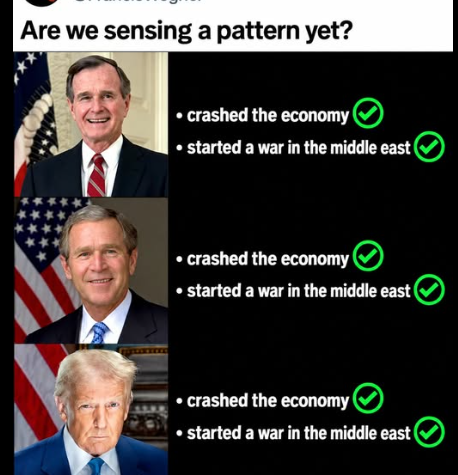 I’m not sure it’s as simple as this, insofar as Bush 41 and 43 weren’t criminal sociopaths.
I happened to be driving through Manhattan on the very day that Colin Powell was addressing the United Nations just a few miles away and claimed, and I think honestly, that Saddam Hussein had “weapons of mass destruction,” and must be stopped by a U.S. military invasion.
Contrast that against what we’re doing in Iran. Fifteen years ago, the Joint Comprehensive Plan of Action (JCPOA), included Iran, the P5+1 nations (the United States, China, Russia, France, the United Kingdom, and Germany), alongside the European Union made an agreement in which most of the developed world agreed that Iran must not have a nuclear weapon.
That stood firmly in place until Trump’s latest war crime, which is costing lives and choking the world economy, solely to defend our president’s neuroses.



-
Climate Change1 year ago
Guest post: Why China is still building new coal – and when it might stop
-

 Greenhouse Gases2 years ago
嘉宾来稿:满足中国增长的用电需求 光伏加储能“比新建煤电更实惠”
-
Greenhouse Gases1 year ago
Guest post: Why China is still building new coal – and when it might stop
-

 Climate Change2 years ago
嘉宾来稿:满足中国增长的用电需求 光伏加储能“比新建煤电更实惠”
-

 Renewable Energy11 months ago
Sending Progressive Philanthropist George Soros to Prison?
-
Climate Change2 years ago
Bill Discounting Climate Change in Florida’s Energy Policy Awaits DeSantis’ Approval
-
Greenhouse Gases1 year ago
嘉宾来稿:探究火山喷发如何影响气候预测
-

 Climate Change2 years ago
Analysis: China’s CO2 falls 1% in Q2 2024 in first quarterly drop since Covid-19