

PEAK Wind Masters Site and Turbine Selection
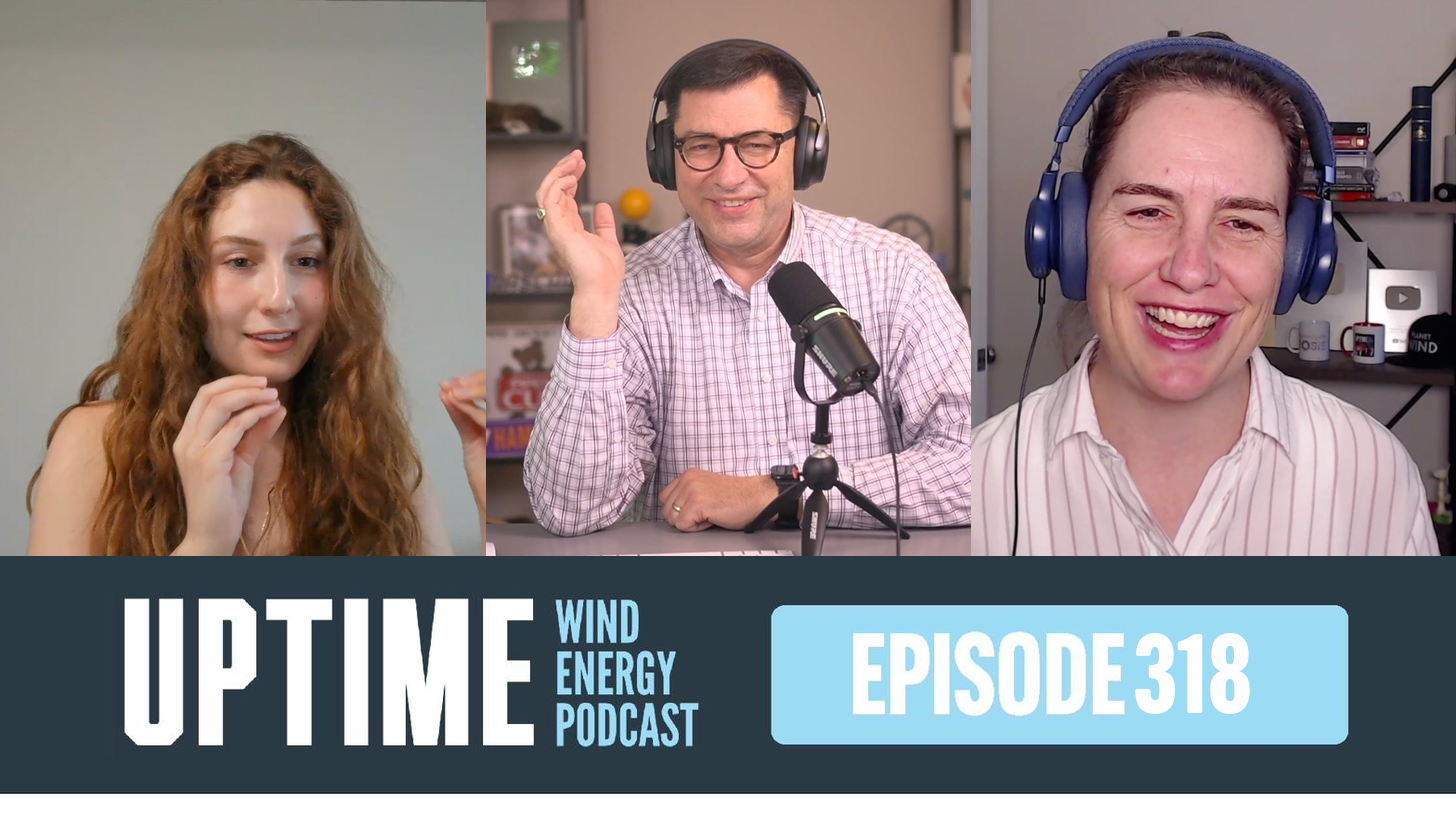
Lene Hellstern, Director of Engineering at PEAK Wind, discusses the complexities of onshore wind siting, the advantages of using LIDAR technology, and strategic considerations for turbine selection.
Sign up now for Uptime Tech News, our weekly email update on all things wind technology. This episode is sponsored by Weather Guard Lightning Tech. Learn more about Weather Guard’s StrikeTape Wind Turbine LPS retrofit. Follow the show on Facebook, YouTube, Twitter, Linkedin and visit Weather Guard on the web. And subscribe to Rosemary Barnes’ YouTube channel here. Have a question we can answer on the show? Email us!
Allen Hall: We’re back with Lene Hellstern, the Director of Engineering at PEAK Wind, and we’re talking about onshore wind siting, which is a really critical issue that a lot of operators have difficulties with. And I’ve seen it in the United States and it’s not good.
And I’m wondering from your perspective, what are some of the problems, Lene? Well first, welcome back to the podcast.
Lene Hellstern: Thank you. And thanks for having me repeat experience last time, so I hope so. I thought I’ll pop in again.
Allen Hall: Well, it’s good to have you back and thanks
Lene Hellstern: for coming to Copenhagen.
Allen Hall: Yeah, well we love Copenhagen.
It’s great. Uh, I just wish it was a little bit warmer. Yeah, the sun is terrific. Yeah. When you’re in it, well, at
Lene Hellstern: least I fixed that. Right. Yes. It’s not raining. It’s not raining. Yes.
Allen Hall: We, we quite enjoyed it. Uh, but I’m trying to get an understanding of what the underlying issues are with onshore wind siding and why some of the operators have difficulty later on.
Let’s just start with the sighting [00:01:00] itself. Yeah. Is usually, we’ll see a wind mast out on site for several months, maybe a year, maybe two years. To try to get some wind data. We would
Lene Hellstern: really like that. Yeah. Okay. But, uh, the preferable measurements are lidars.
Allen Hall: Oh, lidars. Yeah. I have not seen a lot of lidars in use.
Lene Hellstern: No. You, you need to get some more.
Allen Hall: Why?
Lene Hellstern: Um, because they reach higher.
Allen Hall: Okay.
Lene Hellstern: Um, and you can, uh, you can, you can move them around. Right. And the hassle of installing a Met Mass that’s a hundred meters tall, is, uh, is it a problem? Quite, uh. Quite it, it cost a lot more. Yes. Um, and, and the lidars, they, they just, they’re better and they measure higher.
And you can, you can have one sort of mother lidar and then you can move the other around and you can cover your wind resources and site suitability much better on the site. So I would definitely recommend
Allen Hall: lidars. Okay. How the lidars use a [00:02:00] good bit of power to make them run, correct? Yes. So you need a decent power source?
Yes.
Lene Hellstern: You do? Yes.
Allen Hall: Okay. Yeah. I, is that one of the difficulties why they don’t use a lidar? Is it just in a lot of remote areas, they don’t have the power source to run it?
Lene Hellstern: It could be, or it could be the, the lack of knowledge. Right. Traditionally we have used med masks, yes.
Allen Hall: Forever.
Lene Hellstern: Uh, so, so it could be, and then there are also some, um, uh, some issues with uncertainties because the lidar is the, the standards are not up to date.
I would say that’s the political way correct way of saying it. So. Eh, the standard actually introduces more uncertainty on the lidar that’s really not necessary to, due to a calibration with a me mast. Um, so that there’s some, there’s some things that needs to improve in that area
Allen Hall: because a lidar should be a lot more accurate than a met mast.
Lene Hellstern: Yes. Yeah. Yeah. But, but the, the downside of the lidar, so that, that is not often we see that, is if you don’t have enough particles in the air, you have [00:03:00] an issue because then you are, you’re simply not gonna be able to measure. The, the, uh, velocity of the particles because they’re not there. And then you have a low availability on your measurements.
But, you know, most places there’s, there’s a quite a lot of dust. There’s pollution. Um, so there, there are things in the air that we don’t see, but the lighter sea and then you can make the measurements.
Allen Hall: And as the hub heights have gotten taller, it gets a lot more difficult to get a met mass up that high.
So the lidars go can measure winds. How high up in the air? How many meters? I
Lene Hellstern: think at least 250 meters. Wow. And, and you want, you want to, you know, traditionally you would only measure at hop height, but you wanna measure at the, the, the rotor surface, right? So you wanna measure at tip height, and you wanna measure at lower top tip and lower tip to, to see what, for instance, what’s the wind share across your, uh, rotor disc.
Um, which
Allen Hall: you cannot really do with a met mast at all. You can’t do that. You have no [00:04:00] wind share knowledge. From that instrument? Sort of, yeah,
Lene Hellstern: you can, because you can make, you always, you, you have a met mass that’s at least at hop height, and then you have, uh, anemometers and wind veins and I don’t know what on all the way down.
Um, and you can with, without that equipment, you can, you can measure on the lower part of the rotor, but not the upper part. So, so you, you do get some possibilities to measure wind share, but not as good as, um, for instance, a lidar. Yeah.
Allen Hall: So how many lidars would you typically need on a 100 turbine site?
Lene Hellstern: Well, that depends.
Allen Hall: Okay.
Lene Hellstern: Because you have a, if you have complex terrain,
Allen Hall: right?
Lene Hellstern: Yeah. You may want a lot. Right. That’s what I
Allen Hall: was wondering if the more hills and valleys, the, the more lidars you will need, or more samples you’ll need, or maybe the longer duration you’ll need. Yes.
Lene Hellstern: Yeah. And you, you would wanna, you know, it’s always the best to measure it.
I think it’s [00:05:00] ideally five years. Nobody does that five years. Nobody. No, no. But you should at least have two, right?
Allen Hall: Yes.
Lene Hellstern: Uh, and then you should do a proper long term correlation. Um, so, so that’s, and how does
Allen Hall: that, how does that accomplish Right now, let’s just say we have a met mass. What I typically see is, has been a met mast out in the middle of the United States where the winds are pretty good.
Speaker 3: Yeah.
Allen Hall: And they have data. They have some data. Yeah. So typically I’ve seen them out there a year, maybe two years, and then. The, but the sites are massive. Yeah. They’re, they’re square miles. Yeah. Dozens of square miles. So it’s big.
Speaker 3: Yeah. I
Allen Hall: dunno whether it’s in kilometers, but a lot of square kilometers. So then they are trying to interpret interpretate that data that they have from the Met Mass on top of that.
I think they’re looking a little bit forward in terms of who, what other wind farms may be surrounding us in the next several years. Yeah.
Lene Hellstern: And that’s, that’s one of the challenges we have because there’s a lot that. Uh, you, there’s a lot of guessing.
Allen Hall: Yes.
Lene Hellstern: Um, and so if [00:06:00] you are planning a wind farm, you wanna know what goes on in the area.
You wanna map out the already existing turbines, uh, and what, what hop height, what rotor size, because you wanna be able to model them in your calculations.
Allen Hall: That was really good. Get to my question about how difficult this process is and how you try to address it. In the United States, we turn over wind turbines every 10 years, so there’s a repowering happening and.
Almost always, the rotor size gets substantially bigger. 20 to 30 to 50% bigger. Right. So there’s fewer turbines, same location. Yeah. And the turbines are roughly in the same spots, but they’re just bigger rotor diameters. How do you then prepare for that? Do you use the old data or is the old data even applicable?
If I’m really dramatically increasing the rotor size, do I need to be doing more? LIDAR measurements before I make that repower, or how do I even cite that? Right.
Lene Hellstern: Uh, you can, if you have some good SCADA data from your turbines, you can do some [00:07:00] modeling. And many of the sites actually have a met mast. They do a lot Yeah.
As a reference, right? Yes. Right. But that will be on it, it will have sectors where there’s a lot of weight from the existing.
Allen Hall: Okay.
Lene Hellstern: So, and so I would, I would, I would try, I would filter your SCADA data from your site and see if, can I, can I use this? I’ll take a look at the mid mass state and see, can I use this?
If not, I’ll start a me mass campaign. Now the problem is if you’re reusing the spots now, well first of all, that’s a little bit difficult reusing because your foundation is dimension to an old generation turbine. Uh, let’s say take someone a hundred, a hundred, uh, meter rotor, right? Right. But now you’re going up in size.
Um, so that means everything gets heavier and bigger, right? So your foundation may not be suitable. The old foundation, normally they’re over dimension. So you can, you can extend life or you could repower on them, but you would want a bigger turbine. [00:08:00] So you don’t necessarily want to use the opposition, right?
And then you would wanna know what is in the pipe. You know, when can I get my, when can I start digging? Right? When can I start installing? Uh, what is in the pipeline at that point from the OEMs? Because sometimes it actually takes five years from, you start planning until you, you, you start digging. And in that time, if you, you, if you space with today’s models, you are gonna have two shorter distance between the turbines because the new turbines on the market that you would wanna buy has increased significantly.
Um,
Allen Hall: and that’s a real problem. Yeah. Like that, this, this. Between the, the siting time, the met mass, the LIDAR data, getting enough data and having to make the decision about a turbine relatively early because the production lines are not operating at full capacity right now. Yeah. It’s hard to get a turbine.
So you are 3, 4, 5 years out. Yeah. How do you plan for that on an onshore site?
Lene Hellstern: Well, [00:09:00] you, you gotta guess a rotor and guess a, a turbine site. Okay. Right, right. So, but
Allen Hall: do, do the engineering staffs that a lot of operators have that inside knowledge because it seems like smaller operators, I’m, I’m not the urals of the world, have power and they can see inside the factories and they have a really good connection and they develop that connection over a long, many, many years.
Speaker 3: Yeah.
Allen Hall: Where newer operators usually do not have that sort of insight. So where do they go to get help?
Lene Hellstern: Well, well, they could go to, right? We could help them a little bit, but. You can also look, if you look at the evolution of the turbines, you can, and I, I’m, I’m hoping we are at a little bit of a pause here in the, in, in the growing size.
So we, we can refine the turbine, we can refine our manufacturing facilities. We, we get better at service and installation. But you can pretty much, you know, guess the rotor. Uh, I’ve, I’ve done that a lot in, in this job and my previous job, because you [00:10:00] look at, if you look at when the. When did what? Come on the market and from what, OEM.
Right. And then you, you know, there’s, there’s other topics you need to look into for, for instance, site suitability. Right? Right. What are, what are the conditions on the site? Um, are you a, we, we categorize in different classes. I, e, c, 1, 2, 3, um, or turbulence classes. A, B, C. And then there’s the, the class I like the least that is the Class S.
Which is special. And then you never know what it is before you start digging in all the paper. Um, but, but you, that’s sort of the first things you need to find out. What class are you? And then there’s a small in that because, um, you may think you are a, a class two or have a class two side, but then it turns out that your air density is unbelievably low.
So sometimes you can actually squeeze in a class three. Turbine on a class two [00:11:00] side and get that much more production.
Allen Hall: Do a lot of operators know that?
Lene Hellstern: No.
Allen Hall: I wondered. Okay. Yeah. Well
Lene Hellstern: maybe the, it’s not so much the operators. It’s the developers. Developers. Sure. Yeah, yeah, yeah. That has to, to, to dig a little bit more into the lovely engineering science around turbines and.
And, and then do more site suitability because you can actually improve your, the value of your project quite significantly.
Allen Hall: That’s what I wonder if, if you spend a good extra amount of time maybe spending a little more money to get LIDAR measurements Yeah. And to do them for a slightly longer period of time, does that have a return on investment?
Lene Hellstern: You get, you get less uncertainty. Right. And then I think some of the issues or some of the mistakes that the developers do, they. They do a wind, they do a, a production estimate, but that is not the same as a site suitability or uh, [00:12:00] you know, also, some people also think if I do a wind resource assessment, then I’m covered.
No, because that is the input to the site suitability. Now you also need to do the site suitability. So you know, I would start out doing a wind resource assessment, right? Then I would do a site suitability and then you do your production calculator.
Allen Hall: And how long does that process take, generally?
Lene Hellstern: Oh, that’s always a cue.
So it could take, uh, it depends on who you use for this, right? But it could take four to to eight weeks.
Allen Hall: Okay. That’s not horrible. No,
Lene Hellstern: no, no.
Allen Hall: Alright, so it, it is relatively efficient compared to other things that happen in wind.
Lene Hellstern: Yeah. If you are have a complex site, it can take longer because you need to run a lot more calculations due to, uh, the comp complexity of the terrain, right?
Mm-hmm. You can have issues with inflow, angles, uh, ware, wind share, uh, [00:13:00] all the lovely technical things. Yeah.
Allen Hall: Well, and because we’ve developed so many sites to date, all the best wind sites have turbines in them mostly right now, and. We’re, we’re starting to get along the fringes of that good wind area.
Yeah. And in some cases, does that change the way you do the analysis and do the approach?
Lene Hellstern: Yes, but, um, some of us have done that for a long time because it’s not good enough to have good wind if you don’t have good grid. Um, so, so for me, a good wind side, you know, we, I, I spoke with someone yesterday about.
The best, uh, uh, wind resource in Sweden. Um, but, but if that area doesn’t have a good grid, then you know it, I can’t harvest the wind. Right. Right. Um, and it’s the same in, in the US right? You, you have some grid issues. Um, so we have a lot of
Allen Hall: grid issues. Yeah.
Lene Hellstern: And if you don’t, everything is [00:14:00] combined.
Everything works closely together, right. Uh, the technical, the commercial and the finance. So if, if, if that is not. Well, um, covered in a, in a, or, uh, investigated in a project, you don’t have a good project. Um, is
Allen Hall: the grid the limiting factor in a lot of onsite onshore sites?
Lene Hellstern: I think the world is becoming more and more electrical, which it is, which I think it’s good.
Mm-hmm. And I don’t think that they, we can point at any government that was super duper on, um, expanding the grid. Um, no. I know there are issues in Texas. There are also issues in Denmark where I’m from. There are, yes, there’s issues in Europe. So, um, we, we need, we need massive in investments from the government to build out this grid.
It’s, it’s not, um, enough to say we want clean energy and then do nothing. Right. Well
Allen Hall: this is where, where, where the ons onsite versus the onshore versus the offshore comes in. Yeah. [00:15:00] Is the grid.
Speaker 3: Yeah.
Allen Hall: So in the US and other places, uh, there’s been. A, a lot of concern about offshore wind, but offshore wind, you can get to a grid relatively easily.
Yes, usually. Yeah. Yeah. And it’s less bureaucracy to lay cable in the ocean than it is to run transmission lines over land.
Speaker 3: Yeah.
Allen Hall: So is this starting to flip a little bit because of the onshore limitations in the grid that we’re seeing more offshore, just because it’s easier.
Lene Hellstern: Well in Europe, but I would not say that in the us Right.
But, uh, but, um, um, it, it, it is easier, but it’s also much more complex to put up these, uh, offshore projects. They are in development for many, many years compared to onshore.
Allen Hall: Right.
Lene Hellstern: So, so onshore is a little bit of a, depending on country you are in, if it’s overpopulated right? It’s, it’s difficult, but it’s, it’s a much more of a quick fix, uh, [00:16:00] onshore.
For, uh, lack of energy. Right, right. But, but it just requires it, yes, it requires the grid and yes, it requires that you don’t do it in a popula populated area. We don’t want to do that. Right, right. We want, we want the open fields, um, where we’re not disturbing anyone. True. Yeah.
Allen Hall: True. But we also want infinite electricity.
Absolutely. So you have to weigh those two off.
Lene Hellstern: I, but I think the turbines are beautiful. So I would, I would love to be able to see one from my house, but I can’t. Yeah.
Allen Hall: We have actually quite a few we can see from our, from our house. Yeah. Yeah. And no one complains. No. They complained for the first few weeks after they were installed and after that it’s been completely quiet.
Yeah. But,
Lene Hellstern: but I do understand if you place turbines too close to a house Right. Sure. That, how that can be disturbing. Sure. Um, I, I totally understand that. Yeah.
Allen Hall: Can we talk about AI data centers and independent grids and how that’s factoring [00:17:00] into some of the decisions about where to place wind sites?
Because it does seem like in a lot of places in the world, these AI data centers are going to go in. Yeah. And they’re making decisions about using natural gas to power the turbines or using wind and solar and a little bit of battery to, to run these centers. Yeah, but that doesn’t necessarily. Wire a connection to the grid.
Does that make it easier in a sense that you don’t necessarily have to have a grid connection, you could put something out in a remote area that it still had good wind and still has good solar with a little bit of battery? And are you starting to hear more action that way, or interest in that?
Lene Hellstern: I’ve, I’ve seen that there’s been, uh, quite some centers that has, uh, made, uh, PPA agreements with, with wind turbine owners.
But they are normally not super close, uh, uh, located to the wind farm. Okay? And I would also say that I would find it a little bit difficult, [00:18:00] uh, if they were remote, because you need a, you need a constant power source and, and the wind doesn’t blow all the time, right? No. So you need, you need a lot of, uh, combination mechanisms, right?
You do to make sure everything runs stable.
Allen Hall: But you may not have neighbors in that case because you could select a site that’s a little bit further away from. Society in a sense. Yeah. Where the, the wind siding may be a little more complicated though because we, we probably haven’t looked in those areas because it’s not connected to the grid.
So you may not have historical wind data doesn’t make the problem just bigger. So I do think in the United States you see like Amazon and Meta and Google talking about using wind and solar to power some of these data centers. Yeah.
Lene Hellstern: And, and they are, and I know that there are, uh, agreements that has been signed.
But I, I am, I don’t think they are close, uh, you know, in close proximity necessarily.
Allen Hall: Okay.
Lene Hellstern: But of course the, the, the electricity needs to be to be transported in the grid. Right. [00:19:00] And it’s not like it’s a microgrid around the data center.
Allen Hall: I think you may see more microgrids.
Lene Hellstern: Okay. Well that could be interesting.
Well, that’s what
Allen Hall: I’m wondering because there may be more microgrids that won’t even be microgrids because the amount of power that they’re gonna use, they’re gonna be decent sized grids.
Speaker 3: Yeah.
Allen Hall: That. Th that becomes even a more difficult engineering challenge.
Lene Hellstern: Well, I think it’s gonna be too expensive.
Allen Hall: You think so?
Yeah. Compared to natural gas or just because No, just,
Lene Hellstern: uh, buying, doing a PPA with a wind farm that may be a hundred kilometers away. Yeah. Right.
Allen Hall: Okay. Um, well that’s interesting. Yeah.
Lene Hellstern: I think the whole, um, uh, burying the cables in the, you know, the whole installation, uh, is, is simply, it’s simply to, uh, it’s complicated cap.
Is too high.
Allen Hall: Okay.
Lene Hellstern: It’s, it’s much more affordable just to buy a PPA.
Allen Hall: Yeah. It may be. Yeah.
Lene Hellstern: Yeah.
Allen Hall: Okay. Well this is, this is fascinating. Can I pick your brain or bother you just a little bit longer?
Lene Hellstern: Yeah, [00:20:00] yeah, sure. Okay.
Allen Hall: So
Lene Hellstern: it depends on the time. Yeah.
Allen Hall: We got 20 minutes. Good. Can I steal 10?
Lene Hellstern: Yes, sure.
Allen Hall: Okay.
Lene Hellstern: This is not my core area, just so you know.
Allen Hall: No, no, no. I wanna, I wanna get, I wanna get back into Yeah. The, the meat here, which is turbine selection.
Speaker 3: Yeah.
Allen Hall: I have my LIDAR data. Mm-hmm. I have my MET Tower data. I have say I have two years. I am really the best wind resource knowledge operator developer that you’re gonna meet.
Speaker 3: Yeah.
Allen Hall: Great. Super. What do I do next in terms of picking a turbine?
How do I even do that? And how does that process look like if I’m talking to OEMs about something that’s still three years from being developed?
Lene Hellstern: Well, you need to start, you, you need to have your planning, uh, your permits in order.
Allen Hall: Sure.
Lene Hellstern: So depending on what country you are in some operate, what you need to apply for the [00:21:00] specific location of the turbines more, it’s more a box.
Uh, so it’s, you say, I am, I wanna apply for 300 megawatt, 500. Uh, please. In, in this area. Um, so then you start looking at your site, suitability, uh, what, what boundaries am I working within? What is my average wind speed in different, these different heights? Uh, what’s more, how do I get levelized cost of energy as low as possible?
Because some people still sit and look at the net capacity factor, but those days are over, right? They are,
Allen Hall: yes.
Lene Hellstern: Yeah. So when, when all alarms should go up, if they say. Good lift capacity factor. Yeah. Super. What’s your live life cost of energy there? Um, so, so then you, now you start, you have a good idea on what kind of a turbine class should I look at?
Then you start looking at who is, do you wanna do self service? Do you wanna have a full service agreement?
Allen Hall: Exactly. That’s what Im really wondering how that works then, because if I [00:22:00] know the basics of the wind site, do I just. Put a proposal together and slide it to Vestus and slide it to ge, or is there still more I need to do before I start talking to them?
Lene Hellstern: You need, you need to ask you yourself and your organization. Okay. Or PEAK. Yeah, but, but we would ask you as well, what is your o and m strategy, right? Do you wanna do self perform? Do you want a full service agreement? What, what’s, how risky do you wanna make it? Is that
Allen Hall: a deciding factor in determining what turbine you want to purchase?
Yeah.
Lene Hellstern: Because then you may not need D-O-E-D-O-E-M to have a service organization close to your site. Right? Let’s say, okay, so
Allen Hall: let’s say you choose vestus because they have a, they want to sell you a full service agreement, generally sPEAKing. Yeah. Where a, a GE typically doesn’t care or not so involved in that.
Lene Hellstern: Okay. But then, but you wanna know, do they have a service organization close to right. Right, right. Or are they gonna re uh, are they, do they need to build it? Right? Is this a new [00:23:00] platform? Do they not have any experience with this platform, the people in this area? Because then you, you know, that’s always, so it’s teething issues, right?
Allen Hall: Sure.
Lene Hellstern: Yeah. So,
Allen Hall: so how does that play into your decision making then?
Lene Hellstern: Well, you know, if you have a, if you have, let’s say, four volumes in this area,
Speaker 3: right?
Lene Hellstern: Yeah. And then you had, you, you look at what, what do they, what turbines do they offer? What service agreements can you get? What availability, you know, how does the contracts, you wanna benchmark the TSAs and the SMAs?
Yes. Um, and to see what kind of, who’s the best player here? There’s a lot of pieces to the puzzle. Well,
Allen Hall: that, that’s exactly what I wanted to get to was, I’m trying to understand how deep you’re going in this. So you’re actually looking to see if they have a service site nearby? Yes. And what the service people have been exposed to in terms of turbine type.
Yeah. And also you’re going a little bit deeper to see how successful they have been. Maybe you, you’ve called the sites
Lene Hellstern: around if I have that information. Yes. Yeah. [00:24:00] Okay.
Allen Hall: Yeah. So you’re making a lot of decisions not based upon necessarily what the OEM is offering as a product, but you’re also looking at what does the next 10, 20, maybe even 30 years looks like.
Lene Hellstern: Yeah. And then you wanna know what, you know, what, what turbines, what pipeline is there, and then you wanna do the tender. Right,
Allen Hall: right.
Lene Hellstern: Let’s say now you’re down to three because the fourth one, that, that was a no-go. Right? So now you have, that’s why I always, I say four turbines per site. You need to pick, pick four different OEMs.
Now you’re down to three. Right? And then you, you, you, you, you issue a tender and you, you get the proposals in. Okay? And then you, you start negotiating and you do your tech, your technical due diligence, right? To sort of dig a little bit deeper and understand the OEMs right. Also give them a chance to say.
Hey, this was an issue before, but we fixed this problem and you can see it documented. Oh, you go, yeah, but you’re still, you’re not there. So I need to account for that. So then you have a dialogue with them, and then, [00:25:00]then you have, you, you then the third one is too high and now you have or can’t deliver, or you know,
Allen Hall: doesn’t have a production schedule that meets your deeds.
Lene Hellstern: Yeah. Yes, exactly. And now you’re down to two, and then may the best one win. Right.
Allen Hall: Okay. So you’re talking about. Several months of gyration. Yes. Meeting with the OEMs or OEMs coming to you even to give their pitch. Meanwhile, you’re evaluating their technical expertise about their turbine, and you’re questioning how the previous generation of those turbines have performed looking forward to say, have you fixed the the existing problems?
And what does the next generation look like? Yeah.
Lene Hellstern: Oh, well, what did they look into? Developing a new
Allen Hall: platform.
Lene Hellstern: Okay. Right.
Allen Hall: So are you thinking about risk in terms of new technology? I’ll, I’ll throw the easy one at you two piece blades.
Lene Hellstern: No, thank you.
Allen Hall: Okay. That’s a, that’s a good response. Yeah. Because I think a lot of, there was just a lot of unknowns about that.
Speaker 3: Yeah.
Allen Hall: Yeah. And then now that we have some service history, yeah. We may wanna rethink that. Yeah. Are there other types of [00:26:00] technologies that would lend themselves to requiring further review?
Lene Hellstern: Yeah, but there’s, I, what I’m hoping is that, that maybe we can pause a little bit on the sizing thing in the. Right.
And then refine the components a little bit more and then, and be more innovative, um, instead in the components. In the components, yeah. And, and improve the manufacturing quality installation service. Right? Because, um, sometimes what I see in the industry is not, it’s an old component, but actually it’s the people that’s the issue, right?
Mm-hmm. We don’t, we are not, we are not trained, you know, we don’t have the technicians trained really in a. We don’t have the people in the manufacturing trained well enough, and so, so we make mistakes. So, and
Allen Hall: are you looking for OEMs that are doing more reflective activity at the moment that they’re basically causing new designs?
And then we always do that, that when we
Lene Hellstern: always look at, when we do technical diligence, how is the training [00:27:00] in the, in the manufacturing, you know, what kind of programs do the different people need to go through? How do you get to a seniority? How do they train them? How do they test them? How many years does it take, right?
Because you can’t do things in five minutes.
Allen Hall: Right?
Lene Hellstern: What’s the turnover at a manufacturing plant?
Allen Hall: See? But this is why you would choose PEAK wind to help you do that process. Because I don’t think a lot of developers, and especially in the United States where we see a lot of it, I see a lot of it developers are about putting turbines in the ground.
Yeah. And then selling that farm to the next owner, right? Yeah. So those long-term agreements don’t really play into a lot of this, and from what I’ve seen, but I think in Europe it’s a lot different.
Lene Hellstern: Yeah. No, but we also have, you know, there are different concepts. There is a built to sell.
Allen Hall: Yes. Right? Yeah.
Lene Hellstern: That’s, then you, you, they, they tend not to, uh, be so focused on the technology. Right, right, right. And then there’s the people that built to keep, right, right. And you could, if you can see, they, that was their intention. And then they [00:28:00] ended up having to divest anyway. Then, you know, that they, they, they probably did, did a little bit more work on the technology side.
Which
Allen Hall: one’s more successful? Build to sell or build to keep
Lene Hellstern: build, to keep
Allen Hall: built, to keep has better power production, more revenue,
Lene Hellstern: less uh, downtime.
Allen Hall: Less downtime. Yeah. Because they’ve done their work upfront and many
Lene Hellstern: of them Yes. Have have done it. Yeah.
Allen Hall: Mm-hmm.
Lene Hellstern: So, but, but developers can still do, uh, build to sell.
Sure. But then they need someone with the technol technological glasses to come in and help.
Allen Hall: Sure, sure. But that’s where PEAK wind comes in, because. You carry those people on your staff, you, your PEAK wind’s full of experts.
Lene Hellstern: We would love to, yes.
Allen Hall: So that you can immediately tap the group of experts about the different aspects of this new development.
Yeah. From training to warranties to technology to just generally how an OEM performs and Yeah, but it’s
Lene Hellstern: also, it’s the technology [00:29:00] commercial finance, right? Bingo, finance. Yeah. They go, they go together. Right, right. It’s not a. Enough to have a brilliant gearbox that can last a hundred years if you only need it for 35.
Right. That’s true. And you paid a fortune. Right. That true. That’s just not a good business case.
Allen Hall: Right. And there are turbine manufacturers that have that model that do do that still. Yeah. Yeah. This is fascinating and I, I appreciate your time. Every time we talk, I just get more in depth of what is happening and, and where we can get better as an industry.
Yeah. And that’s what PEAK wind is all about. Yes,
Lene Hellstern: but we are really good already. We just need to get, we are good. Better. Yeah. Yeah.
Allen Hall: We do need to get better. And we do, I think we do need to take a pause.
Lene Hellstern: Yeah.
Allen Hall: So how do people get a hold of PEAK wind and to tap your expertise and attack, to bring in the expertise of your team?
Lene Hellstern: Well, we have a, a webpage, uh, where you can contact us through, or, uh, LinkedIn. I am on LinkedIn, so feel free to send me a, a message. Um. [00:30:00] So, and reach out to us and we would love to help. We also have a, we have offices in Boston and uh, uh, Texas. Uh, we also have Oh, around the world. Yeah. Canada. So Taipei, yes.
Yes. Re and
Allen Hall: congratulations. I think you just won a, was it in Taiwan? Uh, an offshore site Yes. That you’re gonna be operating or managing Meow.
Lene Hellstern: Yeah.
Allen Hall: Yes. Congratulations on that. Thank you. That’s very exciting. That’s
Lene Hellstern: my lovely C in asset management. Yeah.
Allen Hall: Very nice. Yes. So Lene, thank you so much for being back on the podcast and we have to have you back on again ’cause there’s so much to talk about and win.
And it’s great to talk to someone who has been around and has seen it and has done it. Uh, it’s, thank you for having, it’s such a tremendous learning experience.
Lene Hellstern: It was a pleasure. Thanks.
https://weatherguardwind.com/peak-wind-site-turbine/

Weather Guard Lightning Tech
Vineyard Wind’s $69.50 PPA, Two Offshore Lease Exits
Rosemary reports back on her visit to multiple Chinese renewable energy companies, Vineyard Wind activates a $69.50/MWh PPA with Massachusetts utilities, and Bronze Age jewelry halts a German wind project.
Sign up now for Uptime Tech News, our weekly newsletter on all things wind technology. This episode is sponsored by Weather Guard Lightning Tech. Learn more about Weather Guard’s StrikeTape Wind Turbine LPS retrofit. Follow the show on YouTube, Linkedin and visit Weather Guard on the web. And subscribe to Rosemary’s “Engineering with Rosie” YouTube channel here. Have a question we can answer on the show? Email us!
[00:00:00] The Uptime Wind Energy Podcast brought to you by Strike Tape protecting thousands of wind turbines from lightning damage worldwide. Visit strike tape.com and now your hosts.
Allen Hall 2025: Welcome to the Uptime Wind Energy Podcast. I’m your host, Allen Hall. I’m here with Yolanda Padron in Austin, Texas, who is back from the massive wedding event. Everybody’s super happy about that, and Rosemary Barnes had her own adventures. She just got back from China and Rosemary. You visited a a lot of different places inside of China.
Saw some cool factories. What all happened?
Rosemary Barnes: Yeah, it was really cool. I went over for an influencer event. So if you are maybe, you know, in the middle of your career, not, not particularly attractive or anything you might have thought influencer was ruled out for you as a career. No one, no one needs engineering influencers in their [00:01:00] forties.
It’s incorrect. It turns out that’s, that’s where, that’s where I, I found myself. It was pretty cool. I, I did get the red carpet rolled out for me. Many gifts. I had to buy a second bag to bring home the gifts, and when I say I had to buy a second bag, I had to mention. Oh, I have so many gifts, I’m gonna need another bag.
And then there was a new bag presented to me about half an hour later. But, so yeah, what did I do? I got to, um, as I was over there for a Sun Grow event. Huge, huge event. They, um, it’s for, it’s for their staff a lot, but it’s also, they also bring over partners. They also bring over international experts to talk about topics that are relevant to them.
Yeah. They gave everybody factory tours in, um, yeah, in, in shifts. Um, I got to see a module assembly factory, so where they take cells, which are like, I don’t know, the size of a small cereal box, um, and assemble them into a whole module. Then the warehouse, warehouse was [00:02:00] gigantic. It, um, was, yeah, 1.8 gigawatt hours worth of cells that couldn’t hold in that one building.
They’re totally obsessed with fire safety there in everything related to batterie, like in the design of the product, but also in, in the warehouse. And they do, yeah, fire drills all the, all the time. Some of them quite big and impressive. Um, I saw inverter manufacturing facility that was really cool.
Heaps of robots. Sw incredibly fast. Saw a test facility.
Allen Hall 2025: So was most of the manufacturing, robotics, or humans?
Rosemary Barnes: Yeah. So at the factory it was like anything that needed to be done really fast or with really good quality was done by robots. So they had, um, you know, pick and place machines putting in. Um, you know, components in the circuit board, like just insane, insane rate.
I’m sure it’s quite, quite normal, but, um, just very fast. Everything lined up in a row. Most of their quality control is done by robots. Um, so it does well it’s done by ai, I should say. [00:03:00] Taking photos of, of things and then, um, AI’s interpreting that. Repairs, I think were done by humans. There were humans doing, um, like custom components as well.
Like not every product is exactly the same. So the custom stuff was done by humans.
Allen H: So that’s the Sun Grove facility, right? You, but you went to a couple of different places within China?
Rosemary Barnes: Yeah, I went to another, a factory, a solar panel, a factory, um, from Longie. That was really cool too. I got to see a bit more probably of the, um, interesting, interesting stuff there, like, uh, a bit more.
Um, yeah, I don’t, I dunno, processes that aren’t, aren’t so obvious. Not just assembly, but um, you know, like printing on, um, bus bars and, you know, all of the different connections and yeah, it was a bit, a bit more to it in what I saw. Um, so that was, but it, it’s the same, you know, as humans are only involved when it’s a little bit out of the.
Norm or, um, where they’re doing repairs, actual actually re [00:04:00]repairing. You know, the robots or the AI is identifying which components don’t meet the standard and then they’ll go somewhere where a human will come and, um, fix them.
Allen H: Being the engineer there. Did you notice where the robots are made? Was everything made in China that was inside the factory or were they bringing in outside?
Technology.
Rosemary Barnes: I didn’t think to look for that, but I would assume that it was Chinese made, also
Allen H: all built in country
Rosemary Barnes: 20 years ago that wouldn’t have been the case, but I think that China has had a long, a long time to, to learn that. Again, it’s not like, it’s not, it’s not rocket science. These are, these are pick and place machines, you know, like I remember working on a project very early in my career, so.
Literally 20 years ago, um, I was working with pick and place machines. It’s the same, it’s the same thing. Um, some of them are bigger ’cause they’re, you know, hauling whole, um, battery packs around. It’s just the, um, the way that it’s set up, but then also the scale that they can achieve. You just, you can’t make things that cheap if you don’t have the [00:05:00] scale to utilize everything.
A hundred percent. Like I said, wind turbine towers is a really good example. ’cause anyone, any steel fabricating
Allen H: shop
Rosemary Barnes: could make a wind turbine tower. Right? They, they could, they could do that. You know, the Chinese, um, wind turbine tower factories have the exact right machine. They don’t have a welder that they also use for welding bits of bridges or whatever.
Uh, they have the one that does the exact kind of world that they need, um, for the tower. They, you know, they do that precisely. Robotically, uh, exactly the same. And, you know, a, a tower section comes on, they weld it, it moves off to the next thing, and then a new one comes on. They’re not trying to move things around to then do another weld in the same machine.
You know, like they’re, um, but the exact right. Super expensive machine for the job costs a whole bunch to set up a factory. And then you need to be making multiple towers every single day out of that factory to be able to recoup on your cost. And so that is [00:06:00] the. The, um, bar that is just incredibly hard slash impossible for, um, other countries to clear.
Allen H: Can I ask you about that? Because I was watching a YouTube video about Tesla early on Tesla, where they wanted to bring in a lot of robotics to make vehicles and that they felt like that was the wrong thing to do. In fact, they, they, they kinda locked robots in and realized that this is not the right way to do it.
We need to change the whole process. It was a big deal to kind of pull those. Specialized piece of equipment, robots out and to put something else in its place in that they learned, you know, the first time, instead of deciding on a process, putting it in place and then trying to turn it on, see if it works, was to sort of gradually do it.
But don’t bolt anything down. Don’t lock it in place such that it doesn’t feel like it’s permanent. So you engineer can think about removing it if it’s not working. But it sounds like this is sort of the opposite approach of. A highly specialized [00:07:00] machine set in place permanently to produce. Infinite amounts of this particular product, does that then restrict future changes and what they can make or, I, I, how do they see that?
Did, did you talk about that? Because I think that’s one of an interesting approaches.
Rosemary Barnes: I didn’t actually get as much chances I would’ve liked to speak to engineers. Um, I was talking mostly to salespeople and installers. Um, so they know a lot, but I couldn’t, um, like in the factory tours, I was asking questions.
Um. That kind of question and, and they could answer all, all that. Um, but outside of that, and I couldn’t record in the factory obviously. Um, but I did, I did take notes, but what I would say is that they would have a separate facility where they would be working out the details of new products and new manufacturing processes and testing them out thoroughly before they went and, you know, um, installed everything correctly.
But what I do hear is that, you know, especially with solar power. Maybe to [00:08:00] batteries to a lesser extent. You, you know, you like, you have these kind of waves of technology. Um, so you know, like everyone’s making whatever certain type of solar cell and then five years later, um, there’s a new more efficient configuration and everybody’s making that.
And I know that there are a lot of factories that kind of get scrapped. Um, and the way that China’s set up their, like, you know, their economy around all this sort of thing is set up is that it’s not that, like every company doesn’t succeed. Right. They SGO was a big exception because they’ve been going since 1997, I think it was.
It was started by a professor quid his job and hired a room across the, across the road from his old university and, you know, built his first inverter and, um, you know, ’cause he, he could see that. Uh, the grid was gonna have to change to incorporate all of the solar power that was coming, which to be honest, in 1997, that was like pretty, pretty farsighted.
That was not obvious to me when I started working in solar in mid two thousands. And it was not obvious to me that this was a winner.
Allen H: Well, has sun grow evolved then quite a bit? ’cause if you’re [00:09:00] saying that they’ve minimized the cost to produce any of their products by the use of robotics, they have been through an evolutionary process.
You didn’t see any of the previous generations of. Factories. You, you were just seeing the most modern factory that that’s actually producing parts today. So is that a, is that a, is that just a cost mindset that’s going on in China? Like, we’re just gonna produce the lowest cost thing as fast as we can, or is it a market penetration approach?
What are, what were, were the engineers in management saying about that?
Rosemary Barnes: I think there’s a few different aspects to that, like within China. So Sun Grow is the big company with a long track record and they’re not making the cheapest product out of China. So I think that they are still trying to make the cheapest product, but they’re not thinking about it just in the purchase price.
Right. They’re thinking more in terms of the long, long term. You know, they’ve been around for 30 years and probably expect to be around for another 30 years. They don’t wanna be having [00:10:00] recalls of their products and you know, like having to, um. Installers in particular are probably working with them because they know that they won’t have to go back and do rework and the support is good and all that sort of thing.
So they’re spending so much money on testing and you know, just getting everything exactly right. But I don’t think that that’s the only way that China is doing it. There’s, you know, dozens, probably hundreds of companies. Um. Doing similar stuff between Yeah, like solar panels and associated stuff like inverters and, and batteries.
So many companies and all of them won’t succeed. You know, sun Girls Facility in, I was in her and it’s huge, you know, it’s like a, a medium sized country town. Just their, um, their campus there, they’re not, they’re not scrapping that and moving to a new site, you know, they’re gonna be. Rejiggering and I would expect that, you know, like everything’s set up exactly the way it needs to be, but it’s not like gigantic machines.[00:11:00]
It’s not like setting up a wind turbine blade factory where it’s hard if you designed it for 40 meter blades, you can’t suddenly start making 120 meter blades. Like it’s, they will be able to be sliding machines in and out as they need to. Um, so I, I, yeah, I guess that it’s some, some flexibility. But not at the cost of making the product correctly.
Allen H: Did you see wind turbines while you were in China?
Rosemary Barnes: I, the only winter I saw, I actually, I saw, because I caught the train from Shanghai, I actually caught the fast train from Shanghai to, which is about, it depends which one you get between like an hour 40 or three hours if it stops everywhere. Um, and I did see a couple of wind turbines on the way there, out the window, just randomly like a wind turbine in the middle of a, a town.
Um, so that was a bit, a bit interesting. But then in the plane, on the way back, the plane from Shanghai to Hong Kong, I, at the window I saw a cooling tower of some sort. So either like a, yeah, some kind of thermal [00:12:00] power plant. And then. Around all around, well, wind turbines, so onshore wind turbines. So I don’t know.
Um, yeah, I, I don’t know the story behind that, but it’s also not a particularly windy area, right? Like most of the wind in China is, um, to the west where, uh, I wasn’t
Allen H: as wind energy professionals, staying informed is crucial, and let’s face it. That’s why the Uptime podcast recommends PES Wind Magazine. PES Wind offers a diverse range of in-depth articles and expert insights that dive into the most pressing issues facing our energy future.
Whether you’re an industry veteran or new to wind, PES Wind has the high quality content you need. Don’t miss out. Visit PS win.com today. So there are two stories out of the US at the minute that really paint a picture of the industry. It was just being pulled in opposite directions. The Department of Interior announced agreements to terminate two more.
Offshore wind leases, uh, [00:13:00] Bluepoint wind and Golden State wind have agreed to walk away from their projects. Global Infrastructure Partners, which is part of BlackRock, will invest up to $765 million in a liquified natural gas facility instead of developing blue point wind. Ah. And Golden State Wind will recover approximately $120 million in lease fees after redirecting investment to oil and gas projects along the Gulf Coast, and both companies say they will not pursue further offshore wind development in the United States.
Well, we’ll see how that plays out. Right? Meanwhile. In Massachusetts Vineyard Wind, which has been fighting with GE Renova recently has activated its long awaited power purchase agreement with three utilities. The contract set a fixed electricity price of drum roll please. [00:14:00] $69 and 50 cents per megawatt hour for the first year and a two and a half percent annual increase.
Uh, state officials say the agreements will save rate payers $1.4 billion over 20 years. So $69 and 50 cents per megawatt hour is a really low PPA price for offshore wind. A lot of the New York projects that. Renegotiated we’re somewhere in the realm of 120 to $130 a megawatt hour, and there’s been a lot of discussion in Congress about the, the usefulness of offshore wind.
It’s intermittent blahdi, blahdi, blah. Uh, but the, the big driver is what costs too much. In fact, it doesn’t cost too much. And because it’s consistent, particularly in the wintertime, uh, electricity prices in Massachusetts in the surrounding area are really high. ’cause of the demand and ’cause how cold it is that this offshore wind project, vineyard wind would be a huge rate saving.
And [00:15:00] actually the math works out the math. Math everybody. Do you think this is, when we go back five years from now, look back at this. This vineyard wind project really makes sense for Massachusetts.
Yolanda Padron: I think it really makes sense for Massachusetts. I’m really interested to know what the asset managers are thinking on the vineyard wind side, um, and if they’re scared at all to take this on.
I mean, it’s great and I’m sure they can absolutely deliver. Like generation I don’t think should be an issue. Um. I just don’t know. It’s, it sounds like they’re leaving a lot of money on the table.
Allen H: I would say so, yeah. But remember, the vineyard win was one of the early, uh, agreements made when things were, this is pre Ukraine war, pre Iran conflict on a lot of other, a lot of other things.
It was pre, so I remember at the time when this was going on that. P. PA prices were higher than obviously a lot of other [00:16:00] things. Onshore solar, onshore wind, it would, offshore is always more expensive, but I don’t remember $69 popping up anywhere in any filing that I remember seeing. So even if they had said $69 five years ago, I think that would’ve still been like, wow, that’s pretty good for an offshore wind project.
And now it looks fantastic for the state of Massachusetts
Yolanda Padron: because I know that there’s sometimes, and we’ve talked about this in the past, right? There are sometimes projects where, you know, you think you, you’ve got a really good price and you’re really excited about it, and then it goes into operation and then like a couple years down the road, prices increase quite a bit and it’s not the worst thing in the world.
But you do just kind of think a little bit like, I wish I could. Renegotiate this or you know, just to get, to get our team a bit of a better deal or to get a bit more money in operations and everything.
Allen H: Does this play into Vineyard wind claiming $850 [00:17:00] million in dispute with GE Renova that at $69 PPA, there’s not a lot of profit at the end of this and need to get the money out of GE Renova right now, and maybe why GE Renova wants to get out of this because they realize.
The conflict that is coming that they need to separate the, the themselves from this project. It’s, it’s very, as an asset manager, Yoland, as you have done this in the past, would you be concerned about the viability of the project going forward, or is all the upfront costs. Pretty much done in that operationally year to year.
It’s, it’s not that big of a deal.
Yolanda Padron: As an asset manager taking this on, I’d probably have started preparation on this project a lot earlier than other of my projects like I do. I know that usually there’s, you know, we’ve talked about the different teams, right, throughout the stages of the project until it goes into operations, [00:18:00] but.
And usually you don’t have a lot of time to prepare to, to make sure all of your i’s are dotted and t’s are crossed, um, by the time you take the project and operations from a commercial standpoint. But this project, I think would absolutely, like you, you would need to make sure that a lot of the, of the things that you’re, that might be issues for some of your projects like aren’t issues for this project.
Just to make sure at least the first few years you can. You can avoid a lot of, a lot of turmoil that the pricing and the disputes and the technical issues are gonna cause you, because I feel like it’s just, there’s, there’s just so many things that just keep this side, just keeps on getting hit, you know?
Allen H: Well, I, I guess the question is from my side, Yolanda, is obviously inflation, when this project started was pretty consistent, like one point half, 2%. It was very flat for a long time. And interest rates, if you remember when this project started, were very, very low. Almost [00:19:00] nonexistent, some interest rates.
Now that’s hugely different. How does a contract get set up where a vineyard can’t raise prices? It would just seem to me like you would have to tie some of the price increase to whatever the inflation rate is for the country, maybe even locally, so that if there were a, a war in Ukraine or some conflict in the Middle East.
That you, you would at least be able to, to generate some revenue out of this project because at some point it becomes untenable, right? You just can’t afford to operate it anymore. And,
Yolanda Padron: and I think, um, I, I haven’t, I obviously haven’t read the, the contracts themselves, but I know that there’s sometimes there, it’s pretty common for a PPA to have some sort of step up year by year.
And it’s usually, it can be tied to, um, the CPI for. Like the, the change in CPI for the year to year. So you’re [00:20:00] absolutely like, right, like maybe, I mean, hopefully they’re, they’re not just tied to the fixed 69 bucks per megawatt hour. Um, but, but yeah, to, to your point like that, that price increase could, could really save them.
Now that we’re, we’re talking the, the increase in, in inflation right now and foreseeable future,
Allen H: if you think about what electricity rates are up in the northeast. I think I was paying 30 cents a kilowatt hour, which is 300. Does that sound right? $300 a megawatt hour. Delivered at the house, something like that.
Right? So
Yolanda Padron: prices in the northeast are crazy to me,
Allen H: right? They’re like double what they are in North Carolina. Yeah.
Delamination and bottom line failures and blades are difficult problems to detect early. These hidden issues can cost you millions in repairs and lost energy production. C-I-C-N-D-T are specialists to detect these critical flaws [00:21:00]before they become expensive burdens. Their non-destructive test technology penetrates deep dip blade materials to find voids and cracks.
Traditional inspections completely. Miss C-I-C-N-D-T Maps Every critical defect, delivers actionable reports and provides support to get your blades. Back in service, so visit cic ndt.com because catching blade problems early will save
Yolanda Padron: you millions.
Allen H: Well, sometimes building a wind farm turns out more than expected construction workers at a 19 turbine wind project in lower Saxony Germany under Earth. What experts call the largest Bronze age Amber Horde ever found? The region, the very first scoop of an excavator brought up bronze and amber artifacts that stopped construction and brought archeologists back to the site.
Uh, the hoard has been dated between [00:22:00] 1500 and 1300 DCE and is believed to have belonged to at least three. Status women possibly buried as a religious offering. Now as we push further and further across Germany with wind turbines and solar panels for, for that matter, uh, we’re coming across older sites, uh, older pieces of ground that haven’t been touched in a long time and we’re, we’re gonna find more and more, uh, historically significant things buried in the soil.
What is the obligation? Of the constructor of this project and maybe across Europe. I, I would assume in the United States too, if we came across something that old and America’s just not that old to, to have anything of, of that kind of, um, maybe value or historically significant. What is the process here?
Rosemary Barnes: I assume that they’ve gotta stop, stop work. Um, yeah, that’s my, my understanding and I don’t think, do you have [00:23:00] grand designs in America?
Allen H: I don’t know what that is. Yes.
Rosemary Barnes: So missing out by not having that chat. It’s a TV show about people who are building houses or doing, um, ambitious renovations, and it just, it follows, it follows them.
You can learn a lot about project management or. The consequences if you decide that you don’t need to, project management isn’t a thing that you need to do. Um, anyway. I’m sure that in some of those ones I’ve seen they have had work stop because in their excavation they found a, um, yeah, some, some kind of relic, um, from the, from the past.
So based on that very well-credentialed experience that I have, I can confidently say that they would be stopping stopping work on that site. I mean, it’s so bad, bad for the developer, I guess, but it’s cool, right? That they’re, you know, uncovering, uh, new archeology and we can learn more about, you know, people that lived thousands of years ago.
Allen H: It, it does seem [00:24:00] like, obviously. Do push into places where humans have lived for thousands of years. We’re going to stumble across these things. Does that mean from a project standpoint, there’s, there’s some sort of financial consequence, like does the lower Saxony government contribute to the wind turbine fund to to pay the workers for a while?
’cause it seems like if they’re gonna do an archeological dig. That that’s gonna take months at a minimum, may, maybe not, but it usually, having watched these things go on it, it’s. It’s long.
Rosemary Barnes: But wouldn’t that be something that you’d have insurance for?
Allen H: Oh, maybe that’s it.
Rosemary Barnes: You know, it seems to me like an insurable, an insurable thing, like not so hard to, it would’ve affected plenty of other, like any project that involves excavation in Europe would come with a risk of, um, finding Yeah.
An archeological find. And having work stopped, I would assume.
Allen H: Yolanda, how does that work in the United States do, is there some insurance policy towards finding [00:25:00] a. Ancient burial ground and what happens to your project?
Yolanda Padron: I don’t know. I, um, the most I’ve heard has been, it’s just talking to like the government and like the local government and making sure that you have all your permits in place and making sure, you know, you might need to, to have certain studies so you know, you might not have to get rid of the whole wind farm or remove the hole wind farm, but at least a section.
Of it has to be displaced from what you originally had thought. I don’t know. I know it happens a lot in Mexico where you get a lot of changes to construction plans because you find historical artifacts or obviously not everybody does this, but like. Tales of construction workers who will like, find, they’re so jaded from finding historical artifacts that they just kind of like take and then dump them to the next plot over to not deal with it right now.
Not that it’s anything ethical, uh, or done by everybody, [00:26:00] uh, but it’s, but, but it’s a common occurrence, a relatively common occurrence.
Allen H: You would think it where a lot of wind turbines are in the United States, which is mostly Texas and kind of that. Midwest, uh, wind corridor that they would’ve stumbled across something somewhere.
But I did just a quick search. I really hadn’t found anything that there wasn’t like a Native American burial ground or something of that sort, which they previously knew. For the most part. It’s, so, it’s rare that, that you find something significant besides, well, maybe used some woolly mammoths tusks or something of that sort.
Uh, in the Midwest, it’s, it’s, so, it’s an odd thing, but is there a. A finder’s fee? Like do does the wind company get to take some of the proceeds of, of this? Trove of jewelry.
Rosemary Barnes: I, I would be highly surprised.
Allen H: Well, how does that work then? Rosemary?
Rosemary Barnes: I’d be highly surprised if that’s the case in Europe. I bet it would happen like that in America.
Allen H: Sounds like pirate bounty in a sense.
Rosemary Barnes: In, in Australia it wouldn’t be like that because [00:27:00]you, when you own land, you don’t actually. You, you own the right to do things from surface level and above, basically. I don’t know how excavation works. So you don’t generally have a a right to anything you find like that?
I mean, you shouldn’t either. It’s not, it’s not yours. It’s a, it belongs to the, I don’t know, the people that, that were buried. When you then to the, the land, like, I guess. The government in some way. I mean, in Australia it’s, um, like we don’t have so many archeological fines that you would find from digging.
I mean, it’s not that there’s none, but there’s not so many like that. But it is pretty common that, you know, there are special trees, um, you know, some old trees that predate, uh, white people arriving in Australia. And, um, you know, that have been used for, you know, like it might have a, a shield that’s been, um.
Carved out of it. Or, uh, hunting. Hunting things, ceremonial things, baskets, canoes, canoe like things, stuff like that. They call ’em a scar [00:28:00] tree ’cause they would cut it out of a living, living tree. And you know, so when you see a tree with those scars and that’s got, um, cultural significance. There’s also, you know, just trees that were, um.
That that was significant for cultural reasons and so you wouldn’t be able to cut down those trees if you were building any, doing any kind of development in Australia and a wind farm would be no different. I know that they are, there are guidelines for, if you do come across any kind of thing like that or you find any anything of cultural significance, then you have to report it and hopefully you don’t just move it onto the neighboring property.
Allen H: I know one of the things about watching, um. Some crazy Canadian shows is that. Uh, you have to have a Treasure Hunter’s license in Canada. So if you’re involved in that process, like you can’t dig, you can’t shovel things, only certain people can shovel. ’cause if they were to find something of value, you.
You’ll get taxed on it. So there’s just a lot of rules [00:29:00] about it. Even in Canada,
Rosemary Barnes: if I was an indigenous Australian and you know, some Europe person of European descent came and found some artifacts, uh, aboriginal. Artifacts. I would be pissed if they just took it and sold it. Like that’s just clearly inappropriate right.
To, to do that. So you, I don’t think it should be a free for all. If you find artifacts of cultural significance and you just, it’s, you find its keepers that, that doesn’t sound right to me at all.
Allen H: Can we talk about King Charles II’s visit to the United States for a brief moment?
Uh, he is a really good ambassador, just like, uh, the queen was forever. He’s, he does take it very seriously and the way that he interacted with the US delegation was remarkable at times in, in terms of knowing how to deal with somebody that there’s a war going on right now. So there’s a lot [00:30:00] happening in the United States that, uh, not only could it be.
Uh, respecting both sides of the UK and the United States’ position in a, in a number of different areas, but at the same time being humorous, trying to build bridges. Uh, king Charles, uh, had the scotch whiskey tariffs removed just by negotiating with President Trump, and sometimes that’s what it takes.
It’s a little bit of, uh. Being a good ambassador.
Allen H: Yeah. The very polished you would expect that. Right? But this is the first visit of. The king to the United States, I believe. ’cause he, he’s been obviously as a prince many, many, many times to the United States. [00:31:00]But this time as, as a, the representative of the country, the former representative or head of the country, which was unique.
I think he did a really good job. And I wish he, they would’ve talked about offshore wind. Maybe he could’ve calmed down the administration on offshore wind.
Rosemary Barnes: I bet that’s one of the, the goals. I mean, that’s an industry that’s important to. So
Allen H: I wonder if that happened actually. ’cause that’s not gonna be reported in, in the news, but how the UK is going on its own way in terms of electrification and I guarantee offshore wind had to come up it.
Although I have been not seen any article about it, I, I find it hard to believe that King Charles being the environmentalist that he is, and a proponent of offshore wind for a long time. Didn’t bring it up and try to mend some fences.
Rosemary Barnes: Maybe he’s playing the long game though. I mean, Trump is pretty, he’s transactional, but he also, you know, he has people that he really likes and you know, will act in their interests.
So maybe it’s enough to just be [00:32:00] really liked by Trump, and then that’s the smartest way you can go about it.
Allen H: Did you see the gift that King Charles presented to, uh, the US this past week?
It was a be from, uh, world War II submarine, which was the British, I dunno what the British called their submarines, but it was, the name of it was Trump. So they had the bell from. The submarine when it had been commissioned and they, they gave that to the United States, or give to the president. It goes to the United States.
The president doesn’t get to keep those things, but it was such a smart, it’s a great president. It’s such a smart gift, and somebody had to think about it and the king had to deliver it in a way that got rid of all the noise between the United States and the uk. Brought it back to, Hey, we have a lot in common [00:33:00] here.
We shouldn’t be bickering as much as we are. And I thought that was a really smart, tactful, sensible way to try to men some fences. That was really good. That wraps up another episode of the Uptime Wind Energy Podcast. If today’s discussion sparked any questions or ideas, we’d love to hear from you. Reach out to us on LinkedIn.
Don’t forget to subscribe, so you never miss this episode. And if you found value in today’s conversation, please leave us a review. It really helps other wind energy professionals discover the show. For Rosie and Yolanda, I’m Allen Hall and we with. See you’re here next week on the Uptime Wind Energy Podcast.
 I’ve enjoyed quite a few works from the poet whose work appears at left, but this one speaks to me most clearly.
Money means everything, and the value we put on the lives of our children pale in comparison.
 Schopenhauer’s pessimism is essentially everything he left us, and his quote here is representative of that.
We can’t change our birthplace, but does anyone want to do that anyway? We can change anything else about us that we choose, and we certainly don’t spend the rest of our lives defending anything.



-
Greenhouse Gases9 months ago
Guest post: Why China is still building new coal – and when it might stop
-
Climate Change9 months ago
Guest post: Why China is still building new coal – and when it might stop
-

 Greenhouse Gases2 years ago
嘉宾来稿:满足中国增长的用电需求 光伏加储能“比新建煤电更实惠”
-
Climate Change2 years ago
Bill Discounting Climate Change in Florida’s Energy Policy Awaits DeSantis’ Approval
-

 Climate Change2 years ago
嘉宾来稿:满足中国增长的用电需求 光伏加储能“比新建煤电更实惠”
-

 Renewable Energy6 months ago
Sending Progressive Philanthropist George Soros to Prison?
-

 Carbon Footprint2 years ago
US SEC’s Climate Disclosure Rules Spur Renewed Interest in Carbon Credits
-
Greenhouse Gases10 months ago
嘉宾来稿:探究火山喷发如何影响气候预测