

Georgia Power customers have already seen bills increase significantly over the past few years. Yet Georgia Power’s current plan risks additional, significant bill increases. NRDC, SACE, and Sierra Club hired experts in electricity systems and markets to delve into Georgia Power’s plan for the future. The plan isn’t all bad, but there are big risks that Georgia Power either overlooked or downplayed. Dive into the details with our experts in their testimony, or read on for a brief overview.
Every three years, Georgia Power presents a plan for the future to its regulators, the Georgia Public Service Commissioners, three of whom are up for reelection this year and next. This future plan, called an Integrated Resource Plan or IRP, lays out Georgia Power’s estimate for future electricity needs, what power plants it plans to use to meet that need, and major new power lines needed to get that power to where it is needed. Utilities often present IRPs as highly technical exercises that the public doesn’t need to understand, and it’s true that there are some very technical pieces of analysis that go into a good IRP.
However, keep in mind that utilities benefit when their IRPs get little public scrutiny. When customers call to complain that bills are going up because gas prices spiked, they’ve already missed the opportunity to weigh in during an IRP to tell the utilities to stop building new gas plants. So, while there are some very technical analyses that go into IRPs, it’s important that all people are able to engage with decisions about how their power is generated. It’s those decisions that will ultimately determine future power bills, future pollution burdens, and whether the lights stay on.
Expert: Parts of Georgia Power’s Plan Are Unreasonable
An expert in electricity planning, Derek Stenclik of Telos Energy, found several parts of Georgia Power’s proposed plan unreasonable. A reasonable way to look forward is to consider many potential futures, what electricity plan would be best suited for each potential future, and evaluate the commonalities across those potential electricity plans. But Georgia Power only considered one future: one in which the need for electricity significantly increases because of “large loads,” which are primarily data centers. Data centers, the Artificial Intelligence race, and the increasing need for electricity have been in the news a lot recently. But good planning for the future doesn’t just focus on the hot topic of the day; it takes a reasonable approach to evaluate a range of possible futures. Since Georgia Power didn’t look at a future without significant new data center load, we did, and the results inform our recommendations that the Commission make some changes to Georgia Power’s plan to protect customers.
Stenclik’s testimony states that Georgia Power’s plan is “based on inappropriate assumptions” that “resulted in [Georgia Power] portfolios that have limited fuel diversity, rely heavily on new gas resources, artificially limit lower cost and lower risk renewable energy resources, fail to capitalize on available federal subsidies which would lower costs, and place significant risk on [Georgia Power] ratepayers for stranded assets that would increase rates if new large loads do not materialize.”
Basically, Georgia Power is proposing to keep dirty coal plants online and build big, risky power plants based on a potentially inflated forecast of future electricity needs, and if the future does not pan out exactly as Georgia Power claims it will, Georgia Power’s customers’ bills could go up significantly. In fact, independent modeling shows that costs could rise by billions of dollars, representing 20-40% of the total cost of the future plan. If the Commission does not protect customers and data center load fails to materialize, all of that additional cost would need to be paid for through increased electricity bills.
In addition to driving up bills, Georgia Power’s proposed plan continues to increase reliance on polluting and unreliable fossil fuels while at the same time limiting cleaner and lower-cost resources such as solar and battery storage. Our experts point out that Georgia Power’s plan to increase reliance on gas could put the system at risk of power outages during extreme weather, like the rolling blackouts that other Southeast electric utilities experienced in December of 2022, when coal and gas plants failed and gas supply was severely limited. Experts from Telos provide specific recommendations for how to account for this risk when modeling and evaluating what power plants to build in the future.
Solutions for a Better Plan
But there are solutions that reduce the risk of future bill spikes and power outages. Stenclik’s testimony goes on to state that “independent modeling indicates that when assumptions are revised to more realistic values, [Georgia Power’s] portfolios are not economically competitive as compared to alternatives that further deploy solar and storage resources and accelerate coal retirement.” Therefore, the Commission should “accelerate coal retirements, increase procurement of solar and storage resources, limit new gas resource investment, and evaluate options for interregional transmission.”
Our experts also had recommendations for how Georgia Power and the PSC could ensure the next IRP is more transparent and thorough, including in areas like transmission planning and fuel costs.
What’s Next?
One last thing to know about Georgia Power’s currently proposed plan is that Georgia Power isn’t the final decision-maker. This plan must get approved by the five-person, elected Georgia Public Service Commission (PSC). But before the PSC decides, intervenors present alternative views to Commissioners, often with specific asks. For example, one of our asks is that the Commission de-risk over-reliance on fossil fuels by increasing the deployment of solar and storage resources.
In addition to the written testimony filed today, our experts will appear in a hearing in front of the PSC the week of May 27 in downtown Atlanta. Hearings are also viewable on the PSC’s YouTube channel.
The post Georgia Power’s Assumptions for Data Center Growth Could Cost Customers Billions, Increase Pollution appeared first on SACE | Southern Alliance for Clean Energy.
Georgia Power’s Assumptions for Data Center Growth Could Cost Customers Billions, Increase Pollution

 One might think that this level of idiocy and incompetence would detract from the appeal of the GOP, but Trump supporters don’t seem to mind.
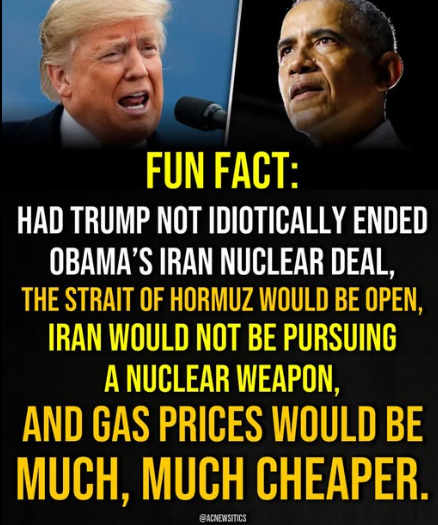 At left we see the cause of Trump’s imminent demise.
We’re OK on the lies and crimes, but we’re not OK on high prices, and though we’re dumb, we’re not dumb enough to believe that prices were higher under Biden.
Btw, people commonly refer to this as “Obama’s deal,” but several other countries were party to it.
 It’s a tragedy that this didn’t happen in 2015 when Trump entered the political scene.



-

 Greenhouse Gases2 years ago
嘉宾来稿:满足中国增长的用电需求 光伏加储能“比新建煤电更实惠”
-
Climate Change1 year ago
Guest post: Why China is still building new coal – and when it might stop
-
Greenhouse Gases1 year ago
Guest post: Why China is still building new coal – and when it might stop
-

 Climate Change2 years ago
嘉宾来稿:满足中国增长的用电需求 光伏加储能“比新建煤电更实惠”
-

 Renewable Energy11 months ago
Sending Progressive Philanthropist George Soros to Prison?
-
Climate Change2 years ago
Bill Discounting Climate Change in Florida’s Energy Policy Awaits DeSantis’ Approval
-
Greenhouse Gases1 year ago
嘉宾来稿:探究火山喷发如何影响气候预测
-

 Carbon Footprint2 years ago
US SEC’s Climate Disclosure Rules Spur Renewed Interest in Carbon Credits